Stalking Ideas

by Janis Patterson

One of the questions authors are asked the most is “Where do you find your ideas?” – as if ideas were rare and wondrous things as difficult to discover as flawless emeralds. As far as I and most of the writers I know are concerned, there are fewer questions more maddening.

As if one has to ‘find’ ideas. They find us, as ubiquitous as mosquitoes during a lake holiday, and sometimes just about as annoying. For example : you’re working happily on a sophisticated big city humorous mystery, when all of a sudden the sight of an axe in a hardware store brings up a flash of inspiration for a dark and noir-ish story about a suburban serial killer. It lurks at the edge of your consciousness, waiting to leap on every unguarded moment with yet another character or plot twist.

The sleuth you’re trying to write is an urbane, wise-cracking former male model who speaks four languages and not only knows but actually cares about the difference between white tie and black tie evening wear. (Sigh) The sleuth who is trying to creep into your mind is a wise-cracking suburban mom who hates soccer, has a daughter mad for ballet and who, through her knowledge of some arcane middle-class suburban pastime, deduces the killer who has been decimating the neighborhood.

Finally to propitiate the annoying creature you take a few precious hours to make some notes, jot down an idea or two, scrape together the bare bones of an outline and file the results into your bulging Ideas file. (You do keep an Ideas file, don’t you? I have for years. Mine is now roughly the size of Rhode Island.) The only problem is, when you decide the suburban mom has to have a garden, there is the flicker of an idea about a well-known television writer who loves to raise poisonous plants and his encyclopedic knowledge allows him to solve crimes as there is suddenly an epidemic of poisonings on the set of a controversial new series…

See how insidious this is? Before long you’re doing nothing but making notes about possible story ideas while your sophisticated and urbane city detective languishes somewhere in black tie (appropriate to the occasion, of course) waiting for you to come back to him. Ideas are everywhere, and catching them can take over your life.

Now, as we must never forget, I will repeat my mantra – an idea is not a plot. An Idea Is Not A Plot. Repeat that three times every day before you sit down to write. An idea is a situation, a frame, a slice of a singular moment in time. For a successful book, you need hundreds of ideas, and you need to be able to mesh them together seamlessly to provide a workable story. That part is work. Fielding a couple of the bazillions of ideas that flash by you every minute is not.

For the record, my second-most-disliked question is when some bright-eyed naif comes bouncing up (for some reason this is usually a middle-aged male at a cocktail party) and says with the utmost generosity of a Lord Bountiful, “I’ve a wonderful idea for a book – why don’t I tell it to you so you can write the book and we’ll split the money.” If it weren’t so maddening it would be funny to see their faces fall with disbelief when I tell them that ideas are literally everywhere and why would a writer need or even want to borrow ideas when there are more around for free than we could ever even make notes on in our lifetime? Let alone that the writing of the book is the work part, not finding an idea or two.

There have been a few, foolish ones who forge ahead and tell me their idea anyway, apparently convinced that once I hear it I will find it so irresistible and wonderful that I will fall all over myself begging to write it. Huh. Usually this idea is either an improbable farrago of wish-fulfillment or a twisted re-hash of some recent television show. Sigh. Unfortunately, there is nothing in any etiquette book about how to handle this situation and stabbing the innocent but tenacious offender with a cocktail pick is frowned upon. (I say that from sad experience…)

See the problem? It’s not that we have to stalk ideas – it’s that ideas stalk us, continually battering at the gates of our mind until we acknowledge their existence, which diffuses our focus. Perhaps a friend of mine said it best : “It’s not the idea; it’s what you do with it.”

What we do with it – writing the story itself – is the important part.
The Terrible, Necessary, Unavoidable Triumvirate

by Janis Patterson

In last month’s blog I talked about musery, and how the concept of a mythological goddess whispering ideas and words into a writer’s shell-like ear was a catch-all used to combine the rock-bottom basics of inspiration, imagination and skill. You see, to be a writer – a writer of any worth, a writer with any hopes of publishing – you need all three.

Inspiration is the beginning; this is the start of creating something from nothing. A ghost of an idea. An isolated incident that could be pampered and grown into something more. A starting place.

Imagination is what takes the ephemeral, insubstantial bud of an idea and feeds it, molds it, multiplies it into an acceptable storyline. Like a cook creating a recipe from the beginning idea of two ingredients, a writer will spin a complete storyline, adding in heroes and villains, buffoons and sages, problems and victories, and eventually bring it to a desired and logical conclusion.

Sounds simple, doesn’t it? Well, it will come to nothing if the writer does not possess the final part of the triad – skill.

In this context the simple word ‘skill’ has a labyrinth of meanings. The most basic form is what we used to call fifth-grade English – mastery of spelling, grammar, sentence structure and punctuation. In other words, the solid skeleton of language on which you can hang the gossamer flesh of your story.

Unfortunately, these days it seems that correct and standard usage of English is if not a dying at the very least a fading art. Typos and plain mistakes that would have been unthinkable a couple of generations ago are now not only tolerated, but hardly noticed. Where once a single typo in a published book was a point of shame, now it is regarded as a triumph.

But this post is not to rant about the relaxing of standards, it is to point out the need for plain old skill to use the language to create your world and your story. Everyone knows the example of ‘eats – shoots – and – leaves’ and its two very different meanings. ‘Eats, shoots and leaves’ is a very different sentence from ‘Eats shoots and leaves.’ A single comma changes the sentence from the reporting of a violent action to a descriptor of an herbivore’s diet.

It’s the same thing with ‘she took a peek’ (i.e., she snuck a quick look) to ‘she took a peak’ (she conquered a mountain top). Such mistakes can pull a reader out of the story in an instant, to say nothing of confusing the action. Doesn’t make the author look very good, either.

Our imaginations might be our stock in trade, but our command of language – and our skill in using it – are what makes it possible for us to communicate our stories to others. Inspiration, imagination and skill – the essential tools a writer must have.

Musery, or Conversations With A Goddess

by Janis Patterson

On one of my writers’ loops the other day a bunch of us were lamenting the fact that we all couldn’t just write and leave the business side of publishing to someone else. These days however you are published you have to deal in the non-creative side of the book industry – publicity, editing and all the rest. As we all were having the same problems, someone said she was grateful for other writers, as ‘misery loves company.’

Well, you know I can’t leave a single quip unturned, so I popped back, “Shouldn’t that be musery?” My rather smart-ass remark has turned into a… well, not a phenomenon, but a comment that is spreading. ‘Musery’ is a growing concept.

So what is Musery? It is taken from the legend of the Muse, a mythological construct of some goddess or another who is constantly whispering fantastic prose into a writer’s shell-like ear… which all writers know is pretty much wishful thinking. Even if you get ideas constantly peppering you like beneficent shotgun pellets as I do, ideas by themselves are pretty useless – nice, and a necessary beginning, but by themselves pretty much useless. No book ever came from ideas alone. It would be sort of like trying to live in only the foundation of a house.

Ideas (and it takes many to make a book) are only the beginning. You need believable characters, many complications, conflicts… the whole menu of writerly tools. Many of us need the interaction and brainstorming with other writers, and then there is research and finally – and perhaps most importantly – a command of the language that can make the whole heap of disparate parts into a readable and hopefully enjoyable book.

This seemingly magical combination of elements is the essence of Musery, which boils down to the basics of inspiration, imagination and skill. Done right, it appears effortless, which is probably the basis of the popular belief that some magical creature dictates the finished product to the writer, who has only to write it down, thus perpetuating its own myth that writing a book is a piece of cake that anyone could do if they only took the time.

Yeah, right. The fastest way to reach your Muse always has, is and always will be hard work. Now I have to go propitiate mine with a couple of hours at the computer.

Writing as a Gratitude Practice


Every day is a story. We usually wake up in the world of our status quo from the day before and set goals, and then challenges show up on the way to those goals. We face them, and whether we overcome them, change course, or defer completion, by night we close a chapter. Unlike a chapter in a book, though, that day’s chapter ideally doesn’t have a hook that keeps us awake and wondering what happens next.

To get closure on those daily endings, I keep a journal, following a structure I learned in yoga teacher training as a method for developing self-awareness and which I’ve taught in many stress management workshops. First thing in the morning, I record my dreams, if I remember them, and reflect on their unique and personal meanings (Recommended reading: Mindful Dreaming by David Gordon). In the evening, I record the emotions I experienced in all their complexity and variety. I consider this detailed awareness of feelings to be a mindfulness practice, but it’s also a valuable skill for writing. The next part of the journal covers the day’s events. Some are mundane, and I can skim them in bad handwriting, while others call for exploration, discerning how they related to the emotional landscape of the day.

The final line in each journal entry is something positive. It may be small and subtle or enormous and worth celebrating. It can also be an intention for the night’s fiction writing hours (I’m nocturnal and do the journal before I settle into my work). I never want to wrap up a day feeling negative or pessimistic. The human mind is naturally drawn to what’s wrong in case it requires attention. If my whole body feels great except for a twinge in my left ankle, my mind will go to my left ankle even if the twinge is trivial. Attention to the big picture and its positive aspects is a conscious choice. On a day in which difficult or painful events dominated, this space for hope and healing is even more important than on the more ordinary days when it’s easy to find some light.

With this journal, I train my mind not only to the story line and emotional depth of each day, but to gratitude. Daily.

*****

You can read more of my essays on mindfulness in the collection Small Awakenings: Reflections on Mindful Living.

Goodbyes and fresh starts!

Hey, y’all!

So, I know I’m a newbie to the Ladies of Mystery blog and I’ve only been gracing your computer/phone/whatever screen for a short time with my awesomeness but sadly the time has come for me to say adieu.

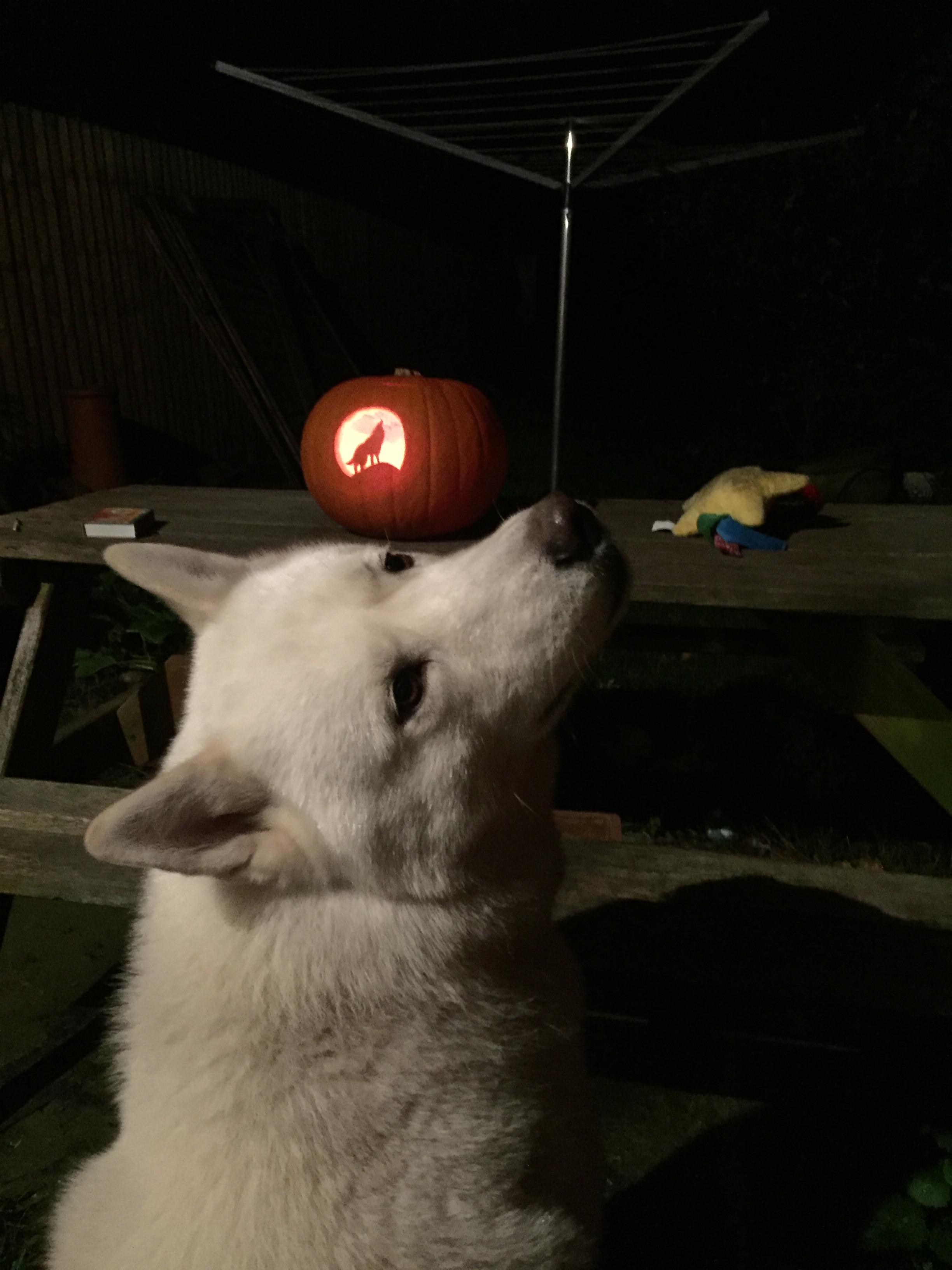
But I wanted to leave you with something awesome. (No, you can’t have Mr Wolf!) It’s my birthday tomorrow. (Woopwoop!) And when it gets around to this time of year (once we get the celebrating/crying out of the way!), I start thinking about all the things I’ve achieved (or still have yet to achieve) this year. And my goals next year.

Because I love fresh starts, I always start the new year off with resolutions. Mostly it’s things like “eat better” or “make time to exercise” or “stick to your darn writing schedule”. And I always think that because it’s the first day of the new year, it will be easier to keep the resolutions. Like starting with a clean slate … but it never is! And yet each year I do the same thing. Over and over! Have you heard the Einstein quote …

“The definition of insanity is doing the same thing over and over again, but expecting different results”

Yeah. So that’s me (and probably a lot of other people too!) at the start of every year. And, by the second week of February, most resolutions have failed. So this year I thought, “How awesome would it be if I ended the year with all my resolutions in place and started the new year exactly where I want to be?”. I’m sure you guessed my answer was, “Wow, you’re really smart. You should totally do that!”.

And it’s twelve weeks until the end of the year. So that’s plenty of time to get those resolutions up and happening. There’s no “new year” pressure to get things perfect straightaway and even if you make a few slips, you’ll still be in a much better place by the start of the new year.

This is my plan! Are you going to join me? I know I won’t be on this blog to keep you in check but you can sign up to my newsletter (if you aren’t already) and we can keep each other accountable that way. Or you can always follow me on Insta (where I keep promising I’ll post more!). Just don’t follow me on Twitter. Yes, I’m on it but I just blueeergh—I’m terrible at it. Someone tweeted me ages ago, and it took me four months (FOUR MONTHS!!!) to see the tweet and reply. Yep, so don’t tweet me with how you’re doing because I likely won’t see it until the middle of the year and that’ll be no help to anyone.

So! Are you in for getting your resolutions in place before the end of the year? AWESOME! I totally knew you would be.

If you’re not signed up to my newsletter, then it’s been a pleasure having your company these past few months and I hope you have the BEST possible end to the year!

*waves* Jordaina 🙂