My First DSLR

I was returning to India after a seventeen-year hiatus, and my husband suggested I take a digital camera. He gave me his. The first time I returned I took a film camera. The DSLR would be much easier—no film to load and unload throughout the day, not to mention the added cost to develop and weight in my luggage.

One of my favorite side ventures is photography, something that I first tried as an eight-year-old and then again as a college student, but didn’t pick up again until my forties. Since then I’ve had two solo shows, exhibited in juried shows, and sold a few images. But the camera I use has its own story.

Michael began working in photography in college, and immediately showed an aptitude for all things photographic. He began with a Pentax and remained loyal to the brand for practical as well as technical reasons. Every Pentax lens is interchangeable on a Pentax body, and over the years he accumulated lots of lenses. Before my trip he’d been having trouble with his current DSLR, and took it to a specialist, at Hunt’s. The two men along with a technician inspected, tested, retried, retested, opened, fiddled, and couldn’t figure out why it wouldn’t register an image. The camera simply didn’t work. He didn’t buy it from Hunt’s, but the man offered him something reasonable for it. Instead, Michael brought it home and told me of the very disappointing visit. This is where it gets weird.

He came in and told me the whole story of his visit to Hunt’s, and his discussion with the owner, whom he’d worked with before and trusted. I picked up the camera, sighted it, and snapped the shutter. The image appeared and looked fine to me.

“What’s wrong with it?” I asked. “It looks okay.”

Michael looked at the image, at me holding the camera out to him, at the image, at me. He agreed it did look okay. I’ll never forget the look on his face, though I didn’t understand why his expression was so odd.

“Why don’t you take it with you to India, along with the other one.” He was referring to a small pocket digital Pentax I’d given him a few years ago that he didn’t use.

I did, and took tons of photographs. The camera was the most reliable tool I’ve ever worked with. It always worked for me. I never had any trouble with it. It never worked for him again, no matter what he did. I use it still, though I now have access to his other, more advanced cameras and lenses.

At the time I said the problem with the camera was a matter of electricity. I had less in my hands, or body, than he had. My touch didn’t interfere with the operation of the camera. Maybe I have more than he has and that helps the camera work. I have no idea. But it’s one of those odd incidents in life that reminds me of how little we know about how the physical world around us operates. 

And it perhaps explains why some of us love our tools, as though they are a part of our body, an extension of our imaginative selves as we manipulate the physical world to fit our vision. Writers do it with paper and pen, or computer and printer; carpenters with hammers and chisels and wood; photographers with camera and lenses and paper and ink. It doesn’t matter what you use; the result is the same—a world remade according to the singular vision of one particular person, a lens into another mind and its world.

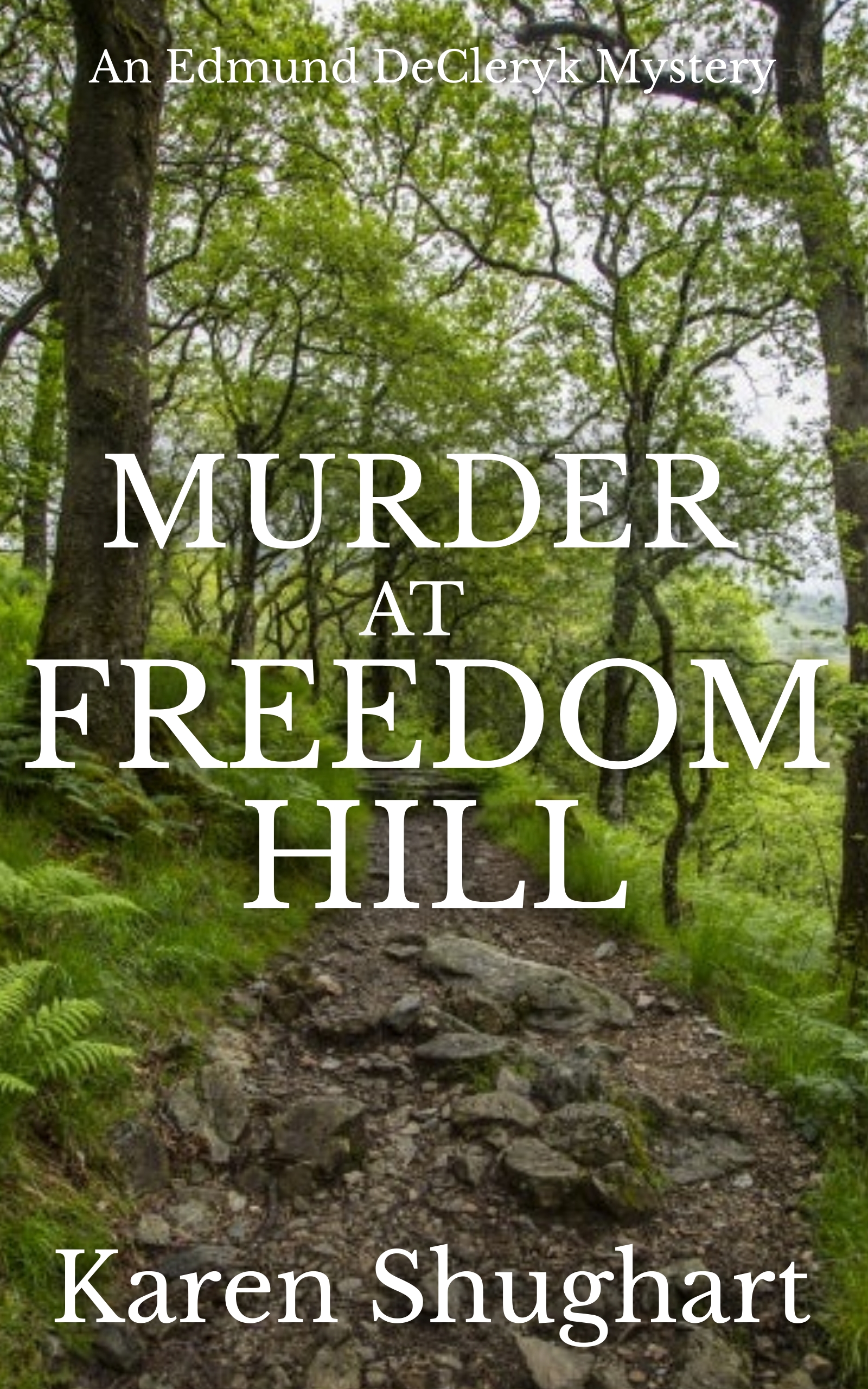
November: A Prologue by Karen Shughart

After my first Edmund DeCleryk Cozy mystery, Murder in the Museum, was published, I decided to play around with the concept of having two prologues for subsequent books and contacted my publisher to see what she thought. She basically told me to ” go for it”, and in book two, Murder in the Cemetery, that’s what I did: the first to set the historical back story that alerts readers to why the murder may have been committed, and the second to describe the seasonal tone for the crime.

In book two I described the month of May in Lighthouse Cove, with its profusion of flowers and abundance of sun, a fitting backdrop to the crime that’s about to occur. In Murder at Freedom Hill, the third book in the series (now on sale in paperback and Kindle versions at Amazon and other book outlets) the second prologue is entitled “November”. I thought it was appropriate for this month’s blog, so here goes:

  For residents of Lighthouse Cove, NY, November was always a month of mixed emotions.  

There was a yearning for the blazing colors of October, the cool, crisp nights, starlit skies, bright days. For a low-hanging sun that could still warm the bones and ease the joints.  For the farm stands, now shuttered until spring, that had offered up a bounty of ripe produce, local honey, homemade baked goods and jams, fresh herbs.  For the hayrides and bonfires and deer spotting among the apple orchards. For the unbridled joy of chattering, costumed children extending small hands for treats as their parents kept a watchful eye; glowing lights illuminating their way.

There was also the peace that comes with tourists gone for another year and the ease of getting about.  The sound of waves, ambling onto the beach like lazy sloths. The geese and swans gliding effortlessly around the bay, no longer competing for space with boats and bathers, and the eagles soaring silently above on currents of wind. The rumbling and grumbling of street noises now muffled by a thick carpet of brown, fallen leaves.

 There was excitement and anticipation, too, in November.  For a day, later in the month, when families would gather to give thanks and then soon after, start to prepare for the hustle and bustle of the upcoming holiday season. For the hunters who had been looking forward all year to donning their camo, retrieving their guns, and stalking their prey in fields and woods, hoping to bestow upon their loved ones a largess befitting of their labors.

For some, November was also the month of grieving. A month of decay that precedes death.  Where what was past was past and would be no more, and what lay ahead was the chill and dark of winter.

It’s November Again

by Janis Patterson


Yes, the dreaded month of November has stomped onto our calendars again, darn it. No, I’m not talking about the approaching gluttony of Thanksgiving or the terrifyingly few weekends left until Christmas, though both are swiftly oncoming realities.


I’m talking about the annual National Novel Writing Month, commonly known as NaNoWriMo or even NaNo, where for years now people have been encouraged to write a 50,000 word novel in the 30 days of November. It is called an exercise in accountability, or a time of group encouragement, or any number of other pleasant and positive euphemisms. While I can see that both the former can be regarded as sort of desirable for writers, what disturbs me is the number of absolute tyros who will regard this as their ticket to literary fame and fortune.


Perhaps a few of them will learn what plain old hard work it is to string 50,000 +/- words into a cohesive story and there is a lot more to creating salable stories than just writing down the requisite number of words… but most of them won’t. They’ll pound out the words in a blaze of literary fervor, many truly believing that their prose is both deathless and special. Most of it will not be.


And to this point that’s fine. It’s supposed to be a learning experience. What bugs me is that most of the tyros won’t learn from it. Many of them will take their ‘masterpieces’ and send them off to agents and publishers and wait impatiently for large contracts. Many of those manuscripts will not be edited or, on some sad occasions, not even be read through. Then, when the inevitable rejections occur, said novices will declare that the publishing world does not recognize their genius and will self-publish.


I do wish that there were some sort of law forbidding any non-professional writer to submit a manuscript done for NaNo. It would be so much kinder to everyone involved. Writing is just about the only profession where someone with no training or education in the field and no discernable skills in grammar, punctuation or story structure wakes up one morning and decides he is going to write a novel, then is surprised when the rest of the world does not acclaim the genius of his work. But hey – he wanted to write a novel so he did. I guess we should all be grateful he didn’t wake up, decide he wanted to be a brain surgeon or aerospace engineer and act in the same way.
And that’s my opinion of those who have a skewed and unreasonable view of NaNo. What about the working professional writer?


Properly used, NaNo can be a marvelous tool of discipline and accountability. I’ve worked under various writing contracts for the majority of my adult life, but as I get older I have noticed that I am not only slowing down, I am becoming much more easily distracted. For example, while in Egypt a couple of weeks ago – after vowing I wouldn’t do another book set in Egypt – I got the idea for a wonderful mystery and began writing it. Normally a couple of years ago I would have had the first draft already finished. It isn’t.


I’ve never done NaNo, so this year – since I have no overhanging contracts or deadlines at the moment – I decided to try it. It’s a wonderful thing. Every day I have to post to a certain site (this NaNo is being facilitated by one of my writers’ groups) how many words I have done that day. Sometimes it is embarrassing. Sometimes – when I exceed my allotted number by a respectable amount – it is a source of pride. I like it. Accountability is a good, positive thing.
Some say that NaNo is at its heart a learning experience. I can agree with that, and can also agree that we should never stop learning.

REFRIGERATOR UPDATE – I told you about my woes of buying a new refrigerator. All we want is a very simple refrigerator – French door, bottom freezer and ice/water on the outside of the door. And white. White was the problem; white is not standard any more, nor even available on most models. It has to be special ordered.


So we ordered it the day after we returned from Egypt and were told we could have it some three weeks later on 23 October. On 22 October I called Lowe’s and asked for a time frame for delivery; between 8-12 on the 24th, I was told. Well, October 24th came and went with no refrigerator, so I called and after being routed through two idiots who knew nothing finally got a hold of a manager, who after some investigation told me the refrigerator was not only not in Dallas, it was still at the factory and had not even been finished.


WHAT IS SO DIFFICULT ABOUT PUTTING A PLAIN WHITE FINISH ON A VERY STANDARD MODEL?


With admirable self-restraint I asked why Lowe’s had not told me the truth and had not told me a real date for delivery instead of giving me a big chunk of blue sky. I also asked why no one had had the courtesy to call and say the refrigerator was not even in Dallas yet. (Needless to say, the refrigerator was fully paid for on the day we ordered it.) The man had the good grace to be embarrassed and said he didn’t know. Then he gave me the delivery date of 25 November. I asked him if that was any more true than the first date had been. He didn’t answer.


So – heed my sad little tale and be very careful where you buy a refrigerator or any other appliance unless you will let the store dictate what you will receive.

Writing and Rewriting

My Monday morning zoom partner and I indulge in wide-ranging discussions with no restrictions on our wanderings. We’ve discussed business architecture in Kolkata, the renaming of Indian cities, e.g. from Calcutta to Kolkata, Maya ruins, and the writing process, which fascinates her because she’s a techie and thinks differently, she tells me. More recently we’ve been exploring figures of speech after coming across a book of them by Mark Forsyth. In The Elements of Eloquence he examines over forty figures, with wit and erudition. 

In case he has failed to make his point, Forsyth ends with a final note. “Above all, I hope I have dispelled the bleak and imbecilic idea that the aim of writing is to express yourself clearly in plain, simple English using as few words as possible. This is a fiction, a fib, a fallacy, a fantasy and a falsehood. To write for mere utility is as foolish as to dress for mere utility.” Obviously not a fan of Hemingway’s work.

Even while reading through his work, I got his other message. Look carefully at what you write. We use these figures of speech all the time anyway, he points out, even if we don’t know what they’re called and how they developed and what some good examples of them are. So, recognize them, and polish the gems in your own work. 

Forysth’s book underscores that writing is rewriting, as Richard North Patterson said (or wrote), along with every other author who has ever given writing advice. Before I even begin a story or novel I craft a first line in my head. Until I understand how I’m going to open, to begin a journey, I can’t start writing. I know those who begin by writing scenes they expect to be in the narrative at some point, sometimes the final scene, but I’m one who has to begin at the beginning, and the beginning is the opening sentence. I draft it again and again in my head, and when I think I have something that will work, that places the main character where I want her to be, then I write it down. But even then it’s not done. This is just the first stab at the opening line on paper, and I rework the phrasing several times. Forsyth’s list of figures of speech draws out the faint opportunities I might not otherwise notice.

I don’t usually feel the need to recast every sentence, but sometimes a paragraph needs to be reworked again and again. My preference is to get a sense of the narrative and characters on paper, and then rework it. I don’t write fast, so I tend to rethink and redraft as I go along, editing until I consider a paragraph or scene finished enough to be allowed to stand. I know I’ll come back to it later, probably several times.

Working slowly also means that I’m more likely to make discoveries as I go along—a character whose back story turns out to be significant to the plot in an unexpected way; a twist in the timeline that I might not have noticed otherwise; and a digression I discover I can use later. But also I can spend time teasing out greater meaning by reworking sentences, building the idea by building the expression.

Forsyth’s book came along at just the right time, giving me another way to consider a passage and recraft lines in my WIP. Reexamining every expression, recasting every line, is all part of the writing process. The first draft is really just throwing the clay onto the wheel, loading film into the camera. Rewriting is the work.

A Quiet Life by Karen Shughart

When my husband and I decided to move from Central Pennsylvania to a small village on the south shore of Lake Ontario it was because we agreed that in retirement, we wanted a quiet life. We knew it was a trade-off. In Pennsylvania we had easy access to cultural events and were within minutes to shopping and restaurants of every sort. But we also had to contend with gridlock traffic on the highways, light and noise pollution, a drive of between 15 and 40 minutes to visit with our friends and the hustle and bustle that goes with living near a state capital.

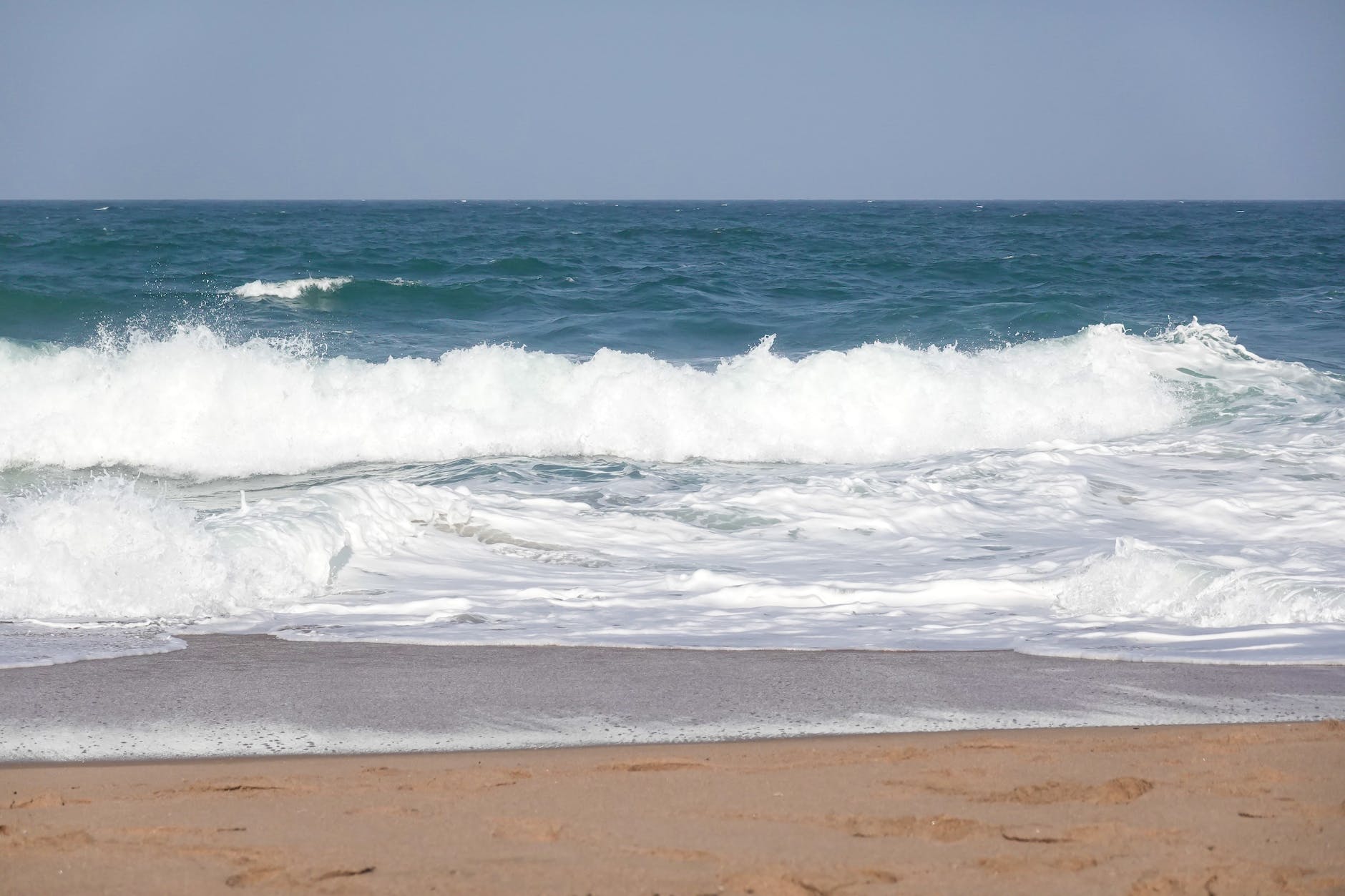
Photo by Magda Ehlers on Pexels.com

Up here, along the lake, we have a traffic jam when there’s a car at each stop sign at “four corners”, the four-way intersection as you enter our village. We travel a distance for symphony, ballet and opera performances, the nearest mall is a 45-minute drive, and supermarkets between 15 and 30 minutes from our home. But we have an abundance of restaurants, farm markets, small grocery and liquor stores, a post office and hairdresser, the beach and even a golf course within walking distance.

There’s music everywhere in the summer, concerts on a bluff overlooking the water, and groups performing at restaurants and parks. Friends live nearby, and the longest drive to visit them is at most five minutes. What some might call noise soothes my soul: waves pounding upon the shore, the morning cacophony of birdsong, the chittering of squirrels, the soft chirping of crickets on a late summer’s eve, and the mournful call of the loons.

The quiet here is also a balm for me as a writer. A short time ago I took part in a discussion with a Cozy writers’ Facebook group where the administrator asked how many of us write with music playing in the background. I discovered that I am in the minority, most of those who responded are stimulated and feel more creative with background music of every sort. Some were surprised when I said that I get distracted, it’s hard for me to concentrate when there’s too much “chatter”.

It was an interesting discussion, and as I thought more about it, I realized how creative juices are stirred in so many ways. Writing for me is meditative, I can write for hours without paying attention to the time, and sometimes without taking a break. My husband teases that he knows not to try and discuss anything important with me when I’m writing. If he tells me he’s leaving to play golf or run errands, I’ll nod and later not remember a word he’s said and wonder where he is.

As I thought more about it, I realized that as I’ve aged I choose not to multitask as much as I used to.  I can cook and listen to rock and roll, show tunes or jazz at the same time, and do word puzzles or Sudoku while watching TV, but for some reason, writing, reading, or listening to certain types of of music are activities I want to savor individually. There’s immense pleasure and something to be said about immersing oneself in quiet pursuits.