Reading Old Work

For the last few weeks I’ve been thinking about the old mss left unfinished. Some are in my computer. Some of them are on paper, stacked in a closet, shoved into the back where I can’t see them. That’s probably a good thing because if they were visible I’d pull them out and litter my desk with them.

There’s nothing wrong with any one of them, and several came very close to a sale. But there is something not quite right. Every writer knows what I’m talking about—the story we loved and worked on and with a gasp of hope sent off to an editor or an agent. And then it sat there, on someone’s computer or desk, gathering dust of being pushed lower and lower on the list of titles in the TBR file. The question becomes, what do we do with them? Do we reread and rework them? That’s a definite possibility. The more I learn, the more I rethink what I’ve done and recognize where I could have improved the story by changing the setting, developing the villain more, heightening the tension, or removing the extra secondary characters. But I don’t do these things in a novel. I might do some in a short story, but not in a longer work. And I think I know why.

Some years ago I was an avid fan of Margery Allingham’s Albert Campion mysteries. The first one appeared in 1929, The Crime at Black Dudley, and others followed fairly regularly into the 1960s. I don’t know if many people read her work anymore, but she was considered one of the great British mystery writers of her time. After reading through her entire list including a couple of novellas, I came across her first mystery, The White Cottage Mystery, published in 1928. This is only a year before her first Albert Campion story. And I was startled at the difference between the two., and the extent of her growth and development as a writer between her first and her second book. It’s an experience I have always remembered. 

We grow and change as writers. If our work sounds the same year after year, we’re not growing and it’s time to stop and ask why. I don’t want to write the same book year after year. There has to be something different, some sign of a new perspective, a new challenge. I can see this same ambition in some of the writers I read, but not in others. 

When I pulled out some of my old mss and had the passing thought of rewriting and updating them, I was frozen, and here I think I was so for a good reason. Whoever I was back then I am not her now. To bring one of those old mss up to the level I would want to write today would be to dismantle and basically erase it. Each line, each feeling and action would have to be different because I’m different. The story was good for its time and in some instances that’s twenty or more years ago. I was different and the world was different.

I’m in a long phase of decluttering the house I’ve lived in for over forty years, but I doubt I’ll toss out those mss, not just yet. Each one tells me something about writing, finding a voice, developing a voice through time, challenging ideas and creating new ones. I liked some of those stories more than others, and the failure of some weighed on me more than others, but like any other experience that comes to an end, I let those novels go and moved on.

The one important thing I remember is that even though they didn’t sell, they made me the writer I am today, with their lessons and discoveries, their pitfalls and graces. For that alone I will probably keep them for a while longer.


Voice as Unique as a Fingerprint

My mind spins so many different directions when I’m “stewing and brewing” the next book or chapter. The other day, as browsed the email of free photos from Depositphotos a vector caught my attention. It is in this post. I thought could I use that for anything, and poof! the idea for this post came to mind.

Everyone has a unique to them fingerprint. It is theirs and theirs alone.

The same can be said for a writer’s voice. Not their speaking voice, their style of writing. Some writers use long, elaborate words or sentences. They spin their tales with sinewy prose, weaving the tale in between the actual words on the page. Then there are others who use precise words, short sentences, and graphic descriptions.

No matter what the writer writes there is a telltale “fingerprint” to their writing. Think about some of your favorite authors. Why do you read each one of their books? Is it how the story is worded? The characters? The plotting?

Characters? Plotting? How can that be voice? Again, think about your favorite authors. Do the characters seem similar even if they have different names, backgrounds, and ethnicity? Every author puts a little of themselves into their main and sometimes secondary characters. They can’t help it. Otherwise, how would they be able to describe feelings, emotions, and even the setting around them, if they didn’t allow a bit of themselves to slip into the characters.

And Plotting- You can give five authors the same basic theme for a book and each one would put their own spin on how that theme or plot played out. Again, they would each put their knowledge, feelings, and imagination into that story, making it their own with their unique voice.

I’ve always thought of my writing as simple and engaging- not really having a memorable voice. However, many readers tell me they enjoy the simplicity of my writing. They can see the story as it unfolds and not have to guess what words mean. I take that as a compliment to my style. Especially, when I’ve had several people also say that my books brought them back to reading.

My true voice, I think, is that all my stories are about justice. Not just the bad guy getting what he deserves but also showing the injustices that are in the world. I will throw in a cause here and there in my books to bring it to the attention of my readers. And thankfully, they understand that is what I’m doing. I don’t preach. I reveal the injustice and leave it up to the reader to do more digging if it intrigues them. That is my voice. As unique to me as my fingerprints.

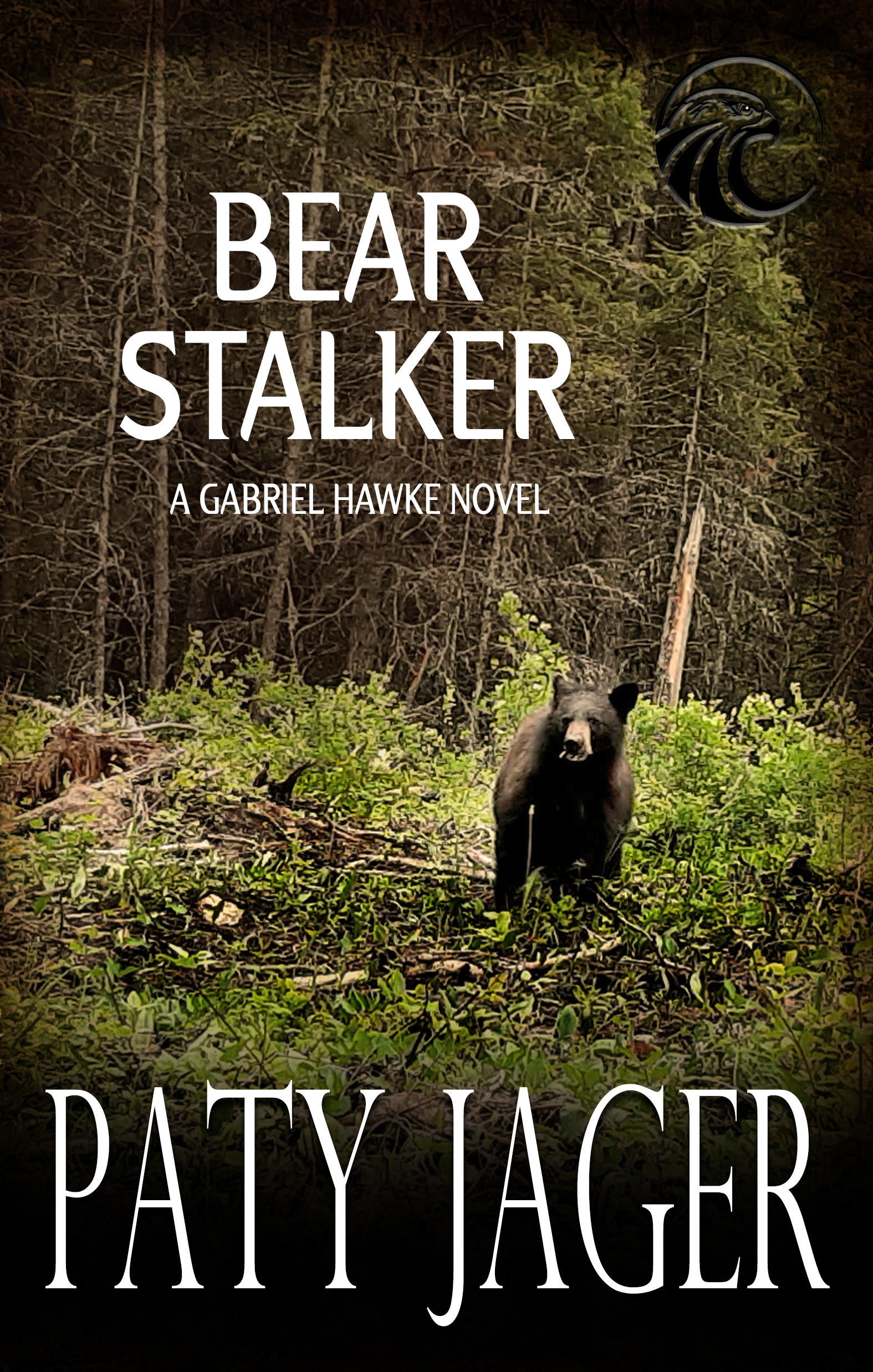
Coming at the end of this month, book 10 in my Gabriel Hawke series, Bear Stalker.

Greed, misdirection, and murder has Hawke rushing to track his sister in the Montana wilderness before she becomes the next victim.

Oregon State Trooper Gabriel Hawke’s sister, Marion, is on a corporate retreat in Montana when she is suspected of murder. Running for her life from the real killer, she contacts Hawke for help. 

Hawke heads to Montana to find his sister and prove she isn’t a murderer. He hasn’t seen Marion in over twenty years but he knows she wouldn’t kill the man she was about to marry.

As they dig into possible embezzlement, two more murders, and find themselves trying to outsmart a wilderness-wise kidnapper, Hawke realizes his sister needs to return home and immerse herself in their heritage. Grief is a journey that must be traveled and knowing her fiancé had wanted Marion to dance again, Hawke believes their culture would help her heal.

You can pre-order it here:

https://books2read.com/u/mdjNzW

Voice and Word Choice by Paty Jager

Voice is the author’s style, the quality that makes his or her writing unique, and which conveys the author’s attitude, personality, and character; or. Voice is the characteristic speech and thought patterns of the narrator of a work of fiction.”

This definition I pulled off the internet helps define Voice, but I’m going to dig a little deeper.

Each genre, historical or contemporary, western or mystery, I have to think about the “voice” I need to use for each one. I know the example of voice says it conveys the author’s attitude, personality, and character- true, but that has to also fit the time period and the place- historical or contemporary western. Jeans in a historical are called denims or overalls – in a contemporary they could be call Jeans, Wranglers or Levis.

This also goes along with word choice. The writer needs to know if a word was used in 1880 or if it didn’t become popular until the 1900s. When I type a word when writing an historical, and it feels modern, I use online etymology, a website where you can type in a word and it tells you when it was first used and the meaning of the word at that time and later.

Same goes with my mystery books. I use terms that are contemporary but try to include a bit of a western feel or voice to the books. I do this because they are set in rural areas and because my main characters are Native American, which also leads me to think about phraseology when writing from their points of view.

Paiute Fancy Dancer

Especially, my Gabriel Hawke character. He grew up surrounded by his culture, and therefore, has a deeper connection to the outdoors and the earth in general. While writing in his POV, I try to make sure his inner dialog as well as what he says to other characters captures that essence. 

Shandra Higheagle, while having the love of the outdoors and making pottery from clay she digs on the mountain where she lives, she grew up in a white world and is only now learning how deep her roots go in the earth. And because of this, she is easier for me to write because I can include my wonder of the Nez Perce and their culture to be reflected in her as she is coming to know more about her family.

When I sit down to write a book, depending on the genre, I have to mentally put myself in that time and place to make sure I give the best accounting of the events that are happening and told through my characters’ eyes and emotions. If you read a book from each of the genres I write, you will see there is a bit of difference in voice because I am trying to show the story through their eyes and not mine. But some of my emotions- such as my need to show injustice – will come through in every main character.

Word choice as I commented on earlier, has to do with making sure the word is true to the time and the occupation of a character or knowing what I am talking about. I don’t know how many western romance books- contemporary and historical – I stopped reading because a character grabbed a fetlock to swing up onto a horse’s back, or they grabbed the cantle as the horse started galloping. Or what really had me tossing a book…They put the halter on the horse and slid the bridle into its mouth. The writer needs to know what they are writing about. If they don’t know, they need to look it up. I spend a third of my writing time looking things up. Even if I think I know it, I still look it up to be sure. And while I’m looking it up, I might find a better word that makes the scene sound even more convincing.  

Words are what make up a book and they need to be thought about carefully. Just as carefully as the characters that are fabricated to show the story.

blog / websiteFacebook / Paty’s Posse / Goodreads / Twitter / Pinterest   / Bookbub