Guest Blogger ~ Jerry Aylward

The Victim’s, Victims.

   Being the second oldest in a family of seven children and growing up impecunious during the mid-50s in rural Middle America, where occupying one’s time for entertainment was left to their imagination. I often busied myself trying to solve problematic riddles and puzzles, starting with the most basic and subjective ones like what came first the chicken or the egg, or, did Humpty-Dumpty really have a great fall, or was it simply a Kings premeditated design for fresh egg salad?

      I was never enthused with those rainy-day picture puzzles that give away the reveal by displaying the completed puzzle’s image all shiny and pristine on the face of its cardboard container. No, I thoroughly enjoyed a deep dive into complex brainteasers, ones that would pique my curiosity, while challenging its solvability. Ones like: I speak without a mouth and hear without ears. I have no body, but I come alive with the wind. What am I? Or the immemorial murder mystery where a lifeless victim is discovered in a windowless room, and the only door is dead bolted from the inside.

   Fast forward a multitude of years, after turning twenty-one, I moved to the east coast, to New York. Where I joined the police department and honed my skills as a detective in the creative art of criminal investigations.

   It’s where I learned the meaning of a true mystery, where a mystery can be nothing more than an unanswered question, or where something is difficult or impossible to understand, or even to explain, or where something not understood or beyond understanding remains an enigma, until it’s solved.

   I also learned the difference between a mystery and a secret, which most often will be conjoined in a crime. A secret is usually just information that needs to be ferreted out before revealing the hidden mystery.

   While the mystery of any homicide is usually limited to who, what, where, when, how, and why, it rarely focuses its investigative depth on the murder victim’s family back story, or it may modestly skim its veneer. I’ve come to learn there is more often a burly and expansive personal history cloaked somewhere beyond the surface pedigree of the victim. By digging deeper into the victim’s background and uncovering hidden or forgotten secrets will often reveal a forewarning to their own impending crisis, of course that can only be exposed through an extensive investigation, and obvious hindsight. Though by unmasking hidden or untold historical family secrets will oftentimes reveal a clear and sharper image of the victim and their significant loved ones, it will frequently divulge the motive for the victim’s demise.

   I further learned most homicide victims leave behind palpable shards of their living lives, along with their unintentional victims, (collateral damage) unwittingly of course, but nevertheless, they leave behind living victims, such as loved ones, family members, and loyal friends. These unforeseen victims, who are mostly overlooked and quickly forgotten victims themselves, though portentously significant in the life of the murdered victim, possess a fundamental account of their own that needs to be shared.

   I’ve written both fiction and nonfiction, though all could be considered mysteries, at some point in time. My nonfiction books are True Crime. My latest True Crime chronicle takes place in 1955, in an affluent community located on the north shore of Long Island, in Nassau County, New York, commonly referred to as the Gold Coast, with the murder of a thirty-five-year-old multimillionaire, hence the title of the book Murder on the Gold Coast, conjointly narrating details of the living victims.

   Consequently, I learned that conducting research into even a seventy-year-old controversial homicide case requires obtaining accurate and minute details of pertinent information that can only be attained by extreme digging into the crime itself, while not being stifled by intentional information barricades, despite some present-day law enforcement officials attempts at continuing to thwart the truth.

   Another interesting detail I discovered while conducting my research in this aged homicide case was the compelling theory of the six degrees of separation. A persuasive philosophy that anyone on Earth can be connected to anyone through a chain of acquaintances with no more than five intermediaries. This means that on average, everyone on this planet is only six introductions away from each other.

   I found in my current true crime commentary I was only three degrees-of-separation away from the victim himself, and only two degrees away from some of the essential witnesses, without ever knowing.

   I also believed that just because some of the facts and physical evidence in this 1955 homicide investigation had been passed over or not addressed, it didn’t necessarily mean the investigators were merely incompetent.

   It should also be noted that exposing any aged criminal mystery to the prism of a new day will always require accurate documentation and absolute certainty based on official police reports, court records, historical witness testimony, common logic, and above all, perceptual principle. 

 MURDER ON THE GOLD COAST
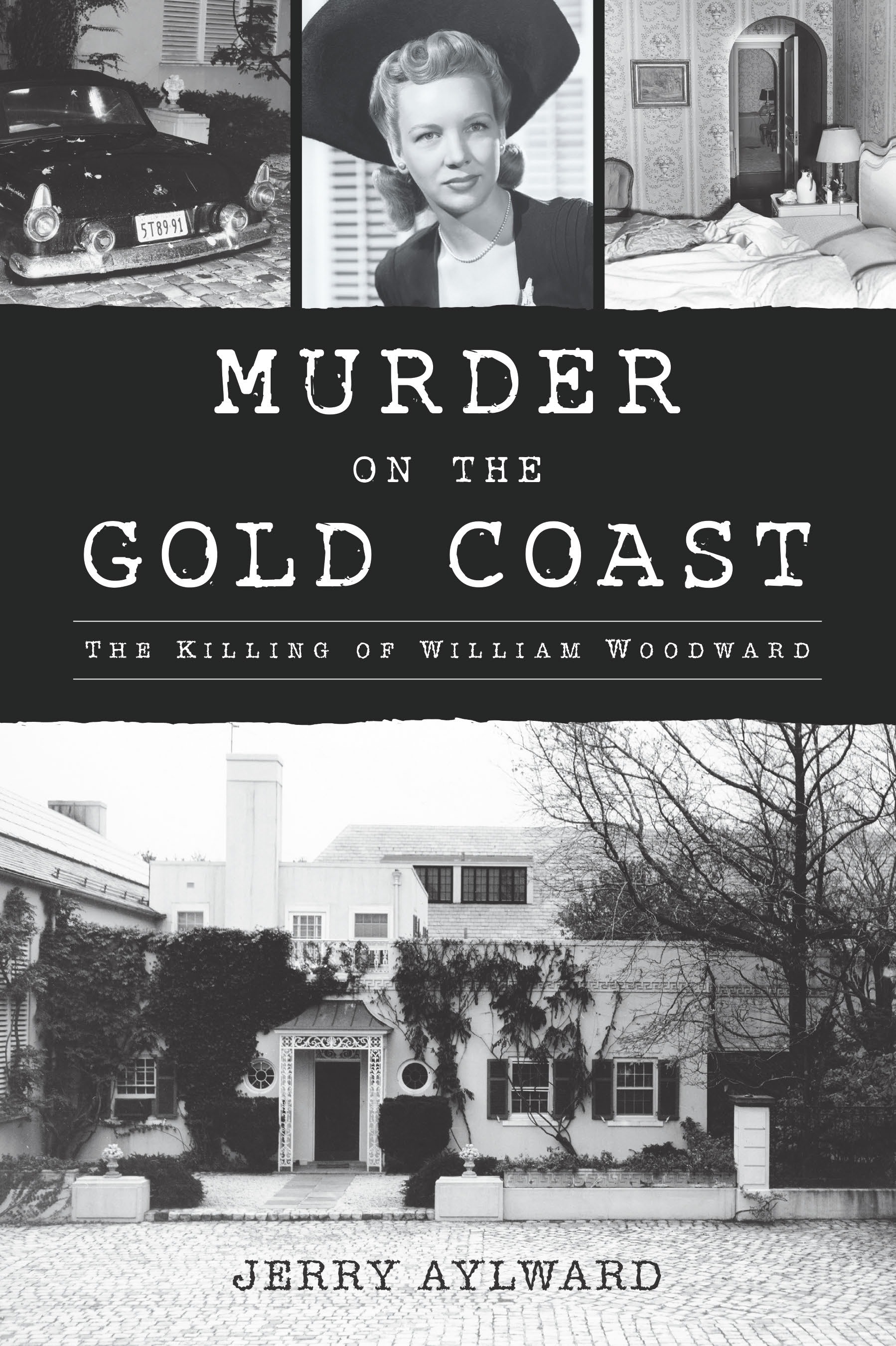
In the early hours on a rainy autumn night in 1955, on a lavish country estate in Oyster Bay Cove, esteemed New York socialite Ann Woodward fired both barrels of her custom-made shotgun into the head of her husband, multimillionaire William J. “Billy” Woodward Jr., killing him. She mistook him for a notorious prowler who preyed on the privileged class. At least that was what the official reports stated. The police focused on catching the prowler, as they cast an impenetrable dragnet around the “Playhouse” for the elusive intruder. However, as with many other aspects of Billy and Ann’s social circle, things were not always as they appeared. Local author and retired detective Jerry Aylward uncovers the uncomfortable truths behind one of the Gold Coast’s most notorious murders.

Murder on The Gold Coast… pre-order is now available at the following online sites.

Amazon: https://www.amazon.com/Murder-Gold-Coast-Killing-Woodward

Barnes and Noble: https://www.barnesandnoble.com/w/murder-on-the-gold-coast-jerry-aylward/1147090484?ean=9781467157490

Walmart: https://www.walmart.com/ip/True-Crime-Murder-on-the-Gold-Coast-The-Killing-of-William-Woodward-Paperback-9781467157490/15485624051

Target: https://www.target.com/p/murder-on-the-gold-coast-true-crime-by-jerry-aylward-paperback/-/A-1004984063

The History Press/Arcadia Publishing:  https://www.arcadiapublishing.com
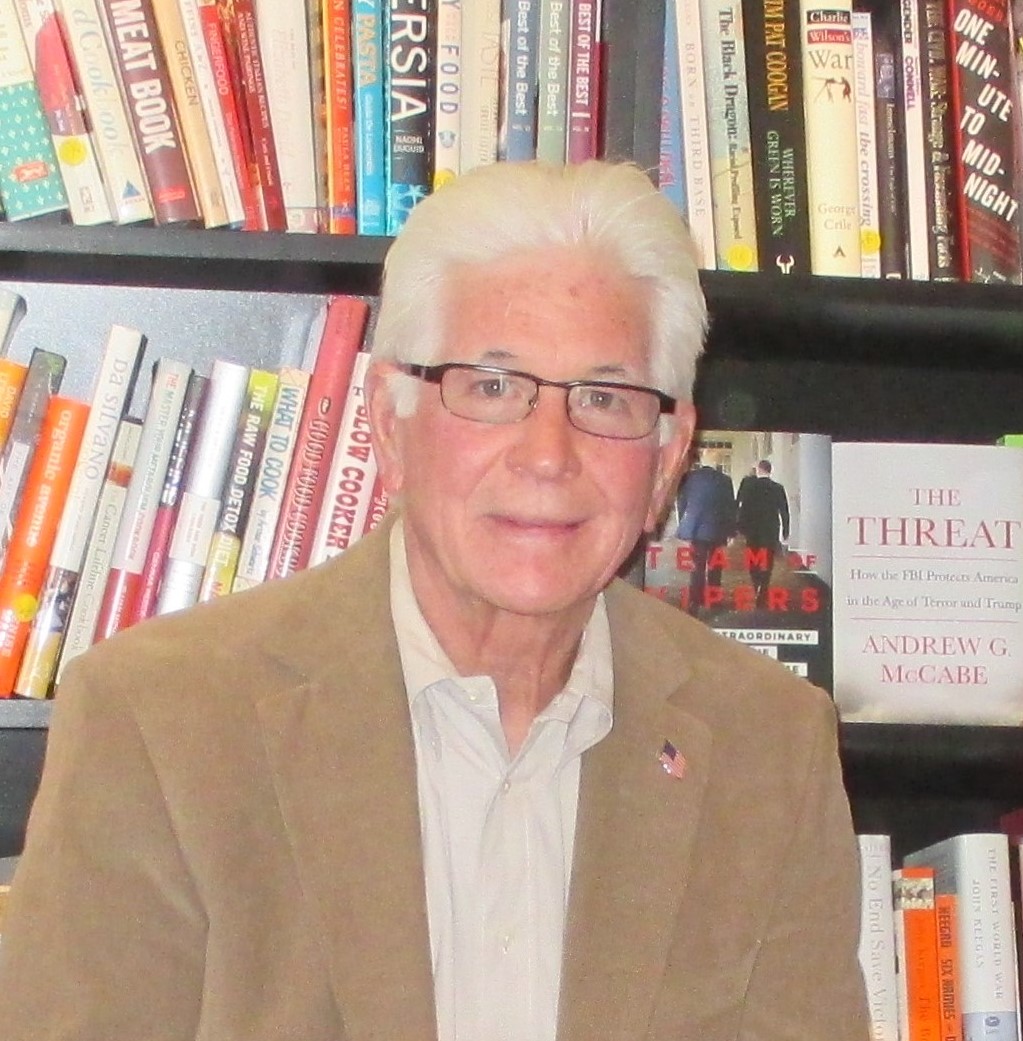
Jerry Aylward is a retired detective with thirty-two years of service with the Nassau County (NY) Police Department. He served another ten years in federal law enforcement with the United States Department of Homeland Security as a criminal investigator with the OCSO (Office of the Chief Security Officer) at a high-level, secret, government research facility. Jerry has a bachelor’s degree in behavioral science from NYIT and is a New York State–licensed private investigator. Jerry has also authored nonfiction: Francis “Two Gun” Crowley’s Killings in New York City & Long Island. And a pictorial history of the Nassau County Police (NY) Department. Jerry’s first mystery novel was “The Scarlet Oak” was released in July of 2022.
Jerry’s genre has been mainly local history and true crime. With The Scarlet Oak, he throws a twist of murder, spies, and spirits into an American Revolution time travel mystery that takes place in historic Oyster Bay, New York.

Website: www.jerryaylward.com

Email:    jerryaylwardauthor@yahoo.com

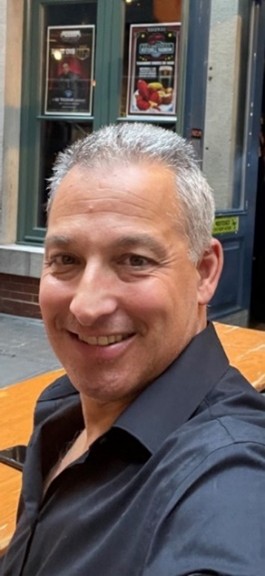
Guest Blogger ~ John Ferriso

Why I Write True Crime.            

Many things can lead us to write down our stories. My writing journey did not just begin; it was always there. As a child, I would remember an incident and retell it to anyone interested. A television show or a stickball game were topics that, years later, I retold to my friends and family. As a child, I watched the police-related television drama Barney Miller, and its dry cop humor interested me. Hill Street Blues had the precinct crime that I enjoyed. Movies like Serpico, Dog Day Afternoon, and Fort Apache the Bronx showed the gritty portrayal of street-level crime; I was hooked and wanted in on the action.    

Growing up in New York, the nightly news inspired me to want a career in law enforcement. I watched the nightly news as the reporters talked about the 44 Caliber killer who murdered his victims; the newspapers referred to him as the Son of Sam. I looked at the morning newspaper headlines and the horrible photos of the women shot. My neighbors talked about him, and teenage girls had their hair color changed. I understood that the Police were looking for the guy. I was fascinated with the stories adults told about the crimes and the ongoing investigations described.

I read true crime, which interested me. I was a reader before my NYPD career and my writing endeavor began. I was in college when I read about the suspects, the investigations surrounding them, and the detectives who hunted them down.

I was in college, working at a sports bar, and waiting to get called to the police academy. I was standing near the waiter’s station, pondering my future law enforcement career. I had a few tables and only a few dollars in my pocket. It would be five more months until the police academy; what type of cop would I become? I will write down what I experienced in the NYPD.

My childhood dream of being in law enforcement propelled me to write. To become a writer, you must focus on what interests you. I no longer needed to listen to the stories of other cops: I was living the same short stories I once read about. I took note cards to work and scribbled pencils to paper my thoughts and engaging experiences. I kept these notecards secret from my co-workers; it was my writing journey.

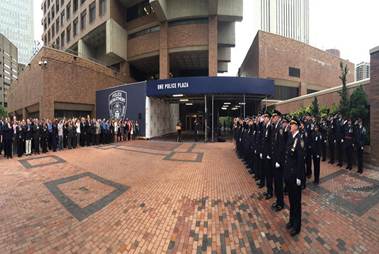
On the morning of September 11, 2001, I was working in Lower Manhattan, half a ½ mile from the towers. The events of that day and all I witnessed would be imprinted on my mind like an ever-playing movie scene. The day’s horrible events would give me a story to tell others. A few days after the events, I began writing in my spiral notebook everything I witnessed. I condensed my thoughts and observations to 17 pages. I wanted to do more than tell my story; I wanted others to read about it. On the 20th anniversary of the attacks, my story was published online. Free for all to read about what I was an eyewitness to on that horrific day.

In a New York Minute: An officer’s eyewitness account of the events of September 11, 2001 – The Juniper Park Civic Association

After retirement, it was time for me to tell my stories and get my work published. I began with one story about an intoxicated businessman who parked his vehicle on the roadway. I wrote it down as a short story and sent it to Psychology Today. What if the Police called all your contacts? What would they say about you? They published my story! I now knew I was more than just a storyteller; others were interested in what I experienced and what I was saying.

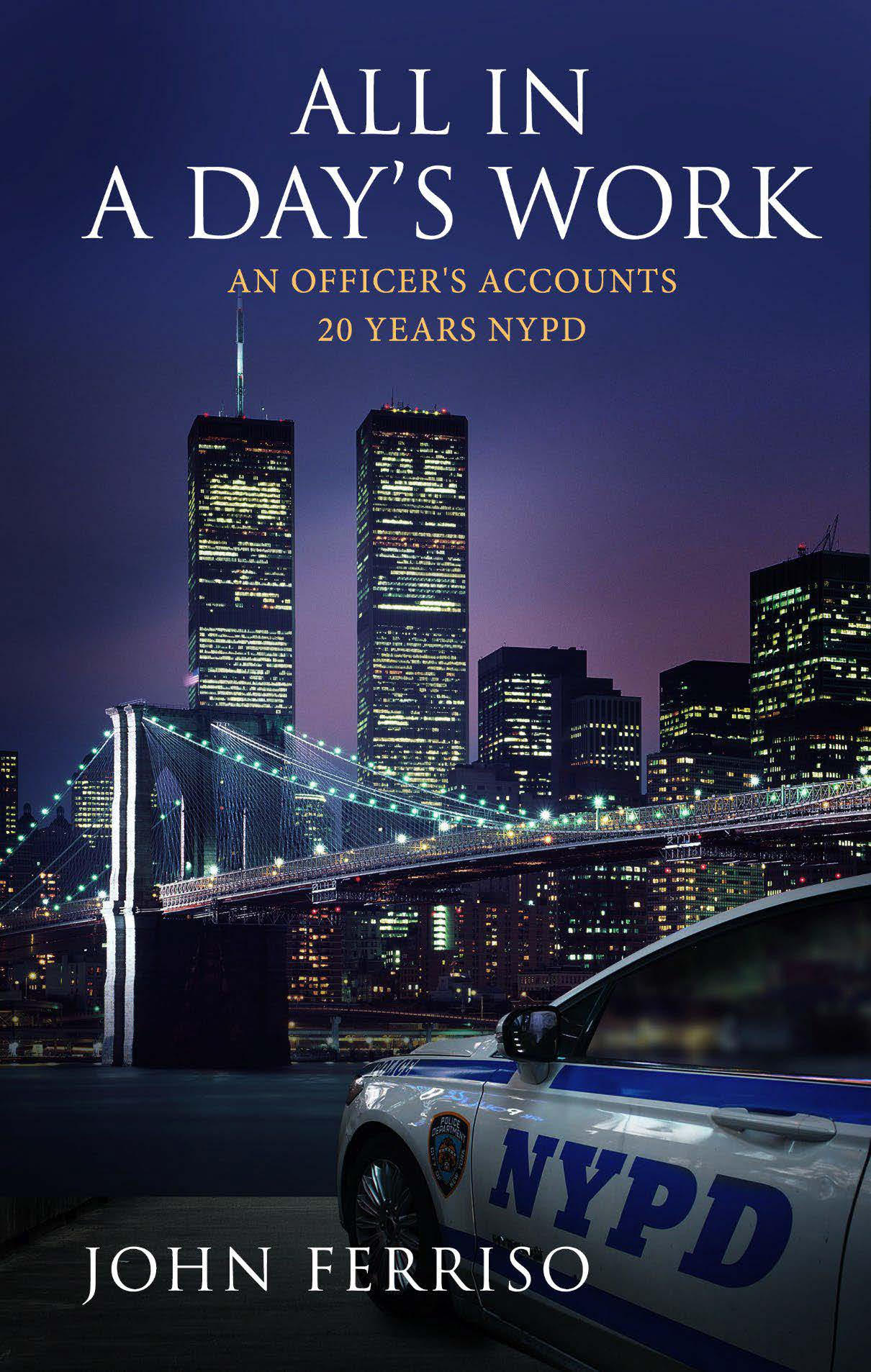
In 2023, it was time to take short stories and self-publish them. All in a day’s work: an officer’s accounts 20 Years NYPD. Soon after, I was a podcast guest in the USA, Australia, and England. I was now telling my stories to a broader audience, discussing my writing journey and the interesting cases I investigated.  

ALL IN A DAY’S WORK

When you are a New York City police officer you become a social worker, chauffeur, human relations consultant, and tour guide. You are expected to do all those tasks while stopping crime as it occurs, preventing crime, and keeping the peace in a city that never takes a break. Let’s not forget you get to do all this within a workday or tour as we call it.

These separate tasks come to you at random times, so going to work is like a roll of the dice. One moment, you are driving with your partner, talking about nonsense, and five minutes later, you are coming face to face with dangerous people who just committed a criminal act. The weight of these tasks can become overwhelming and mentally drain you if you allow it to happen. Many times, you do not have time to reflect on the day’s events. You just move on to the next crisis. Within days or a month, NYPD cops will get involved with and witness more toxic events than an average person will see in a lifetime. Active cops must navigate and work with their coworkers, supervisors, the public, and criminals. What people believe cops do daily regarding police work is often far from the truth.

You will find within my short stories what is occurring inside those moving police vehicles. What the city was like in the days after September 11, 2001. Take a close, in-depth look at the investigation within the NYPD detective squad room. Within the squad room, the pen can influence like a hammer, and a phone call can arrive like a hurricane. If you want the gritty, alarming, and sometimes comical truth behind police work, you have arrived at your destination.

buy link: https://a.co/d/gHVCzb7

I also began to network with authors regarding my law enforcement experience. I could advise other writers on how to place accurate and interesting police-related material into their stories. I could technically advise about the progression of the cases, how the reports are written, and even cop humor. Beyond storytelling and writing, giving back to the writing community is essential and will propel me in future endeavors.

I mainly write true crime because I lived it, which has always kept my interest.

John can be contacted at:

https://ferrisinvestigations.org/

John.Ferriso1970@gmail.com

www.linkedin.com/in/john-ferriso

Fictional Crime

thumb_IMG_1225_1024

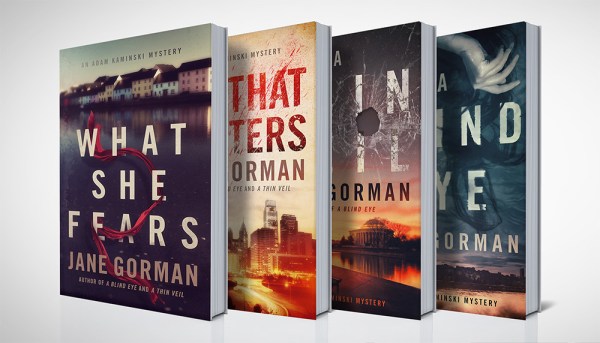
The Adam Kaminski Mystery Series are fiction. I base the stories on some true events — historical events, for example, or crimes I read about in the newspapers, or interactions I’ve had in the past with diplomats and law enforcement officers. But in the main, the stories originate in my head. No one was hurt in the making of these books.

No Animals Harmed

This past weekend, I was thrilled to once again join the Delaware Valley Chapter of the Sisters in Crime for a lecture by a local expert in crime and murder. Of the true variety.

I’m not usually a fan of true crime stories. I love reading about fictional murders, with fictional victims and fictional sleuths. Hearing about grisly murders that really took place, about a sick, twisted individual who really did kill innocents, is disturbing. Fascinating, yes, but disturbing.

IMG_3757

Our speaker this month was Sam Cox, an archaeologist at the University of Pennsylvania. Sam spoke to us about her involvement in the exhumation and identification of the remains of H. H. Holmes, commonly known as America’s first (known) serial killer.

Holmes is suspected of killing as many as 200 people. During the 1893 World’s Fair in Chicago, he ran a hotel just off-site that was later determined to have a lime pit and large incinerator in the basement — handy for getting rid of unwanted bodies.

Hearing Sam tell this story, I was hooked. Sam’s work was included in a recent series by the History Channel, American Ripper. Her team is featured in the final episode. I recommend it!

History Channel
I loved hearing her talk about the techniques they used to dig up his grave then identify the bones they found. She told us about what was actually proven in the case and what was still conjecture. She explained how the detectives at the time tracked him and the bodies he left in his wake as he ran.

As a writer, this lecture was invaluable as a source of ideas and information. We learned about investigative and exploratory techniques that law enforcement can use in identifying victims and killers. We got a glimpse behind the scenes.

As a reader, I’m intrigued by the personalities involved. The nonchalance of the serial killer, the determination of the detective who finally tracked him down.

That said, I don’t think I’ll become an avid reader of true crime stories. There’s something comforting about murder mysteries: the killer always gets caught, the hero always saves the day (well, not for the victims, but for those who survive).

I like the feeling that once you’re done, all is right with the world. And I try not to think too much about the true killers still lurking, out there, in the real world…

Adam-Kaminski-Mystery-Series

Learn more about Jane Gorman at JaneGorman.com or follow her on Facebook or Instagram.