

Researching the Mystery
By Tilia Klebenov Jacobs
Often you can tell when a writer’s research begins and ends with a keyboard search: telltale signs include incomplete knowledge and/or cliché-based assumptions, creating eye-roll moments in our readership—something it’s safe to say none of us wants to do. So when Professor Google falls down on the job, it’s time to fold up that laptop and do a different kind of investigating, one that involves people instead of pixels.
First, an example of what to avoid. Some years ago I was reading a novel with a scene set in MCI-Cedar Junction, a maximum-security prison in Massachusetts. Our protagonist steps inside and notes that the foyer smells like vomit, a sensory detail illustrating the degradation of the incarcerated.
Slight problem, however. I used to teach at that prison, and on precisely zero of the many occasions I’ve been there did the foyer smell like vomit. The only time it smelled of anything other than air was one day when an inmate was mopping the floor, at which point it smelled like Pine-Sol. That, combined with a variety of hilarious gaps in said author’s knowledge of prison security protocols, absolutely trumpeted the fact that he never bothered to visit the facility or even call. I have not picked up one of his books since.
I should add that he absolutely nailed his description of the exterior of the prison. In other words, he googled it, saw what the place looked like, and ended his investigation there.
Circumventing such blunders consists of several steps. First, find an expert. Second, contact them and politely ask for a few minutes of their time. If you are on the shy side, Step Three is, in the immortal words of Douglas Adams, “Don’t Panic.” The words “I’m a writer” convey more gravitas than you might expect, and the phrase “I’m writing a book with a character like you, and I want to be sure I get it right” is usually greeted with enthusiasm. Most people are delighted to share their expertise, especially if they belong to a profession or culture that is frequently misrepresented in popular media. On behalf of my books, I have interviewed prison guards, FBI agents, a Marine who served in Afghanistan, a parole officer, a rabbi, and more; and in almost every case, the interview went over time because we were enjoying ourselves so much.
My most recent book, Stealing Time (co-authored with Norman Birnbach), is set largely in 1980. While we wrote it, we had the very great pleasure of plumbing the expertise of John Barelli, former head of security at the Metropolitan Museum of Art in New York; and Jonathan Campbell, a Boston-based architect. In both cases, our question was this: how can our bad guys rob a museum—in 1980? We needed specific information about rooftops, scaffolding, and museum security in that era, and the internet was tired of our questions.
I discovered Mr. Barelli via his memoir, Stealing the Show: A History of Art and Crime in Six Thefts. It describes his tenure at the Met from 1978 to 2016, years that neatly overlapped the era of our book. I emailed him to ask for an interview. He replied in the affirmative, and he and Norman and I spent a delightful evening chatting about security arcana of the late twentieth century. Since my partner and I needed to insert one of our baddies into the museum, we asked how long it would have taken for someone to be hired as a security guard at that time. Were there extensive background checks? What about fingerprinting? Mr. Barelli laughed. “Back then, we had a saying,” he told us. “‘If it breathes, put a uniform on it.’”
Thus reassured, we wrote a scene in which our criminal is quickly hired to guard a hall full of precious gemstones. Our editor later urged us to change it, since he was confident the guards’ union would have prohibited such slipshod operations. But we had done our homework with an unimpeachable source, and were able to allay our editor’s concerns. The scene stayed put in all its scintillating historical accuracy.
The second expert, Jonathan Campbell, was easier to find because I went to high school with him. Once again, I needed very specific information for our baddies, whose plan involved climbing scaffolding in order to break into the museum; and once again, the internet failed to answer some basic questions, such as,
- Is this possible?
- How?
- What will our degenerates find on the way up?
During a delightful February afternoon, Jonathan led me cantering about the rooftops of Boston in search of verisimilitude. I learned that,

- Yes, it’s possible.
- But dangerous. Anyone seeking to climb scaffolding needs to adhere to the “three points of contact rule,” meaning that at all times one must have at least two hands and one foot, or two feet and one hand, in contact with the structure; unless, of course, one wants a very brief flying lesson.
- Roofs are messy. Based on my experience, our band of reprobates might reasonably be expected to find pigeon poop; ductwork for HVAC; plastic buckets full of rainwater and chains; and stray tools left behind by construction workers. All of this makes such areas difficult to navigate, which was bad for our baddies but good for us.
Factuality is not meant to set a reader’s pulse a-twitter; for that we have finely etched characters, snappy dialogue, and wicked plot twists. Instead, it is a load-bearing wall: we may not be aware of its function, but it holds our disbelief aloft. Unconventional kinds of research can be fantastically rewarding, and they give our work both solidity and sparkle that come from no place else.
STEALING TIME

Good news for everyone who loved Back to the Future, The Time Traveler’s Wife, and Time and Again: the newest page-turner is Stealing Time, a smart, funny caper that will steal your heart.
When there’s no time left, you have to steal it!
New York, 2020. Tori’s world is falling apart. Between the pandemic and her parents’ divorce, what else could go wrong?
Plenty! Like discovering that a jewelry heist forty years ago sent her grandfather to jail and destroyed her family.
New York, 1980. Bobby’s life is pretty great—until a strange girl shows up in his apartment claiming to be a visitor from the future. Specifically, his future, which apparently stinks. Oh, and did she mention she’s his daughter?
Soon Bobby and Tori have joined forces to save the mystical gemstone at the heart of all their troubles. But a gang of thugs wants it too, and they’re not about to let a couple of teenagers get in their way.
This time-travel jewelry heist will keep you guessing till the end!


Buy links: https://www.amazon.com/Stealing-Time-Tilia-Jacobs-ebook/dp/B0DFRC8CJH
Bookshop dot org (paperback):
Bookshop dot org (ebook):
Barnes and Noble:
https://www.barnesandnoble.com/w/stealing-time-tilia-klebenov-jacobs/1147240874?ean=2940181321410

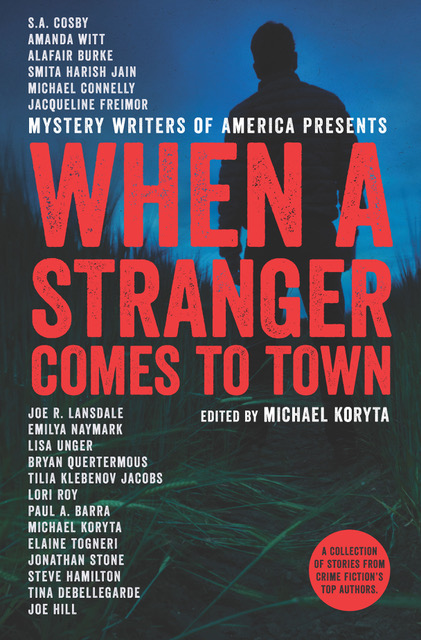
Tilia Klebenov Jacobs is a bestselling novelist and short story writer. She is vice president of Mystery Writers of America-New England, and is proud to say that HarperCollins calls her one of “crime fiction’s top authors.” Tilia has taught middle school, high school, and college, as well as classes for inmates in Massachusetts state prisons. She lives near Boston with her husband, two children, and pleasantly neurotic standard poodle.
The book has its own website: https://stealingtime.net
Tilia on FB: https://www.facebook.com
Tilia’s website: http://www.tiliaklebenovjacobs.com

Norman Birnbach is an award-winning writer who has published over a hundred short stories and articles. His work has appeared in The New York Times, The New York Times Magazine, The Wall St. Journal, Chicago Tribune, Miami Herald, San Francisco Chronicle, McSweeney’s Internet Tendency, New York Magazine, The Magazine of Fantasy & Science Fiction, and Militant Grammarian. He has also studied gemology at the Gemological Institute of America. Stealing Time is his debut novel. A native New Yorker, he lives outside Boston with his wife, three children, and dog, Taxi.
Norman’s website: https://normanbirnbach.weebly.com
FB: https://www.facebook.com/nbirnbach
Insta: https://www.instagram.com/normanbirnbach/
Insta: https://www.instagram.com/stealing_time_book/
Tilia and Norman met when they were students at Oberlin College.


 Ladies of Mystery
You must be logged in to post a comment.