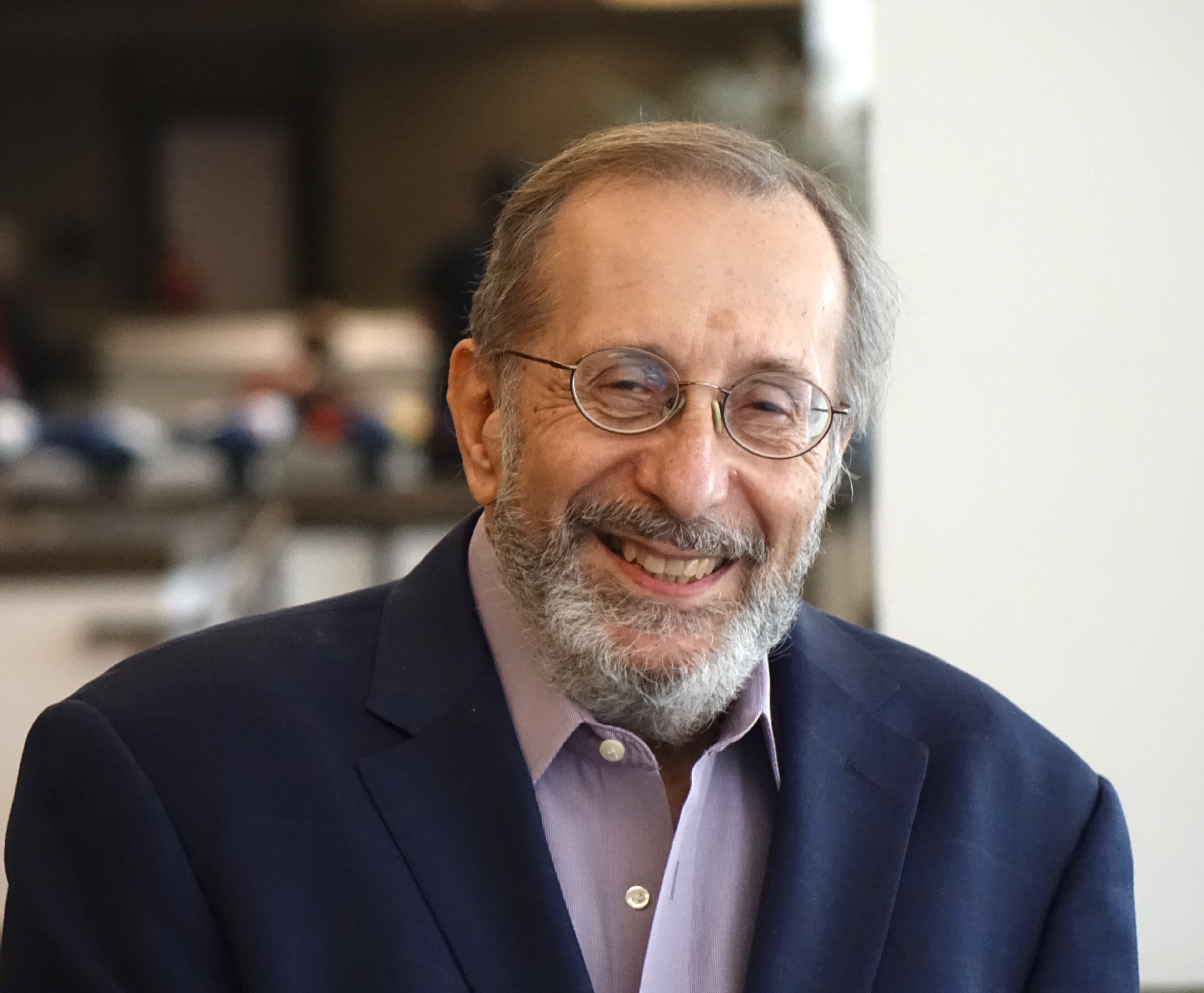
Guest Blogger ~ Douglas J. Wood

Our Love Affair with Villains and Killers

As a novelist who writes criminal procedurals (a genre name I hate), evil characters are central to my plots.  The more evil they are, the more they capture the fascination of readers.  It’s not that readers want the killers to win, but they do love the chase and climax when the criminals are caught and face their fate.

I like to call my writing style “plausible fiction”.  While the stories are a product of my imagination, I want readers to walk away with the belief that while my novels are fictional, the stories I weave are believable.  Plausible.  Only then have I successfully delivered a compelling tale to my fans that hopefully puts a few chills down their spines. 

I try to achieve that result through thorough research, including conversations with some of the vilest people one could ever meet.  I’m often amazed how open such people will open up to me.  Early in my writing career, I imagined that if I told a stranger that I was a novelist and would like to talk to them, they’d suggest I find the door.  Or worse.  But the exact opposite occurs.  People want to talk.  They want to tell their stories.  I strive to make sure my readers can get into the criminal mind and find themselves conflicted with their own thoughts on right and wrong.  So, I talk to both criminals and the people who protect us from them.  I’m not trying to write morality plays but I want to challenge readers with a reality that can often be unsettling.

Terrorists and serial killers, always major characters in my books, are unworthy of our sympathy.  They are psychopaths to their core.  They have no sense of right or wrong.  Yet they could be your neighbor.  Someone you know who seems to act as sanely as anyone else.  Most are not the scary characters you see on television or in movies.  They don’t have dispositions that openly reveal their ill intent.  Indeed, they are among us every day.  As FBI statistics and supporting studies by non-partisan organizations show, at any given time there could be as many as fifty active serial killers on the prowl.  There are thousands of unsolved murders, and experts say many of them are collections of victims slain by serial killers who were never caught. 

Yet in our day-to-day lives, we should not be frightened.  The chance of a serial killer lurking in your hometown is slim.  You probably have a better chance of being hit by lightning than encountering  one of these psychopaths.  Nonetheless, we remain captivated by their stories, and it is that fascination that makes readers crave criminal procedurals. 

Of course, we need our heroes, too.  Someone needs to counter evil and stand for justice.  And at times, they need to skirt the edge of propriety to catch the targets of their search.  That happens every day.  Who can blame them?  If they can stop a killer, we’re all safer.  But what we often miss is that our justice system has checks and balances that are important even when they seem to favor criminals.  So, in my writing, I try to keep the “bad cops” well balanced against the “good cops.”  That conflict is central to the plot in The Shakespeare Killer where the FBI profiler is repeatedly stumped by a mysterious serial killer murdering criminal defense lawyers.

One thing that has beguiled me, however, is the choice people make when I offer to use their name as a person in one of my books.  Years ago, I used to raffle off the opportunity to choose whether you’d like to be a hero or a villain  The proceeds were donated to charity.  Or I’d simply ask someone I wanted to memorialize if they’d like me to use their name.  Something like an homage.  Every time, they chose to be a villain.  Not once has anyone said they want to be a hero.  In fact, when I’ve chosen to make them heroes or victims, they’re disappointed.  They’d rather be an outlaw.  A killer.  A psychopath.  And when I tell them to reconsider since it was likely I’d kill them off in a particularly gruesome manner, to a person, they’d tell me to have at them.  The worse their death, the better.  I’ve vaporized characters in bombings, hanged them in executions, riddled them with bullets, or made them suffer grotesque endings.  The response?  Sheer glee from those who face that fate.

So, I write plausible fiction that teeters close to reality and when I approach a person I want to include in the book, they choose to be killed-off in the most despicable way possible.  Now ask yourself and be honest.  If you’re given a choice to have your name as a character in a fictional thriller about a serial killer or terrorist, who do you want to be? The hero or the villain?  And, most importantly, how would you like to be killed?

The Shakespeare Killer
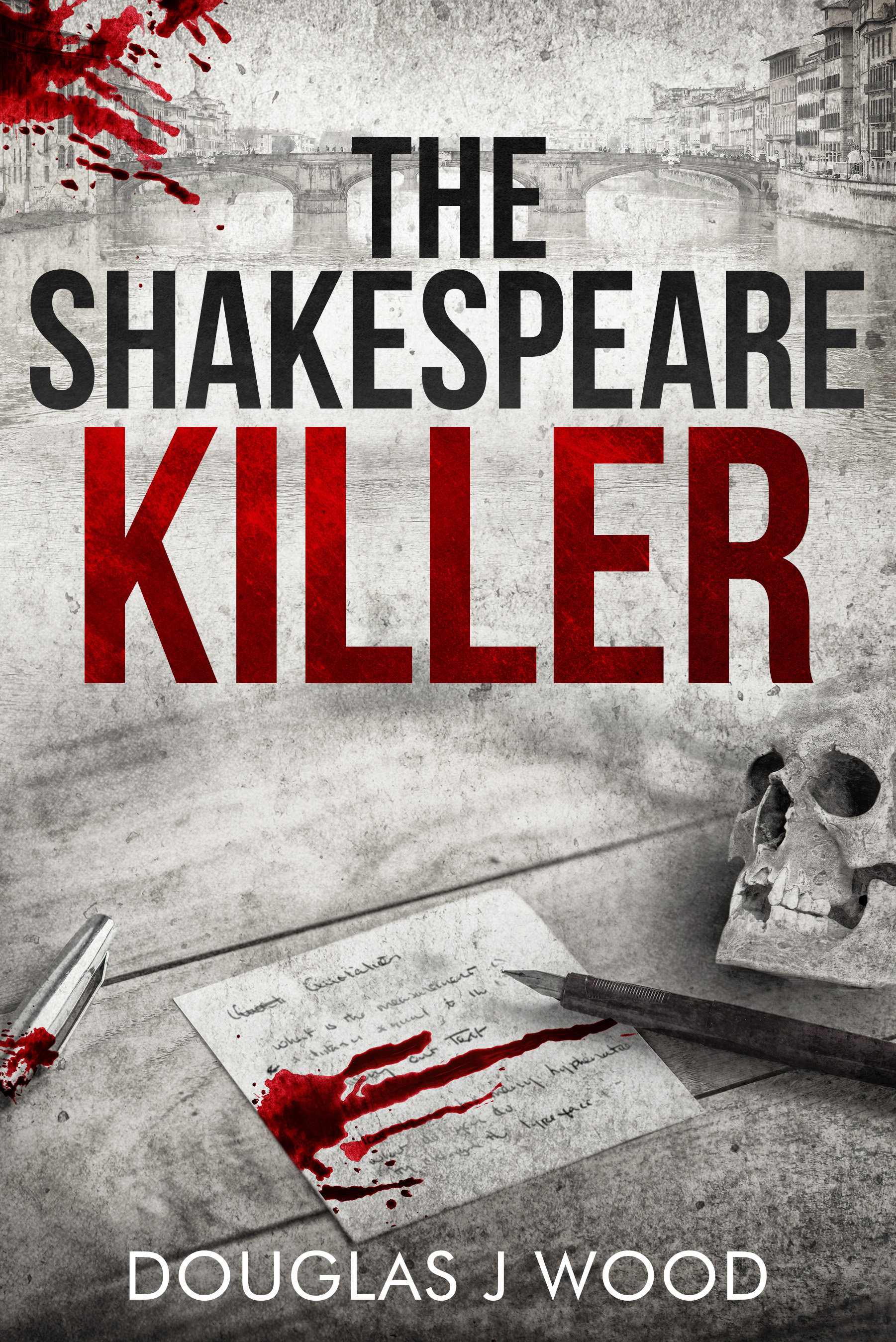
The first victim is Jacob Schneider– a prominent criminal defense attorney. His death is ruled a suicide by authorities, just like all the other defense attorneys who have died recently. However, when Special Agent Chris DiMeglio gets on the case, he receives a tip from a local reporter who suspects these deaths are connected. Between the victim profiles, the suicide notes, and the unusual methods of death, it soon becomes obvious the FBI has yet another serial killer on their hands.

The Shakespeare Killer is a new mystery from Douglas J. Wood featuring Special Agent Chris DiMeglio. This case is particularly sadistic and soon DeMiglio starts receiving texts referencing Shakespearean characters and a clear motive to “kill all the lawyers.” With the lives of so many at stake, DiMeglio is forced to play a heart-pounding, cat and mouse game to find the culprit and stop the killing.

Amazon buy linkhttps://www.amazon.com/Shakespeare-Killer-Douglas-J-Wood/dp/B0C4HLQ82S/

Douglas J. Wood is the author of multiple award-winning books, both fiction and non-fiction. Including his Samantha Harrison series; his memoir, Asshole Attorney: Memories, Musings, and Missteps in A 40-Year Career (2019 Independent Press Award for Best Humor and Wit); Dark Data: Control, Alt, Delete, a thriller about cyberwar and financial terrorism (2020 Independent Press Award for Best Political Thriller); critically acclaimed Dragon on the Far Side of the Moon (2021); and Blood on the Bayou, a police procedural about a serial killer in New Orleans (2023 Independent Press Award Distinguished Favorite in Crime Fiction). The Shakespeare Killer is his seventh novel and a sequel to Blood on the Bayou.

As Senior Counsel at the law firm of Reed Smith LLP, he gained over 45 years of experience practicing entertainment and media law, often imparting knowledge from his career in his books. Listed among the leading global specialists in advertising law in Chambers, the Legal 500, The Best Lawyers in America, and Super Lawyers, he is known and respected worldwide and is a member of the Legal 500 Hall of Fame. He received his BA from the University of Rhode Island, his Juris Doctor from the Franklin Pierce Law Center, a Masters of Law in Trade Regulation from New York University School of Law, and an Honorary Doctor of Laws from the University of New Hampshire.

Doug currently lives in North Carolina with his wife of 49 years, Carol Ann. They are blessed with three grown children and four adorable grandchildren.

Author websitehttps://douglasjwood.com/

Instagramhttps://www.instagram.com/douglasjwoodauthor

Facebookhttps://www.facebook.com/douglaswoodauthor

Twitterhttps://twitter.com/djwood1976

Guest Blogger ~ John DeDakis

FICTIONALIZING PERSONAL EXPERIENCE

On the night of December 20, 1959, I was sitting in the left front seat of the Vista-Dome car of the Burlington Zephyr passenger train as it hurtled through northern Illinois on its way from Chicago toward my hometown of La Crosse, Wisconsin. 

The engineer would later tell a coroner’s jury that he was going 90 miles an hour (legal at the time) as we rounded a gentle curve at the tiny town of Chadwick.

From my vantage point in the darkened dome car near the front of the train, I could see the locomotive’s searchlight slice through the darkness, sweeping the tracks that stretched ahead of us.  Suddenly, off to my left, I saw a car speeding toward a crossing we were approaching.  The car looked like a 1949 Chevy, distinctive because of its sloped rear end.  A split second later, I lost sight of the car as it went in front of the train.

I heard a bang, the train shuddered, and debris rained onto the Plexiglas dome, cracking the window I’d been peering through. I ducked, then scrambled down the narrow stairway to the dome car’s lower level where I told my dad and the conductor what I’d just witnessed. 

I was nine years old.

The crash killed three people including a boy about my age.

Fast forward to 1994. I was doing a writing exercise recounting a personal experience—the one you’ve just read.  As I wrote, I remembered a radio news report about a car-train collision in which an infant survived.  I began wondering, “What if an infant survived the crash I witnessed and grew up wondering about her past?” 

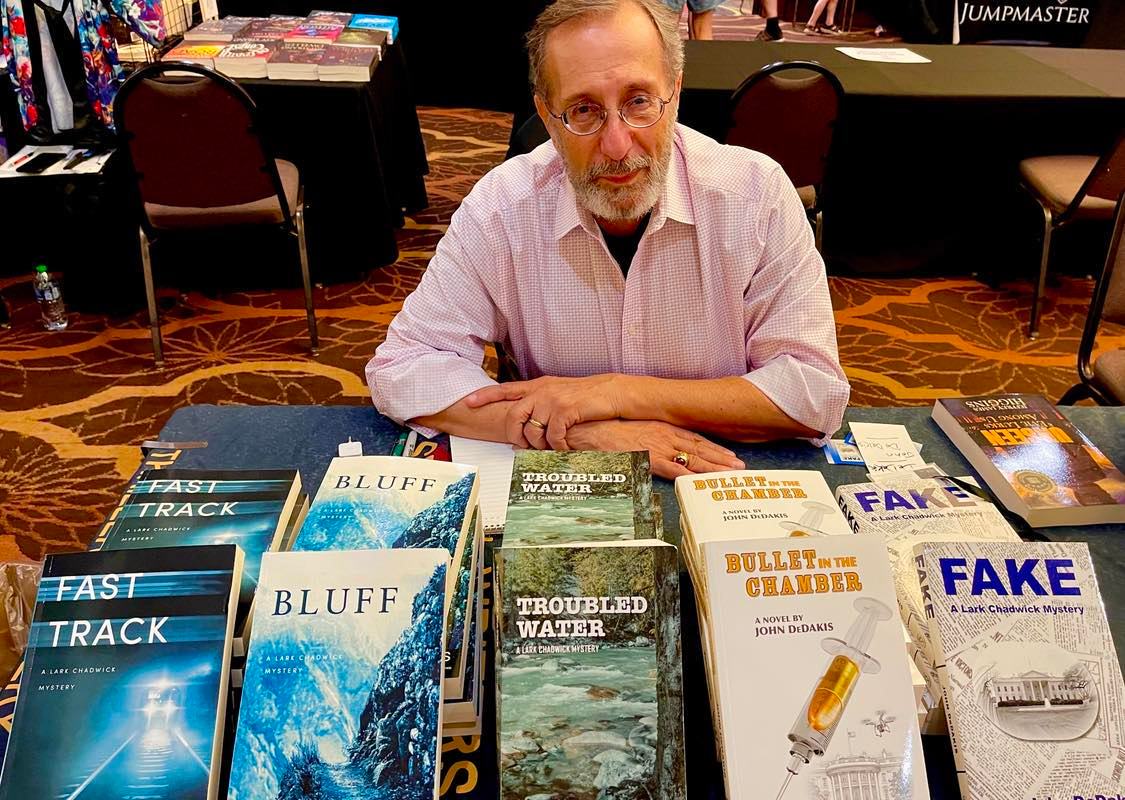
That idea turned into my first mystery-suspense novel Fast Track.

The novel isn’t about the accident.  If anything, it’s an example of how a personal experience can be the seed of an idea that can blossom into something else—something redeeming. 

Fast Track begins with my 25-year-old heroine vexed because she doesn’t know what to do with her life. She discovers the body of the aunt who raised her from infancy—a victim of carbon monoxide poisoning. (This is an echo of my sister’s suicide in 1980, but that’s another story for another time.) That trauma begins a quest to unlock secrets kept hidden for a quarter century when my protagonist’s parents died in a mysterious car-train collision.

The Fast Track manuscript went through 14 major revisions over 10 years before I found my current agent, Barbara Casey, (the 39th agent I queried).  During that process, I drew on other personal experiences to add texture to a story that includes politics, journalism, and mentoring relationships.

Fast Track is the first novel in a series that’s now five books and counting. But it all started more than 63 years ago in Chadwick, Illinois.  So, I suppose it’s fitting that I named my heroine Lark Chadwick.

Orphaned as an infant, sexually assaulted as a naïve college student, strong-willed, impulsive Lark Chadwick is vexed and trying to figure out what to do with her mixed-up life. When she discovers the body of the aunt who raised her, Lark goes on a search for answers.

She is stunned to learn from a 25-year-old newspaper clipping that she’s the “miracle baby” who survived a suspicious car accident that killed her parents at a rural railroad crossing in southern Wisconsin. Lark convinces Lionel Stone, the crusty Pulitzer-Prize winning editor, to let her do a follow-up investigation of the crash. Two of her sources are the sheriff and the town’s mayor, they’re running against each other for Congress, the election is a week away, and both men have a secret that will unravel the mystery.

Award-winning novelist, writing coach, and manuscript editor John DeDakis is a former editor on CNN’s “The Situation Room with Wolf Blitzer.” DeDakis is the author of five mystery-suspense-thriller novels. In his most recent novel, FAKE, protagonist Lark Chadwick is a White House correspondent dealing with “fake news” in the era of #MeToo. DeDakis, a former White House correspondent, regularly leads writing workshops at literary centers and writers’ conferences. He is also the host of the video podcast “One-to-One with John DeDakis” on YouTube, Facebook, and LinkedIn. Originally from La Crosse, Wisconsin, DeDakis now lives with his wife Cindy in Baltimore, Maryland.

Website: www.johndedakis.com

Settings and Seasons

This morning when I went out to walk the dog, the temperature was 12 degrees. When the breeze came along, it cut. But it’s also dry. When I think about winter I prefer cold and dry to warmer and wet (think snow and ice).

During my walk I often compose sentences to add to whatever I’m working on when I get back to the house, or just because I feel like writing a sentence in my head. This morning the cold held my attention, and I began thinking about how this degree of cold would affect an amateur sleuth hot on someone’s trail. Snowy and cold would make the situation even worse.

Since I live in New England, famous for its winters, most of my mysteries, long or short, are set in pleasant, or at least tolerable, weather—in spring, summer, or fall. Winter poses challenges that my characters don’t have to face, challenges that could change the plot, the direction of the story, the success of the sleuth and the authorities. Perhaps the sleuth has only a few minutes to reach a location to rescue someone, but it’s snowing, the roads are icy, the stop lights not working because of a power failure, the streets impassable in some places. The weather certainly ratchets up the suspense. (Sounds like my drive home from work years ago.)

In a city the sleuth could travel faster and more safely by subway, but at least in my area (Boston), that means a different kind of problem—subway car breakdowns. (To be fair, in Boston subway cars break down in every season.) Or, this could be the start of a story—the subway car stuck in a tunnel. When the car starts up again and makes it to the station, the riders trip over a dead body blocking the exit. Is the killer still on the car, or did that person somehow get off and escape through the tunnel? Will he or she survive in subzero weather underground?

I will admit that when I go about choosing the setting in a warmish season, I’m really thinking about myself—how easy it is to get around, to get things done, to get anywhere I want to go. Winter is a chore for me. And on cold days, though I don’t actually mind them, having grown up in New England, I’m aware of how much effort it takes to make the transition to outdoors—scarf, hat, coat, boots or heavy shoes, mittens, sometimes even a hand warmer for a long walk. But now that I’ve thought up a number of scenarios relying on cold weather, perhaps I’ll make a change.

The weather is going to remain well below freezing for the next day or two, and then warm up. That gives me plenty of time to work out the basic plot of a story set in bitter cold weather, with all the worries and challenges that come with that setting. And I get to write the story while I’m warm inside.

As we head into Christmas, I hope all of you reading this are warm inside with your families and friends, good food, and a pet if you have one, enjoying the season and the freedom to write whatever you want.

Guest Blogger- Reggi Allder

Hi Ladies of Mystery, thank you for having me.

I write in two different genres, suspense and contemporary romance. Years ago, I found an old romantic suspense novel in a friend’s basement and read it. I was hooked and thought what could be more exciting than combining the thrill of falling in love while wondering if you will solve a mystery and stay alive. So, I wrote my first romantic suspense, Shattered Rules. My current suspense is Dangerous Web

After spending a great deal of time with the villains in my suspense books, I needed a change of pace and decided to write a contemporary romance and so, Her Country Heart a Sierra Creek Novel was written. I now look forward to spending time in my imaginary small-town of Sierra Creek, California where strong men and determined women intersect. If you love cowboys and independent women check out Her Country Heart.

I’m a pantser rather than a plotter, though I don’t work backwards, I often know the end of a book before the beginning. Whether I’m writing a suspense or a small-town romance, I begin the first chapter even though not all the characters and the plot twist are understood. Still, I have visualized the ending, sometimes writing the last scene first.

In both my suspense and contemporary novels, the characters have difficulties to overcome. The males are strong but may be a wounded hero. The women are determined to make changes in their lives in order to manage their future. All my characters must cope with their passion as each fight to discover a hidden strength and work their way toward a lifelong goal.

My Suspense Series: Dangerous Web, coming next Dangerous Money and Dangerous Denial.

Dangerous Web

A web of intrigue brings the reader into the world of black ops, mystery, and desire.

Emma lives a quiet life. When the past returns to threaten her present, is the key to her safety the man offering protection? Does he have secrets that will put her in greater danger?

Webb lives undercover and never lets anyone get too close. However, in his current perilous situation, Emma is the only one he can trust. Still, if he accepts her aid, he might be putting her in jeopardy. Can he justify involving her? Will he be able to manage his growing desire for Emma? 5.0 out of 5 stars Amazon  A non-stop suspense from the first chapter until the end!

Buy Link: https://www.amazon.com/gp/product/B07XXNBDXV

Reggi studied creative writing and screen writing at University of California at Los Angeles (UCLA) and was a past chapter president of Romance Writers of America (RWA).

When she is not writing, she enjoys viewing romantic movies with her hubby and searching antique shops for vintage tea cups and saucers. Her dogs make sure she gets exercise by going on long walks with them.

She enjoys hearing from readers. Follow her on Bookbub, Facebook, Goodreads, Twitter, allauthor.com