Fingerprinting by Paty Jager

canstockphoto17652788My current work in progress has been interesting and fun. I’ve had numerous conversations with forensic and law enforcement employees about fingerprints.

While the fingerprints on an object doesn’t help find the killer in my book, the illusion they are important draws the reader into a speculation of what-if and hopefully lets an important piece of the puzzle become a throw-away thought.

What I discovered while asking questions about how fingerprints are stored and who might have access to the fingerprints came from a variety of people and, not surprisingly, they all had a bit different take on it all.  Which led me to believe, I could do what I wanted in discovering who had their hands on the weapon. 😉

When I looked up fingerprinting, I discovered there are many jobs where fingerprints are required.  Medical, educational, and of course law enforcement. But also, companies that contract government work.

What I wanted to know dealt with my medical examiner, a local doctor given the honorary title and honor of pronouncing people dead, and a person who came from another country but had gained U.S. citizenship thirty years ago. Would they have fingerprints in “the system”? The answers were varied on the M.E.. Yes, most would have had their prints taken, but they wouldn’t be held in a local police database or AFIS (Automated Fingerprint Identification System). They also said my new citizen would not have had fingerprints taken unless arrested or had a job that required it, and they would only be in the system if arrested.

So millions of people have their prints taken for jobs. What happens to those prints?

According to the law enforcement people I contacted, the employees either send the prints to a local print collection business or they are sent to AFIS. If the prints come up clean, the ten-print cards are then either put in the employees file or trashed. They don’t go into a national system.

So, if you haven’t done a crime and you are fingerprinted, you have nothing to worry about. And your prints shouldn’t wind up in any databases. But what if you had a crooked person running one of the databases, and they did keep your prints to use when committing crimes????

That just may be another book!
higheagle-book-banner
photo source: © Can Stock Photo / peshkova
 

Hidden Tracks

Amber in tree final I have files with titles such as “Accidental Shooting Settlements” and “Art Authentication” as well as “Pricing Art” and “Parrot Questions.” I finally deleted the one on 1989 Aerostar vans. The struggling old van made it through Shaman’s Blues and Snake Face and retired, with no one commenting on how I’d handled its various mechanical problems. That’s how it should be. I want to hide my tracks. Readers usually shouldn’t be paying attention to my research, but since this is a blog about writing, I’m going to go backstage and show the process.

Readers notice all the scholarly articles in The Calling. This book may look as though I worked harder on research compared to the rest, but in fact it was the easiest. I didn’t venture outside my areas of expertise, and I set it in places I knew well.When I lived in Norfolk, I’d visited a number of alternative healers there and several psychics in Virginia Beach—out of pure curiosity, with no idea they would end up as background for a book.  An important character in this story is a professor in health sciences and so am I. To find the material on alternative medicine and research in the field, all I had to do was relocate the right articles. I knew where they’d been published and I remembered the content.

More often, I don’t realize how much I’ll need to know about a subject until I’m into the first draft of a book. I immediately start keeping research lists, things to look up or ask experts about, and I dig into these questions as I go along.

When the character of Jamie showed up in Shaman’s Blues, I read books about current Australian Aboriginal culture in order to understand his roots. I studied Aussie slang and was blessed with an Australian critique partner who could tell if I got it right. And then there’s his van. It’s close to being a character in the next book, Snake Face. I took notes during Car Talk. I looked up timing belts and timing chains, I looked up the last year that these vans were made with carburetors, and I looked at pictures of their engine parts. A musician who had toured with a band read the manuscript to make sure I portrayed life on the road correctly. And I consulted a couple of lawyers about a major plot point. I double-checked some details of the medical treatments and outcomes for a particular injury. And I searched out the name of a Greek drinking dance. This is, I think, typical in the creation of a book, more typical than the ease with which I could pull together the seemingly obscure scholarship in The Calling.

For Soul Loss I reread some books on neo-shamanism to refresh my memory of a strange workshop I once attended as part of a conference, and I researched Tarot cards and Cochiti Pueblo beliefs about the dead. I also had to find out what was involved in setting up a festival. For Ghost Sickness I had to study up on parrots, since several play roles in the story, and also looked into rodeo injuries, and many matters related to art. Even though I’d set the story in familiar places, I revisited the Mescalero Apache reservation and took a careful, observant walk through Truth or Consequences to make doubly sure that certain events could happen as I wrote them. I could go on and on. It’s amazing what I discover that don’t know—or what I’ve forgotten that I thought I knew. But that list with the heading “Look Up” eventually gets crossed off and ideally readers have no idea I had to work so hard on that van. All they need to care about is the character driving it.

Location, Location: Using Real Places in Fiction

Amber in tree finalSign_-_New_Mexico_-_Truth_Or_Consequences_-_Exit_(4892943477)

When I read books set in cities I know well, I enjoy recognizing familiar locations. It makes me feel like I’ve set foot inside the story. There are good reasons, however, to invent addresses, businesses, even entire towns. The usual rule seems to be that if you say something bad about a place or set a disturbing event in it, make it fictitious. In Sacred Clowns, Tony Hillerman gave New Mexico an entire new pueblo, the fictitious Tano Pueblo, because he had a murder take place during a ceremony. He used real reservations for his other books. Every city, town and reservation has its problems, so it’s not maligning the entire place to write about a crime there, but he felt that the particular one in Sacred Clowns would be objectionable. He included spiritual ceremonies in a couple of other books, but not as crime settings, and only shared what was open for non-tribal members to know. Based on Hillerman’s wisdom, I’m setting a number of scenes in my work in progress at a Mescalero Apache ceremony, but the misdeeds take place in private homes or in other towns.

In my first book, The Calling, I “invented” two entire towns, even though they are intimately based on real places, because my protagonist doesn’t like living there. (I had fun coming up with the name Cauwetska. I looked up words in the Meherrin language that would make good place names, since many Southern towns’ names come from local Indian words.) I actually loved the little town that I turned into Tylerton, but the way its fictitious residents treat Mae wouldn’t reflect well on it. I invented Coastal Virginia University, too, because I wouldn’t want to attribute a professor like Charlie Tann to any real college.

I’ve sometimes invented houses or businesses because I needed specific architecture to suit the plot rather than because I was avoiding insulting anyone, but in certain cases real locations are the best.

How could I imagine anything as remarkable as Sparky’s Barbecue and Espresso in Hatch, New Mexico? It has crazy local color and live music, and I needed a setting where my protagonist encounters two musicians in a key event that ties three plot lines together in Soul Loss. The eccentricity of Sparky’s décor struck me as a perfect background to frame one of the characters. The establishment’s owner, who knows me as a regular Sunday afternoon blues fan, was happy to let me set a scene there.

In my work in progress (Ghost Sickness, book five in the Mae Martin Series) I set several scenes in Truth or Consequences’ popular coffee shop, Passion Pie Café, with the owner’s enthusiastic permission to employ a character as a barista there as well as to have a little drama take place during the busy breakfast hours. She even gave me a great idea for that scene. I needed Passion Pie because of their wonderful local artist table tops. The mystery revolves around an artist with a secret, and my plot required that his work grace one of those tables. Rio Bravo Fine Art’s owner also let me set scenes there and allowed me to have a fictitious artist exhibit in his gallery. One of T or C’s best-known artists, Delmas Howe, gave me permission to use one of his paintings in the story. It’s great having my New Mexico town come to life in this book.

I had to give Santa Fe a new exotic bird store, though. The owner of Feathered Friends of Santa Fe helped me with my research, and we agreed that I should invent some fictitious competition for her shop, a new and less well-run parrot store, because, well, something happens there. I can’t say what it is. But it involves parrots, two pueblo potters, an Apache cowboy and a struggling photographer, and something illegal. Stay tuned. Ghost Sickness will be released this summer.

Meanwhile, if you’re curious to get started on a mystery series without murders, you can go to Northeastern North Carolina and Norfolk, Virginia in The Calling, Santa Fe and Truth or Consequences in Shaman’s Blues, on a road trip across the country in Snake Face, and back to Santa Fe and T or C (and Hatch) in Soul Loss. Just for fun: Mae and Hubert’s house in Tylerton, Bernadette’s tiny Norfolk apartment, and Mae’s pea-soup-green converted trailer in T or C are all places I’ve lived in.

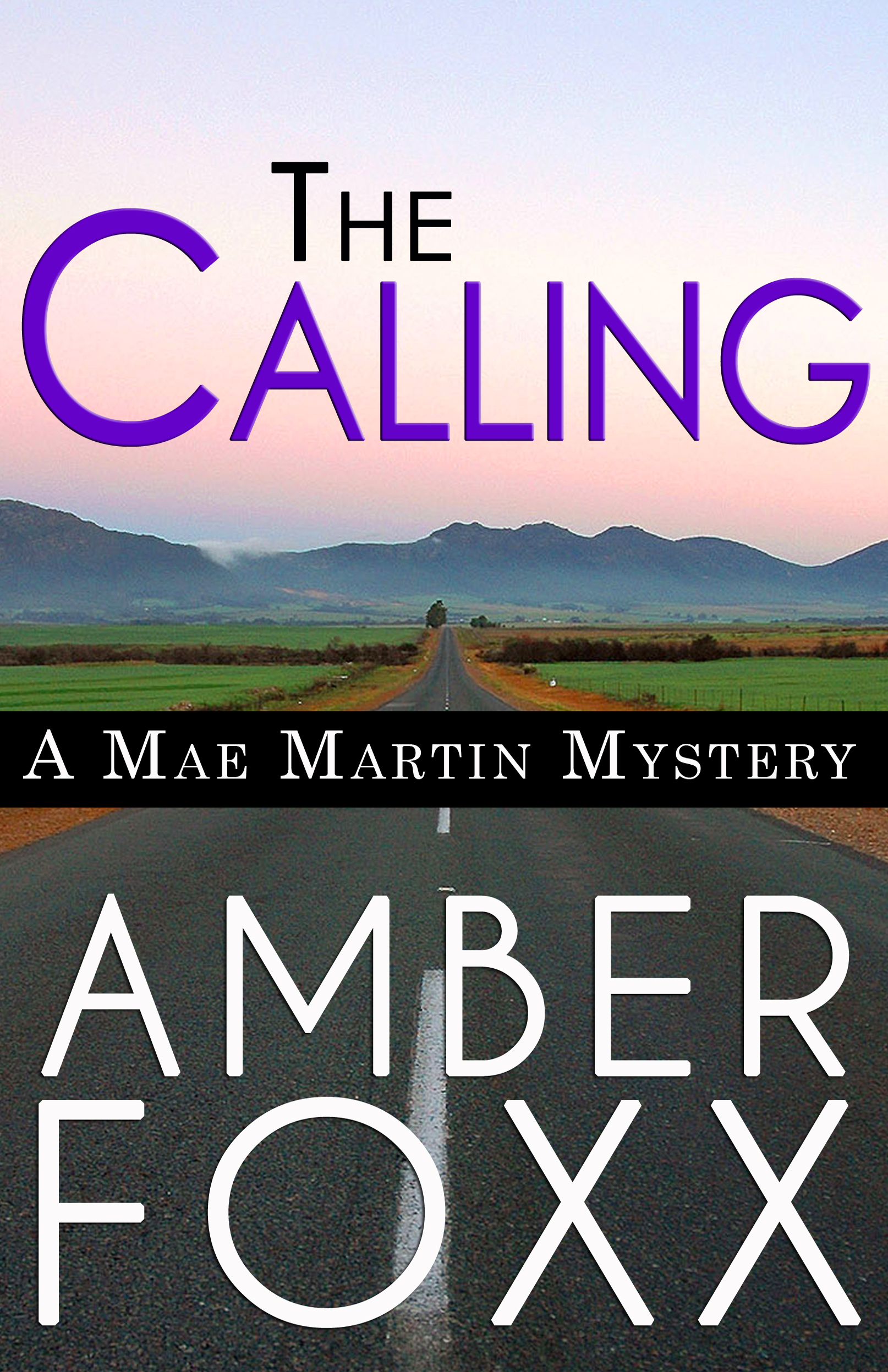
The Calling is on sale for 99 cents through this weekend on all e-book retail sites.callingebooknew

Barnes and Noble     Kobo         Amazon     iTunes Bookstore      Page Foundry

Researching a Mystery by Paty Jager

SH Mug Art (2)

I’m not a forensic coroner or a lawyer or even a law enforcer. I’m the wife of a rancher and I write murder mystery.

As I write this next book in my Shandra Higheagle Mystery Series I’ve come across questions that have required answers by professionals. When I start a book I know how the victim will die and where. But I ultimately need to know what their injuries would look like say if they fall off a cliff or are stabbed with a blunt object or shot at close range with a small caliber gun.

These are all things coroners have seen and can tell me. But how do I get a coroner on speed-dial or in my case speed e-mail? I’m part of a yahoo loop that is filled with every kind of occupation a mystery or murder writer might need expertise about. The yahoo loop is crimescenewriter@yahoogroups.com

That’s how I connected with a coroner who not only answered my question I put on the loop but also emailed back and forth with me as I asked more questions and what-if’s. She has lots of knowledge and being a budding writer is willing to help out fellow writers.

Writing the opening and how the victim is killed and what is discovered went well, knowing I had the correct information and knowledge. Then I brought in some secondary characters and a sub-plot. For the sub-plot I needed some legal information. I turned to my niece who is a para-legal and what she couldn’t answer she knew where to send me to find the information. After my niece and I discussed the issue I wanted brought up in my book and how I wanted it dealt with, she suggested I contact a law enforcement officer.  I happen to have one in the family. 😉

I sent off an email explaining what I wanted to do, how would it be handled, and after some back and forth ,that element of the sub-plot was worked out.

Writing mystery books is my favorite writing experience. Not only do I have to puzzle out a mystery that will keep the reader thinking, I have to make sure the forensics and laws will work in the story and enhance the overall realness of the crime and the killer.

Have you read books where you could tell the writer hadn’t researched the laws or forensics? Did it bother you while reading the book or is that something that doesn’t bother you?

~*~

Award-winning author Paty Jager and her husband raise alfalfa hay in rural eastern Oregon. She not only writes the western lifestyle, she lives it. All Paty’s work has Western or Native American elements in them along with hints of humor and engaging characters. Her penchant for research takes her on side trips that eventually turn into yet another story.

You can learn more about Paty at:

her blog; Writing into the Sunset

her website; http://www.patyjager.net