Pesky little thing called research.

When I learned about an event that is held every year in the area where I set my Gabriel Hawke novels, I decided I would write a book around that event. How hard could it be to have my character, who is a Fish and Wildlife State Trooper, become involved with finding a person or a killer during a sled dog race competition?

Well… Let me tell you, now that I’ve been digging into the logistics, the multitude of volunteers, the less than 60 hours for the total of the 200 mile race, and that doesn’t even count the weather conditions, I’m starting to wonder if this was a good idea.
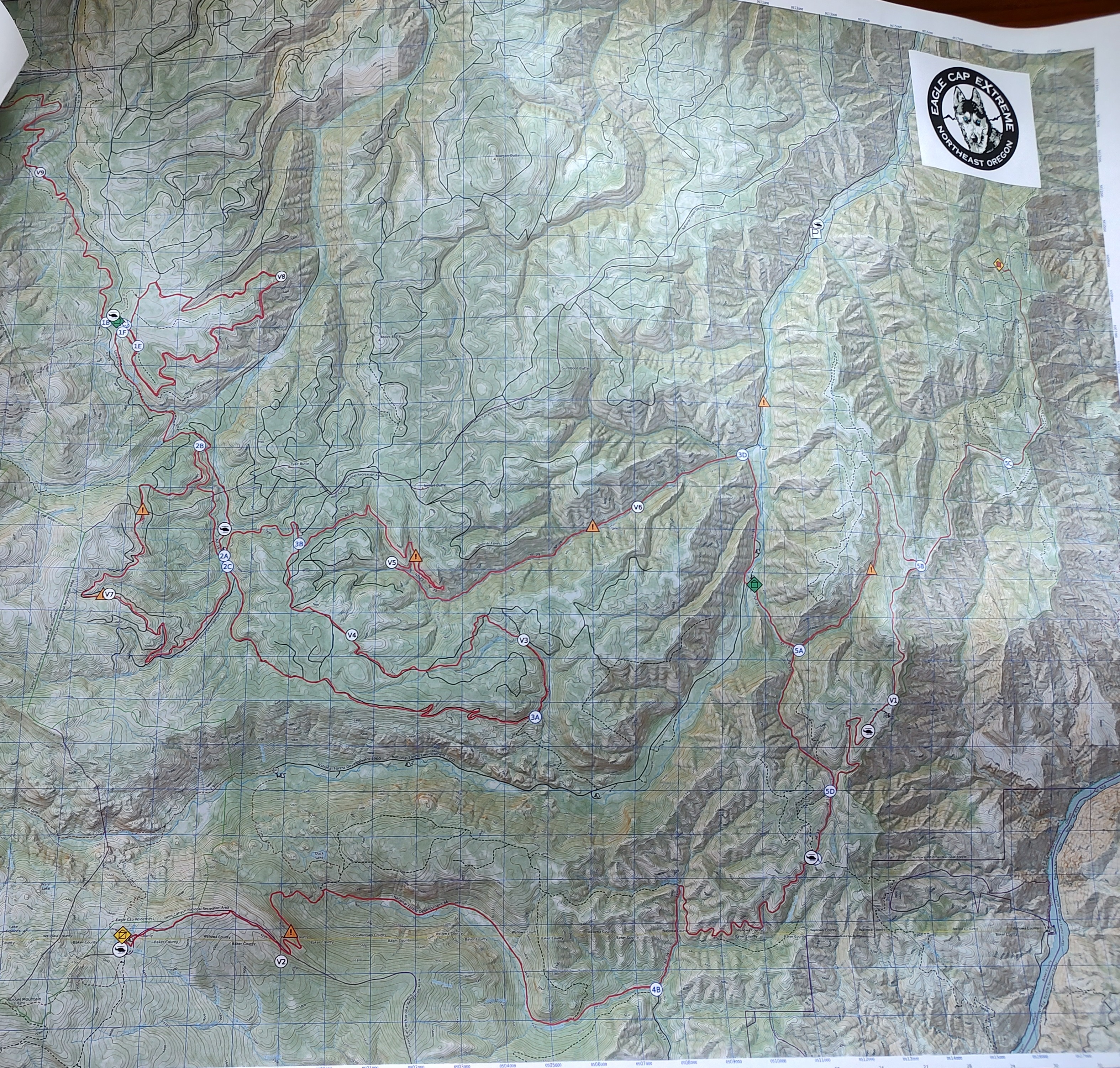
Map of the race

I’ve had my first interview with a person who has volunteered for this event for 20 years. She gave me some good insight into logistics and more people I will need to interview. This book won’t be ready to write for at least two more weeks as I talk to the head of technology, mushers, the race marshal, and judge.

What had started out as a “fun idea” has now blossomed into much more of a project. I can’t even start my suspect chart or decide how someone would be murdered or missing without doing all the research. There are so many uncertainties that I can’t even begin to fathom what the motive would be.

This is so out of the norm for what I normally do when writing a book in this series. By the time I’m ready to start writing the book, I have mulled over every aspect of the death, did the bit of research I needed and am ready to roll.

Now I sit, watching one more video, reading one more blog, and waiting to interview people so I can start this book. The next book my fans are waiting for me to publish. But as I dabble in the research, waiting to do the interviews, I may have to start working on the next Cuddle Farm Mystery book or even the next Spotted Pony Casino Mystery book, because my hands and imagination can’t sit idle for that long.
Depositphoto

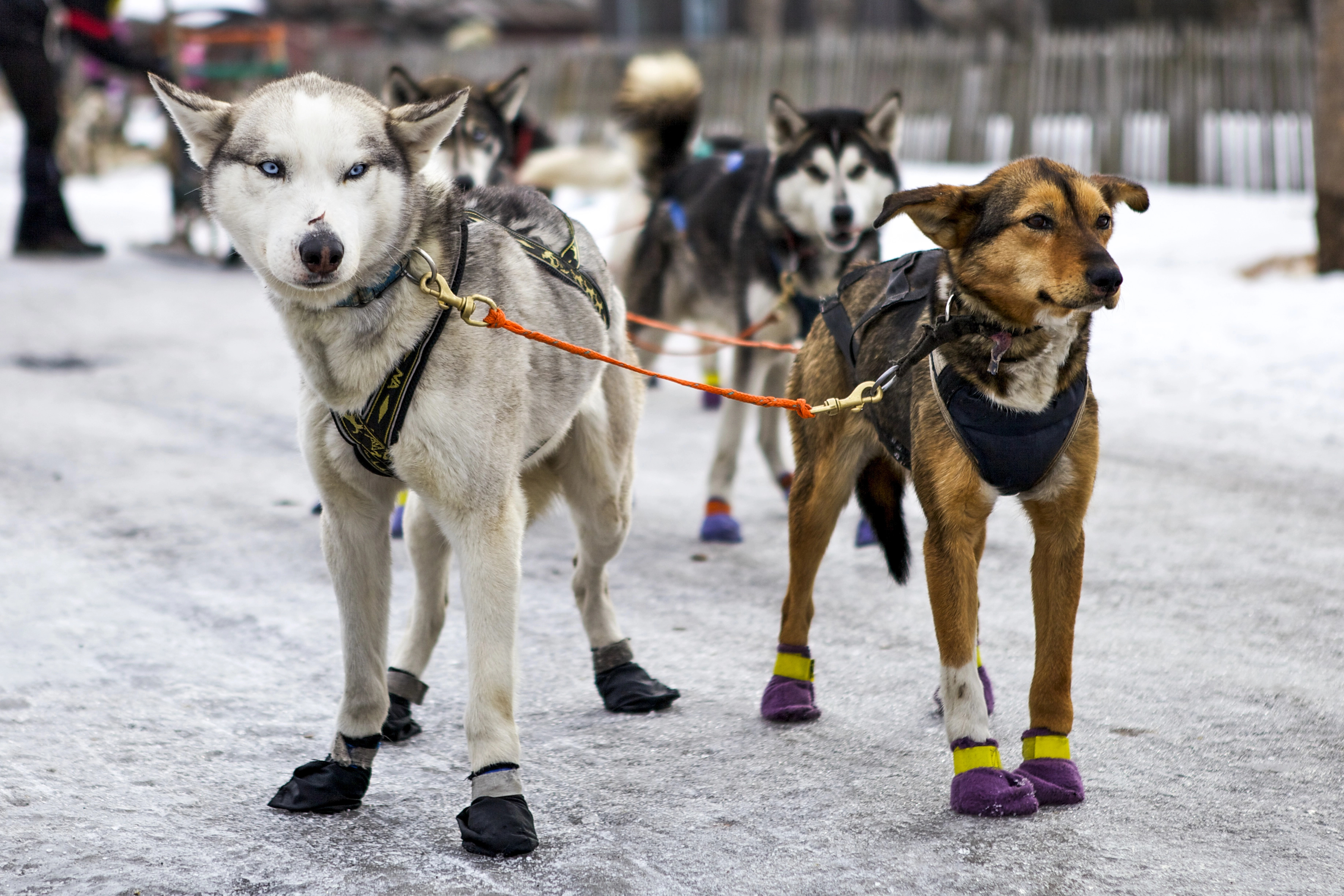
I’ve already learned a lot that I didn’t know. Especially, about the dogs. A good mushing dog isn’t big and thick. It’s long and lean, like a marathon runner. They have high energy and stamina. The Alaskan Husky is nothing like the Siberian Husky. The Alaskan has been bred through the centuries to be fast and tough. They have a multitude of breeds in them that make them the marathoners that they are.

Now I need to learn more about the tracking of the participants during the race, the area where they sleep, and why someone, in a sport where you are dependent on one another to survive, would kill.
Happy Dancing

I don’t know about other authors but there are times my husband and family give me a look that says, they wonder about my sanity. 😉

Last month, I drove to Wallowa County where I set most of my Gabriel Hawke Novels. He is an Oregon State Trooper with the Fish and Wildlife division. The reason for my trip was to:

1) Do reconnaissance of the area where Hawke finds an unconscious woman in the wilderness.

2) Discover why Starvation Ridge was named that.

3) Attend a powwow in Wallowa County so I can have Hawke and his partner Dani attend one in the next book. I also wanted to see if I could connect with a Nez Perce tribal member who would help me add more of the culture to my books.

As usual, I dragged my sis-in-law and brother into my hijinks. Thankfully, my brother being an artist, he understands my need to see things for my books. And I’ve taken my sis-in-law along on other research adventures. First, we made the trip out Starvation Ridge so I could see it better. I’d used Google Earth and an Oregon Gazetteer to try and come up with a plausible explanation for the car stuck between two trees in the middle of forest service land. But I wanted to see the terrain better and I’m glad I did! The way I had my character discover the vehicle wouldn’t work for the area. When I came home, I rewrote the scenes where and how the car was found. Not only did I get a good look at the area, but I got a better feel for it too. And my brother added nuances to it because the story is set in April when there would still be some snow and lots of mud. Which I had written into the story, but he explained it a little bit more. Wind can blow the snow off the very top of the ridge and it’s just mud where there is snow in the trees.

Road on Starvation Ridge

Sis-in-law and I went to the museum in Joseph to find out if there was a way to discover why the ridge was named Starvation. And while we saw some great photos of the past and learned a bit more about the county’s history, we came up empty on the reason for the name. Of course, as we were driving around up on the ridge, we came up with all kinds of grisly reasons for the name. But the next day at the suggestion of a local historian, we went to the Wallowa Museum and the woman there found a book and we discovered the reason for the name. And it was nothing like what we had thought. In fact, it was pretty pathetic. According to the book, it was named Starvation Ridge because a man named Billy Smith came up on the ridge and discovered that a large herd of sheep had eaten all the grass off the ridge. He called it Starvation Ridge and it stuck. Kind of lame and not worth putting in my story. I’ll let the readers fantasize about the name as we had.

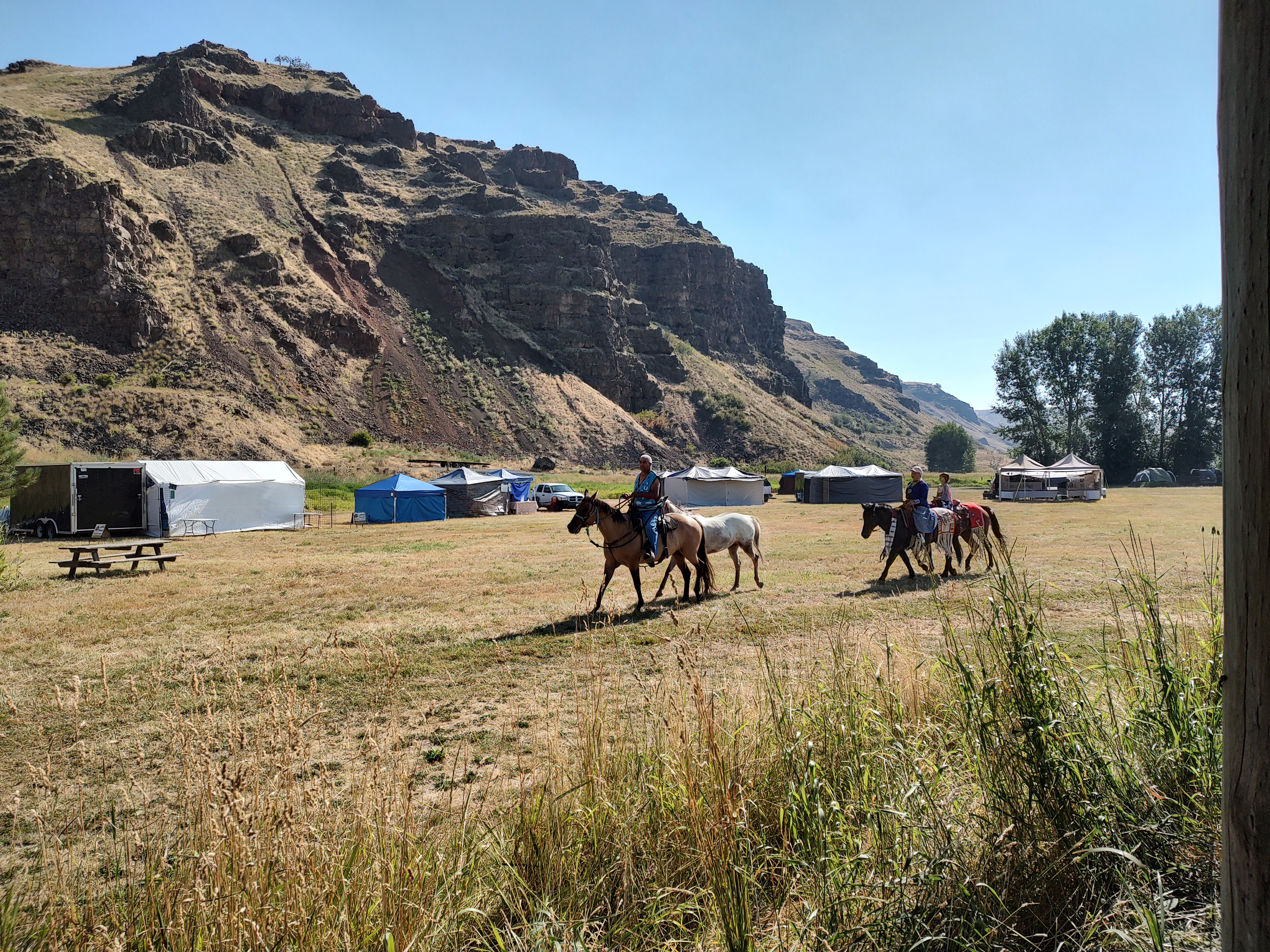
The Tamkaliks Celebration was as moving and colorful as I remembered. I’d attended this powwow a number of years ago, but after taking a class on writing Native American characters and the teacher suggested attending powwows and taking in the ceremonies and talking to people, I decided I needed to get to this one again. I also plan to have my characters attend the powwow in the next Hawke book. The songs, the welcome they give everyone, the friendship dance (we danced), and the reverence they pay to one another was so worthwhile.

Ceremony of the riderless horse. symbolizing the ancestors and those tribal members lost the past year.

The best part of the whole day was a woman that sat down in front of us. She openly explained what was happening to those around her and taught a young couple how to say her dog’s name which meant, Moose. This isn’t how you write the word, only how you say it, “Sauce Luck.” And she taught us how to say Good Morning. Again, not the way you write it but how you say it, which she explained. “Tots MayWe.” After watching her so enthusiastically sharing her culture, I sat down beside her and thanked her for explaining things and asked if she’d be interested in helping me bring more Nez Perce culture to my books. She was excited to help me! She told me about her education and her B.S. in American Indian Studies and Business and her new job that was basically teaching the Nez Perce culture to those who were interested. We exchanged names, emails, and phone numbers. I have sent her an email and she responded right away. I’m excited to have found another connection to help me make my books true to the Nez Perce culture.

And that, my friends, is why I am happy dancing!

Never Too Old

I think back to my childhood every time I find myself digging for more information. I loved school and learning. While math wasn’t a favorite and I struggled to be proficient in it, I understood it was necessary to learn the basics. In the fourth grade every evening while my mom and I washed and dried dishes, she would quiz me on the multiplication table. And today, I can pretty much spout out the correct answer with a few minutes to pull numbers out of my filled brain. 😉

Writing books has been my way of continuing to learn and fulfill my love of research and discovering new things. From the occupations my characters have:

Vase by Olaf

Shandra Higheagle, my Native American potter character, gave me the opportunity to spend time with ceramicist Ted Juve, or Olaf, the name he signs to his work. He taught me the process of extracting pure clay from clay soil that he uses for some of his pieces and the method my character uses for her art pieces.

My character Gabriel Hawke allowed me to spend a day with an Oregon State Trooper with the Fish and Wildlife Division in the county where I have my stories set. That was an eye-opening day with lots of notes taken as we drove around the county. He gave me insights into the job and some incidents that he had been a part of.

My newest character, Dela Alvaro, is taking me into the world of Tribal run casinos and the life of a lower limb amputee. Both new things to me and I’m soaking in all I can learn from many different sources.

This month I am also taking an online workshop from a retired law enforcement officer. He has over forty years law enforcement and what I appreciate the most is he has worked with lots of different law agencies and knows a lot about how different states handle things. And if he doesn’t know, he knows someone who can give us the correct answers.

The workshop started out with him attendees some law enforcement information and then he gave us the first responders view of a murder scene. We are now not only learning the whole business of processing the area and starting the investigation but also being asked along the way who we think might have killed the victim and why. He not only has us using our minds to learn, but to be creative in what we think might have happened or how it would have happened if we wrote this in a book. I like learning two things at once!

This workshop came at a good time for me. I sent out my most recent finished WIP (work in progress) to my retired LEO beta reader. He found fault with three different scenes. Two, I will learn about from this workshop. The third…is harder. It goes to the core of being a policeman for decades. I was being too soft. My character isn’t soft, so I can’t have him acting like I would act. He is tough and knows when his life is in danger he must react as he’s been trained. Another lesson learned. Did I say I like learning new things?

The reasoning my beta reader gave me made sense. It just didn’t work for the scene to come later, so I had to rewrite the scene to keep my character from killing someone they needed to question. I had my LEO wounding the man. But with an AR rifle aimed at him, my character would have “tapped” the suspect three times. (tapped=three quick shots to the torso) Which would end up with a dead, or close to dead, suspect they needed to question. I changed the scenario to the suspect realizing he was shooting at police and surrendering. He wasn’t the bad guy they were after, which the police discover after questioning him. Whew! That scene was rewritten three times before my beta reader gave it a thumbs up.

But he also questioned my character never giving the people he brings in for questioning Miranda Rights. That is why I am taking this workshop. To learn more about that process and how I can incorporate it into the books at the correct time.

There is always a need to learn something. And I love drinking it all up and using it in books.

As a reader do you like to learn while you are entertained?

As a writer do you feel the need to learn and get things right in your books?