You Want to Know What???

by Janis Patterson

Am I weird? (Wait – don’t ask my husband that – we all know what he’ll say!) But regarding writing, I think I really am totally out of step.

Got an ad this morning from yet another one of those proliferating ‘publicity’ sites offering a new site/protocol/scheme for publicizing my books and ‘helping me to personally interact with my readers.’ I don’t get that. Yes, I know the lifeblood of a book is publicity, and I’m willing to pay for that, but interacting with my readers on a personal level? Really?

I don’t want to interact with my readers and turn them into friends. I have a lovely bunch of friends, some of many decades’ standing, and don’t need nor particularly want to make loads of new friends ‘with whom I can share things’ – especially not through the mechanical grist mill of the internet. I don’t see why my readers would want to talk about – or even be particularly interested in – my private life. My biography is on my website, and it covers everything, if not a little more, about me than any reader should want to know.

What difference is it to the readers how I take my coffee or what color my kitchen curtains are (or if I have curtains in my kitchen at all!) or what I name my pets? How does knowing that affect their enjoyment of my books? Or, more to the point, what business is it of theirs? They are buying my books, but should that also give them access to my private life?

One thing that these ‘I really want to know the real you’ type readers never seem to accept is that the time spent with them discussing pets, kitchen curtains, coffee or any other personal thing is time taken from my writing the next book. ‘Oh, but I’ll only take a little bit of time,’ they croon, ‘I don’t want to bother you…’ without realizing that if I spend ‘a little bit of time’ with everyone who wants a piece of my life all my writing time will be gone and there will be no more books, as I refuse to sacrifice a moment of my family/home time for anything on this earth.

Why is being privy to another’s life – another whom you will probably never meet in person or have a real relationship with – considered so important? Isn’t it my stories that caught their attention to begin with? Why can’t they be satisfied with them? It’s none of their business how I drink my coffee or decorate my house or anything else.

I write the books. They buy and read the books. That is the basic equation, and is all both writers and readers should need.

And although the holiday is over, my new anthology THE FOURTH OF JULY MURDERS is still available on Amazon… Four authors. Four murders. Four wars. It’s great fun!
Research, or the Lure of the Rabbit Hole

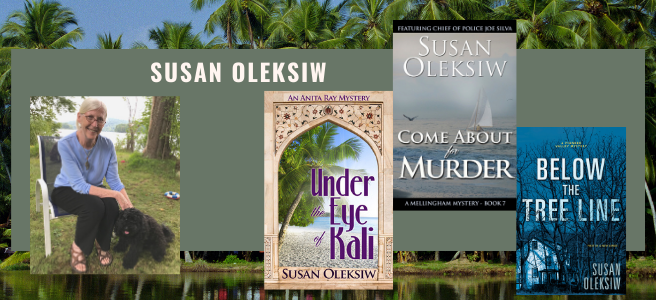
by Janis Patterson

There’s nothing more frustrating than a novel which mangles history. Unless, of course, it is alternative history (at best a bastard genre) and clearly labeled as such. What raises my ire is when someone writes what is purported to be historical fiction but has such factual clangers in it as to stop the reader cold. My favorite example of this is from a contest I judged when a Regency hero – handsome, wealthy, arrogant as all of them are – pulls a fountain pen from his pocket to sign some important document.


Really? A fountain pen?


The bladder fountain pen that we all know wasn’t invented for at least fifty years after the Regency. Even the steel-tipped dip pen wasn’t invented until after the end of the Regency. Before that, writing was done with feather quills, usually goose.


Of course I dinged the writer severely for not doing proper research, and sent a rather kindly note of explanation of her low score, hoping to raise her consciousness about the necessity of research. Instead she attacked me viciously, not only in a private letter but on social media, ranting that it was an old-fashioned pen and who would know the difference anyway.


And there is the crux of the matter. Far too many people get their ideas of history from novels (and movies, and TV) and therefore as writers we owe them the honesty of real facts.


Such a high-minded ideal is not without its dangers to us, though. I was working on a fairly early Victorian Gothic where my librarian heroine had to make some ink. Now I knew she couldn’t just pop off to the allsorts shop in the village for a bottle, so I went online and looked up how to make ink.


Who knew there were so many ways to make ink? And there are so many people making it today? Well, it was a plethora of information and I started reading happily. Only thing was, I realized that some of the recipes used items to which my early-Victorian-working-in-remote-Scotland heroine would have no access. But I had to make sure of what was available, which took me to botanical sites and shopping sites and each of them led to other sites, most of which had little to nothing to do with Scotland, libraries or ink, and before I knew it hours later I was deep into the intricacies of making Scottish country cheese. Still don’t know quite how I got there, but it was fascinating.


Now I don’t know if I’ll ever need any minutiae about the making of country cheese in Victorian Scotland, but it did give me a deeper insight into the Scottish rural people of the time, their lives, their chores, their way of living. Besides, I believe that everything is useful in some way, some time, some how. Who knows when some snippet of rural Victorian Scottish life/mores/cheesemaking – or something influenced by them – will show up in a totally unrelated story? It’s one of the dangers and the magic of writing!


Doubtless by now you have figured out that I like research. And, having an inquiring (some say nosy) mind, I must admit I do. It’s one of the most fascinating things in the world. And one of the most dangerous. It can take hold of a story, turn it every way from up, then hand it back to you in a form totally different from the way you originally envisioned it. Or, if you are strongminded enough to corral your story to its original form, those little snippets of research are still there, adding depth and shading – and an occasional surprise – to your story.


A prime rule of good writing is Do Your Research. Another rule of good writing is Do Not Let Your Research Take Over. Usually I manage both, but it’s most definitely a delicate balancing act.

Endings

Beginnings and endings are the hardest part of writing for me. (That’s today. On other days it’s the muddled middle.) Some writers have arresting, captivating openings that grab the reader and carry her along into a ninety-thousand-word novel. I’m not one of those, but I can eventually get a few words on the page to get the story moving. For me the greater challenge is endings.

Some years ago I listened to Andre Dubus III talk about his new book, House of Sand and Fog, which led him to talk about how he’d grown as a writer. He didn’t like his first book, Bluesman, because he considered it sentimental. His disdain for this failure in craft was obvious, and when I met him at a writers’ event years later, the subject came up again. As I listened to him touch on the challenges in his work, I understood that for him an ending that is sentimental is also in some ways dishonest, an inability to reach deeper for something that was true. I had just purchased TheGarden of Last Days, and read it with that in mind. There is nothing sentimental in that book, least of all in the ending.

Several critics have explored the link between the traditional and cozy mystery and comedy; noir crime fiction has been linked to tragedy. At the end of the cozy mystery, the world is set right again; the villain has been identified and brought to justice of some sort; the lesser crimes of other characters are brought to light and justice is visited on them in various ways, perhaps public censure or shame or remorse; and the minor romance barely acknowledged sometimes comes to light and there is a new beginning for a young couple. All is right with the world. From Restoration Comedy to Agatha Christie and writers today, it is hard for a reader of cozies or traditional mysteries to be satisfied with less. An unrequited love or an unchallenged con artist will annoy some readers as much as a dangling participle will menace the peace of mind of a copy editor. And I understand this. There is something deeply satisfying about the comedic ending, a moment that reassures us that the world aslant can be righted, that our inchoate ideals can be realized.

So how does a writer of traditional crime fiction compose an ending that is both true to the story being told and unsentimental? Sometimes I think this question is just one more obstacle to writing a satisfactory ending, and all I’m doing is complicating matters, making life harder for myself. I’m not unsatisfied with the ending of Family Album, the third in the Mellingham series, but I acknowledge that it is a tad sentimental (maybe more than a tad). But readers loved it because it fulfilled one of the hints at the beginning of the story, and a promise fulfilled, particularly about a possible romance, always brings a frisson of delight. But it was sentimental. At least it wasn’t mawkish.

I don’t remember most of the endings in my books and stories but some stand out, for me at least. The ending of When Krishna Calls in the Anita Ray series required research, rethinking, and stepping back. A woman sentenced to prison looks out on her new world, listening to another prisoner, and is satisfied with the choices she has made. She won’t forget why she is where she is, and she won’t regret it. The ending of Friends and Enemies in the Mellingham series required several versions before I finally landed on the one that worked and fit with the rest of the story. An editor who read the ms and considered acquiring it mentioned how much she liked it (but not enough to take the book). Another ending that satisfied me is that in “Coda for a Love Affair,” in Devil’s Snare: Best New England Crime Stories 2024. The ending is simple, clear as cut glass and sharp.

Endings are hard because the easy ones come fast, are easy to write, and sit well on the page. And that’s the problem. They tempt us to take them, give a sigh of relief, and pat ourselves on the back for coming up with (rather than running carelessly into what looks like) the perfect line or paragraph to close out three hundred pages. Depending on how tired we are of the story and working on it, that ending will appear reasonable, acceptable, or a gift from the writing gods. So this is where I step back and wonder what Andre might think. I don’t have to get far into that mental exercise to admit that the first or even the thirtieth ending is not what I want. 

If nothing else, writing keeps us humble. In our heads we hear perfect dialogue, snatches of prose so brilliant we’ll never need the sun again, but on the page, our pen does not cooperate (or the computer keyboard), and we end up with the mundane, the ordinary, the usual. I keep working on endings but I know I fall short most of the time. As do we all. It’s encouraging to know that greater writers have the same struggles, the same challenges, the same doubts. With one eye on writers whom I admire, I keep at my own work, striving to meet my standards even if that means sometimes disappointing some readers. If I want better endings, I just have to keep at it until I get there.

Cavalcade of Books

When I look at my TBR pile, which is really a scattering of books all across the sofa, the upholstered chairs, and stacks on the floor, my brain boggles at the variety of titles. It’s as though I have no focus. I was about to add a number (a large number) of mysteries to the list when a couple of friends came up with an idea, The Cavalcade of Books, which would be a list of three books by each of the ten writers on Ladies of Mystery. Yes, they would do my work for me—they’d bring together all the titles I want to read in the next few months, everything at my fingertips. Yay!

I’ve been writing a monthly post for Ladies of Mystery since June 2019, assuming I’ve managed to keep a complete list, which is a lot to assume about me sometimes. And during those months and years of writing my posts and reading posts by the other ladies I’ve learned about other parts of the country, this very strange writing business, lots of history, tricks and techniques I would never have thought of, marketing options, sales outlets, the thoughtfulness of my fellow blog writers, and had a lot of very good laughs. 

But you as a reader probably want something more than compliments and ravings from me to persuade you to try some of these books. Readers are so demanding, and that’s why we writers love you. You make us work, you give us a reason to dig deeper, think harder, write better. So herewith a little piece of why we read and (I) write mysteries. 

Sir Arthur Conan Doyle and Agatha Christie both wrote traditional mysteries. So did Dashiell Hammett and Raymond Chandler. How can this be? They’re all so different. The form of the mystery has always seemed to me to be as broad as the range of human taste. You can write the story with any level of violence or no violence, and in the end you return to a point of stasis promised at the beginning. The form holds both writer and reader, and yet liberates both to explore and range widely (I almost write wildly, so drop that in there too).

https://bodiebluebooks.com/ladiesofmystery.

In The Cavalcade of Books you’ll find the whole range of crime fiction organized into seven categories. Just click on whichever one calls to you and find a list of novels by new and perhaps long favorite writers. You can also chase down a writer through the alphabetical index.

All these books come with special prices in effect from November 15 to December 31 (just in case you climbed onto a really slow Christmas/Holiday shopping train).

These women are amazing—hilarious, scary, captivating, fun, and terrific writers. Buy the books for your friends, your families, strangers you want to turn into friends. Then when the season becomes the crazy time of too much shopping, wrapping, eggnog, take one of your new treasures, crawl under the dining room table, and take a break. Visit the Northwest, the nineteenth century, India, or New York City. We all deserve a break. Even writers. Enjoy!

Thankful Thursday

I loved the last mystery I read, but I don’t remember who the killer was. I do remember being deep in the story because the author took me on a wonderful journey. The book was set in the 1940’s, and she did such an amazing job of immersing me in the story world. The setting, characters, and storyline were so exquisite that the solving of the crime seemed less important.

Now, I know that those of you who read mysteries for the puzzle might have a different take on this, and sometimes I do too, especially when I’m totally surprised by the killer. But at times, the story journey is so special that the ending is inconsequential.

Today, I’m thankful for all the writers who’ve gone before me. I was a huge fan of Mary Higgins Clark’s books. When I sat down to read one, it was like sitting down with a good friend while they told me something that happened to them. I would get so engrossed in the story I didn’t want it to end. I read her books straight through and was sorry I did because I had to wait a year for the next one.

A few years ago, I took a class on writing from Robert Dugoni. It was such an amazing class by a wonderful writer and teacher. The class was small, maybe twenty people, and I still think about what he taught and how fortunate I was to be there. Robert talked a lot about finding the heart of the story. At the time, I was new at writing novels and even though I loved what he said, I didn’t know how to apply it to my work.

Now, after publishing three mystery novels, I feel like I have a better understanding of what he meant. The main character in my Hood River Valley Mystery Series is a woman detective, Liz Ellisen. Liz is the driving force of the story, but as I thought about this, I asked myself, what about her draws the reader in? What makes them ask for more books about her?

Liz puts her heart into solving crimes, and she wants to find justice for the victims. She can be strong and tough, but she can also be tender and loving. And even though her own life hasn’t always been easy, she wants to make the world a better place for others.

I recently had my books for sale at a holiday bazaar. A lady came in and bought three copies of my latest book, one for each of her sister’s for Christmas. She said, “I loved all of your books, but this one is my favorite.”

As with most writers, I hope that my books get better with each one. But I’ve found that some people like my stand alone novel, which was my first published novel, better than the series. And other people like the series best. It’s such a thrill when someone buys my books for their friends or family because they enjoyed them so much.

I feel that finding the driving force of the story is also about finding the heart of the story. Thank you to Robert Dugoni for sharing that. I would love a sign to put up in my office that says, “What is the heart of this story?” I’m hoping I’ll remember to dig deeper to really find what drives my characters and in so doing, find a way to connect to my reader’s hearts.

So this Thanksgiving I’m thankful for all of the writers, teachers and readers who have brought me such joy over the years. I’m also thankful to each of you for reading this blogpost and to Ladies of Mystery for inviting me to write a post on the blog.

Happy Thanksgiving. May your heart be full of love and may we all find the heart in our stories.

My view as I write. Yes, sometimes it’s difficult to concentrate, but not today. Today it was pouring rain and the mountain was hiding. Blessings, Lana