Hope, or, Why we love a good #mystery #series

thumb_IMG_1225_1024

At this time of year, it seems perfectly reasonable to write about hope. We gather with family and friends, cuddle up in front of a cozy fire, laugh, talk — and read, of course! As the song says, “we’ll conspire, as we dream by the fire, to face unafraid, the plans that we made …”

books

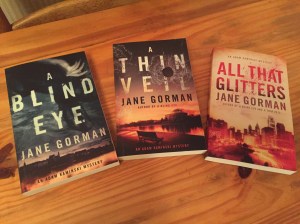
I’ve been thinking about plans and hope. Not my plans (or my hopes) but those of Adam Kaminski, the hero in the Adam Kaminski mystery series.

Adam has dreams. Or at least he did. Until his view of the world was shattered through one cruel, heartless act. That devastation changed his dreams and changed his life course. He left teaching to join the Philadelphia Police Department, intent on chasing down the bad guys who posed a threat to the safety of the people he loved and cared for.

My job as author is to force Adam to face his lost dreams, to help him strive for his lost hope. It’s not easy! Sometimes it’s so much easier to let him sit back, take life as it comes, watch from the sidelines even. But that wouldn’t make for very interesting reading.

In any mystery, the detective, whether amateur or professional, must throw himself into the path of danger. She must face her fears, thwart the villain. And in each book, that’s exactly what happens. But the attraction of a series is that other story, the longer story arc that the character follows over multiple books.

IMG_2298

For Adam Kaminski, that longer story sends him on a quest to find the truth about his family legacy and to find the hope that he lost, the hope that led him to be a teacher in the first place.

Whenever I’m tempted to make life easy for Adam, to let him zip through a case, solve the murder in front of him without delving too deeply into other mysteries, I remind myself of his dream. I owe him. He needs me to let him dig deeper, to send him to unknown places, so that he can find the answers he needs, the faith in humanity that will give him back his hope.

IMG_2039 (1)

Links to all available retailers for the Adam Kaminski mystery series can be found at my website.


Ax-murderess or Victim by Paty Jager

paty shadow (1)I recently ran across a story in the local paper written by an Oregon State University Professor. He brought to light the first female murderer in Oregon’s territorial prison. Her story is interesting to my mystery writer mind. Back when she took an ax to her husband, they didn’t take spousal abuse into consideration for a woman’s actions. But this story lends itself well to several directions a mystery writer could take it.

Charity Lamb and her husband traveled to Oregon Territory in 1852 via the Oregon Trail. They had five children ages, nineteen to a newborn baby. The Oregon Territory at that time had few woman and the family was busy trying to build a house and starting crops.

The husband on several occasions had punched, kicked, and thrown a hammer at Charity leaving a large gash on her forehead.

The nineteen-year-old daughter fancied she was in love with a drifter. The man was also smitten with the daughter and showed Charity kindness. Mr. Lamb refused to allow the two to marry and forbid the daughter to converse with the man when he left the area. Charity helped her daughter write and mail letters to the man. Mr. Lamb caught Charity with one of the letters and told her he would kill her before he’d let her leave.

A day later as he was leaving to go hunting, Mr. Lamb turned at the gate, drew up his rifle, and aimed it at Charity. One of the children noticed and he turned the barrel, shooting into a tree. That day Charity and the daughter planned a way to murder Mr. Lamb. That night as they all sat down to dinner, Charity excused herself and walked back in with an ax and hit Mr. Lamb twice with it, making a two inch cut in his skull. Mr. Lamb wasn’t dead. Charity and her daughter fled to the neighbors and a doctor took care of Mr. Lamb until he died a week later. But not before telling everyone he didn’t mistreat his wife.

Charity and her daughter were looked upon as ruthless women, until the children were put on the stand and told of the abuse Mr. Lamb had given their mother. The daughter’s trial was first. She was acquitted. But at that time the courts couldn’t figure out how to try Charity. It was self-defense but not really as the man was sitting at the table not attacking her when she axed him. Which made it seem like insanity, but they found her sane.

And so, Charity Lamb received second-degree murder with life in prison. She was the only woman at the territorial prison. Years later she was sent to the insane asylum where she lived out the rest of her sentence, dying in 1879.

From this story I see spousal abuse as a means for someone to murder and in the case of the daughter she wanted to be with her love. Two good reasons to kill, well for a character in a murder mystery not in real life. But it does happen in real life, so using these premises in a book, would work in the reader’s mind.

What do you think? Would a story like Charity’s be plausible or unbelievable in a book today?

Website

Writing into the Sunset


Guest Blogger – Kathleen Kaska

The Grand Dame of Mystery Writing
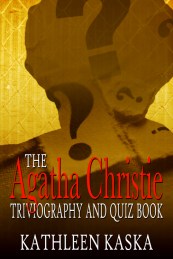
Agatha Christie_mockup02 copyAgatha Christie is regarded as the most popular mystery writer of all times. Since the publication of her first book in 1920, more than one billion copies of her books have been sold worldwide. She wrote her first detective story while working in a dispensary during the First World War. Her sister, Madge, bet Christie that she could not write a mystery in which she gave her readers all the clues to the crime and stump them at the same time. Christie proved Madge wrong, and The Mysterious Affair at Styles was published. Her second book sold twice as many copies as her first, and she found that writing flowed easily for her. In 1926, The Murder of Roger Ackroyd, gained her world acclaim. It is one of the most talked about detective stories ever written. Using a technique that had not been used before, many of her colleagues and readers accused her of breaking the mystery-writing rules. In her defense, she stated that rules are made to be broken and if done well, prove effective. Almost ninety years later, the controversy still remains. She’s gone on record to say that this Hercule Poirot mystery was her masterpiece.

But my two favorite Christie mysteries are two of her lesser-known novels. In these two action-packed stories, The Man in the Brown Suit and They Came to Baghdad, Christie ventured away from Miss Marple and Hercule Poirot and drove into light-hearted adventure. She sent her young heroines, Anne Beddingfeld and Victoria Jones, to mysterious locales, exposes them to harrowing danger, and allowed them to live life on the edge.

“I had a firm conviction that, if I went about looking for adventure, adventure would meet me halfway,” Anne Beddingfeld proclaimed. He archaeologist father has decently died. On her own for the first time in her life, Anne is ready for adventure. But her eighty-seven pound legacy would not last long. After a discouraging job interview, Anne was waiting to catch the train home, which put her in the right place at the right time. A man, startled by something, stumbled and fell off the train platform onto the third rail. Another man claiming to be a doctor, examined the body, declared the man dead, and hurried away, dropping a piece of paper with the words, “17.122 Kilmorden Castle,” written on it. Anne retrieved the paper and tried to catch up with the doctor, but he disappeared into the crowd.

Anne was determined to find the man in the brown suit. He obviously was not a doctor, since he examined the victim’s heart by palpating the right side of his body. After a clever bit of detecting, Anne was aboard a ship to South Africa. In Anne’s life there are no coincidences.

A few days later, she was in her cabin, recovering from seasickness when there came a knock on her door. Or to be more exact, an explosion. Her door flew open and a man tumbled inside.

“Save me,” he says. “They’re after me.” Anne shoved him under her bunk and got rid of the nosy stewardess, who was tracking the apparently drunk passenger. However, alcohol was not the reason for his clumsiness. A knife wound and the loss of blood gave cause for the young man’s unsteadiness. As Anne dressed his wound, they exchanged insults and cold stares, along with a bit of shoving. As he felt, she realized that it was him—the man in the brown suit! But he was gone again, and she was left standing with clenched fists and a racing heart. There was no doubt about it. Anne was in love, and she would find him no matter what.

“To Victoria an agreeable world would be one where tigers lurked in the Strand and dangerous bandits infested Tooting.” Victoria Jones, unemployed secretary, flighty female, habitual liar, is the star of They Came to Baghdad. Fired from her job for poking fun at her employer’s wife, Victoria found herself on her favorite park bench, eating a tomato and lettuce sandwich, and contemplating her future with no income. Before her pondering became too serious, however, she noticed a handsome blue-eyed man sitting next to her, and her plans for finding a new job were forgotten. A quick exchange of life stories, a few laughs, and Edward declared he must leave. “I don’t suppose you’ll ever think of me again,” said Edward. “Oh, Hell—I must fly.” Duty called and Edward was off to Baghdad. Victoria decided to follow the young man. Undaunted by the 3,000-mile distance and the mere three pounds to the name, she conned her way to the Middle East and quickly found herself penniless and alone in a strange hotel.

All of a sudden, there is a knock at Victoria’s door. Could it be Edward? Had word reached him that she was in Baghdad? Without hesitation, she opened the door and found a handsome stranger seeking refuge.

“For God’s sake hid me somewhere—quickly,” he pleaded. Victoria, never one to shrug off adventure, shoved him under the bed cover, propped up the pillows and leisurely leaned back while the hotel manager searched the room. Satisfied that the fugitive was not present, the manager left. Victoria pulled back the covers just in time to hear the dying man’s cryptic message. Now she must found Edward, but where should she begin? After all, she didn’t even know his last name.

Following the adventures of these two young women is almost as exciting as following Indiana Jones into the Temple of Doom. The Man in the Brown Suit and They Came to Baghdad are truly two of Agatha Christie’s most delightful mysteries.


Kathleen Kaska writes the award-winning Sydney Lockhart mysteries set in the 1950s. She also writes the Classic Triviography Mystery Series, which includes ThIMG11_2661e Agatha Christie Triviography and Quiz Book, The Alfred Hitchcock Triviography and Quiz Book, and The Sherlock Holmes Triviography and Quiz Book. The Alfred Hitchcock and the Sherlock Holmes trivia books are finalists for the 2013 EPIC award in nonfiction. Her nonfiction book, The Man Who Saved the Whooping Crane: The Robert Porter Allen Story, (University Press of Florida) was released in 2012. Kathleen has a new mystery series, which will debut later in 2016.

http://www.kathleenkaska.com

http://www.facebook.com/kathleenkaska

https://twitter.com/KKaskaAuthor

 

Where Do Writers Get Their Ideas? By Ann McAllister Clark

It’s magical really. Well, at first it may seem that way. Creative thoughts, words and phrases running through a writer’s mind as she is writing. Sometimes it feels the words are like ribbons spilling out of our fingers, pens, pencils or keypads as if someone or something else is actually gathering them up and pushing them out on the page. When that happens I always send up a sincere ‘Thank You’ to the goddess of verbiage and thoughts. Yes, it is magic and when it happens I take a big breath and stay with it as long as I can.

And then I remember all the studying I have done – many college classes and dozens of writing books over the years. I read classics – Russian, English, and mostly American.

Writers get this question all the time – “Where do your ideas come from?” Ideas come right from a compilation of life and the writer’s experiences – encounters and events or things she has witnessed or researched. Writers have a way of filling up their internal and invisible sponge with all that moves before their eyes and ears and all the minutia of life. A writer is voraciously curious and thirsty for interest. A bit of this person, a little of that person, saved notes of conversation and pieces of experience all go into the vault of ideas. So ideas come from just about anywhere and go into the big soup pot of a rich mix. And then at the end of this wash of creativity comes the real work. Revision, revision and then more revision. The work never seems completely right and some writers may revise a dozen times or more.

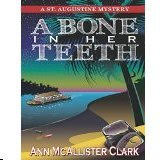
bone in teethI watched much of the George Zimmerman trial in Sanford, Florida. I suspect many writers watch court cases on TV or better yet in their own county courtrooms with thoughts of incorporating what they see into their stories. We have files of interesting newspaper clips and magazine articles to be used at a later date for inspiration or research. I took notes on the attributes of the detectives, lawyers and court proceedings during the trial in Sanford. I used those notes to describe the detectives in A Bone In Her Teeth: A St. Augustine Mystery.

Traveling through the streets of Gettysburg, Washington, DC, and Antitam and walking many battlefields helped me immensely with description in my historical novel, The Chrysalis: An American Family Endures The Civil War.

I just finished reading Justice Sonia Sotomayor’s memoir, My Beloved World. http://www.amazon.com/My-Beloved-World-Sonia-Sotomayor-ebook/dp/B00957T7CQ/ref=sr_1_1?s=books&ie=UTF8&qid=1447440566&sr=1-1&keywords=my+beloved+world

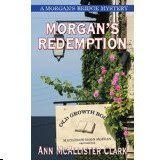
MorganWhen she was a young girl of about eight years old, she faithfully watched the weekly television program, Perry Mason and decided she wanted to be a lawyer! And then she diligently pursued that direction in every single aspect of her educational life all the way to her seat on the United States Supreme Court. I used her early years for inspiration in Morgan’s Redemption

https://en.wikipedia.org/wiki/Sonia_Sotomayor

Where do we get our ideas for writing? Everywhere and anywhere.

Ann’s Books

A Bone In Her Teeth, paperback and kindle

Morgan’s Redemption, kindle edition and paperback

About  Ann McAllister Clark

A graduate with a BA in Education from charming Aquinas College in Grand Rapids, Michigan, Ann McAllister Clark, author of the award-winning novel, A Bone in Her Teeth: A St. Augustine Mystery, and Morgan’s Redemption: 1st in the Morgan’s Bridge series and soon to be released, The Chrysalis: An American Family Endures The Civil War,  is a teacher, journalist, and former used bookstore owner. She now lives and writes in a small cottage in the Nation’s Oldest City, St. Augustine, Florida.

Ann McAllister Clark’s website
Ann McAllister Clark’s blog “Ann’s Cottage Blog
Ann McAllister Clark’s facebook page


Dreaming up an Amateur Sleuth by Paty Jager

Dream your dreams with your eyes closed…paty shadow (1)

But live your Dreams with your eyes open—

                                                                     ~Cherokee~

The amateur sleuth in my Shandra Higheagle Mystery Series is half Nez Perce. She was raised to hide her Native American heritage when her Nez Perce father died and her mother remarried. However, her paternal grandmother kept in touch, and Shandra spent a summer during her teen-age years with her grandmother on the reservation. Her grandmother said Shandra had powers. When Shandra announced that at home her mother and step-father quickly made her see it was an old woman’s way to making an awkward teenaged girl feel special–nothing more.

As an adult, Shandra visits her grandmother more and is interested in discovering more about her roots. But her grandmother dies, leaving Shandra a note requesting she attend the Seven Drum Ceremony after the funeral.

While in the midst of murders and mystery, Shandra’s grandmother comes to her in dreams showing her clues to the true murderer. While Shandra investigates the dreams and discovers helpful information, she has a hard time believing the dreams and her grandmother’s presence.

This is the information I came up with when I was brainstorming who my amateur sleuth would be in the mystery series I wanted to write. I started with the niggling that I wanted a Native American character. But not being Native American myself, I didn’t know the first thing about being from that heritage. That’s when I came up with the idea of her being kept from those roots. It allowed me to discover Shandra’s heritage as she is discovering it, a piece at a time.

To add a bit more of the “mysticism” or “dreamer” qualities to the Native American element I have her deceased grandmother come to her in dreams. Visions and dreams are instrumental in Native American culture. This was my way of drawing on elements that could be intrinsic to Shandra.

And all amateur sleuths need a person in law enforcement to keep them safe. I gave Shandra handsome Weippe County Detective Ryan Greer. He believes in Shandra’s dreams more than her in the beginning thanks to his Irish mother who taught him to believe in things you can’t see.

I’m enjoying getting to know Shandra and Ryan better with each book I write and having them meet the locals of Huckleberry, Idaho and the unique murders that draw Shandra into the investigations. And I can use the backdrop of the ski resort and the art communities because Shandra is a potter whose works are considered art.

What draws you to the main character in a mystery series? What elements in a character haven’t you seen that you would like to see?

Publication1

www.patyjager.net

Writing into the Sunset