Motivation

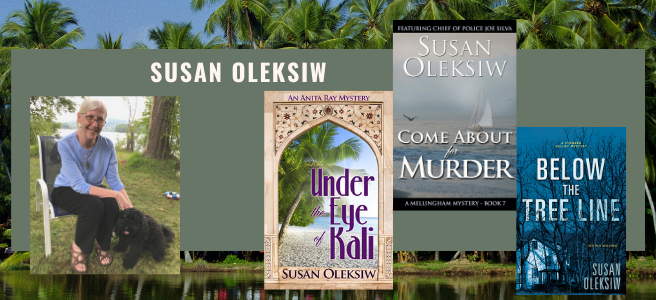
I’ve been working on the sixth Anita Ray mystery since July, and now have 44,000 words. That by itself should tell you that I haven’t been well focused on this one, but I’ve had two epiphanies this month. First, I know what the big crisis will be, and it’s coming up in the next 10,000 words. Second, and much more important, I don’t have to know a character’s motive until I get near the end.

This, the second discovery, surprised me. I’ve struggled with finding motivations for my characters’ behaviors beyond their conduct simply being the result of who they are, their past experiences and hopes for the future. That’s always been true of any character, but when it comes to murder or some other form of violence, I need to see something more in this person I’ve created, something that the reader hasn’t already divined by reading about him or her. 

We stitch together our fictional creations from snippets of real life. Riding on the subway or bus or train brings us into contact briefly with the oddities of our world, the woman who wears orange sandals under a plaid lumber jacket on a sunny day, her jacket covering up fabric of such color we’re dying to get a look at it but she’s buckled up tight. Perhaps the only thing about her buckled up. We overhear snatches of conversation. I still wonder about the meaning behind the casual words of two men in a cafe. She’s always been like this; it was no secret. But he married her anyway? He did. And it isn’t medical? Nope. I really want to know what “it” is. And then there was the package that arrived at a neighbor’s, which she sniffed and shook, and apparently rejected because she left it on the front step. I don’t know what happened to it after that, only that it disappeared.

I’m curious about these people’s lives but if I put them in a story as a killer, I need to know what would make them kill. Being odd or different or cryptic isn’t enough, as every writer knows. We look to the great ones in our genre—Agatha Christie in the traditional mystery, Ray Bradbury in science fiction, or James M. Cain for noir—and think about how they developed their characters’ moves and failures. The motives for crime can be limitless, but perhaps the shortest list comes from Christie: greed, lust, envy. Those cover just about every failing in life.

I’ve been thinking about these for weeks now because even though I have a murder, another crime coming up, a diverse cast of miscreants, and a great deal of stupidity, I still don’t have a motive for the inciting incident. At least, I didn’t. That was part of the second epiphany this month. The characters can have all sorts of immediate short-term motives, but the one that’s driving everything has to be larger, tied deeply and inexorably to the character’s identity. I found it this month, and it has delighted me. It was almost obvious, but not quite. 

The surprising thing to me is that I’ve written half the book without knowing why this is all happening and happening in the way it is. We watch people in life, just as in books, wondering what they’re up to. We’re waiting to cross the street when he see a man on the opposite sidewalk stop and stare in a store window; he peers, he moves closer, he looks around to see who else is nearby, and he stares even harder in the window. When he walks on, looking back once or twice, we cross the street and try to guess what he was looking at. It’s an old-fashioned tailor’s shop with the expected clutter in the undusted window—scraps of fabric, a bolt of cloth, a tape measure, a small cardboard box of pins and other notions. In the unlit interior beyond, we see nothing to catch our interest. So what was he looking at? He wasn’t wearing a fine suit, just a short jacket and slacks; and he wasn’t old enough to have known about regular tailors in this little city. But there is something in that window . . .

I stopped worrying about my characters’ motivations in this particular novel while I wrote, figuring each one would either come to me or it wouldn’t. And I have faith in my unconscious to supply the needful. But I’m also flexible, and if a better one pops into my head, I’ll go with that. This is all part of the path I decided to try with this book. I would write it without guideposts, outlines, clear (or vague) ideas of where I was going. If a character or incident popped into my head, I’d add it. I’d just keep going. It’s very liberating but also a little scary. I’m not sure what I have, if anything, but I do have a sense of things coming together. I’ll let you know in another 20,000 words or so where I am.


The ‘M’ Word – Motivation

by Janis Patterson

Last month on the Make Mine Mystery blog I wrote about the plethora of book ideas that always seem to overcome and sometimes swamp me. ( https://makeminemystery.blogspot.com/2018/08/an-embarrassment-of-riches.html )

This resonated with a lot of my writer friends who seem to have the same dilemma, but a comment from my good friend, mystery writer Nancy J. Cohen, author of the fabulous Bad Hair Day mysteries, especially touched me. In part, she said “I agree that ideas are out there… My problem currently is lack of motivation to pursue these ideas.”

I could not have said it better. I sold my first novel in 1979 and have been writing ever since. Not constantly, as life has interfered much too often, but I always seemed to be writing something, if nothing but jotting down ideas. That’s a loooong time to be tangled up with words, with creating worlds and populations out of nothing but imagination and caffeine.

Lately I too have been suffering that same lack of motivation. As I have talked about here and there recently, I have been ‘slothing’ since a couple of surgeries at the end of last year – and enjoying it thoroughly. (I even changed my Spirit Animal to the sloth.) Eight months, however, is long enough to recuperate from surgery! But I haven’t. Oh, I’ve healed just fine. And I’ve fulfilled all my contracts, but it lacked the joyousness that writing always held for me.

My friends and readers have wished me well, assured me that this was temporary, and that the joy of writing would return. And it has – sort of. Instead of being a business, writing has become a self-indulgence, a pixilated form of daydreaming, and nothing connected with professionalism. It’s also very handy for avoiding housework! (Did I mention that I totally lack the housekeeping gene?)

All of which results in a cache of six manuscripts, all originally intended for self-publishing, most of which have been edited, and all sitting on my hard drive gathering metaphoric dust. I cannot seem to get the slightest bit interested in getting them out. Of course, if my sales were better I might be more enthusiastic, but unless things pick up soon I’ll have to start paying people not to read my books, and that is not an incentive to putting more out there!

Maybe this is just another step in my ‘healing’ process… I hope so, but I must tell you, right now I really don’t care. And that’s terrible. I’m working on it, I really am… and I’ll get right on getting those dormant manuscripts out… soon. Yeah, I promise. Soon.

Dying for a Deadline

IMG_1610By JL Simpson

Last year I decided to take on a new role. Not only was I going to be the author of my Daisy Dunlop mystery series, but I was also going to be the publisher. Gone were the days of typing ‘the end’ and then sending it off to someone else to do all the other stuff. Now I needed to sort out an editor, a cover artist, learn to format the finished masterpiece, set up accounts with Ebook retailers and finally to upload and publish the books. The feeling of power when you’re master of your own destiny is amazing. I can give books away, change the price, advertise where I want, and do my own thing with the plots, provided the readers still enjoy the story.

This was all positive stuff. I love power, it’s a heady drug. But with the positive comes a couple of negatives. The first, if my books fail I only have myself to blame, and the biggest negative of all, no one is cracking the whip. I don’t have anyone to set deadlines for me, and that can be a real problem.

From my experience people fall into two categories, those who are self-motivated and 19386145_snormal people. Self-motivated people are the ones who set their own goals and meet them. You seem them out running as the sun’s rising. Meanwhile, normal people are flailing an arm out from under the bed covers in a desperate bid to hit the off switch on the alarm clock whilst mumbling “coffee” into the pillow, hoping their spouse will rise to the challenge and get the much needed caffeine fix they require to jump start their brain.

19117412_sSelf motivated people nibble on a salad, whilst normal people inhale doughnuts swearing they’ll get back to dieting next week. Self motivated people stride down the confectionery aisle at the grocery store without so much as a sideways glance, because chocolate is not on the list. Self motivated people have organised desks, tidy houses, color co-ordinated wardrobes, their whole lives are planned, and everything runs like clockwork. They don’t forget to pay a bill, or realize they are out of milk after the stores are shut for the day. They’re not the ones running around the shopping mall on Christmas Eve looking for gifts.

If you want to be an Indie Author then you need to keep working. I’ve just read a book called, “Write, Publish, Repeat” and it’s brilliant. It says the way to success is to keep getting books out there. The more books you publish the easier it is for readers to find you. So you might think, seeing as I have only two books to my name, I’d be writing up a storm, but you’d be wrong.

I have the curse of being a normal person. My desk is cluttered, as is my mind. My house is clean but untidy, my color co-ordination is hit and miss. I forget my glasses. I lose my keys. I even forgot my son when he was a new born and left him parked at the meat counter in the supermarket until the girl at the checkout asked when my baby was due.

My day job is deadline driven. As a tax accountant their are lodgement dates that need to 36965961_sbe adhered to. Miss one of those and the tax office let you know about it. At work I’m organised and regimented because big brother is watching. With my writing no one is watching. I used to write to publisher’s deadlines. I used to have a critique partner who read along one chapter at a time telling me to hurry up and write the next, but her career took off and I was lost in the madness of it all. Now it’s all down to me.  Time marches on. Days, weeks, months fly by with little progress.

I may never stick to my diet, wear clothes that go together, tidy up my desk, empty my inbox, remember my sister’s birthday, but if I ever want to make something more than an on-again off-again hobby of writing I simply have to get a grip. And the best way to do that is set a deadline. I know that if I’m ever going to focus and finish book 3 in my Daisy Dunlop Series I need to set a publication date and book an editor. Maybe I should set a date for just before Christmas, but that still leaves the question, ‘which Christmas?’

JL Simpson

Where mystery and mayhem collide.

Website  | Facebook | Twitter | Goodreads | Amazon