Guest Blogger ~ June Trop

Meet Miriam bat Isaac

            I’ve modeled my heroine, Miriam bat Isaac, on the woman known as Maria Hebrea, who probably lived in Roman-occupied Alexandria (Egypt) during the first century CE. I encountered her work when taking a course on the Historical Development of Concepts in Chemistry.

Ordinarily chemistry is taught from the perspective of what we know now without delving into how the concepts evolved over the millennia. So, when the professor assigned a paper on a historically significant concept, I had no idea of a topic. That is, until in desperation, I went to the university library to roam the stacks.

I don’t remember exactly how it happened—did I bump into a bookcase while looking to the heavens for inspiration?—but a moment later, a weighty tome fell on my toe and opened to a page about Maria Hebrea. And so, I began to wonder how a Jewish woman from Ancient Alexandria became the legendary founder of Western alchemy and held her place for 1500 years as the most celebrated woman of the Western World.

Sixteenth Century Depiction of Maria Hebrea
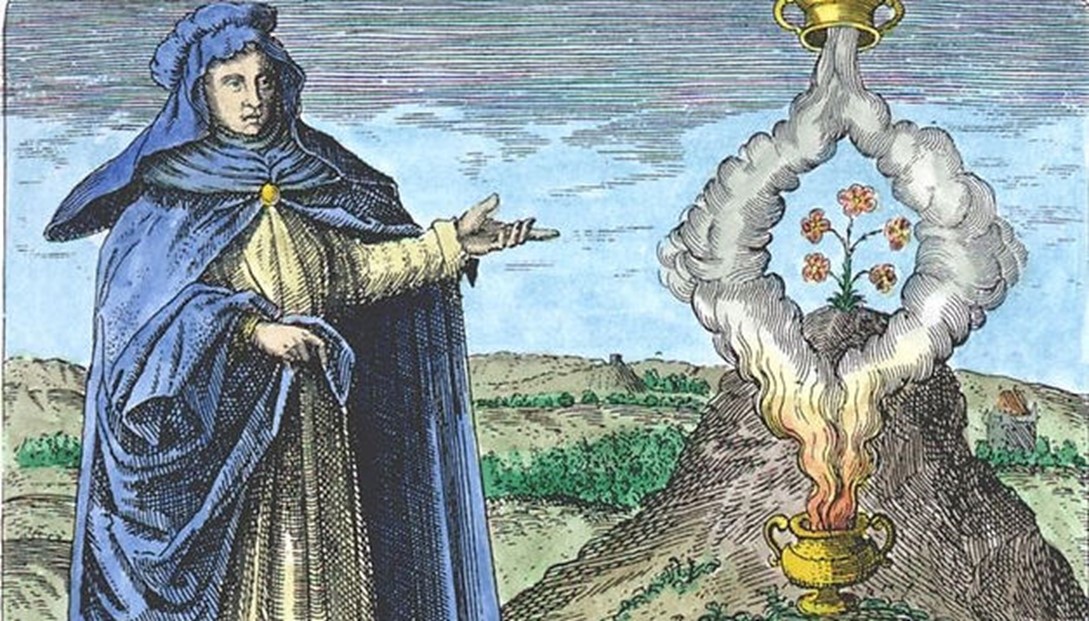
 In the alchemical literature, Maria Hebrea is also referred to as Mary the Jewess or Miriam the Prophetess, sister of Moses. Like her, all alchemists wrote under the name of a deity, prophet, or philosopher from an earlier time to enhance the authenticity of their claims or shield themselves from persecution. Although the tradition among all the crafts and mystical cults was to guard the secrecy of their work, persecution was a real risk for alchemists, who could be accused of and summarily executed for conspiring to debase the emperor’s currency.

Accordingly, Maria Hebrea worked anonymously. Hundreds of years later, however, another alchemist, Zozimos of Panopolis, celebrated her contributions. And so, with just a little tweaking, I had enough information to resurrect the once famous Maria Hebrea and create Miriam bat Isaac, my sleuth extraordinaire.

Miriam bat Isaac’s Adventures
Published in paperback and e-book by Level Best Books in February 2024

Miriam bat Isaac has recorded her nail-biting adventures in novels, novelettes, and short stories. Her most recent volume, The Deadliest Returns, is a book of three novelettes about returning, whether it means going back or giving back. In the first, “The Bodyguard”, Miriam’s brother, a renowned gladiator, returns from the dead to serve as a bodyguard back home when his employer retires Alexandria.

In the second, “The Beggar”, an old man disguised as a matronly beggar, returns to Alexandria to learn the fate of the lovechild he was forced to leave behind to escape the wrath of Roman law. And in the third, “The Black Pearl,” Miriam, having come into possession of the cache of jewels heisted from the Temple of Artemis, sails to Ephesus to return the treasure. The prized gem, however, a uniquely lustrous black pearl, disappears. With the power to heal the brokenhearted and restore the health of the one possessing it, could the pearl’s mystical properties be the motive for murder?

If, like Miriam, you thrive on uncovering the guilty longings, secrets, lies, and evil deeds of others, then as Miriam’s deputy, you will have ample opportunity to indulge your fancies. So, escape the monotony of everyday life and plunge into that rousing world of adventure in three of her most daring exploits.

To purchase The Deadliest Returns from Amazon

For the e-book, click here: https://www.amazon.com/dp/B0CV4TTX3T

For the paperback, click here: https://www.amazon.com/Deadliest-Returns-Collection-Miriam-Novelettes/dp/1685125859

As an award-winning middle school science teacher, June used storytelling to capture her students’ imagination and interest in scientific concepts. Years later as a professor of teacher education, she focused her research on the practical knowledge teachers construct and communicate through storytelling. Her first book, From Lesson Plans to Power Struggles (Corwin Press, 2009), is based on new teachers’ stories about their first classroom experiences. 

Now associate professor emerita at the State University of New York, June devotes her time to writing The Miriam bat Isaac Mystery Series. Consisting of short stories, novelettes, and several books, some have won modest recognition, such as being named a finalist for the Killer Nashville Silver Falchion Award. ​

June, an active member of the Mystery Writers of America, lives with her husband Paul Zuckerman, where she is breathlessly recording her plucky heroine’s next life-or-death exploit. She’d love a visit at www.JuneTrop.com or on her Facebook page, June Trop Author, https://www.facebook.com/profile.php?id=100044318365389, where she publishes a blog every Tuesday afternoon about writing, the history of science, or life in Roman Alexandria.

Guest Blogger ~ June Trop

Ancient Roman Forensics

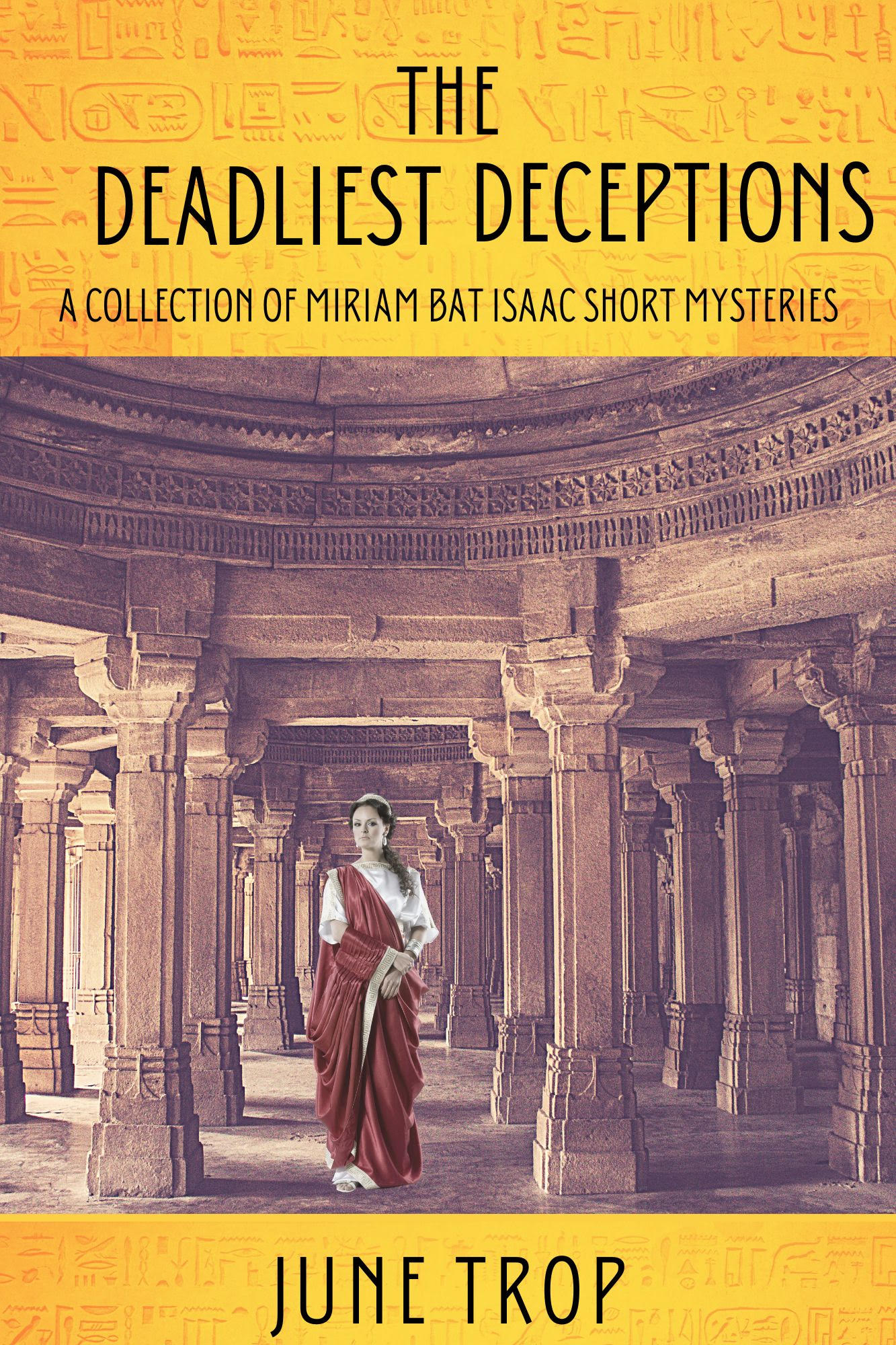
As the author of the Miriam bat Isaac Mystery Series set in first-century CE Roman-occupied Alexandria, I regularly research the investigative techniques used in Roman times. In writing my latest book, The Deadliest Deceptions, a collection of short mysteries ranging from cozy to noir, I found myself focusing on Roman forensics. No, the Romans didn’t know about fingerprints and DNA, but in time, their courts accepted evidence based on blood spatters, dental characteristics, and pattern recognition.

Perhaps the most famous case based on blood spatters was “The Wall of Handprints”, in which a blind son was accused of killing his father for his inheritance. The prosecution argued that the father was asleep with his wife, his son’s stepmother, when his son stabbed him to death. Furthermore, the father died instantly without having awakened his wife, and the son left a trail of intermittent handprints and blood spatters on the wall from their room back to his own.

On the other hand, the defense attorney claimed that it was the stepmother who killed her husband. Upset that she would lose the inheritance, she framed her stepson. The lawyer successfully argued that the son, being blind, would not have left intermittent prints. Rather he would have dragged his hand along the wall. So, despite their lack of knowledge about the components of blood, the Romans used its prints and spatters to reconstruct the crime.

Julia Agrippina, a.k.a. Agrippina the Younger, used dental characteristics to confirm that Lollia Paulina was dead. Having ordered Paulina’s suicide, Agrippina confirmed her rival’s death by asking for Paulina’s head and inspecting the teeth herself. She must have been satisfied because she did not have anyone else killed for five more years.

Pattern recognition marks convinced the Roman emperor Tiberius that his praetor’s wife died by murder rather than suicide. He saw drag marks and other signs of a struggle to contradict the husband’s claim that his wife had jumped out the window while he was sound asleep. Tiberius referred the matter to the Senate, but alas, the praetor opened his veins instead.

        Roman forensics may date back two thousand years, but even modern evidence from blood spatters, dental characteristics, and pattern recognition can be wrongfully interpreted. Just not in my stories. You can depend on Miriam bat Isaac and her assistants to look at wounds, loss of body heat, skeletal proportions, blood spatters, foot prints, and disturbed foliage to assess a crime correctly.

THE DEADLIEST DECEPTIONS

Enter the world of first-century CE Roman Alexandria and participate in the perilous adventures of Miriam bat Isaac, budding alchemist and sleuth extraordinaire. Join her and her deputy Phoebe as they struggle to solve nine of their most baffling cases beginning with the locked-room murder of a sailor in which Miriam is baffled by not just who killed the sailor but how he could have died and how the killer could have entered and escaped from the room.

But be careful as you accompany them into the city’s malignant underbelly. Whether or not you can help them solve the crimes, your blood will flow faster as you escape to that world of adventure we all long for.

BUY LINKS:

Amazon for Kindle    https://www.amazon.com/Deadliest-Deceptions-Collection-Miriam-Mysteries-ebook/dp/B0BT3W7V1B

Amazon for Paperback   https://www.amazon.com/Deadliest-Deceptions-Collection-Mysteries-Mystery/dp/1685122752

June Trop and her twin sister Gail wrote their first story, “The Steam Shavel [sic],” when they were six years old growing up in rural New Jersey. They sold it to their brother Everett for two cents.

“I don’t remember how I spent my share,” June says. “You could buy a fistful of candy for a penny in those days, but ever since then, I wanted to be a writer.”

As an award-winning middle school science teacher, June used storytelling to capture her students’ imagination and interest in scientific concepts. Years later as a professor of teacher education, she focused her research on the practical knowledge teachers construct and communicate through storytelling. Her first book, From Lesson Plans to Power Struggles (Corwin Press, 2009), is based on the stories new teachers told about their first classroom experiences.

Now associate professor emerita at the State University of New York, she devotes her time to writing The Miriam bat Isaac Mystery Series. Her heroine is based on the personage of Maria Hebrea, the legendary founder of Western alchemy, who developed the concepts and apparatus alchemists and chemists would use for 1500 years.

As an award-winning middle school science teacher, June Trop used storytelling to capture her students’ imagination and interest in scientific concepts. Years later as a professor of teacher education, she focused her research on the practical knowledge teachers construct and communicate through storytelling. Her first book, From Lesson Plans to Power Struggles (Corwin Press, 2009), is based on the stories new teachers told about their first classroom experiences.

Now associate professor emerita at the State University of New York, she devotes her time to writing The Miriam bat Isaac Mystery Series. Her heroine is based on the personage of Maria Hebrea, the legendary founder of Western alchemy, who developed the concepts and apparatus alchemists and chemists would use for 1500 years.

June, an active member of the Mystery Writers of America, lives with her husband Paul Zuckerman, where she is breathlessly recording her plucky heroine’s next life-or-death exploit.

Facebook    https://www.facebook.com/profile.php?id=100044318365389

Website       https://www.junetrop.com/

Guest Author June Trop

ANCIENT FORENSIC SCIENCE

My mysteries are set in Roman-occupied Alexandria during the first century of the Common Era. Why then? Well, one reason is I thought my protagonist, Miriam bat Isaac, wouldn’t have to deal with forensic technology. Little did I know that, although the Romans didn’t have a formal body of forensic knowledge, they used some methods similar to what we have today. One example is bloodstain pattern analysis.

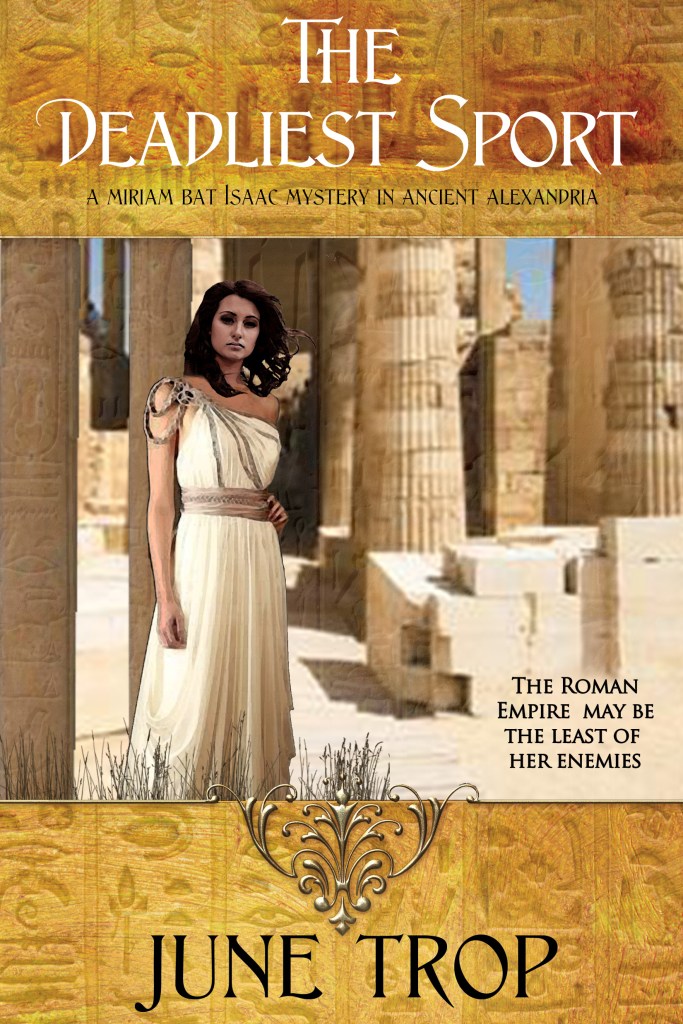
In The Deadliest Sport, Miriam examines the blood spatters in the room of a sleazy waterfront inn to solve a “locked-room mystery”, that is, a mystery about a crime, usually murder, that appears impossible to have been committed. The crime need not take place inside a locked room, as it does in The Deadliest Sport, but in any utterly inaccessible place.

The most famous case of a Roman jurist analyzing a bloody handprint is titled “Paries Palmatus” or “The Wall of Handprints.” A blind son is accused of stabbing his father in his sleep to obtain his inheritance. Purportedly, the blind man took his sword from his room, walked across the house in the dead of night, and entered his father and stepmother’s bedroom. Then he stabbed his father once, killing him instantly without waking his stepmother, who found her husband dead in bed when she awoke. A trail of bloody handprints led from the parents’ room back to the blind son’s room, and his blood-covered sword was found as well.

The defense argued that the stepmother did it, upset because she would lose out on the father’s fortune to his blind son. So, she framed the blind man using his own father’s blood:

It was the stepmother, yes, the stepmother who set this up with her sure sight; it was she, with her right hand, who brought that poor blood there and made the imprint of [her] hand [on the wall] intermittently! The wall bears the imprints of one palm, has them at intervals, with a certain empty space in the middle, and everywhere the palm-print is intact; a blind man, on the other hand, would have dragged his hands [along the wall].

What other forensic techniques did the Romans use? Emperor Tiberius used footprints and drag marks to argue that his praetor, Silvanus, threw his wife out their bedroom window rather than, as the husband asserted, she chose to jump. Unfortunately for Silvanus, the marks of her struggle and his forcible ejection convinced the Senate of his guilt.

The point for me was that I learned every setting, especially a historical setting, is going to have its challenges, even its surprises. So, set your story in a time and place you’ll enjoy researching and then take your readers there. 

FOR THE DEADLIES SPORT by June Trop

Miriam bat Isaac, a budding alchemist in first-century CE Alexandria, welcomes her twin brother Binyamin home to fight his last gladiatorial bout in Alexandria. But when he demands his share of the family money so he can build a school for gladiators in Alexandria, Miriam explains that he forsook his share when he took the gladiatorial oath. When she refuses to loan him the money for what she feels is a shady, and dangerous, enterprise, Binyamin becomes furious. Soon after, the will of Amram, Miriam’s elderly charge, turns up missing, Amram becomes seriously ill, and the clerk of the public records house is murdered. Could Binyamin really be behind this monstrous scheme? If not he, who could be responsible? And is Miriam slated to be the next victim?

Buy links: https://www.amazon.com/Deadliest-Sport-June-Trop/dp/1626947554

https://www.barnesandnoble.com/w/the-deadliest-sport-june-trop/1127167995

As an award-winning middle school science teacher, June used storytelling to capture her students’ imagination and interest in scientific concepts. Years later as a professor of teacher education, she focused her research on the practical knowledge teachers construct and communicate through storytelling.

Her books have been cited for excellence at the New York Book Festival, by Wiki Ezvid, the Historical Novel Society, and as a 5-star Readers’ Favorite.

An active member of the Mystery Writers of America, June lives with her husband Paul Zuckerman in New Paltz, NY where she is breathlessly recording her plucky heroine’s next life-or-death exploit.

Connect with June on her website www.JuneTrop.com or her Facebook page: June Trop Author.

Guest Blogger – June Trop

Miriam bat Isaac, Alchemist and Sleuth Extraordinaire by June Trop

I write historical mysteries set in Roman-occupied Alexandria during the first century CE. My protagonist, Miriam bat Isaac, is an alchemist and amateur sleuth whom I got to meet quite unexpectedly.

You see, I spent my early professional life as a science teacher. I met Miriam when I was taking a course on the historical development of concepts in chemistry. Chemistry is generally taught as if the knowledge accepted as Truth now has always been known. So, when the professor assigned a paper on some chemistry concept from the past, I had no idea what to write about. In desperation, I roamed the stacks of the library while looking toward the heavens for some inspiration. If I’d been looking where I was going, I might never have met Miriam.

As I bumped into one of the bookcases, a tome from a top shelf fell on my toe. It opened to a short article about a woman known as Maria Hebrea. I wondered how a woman from Ancient Alexandria came to be the legendary founder of Western alchemy and hold her place for 1500 years as the most celebrated woman of the Western World.

In the alchemical literature, Maria Hebrea is alternately referred to as Mary the Jewess or Miriam the Prophetess, sister of Moses. Like her, all alchemists wrote under the name of a deity, prophet, or philosopher from an earlier time to enhance the authenticity of their claims and shield themselves from persecution. Although the tradition among all the crafts and mystical cults was to guard the secrecy of their work, persecution was a real risk for alchemists, who could be accused of and summarily executed for synthesizing gold to debase the emperor’s currency.

With so little known about her, not even her real name, I was free to invent a life for her. With her plucky spirit and analytic mind, why not make her my detective in a mystery series? She’d be up to the challenge; she’d play fair; and she’d make the pieces of the puzzle fit together. She’d even give readers a chance to the solve the puzzle along with her, although they’d likely be unable to do so. And the solution would satisfy her sense of justice. So, while my Miriam bat Isaac is fictive, her personage is based on the once-famous Maria Hebrea, alchemist extraordinaire.

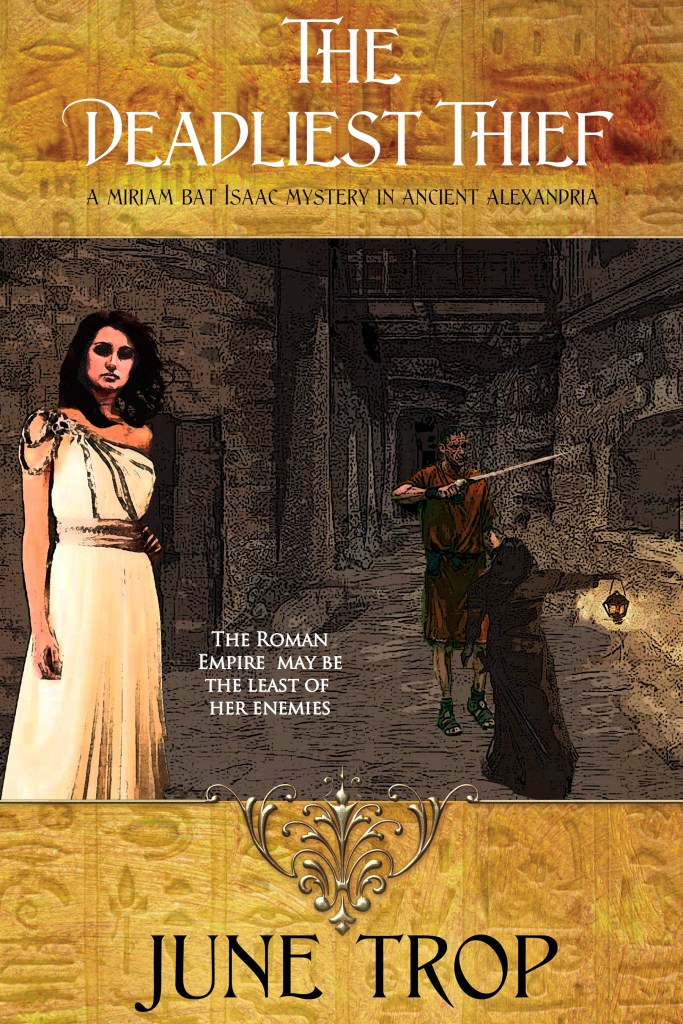
In the latest of her five adventures, The Deadliest Thief,Miriam’s best friend, Phoebe is kidnapped. At the same time,a brute of a man is stalking Miriam’s assistant, Nathaniel ben Ruben, an itinerant potbellied dwarf. Could this brute be the same man who kidnapped Phoebe? And can Miriam find her before it’s too late?

According to Kirkus Reviews, The Deadliest Thief has “an entertaining plot ending with a most unexpected twist.” [but] “The real strength of Trop’s atmospherically rich book lies in her ability to transport her audience to a distant time and place.” So, let The Deadliest Thief, e-book or paperback, take you into the Alexandria’s underbelly to help Miriam solve her most baffling case yet. 

The Deadliest Thief

Miriam bat Isaac, a budding alchemist and amateur sleuth in first-century CE Alexandria, becomes frantic when her best friend, Phoebe, is kidnapped. At the same time, a brute of a man is stalking Nathaniel ben Ruben, an itinerant potbellied dwarf. Could this brute, the last surviving jewel thief from the Temple of Artemis, be the same man who has kidnapped Phoebe?

Buy Links:

https://www.barnesandnoble.com/s/the+deadliest+thief?_requestid=261164

or wherever e-books or paperbacks are sold.

As an award-winning middle school science teacher, June used storytelling to capture her students’ imagination and interest in scientific concepts. Years later as a professor of teacher education, she focused her research on the practical knowledge teachers construct and communicate through storytelling.

Her books have been cited for excellence at the New York Book Festival, by Wiki Ezvid, the Historical Novel Society, and as a 5-star Readers’ Favorite.

An active member of the Mystery Writers of America, June lives with her husband Paul Zuckerman in New Paltz, NY where she is breathlessly recording her plucky heroine’s next life-or-death exploit.

Connect with June on her website www.JuneTrop.com or her Facebook page: June Trop Author.