In 2024, I Resolve To . . .

By Margaret Lucke

Here we are—halfway through January. Have you broken your New Year’s resolutions yet?

I recently came across this definition:

New Year’s resolutions = a to-do list for the first week of January

Maybe it’s true that most resolutions don’t last. In fact, a lot of people claim not to make them at all. But I sort of enjoy the annual ritual. If you’re like me, this is the year you’ve resolved to do things right—to break all your bad habits, finish all the projects you’ve been procrastinating on, and become that all-around perfect person you know you have it within you to be.

Most of my resolutions have to do with writing. It’s the same list I made last year, and the year before, and, well, probably every year since 2010.

If you’re a writer and you’ve neglected to make your own New Year’s resolutions, I hereby make you a gift of mine. I probably won’t keep them this year either, so someone else might as well put them to good use.

Note well: If carefully followed, these resolutions are guaranteed to lead to fame, fortune, and bestsellerdom. How do I know? Because they’re based on the never-fail counsel I’ve received over the years from how-to books, English teachers, and writers far wiser than I. Or is it than me?

That question leads me to:

Here are the rest of them:

3.  I will study the markets and never submit anything that is not tailored precisely to its intended home.
(I will also learn to read editors’ minds as well as their guidelines.)

4.  I will write about what I know.
(Hey, that puts me back to writing only once or twice during the whole year!)

5.  I will not try to second-guess market trends but will write only what speaks to my heart.
(Wait a minute—does anyone else detect a contradiction here? See Number Three.)

6.  I will keep pen and paper handy so that I can jot down ideas as they come to me.
(Especially those ideas that are so huge, so fabulous and solve so many plot problems that I could not possibly ever, ever forget them—until the next time I’m at my desk, when I will remember that I had this idea that was so huge, so fabulous … but I will have absolutely no recollection of what it was.)

7.  I will get organized.
(I’ve got a head start on this one. For New Year’s 2022 I bought myself a box of file folders. As soon as I find it, I’ll be all set to go.)

8.  I will eat right and exercise so that I will be in excellent shape for producing excellent work.
(That is, I will follow the Writer’s Diet Plan. It has been scientifically established that creativity is stimulated by the four basic food groups: caffeine, chocolate, wine, and nacho chips. And if getting up to refill your mug isn’t exercise, I don’t know what is.)

9.  I will quit procrastinating.
(Well, maybe I ought to wait until 2025 before committing myself to that one.)

10.  I will persevere, because writers with perseverance and no talent are more likely to succeed than writers with talent and no perseverance.
(All the books say so. Of course, it would be nice to have perseverance and talent both. Not to mention luck.)

11.  I will follow all the good advice I receive about my writing and ignore all the bad advice.
(And I will suddenly be blessed with the perspicacity to know which is which.)

12.  I will double-space my manuscripts when I submit them.
(Hey, I had to throw in one resolution that I might actually keep.)

So there you are—help yourself. Learn these lessons well, and let me know the minute these little gems make you rich and famous. And have a wonderful 2024!

My Muse and My Editor Talk About Challenges

“Yesterday my critique group was chatting about challenges we’re facing with our works in progress,” I announce as I walk into my office. “What would you two say are the biggest challenges when it comes to writing fiction?”

You two means my collaborators, my partners in crime—the Muse and the Editor who inhabit my head when I write.

“That’s easy,” says my Muse. She is lounging in the easy chair in the corner of the room, sipping from a cup of Earl Grey. “The biggest challenge is keeping her out of the way so I can let the ideas flow freely.”

“Ha!” snorts my Editor, who is sitting cross-legged on the desktop, a grammar book on her lap. “The biggest challenge is to keep her under control.”

“Control!” My Muse jumps up, and tea sloshes out of her mug. “Writing a story is a creative process. It’s all about inspiration. It’s not something you can control.”

I run to get paper towels so I can control the rivulet of tea that’s flowing across the floor.

“Writing is only ten percent inspiration,” the Editor is saying when I return. “It’s ninety percent perspiration. You do the easy part.”

Getting down on my hands and knees, I mop up the spill.

“Easy! You think coming up with ideas is easy? It’s grueling work.” The Muse clasps a hand to her brow and nearly kicks me as she flops back into the chair cushions.

The Editor blows a Bronx cheer. “Without me, your ideas would run around wildly all over the place. There’d be no coherence, no order, no story at all.”

“Nonsense,” the Muse retorts. “All you do is pester me about little stuff. ‘That word is spelled wrong. Put a comma here.’ Commas, shmommas. Who cares?”

“Who cares!” The Editor yells as she throws the grammar book to the floor. “Everyone should care. A misplaced comma can change the whole meaning of the sentence. Remember that time when—”

The Muse sticks her fingers in her ears. “La, la, la, la, la … ”

I toss the soggy paper towel into the trash. “Come on, you two, you know we’re all a team. You each have an important job to do.”

They’re too busy arguing to pay attention to me.

“You’re lazy,” shouts the Editor.

“You’re rigid,” yells the Muse.

“Airhead!”

“Stick in the mud!”

I raise my hands in surrender. “Enough! I’m getting out of here. I’ll see you two later, when you’ve settled down.”

“Wait a minute,” the Muse says. “You can’t leave.”

The Editor chimes in, “Yeah, what about our schedule? We’re supposed to be getting some writing done.”

As I walk out of the office, the Muse says, “There she goes again. Know what the biggest writing challenge really is?”

“Yeah,” says the Editor gloomily. “It’s getting the author to sit down and do it.”

So Happy to Be Here

by Margaret Lucke

Hello, everyone! I’m thrilled and honored to be joining the ranks of the Ladies of Mystery. So let’s get acquainted. Allow me to introduce myself.

I fling words around as an author, editor, and teacher of writing classes in the San Francisco Bay Area. I’ve always been fascinated by the power of stories and the magic of creativity.

My beginning as a writer came when I was four years old. For my dad’s birthday I decided to give him a book of my own creation, entitled We Are Going to a Birthday Party. I wrote the story—well, dictated it to my mom—and drew the illustrations. I cut a cover out of oilcloth and Mom helped me bind my book with yarn. I could not have been more excited. My first book! Nothing beats the thrill of holding your first book in your hands.

Okay, it was a bit short on plot and the character development left something to be desired. But a story had emerged from my imagination and been captured in this set of pages. And the most important literary critic in the world, my dad, said it was wonderful. I was hooked. I decided I was going to spend my life writing stories.

As a child I imagined myself sitting at a desk by a window that looked out on flowers and trees. I would sip tea as wonderful tales flowed effortlessly onto the paper. I would send them off to a publisher who’d send me fat checks, and eager fans would grab my novels off the bookstore shelves. I‘d do research in glamorous places. Dad, a stockbroker, had a client who spent three months of the year in some exotic locale—the Caribbean, southern France, a castle in Scotland—and the other nine months writing a novel that used that place as a setting and figuring out where to go next. That sounded like exactly the life I wanted to have.

The reality hasn’t quite turned out that way. But I do have a desk in front of a window, and I drink gallons of tea. And while the stories don’t flow effortlessly and the fat checks remain elusive, I can’t imagine anything I could do that would reward me more.

Beginning a new story is an adventure, an exciting and slightly scary journey into unknown territory. Fortunately I’m accompanied by my sidekick, the Muse. That is, sometimes the Muse comes with me. All too often, she’s reluctant or rebellious, and despite my urging, she refuses to pack up her duffel bag and set forth on the path. Instead she gives me a raspberry (not the edible kind), rolls over, and goes back to sleep. And I’m left by myself, staring at the blank page. Some sidekick. More like a kick in the pants. But eventually, between us we get the work done.

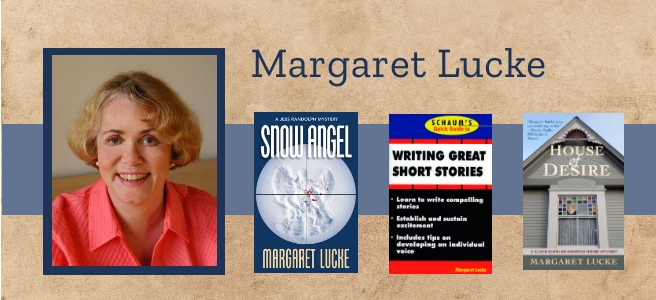
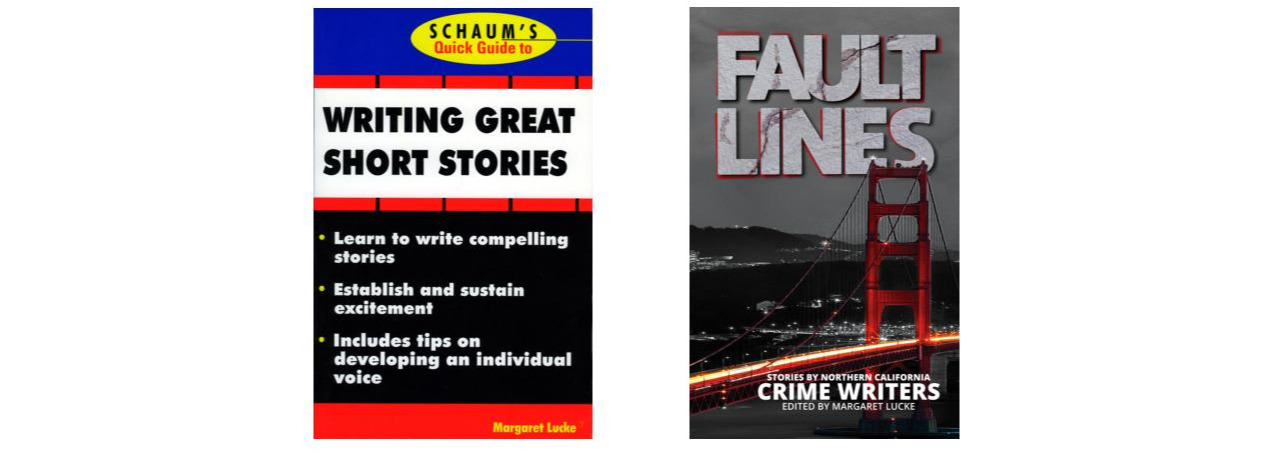
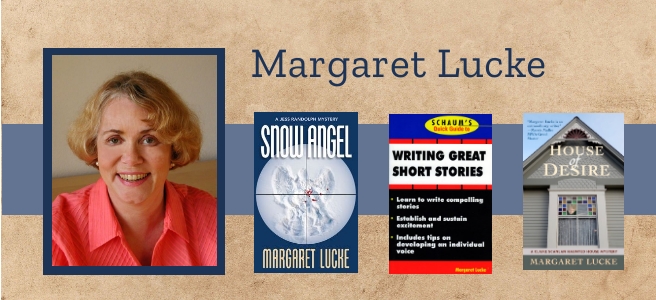
I write tales of love, ghosts, and murder, sometimes all three in one book. I’ve published four novels and more than 60 short stories, feature articles, book reviews, and scripts for mystery weekends. I’m the editor of Fault Lines, an anthology of short crime fiction published by the Northern California chapter of Sisters in Crime. I teach fiction writing classes and write nonfiction books on the craft of writing. As a writing coach and developmental editor, I enjoy helping writers move forward toward their writing goals.

All in all, I think the four-year-old aspiring author is pleased with how things have turned out.