What a Writer Does in Her Spare Time

By Margaret Lucke

Spare time? What spare time?

The other day someone asked me what hobbies I enjoy. When I’m asked a question like that, I never know what to say. A hobby is a pastime—that is, an interest or activity you enjoy passing time with when you’re not working. But when is a writer not working?

Really, it’s a 24/7 job. No matter what else we’re doing, half of our mind is focused on writing the book. With that kind of schedule, who has time for a hobby?

Consider some of my favorite activities. You might think they’re hobbies but they qualify as work just as much as the time I spend at my desk.

Reading. Writing changes how you read. When I pick up a book my mental red pencil is poised to rearrange sentences and trim out extraneous words. I nod at clever word choices and apt descriptions, and shake my head at clumsy ones. Every book is a potential course in professional development. How can I achieve what Author A does so well? How can I avoid doing things as badly as Author B? Sometimes, to my delight, a book absorbs me so completely that my mental red pencil disappears. Other times, it’s so busy that I get annoyed and set the book aside for good.

Movies. I’m a big fan of movies, and I especially like seeing them in a theater. The big screen, the dark auditorium, and of course the popcorn add a lot to the experience, if you ask me. A writer can learn so much from movies. How is the backstory made clear when there’s only dialogue, action, and visual cues to work with? How is the main character’s point of view made clear when we can only observe that person from the outside? How are the plot points presented and transitions made from Act I to Act I to Act III? By the time the credits roll, my husband is blinking back tears while I’m analyzing how the scriptwriter achieved that emotional impact.

Walks. A hike on a forest trail and a walk along a beach are my favorite forms of exercise—or. even a stroll around the neighborhood. I’m fortunate in that the San Francisco Bay Trail goes through my town, and it’s not unusual to find me there. I enjoy the fresh air, the sunshine, the bird song, and all of the story ideas that pop into my head. Maybe it’s the rhythm of the steps or the letting go of other thoughts as I attempt to be present in the moment. I try to remember to tuck a pad and pen into my pocket so I can be ready to grab the elusive ideas as they float by.

Sleeping. Sleeping is one of my better skills, and it’s definitely a way I enjoy passing the time, especially in the middle of the night. But even when I’m asleep, my story machine is cranking away. I’m sure I’m not the only writer who’s dreamed the entire plot of a novel during the course of a night. Of course, as soon as the alarm clock rings it all vanishes, except for a couple of tantalizing but meaningless tidbits. That’s not the point. What’s important is, even though my body is at rest my mind is still at work.

So none of those activities really count as hobbies. I can think of only one pastime I have that doesn’t contribute somehow to my writing: 

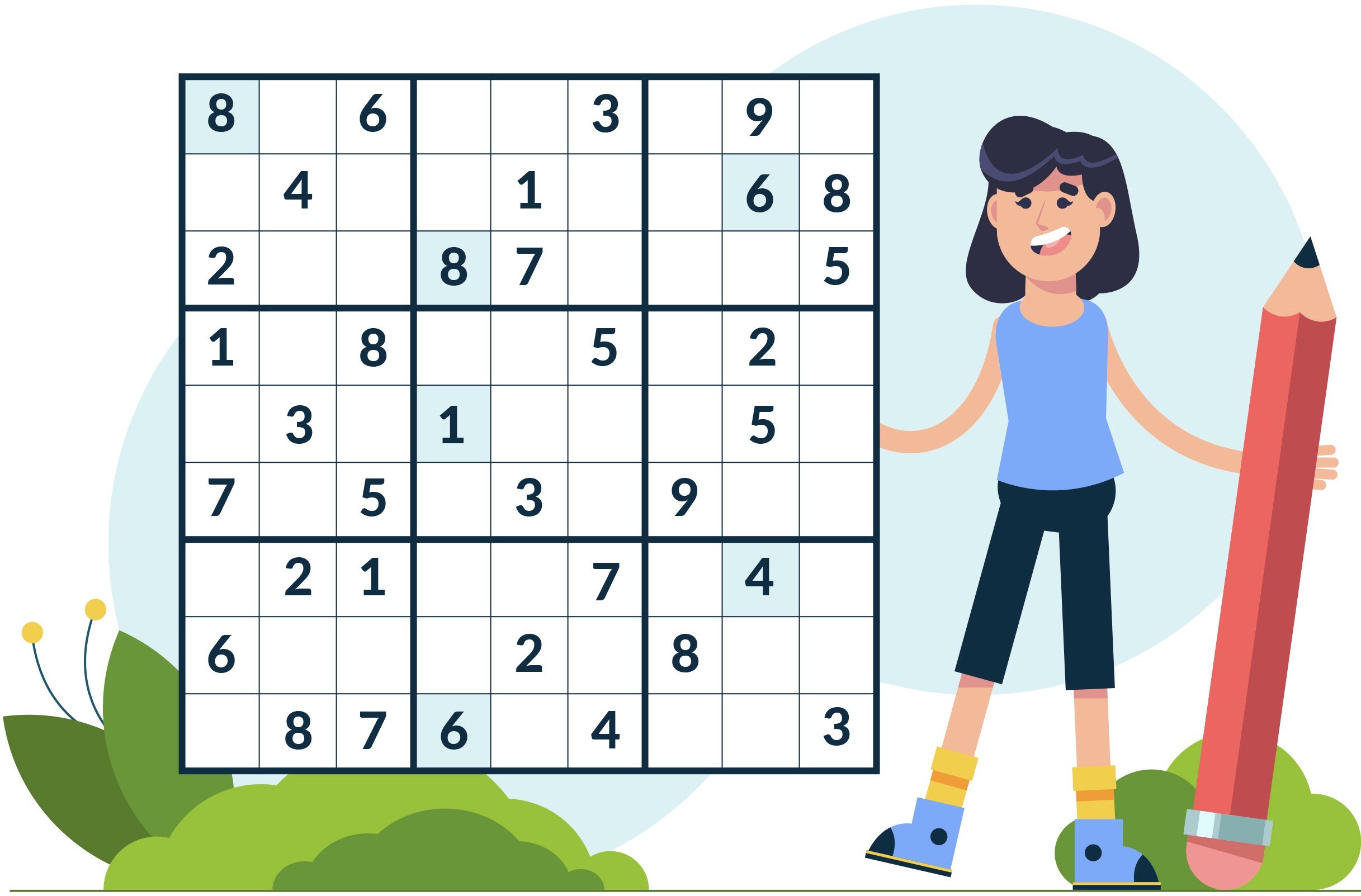
Sudoku. Nine digits. Arrange them in rows, columns, and squares so that none are repeated. No math, just logic. And it’s nonverbal, leaving no room for words and ideas to jostle their way into my head.

Except—what if there’s a major sudoku competition, with a top prize big enough to kill for? And what if it pits two expert players against each other, two experts with secrets in their pasts? And what if there’s a cheating scandal? And what if …

The People in My Head

By Margaret Lucke

“Many people hear voices when there’s nobody there.
Some of them are called mad and are shut up in rooms where they stare at the walls all day.
Some of them are called writers and they do pretty much the same thing.”
– Mystery Author Meg Chittenden

Do you hear voices when there’s no one there? Or have invisible people accompany you as you go about your daily activities?

Yes? Then welcome to the club. A fairly exclusive club, as it turns out.

A few years ago I took a short road trip with my good friend Penny, whom I’ve known since our college days. As we drove we chatted, the way old friends do, about our dreams, our daily lives, and the ways we would fix the world if only someone had the good sense to put us in charge. I mentioned the book I was writing, and she asked me this:

“What’s it like to have people running around inside your head all the time?”

The question startled me. “What? You mean you don’t have them?”

“Not at all. I can’t imagine it. Is it like hearing voices?”

Now, Penny is someone with a direct line to the creative process. She’s a brilliant cook who serves the most amazing dishes. A talented seamstress who tossed together fantastic costumes out of nothing for our college theater. A devoted lover of art, music and literature. Yet she didn’t have people occupying her head? How did her brain work then? How could she possibly think?

Since then, I’ve discovered that it’s actually rare to have a head filled with people. I’ve met other fiction writers who share this trait, but usually when I mention it to someone I get a strange look, as if the person is assessing whether I need to the services of my friendly neighborhood mental institution.

Perhaps I do. But I have a hard time understanding how anyone’s mental processes could possibly function in a different way.

I’ve had people wandering around in my brain ever since I can remember. They’re my equivalent of imaginary playmates. They tell me stories, ask me questions, give me answers, and help me clarify my thinking. They keep me company when I take long walks and as I’m trying to fall asleep at night. I’ve heard that writing is a lonely profession, and in lots of ways that’s true. But even when I’m at my desk by myself, I’m never really alone.

Some of the people in my head turn into characters in my novels and short stories. Often what sparks a story is a snatch of conversation that comes drifting through my brain. That sets me on a journey to discover who’s talking, and how they’re connected to each other, and what they’re discussing and why. Gradually the story emerges.

My first novel, A Relative Stranger, began this way. Walking to a bus stop, my mind let me overhear a late-night phone conversation. The woman who answered the phone clearly found the call unwelcome. The man who had called sounded desperate to connect with her. When I reached my destination, I wrote the conversation down. Who were these people?

The woman turned out to be a private investigator named Jess Randolph; the caller was her estranged father, turning up after many years to ask for her help because he was the prime suspect in a murder. Was he guilty? Would she help him? What would they do next?

In my story “Haircut,” a flash fiction tale that was recently published by Guilty Crime Fiction Magazine (you can read it here), I woke up one morning listening to the voice of a young woman named Hallie as she described the abrupt ending to what she had hoped would be an enduring romance. I got out of bed, stumbled to my computer, and wrote down what she had to say.

I may be making the process sound easier than it is. The people in my head don’t always want to be promoted from random guest to Story Character. Once they have me intrigued, they all too often ignore me. They fight me off or hide behind the curtains. They take a vow of silence. Sometimes they disappear.

And sometimes, gradually, after I beg and plead and cajole, they start to reveal their secrets.

At last the story is underway.

T Is for Thanksgiving – and Tea

By Margaret Lucke

’Tis the season for gratitude, and I hope that as you sit down later this month at your Thanksgiving table, you’ll have plenty of things to be grateful for. For me, one of the main entries on this year’s things-I’m-glad-to-have-in-my-life list is tea.

In fact that’s on my list every year, in fact every day. Each morning as I sit down at my desk to write, I give thanks to Shen Nung, who gave humanity one of its greatest gifts.

Shen Nung was an emperor of ancient China, revered for teaching his people the art of cultivating grain and for researching the medicinal value of herbs. He believed drinking water should be boiled to make it clean and healthy.

Legend says that one day in 2737 BC, while traveling through a remote region, he rested in the shade of a wild bush while his servants boiled a pot of water for him. A gust of breeze blew some leaves and twigs into the water, but the thirsty emperor drank it anyway. To his delight, the brew had a wonderful aroma and flavor.

The bush was Camellia sinensis, and the drink he discovered was tea. Shen Nung proclaimed it to be a beverage of many virtues. He claimed the person who consumed it would gain “vigor of body, contentment of mind, and determination of purpose.”

Who can argue with an emperor?

I would add one more benefit to the list—tea stimulates creativity. My creativity, anyway.

A mug of tea is my constant companion through the workday. In the morning I like to be fueled by one of the breakfast teas, like English Breakfast or Irish Breakfast, or by Newman’s Own Organic Black, which I favor because it tastes good and the company gives its profits to charity. I’ll take mine black, thank you—no milk, sugar, or lemon.

Later on I often invite the distinguished Earl Grey to join me at my desk. His namesake tea is the perfect pick-me-up in the late afternoon. For my birthday one year a friend gave me a fun present, an Earl Grey tasting: six packages of Earl Grey tea, each a different brand. I was surprised to discover how dissimilar they were—six very different flavors, even though they were all made to the same basic formula: black tea permeated with oil of bergamot.

Sometimes I vary my routine by indulging in something more exotic. Oolong, Darjeeling, Kilgiri, Keemun, Assam, Russian Caravan—the names alone are enough to spark the imagination.

I stop drinking tea around 6 p.m., in deference to my desire for a good night’s sleep. Tea does contain caffeine. Pound for pound it has more caffeine than coffee. However, tea gives you many more cups from a pound than coffee does, so cup for cup there’s less caffeine in tea. I’ve never noticed that drinking black tea in the evening really inhibits my sleep. But I prefer to err on the safe side, so my bedtime libation isn’t real tea but something herbal, like ginger or mint.

My kitchen cupboard holds several delicate porcelain teacups with matching saucers, and the cupboard is where they stay. You have to fill one of them three times to get enough tea to taste. I prefer a mug that has a generous capacity and a wide curve to the handle so it’s easy to hold.

I consider tea to be one of the most important tools of the writer’s trade, right up there with my writing software program and my solitaire game. A tool is something that helps you accomplish a task. Without tea, I’d never get any writing done. Uh-oh, my mug is empty. Excuse me while I go and refill it. Thanks again, Shen Nung!

~

Here’s something else to be thankful for this season—the Ladies of Mystery Cavalcade of Books! This catalog goes live from November 15 through December 31, 2024 and features books by all of the Ladies, some at special prices just for you! A great opportunity to get wonderful gifts for your favorite readers or yourself (you deserve some gifts too). You can find our Cavalcade of Books by clicking here.

Muse vs. Editor: Writing a First Draft

By Margaret Lucke

“Whee! Look at these! So pretty. So wise.”

My Muse is flinging words and ideas at what a moment ago was a blank page, while I scramble to get them down. She’s as happy as a toddler in a mud puddle, and about as disciplined. I can’t wait to see what she’s going to come up with. I’m starting a new story, and I know my best course of action is to let myself simply follow her lead.

“Hey, you two. What’s going on here?” Uh-oh. My Editor has arrived and is peering over my shoulder at the screen. “You want to say that? Really? Are you sure?”

I reread the freshly written paragraph. A moment ago it seemed just right, but suddenly I’m having second thoughts. “I don’t know. It sounds pretty good to me.”

The Editor harrumphs and shakes her head, as if pitying me for having such faulty discernment.

“Go away,” the Muse demands. “You don’t belong here. I’m in charge of the first draft.” She splashes the Editor with muddy water. Drops land on the pristine page, making it look smeared and dirty. I frown. Maybe what I put down isn’t so wonderful after all.

The Editor leans in closer, jabbing her finger at the screen as she tries to confirm my misgivings. “Look. That word’s misspelled. And you left out a comma.”

“Little stuff,” the Muse sniffs. “Mere tweaks. Come back when we’re finished being brilliant and creative.”

“Just trying to help,” the Editor retorts. “While I’m at it, let me point out that there’s no way Lucy would sneak out of the house on the night of the murder. Totally out of character.”

The Muse claps her hands over my ears. “Don’t listen! Make her go away.”

I pull myself free. “Listen, you two. Play nice. The Muse is right, it’s her turn. The first draft is all about letting her run wild while we get to know the characters and figure out what the story is.”

“Ha! Told you.” The Muse gives the editor a raspberry.

“Not fair.” The Editor slinks into the corner to sulk. “No one gets how important I am. See if I ever come back.”

I sigh. This is like refereeing a fight between kindergartners.

“Of course you’ll come back,” I say in my most placating voice. It’s true that the Editor needs to leave now, but I don’t want to alienate her forever. “When it’s time for the second draft, you and the Muse will collaborate. I’ll need both her art and your craft.”

“Probably won’t be worth my effort,” she grumbles. “What you’ve got so far is garbage.”

The Muse rolls her eyes. “Of course it is. The first draft is supposed to be garbage.”

“You can fix it,” I promise the Editor. “In the second draft, maybe the third one, too. And the final one—that’s all yours. You can change words and fix punctuation to your heart’s content.”

I wonder what the Muse will say to that, but her attention has wandered. She’s capricious and whimsical, and it’s not easy to keep her focused. Right now she’s amusing herself by slapping bits of mud together into a castle.

There’s a long moment of silence as the Editor watches the construction project. Finally she says, “That’s the poorest excuse for a horse I’ve ever seen. I can tell that making sense out of this story is going to be a huge job. You have my number. Call me when you’re ready.”

She leaves my office, but I know she won’t wait for the call. She’ll be back tomorrow. She can’t resist trying to interfere in the first draft.

I turn back to my keyboard. “Okay, Muse, let’s get back to work. Where were we?”

My Muse stands up and wipes her muddy hands on my sleeve. “Oh, I’m done for today. Do we have any ice cream?”

A Long Take on Short Stories

By Margaret Lucke

This weekend I’m in the Seattle area attending Left Coast Crime, a wonderful convention of mystery writers and readers. One of the highlights for me came on Thursday night, when the Northern California chapter of Sisters in Crime celebrated the official launch of its new anthology, Invasive Species. I’m thrilled that the book includes a story of mine. Called “Open House,” this tale recounts what happens two unwelcome visitors arrive at a showing of a home for sale.

So lately short stories have been on my mind, though not for the first time. I’ve always been fascinated by the power of stories and the joy of creating them. From the time I was very small, I thought of once upon a time as magic words with which to conjure a fascinating adventure. I started writing stories of my own when I was four.

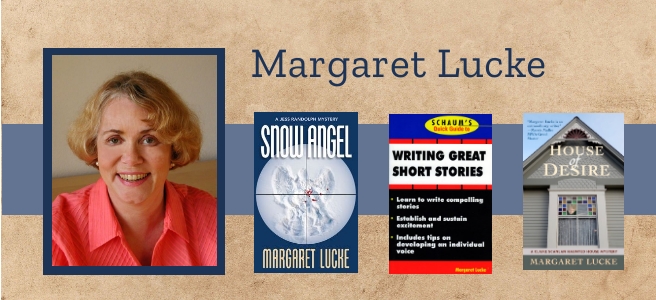
I teach fiction writing classes for the University of California-Berkeley’s Extension program. That gave rise to the opportunity to write a book for McGraw-Hill called Schaum’s Quick Guide to Writing Great Short Stories, which I’m told is a pretty good handbook for aspiring writers. I’ve edited story collections for a couple of authors, and a few years ago I had the privilege of being the editor for Sisters in Crime NorCal’s first anthology, Fault Lines.

What does it take to write a good short story? Writing a successful one takes less time than writing a novel, but in many ways it can present an equal challenge.

Not long ago, a local writers organization asked me to be the judge for their short story contest. A panel had narrowed the roster of entries to eight finalists, and my task was to choose which one would win first place.

It turned out not be an easy task. Too many of the entries were not, in fact, short stories. They were character sketches, anecdotes, or descriptions of random events. Some had no clear protagonist. In others, the narrative wandered around too long before settling into a plot. Several lacked tension. Too often, the narrative didn’t build to a logical ending, but simply stopped.

Since none of the stories stood out as the winner, I did a deep dive. After charting their strengths and weaknesses, I came up with a rating system, assigning scores to how well they handled characterization, plot, point of view, reader experience, language and style. When I totaled their points, the winner became clear.

When it comes to writing a short story, it helps to pay attention to two key words: short and story. That seems obvious, right? But it turns out that both words may be a little more complicated than they seem.

Let’s start with story, as this was something that several of the contest entrants didn’t seem to understand. In order to have a story, Something Happens to change a character’s life in some large or small way.

Here’s a definition I’ve found helpful:  A story is an account of the journey that a person takes as they move from one point in their life to another.

This might be a physical or geographical journey as the person moves from one spot on the map to another. The journey could cover a long distance, like a trip to a different city or a faraway planet, or a short one. Even getting out of bed in the morning can constitute a journey for some of us.

Or it might be mental or emotional journey, as the person gains new knowledge, new ideas, or a new understanding of themselves or others.

Early in the story, something happens that creates a challenge, a problem, or an opportunity for our person. So the person sets out on a path to meet the challenge, solve the problem or take advantage of the opportunity. Along the way, they encounter conflicts and obstacles that they must overcome if they are to succeed.

By the end of the story the person and their circumstances are different in some large or small way. Because of their accomplishment, or their failure, or the insights they’ve gained, nothing will ever quite be the same.

Change is the key—what is different for the person as a result of what happens? If there is no change there’s no story.

The protagonist in my short story “Open House” is a woman who, in midlife, is starting a new career in real estate. She is holding her first open house and has high hopes of having a buyer by the end of the day. That plan is derailed with the arrival of the two unsavory characters who are up to no good, but the encounter teaches her some valuable lessons about her own capabilities.

Then there’s short. Some sources define a short story as 10,000 words or fewer; others say 7,500. But it really depends on the market you’re aiming for. For Fault Lines we set a limit of 5,000 words, and I recently submitted a story to a different publication whose cap was 3,500.

But short means more than word count. It’s also a matter of focus. Compared to novels, short stories focus tightly on one event or sequence of events. They have fewer characters, cover a shorter timespan, and take place in a limited number of locales. They have room to raise and answer only one or two questions, to deal with only one or two themes. While a novel allows you delve into a complex series of events, relationships, backstories, and subplots, a short story requires you to make your point quickly and move on.

And while a novel might forgive you for meandering a bit, in a short story every single word has to pull its weight.  

Yet a short story also grants you a certain amount of freedom. You have the opportunity to to explore and experiment with language and form in ways that would be hard to sustain in a novel.

So go ahead and write your story in second person, tell it from the point of view of a giraffe in a zoo, and end it with an explosive twist. Have fun, and enjoy the challenge and creative reward that writing a short story provides.