The Freedom to Read

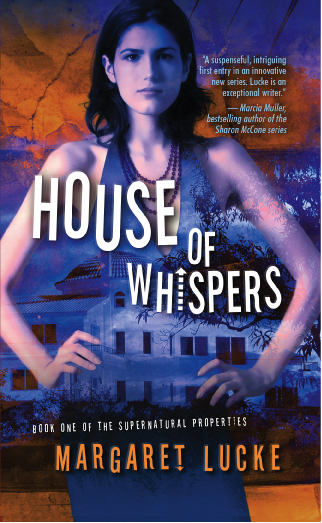
by Margaret Lucke

When I was twelve and in the seventh grade, I read On the Beach, by Nevil Shute, a grim novel about people facing death from radiation in the aftermath of a nuclear war. I chose it for the best of reasons—a cute guy in my class was reading it and I wanted to impress him.

A friend of my mother’s who was visiting saw me with the book and said to Mom, “Are you really letting her read that?”

Mom’s reply: “I don’t worry about what she reads. If a book is too adult for her, she won’t really understand what it’s talking about. And if she does understand, it’s already too late.”

When it came to my sisters and me, my parents set firm standards for behavior but not for ideas. While they urged us in the direction of certain attitudes, opinions and beliefs, they let us read whatever we liked. They understood that books can fire a child’s imagination and give her an experience of ideas, cultures, and aspects of the human experience far beyond the boundaries of her own family and community. They knew that books are a good investment yielding lifelong benefits.

Not everyone understands this. I’m all for parents being aware of what their children read, of discussing with them the books and the ideas they contain, even sometimes making them set aside a particular book until they are older. But too many people, afraid of the power books have to change lives, feel they have right to dictate what others can read—not just their own children, but other people’s kids. Other adults too.

This week, October 5-11, is Banned Books Week 2025, sponsored by the American Library Association, and today is Let Freedom Read Day, when the ALA asks everyone to take at least one action to help defend books from censorship and to stand up for the library staff, educators, writers, publishers, and booksellers who make them available. Every year the ALA compiles lists of hundreds of books for which people have filed written complaints requesting that the book in question be removed from schools and libraries. The reasons cited: the books have too much sex or violence or bad language, or they depict lifestyles or beliefs with which the complainant disagrees. Too often, the jurisdiction in question agrees and pulls the books off the shelves.

According to the free-of-expression advocacy group PEN America, this sort of book ban happened almost 7,000 times between July 1, 2024, and June 30, 2025. The Washington Post reported that during this period, the author who was subject to the greatest number of bans was Stephen King.

This is in the U.S., where free speech and freedom of expression have traditionally been dearly held principles. In many countries it’s the government that steps in to ban books, afraid of what its citizens might do if they had unfettered access to ideas.

I don’t know if On the Beach was ever banned or challenged anywhere, but a book I read and loved soon afterward made the list: Margaret Mitchell’s Gone with the Wind. Here’s a random selection of a dozen other favorites (among many) that have been so “honored”:

Where the Wild Things Are, by Maurice Sendak
Charlotte’s Web, by E.B. White
Green Eggs and Ham, by Dr. Seuss
Winnie-the-Pooh, by A.A. Milne
The Merriam-Webster Dictionary, 10th edition
The Great Gatsby, by F. Scott Fitzgerald
To Kill a Mockingbird, by Harper Lee
The Grapes of Wrath, by John Steinbeck
The Kite Runner, by Khaled Hosseini
Huckleberry Finn, by Mark Twain
The Glass Castle, by Jeanette Walls
Born a Crime, by Trevor Noah

Banned Books Week is an opportunity for librarians, booksellers, publishers, journalists, teachers, writers, and readers come together to celebrate the freedom to read and draw attention to attempts to restrict that freedom. You can learn more about it here.

A good way to celebrate? Find a book that has somewhere, at some time, been challenged or banned. Read it. And pass it on.

A Tribute to a Fine Writer and Great Friend

By Margaret Lucke

The literary world lost a bright light last week­—the redoubtable Chelsea Quinn Yarbro. To me, she was a muse, mentor, and great friend. To her many readers and fans she was, in some of their own words, “a brilliant writer and an amazing person,” “a consummate professional,” and “a truly extraordinary human being.”

We met in 1978 when I went to my first meeting of the Northern California chapter of Mystery Writers of America. She was the chapter president at the time, and gave me a warm welcome that grew to one of my closest friendships.

She defined what it means to be a prolific writer, having around 100 published books to her credit, along with numerous short stories and essays. Her work spanned just about every possible genre­—science fiction, fantasy, Westerns, romance, crime fiction, and horror. She won a Bram Stoker Lifetime Achievement Award in 2009 and received a World Fantasy Award for life achievement in 2014. 

Quinn was a Lady of Mystery in her own right, as the author of two mystery series, one starring the Native American attorney Charlie Spotted Moon and the other featuring a 1920s journalist Poppy Thornton who investigates crimes with the help of a ghost named Chesterton Holte. But what she is best known for is her groundbreaking novels that follow the vampire Count St. Germain across several continents and centuries. In a departure from the norm, her vampire was the good guy. “The horror in these books,” she said, “comes from what human beings do to each other.”

I shared with Quinn an appreciation of a good red wine, an affection for the cats with whom she shared a home, and two memorable trips to Italy. She shared with me a great deal of wisdom and encouragement when it came to writing.

She gathered some of that wisdom into a workbook called Fine-Tuning Fiction, which evolved out of a popular seminar she offered through the Writers Connection in Cupertino. She organized it five sections, or what she called The Five Ps, each covering an essential aspect of an fiction writer’s craft: People, Plot, Presence, Pacing, Poetics. A quick sampling:

PEOPLE – “All fiction begins with people, no matter how they are packaged, and the premise that people—which covers all species and forms of characters, human or otherwise—are interesting.”

PLOT – “When most people say plot they mean story-line, or the steps the characters take to get from one end of the narrative to the other. A plot is much more basic than that. It is the means by which the argument or conflict between two or more characters is resolved.”

PRESENCE – “The environment of a story is as much a character as the people in it. Presence is what pulls the reader in with your characters and convinces them that their experience is complete.”

PACING – “Pacing has to do with how quickly events occur in a story, and how much reaction time is allowed before another event occurs. Every story will reveal its own internal rhythm if you are willing to take the time to work the story through.”

POETICS – “[Words that seem mean the same thing] contain nuances that make them not quite synonyms, and therefore each has a slightly different meaning. These nuances are the province of poetics, or the esthetics of words. Just as presence and pacing each contribute to the impact of story-telling, so poetics give any piece of fiction its particular voice.”

You might be amused to know that the list of not-really synonyms she uses to introduces the Poetics discussion is: nude, naked, bare, unclothed, undraped, stripped, starkers, in your birthday suit, bare-assed, disrobed, in the altogether, exposed, in the buff, in a state of nature, unattire, unclad. I’m sure that list caught her readers’ attention. All of those terms mean “not wearing any clothes,” but the impression each of them conveys is different, sometimes strongly and sometimes subtly, from the impact made by any of others.

Ciao, Quinn. I’m going to miss you. Tonight I’ll raise a glass of your favorite red in your honor. Have a good time cavorting in the afterlife and telling everyone there great stories.

Words, Words, Words

By Margaret Lucke

The other day I fell down another internet rabbit hole. While working on a scene in my latest novel-in-progress, I was looking up some words to make sure I was using them correctly. I always like to catch these things, if I can, before the book is published and readers start pointing them out to me.

A couple of hours later, I resurfaced, the sought-after definitions in hand along with quite a few more that were totally irrelevant to the scene in question.

Doing the research can be more fun than doing the writing. It’s a great way to procrastinate while persuading myself that I’m actually working, just as much as if I were putting words on the page. Once I get started doing research like that, one interesting fact leads me to another, and to another. I’m especially fond of fun facts about words, writers, and literature. Here, for your amusement, are some of my discoveries:

*    The longest word in the English-language dictionary is pneumonoultramicroscopicsilicovolcanokoniosis, which is a lung disease contracted from inhaling volcanic particles. It contains 45 letters (I counted so you wouldn’t have to). But its primacy is challenged by the chemical name of a giant protein known as titin, which has 189,819 letters and, it is estimated, would fill around 57 pages if printed in a typical book. A YouTube video of a man pronouncing the word runs almost as long as the film Gone with the Wind. No wonder the dictionary leaves it out.

*    That long p-word disease isn’t much of a problem for writers, who are more likely to be afflicted with colygraphia, which sounds serious enough to earn us plenty of tea and sympathy. Most of us call this problem by its more common name — writer’s block.

*    After you recover from your colygraphia, it’s time to get back to work. Before you know it, you may find yourself complaining about mogigraphia, or writer’s cramp

*    Someone who probably suffered from mogigraphia was Peter Bales, who earned fame in Elizabethan England for his skill as a scribe and calligrapher. In 1590 Bales transcribed a complete copy of the Bible so tiny it could fit inside a walnut shell.

*    Though Bales was known to engage in contests and rivalries, I don’t know if he produced his Bible to win a wager. But some have taken pen in hand in order to win a bet. For instance:

>>   Editor and publisher Bennett Cerf bet Dr. Seuss $50 that he couldn’t write a book using only 50 words. Seuss responded by writing Green Eggs and Ham.

>>   Ernest Hemingway famously won a bar bet when his drinking buddies each put $10 in the pot and challenged him to write a story using only six words. Hemingway scribbled these words on a napkin — “For sale: baby shoes, never worn” — and collected the cash. This has led to an entire genre of six-word stories, some of which can be found at http://www.sixwordstories.net/

>>   Agatha Christie wrote her first book, The Mysterious Affair at Styles, after her older sister bet her that she couldn’t write a mystery novel in which the reader couldn’t guess the murder even though given the same clues as the detective – who in this case is Hercule Poirot.

*    Christie’s other famous sleuth is Miss Jane Marple. But Miss M. was far from the first female detective. That honor may belong to the heroine of a novella by E.T.A Hoffman that was published in 1819, more than a century before Miss Marple made her appearance. Both the sleuth and the novella are named Mademoiselle de Scudéri. That’s the same E.T.A. Hoffman, by the way, who wrote The Nutcracker and the Mouse King, which formed the basis of Tchaikovsky’s Christmastime ballet.

Who knew all these cool bits of trivia? Well, I know them, thanks to my research journey and the stops I made along the way. And now so do you. I’ll conclude this list with one final entry:

* A literarian is someone who loves literature and is dedicated to sharing that love with others. In other words, me.

What are some of the odder entries in your literary lexicon?

A Comma-dy of Errors

by Margaret Lucke

I don’t recall what the sentence said. I no longer know the subject of the report that contained it, although you’d think these details would have impressed themselves on my mind.

All I remember is the yelling.

I was working in my first editorial job, for a firm of international economics consultants. My role was to tidy up the grammar and punctuation in the proposals and reports that the economists produced.

The sentence in question was critical to the central point that the document was making. But it needed one small change. I inserted a comma. After making a few other tweaks, I sent the report back to the economist who’d written it.

When it came back to me for the next round of editing, my little fixes were intact. Except for that comma—the author had taken it out. So I put it back.

A few days later the report landed on my desk again. Time for the final proofreading.

Once more, the comma was missing.

Now, some commas are optional. Some are a matter of style. But the presence or absence of a comma can be crucial to the meaning of the sentence.

Take the title of author and editor Lynne Truss’s handbook on punctuation, Eats, Shoots & Leaves. It comes from an old joke about a panda that comes into a café, consumes a sandwich, and then fires a gun at the waiter. As the panda walks out, the manager yells, “Hey, what did you do that for?” The panda calls back, “I’m a panda! Look it up.” The manager finds a dictionary and checks the definition: “Panda: a black-and-white, bearlike mammal found in Asia. Eats shoots and leaves.” Simple and straightforward. But add that comma after eats . . .

Or consider this sentence from an Associated Press article I saw a while back: “Netanyahu has been an outspoken critic of the international efforts to negotiate a deal with Iran, which does not recognize the Jewish state, and supports anti-Israeli militants like Lebanon’s Hezbollah and Palestinian Hamas.” Having two commas makes a nonrestrictive clause of the words in between them (the ones I’ve italicized). This means that if you take out those words, the sentence should retain its meaning. But when you do that in this case, you’re left with “Netanyahu has been an outspoken critic and supports anti-Israeli militants …” Not what the author intended. You have to remove that second comma from the original sentence to make its meaning clear.

Of course other small changes in punctuation and, for that matter, spacing can alter meaning too. Consider the difference in response you’d get to these two ads:

Wanted: one nightstand.
Wanted: one-night stand.

And notice how changing periods to commas and changing their placement around gives you a different impression of an evening’s events (from KidsCanReadandWrite.com):

I ate. My mother washed the dishes. Then I went to bed.
I ate my mother, washed the dishes, then I went to bed.

A row of colorful commas

The comma in the economist’s report was like these examples—its presence or absence altered the meaning of the sentence. It needed to be there, yet the author kept taking it out. So I trekked down the hall to his office to explain why I’d added it and why keeping it was important.

He didn’t believe me. I was younger than he was, I was female, and I held only a lowly B.A. while he had Ph.D. He assumed that all of these factors were reasons to dismiss my arguments. In his opinion the comma was clutter, the sentence looked cleaner without it, and so it had to go.

I’m a calm and reasonable person by nature, not given to raising my voice. So I’m not quite sure how our discussion turned into a shouting match. But there we were, screaming at each other over a comma, while everyone else in the workplace gathered in the corridor outside his office to enjoy the entertainment

Finally the economist yelled, “Prove it! Show me the rule.”

“Okay, I will,” I snapped back, and I stomped away.

I spent the rest of the day scouring grammar guides and style manuals. Finally I found a statement about comma usage that was so clear and so close to the case of our particular little comma that I figured even he would get it. I ran back to his office and thrust the open book at him, jabbing my finger at the proof. “Here it is. See? See?”

I won. The comma stayed.

A Love Letter to Libraries

By Margaret Lucke

“I have always imagined that Paradise will be a kind of library.”
Jorge Luis Borges, author

A public library is an amazing place. You can choose a book or a DVD and take it home–for free. If you need a computer, you can use one there–for free. You can attend a concert, or hear an author speak, or take a child to listen to stories–all for free.

A library offers a wealth of education and entertainment at no charge. As it happens, though, it costs a lot of money to do that.

“A library is not a luxury but one of the necessities of life.”
Henry Ward Beecher, social reformer

Friends of the Library 25th Anniversary celebration

I’m on the board of my local Friends of the Library, which recently celebrated a milestone—our 25th anniversary. The library staff and another library support group honored the occasion by throwing us a wonderful party.

For nearly four decades, my town had no public library. It was the second largest city in California without one. When the state’s voters approved a bond for library funding in the late 1990s, local leaders decide to apply for some of that money. Some civic-minded folks got together and set up the Friends group to demonstrate to potential funders that building a library here had strong community support.

Hercules Public Library

There was a huge celebration when our beautiful new library opened in 2006. Our Friends group was proud to present to a check for $25,000, raised by sales of used books donated by the community, for the Opening Day Collection.

The enthusiasm continues. The library gets close to 25,000 visitors every quarter. Last year more than 10,400 people attended nearly 326 free programs, and patrons checked out 86,400 books and other materials. In many ways the library has brought the community together and become its heart.

Some people would have you think that in this era of Internet access and high-tech gadgets, public libraries are obsolete. Not so. They are well used though, sadly, not always well funded. The Friends are doing our bit help. To date, we’ve raised $350,000 to expand our library’s collections and support its programs.

“A library outranks any other one thing a community can do to benefit its people. It is a never failing spring in the desert.”
Andrew Carnegie, industrialist and philanthropist

Andrew Carnegie portrait

Steel magnate Andrew Carnegie (1835–1919), one of the richest men in the world in his time, was a big believer in libraries. At age 12 he emigrated with his family from Scotland to Allegheny, Pennsylvania, now part of Pittsburgh. Though the move ended his formal schooling, he was much impressed by a local businessman who, every Saturday, opened his personal library so workers could borrow books, thus allowing Carnegie to continue his education.

Carnegie vowed if ever he had any surplus wealth he would use it in lending books to others. Years later, he made good on that promise by giving some $56 million (a lot of money in those days) to build 2,509 public libraries worldwide, including 1,679 in the United States. He shaped the concept of public libraries in this country. If you have one in your community, you have Carnegie to thank.

“The best thing about the library is that it is available not only to me, but to everyone. It does not discriminate.”
David Horowitz, political writer

Libraries are among the most democratic of our institutions. The access they provide to computers, books, films, and music is invaluable, not only to individuals but to our society. Libraries bring people together. They enlighten and inspire. They open the doors to the world.

Some years ago I was hired by two Bay Area library systems to write the documents that would present their new strategic plans to their communities. Both of the planning task forces grappled with how to define the audiences they served. One opted to list the possibilities: “The Library welcomes all members of the community regardless of culture, ethnicity, age, gender, sexual orientation, physical ability, or socioeconomic status.” The other wrestled with the question for a while until one member said: “Doesn’t ‘everyone’ mean everyone?” So their statement simply says: “The library systems … promote[s] learning and enjoyment for everyone.”

Everyone is welcome. How many of our institutions can make this claim?

“Libraries are places where the imagination begins.”
Heather Barbieri, author

Have you been to your local library lately? I urge you to pay a visit and see all that it has to offer. While you’re there, check out some books, because funding is often based in part on circulation numbers. Join your Friends group. Make a donation. Vote for tax or bond measures that will secure its funding. Your library deserves your support.

“Libraries are a public good and a civic responsibility. They are about our future as much as they are our past.”
Andrew Lopez, university librarian