Guest Blogger ~ M.E. Proctor

Pretty as a Picture and Far from Innocent

By M.E. Proctor

Catch Me on a Blue Day, Book 2 of the Declan Shaw mystery series, takes place in Old Mapleton, a postcard-perfect town on the Connecticut coast.

It comes with Queen Anne cottages, a yacht club, a bakery-chocolatier, an art gallery, several cafés, including one next to the marina that serves delicious crab cakes and lobster rolls. The police station is in the Tudor style, and its dark beams and stained glass windows give it the appearance of a tavern, or an inn—Ye Olde Copper’s Nest, Declan Shaw muses when he first sets eyes on it. The old Customs House, restored, is a private residence on a point next to the commercial fishing harbor. The camp of a lesser robber baron is now a B&B, and art afficionados can visit an artist colony on the outskirts of town, by appointment.

Families flock to the beaches from Memorial Day to Labor Day. Dogs are not allowed on the beach. Other things are not allowed. The list is long; it includes ‘horsing around’.

Doesn’t it look like the perfect setting for a cozy mystery?

Before you settle down in a comfortable armchair with grandma’s Delft teapot in easy reach (I just read that Delft is fashionable again), I must warn you: I don’t write cozies.

Bad people do nasty things no matter the landscape. There are homicidal maniacs in Neverland. And all the notices painstakingly posted by the city council won’t stop mischief. Violence is even uglier in an ideal setting because nobody expects it.

But you, readers of Ladies of Mystery, have consumed metric tons of crime fiction and you’re already making guesses about what comes next.

  1. Small towns have secrets, buried deep.
  2. The detective has a good shovel.
  3. A love interest delivers inside information.   

I’ll try to stay away from big spoilers, I don’t want to ruin the fun, but I’ll knock down a few hypotheses.

Old Mapleton, CT, has a dirty past. Not in a Stephen King kind of way—it isn’t built on a burial ground, and it doesn’t suffer from recurring murder sprees—but it went through a traumatic episode of collective hysteria. A horrible murder happened there thirty years ago. A little girl, Ella, was killed. The town tore itself apart in a frenzy of suspicion, denunciations, anonymous letters, and recanted confessions, with the media stoking the fire. To this day, the case is still open. Lives were destroyed, and long-time residents remember. None of this is secret. Ella and Old Mapleton made headlines far and wide.

The detective, Declan Shaw, doesn’t come to town to poke in the trash of the past. An old friend, Carlton Marsh, asked him to help with research for his book. Marsh was a war correspondent and he’s gathering his articles on the Salvadoran civil war of the 1980s. Declan is recovering from a severe leg injury and intends to take it easy. Learning, upon arrival, that Marsh committed suicide throws him off kilter. Nothing in his last conversation with the reporter indicated that he was in any kind of trouble. The Old Mapleton chief of police agrees … even if he’s not eager to have a PI sniffing around. No fisticuffs and roughing up, the two men get along. In the claustrophobic town, they’re both outsiders. The chief calls himself ‘the token punk’, he doesn’t belong to the local elite and has a lot more in common with the rough trade on the wrong side of the tracks.

The love interest. Ha! The title of this post applies to her as much as it applies to the town. Isabel is in her late twenties, smart, pretty, not too hindered by morality, and bored out of her skull. When Declan walks into the art gallery she manages, her first thought is that maybe her summer isn’t a complete waste of time. This would be a meet cute if the lust thermometer wasn’t stuck in the high nineties. I had a lot of fun writing Isabel’s point of view. Let’s say that she has very, very, little self-control … and no, she doesn’t know anything about the cold case, or Marsh’s suicide, which will not keep her out of trouble.

I like complex narratives. How does a little’s girl death in New England connect to political upheaval in Central America? Carlton Marsh knew but he’s no longer around to make Declan wise. The path to the truth will be sinuous and dark. Through the woods where Ella was found, many years ago.

—-

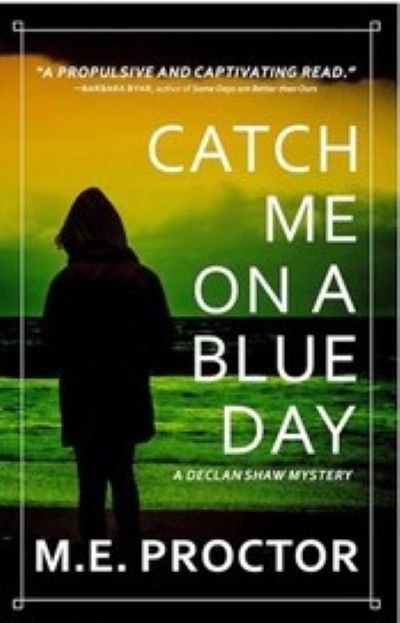
Catch Me on a Blue Day

A Declan Shaw Mystery
“For Ella and all the innocents slain by soulless men.”

It’s the dedication of the book on the Salvadoran civil war retired reporter Carlton Marsh was writing before he committed suicide.

A shocking death. Marsh had asked Declan Shaw to come to Old Mapleton, Connecticut to help him with research. He looked forward to Declan’s visit: “See you at cocktail time, a fine whiskey’s waiting.” They talked on the phone a few hours before the man put a bullet in his brains.

Now Declan stands in the office of the local police chief. The cop would prefer to see him fly back to Houston. He’s never dealt with a private detective, but everybody knows they are trouble. If only there weren’t so many unanswered questions around Marsh’s death … the haunting first three chapters of his book, and that dedication to Ella, a girl whose murder thirty years ago brought the town to its knees.

In Catch Me on a Blue Day, Declan is far from his regular Texas stomping grounds. He’s off balance in more ways than one, and the crimes he uncovers are of a magnitude he could not foresee.

Between the sins of an old New England town and the violence of 1980s El Salvador. And the links between the two.

Buy Links:

Catch Me on a Blue day is available in eBook and paperback

On Amazon at

https://www.amazon.com/Catch-Blue-Declan-Shaw-Mysteries-ebook/dp/B0FR3DWYGD/

From reviews:
“In Catch Me on a Blue Day, she combines the strengths of the best of the best mystery writers, writers like Raymond Chandler, Agatha Christie, and Janet Evanovich, to create a mystery novel that will have you saying, where has this terrific mystery writer been all my life?” —John Guzlowski, author of Suitcase Charlie, a Hank and Marvin mystery

M.E. Proctor was born in Brussels and lives in Texas. She’s the author of the Declan Shaw detective mysteries. The first book, Love You Till Tuesday, came out from Shotgun Honey. Catch Me on a Blue Day is the next installment in the series. She’s the author of a short story collection, Family and Other Ailments, and the co-author of a retro-noir novella, Bop City Swing. Her fiction has appeared in VautrinToughRock and a Hard PlaceBristol NoirMystery TribuneReckon Review, and Black Cat Weekly among others. She’s a Shamus and Derringer short story nominee.

Social Links

Author Website: www.shawmystery.com

On Substack: https://meproctor.substack.com

Facebook: https://www.facebook.com/martine.proctor

Twitter: https://twitter.com/MEProctor3

BlueSky: https://bsky.app/profile/meproctor.bsky.social

Instagram: https://www.instagram.com/proctormartine/
Guest Blogger ~ M.E. Proctor

The Detective Comes Calling

When I start working on a short story I never know much about the characters. I might have a place in mind—a bar on a beach, a path in the forest, an iced-over parking lot—or a line of text I woke up with, like this one that I used recently, curious to see where it would take me: Innocence doesn’t do it for me. Spoiler alert: somebody dies.

Most of my pieces unspool that way. Characters walk on stage, I get to know them, and things happen. Or nothing happens and the story goes asleep on my laptop, for a while or forever. That loose process works well for me, for short fiction.

A book is a very different animal.

If you write yourself in a corner in a short story the damage is minimal. You can shelve the draft, revisit it later and either find a solution or scrap it entirely. It’s disappointing but at worst you’ve only lost a few weeks. On the other hand, if you’re fifty thousand words into a book and hit a wall or run out of juice, it really hurts. The investment in time and the emotional commitment are substantial. Of course you can try to rescue the project. As Chandler said: In doubt, send in a guy with a gun. Sometimes it works, other times … Raise your hand if like me you’ve read books that feel like they’re limping to the finish line.

The pitfalls of winging it were very much in the back of my mind when I decided to sink my teeth into a crime novel. The problem is that I’m not a plotter. Detailing every beat of a story before sitting down to write it feels too much like a straitjacket. It sucks all the fun out of the project. Why bother to write it if I know everything, no surprises, from the get go? Still, I wanted to be better organized than usual. Start with an idea and develop a rough outline that could go the distance.

It was an excellent resolution.

It didn’t happen.

Because Declan Shaw threw me for a spin.

I was on the back porch, engaged in the creative exercise known as woolgathering, when a name popped into my head. Out of nowhere. Insistent. I’d never written anything, book or short story, that used the name of a character as a prompt. I was intrigued. Who the hell was this guy pitching a tent in my subconscious?

Names aren’t neutral. In life, we’re passive recipients—a gift from our parents. In fiction, the writers are in control. They can play with the mental images a name creates (Dickens mastered it). What does the name suggest about the character’s past, family, or cultural background? Smith evokes 1984 or The Matrix, Cadogan-Smith comes with horses and country estates, Smith-Underfoot might be a familyliving in Hobbiton.

Declan Shaw. What does it bring to mind? Irish heritage. He probably drinks whiskey and can tell a tale. Yes, I know, it’s a cliché. But seriously, with a name like that, what does he do for a living? I love antiheroes but I didn’t feel like spending an entire book with a hitman, Ken Follett did it so well in The Day of the Jackal, and, more recently, Rob Hart in Assassins Anonymous. So what? Reporter. I could see the byline, front page, above the fold. Then an insidious voice in my head whispered: Can you build a series around a journalist, how many cases can he cover, without stretching credibility? A series? The inner voice had to be kidding, there was no book #1 yet. It was ludicrous. But, but … I could smell the possibilities.

And that‘s how, right there, on my porch, Declan Shaw became a private detective.

The first scene I wrote had nothing to do with investigating. I pictured him as an eleven-year-old boy, standing at the bottom of a flight of stairs, looking up at his intimidating grandmother. She was a black-clad villain straight out of a comic book. I imagined the events that brought the kid to her place and the disastrous consequences that ensued. Readers won’t find any of that in Love You Till Tuesday, the first book in the series. Declan’s back story is in my back pocket and won’t come out until the time is right.

I forgot my resolution to outline and gave myself permission to improvise. The plan was to learn who my character was by writing him. It took a lot longer than I expected, three years, three manuscripts, a thousand pages, multiple false starts. None of that work made it into the book, but the effort was worth it. I knew Declan inside out. We were both ready to tackle Love You Till Tuesday. In some sort of orderly fashion.

My plot document looked like the output from a chaotic brainstorming session, a jumble of character sketches, a rough timeline, cryptic notes, dead ends and side stories. It was an unstructured and messy pseudo synopsis, with plenty of freedom between the lines to change almost everything. As I typed away, things changed indeed, and changed again after input from editors and beta readers, cuts and tightening up, but the original bones of the story remained. Until finally Declan Shaw made his official debut with his cigarillos, his cowboy boots, his good and flawed impulses, and his ironic take on the world. He’s good company. I’m keeping him.

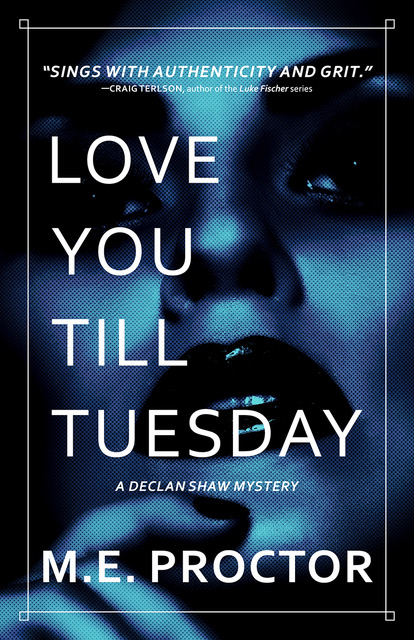
Love You Till Tuesday – A Declan Shaw Mystery

The murder of jazz singer April Easton makes no sense, and yet she appears to have been targeted. Who ordered the hit and why? Steve Robledo, the Houston cop in charge of the investigation, has nothing to work with. Local P.I. Declan Shaw who spent the night with April has little to contribute. He’d just met her and she was asleep when he left.

The case seems doomed to remain unsolved, forever open, and quickly erased from the headlines. And it would be if Declan’s accidental connection with the murder didn’t have unexpected consequences.

The men responsible for April’s death are worried. Declan is known to be stubborn and resourceful. He must be watched. He might have to be stopped. He’s a risk the killers cannot afford. The stakes are high: a major trial with the death penalty written all over it.

Buy Links:

Love You Till Tuesday is available in eBook and paperback.

Barnes & Noble, Bookshop.org, and Amazon at https://www.amazon.com/Love-You-Till-Tuesday-Proctor/dp/1956957707

From reviews:

If you think the crime fiction market has enough PIs, think again. Declan Shaw is the kind of PI this genre has been waiting for. Declan is a well-developed, complex and nuanced character, wrestling with his own internal conflicts as he investigates the murder of April Easton. Sharp, witty dialogue and a fast-pace make Love You Till Tuesday an engaging read—one of those books you can’t put down and keep reading late into the night. It is a fun, intense read from beginning to end and M.E. Proctor displays her incredible talent at creating a well-written and beautifully crafted book.

M.E. Proctor was born in Brussels and lives in Texas. The first book in her Declan Shaw PI series, Love You Till Tuesday, is out from Shotgun Honey with a follow up scheduled for 2025. She’s the author of a short story collection, Family and Other Ailments. Her fiction has appeared in various crime anthologies and magazines like VautrinBristol NoirMystery TribuneShotgun Honey, Reckon Review, and Black Cat Weekly.

Social Links

Author Website: www.shawmystery.com

On Substack: https://meproctor.substack.com

Facebook: https://www.facebook.com/martine.proctor

Twitter: https://twitter.com/MEProctor3 BlueSky: https://bsky.app/profile/meproctor.bsky.social

Guest Blogger ~ M. E. Proctor

The Long and Short of It

If writing a novel is a long-lasting love affair—and it better be passionate because there’ll be a lot of time spent in close quarters—what are short stories? A brief encounter burning bright, a summer romance, a little walk on the wild side … It sure feels like that for me at times. Short fiction is a gulp of fresh air after completing a book draft, a welcome reprieve from obsession, and a new way to look at writing when the work-in-progress leaves me so cross-eyed I don’t see anything anymore.

Short stories are like stretching exercises. Tension is released, relaxation ensues.

A character pops into my head, a place triggers an image, a memory surfaces, a sentence rings true, and an idea is born. Could it turn into a book? Maybe, and some have grown wings and gone the distance, but not all stories deserve a 300-page treatment. Often their strength is in the instant. Their intensity cannot be sustained without dilution in a full-length narrative.

“Rabbits”, one of my favorite stories in the Family and Other Ailments collection, is a good example. It is told from the perspective of a twelve-year-old boy who blanked out a dramatic event. We meet him when he starts remembering. There’s fear and confusion, and a growing sense of panic that is more acute and more immediate for being at the core of the story instead of distributed over book chapters.

I love the spontaneity of short stories, and the best ones are written in a feverish rush with very little rework. They scream to get on the page. I often go back for inspiration to Ray Bradbury, who knew quite a bit about short fiction. One of his quotes is printed in my brain: In quickness is truth. The faster you blurt, the more swiftly you write, the more honest you are.

I can ponder a scene in a book for days, finetune and rewrite it endlessly. That kind of needlepoint doesn’t work for my short stories. The struggle doesn’t improve them, it tends to suck all the life out of them. My files are full of false starts and abandoned fragments. No regrets, they just didn’t make the cut.

Then there’s the guilty pleasure of genre-hopping. I write mostly crime, both in short and long form. The rules of the genre are infinitely flexible and accommodate pretty much everything. Yet, sometimes I feel myself slipping into horror or science fiction. I have a soft spot for cool vampires and conflicted androids. They would not fit in my contemporary detective series. Or I may decide to take a stroll in the 1950s because I’m a sucker for fedoras and hardboiled dialogue. Short fiction is like a pastry shop. All these colorful macarons. And there’s no sin in wanting to sample them all.

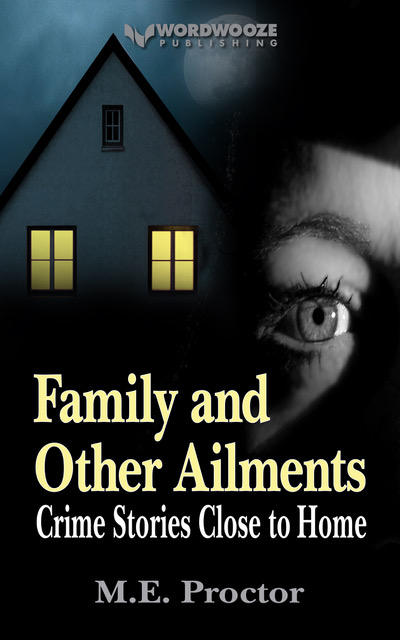
There are twenty-six tasty treats in my short story collection, Family and Other Ailments. Have a bite and tell me which one makes you want to come back for seconds. The main character of the book’s title story has already earned a return engagement. In a book.

Family and Other Ailments – Crime Stories Close to Home

Blood ties. The family we’ve been given, the friends we make, the loves we keep, and those we lost. The twenty-six stories in Family and Other Ailments (Wordwooze Publishing) teeter on the brink, hover at the periphery or even the possibility of crime.
The collection opens with “Spy Head,” a tale of friendship after a crushing trauma. In “Texas Two-Step,” brotherhood leads to a wicked double-cross. “Razorbills” shows a young woman seeking freedom from the prison-like caring of her sibling. “Black and Tan” slips into domestic horror, as does “Mutti,” with a hint of the fantastic. “Hour of the Bat” and “Bag Limit” are deep woods Texas noir, while “A Head for Numbers” and “No Recoil” go west, to the stark unforgiving beauty of the desert.

Buy Links:

Family and Other Ailments is available in eBook, paperback, and audiobook.

All links are accessible here: https://books2read.com/u/3Lx0v5

From reviews:

“Channelling distinct voices, subtle humor, and endings that plant a fist in your gut, Proctor’s Family and Other Ailments is a terrific collection of crime, suspense, and fear. The tales are carefully calculated, with each scene, each piece of dialogue building to that oh so important final strike: a crescendo point that leaves the reader jarred.”

M.E. Proctor was born in Brussels and lives in Texas. Her short story collection Family and Other Ailments is available in all the usual places. She’s currently working on a contemporary detective series. The first book comes out in August 2024 from Shotgun Honey. Her short fiction has appeared in VautrinBristol Noir, Pulp ModernMystery TribuneReckon ReviewBlack Cat Weekly, and Thriller Magazine among others. She’s a Derringer nominee.

Author Website: www.shawmystery.com

On Substack: https://meproctor.substack.com

Facebook: https://www.facebook.com/martine.proctor

Twitter: https://twitter.com/MEProctor3