The Research Monster – or – Down the Rabbit Hole

by Janis Susan May/Janis Patterson

Hello, my name is Janis Susan and I am a research geek.

I have always believed that historical accuracy in our fiction is of paramount importance – equal to that of a good story, in fact, and the further back in time we go the more important it becomes. Why? Because it is sad but true that a lot of readers get most of their knowledge of history through fiction and as writers we have the responsibility to make sure that the history in our books is as correct as we can make it. And by correct, I mean as it really was, warts, unpopular language and beliefs, politically incorrect (according to current standards) behavior and all. A lot of what happened in the past is unacceptable in today’s climate, but that doesn’t matter… it’s the past! As someone said, they do things differently there.

There are those who say that close adherence to history doesn’t matter, that only the story is important. I say that’s dishonest and lazy. It’s just as easy – as if writing anything were easy – to make a story historically accurate as it is to slap something together and call it historical. If an author is going to disregard history then he/she should at least be honest and call it alternative fiction.

I remember a mystery I read a couple of years ago that sent my blood pressure soaring. It wasn’t a bad story – the characters were fleshed out, the clues were there, the descriptions of physical objects and places were fairly good (if a little on the loose side, but hey – if they weren’t enough to set a history geek like me screaming, they were pretty much okay) and the mystery itself was involving and well-resolved. What sent me over the edge was that while the storyline was acceptable, the main characters dashed impossibly quickly back and forth over the Atlantic to Europe chasing clues. You see, the story was set in the mid-1920s, and transatlantic air passenger flights didn’t begin until 1938-1939 (depending on the parameters of different research sites) so there is no way the characters in this book could have zipped back and forth across the Atlantic – after all, Lindbergh didn’t make his history-making solo transatlantic flight until 1927.

The first sort-of-real transatlantic flight was indeed made in May, 1919, in a seaplane called the NC4. However, because it had no reliable navigation equipment, the plane would fly at night shooting their position from the stars. Then in the day, they would land on the water and sleep, and take off again when the stars came out. They were also followed by a Navy warship of some kind in case they crashed. As a side note, I have seen this plane in the Naval Aviation Museum (fascinating – do go if you can!) in Pensacola. It is huge! I mean, really really huge, so big you can’t get a picture of the entire thing in one shot. It is also so incredibly flimsy that I marvel any man would risk his life by flying in it.

Back to the discrepancies in this book – the first passenger transatlantic flights were Zeppelins, flying from Germany to New York, and they took four days. Commercial heavier-than-air transatlantic flight didn’t begin until 1938-1939 (again depending on the parameters of different research sites) so there is no way the characters in this book could have gone back and forth across the Atlantic in mere hours like they were on some modern jet.

See what I mean? Looking up one little fact like the date commercial transatlantic flights began and off I go down the rabbit hole of research.

Another example – some time ago I was judging a Regency romance contest. One of the entries was okay – fairly decent writing, good-ish story… nothing to rave about, but okay. Until the hero reached into the pocket of his Bath-cloth coat and pulled out a fountain pen to sign something. Wow! Talk about hitting a wall! FYI – fountain pens were not invented until 1827, when a very primitive one using a goose-quill nib was patented in France, or if you prefer, the modern steel-nibbed version which was patented in 1884. (See – I’ve spent the last 20 minutes or so reading about the history of fountain pens – never knew they could be so fascinating!) In either case, though, there is no way our Regency hero could have used one!

I gave the book the average scores it deserved on plot, writing, etc., but in the ‘anything else’ category I gave her a zero on period accuracy (I would have given her a minus score, but there was no way to do it) and explained why in a kindly tone. Wow! I got a letter back from her so hot that the flaming pixels almost burned through the screen, demanding to know why I had marked her down for ‘such a little thing.’ “After all,” she screeched, “it’s an old-fashioned pen – who will know the difference?” Ticked, I replied back “Anyone with a brain and the slightest knowledge of history.”

It is unfortunate that far too many readers learn about history from our books instead of academic sources and for that reason alone we need to be as accurate as possible. There are eras about which we have to extrapolate from scant knowledge – the Ice Age, for example, or third century sub-Saharan Africa – but in most historical ages (especially the popular ones like Ancient Egypt or Regency England or medieval Europe) there are lots of research materials to choose from and explore. It is part of our responsibility as writers to do so. Again, far too many readers get a great deal of their knowledge of history from fiction, and we can and should never forget that those who do not remember history – good, bad and indifferent – are condemned to repeat it.
Privacy, Responsibility and General Robert E. Lee

by Janis Patterson

On this and other blogs I have always ranted about the necessity of a writer for privacy, of how we shouldn’t have to open ourselves and our personal lives up just because our fans want us to or because we need the publicity. Privacy is very important to me and always has been. Some say that by being too open, or too outspoken on social media we run the risk of losing or even alienating fans, and that is a distinct possibility. No sane person wants to damage their career deliberately. For some reason writers – especially genre fiction writers – are not supposed to be controversial. Mean people who disagree with us, we are warned, will flock to our retailers and give nothing but bad reviews in an attempt to hurt us and complain about our attacking their freedom of speech if we complain.

That sounds more like bullying than freedom of speech.

However, there are things which supercede a career. We have all been counseled to be quiet or at the most neutral about some things, politics and religion primarily. That’s good advice, but I think we are human beings and citizens first, and some things trump both the career and neutrality cards.

I live in Dallas, which is controlled by a very liberal mayor and city council – all of whom are bound and determined to take down a statue of Robert E. Lee that has been standing for over 80 years – all in a rush of indecent and (in my opinion) barely-legal haste. The powers that be had a crane ready to dismantle the statue within minutes of the council’s vote. (After over 80 years in the same place it suddenly had to be removed THAT AFTERNOON? Sounds like something’s fishy to me.) Had not my wonderful husband rushed to file a Temporary Restraining Order we would have lost an incredible work of art. The statue (or as the council member spearheading this idiocy calls it, the ‘statcha’) is one of the finest examples of heroic-sized bronze art in the country. Whoever/whatever the statue (statcha) represents, the fine detail work, the intricate delineations, the entire piece is exquisite and to take such a work of fine art out of the beautiful park setting created for it decades ago and probably out of public view forever is just plain heinous.

But that’s not the worst. Dallas is a perpetually cash-strapped city where (among other things) it can take months to get a pothole repaired, and where over 400 policemen quit the force last year because of the poor pay and a very shaky, poorly managed pension fund. Even with such financial problems the mayor and the city council simply cannot wait to pay over (and maybe a LOT over) $400,000 just to remove the statue. One statue. And that’s when even the liberal media admits that over 80% of Dallas citizens want the statue (and all such monuments) left alone.

How can I as a tax-paying citizen of this city stand still for such deliberate fiscal irresponsibility? How can I remain silent when our tax dollars are being wasted so egregiously? How can I ignore it when the city is always complaining that they don’t have enough money and say our taxes should go up yet again but our services always seem to shrink? When I think of how that almost HALF A MILLION dollars (and probably more before all is said and done) could be spent on paying our police the salaries they should have, or putting after-school enrichment programs in underprivileged schools, or creating some health-care storefronts in the poorest areas of town, or…

There are so many ways that money could be used constructively, and as a citizen I must raise my voice in spite of the wisdom that says writers should not offend anyone, that stating what you feel or believe or espouse can damage your career. I am not so naïve as to believe that there are not people who will judge my stories by my activism, even though those stories have nothing to do with it. Frankly, I don’t care. I was a human being before I was a writer, and I will be a human being after I quit being a writer.

I have a conscience. I have a voice, and I should have a say about what affects me, be it a statue or a tax increase or a mis-managed pension fund or whatever! After all, it is my hard-earned tax money that the powers that be want to squander so idiotically. I love writing, and I love my career, but life is more important than selling books. If we do not stand up for what is right, for the love of fine art and the integrity of history, for freedom of expression, we have no right to complain when things go wrong. That’s why I’ve spent days urging people to telephone or email the mayor and the city council to stop this attack on freedom, fine art, history and the will of the people.

Plus, my most recent exercise in activism is self-serving, and I believe all writers should applaud. Everything offends someone, so if a small minority can dictate – for no real reason other than they don’t like it – the removal of a statue that the majority wants left alone, how long will it be before they start burning the books they don’t like? Or destroying the art?  And after books and art, what next? People?

Remember, those who do not remember history are condemned to repeat it.

Writing Would Be Perfect If…

by Janis Patterson

I mean it. Writing would be so perfect if it weren’t for the readers.

I know, that is a very incendiary statement, but it’s true. We’re asked to live up to readers’ expectations without being given much of a hint as to what those expectations are. Or what they’re going to be in six months or a year, after some big unexpected blockbuster shows up and turns everything we thought we knew into a fruit salad.

Have you ever noticed how so many of those big unexpected blockbusters are usually done by people who have never published a book before? Without the need to cater to a pre-conceived notion of what readers (and publishers!) want, they write what they want. But I’ll bet there are many many more who write what they want and never get by the second reader at an agent’s or publisher’s office. It’s the one that gets through that messes everything up for us working professional mid-list writers. We’ve finally (we think!) worked out the reading habits of our demographic and adjusted our plotting/writing accordingly and some of us make a fairly decent living doing that.

Then – boom! Some off the wall writer hands in a new style of book and suddenly that’s what everyone is wanting. I’ll bet all those writers who hit the jackpot aren’t trying to make a living off their writing, that they have jobs to pay their rent and bills, but they don’t mind messing things up for the rest of us. Humph!

It has become a bad joke in the writing industry that publishers are eagerly seeking something like [insert name of current bestseller here] – something just the same, but different. I have known writers who start to growl menacingly when told this and publishers don’t seem to understand that such a statement is not really good corporate communication.

Sadly, though, it isn’t just publishers and agents. I have talked to readers about this phenomenon and am astonished at how easily the little darlings are led – of course, they are the same people who rush to buy a detergent that screams “NEW” and “DIFFERENT” when the only things new and different about the product are that the boxes are smaller and the price higher.

I have talked to readers (in both romance and mystery, as I write both) who are upset with the new fashion of genre bending. I recall one most decisive woman who hated the idea, saying “When I read a story I want this to happen, and then this, and then this.” She was not happy when I asked if she were so rigid in her reading desires why didn’t she just read the same book over and over again and save herself some money.

Her reply was fit for neither print nor pixels.

I guess you really can’t please everyone. Sigh.

Splits, Murders and Happy Endings

by Janis Patterson

I have a split personality. No, really it’s true. I do.

Part of the time – as Janis Patterson – I delight in writing the foulest murder, stories of people who exterminate their fellows without a thought or qualm – and what is really scary is that I like it! I delight in finding new and obscure ways of killing someone, and am absolutely over the moon when I discover how such a heinous act can be gotten away with scot-free. (The only unfunny part of this was when in real life a truly creepy person asked me if I do consulting. Brrrrr…..)

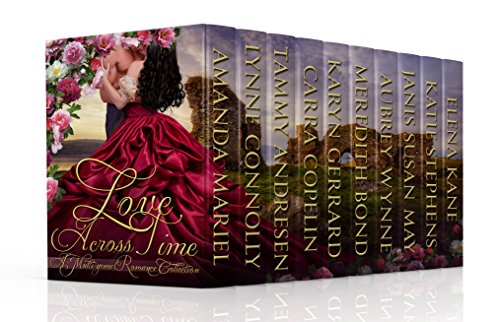
However – the rest of the time – as Janis Susan May – love-across-time-cover I’m an unabashed romantic who writes tender stories of two imperfect people surmounting obstacles and finally find the perfection of true love. I adore giving them trials and misunderstandings and difficulties and differences of opinion, making it seem that they will never get together… then just when things look darkest bringing them together in a satisfying happily-ever-after ending.

And never, hopefully, shall the twain meet.

So what causes this rather radical dichotomy? I have no idea. I just know that some stories demand romance and hearts and flowers, while others have to have revenge and murder. Those of you who know me know a little about my working process – I don’t plot and I don’t do character sheets or anything like that. The stories just come… and so do the characters, independent people who simply walk in, tell me their name (and Heaven help me if I try to change it) and what they’re going to do. Far too many times I don’t feel like I am writing but instead merely transcribing.

It makes for an interesting work process. On the other hand, I am never bored. And neither are my readers.

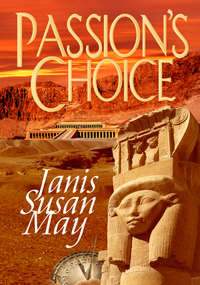
For example, my Ancient Egyptian time travel romance PASSION’S CHOICE is now not only a standalone novel, it is also included in the Love Across Time box set – ten full novels by bestselling authors, right now on sale for 99 cents at Amazon! An unbelievable bargain you should go get immediately! PASSION’S CHOICE is the story of Elissa, an average young American woman on a tour in Egypt when she falls over the railing at Deir el Bahri, temple of the female pharaoh Hatshepsut. The only thing is, when she hits the ground the temple is under construction, and the general in charge of the project believes her to be a pleasure woman. (You can guess what that is, can’t you?) Before she knows what’s going on, Elissa finds herself in a dangerous masquerade at the pharaoh’s court, one that not only puts the life of the man she loves at risk, but the fate of Egypt – and perhaps the future – as well.pc-web-small

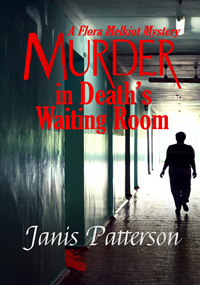
By contrast, my newest murder mystery release is about arrogant, wealthy, aged sleuth Flora Melkiot, who has been called the dark side of Miss Marple. In MURDER IN DEATH’S WAITING ROOM, Flora has been confined to a rehab facility by her painfully conventional daughter, an act that infuriates Flora, who says it was only a little traffic accident and she could manage perfectly well with a broken wrist in her own home. Then first one of the patients and then another are brutally murdered, and Flora once again finds herself in the position of solving the crimes. As always, Flora is convinced that she can do anything… and usually she not only can, she does. When drugs get added into the mix, what should be a place of healing comes perilously close to becoming a death trap. midwr-web-promo-small

See? Two completely different kinds of writing, genres, even characters, but just one of me. One of my longtime beta readers – who has read almost every word I’ve ever written – looked at me one day and asked how I did it. How did I manage two such different genres, two such different conventions, two such different worldviews and do both of them equally well. I thought for a minute, then gave her the only answer that was possible.

I don’t have a clue.

Public Speaking, Self-Publishing and Scars

by Janis Patterson

Last weekend I gave a workshop at our local MWA chapter on self-publishing. Not that I’m an expert, or anything like that, but you realize that to be an authority on something you only have to know a little more than everyone else, and I have been self-pubbing since 2013. Besides, I was dragooned into it by my fellow chapter board members!

Normally when I give a workshop or a public speech I write it out, agonizing on the exact nuances of words and the rhythm of sentences. Yes, I am a control freak. Unfortunately, that means I usually read the presentation, making sure each word is exactly as I wrote it – in other words, giving a boring program that would have been better as a magazine article.

I don’t mind public speaking; it’s not my favorite thing to do, but it is easy and not unpleasant. I know there are some who are absolutely terrified to speak in front of people – my own dear mother was one – but I just don’t understand that. Know that such panicky fear exists, and accept it, but don’t understand it. I don’t see any difference between talking to five people or five hundred.

Anyway, due to work and life and other uncontrollable things I didn’t write down my speech – only made notes of topics that had to be covered. And agonized about their order; apparently you can’t turn off the control freak gene. It would be okay, I thought; we’re a small chapter and I know everyone there. Ha!

I was astonished at how quickly the room filled up. We finally ended up with more than double our usual attendance, and there were some people there I had never seen before. Well, it was too late to back out, so I sat down at my improvised speaker’s table, and started to talk. The Husband says there has never been a time I couldn’t talk!

I talked for over an hour, almost an hour and a half. (My father used to say, Wind her up and she talks…) There were some very intelligent questions, and some very elementary questions, but that’s okay, because everyone starts out not knowing everything – or sometimes anything. I stressed that what I was saying was based on my experience, that their mileage or choices might vary, that there were choices to be made that only they could make. That is the essence of self-publishing, I think – self responsibility. The choices you make will affect the results you get but – aside from a few basics – like to sell a book you have to finish it and get it out there – every choice and everything that is done devolves on you. If it gets done, you have to do it.

The workshop went rather well, though I must admit it was a little unsettling to see all these people – friends and strangers alike – scribbling down seemingly every word I said, just like I had maniacally taken notes at the workshops of important people. Yes, it was a bit of a rush – half elation and half sheer terror. And although public speaking doesn’t really faze me, I’m glad it’s over.

Will I do another one? I honestly don’t know. I’m glad I did this one. I hope that everyone there has an easier path to self-publishing because of what I said. I know I owe a lot to those who went before me into this brave new world, but even so I still accumulated my share of scars and mistakes. Perhaps that’s called growth