The People in My Head

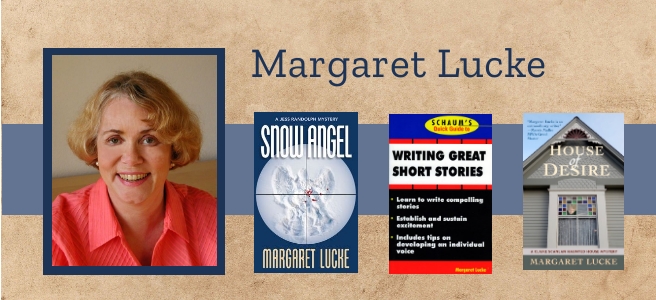
By Margaret Lucke

“Many people hear voices when there’s nobody there.
Some of them are called mad and are shut up in rooms where they stare at the walls all day.
Some of them are called writers and they do pretty much the same thing.”
– Mystery Author Meg Chittenden

Do you hear voices when there’s no one there? Or have invisible people accompany you as you go about your daily activities?

Yes? Then welcome to the club. A fairly exclusive club, as it turns out.

A few years ago I took a short road trip with my good friend Penny, whom I’ve known since our college days. As we drove we chatted, the way old friends do, about our dreams, our daily lives, and the ways we would fix the world if only someone had the good sense to put us in charge. I mentioned the book I was writing, and she asked me this:

“What’s it like to have people running around inside your head all the time?”

The question startled me. “What? You mean you don’t have them?”

“Not at all. I can’t imagine it. Is it like hearing voices?”

Now, Penny is someone with a direct line to the creative process. She’s a brilliant cook who serves the most amazing dishes. A talented seamstress who tossed together fantastic costumes out of nothing for our college theater. A devoted lover of art, music and literature. Yet she didn’t have people occupying her head? How did her brain work then? How could she possibly think?

Since then, I’ve discovered that it’s actually rare to have a head filled with people. I’ve met other fiction writers who share this trait, but usually when I mention it to someone I get a strange look, as if the person is assessing whether I need to the services of my friendly neighborhood mental institution.

Perhaps I do. But I have a hard time understanding how anyone’s mental processes could possibly function in a different way.

I’ve had people wandering around in my brain ever since I can remember. They’re my equivalent of imaginary playmates. They tell me stories, ask me questions, give me answers, and help me clarify my thinking. They keep me company when I take long walks and as I’m trying to fall asleep at night. I’ve heard that writing is a lonely profession, and in lots of ways that’s true. But even when I’m at my desk by myself, I’m never really alone.

Some of the people in my head turn into characters in my novels and short stories. Often what sparks a story is a snatch of conversation that comes drifting through my brain. That sets me on a journey to discover who’s talking, and how they’re connected to each other, and what they’re discussing and why. Gradually the story emerges.

My first novel, A Relative Stranger, began this way. Walking to a bus stop, my mind let me overhear a late-night phone conversation. The woman who answered the phone clearly found the call unwelcome. The man who had called sounded desperate to connect with her. When I reached my destination, I wrote the conversation down. Who were these people?

The woman turned out to be a private investigator named Jess Randolph; the caller was her estranged father, turning up after many years to ask for her help because he was the prime suspect in a murder. Was he guilty? Would she help him? What would they do next?

In my story “Haircut,” a flash fiction tale that was recently published by Guilty Crime Fiction Magazine (you can read it here), I woke up one morning listening to the voice of a young woman named Hallie as she described the abrupt ending to what she had hoped would be an enduring romance. I got out of bed, stumbled to my computer, and wrote down what she had to say.

I may be making the process sound easier than it is. The people in my head don’t always want to be promoted from random guest to Story Character. Once they have me intrigued, they all too often ignore me. They fight me off or hide behind the curtains. They take a vow of silence. Sometimes they disappear.

And sometimes, gradually, after I beg and plead and cajole, they start to reveal their secrets.

At last the story is underway.
Lists and More, Always More

I belong to a chat list of people in my general geographical area, one or two counties north of Boston mostly along the water. Here we post requests for a carpenter or, right now, a snow shoveler. Members report on the remodeled bath and how well the job was done, or not done.

One man organized a picnic for anyone who wanted to come, and within days he had offers of side dishes, the loan of a grill, a small tent in case it rained while he was flipping burgers, a few tables and chairs, and a volunteer to track who was doing or bringing what. There are long discussions on what’s happening that has brought a helicopter and two police cars, and whether or not the city can or should do something about the homeless woman who has set up shop on a certain corner.

This is a community within a community, an ongoing exchange of good will, information, moral support, and occasionally humor. Lots of people are looking for small jobs, the kind that don’t attract construction companies. These are people willing to do just about any little chore—watch your elderly mother one afternoon a week, or your two pre-school children three days a week, or water your plants while you’re on vacation, or fix the front steps, or cut down a small tree that’s dying. There’s always someone who’ll help install a smoke detector, explain the restrictions on B&Bs in a specific town, or suggest a junk removal guy who is reasonable, quick, and neat. Small jobs but necessary ones.

I’ve had several jobs taken care of through this site, and occasionally I recognize another user, or another user recognizes me. The site is more efficient than asking at the local hardware store, another place I’ve come to know and love since my husband died. It’s also more informative. In almost any instance a person seeking a worker for anything will get two or three suggestions, with affirmations (or not) by other readers. 

The site is remarkably accurate as to skill, reliability, and pricing, perhaps because a failure in any one of these areas will lead to a disappointing post, at best, and complaints from others and a decline in business.

For a long time I thought of this as a useful site, but now I read the offers and requests, including occasionally my own, and I feel like I’m reading a novel or a short story as people report on life changes requiring a new home for a pet or a change in a second bedroom. This change in perspective is perhaps the result of how I see the world, or at least my corner of it. 

When I hear someone talking about an incident, or see a group of people engaged in something, within seconds my brain has constructed a narrative, just like what I did in the first paragraphs above. You read very few facts; instead you got a feel for how a group of people relate to each other, with holes where paranoia, suspicion, ill will could fold away from view.

When you’re a writer, wherever you look you find a story.

Words on the Page

In one of the longest-running writing groups I participated in, our discussions often wandered into related areas but never very far afield. They were always informative, at least to me. One discussion in particular has remained with me. 

The de facto leader of the group asked apropos of nothing if we ever wrote anything other than fiction. Aside from the occasional memo for work, everyone said no, except for me. As both a free-lance writer/editor and later an employee in a social services agency, I wrote all the time. When I was freelancing, I wrote chapters for textbooks, articles short and long, lots of book reviews, and edited dozens of books. As an employee I wrote countless fundraising letters, newsletters for our donors, and a never-ending list of grant applications and reports. For me the job search meant finding an opportunity to write.

I wrote a novel (incredibly bad) in college along with short stories (mostly so-so), and in my first job afterwards, as a social worker, I wrote long detailed reports of my visits to children’s homes, foster homes, family court sessions, and other agencies. My long-winded exercises in leaving nothing out sat alongside the terser reports of my colleagues, who managed to say much the same thing in a tenth of the space. 

This observation came to me recently when in the process of cleaning out old files and boxes I came across my original notes from an early job. All that writing, all those words, as though I just had to use as many as possible whenever possible. It reminded me of my answer to a question asked in high school. What do you want to do, a friend asked. I want to write, I replied. And so I have.

Note that I didn’t say, I want to be a writer. I don’t think I’ve ever said that, or thought it. I’m not sure what it even means. I wanted to write. I wanted to get my ideas down on paper, explore them and develop them, see those sinuous strings of letters spreading across the page, coalescing into images I didn’t know I had in my head until I saw them in blue ink on white paper. Writing was like putting seeds into the ground so they’d grow into something bigger, something unanticipated but welcomed even if at first it made no sense to me.

When I look at the various mystery series I’ve written, I can see the stories I’ve used to interpret the experience of living along the New England coast, or in India during the tumult of the 1970s with Indira Gandhi, or on a farm in an isolated rural community. Some of the things I’ve said now surprise me. Did I really think that? How interesting! Each writer has different goals for any work in progress. My goals are always to discover something, see something emerge that I didn’t expect. For me, writing is like breathing. Necessary but something more.

COMING UP DRY

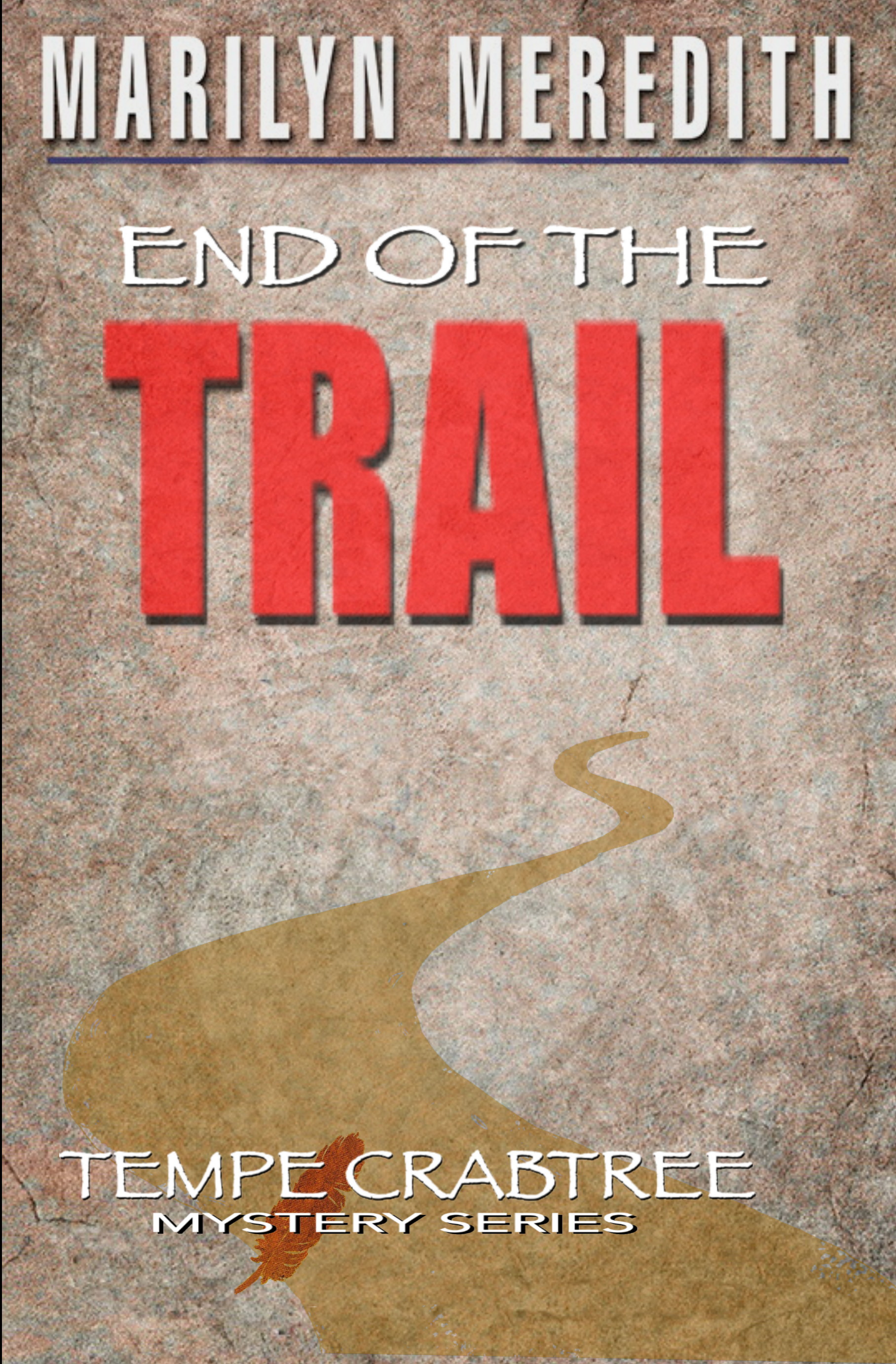
It’s time for me to write a new Deputy Tempe Crabtree mystery, or at least I think it is. I thought I’d finished the series when I wrote End of the Trail, but then I got the bright idea for The Trash Harem. I was pleased to see a photo of a Facebook friend reading it while on the beach in Hawaii. The caption said she always took my latest Tempe book with her on vacation.  Well, if I don’t write one, she won’t have one next year.

I enjoy being with Tempe, but I haven’t any ideas for a great story for her. I was desperate enough to explain this dilemma on my Facebook page. Many of my friends gave me ideas—some pretty good—but nothing that really made me want to get busy jotting down notes.

In mid-July I’m headed to the Public Safety Writers Association’s annual conference. I’m hoping listening to the speakers and the panelists will give me some ideas. Most of the participants are great story tellers.

Truly, I’ve never had this problem before. And no, it’s not writers’ block because I’ve been doing plenty of writing, just not the fiction kind. Maybe all that extra brain and computer time has taken away my incentive for spinning a tale around my now retired deputy, Tempe Crabtree. I hope that’s all it is, and when my life calms down a bit, my imagination will be ready to give Tempe a grand adventure.

Anyone else have their imagination go dry? If so, what did you do to pump the well?

Marilyn

So where do I get my ideas?

One of the questions I have come to almost dread is the standard one about where I get my ideas for a story or a novel. The question is frustrating because no one really knows where an idea of any sort comes from. These things pop into our heads and we either play with them or toss them. But this morning I was trying to recall a thought about a particular memory that had been nagging at me. And that got me thinking about story ideas.

Some of my story ideas are not story ideas at all but arrive first as an experience I’ve heard about or undergone and can’t quite shake. One day, while still employed in social services, I was working quietly in my office when a conversation beyond my door caught my attention. A woman waiting to see her social worker had gotten into a conversation with the volunteer on the desk, and they were exchanging information on what happens after you’ve been convicted, served time, and are released. The man explained that the County House of Correction bus took you back to where you were originally picked up, usually right outside the courthouse. As he pointed out, you were wearing the clothes you had on when you were picked up. In his case, he was wearing shorts and was sentenced to six months. He was released when it was January and snowing. The woman said the situation was different for women. No one provided transportation for women. She got a voucher for a bus or train ticket and had to walk to the station. Two stories grew out of this overheard conversation.

I had seen the navy blue bus before, along with the man checking off names, and never really thought about it. Now I did. In “Kenny Orslow Shows Up on Time” (Mystery Weekly February 2020), a young man is convicted of buying drugs and shows up at the bus stop at the appointed time, but he’s not on the list and the officer won’t let him on. Kenny is now homeless and stranded—and desperate. I had a lot of fun with this story.

The second story grew out of the differences between how the men and women were treated. In “Francetta Repays Her Debt to Society” (AHMM October 2014) a young woman is released from prison but no one is there to meet her. While away, her boyfriend died and she has nowhere to go. She makes her way back to her hometown and arrives at her cousin’s apartment. The cousin is cool and then surprisingly friendly.

The overheard conversation took place in the early 2000s, but it stuck in my imagination for years until I figured out what to do with it. Another odd bit of information came to me more than thirty years ago. A college student drowned in a snow-covered reservoir. The chief of police attributed the accidental death to the student being from the Midwest and not recognizing that the flat expanse was not a field or pasture but a body of water. That comment stuck in my head for years until it emerged in “The Pledge” (AHMM July/August 2020).

Years and years ago I came across a poster of cartoon faces (like the smiley face) showing a range of emotions, with titles underneath—rows of little round faces each with a different expression. This had been developed as an aid for autistic children learning coping skills. This made me wonder how a person otherwise capable could manage in a world where human interaction seemed so opaque. That question lingered in the back of my mind for years (probably decades) until I finally got an idea, which appeared in “Picture This” (Saturday Evening Post, online edition Friday, April 30, 2021).

When one of these factoids, or odd bits of information, comes to me, I don’t think, Oh, there’s a story here. I just remember it because it seems so peculiar, so different from my regular life. Most of my short stories and novels grow out of this kind of tidbit. Right now I have a few of these rattling around in my brain and I’m not sure what to do with them. One involves a man probably in his sixties. He parked his pickup out front of my house and knocked on the door. He wanted to know if I would trade some of the apples in my tree for a bucket of his—he had several buckets in his truck. I agreed because, why not? While he harvested what he wanted (“Please, take more. I can’t use them all.”) he told me about all the fruit trees in Salem that were on public land and therefore whatever they produced was free for the taking. He’d been harvesting, hence the filled buckets in his pickup. I know he’ll end up in a story but I can’t say when.

Meanwhile I’ve been working on a story about an inept hustler who learns damaging information about a friend and tries to use it as leverage with a drug dealer. The idea came from an interview with one of the guards at the Stewart Gardner Museum. A reporter tracked him down in a shabby apartment in a small town and told him some people thought he was in on the robbery. His comeback? “Would I be living here if I had been?” We’ll see where that one goes.

So when someone asks me where my ideas come from, the answer is, Well, it’s complicated. Mostly from life.