Guest Blogger ~ Claudia Riess

Choosing to write an art history mystery series came relatively late in my career, but the seed was planted very early in childhood, and was as much a part of the natural course of events as learning to read and being read to—Winnie the Pooh, Mary Poppins, Alice in Wonderland—and being told laugh-out-loud stories, ad-libbed by my father, about a little girl named Jeanie, clearly my alias, and her adventures with her anonymous daddy, clearly my own.  And like bedtime stories, my introduction to art—my association with art—was, and is, bound up with family, adventure, safe harbor. 

It began with outings to museums.  We lived in Brooklyn, and a couple of the great ones were a short subway ride away.  The Metropolitan, the Museum of Modern Art, the Frick, the Brooklyn Museum.  Typically, these outings were followed by take-out Chinese food and talks around the kitchen table about what we had seen that day.  We talked about the different ways painters saw the world; debated about which perspective better described the real world—and what the real world really was.  Color and light?  Shape and dimension?  And what about imagination? Created imagery.  Distorted reality.  Ideas about the relative nature of beauty and truth were woven into these conversations, and all the while we were savoring our chicken chow mein and fried rice with lobster sauce.

It stands to reason that my idea of the art world was a romanticized one, but by the time I’d written a few rom-com-like novels and murder mysteries and was considering writing an art suspense novel, I’d learned a lot more about its seamier side.  How the price of art is virtually uncontrolled, dependent on the whims of collectors and dealers and the transient tastes and fads of the times.  How art is ransomed, forged, used to launder money, stolen then sold on the black market.  In short, that the art world is where the most sublime of human instincts collide with its basest.  What a great amalgam for fiction!

I pitched the idea of my writing an art suspense novel to my brother, Jonathan, an art history professor at the University of Cincinnati, and he off-handedly suggested, “What about finding a lost study of Michelangelo’s Battle of Cascina?”  As he enlarged on the subject, a conversation I’d had years ago popped into mind.  It was my first week at Vassar College, and I was out of my social depth, trying to hold my own with one of my classmates, a seasoned debutant.  I suppose the incident remained etched in memory because our life experiences were so disparate.  Especially vivid was the story of how her father’s sugar plantation in Cuba had been confiscated by Fidel Castro’s government.  It was this historical nugget that instantly dovetailed with my brother’s suggestion.  In that moment, the American sugar plantation owner became an art collector, and as he and a freshly materialized plantation manager and a lovely cook’s assistant hid out in a basement storeroom, the art collection was being hauled off by a band of wannabe Castro rebels looking to raise money to buy arms.

The imagekicked off the prologue to Stolen Light, Book 1 of my art history mystery series.  I’m a stickler for historical accuracy, and as a rule I take off from it, filling the gap with events that conform to its character, and therefore might have been.  Then, in a butterfly-effect maneuver, I fast-forward to the present and drop a pair of resourceful lovers into the challenging set of circumstances that has developed—multiple murders included—and see if the sleuthing duo can sort it out. 

For example, the impetus for Knight Light, Book 3 in the series, came from two quotes.  From the painter Marcel Duchamp: “Not all artists are chess players, but all chess players are artists.”  From World Chess Champion, Alexander Alekhine: “Chess for me is not a game, but an art.”  From there, I discovered that the two had actually been team-mates on the French chess team in the 1933 Chess Olympiad.  And that furthermore, Alekhine’s death in 1946 has been considered a cold case to this day.  My fiction, integrated with the facts, took off from there.

Dying for Monet, Book 5 and the most recent in the series, is structured with the same criteria, except this time a crucial plot-twisting component hog-ties me to a bare-boned blurb.  I’ve never felt more in danger of giving away the spoiler.  I’m okay discussing Claude Monet and the Impressionists; Paul Ruand-Durell, the renowned art dealer based in Paris, carrying on in London during the Franco-Prussian War; the art museums in London; the disappearance of a still life painting; a brutal murder.  Even the End Notes, where I mention books that were part of the research phase, omits a critical one whose title would blow it.  Luckily, I’ve got my two sleuthing protagonists, Erika and Harrison, about whose ever-evolving love story I could go on forever.

Book 6, the last in the series, is in the works.  Its plot is powered by the subject of artificial intelligence, boon and curse of the art world, depending on your definition of art or stake in its profits.  My fascination was doubly sparked by an episode of CNN’s “The Whole Story with Anderson Cooper,” which focused on the Dead End Gallery in Amsterdam, the world’s first art gallery dealing solely in art generated by AI, and the Whitney Museum’s exhibition of Harold Cohen’s AARON, the world’s first AI program for art-making. These experiences raised questions regarding the genesis of inspiration, the act of creation, and the boundaries of ownership, all of which are potential harbingers of conflict, including the most deadly.

Dying for Monet
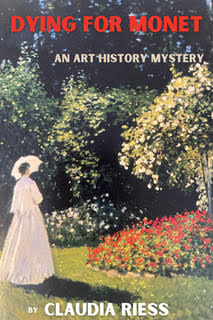
A gala evening auction at Laszlo’s, an upstart auction house in New York City, is in progress.  Without notice, a much sought-after Impressionist painting is withdrawn from the block.  Moments later, its broker is found dead at the foot of an imposing statue in Laszlo’s courtyard.

Amateur sleuths Erika Shawn, art magazine editor, and Harrison Wheatley, art history professor, are once again drawn into an investigation involving an art-related homicide, this time sharing an unnerving coincidence with violent crimes occurring abroad.

As Harrison searches for clues in the archives at the Ashmolean Museum in Oxford, Erika is on a stakeout in Brooklyn Heights gathering information on the owner of the hijacked still life.  After Harrison experiences a disastrous encounter in London, he returns home, where he and Erika, along with a few of their usual cohorts, find themselves ever more deeply at odds with the movers and shakers on the dark side of fine arts commerce.

https://www.amazon.com/Dying-Monet-Art-History-Mystery/dp/1685126545

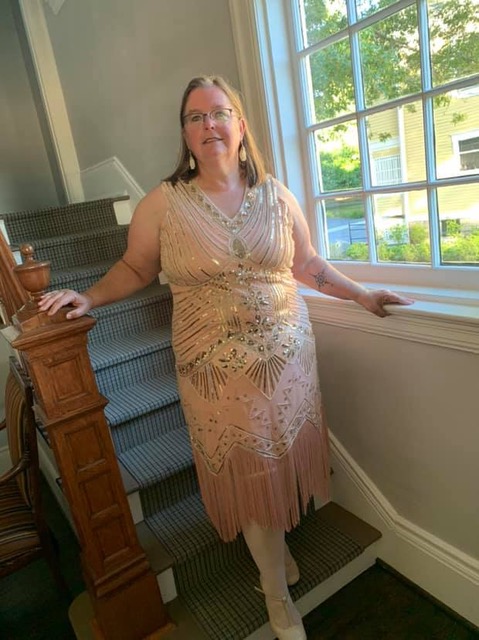
Claudia Riess is an award-winning author who has worked in the editorial departments of The New Yorker and Holt, Rinehart and Winston, and has edited several art history monographs.  Stolen Light, the first book in her art history mystery series, was chosen by Vassar’s Latin American history professor for distribution to the college’s people-to-people trips to Cuba.  To Kingdom Come, the fourth, will be added to the syllabus of a survey course on West and Central African Art at a prominent Midwestern university.  Claudia has written articles for Mystery Readers Journal, Women’s National Book Association, the Sisters in Crime Bloodletter, and Mystery Scene magazine.  She has been featured on a variety of podcasts, blogs and Zoom events.

claudiariessbooks.com.

https://www.facebook.com/ClaudiaRiessBooks

History “swings like a pendulum do” *

* to misquote Roger Miller’s “England Swings.”

When selecting a year in which to begin my Wanee Mystery Series, I landed on 1876 not by accident but by design. It was the U.S. Centennial year. The Centennial Exhibition in Philadelphia, partially powered by a massive steam engine, showcased Alexander Graham Bell’s telephone, the first typewriter with a QWERTY keyboard (Remington 1), Edison’s automatic telegraph, new products such as popcorn, ketchup and root beer, and mass-produced wares including an improved sewing machine. Attending librarians founded the American Library Association. The women’s pavilion demonstrated women’s influence in philanthropy as well as philosophy, science, medicine, education, and literature, foreshadowing the woman’s movement. All while, Reconstruction was still a thing, Native Americans were battling for their land, the James brothers (and others) were robbing banks, and the country was fraught with the second worst depression in U.S. history, setting men adrift to join those already on the road due to the Civil War.

The War may have been over, but it wasn’t. The tides of belief were changing in the North to be less tolerant of the blacks they had just freed. The Southern Democrats fought a different sort of war using intimidation to ensure victory at the Southern polls. Lynchings were common, murders as well, all over the country, not just in the South. The country felt out of control to most. Yet the depression was easing, opportunities were appearing, and technology was booming. Does any of this sound familiar?

What I didn’t expect was how the next year, 1877, the setting for books four through six, would mirror the present. Newspapers predicted the fall of democracy. Public sentiment turned against “tramps” (homeless to us), immigrants, and Hispanics north and south of the border. Southern Democrats (some of whom, as seditionists, the 14th Amendment denied the right to vote or hold political office) took over statehouses by force and threw out duly elected Republican governors, reclaiming control of the south. The oligarchs of industry ruled the White House and most state houses. Graft was everywhere during President Grant’s just ended presidency, and the election of Rutherford B. Hayes considered fraudulent.

Fear crept through the cracks in doors and across the floor, coloring daily life. Small towns were no exception. Though generally not central to the angst, their newspapers, fed by the larger dailies, amplified the news and worries of the world, breeding distrust of the government and outsiders.

The West was still wild, the East tame (if you call murder, gangs and lynchings tame), and the Midwest a mess of mixed sentiments especially in the border states. Small towns like my fictitious Wanee, Illinois were at the nexus of all this change, rife with the disenfranchised, pressured by growth of outside industry, the railroad, and farmers. Glory be, it is my job to weave the discomfit, prejudice, worry, and change into the warp of each story. What a wonderful and frightening opportunity.

The words of one of my professors accompany me; you cannot truly know the tale Shakespeare tells without first understanding the context of the time in which he wrote. He wasn’t a Shakespearean scholar though he discovered the first draft of one of Shakespeare’s plays. Even so, he taught us far more than Shakespeare. He held our hands through the Elizabethan period, the church, the mores, and Shakespeare’s competitors. He made Shakespeare new to me with one question: what if Hamlet’s father wasn’t dead? I hope I do him honor in providing the context for my tales, these roiling years are the stage upon which Cora and her cohorts play. I ask myself with each page written and each plot devised how this disquiet affects the day-to-day dreams and strivings of Cora Countryman, Dr. Philip Shaw, and Sebastian Kanady, who owns and edits Wanee’s newspaper.

This tumultuous period will provide me with plots for a long time to come as Cora and her supporting cast wend their way through to the new century solving the crimes I present them. Yet, as I work on the fourth book, it feels as though 150 years on, we are fighting the Civil War all over again, while dealing with the same threats to our future, oligarchs, seditionists, and technology included. I for one do not wish another 1877 on this country, nor should you.

But I do love writing about the era and how the changes it forced still define us – for the good or the bad.

Unbecoming a Lady and A Confluence of Enemies are available from Amazon; https://www.amazon.com/Confluence-Enemies-Wanee-Mystery-Mysteries-ebook/dp/B0CQJ5DW4W. Check my website: https://dzchurch.com for more information on the Wanee Mystery Series and my other books or to sign up for my newsletter.

Guest Author – Susan Elia MacNeal

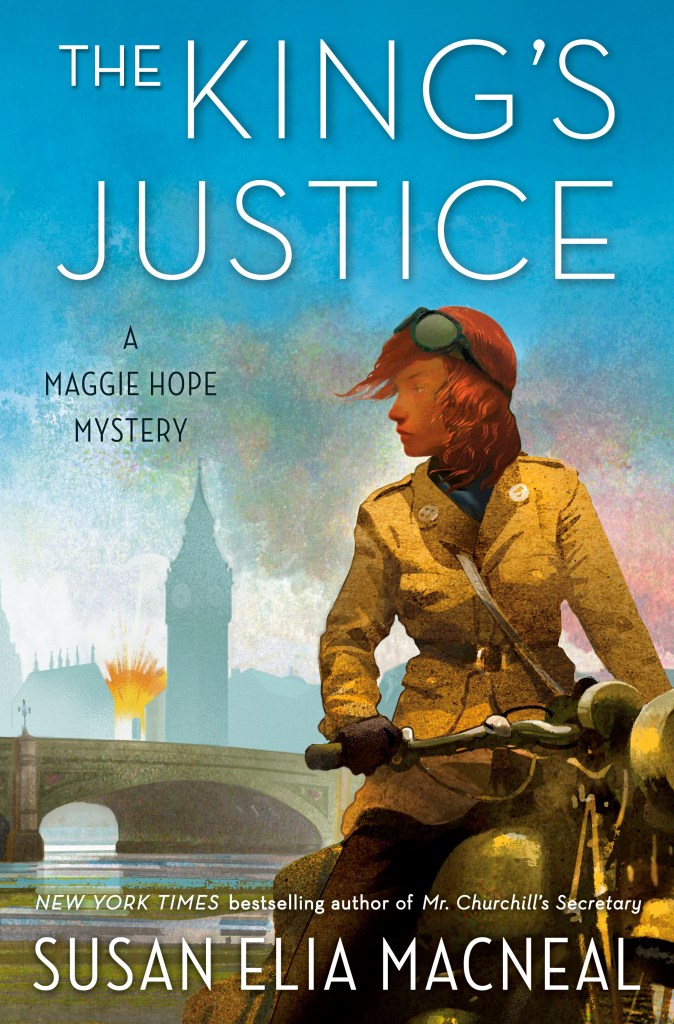
My series’ heroine, Maggie Hope, has been through a lot in the eight novels of the series—most recently falsely imprisoned on a Scottish island. Before that she was held by the Gestapo in Paris, and before that she went up against a serial killer in London. And then of course there’s the war itself. Which is why for her ninth outing, THE KING’S JUSTICE, I wanted to not only write a new thriller/mystery—but also show the toll Maggie’s experiences have taken on her.

PTSD (post-traumatic stress disorder) is the modern name for what in Maggie’s time was called “shell shock.” And although I sometimes describe Maggie as “Nancy Drew meets James Bond,” one thing that makes Maggie different is that all of her experiences, both good and bad, have changed her as a person. (As opposed to Nancy and James, who, while wonderful, remain static characters, regardless of how much danger they’ve be in and trauma they’ve survived.) In this novel, she tries to ignore her psychic damage by quitting the secret agent game, smoking non-stop, drinking too much, and riding much too fast on a motorcycle. But eventually she has to come to terms with her past, her trauma, her fears, and her vulnerabilities.

THE KING’S JUSTICE takes place during March of 1943, in London. The Blitz is over, but the war continues—and unexploded bombs can be found all over the city—just waiting for something to set them off. I have Maggie working as a bomb defuser, a job desperately needed in London at the time, —and also because Maggie’s a bit of an unexploded bomb, too. To defuse herself, she needs to work through her past traumas, some brought to light by a stolen violin and a new serial killer.

This killer is dropping suitcases full of bones in the Thames, and they’re washing up on the banks, sometimes half-buried in sand and silt. Some of the “mudlarkers” of London—those who dig on the riverbanks for lost historic treasures like Roman coins, medieval pottery shards, and Elizabethan rings—find the suitcases with the bones, and report them to Scotland Yard. Maggie’s beau, DCI James Durgin takes the case, and Maggie is ultimately recruited to help, because of a connection to someone from her past.

Like unexploded bombs, I really loved working in the metaphor of mudlarking—sifting through trash to find treasure. I think Maggie’s coming to grips with the traumas of her past was a lot like mudlarking—she has to excavate a lot of “dirt,” before she can find her “treasure”—a return to, well, not her old self, of course—but someone who’s experienced trauma, processed it, and come through the other side.

Without giving anything away, in the novel’s first scene, we meet Maggie as she’s in a deep pit, defusing a bomb. By the last scene, she’s looking down on London from the observation deck of the Monument to the Great Fire of London. Like the city itself, Maggie has gone through disaster and rebuilt, now stronger, smarter, and more compassionate. I hope readers will find her journey inspiring.

In THE KING’S JUSTICE, the ninth book in the acclaimed Maggie Hope mystery seriesby Susan Elia MacNeal (Bantam Hardcover; On Sale 2/25/2020),our heroine is on edge. Maggie has returned to London after being imprisoned on a remote island for knowing confidential SOE information, but she is traumatized by her experience. As Maggie takes a break from spying, she starts to behave more and more recklessly. She drinks too much, speeds through the streets on her motorcycle, and joins a squad tasked with defusing unexploded bombs left in London from the Blitz.

When conscientious objectors to the war start disappearing, Maggie is determined to stay out of it. But as human bones start washing up on the shores of the Thames inside of suitcases, it becomes clear that a serial killer is afoot, and Maggie must put aside her hesitations and get to work. Little does Maggie know that this investigation will force her to conquer her demons and face her past in order to solve the case.

Susan Elia MacNeal is the New York Times bestselling author of the Maggie Hope mysteries. MacNeal won the Barry Award and has been nominated for the Edgar, Macavity, Agatha, Left Coast Crime, Dilys, and ITW Thriller awards. She lives in Brooklyn, New York, with her husband and son.

susaneliamacneal.com • Facebook.com/MrChurchillsSecretary

Twitter: @SusanMacNeal • Instagram: susaneliamacneal

Guest Author- Lisa Lieberman

Cruising for Fun and Profit

by Lisa Lieberman

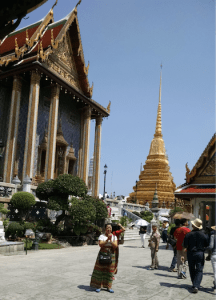
King Mongkut’s Palace in Siam

Historical mysteries are travel literature with a kick. You get to visit a different locale, exploring a distant place AND era. New vistas, new sensations: you want to experience it all and, to paraphrase Humphrey Bogart in The Maltese Falcon, you don’t mind a reasonable amount of trouble.

I’m the kind of writer who needs to immerse myself in a setting. The third book in my noir series takes place in Saigon, circa 1957, and builds off my favorite Graham Greene novel: Banished from the set of The Quiet American, actress Cara Walden stumbles onto a communist insurgency—and discovers her brother’s young Vietnamese lover right in the thick of it. How could I get myself to Asia?

Lecturing on the ship.

It turns out that luxury cruise lines are always looking for guest lecturers. I put together a a film and lecture series for Silversea entitled “Asia Through Hollywood’s Eyes,” a romp through classic movies featuring Asian characters and stories. From Fu Manchu and Charlie Chan through Cato in the Pink Panther series, pre-Code gems like Shanghai Express starring Marlene Dietrich (“It took more than one man to change my name to Shanghai Lily”) and the ever-fascinating Anna May Wong, beloved epics including The Good Earth and Bridge on the River Kwai, musicals including The King and I along with the best-forgotten Road to Singapore not to mention masterpieces based on Somerset Maugham stories and featuring the best leading ladies out there: The Painted Veil (Garbo), Rain (Joan Crawford), The Letter (Bette Davis).

Tai Chi with William

Okay, it took me the better part of a summer to research and write the lectures. I had to watch all the films (poor me . . .) and learn how to rip DVDs to make clips to embed in my presentations. I had to upgrade my wardrobe and get my bridge game back up to snuff. But October 17, 2015 found me at the five-star InterContinental Hotel in Hong Kong, doing Tai Chi by the pool with William to get the kinks out of my body after the nineteen-hour flight. Then I boarded the ship for the eleven-day all-expenses-paid cruise to Ho Chi Minh City, Bangkok, Singapore and ports in-between. The highlights of my trip included tagging along as a chaperone on a tour of Hue, retracing Graham Greene’s footsteps through Saigon, and visiting the palace and temple grounds of the King of Siam, followed by a very expensive mojito in Somerset Maugham’s favorite watering hole, Bangkok’s Mandarin Oriental.

What an adventure!

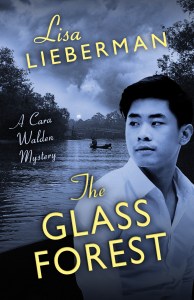
The Glass Forest

A Cara Welden Mystery

Saigon, 1957: Banished from the set of The Quiet American, actress Cara Walden stumbles onto a communist insurgency-and discovers her brother’s young Vietnamese lover right in the thick of it. A bittersweet story of love and betrayal set in the early years of American involvement in the country, Lisa Lieberman’s tribute to Graham Greene shows us a Vietnam already simmering with discontent.

Universal buy link:https://books2read.com/liebermanglassforest

Lisa Lieberman writes the Cara Walden series of historical mysteries based on old movies and featuring blacklisted Hollywood people on the lam in dangerous international locales. Her books hit the sweet spot between Casablanca and John le Carré. Trained as a modern European cultural and intellectual historian, Lieberman abandoned a perfectly respectable academic career for the life of a vicarious adventurer through perilous times. She has written extensively on postwar Europe and lectures locally on efforts to come to terms with the trauma of the Holocaust in film and literature. She is Vice President of the New England chapter of Sisters in Crime and a member of Mystery Writers of America.

Website: https://deathlessprose.com/
Facebook Author Page: https://www.facebook.com/LisaLiebermanAuthor/
Pinterest: https://www.pinterest.com/deathlessprose1/

Guest Blogger- Baird Nuckolls

Researching My Historical Novel

By Baird Nuckolls, author of “Shattered Angel, Morelli’s Private Inquiries, Book 1”

My new novel, Shattered Angel, is set in New York City in 1923. While millions of people have been to New York, even more have seen it in movies, television or photographs. You may feel like you know New York, but I want you to know New York back in the days when my story is set. The Roaring Twenties were a time of great change in society and technology. Society was recovering from the first world war; women had more freedoms, Prohibition had an impact on society’s activities, new jazz music was the rage and new inventions were changing daily life forever.

Doing research is as important as plotting the mystery. You can spend hours or days finding out things that may never make it into the book. For example, we think of the radio as being pretty ubiquitous. Yes, the radio was invented in the late 1800’s, the first radio broadcasts happened in 1906 and the first radio station opened in Philadelphia in 1920. But in 1923, there were few radio stations, fewer programs, and the radios themselves were expensive. So, my detective, Morelli, does NOT have a radio that he can listen to it at night, as he might be doing if the year was 1926 or 1927. Those few years make all the difference.

Another little thing that needed a lot of research was cigarettes. If you watch old movies, everyone smoked like chimneys and pre-rolled cigarettes had become popular during WWI, when they were shipped to the troops overseas. They’d even become popular with women in the 1920’s and the long cigarette holders became a major fashion accessory, in part to keep ash off their clothes and prevent their hats from catching fire, but also to look sophisticated. However, there was still a cost factor. Morelli continues to smoke hand rolled cigarettes because it’s cheaper and he would rather spend his money on whiskey. Telephones were available, including pay phones, but deciding who would have one and who wouldn’t, was part of my initial research as well.

The original genesis of the story came from two articles in the NYTimes. One was about a rum-running tugboat seized by government agents and some missing drugs. The other was about a payroll robbery on the subway. As the story continued to develop, I read more and more of the newspapers of the day and decided to add things to the plot. Stories about the politics, including the mayor and the commissions came straight from the pages of the news. The Jack Dempsey heavyweight title fight was a huge event in 1923. I even found film footage of the fight on YouTube, so that I was able to accurately describe the experience of being there.

Ultimately, these details are what make the story feel like it’s set in a real place. The characters are mostly fictional and the story is my own creation, but New York City is alive and truly a character in its own right.

SHATTERED  ANGEL

Set amid the growing roar of the 1920’s, a beautiful young flapper named Angel has hired Adriano Morelli, an ex-cop turned private detective, to follow her cheating husband. When Morelli steps into the rarified hush of a Fifth Avenue apartment looking for his client, what he discovers changes the stakes of the game.  

He now has a murder to solve while staying one step ahead of the cops. And with a history of failure, especially when it comes to beautiful women, Morelli is hoping to redeem himself for past sins. From the Cotton Club and the city’s speakeasies to the Polo Grounds where heavyweight Jack Dempsey faces his greatest opponent, the life of New York City comes right off the pages of the newspapers of the day in this riveting historical mystery. 

Buy  Links: Amazon EbookPaperback

Baird Nuckolls has had a multifaceted career, from banking to baking. In addition to writing, she has been a partner and editor for The Wives of Bath Press, as well as an assistant editor for Narrative Magazine. She has previously published short stories, as well as a middle grade novel, “The Dragons of Graham.” She lives in Seattle and Orcas Island, Washington with her husband. 

Website: bairdnuckolls.com

Facebook: https://www.facebook.com/baird.nuckolls 

Author Central