Characters, where do they come from?

Shandra Higheagle Mystery, this month.

After my post last month about Getting to Know my Character, I had a reader ask me to write about how I create, develop, and name characters.
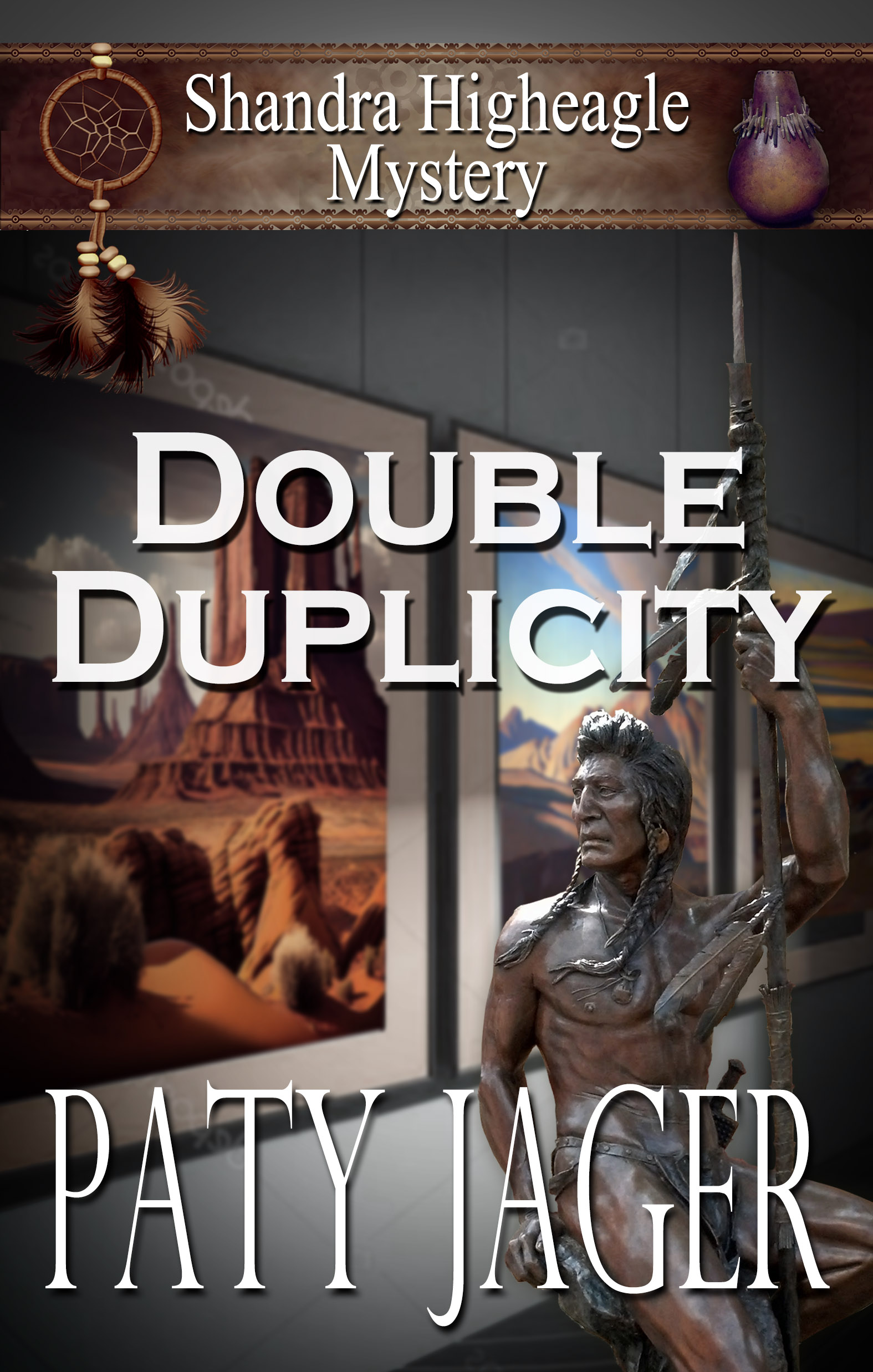
I guess I’ll start with my Shandra Higheagle series. In the case of this series, my brother gave me the idea for a unique murder weapon. He is an artist and was working at a bronze foundry, welding bronze statues and putting the patina on them. He told me about a large statue of a warrior with a spear and how the spear from the warrior’s hand up could be removed. It was made that way for transportation.

Once that idea was in my head, I knew the first book had to be set in the world of art to have the statue come into play. I decided my main character would be an artist. Since I am captivated by Indigenous culture and have a friend in that world who was willing to help me understand things I would need to know, I made Shandra a potter who made vases that are sold in art galleries. She is also half Nez Perce from the Colville Reservation and half Caucasian. To make it easier for me to write from her perspective, I had her Nez Perce father die when she was four and her mother took her away from that side of her family. She grew up off a reservation on a cattle ranch in Montana with a stepfather who kept her Nez Perce origins hidden.

That gave me a good way to reacquaint her with her Nez Perce heritage as I learned things. I didn’t try to appropriate her culture, just share her learning and experience. I had the help of my friend, who lives on the Colville Reservation, to help me with the books that are set there and how the people there live.

I set the books in a fictional ski resort area in Idaho. We had traveled through Kellogg, ID, a few years earlier, and I thought it was a wonderful place for an artist to reside. It gave Shandra a mountain where she would gather clay and purify it to make her vases. I had learned about an artist who made his own clay in Wallowa County from my brother. He set up a time for me to meet with the artist and learn all about the gathering and purifying of the clay. While I was there, he showed me several of his pieces that were in various stages of the processes he used.

Once I had all about Shandra settled, I started working on secondary characters. Her dog, Sheba, who is large and scared of her own shadow. A woman who helps her with her clay and taking care of the land that she purchased. Crazy Lil came with the ranch like a stray cat. She grew up on the ranch, lost it when her parents died, and went to work for the person who bought it. When they sold to Shandra, Crazy Lil didn’t move on and became Shandra’s right-hand woman. She’s a bit on the cantankerous side and is leery of Ryan, the detective who takes a shine to Shandra.

Then I added friends. A woman who owns an art gallery in Huckleberry. Naomi is married and she and her husband, Ted, sell Shandra’s vases and know a good deal about her. Ruthie is a Black woman who owns a diner in Huckleberry. She and Shandra bonded over Shandra’s love of cheeseburgers and caramel shakes. Her other good friend is Miranda Aducci, whose family owns the Italian Restaurant in Huckleberry. There are several other unique characters like the albino doctor who is trying to find a cure for the disease that killed all the males in his family in their 50s, and Maxwell Treat whose family owns the local mortuary.

When Shandra is considered a suspect for the death of a gallery owner in the first book, she butts heads with Ryan Greer, the detective for the county. This brings in a man who was a cop in a large city and came back to where he grew up because his large Irish family all live in and around the county. His cultural beliefs about little people help him to come to terms with Shandra’s dreams with her deceased grandmother before she realizes that they are helpful.  

Detective Ryan Greer came to me as I was building the beginning scene in my head. I made him Irish and gave him a good Irish name. His mother is Irish and taught her family all about her homeland. His siblings all have Irish names.

My vision of Shandra

Shandra’s name just came to me as I was putting together what she looked like to me. Of course, I wanted a last name that sounded Native American. Sheba’s name came from a big black fluffy dog my daughter had while growing up. Crazy Lil, was just something I typed the first time I brought her into the book. That’s the way all the secondary characters’ names come to me in each book.

As I type a scene and add a new character, I have in my mind what they look like and I add a name that seems to suit them, or the purpose they have for the story. That sounds kind of vague but that’s the way my mind works.

I always have the main character, the victim, and the suspects fleshed out when I start a book, but the secondary characters that are new to the series pop up as they enter my head.

I’m sure readers are interested in how I came up with my Gabriel Hawke and Dela Alvaro characters in their series. I’ll tell you about them in next month’s post.

I wanted to give you the info about my new Cuddle Farm Mystery Series. There will be a blog tour for the first book, Merry Merry Merry Murder, from October 10th-23rd. there will be character posts and posts about how I came up with the series on multiple different blogs if you want to hear about the book from Cocoa, the border collie, Cupcake, the pygmy goat, Lulu, the chiweenie, and Betty, a secondary character who is one of the main character’s best friends.
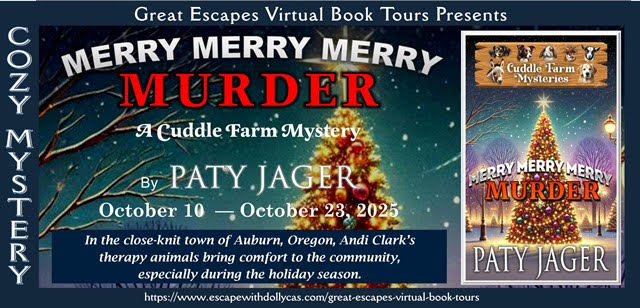
 You can purchase Merry Merry Merry Murder ebook from the usual vendors or you can purchase the ebook from my website.

“Where comfort and cheer meet scandalous secrets—A holiday mystery set in a small town.”
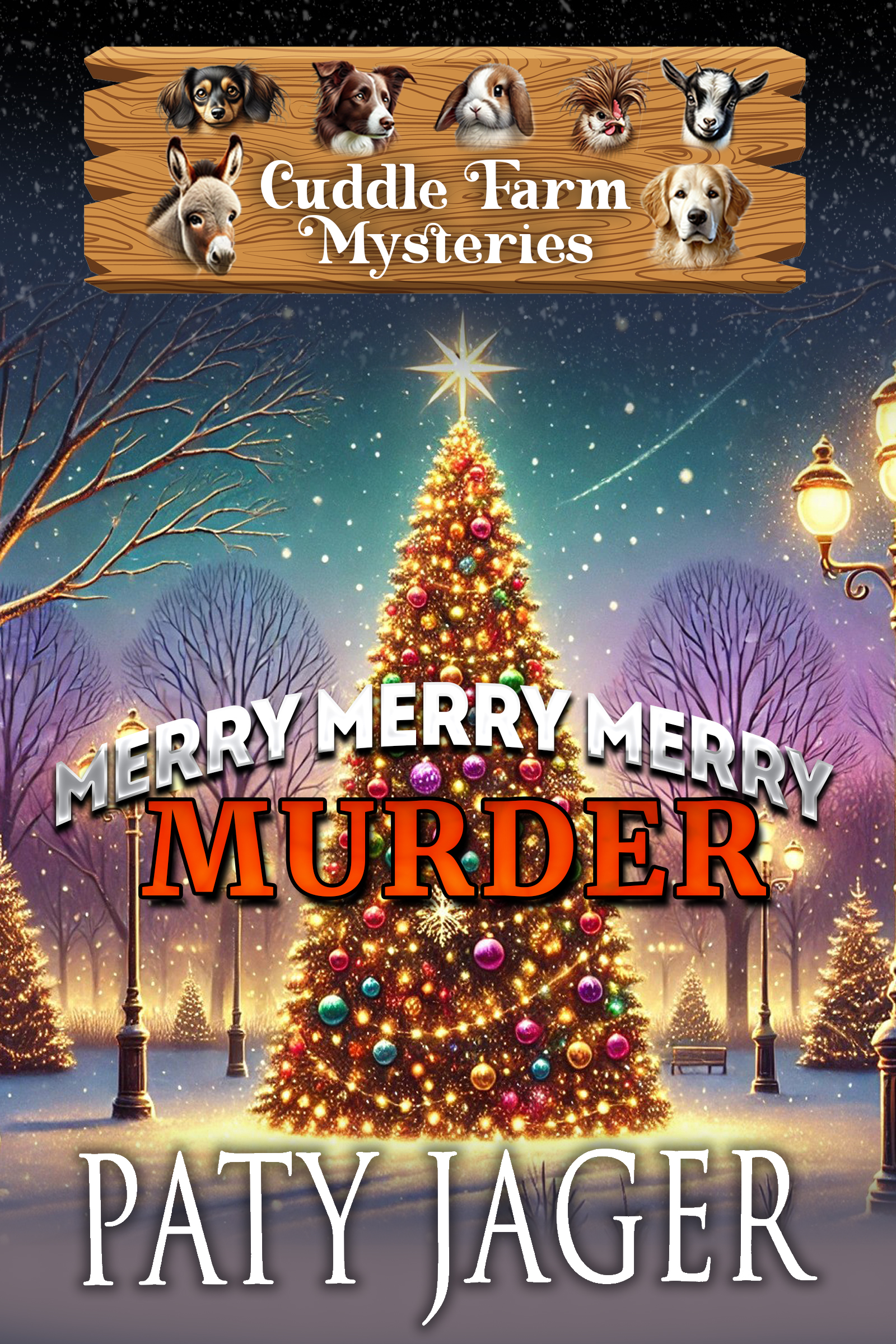
In the close-knit town of Auburn, Oregon, Andi Clark’s therapy animals bring comfort to the community, especially during the holiday season. When a young girl seeks solace from Athena, Andi’s therapy dog, after witnessing an unsettling scene behind the sleigh, it marks the beginning of a much darker holiday.

As the town gathers for the Tree Lighting Ceremony, a scream shatters the festive atmosphere. Cocoa, Andi’s loyal Border Collie, pulls her toward a chilling sight: a woman standing over the lifeless body of the girl’s mother, strangled with Christmas lights.

Determined to help the grieving girl and her town recover from the shock, Andi, her therapy animals, and her niece, a county deputy, take it upon themselves to investigate. As they uncover secrets and untangle clues, they stay one step ahead of the new sheriff and worry that the killer lurking in their midst could be someone they know.

Purchase now from my website: https://www.patyjager.net/product/merry-merry-merry-murder-ebook/

Purchase from a universal buy link: https://books2read.com/u/mZ6qpJ

What’s Your Method? By Karen Shughart

I recently read an article about renowned American author, John Steinbeck, who gave six tips on writing that were included in a letter he wrote in 1962 to a friend. These caused me to reflect on how I write my cozy mysteries, and I was astonished to realize how much of his advice applied to me. Below are the tips with my italicized notes beside them:

  1. Abandon the idea that you are ever going to finish. Lose track of the 400 pages and write just one page for each day, it helps. Then when it gets finished, you are always surprised. I don’t write every day, but when I do I try to write at least a chapter or two. I don’t have pages in mind; instead, I aim for 60,000-75,000 words, the length for cozies.
  2. Write freely and as rapidly as possible and throw the whole thing on paper. Never correct until the whole thing is down. Rewrite in process is usually found to be an excuse for not going on. It also interferes with flow and rhythm which can only come from a kind of unconscious association with the material. This one hit home. I write the entire story and revise and expand afterword, my first draft is typically too short.
  3. Forget your generalized audience. In the first place, the nameless, faceless audience will scare you to death and in the second place, unlike the theatre, it doesn’t exist. In writing, your audience is one single reader. I have found that sometimes it helps to pick out one person—a real person you know, or an imagined person and write to that one. Instead of picking a person, I write towards a targeted audience, mainly women (and some men) who are middle-aged or older. Cozies are called “clean” novels because they do not contain graphic language or violence or explicit sex scenes, something that appeals to my readers.
  4. If a scene or a section gets the better of you and you still think you want it—bypass it and go on. When you have finished the whole, you can come back to it and then you may find that the reason it gave trouble is because it didn’t belong there. I do this a lot. See below.
  5. Beware of a scene that becomes too dear to you, dearer than the rest. It will usually be found that it is out of drawing. I have a slash and burn mentality when it comes to writing. I may fall in love with a scene, but I’m brutal about cutting it if it doesn’t fit.
  6. If you are using dialogue—say it aloud as you write it. Only then will it have the sound of speech. I do this with every character. Sometimes when I’m writing dialogue for a male, I check with my husband to see if it sounds authentic.

So, there you have it. I hope you authors reading this blog take time to reflect on your own writing methods. For those of you who are our readers, perhaps you’ve gained a little insight into the writing process, at least for John Steinbeck and to a lesser extent, me..

What is it about the Great Lakes? by Karen Shughart

A book I read as a child, set in the 1950s on Lake Superior, resulted in a lifelong fascination with the Great Lakes.  I can’t remember the title, I wish I could, but I do remember snippets of it: family gatherings that included winter sports and summer outings; homemade ice cream made with snow and maple syrup; berry cobblers when the sun was warm and the days long and bright.

I grew up in a city about two hours from Lake Erie, and I have happy memories of family trips there: beaches, amusement parks, and many attractions you’d find at the ocean, but without the salt or sharks. We went to the Jersey shore on the Atlantic, too, and I loved it, but for some reason I always felt drawn to that lake. Many years later, I attended college in Buffalo, NY, and when the weather cooperated spent weekends at a beach cottage owned by family friends in nearby Fort Erie, Canada.

As fate would have it, about 20 years ago my husband and I decided one weekend to explore Lake Ontario, north of where we lived in Pennsylvania.  We discovered a tiny village through the internet; found a charming B&B with water views that was a short walk to the lake, the bay, a small but bustling business district, museums and restaurants, and a quick drive to Finger Lakes’ wineries. Two weeks later we bought our house.

We never expected to live here year ‘round, we planned to use the house as a getaway, but as time went by we were drawn to the region’s many charms.  We worked diligently to restore our house, it had been built by a lighthouse keeper more than a century ago and needed loving care. There’s mystique here: shipwrecks; sightings of massive lake creatures; British ships invading our village during the War of 1812; the transporting of runaway slaves to Canada; a rumor that a tunnel under our backyard hid some of those slaves before they fled. And the brisk business of rumrunning during Prohibition.

Each season has its own appeal. Summer months we revel in the resort vibe enjoying concerts, fireworks, outdoor movies, days spent beachcombing, shopping at farm stands, and lots of gatherings on our deck. During fierce winter storms we snuggle safely in our sturdy home, fireplace burning and soup on the stove, drinking wine with friends. Spring and fall are glorious, too, with acres of fruit trees in fragrant bloom or ripened apples hanging heavily at harvest, and a clean, sweet smell in the air.

In truth, our journey here was serendipitous, and we’ve never regretted it. Like the village on Lake Superior in the book I read so long ago, it’s an enchanting place filled with warm, kind people, and a peaceful quality of life.

From the time I was a child, immersed in Nancy Drew books, I wanted to write mysteries. One night several years ago, I dreamed the plot of my first Edmund DeCleryk cozy mystery, Murder in the Museum. Since then I’ve written three, published by Cozy Cat Press, all set on our lake with backstories that depict the history of this place we now call home. Writing has been a passion for me since I was young, but I never expected that someday my dream, coupled with a fascination with the Great Lakes, would become reality.

It Never Rains in Southern California by Karen Shughart

We just returned from a visit with our son and daughter-in-law, who live in southern California. There was a song in the 1970s entitled It Never Rains in Southern California, and although the lyrics did not particularly inspire joy, the title is apt, it truly hardly ever rains in southern California. As my son reminded me when I mentioned how nice it was to not have to deal with the inconsistent weather events like blizzards and blinding rainstorms like we do here in the northeast, he reminded me that California has plenty of their own climate issues: mudslides, fires, earthquakes, and damaging winds. Good point.

During our visit we sat under a pergola in their backyard and snacked on tangerines picked from a nearby tree. One night for dinner we ate freshly-caught Pacific salmon with lemon slices we plucked from another. Avocados, plentiful in that part of the world, hang heavy on branches drooping over fences A bottle brush tree with vivid red flowers and clusters of bright yellow daylilies attract a multitude of hummingbirds and Monarch butterflies. The air is redolent with sun-ripened foliage and the salty brine that drifts inland from the broad, blue Pacific Ocean.

Photo by Gary Barnes on Pexels.com

We arrived back in New York to a gray, cloudy day with a drizzle of fine rain and yet, when we pulled into our driveway, our daffodils and forsythia were beginning to bloom, the hyacinths were emerging from the earth, and nestled in among our own burgeoning daylilies were bright, purple violets, signs that spring is surely on the way. While the weather is fickle, each day here brings a surprise; now some days are warm and bright, on others, winter doesn’t want to lose its frosty grip.

I thought about how climate and weather affect writing. My Cozies are set in a small village along the south shore of Lake Ontario, much like the village where we live.  Four defined seasons provide the setting to the mysteries:  a dark, stormy, windblown night is a metaphor for what’s to come, as is the juxtaposition of bright summer days and a murder that’s occurred in a lush garden setting.

If we lived in California, I would still be writing Cozies, but they would different. Mine have a backstory based on the history of our state: the Revolutionary War, the War of 1812, the Underground Railroad, to name a few. If we lived in California, I’d choose Spanish Missions, the Mexican American War, or the Gold Rush.   The setting, too, would change. A California beach town and one on Lake Ontario have few characteristics in common, our beaches are rocky and not as wide, we don’t have sidewalks and parking lots along the water, and the distance across the lake to Canada is a mere 80 miles, compared to more than 6,000 to China. We do, surprisingly, have pelicans, but we’ve never seen a whale. Still, it’s fun to contemplate what I’d do differently if my mysteries were set in a part of our country where it never snows, hardly ever rains, and the sun shines almost every day.

Switching Horses Mid-Stream by Karen Shughart

The process of writing a novel takes a long time. First, there’s coming up with the idea for the plot, but from creation to completion there are lots of other steps along the way. Some authors set strict parameters, develop an outline, keep a set of note cards and pretty much stick to the plan. When I write, my mind never shuts off while I envision multiple possibilities. At times it drives me and my loved ones crazy, but as a result, I am able to shape what I hope will be a better story.  

I thought I’d be finished by now with writing book three in the Edmund DeCleryk Cozy mysteries series, Murder at Freedom Hill. It’s taking longer than expected because I’ve switched horses mid-stream. There’s a murder, for sure, but I’ve added a subplot that’s loosely related to that crime.

Photo by Karen Shughart

As with the other two books in the series, I created a backstory based on the history in the village where I live. For book one it was post-Revolutionary War; book two, The War of 1812; and for book three, it’s the abolitionist movement and Underground Railroad. Thus, the reason for the title of this blog – the phrase was conceived by Abraham Lincoln in a speech he gave in 1864 to members of the National Union League.  It fit.

But I digress. As the result of adding a subplot, I made other changes, too. In book one, a manuscript dated 1745 provides clues to why the victim was killed, in book two it was a series of letters written between 1814 and 1817 by the wife of a soldier. In this book I had first planned to insert newspaper clippings from the mid-1850s that were discovered at the local library. Just this past week I turned those into excerpts from a research project the victim was working on. As I thought about it, it just made more sense to do it that way because I changed the secondary plot from one that was probably a bit too political for a Cozy mystery to one that’s not.

Politics in Cozies, while permitted, aren’t necessarily encouraged, and I understand why.  When people read the genre, they want to be entertained, and they want to escape. Characters in Cozies are part of a tightly knit community, and the evil that lurks is usually not something you’d read about in the news today.  We get enough of that  every time we turn on our TVs, computers and our phones, and read newspapers and magazines.

For weeks I was losing sleep over this book trying to figure out what it was about it caused discomfort. Once I figured it out, I started rewriting, and I’m sleeping better now.  Yes, the process of writing takes a long time, but to paraphrase another sentence from a speech Abe Lincoln gave, this time on July 4, 1861, “Let us renew our trust… and go forward without fear.” Just so you know, July 4 is also part of the plot.