The First Sentence

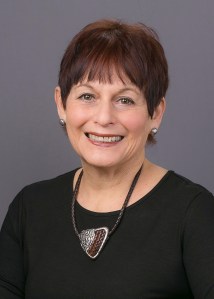
Shughart,Karen-0016_ADJ_5x7 (1)I’ve spent my professional career writing, sometimes as a newspaper columnist and feature writer; other times where I contributed to or edited professional journals, brochures, quality of life books and newsletters. I also wrote two books of non-fiction.

I knew that every good piece of writing starts with a good lead, that the first sentence or two can entice readers to read more. But when I started to write my first work of fiction, Murder in the Museum: An Edmund DeCleryk Mystery, I forgot what I knew. The first several drafts weren’t bad, but something was amiss. Then one day it hit me. I had written a prologue, but the first sentences were boring. Truth be told, the prologue was boring. I reminded myself I knew what to do, took time to rethink it, and started from scratch, happy at last with the results.

I belong to a book group. At the beginning of the year we choose the books we’d like to read, and then each person commits to leading the discussion at least once during the year.  The book we discussed for June was the National Book award-winner Sing Unburied Sing by Jesmyn Ward, a book of such depth and lyricism that when we discussed it, many of us did so with tears in our eyes. Ann, our discussion leader, asked how the first sentence related to one of the book’s themes, death, and to the title. The book is narrated by a young boy who says, straight out, “I like to think I know what death is. I like to think that it’s something I could look at straight.” Succinct and enticing, wouldn’t you agree?

When I got home from that meeting I started thinking about first sentences and the impact they can have on the reader. Consider, for example, Charles Dickens’ first lines in A Tale of Two Cities: “It was the best of times, it was the worst of times, it was the age of wisdom, it was the age of foolishness….” How prophetic, those lines.

Then there is A Tree Grows in Brooklyn by Betty Smith. This classic coming of age novel is set during the first two decades of the twentieth century and begins, “Serene was a word you could put to Brooklyn, New York. Especially in the summer of 1912. Somber, as a word, was better.”  If you’ve read the book, you’ll understand the context.

Perhaps you’ve read books by James Lee Burke, of contemporary southern crime fiction fame. His novel, Jolie Blon’s Bounce, starts out, “Growing up during the 1940s in New Iberia, down on the Gulf Coast, I never doubted how the world worked.” Powerful words, these, if you know the story.

So, as I knew all along, first sentences matter. They set the scene for what’s to come. And I’ll remember that when I start book two in the Edmund DeCleryk series.
Judging a book …

Hey, y’all.

What’s new with you? Hope everything is good down your way. Read any good books lately? (Here’s a cyber cookie if you said you’d read mine and you thought they were “good”. I appreciate it, yo!)

If you didn’t say mine (not cool, bro) then how did you choose the book? Was it recommended to you by a friend? (I used to know a guy #douche who would get really offended when I didn’t rush out and buy whatever book he recommended. Like, sulk-for-a-whole-day offended. He used to think he had the best taste in books so he could never accept why I didn’t read what he suggested. I did mention he was a douche, right?)

Anyway, to get back on topic, how did you find your latest book? Recommendation from a non-douchey friend? Email from a promotions company? Did the cover catch your eye while you were browsing the digital Amazon/iBooks/Nook/Kobo shelves?


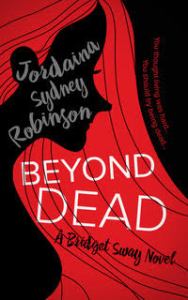
Beyond Dead
Old Bridget Sway cover

I ask because I recently changed all of my book covers. #nightmare Well, it’s wasn’t really a #nightmare as such but it was a LOT of work. Originally I hired a professional cover designer to do them, and I was super pleased with the result. I loved the cover for the first Bridget Sway book. It had been my idea (I wanted her hair to take up the cover and for you to not be able to see her face) and the designer ran with it. I remember I was ridiculously pleased with it at the time. It was my first ever cover! And then I got the second one done. And the third. And the fourth. And the shine completely wore off. 


The colour scheme was a bit limiting. (Straight up, I’m not really a black/red/grey/white type of girl. I do like those colours … but I’m more of a rainbow person.) And I was a bit fed up with how her face just moved around the cover. And I can’t tell you how many people asked me if they were horror books.


Beyond Dead - FINAL COVER-2
New Bridget Sway cover

So, I redid them. Yes, I did them myself. I didn’t know how much you know about that, but that is a huge no-no for independently published authors. It’s like an unspoken rule. But I did. And I LOVE them. I LOVE them so much. To me, the really express the tone of the stories the way the other covers didn’t. But you might not like the newer version, and that’s okay. Different strokes for different folks, yo. 


The biggest thing I took away from this is that you have to trust your gut when making these decisions. You have to trust your own instincts. Writing is a business, but it’s a personal one. It doesn’t matter whether it’s your covers or a comment that your editor makes. You have to trust that you have a story to tell and only you can tell it your way. 


Now, I believe you were about to tell me how awesome my covers were! Yeah, thought so!


Until next time …

Jordaina

The World Through My Eyes

thumb_IMG_1225_1024

The fifth book in the Adam Kaminski mystery series will come out this summer. I am so excited to share it with you! I’ve spent the past two years working on this book that looks at the world through the eyes of a photographer, while also telling the story of a cruise in which everyone is pretending to be someone they’re not.

One of the things I enjoy most about writing is the opportunity to look at the world through other peoples eyes. Because my series has one main character– Adam Kaminski – who always finds someone to help him out, I have the pleasure of creating a new point-of-view character for each book (that is, a character whose thoughts you, the reader, get to hear.)

In this book my second leading character is Julia Kaminski, sister to Adam. Julia has appeared in most of the other books in the series, so I’m not creating her from scratch. But this is the first time I’m writing from her perspective, describing the world through her eyes. In this case, the eyes of a photographer. There can be no doubt, we all see the world a little bit differently.


A-Pale-Reflection-Web-Small
A very blurry suggestion of the cover for A Pale Reflection  – the world as I might see it!

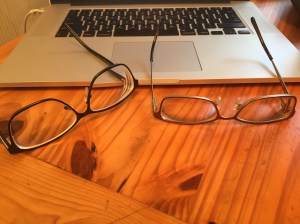
Personally, I’ve been wearing glasses since I was five (and probably needed them before that). The world through my eyes looks very different. Terribly near-sighted, without my glasses I see blurs of color without distinct shapes. Every pin prick of light becomes a giant, glowing snowflake. It’s actually quite beautiful! As long as I don’t need to see clearly. These days, I wear bifocals, so I get two different views of the world depending how I hold my head! (And does anyone hate progressive bifocals as much as I do? I couldn’t stand them.)

As an aside, I recently saw a video about very young children – one year or younger – getting glasses and being able to see their mothers’ faces clearly for the first time. The expression of joy on their faces was indescribable. How the doctors were able to figure out a) that they needed glasses and b) what their prescription was I have no idea. But it is remarkable.


IMG_3813
Bifocal and near vision only – just two of the many pairs of glasses in my life!

My husband, on the other hand, is farsighted. How strange! After a lifetime of holding things next to my face to read them, I can’t imagine only being able to see clearly when things are far away. The world he sees is very different from the world I see.

I’m pretty sure the same holds true for reading. I write a book and let it out into the world. Now it’s up to the reader to see whatever he or she sees in it. I love hearing other peoples perspectives of my books — don’t get me wrong — but I admit there are times when I hear someone describing one of my characters and I think: can’t I just give you a prescription that lets you see it the way I see it?

A Pale Reflection, my book about seeing the world – and other people – clearly, comes out this summer. Check out my Facebook page or sign up for my newsletter at my website to see the full cover soon. And follow me on Instagram to see photos of my world. I hope my perspective of other people’s perspective will keep you entranced – and wondering who the killer is!

Adam-Kaminski-Mystery-Series

Books… And More Books… And Still More Books…

by Janis Patterson

Books are most definitely a leitmotif in my life. I have always loved to read. Even in my toddler days I would on an almost daily basis pull every book I could reach off the shelves and sit happily among them, turning the magical pages. Mother said I never got one upside down and nor ever tore a page, which I find remarkable as it took me much longer to master the skill of walking.

My parents discovered that I was reading when I was three, when I sat them down and read a short story from the newly-arrived Saturday Evening Post (the original version, remember that?). No one ever knew how or when I learned to read.  I had free rein in the family library, reading Boswell, all of Ellery Queen and most of Pearl Buck before starting school, but it was Shakespeare which fascinated me the most. The language! The imagery! The flow of those incredible words that drew you into a different time and place, a world of magic…

I had so looked forward to school, where I hoped to talk books and characters and reading, hopes that were dashed the first day. Not only did my classmates not even know the alphabet, the teacher took my copy of Shakespeare away, telling me I was naughty for stealing it. I had to prove to the principal that it was my book – it had my name in the front, too – by reading aloud and explaining a full page of the play I was currently reading. It was Troilus and Cressida, and it was such an infuriating and humiliating experience (resulting in an irrational dislike of that play which lasts to this day) that I loathed school from then on. Even before starting school I was not too fond of libraries, either, after a supercilious librarian insisted I could not look through the adult section, but would have to stay in the young children’s department where there were only pamphlet-thin and distressingly simplistic (if not downright idiotic) stories that had no real action or character development and a stunted vocabulary that should have shamed a retarded parrot.

I know now I was blessed to grow up in a house with books and respect for books. It took me a long time to realize that not everyone grew up immersed not only in books but love and respect towards books. Then it was just the way things were. I did not realize, however that some blessings can be an overabundance. After my mother passed away, I was clearing out her house preparatory to our doing some remodeling and long-deferred maintenance before moving in. There were books everywhere. Not only did the house have a dedicated library, there were bookshelves in every room. I called The Husband in tears when, after thinking the books were all taken care of, I discovered six big boxes of books under the guest room bed!

I quit counting my parents’ books at 12,000, but there were more. Trust me, there were more. Lots more.

Nor was that our only problem. Mother passed away just 3 weeks after our wedding, and The Husband and I were still trying to blend our possessions. In his house he had most of a bedroom devoted to bookshelves. In my 1,000 sq ft condo I had 19 floor-to-ceiling bookcases, most of them double-stacked.

We gave away LOTS of books. The Husband had a big pickup, and we took the bed brimming full twice to a charity shop. We gave books away to friends by the boxload. We even recycled some which were in too poor a condition to be read. Now, admittedly, most of these were paperbacks, but a paperback still qualifies as a book. We packed away about 10-12 banker’s boxes of books for storage in the garage for which there was no room in the house. Don’t know why, but for whatever reasons we simply could not get rid of them at the moment. A lot of them are wonderful fiction that is currently unavailable. Some I’m hoping to scan some of them. Someday. Of course we kept our lovely collection of reference works on the various subjects in which we’re interested, and the choice assortment of autographed and first editions that were my grandfather’s and then my parents’.

While remodeling we converted one of the bedrooms into another library, one with shelves on all four walls as well as over the windows and doors. The parlor, very Victorian in tone, has a tasty selection of glass-fronted antique bookcases, making it a sort-of third library. Not that any of this did any good. It’s a little known fact that, like brown cardboard boxes with mysterious contents, books tend to breed. We have stringently limited our trips to our local bookstores to one every couple of months, but still books appear, rising in drifts in the corners and lurking in clumps under the furniture. I do try, though, and do probably 99% of my reading of what I call ‘disposable fiction’ (the kind you read once and then get rid of) on my phone. If we had hard copies of every one of those books the house would be so full that we would have to live in a tent in the back yard. We are, however, talking about possibly creating a fourth library in what used to be the garage. We need it.

On Facebook there is a recurrent meme that says “It’s not hoarding if it’s books.” Yes it is. It most definitely is. But it’s wonderful, too.

The Devil in the Details

thumb_IMG_1225_1024

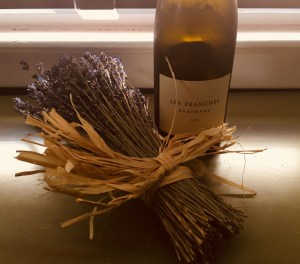
What are the differences in symptoms between cyanide poisoning by inhalation or by ingestion? What is the best way to store evidence? What work happens on a lavender farm in early October? How are French wine labels governed by the state?

lavender
I like research that requires learning about wine and visiting lavender farms

The topics a mystery writer may find herself researching are never boring! We rely on resources including — but by no means limited to—manuals, interviews with experts, visits to unusual places, even Google searches. 

When a murder is committed in our books, even if it takes place off the page, we need to know exactly how it was done and what clues might be left behind. When a victim is found in a particular location, we need to know why he or she was there to begin with. When a suspect produces an alibi that doesn’t hold water, we need to know the detailed explanation of why not — even when we don’t share all those details with the reader.

The question of how many details to share is a big one. For a book to pass muster as a realistic story, a certain level of explanation and accuracy is necessary. But include too many details, and suddenly your reader finds herself reading a how-to manual instead of an engrossing story. 

IMG_3781
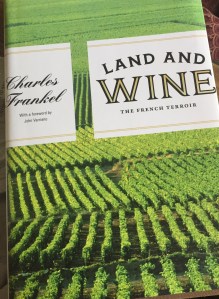
My kind of how-to manual!

Of course, different readers look for different types of details. How we as writers present our stories is a big part of what makes up a writer’s “voice.” Some writers are known for their intricate explanations, whether of crimes or locations or corpses. Readers who loves those writers thrive on those details — to them, it brings the story to life. Other readers look for a book that skims over the detail. They’re less worried about how accurate the description of police activity is and more interested in the emotional arc of the characters involved. And some readers want it all!

Some of these differences are determined by the subgenres within the mystery genre — some books are thrillers, others suspense or cozies. Each type has its own expectations. No one who picks up a cozy is looking for a graphic description of the corpse, but leave out the details of the chocolate cake recipe and you’re asking for trouble!

The writer must know her readers’ expectations and not disappoint. My books are traditional mysteries, which means they follow the line of providing succinct and accurate descriptions of crimes and how they are committed, but keep the focus on the plot and characters. When I’m looking for a fun read at bedtime, however, I usually grab a cozy mystery, something I can cuddle up with along with a cup of hot chocolate and enjoy. Hey, who said we could only read one subgenre?

So how much detail should a writer include? Not too much, but just enough. 

How much detail do you look for in the books you read?

And if you’re wondering, the first two questions above I had to answer for my book A Pale Reflection, coming out later this year. The second two are for the book in the series after that (yes, while one book is with the editor, I get to work on the next one).

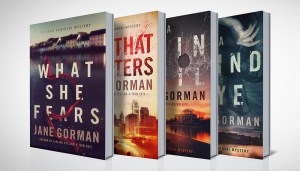
Learn more about Jane Gorman and the Adam Kaminski Mystery Series at janegorman.com or follow her on Facebook or Instagram.

Adam-Kaminski-Mystery-Series