Cavalcade of Books

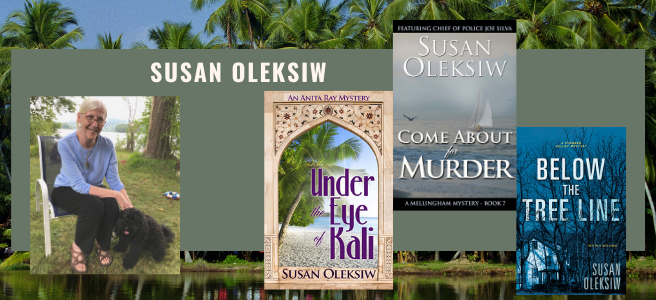
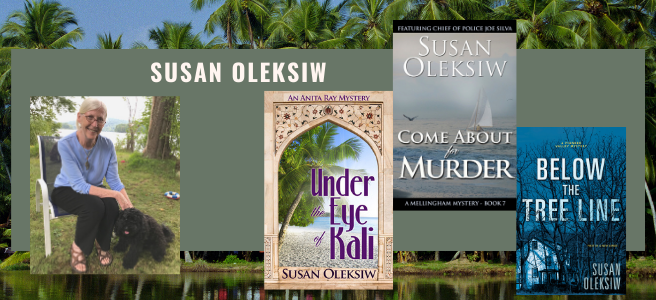
When I look at my TBR pile, which is really a scattering of books all across the sofa, the upholstered chairs, and stacks on the floor, my brain boggles at the variety of titles. It’s as though I have no focus. I was about to add a number (a large number) of mysteries to the list when a couple of friends came up with an idea, The Cavalcade of Books, which would be a list of three books by each of the ten writers on Ladies of Mystery. Yes, they would do my work for me—they’d bring together all the titles I want to read in the next few months, everything at my fingertips. Yay!

I’ve been writing a monthly post for Ladies of Mystery since June 2019, assuming I’ve managed to keep a complete list, which is a lot to assume about me sometimes. And during those months and years of writing my posts and reading posts by the other ladies I’ve learned about other parts of the country, this very strange writing business, lots of history, tricks and techniques I would never have thought of, marketing options, sales outlets, the thoughtfulness of my fellow blog writers, and had a lot of very good laughs. 

But you as a reader probably want something more than compliments and ravings from me to persuade you to try some of these books. Readers are so demanding, and that’s why we writers love you. You make us work, you give us a reason to dig deeper, think harder, write better. So herewith a little piece of why we read and (I) write mysteries. 

Sir Arthur Conan Doyle and Agatha Christie both wrote traditional mysteries. So did Dashiell Hammett and Raymond Chandler. How can this be? They’re all so different. The form of the mystery has always seemed to me to be as broad as the range of human taste. You can write the story with any level of violence or no violence, and in the end you return to a point of stasis promised at the beginning. The form holds both writer and reader, and yet liberates both to explore and range widely (I almost write wildly, so drop that in there too).

https://bodiebluebooks.com/ladiesofmystery.

In The Cavalcade of Books you’ll find the whole range of crime fiction organized into seven categories. Just click on whichever one calls to you and find a list of novels by new and perhaps long favorite writers. You can also chase down a writer through the alphabetical index.

All these books come with special prices in effect from November 15 to December 31 (just in case you climbed onto a really slow Christmas/Holiday shopping train).

These women are amazing—hilarious, scary, captivating, fun, and terrific writers. Buy the books for your friends, your families, strangers you want to turn into friends. Then when the season becomes the crazy time of too much shopping, wrapping, eggnog, take one of your new treasures, crawl under the dining room table, and take a break. Visit the Northwest, the nineteenth century, India, or New York City. We all deserve a break. Even writers. Enjoy!
Reading Old Work

For the last few weeks I’ve been thinking about the old mss left unfinished. Some are in my computer. Some of them are on paper, stacked in a closet, shoved into the back where I can’t see them. That’s probably a good thing because if they were visible I’d pull them out and litter my desk with them.

There’s nothing wrong with any one of them, and several came very close to a sale. But there is something not quite right. Every writer knows what I’m talking about—the story we loved and worked on and with a gasp of hope sent off to an editor or an agent. And then it sat there, on someone’s computer or desk, gathering dust of being pushed lower and lower on the list of titles in the TBR file. The question becomes, what do we do with them? Do we reread and rework them? That’s a definite possibility. The more I learn, the more I rethink what I’ve done and recognize where I could have improved the story by changing the setting, developing the villain more, heightening the tension, or removing the extra secondary characters. But I don’t do these things in a novel. I might do some in a short story, but not in a longer work. And I think I know why.

Some years ago I was an avid fan of Margery Allingham’s Albert Campion mysteries. The first one appeared in 1929, The Crime at Black Dudley, and others followed fairly regularly into the 1960s. I don’t know if many people read her work anymore, but she was considered one of the great British mystery writers of her time. After reading through her entire list including a couple of novellas, I came across her first mystery, The White Cottage Mystery, published in 1928. This is only a year before her first Albert Campion story. And I was startled at the difference between the two., and the extent of her growth and development as a writer between her first and her second book. It’s an experience I have always remembered. 

We grow and change as writers. If our work sounds the same year after year, we’re not growing and it’s time to stop and ask why. I don’t want to write the same book year after year. There has to be something different, some sign of a new perspective, a new challenge. I can see this same ambition in some of the writers I read, but not in others. 

When I pulled out some of my old mss and had the passing thought of rewriting and updating them, I was frozen, and here I think I was so for a good reason. Whoever I was back then I am not her now. To bring one of those old mss up to the level I would want to write today would be to dismantle and basically erase it. Each line, each feeling and action would have to be different because I’m different. The story was good for its time and in some instances that’s twenty or more years ago. I was different and the world was different.

I’m in a long phase of decluttering the house I’ve lived in for over forty years, but I doubt I’ll toss out those mss, not just yet. Each one tells me something about writing, finding a voice, developing a voice through time, challenging ideas and creating new ones. I liked some of those stories more than others, and the failure of some weighed on me more than others, but like any other experience that comes to an end, I let those novels go and moved on.

The one important thing I remember is that even though they didn’t sell, they made me the writer I am today, with their lessons and discoveries, their pitfalls and graces. For that alone I will probably keep them for a while longer.

Reframing

Reframing is a well-established psychological tool for tackling problems that may seem intractable, and I found myself appreciating it recently.

For the last three years two other writers and I spend much of the spring and summer working on the annual anthology Best New England Crime Stories published by Crime Spell Books. All three of us read and select the stories, and all three of us edit. All the other duties are split. Ang Pompano sends out the acceptance or rejection emails and works on promotion, developing ads and the like. Leslie Wheeler manages the books, and works on sales opportunities. I get to write jacket copy, and lay out the book for POD. We have a great cover designer, and all three of us weigh in on the art and design. We review each other’s work, offer suggestions, and manage to put out a book we’re proud of every year while also having fun at our launch at Crime Bake in November.

Writing jacket copy is perhaps the least onerous job of a writer with a book going to press. My practice has been to look over the list of stories, arrange them in loose groups, and talk about the kinds of crimes they contain. I wrote the copy this month and sent it around to Ang and Leslie. Both liked it but Leslie had a response I hadn’t expected but found provocative. With all the talk of crime in the news today, depressing for everyone, perhaps we could focus on the characters who are fighting back, challenging the criminals or the system. This immediately appealed to me, and I ditched the first draft and reshuffled my note cards.

Looking at these stories from the perspective of the range of characters caught up in circumstance of crime and its consequences changed the way I viewed them and let me see beyond the cleverness of the plot, the range of characters swirling around incidents, the grounding bit of information, the unexpected twist. Most were ordinary people in extraordinary circumstances finding something within they didn’t realize they had. They were sometimes stymied by their situations, tripped up by bad luck or trapped by betrayal, but they were a match to the challenge, though not all succeeded in bringing about justice.

By reframing I also got closer to a different view of the crime. When a crime is committed it is most often by a person shriveled by life and seeking an unimaginative solution. An ordinary scam inspires a docile matron, and a drug addict discovers how far he has gone on the path to a. new life, and what his world is really like, something most readers will never experience. For others, following clues and solving a crime leads to a painful reckoning. Rewriting the jacket copy turned out, also, to be more challenging than cataloging a variety of crimes. As expected, the protagonists in these twenty-four stories were a varied lot.

With every year, we three editors choose stories that we think are well written, well thought out, and interesting as fiction. Because it’s crime fiction there is an understandable emphasis on the structure, the plot with a crime and its solution. But with a change in perspective, a reframing, I find myself appreciating the range of personalities grappling with life’s body blows. There is a richness not as easily appreciated otherwise. I hope our readers will feel the same way when the book is out in November.

Discovering the Setting

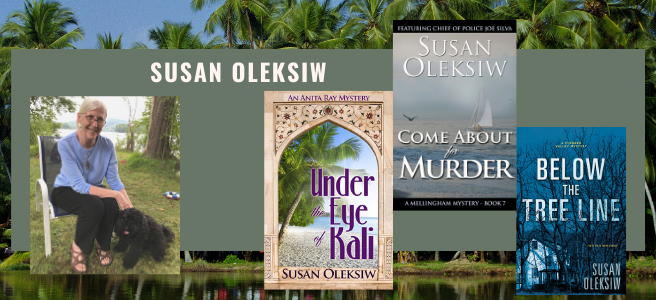
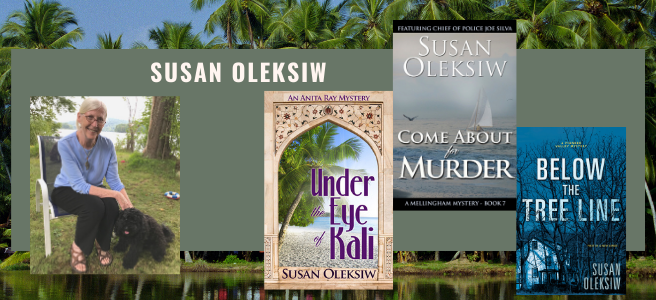
I’m in the middle of the sixth book in the Anita Ray series, which is set in a tourist hotel in a South Indian resort. Over the years the area has grown from a tiny fishing village with a few hotels just up the coast to one of the most popular destinations for Westerners eager for the sun and sand, not to mention the sunsets and the fishing boats bobbing on the horizon at night. I know the area well, having visited it for the first time in 1976 and several times in the 2000s. 

The pathways laid out in the early years are now paved walkways through marsh with little pools covered with lily pads. The paths have been widened in some areas to allow shop owners to hang out rows of brightly colored silk saris and blouses. When I think there’s no more room for another restaurant or shop, I turn a corner and spot five square feet turned into an open-air cafe with the owner stirring a pot on a two-burner cooktop, ready to serve the foreigners sitting on stools before a board table. The food is good, the price is right, and the cook’s son works in one of the high-end hotels. Much of Kovalam has spread on what was once paddy fields that came down to a low berm fronting the beach. All those are gone, and only the rare private home remains, hidden away beneath tall palms.

A reader often tells me they know “exactly where I am” in an Anita Ray story, and that’s because I do too. I have a strong sense of direction in India (and elsewhere), a deep understanding of India (after years of graduate school), and a personal love of the region. All of that informs the Anita Ray stories. What I don’t have is a sense of place in any story if I haven’t been there, walked through a public park, found a typical cafe for the area, and visited a municipal building—perhaps a library or town hall. I can make up a lot of it, but I need to experience the “feel” of the place. 

The Joe Silva series, in seven books, takes place in a small coastal New England town. I know these towns well, having grown up in one. The rocky coast speaks of the “flinty” Yankee, and the harsh winds call to mind the ever-present threat of hurricanes and other storms. Winters may be changing because of climate disruptions, but the birds still come, the land demands careful attention, and life for the fisherman is never easy.

One of the reasons I enjoy reading crime fiction is the other landscapes I get to explore. I’ve been through the Southwest and lived for a brief time in Tucson, so I appreciate any writer who can take me into that world of mountains and deserts, long straight roads, and small adobe houses with gravel yards. The openness of Montana and Wyoming brings out the best in some writers, and I look forward to their stories and landscapes.

Regardless of where we grew up or now live, we are creatures of our environment, and the best fiction uses that sense of place, what is distinctive and unique about one location, to propel the characters and their story. This, for me, is the reward of a reading a novel with a rich, fully developed setting. I come to understand both people and place, and know a part of the world I may never visit a little better.

A Few Of My Favorite Things

I’m one of those people who loves Christmas music. All of it! From the good old songs by Nat King Cole, Bing Crosby, and Brenda Lee to the new ones by Mariah Carey, Kelly Clarkston, and Cher’s new one. If there are bells jingling, joyful lyrics, or reverent lyrics, I like it all.

Listening to Christmas music while I cook, clean house, and put things away from my recent book selling events, makes the task lighter and more fun. My hubby rolls his eyes as I dance around the kitchen putting dishes away, totally absorbed in the song that is playing. (If I’m absorbed how do I know he rolls his eyes?) Because he makes a noise or says something that draws my attention to him. He isn’t a Grinch, but he isn’t into the holiday as much as I am.

Where I’m going with this is I have learned I may be more auditory than I thought. I started listening to one audiobook so I could see what I would need to produce if I ventured into making my books into audiobooks. I enjoyed listening to a book because my hands were free. Now when I sew, cook, clean house, or drive long distances, I prefer to listen to audiobooks. Except this time of year because I’m listening to Christmas music. Audiobooks have kind of become my addiction because I can listen to them while doing other tasks. My mind can wander into the story while my hands and eyes are doing something else.

Lately, I’ve felt like I don’t have enough hours in a day to read for pleasure. But I can listen and continue doing certain tasks. Even my walks, I can listen to a book and get my exercise and fresh air. Our last trip to see our daughter, while my hubby drove, I listened to a book with my earbuds because his pickup doesn’t have the capability to put it through the radio, but our trip before that with my car, he even listened to the book.

I’m finding at the book selling events I attend that more people are saying they listen to audiobooks. Which is good for me since my three mystery series are all on audio. As a means to get more of the books purchased, I joined a Facebook website group for authors with audiobooks wide, meaning not just published through Audible. This group has proven to be more helpful in teaching me how to promote my audiobooks than any other workshop or event I’ve attended.

Right now, the authors at Indie Audiobook Deals are having a MASSIVE year-end giveaway. If you like audiobooks as much as I do, you might want to enter the giveaway. You can sign up to follow the authors with audiobooks in the genre you like to listen to as more ways to get your name in the drawing.

Five entrants will win a $50 Kobo gift card! Kobo is the premier site to listen to fantastic audiobooks.🎧

We’re picking FIVE winners so make sure to complete all of the extra entries to enhance your chances of winning. Good luck and wishing you a happy holiday season!

Enter here: https://kingsumo.com/g/pt4ez1/win-1-of-5-kobo-50-gift-cards

And if you are a mystery fan who likes books with diverse characters, right now I’m listening to book 2 Peril at the Exposition by Nev March and enjoying it. I discovered Ms. March earlier in the year with her first book that I purchased through Chirp, an audiobook distributor that has sales constantly. After listening to that book, Ms. March had asked a question on a crime scene email group I’m on. I emailed her to let her know how much I enjoyed her book and she agreed to be a guest blogger here in February.

Anyway, I got away from reading about diverse characters. Her first book is set in India in the 1800s. The one I’m listening to now is set in Chicago. The two main East Indian characters left India so they could be married. For some reason I enjoy reading books set there. I also like Sujata Massey’s Mysteries set in 1920 India. When I finish reading the book Blood Sisters by Vanessa Lillie, I will dive into The Mistress of Bhatia House by Ms. Massey.

I believe my interest in other cultures is why I write mysteries with Native American characters. I like to learn about their culture and reveal it to others. Though I reveal it slower than an Indigenous writer would because I didn’t grow up in the culture and have to learn about it and understand it before I’ll put it on a page.

Also this month, I have my audiobook, Murder of Ravens, book 1 in the Gabriel Hawke series for $0.99 at Chirp. Double Duplicity book one of the Shandra Higheagle Mysteries, Double Duplicity is $0.99 at Spotify. Or you can get the first three audiobooks of the Shandra Higheagle Mysteries at Barnes and Noble Nook for $2.99.

If you haven’t already finished your holiday shopping, a book or audiobook is a great gift. The recipient will step into another world and be the better for it.

Happy Holidays!

Paty