Guest Blogger -Jennifer Giacalone

Working Backwards

When people find out that I write the occasional mystery novel, the most common question I get is “so do you write the ending first and then work backwards?”

So, for anyone who might be wondering if I did that with “Art of the Chase,” the answer is no. However, I didn’t quite write it from beginning to end either. You could say I did it sideways, from the middle out.

Where Is the Middle Anyway?

For me, a mystery turns less on the beginning or the ending and more on the little bit of information that’s so interesting and surprising that it allows you to see certain things about what comes before it and after it.

For example: I was watching a documentary on the works of Vermeer. They talked a bit about how it was unusual for the time period that he used so much blue in his paintings, because it made them very expensive. Blue paint could only be produced with lapis lazuli stone, which had to be hand-ground and then processed in a very unpleasant, potentially dangerous procedure. You didn’t find many painters of that period using it as wantonly as he did.

The advent of French ultramarine produced chemically, in the 1880s, made it much easier and cheaper to work in blue. And it was this seemingly random fact that ended up being what the story turned on.

Because I started to think: what if you had a detective who specialized in art thefts? Would they know about the rarity of blue in Renaissance and Baroque painting? How would that knowledge come into play if a particular piece was stolen? I was starting in the middle. The middle of a story, the middle of a question, the middle of a period of history in which blue paint was a precious commodity.

Research Is The Fun Part

The process of writing is, for me at least, an opportunity to learn. I learn about myself, always; my biases, my areas of weakness as a writer, my own fascinations. But I also just learn about… well, stuff.

Almost everything I choose to write about requires some amount of research. And it’s always about something of interest to me. There’s nothing I love more than learning a lot about a topic of interest, in this case, art. And in particular, the life and work of Artemisia Gentileschi, the various methods of producing paint colors used by the old masters, and the architectural landscape of Florence. What a delight!

I fell down a rabbit hole, and popped up somewhere late in the third act with bits of fascinating information in my little paws like some sort of literary groundhog. The threads that connect my little prizes are ultimately what hold the story together. Why does this painter matter to this detective? What sort of thief would want to steal a piece of hers? And what does the history of blue paint have to do with any of it?

There is a Connection Here, I Swear

I spread my treasures out and draw lines from one to the next. I figure out why these things matter to each other, and so the story reveals itself. My plotting efforts tend to look less like a traditional bulleted outline, and more like a murder board with photos tacked up alongside post-it notes, connected by a brightly colored thread that runs from the middle out.

And I’m the lunatic cop who can stand back and see how it might all connect; who do I need my thief to be, my heroine, my informant? How do I build them to make these treasures shine and tickle my readers as much as they tickled me?

Ah, there it is. I see it. There’s my story. There’s my heroine. This is how she gets from here, to here, to there. There’s my thief. That’s what he wants, and why.  It’s not a matter of working backwards or forwards. It’s a matter of allowing the story to emerge from the bits and pieces that delight me the most, and letting them surprise the reader as much as they surprised me.
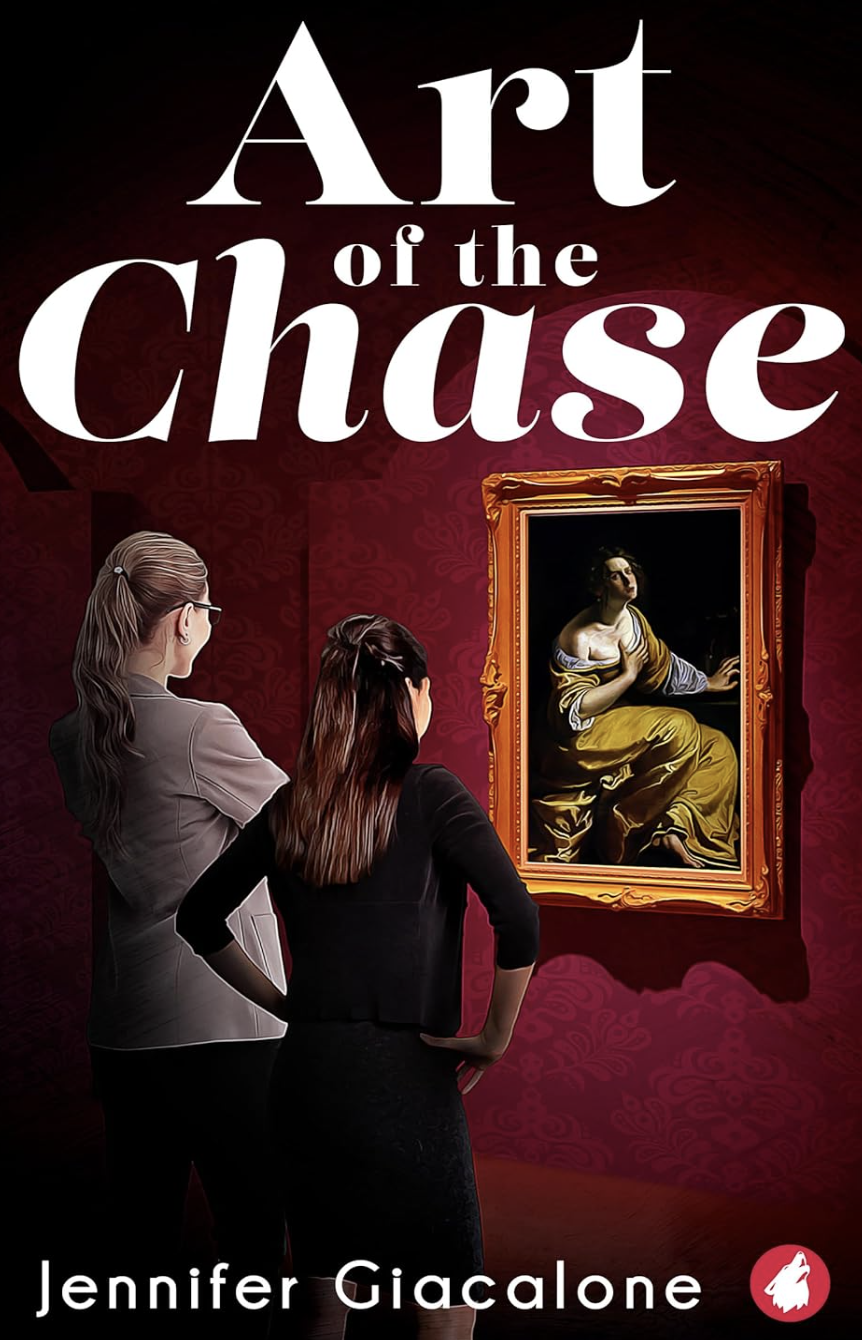
When a notorious art thief surfaces, warring detective exes reunite for the hunt. 

Six years ago, the “Fabulous Gustave” slipped the grasp of Agent Fleur van Beekhof, making off with a priceless artwork…and Fleur’s beautifully ordered life. Suddenly the cool, pragmatic Europol detective lost her detective partner and wife, her rising career, and her control, thanks to the addictive lure of cards.

When a new Italian art theft bears all the markings of Gustave’s flamboyant, taunting style, Fleur is put back in the field, because no one knows him better. She jumps at the chance to correct the mistake that ruined her life. The hitch? She has to work with her fiery ex-wife. 

Where Fleur is a detective who loves art, Renata is an art expert who loves being a detective. Where Fleur is by the book, Renata is reckless and leaps into danger. But they’ll need both of their skills to catch the slipperiest thief Europe has ever seen … even if it shatters what’s left of Fleur’s heart. 

Buy link: https://www.amazon.com/dp/3963248351
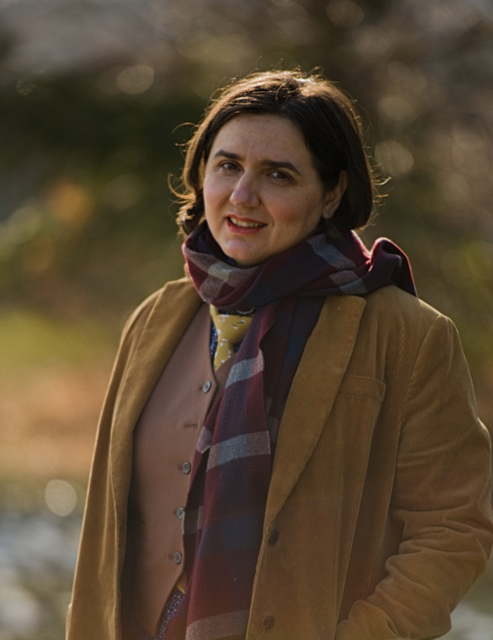
Jen Giacalone is a neurodivergent queer nerd who has lived many lives and brings with her a wealth of experience to tell high-octane drama, thriller, and mystery stories across books, film, and TV.

After spending her twenties as a rock and roll frontwoman, and her thirties as a graphic designer in boardrooms of Fortune 500 companies, she’s currently in what she likes to call her “final form” as a writer.

You can usually find her disappearing down rabbit holes of fascinating research on random subjects that will turn up in one of her books. And, of course, she sprinkles a little glitter on everything she touches.

https://www.instagram.com/jengiacalone/

The Other Reason I Write

This is an exciting time. Crime Spell Books has just announced the list of stories and writers that will appear in its first Best New England Crime Stories anthology. This is the nineteenth such anthology after Level Best Books announced it was discontinuing the series last year.

Last fall two of my colleagues and I agreed that the cessation of the annual anthology by Level Best books was a sad end for a publication we all loved and two of us had worked on. Leslie Wheeler and I had been editors and Ang Pompano had published stories in the anthologies. But I had another reason for being disappointed.

I was one of the original founders of Level Best Books, along with Kate Flora and Skye Alexander. There’s something wonderful in creating something that lives after you—and doesn’t need you to prosper. That was the Level Best Books anthology.

In 2003, when we began, print-on-demand hadn’t yet taken hold and become the easy, accessible (and cheap) process that it is today. As the first editors, we chose paper, dealt with printers and shipping, and hand delivered books to bookstores and events. We advertised and promoted. And that came after reading and selecting stories, editing and proofreading. And back then proofreading meant reading the printed text against the paper manuscript, looking for errors in composition and type setting, not in the writing of the story. The process is so much easier today that any writer can put together a collection of stories and publish it digitally and through POD with or without technical help.

Creating this new anthology satisfied something in me that I don’t usually find elsewhere. I love the process of making something. Yes, I write stories and novels, and have a number of both out circulating with editors. I cannot imagine a life without writing, and indeed I’ve never had one without it since I was a teenager. But the finishing process has its own special appeal—there’s a tactile pleasure in putting together the front matter and back matter, arranging the parts felicitously. I get some of the same pleasure from matting and framing a photograph for the few times I’ve done an exhibit of my work. That form of satisfaction is probably why I do needlepoint and embroidery, and used to sew all the time. Sometimes I arrange tools and equipment in the garage or cellar for their appearance rather than practical reasons. I may end up a sculptor making assemblages or found art pieces. I love using my hands. But I’ll still be writing.

The point of all this, I suppose, is to share with all of you those aspects of my writing self that don’t often come out. I talk so much about writing—how to do this or that—that I sometimes forget that each of us who writes has more going on and other ways of being creative and finding a sense of accomplishment than the one part we talk about on line. The beginning of the resurrected anthology is one of them for me. So while all the writers are celebrating having their stories in the new anthology, which I fully understand, I’m celebrating making another object that will satisfy another part of me.

The World Through My Eyes

thumb_IMG_1225_1024

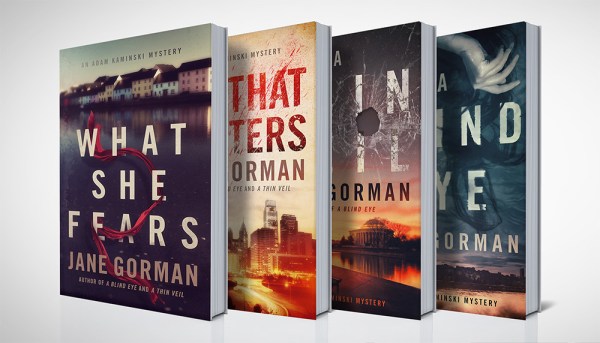
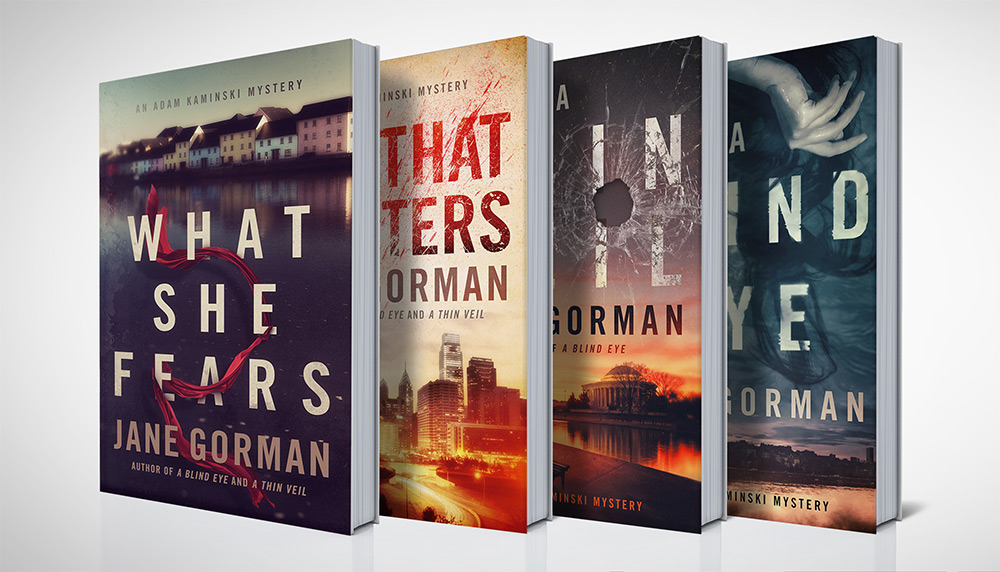
The fifth book in the Adam Kaminski mystery series will come out this summer. I am so excited to share it with you! I’ve spent the past two years working on this book that looks at the world through the eyes of a photographer, while also telling the story of a cruise in which everyone is pretending to be someone they’re not.

One of the things I enjoy most about writing is the opportunity to look at the world through other peoples eyes. Because my series has one main character– Adam Kaminski – who always finds someone to help him out, I have the pleasure of creating a new point-of-view character for each book (that is, a character whose thoughts you, the reader, get to hear.)

In this book my second leading character is Julia Kaminski, sister to Adam. Julia has appeared in most of the other books in the series, so I’m not creating her from scratch. But this is the first time I’m writing from her perspective, describing the world through her eyes. In this case, the eyes of a photographer. There can be no doubt, we all see the world a little bit differently.


A-Pale-Reflection-Web-Small
A very blurry suggestion of the cover for A Pale Reflection  – the world as I might see it!

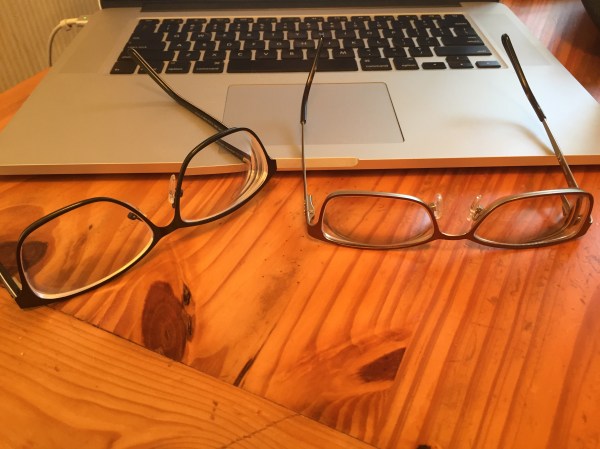
Personally, I’ve been wearing glasses since I was five (and probably needed them before that). The world through my eyes looks very different. Terribly near-sighted, without my glasses I see blurs of color without distinct shapes. Every pin prick of light becomes a giant, glowing snowflake. It’s actually quite beautiful! As long as I don’t need to see clearly. These days, I wear bifocals, so I get two different views of the world depending how I hold my head! (And does anyone hate progressive bifocals as much as I do? I couldn’t stand them.)

As an aside, I recently saw a video about very young children – one year or younger – getting glasses and being able to see their mothers’ faces clearly for the first time. The expression of joy on their faces was indescribable. How the doctors were able to figure out a) that they needed glasses and b) what their prescription was I have no idea. But it is remarkable.


IMG_3813
Bifocal and near vision only – just two of the many pairs of glasses in my life!

My husband, on the other hand, is farsighted. How strange! After a lifetime of holding things next to my face to read them, I can’t imagine only being able to see clearly when things are far away. The world he sees is very different from the world I see.

I’m pretty sure the same holds true for reading. I write a book and let it out into the world. Now it’s up to the reader to see whatever he or she sees in it. I love hearing other peoples perspectives of my books — don’t get me wrong — but I admit there are times when I hear someone describing one of my characters and I think: can’t I just give you a prescription that lets you see it the way I see it?

A Pale Reflection, my book about seeing the world – and other people – clearly, comes out this summer. Check out my Facebook page or sign up for my newsletter at my website to see the full cover soon. And follow me on Instagram to see photos of my world. I hope my perspective of other people’s perspective will keep you entranced – and wondering who the killer is!

Adam-Kaminski-Mystery-Series

Who Saw That?

thumb_IMG_1225_1024

Julia Kaminski, sister to the hero of the Adam Kaminski mystery series, is a photographer. A good one. She’s still figuring out how to make a living in her chosen profession. In an ideal world, she’d earn her money by showing and selling her photographs at galleries. But until that happens, she’s getting by by taking on gigs as a photographer at wedding or parties. And still holding out for her big break.

Julia’s photographs take on new meaning in book 5 in the series, A Pale Reflection. Julia finally gets a leading role, after appearing as a side character in the first four books, and jumps into the chance to use her photographic skills to help her brother Adam figure out whodunnit.

27591728_Unknown

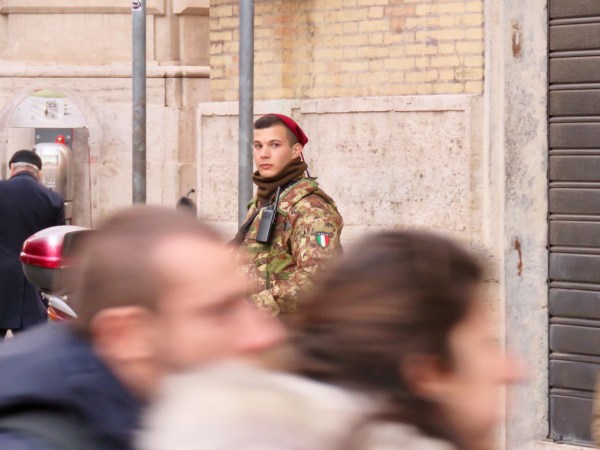
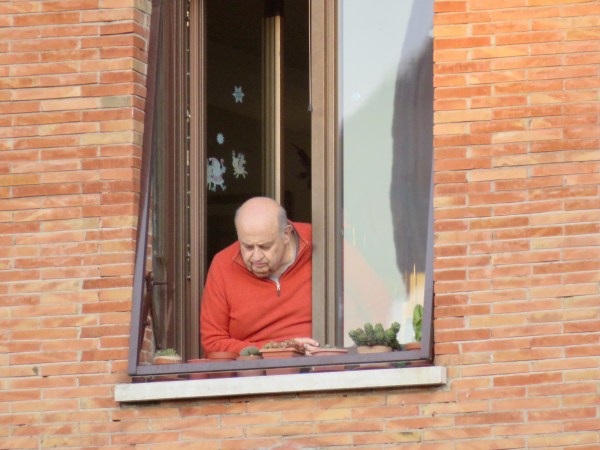
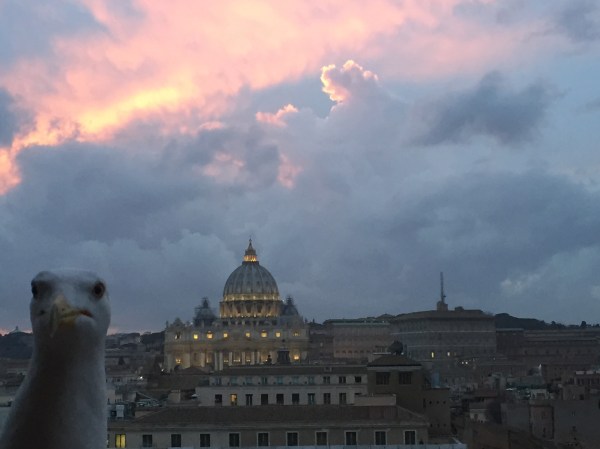
The thing about photographs is they capture more than you might realize. You, the tourist, for example, sees a beautiful scene and snap a shot. It may only be later, as you go back to look through the photographs, that you notice someone or something in the picture you hadn’t previously realized was there. Or someone watching when you thought you were alone.

27599568_Unknown

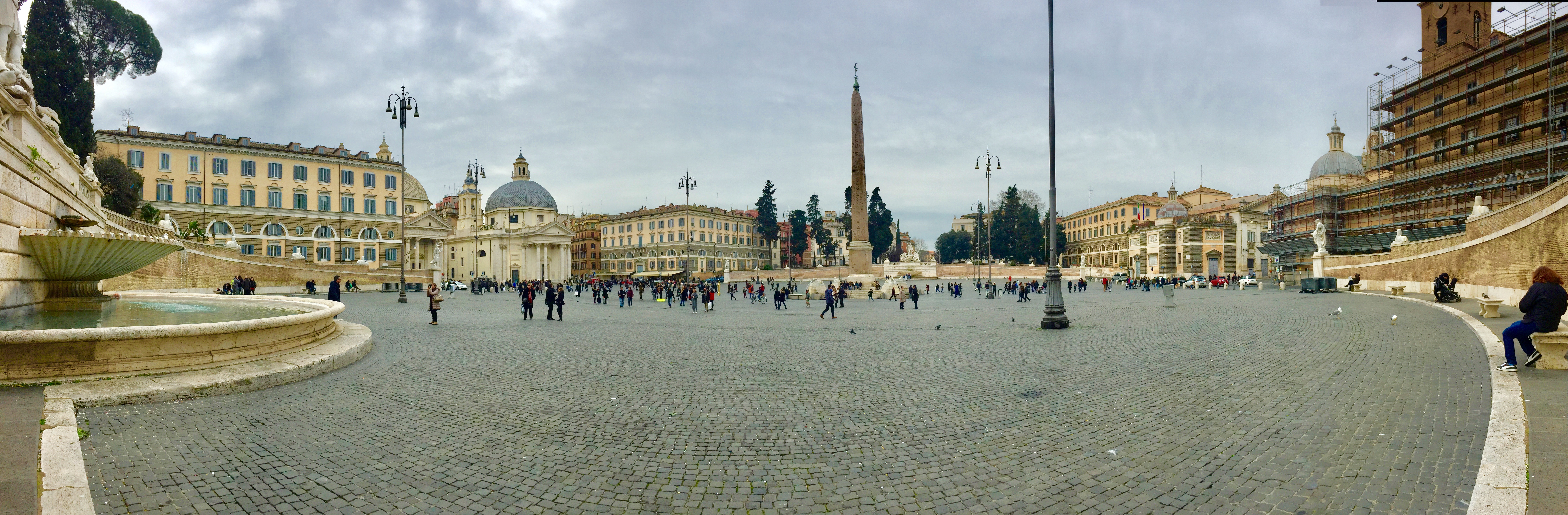
In my family, my husband is the photographer. We just had the amazing opportunity to spend a glorious week in Rome. (Will Adam Kaminski be solving a murder in Rome in the near future? Stay tuned!).

Chuck, my husband, takes spectacular photographs of traditional scenes — statues, artwork, natural beauty and urban beauty. But he also finds joy in surprising details. For example, catching an unexpected eye.

IMG_3708

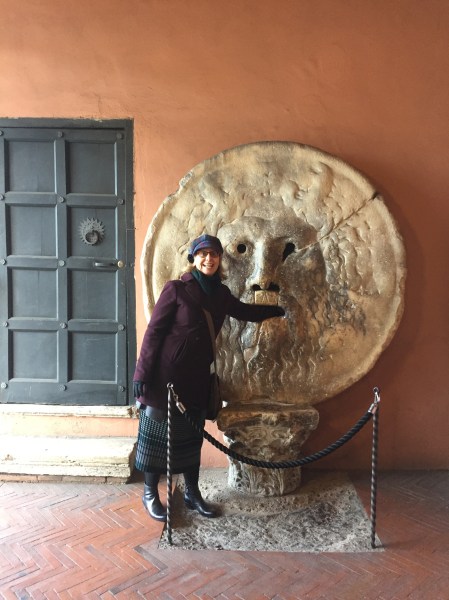
For us, it’s fun. We use these photographs to share our experiences with friends and family and to refresh our own memories of the time we spent there. And if we were trying to catch a killer, the “mouth of truth” pictured here would be a huge help!

IMG_6641

Of course, we’re not trying to solve a murder. For Julia and Adam, a photograph can mean so much more. Even the difference between life and death.

IMG_6700

Learn more about Jane Gorman and the Adam Kaminski mystery series at janegorman.com or follow her on Facebook. For some great photographs of Rome and her other travels, check out her Instagram page!

Adam-Kaminski-Mystery-Series

On the Trail of Inspiration

Some of my friends here think I’m crazy. Not because I’m any more peculiar than most people in Truth or Consequences—that would be more difficult than the odd thing they question, which is running at noon. In the desert. In July.

It’s much more pleasant than it sounds, though it would have been hell in June before the rains came. Now the temperatures are in the upper eighties or low nineties, with a few little storm systems flirting with the mountains, and no one around except the quails and jackrabbits and lizards. Snakes are hiding from the midday sun, and all the humans are out on the lake. That’s the way I like it. Not that I have anything against snakes, but I prefer not to meet them—or my own species—while I run. I want to be alone. It may look as if I’m only exercising, but actually, I’m writing.

With my train of thought taking a crooked path between lizard sightings and admiration of quail chicks, cacti and the rain-promising sky, I get creative. At the beginning of the run I pick a plot problem and turn my mind loose to play with it. Something about the free flow of running breaks mental dams. Key lines of dialog and important character goals arrive, ideas that refused to show up at my computer the night before. Snake Face has a lot of music in it, and all of those songs came to me on my favorite trail in Elephant Butte Lake State Park, complete with melodies no one will ever hear.

Over the past couple of years, someone has had the urge to make art along that trail. First, there was the miniature Stonehenge. Now there’s a spiral of pebbles presided over by a bulbous lava rock that looks like the Venus of Willendorf with a few too many endowments, and another that looks remarkably like a fluffed-up bird. The bird rock faces out, with its clutch of egg pebbles nearby. The fertility goddess squats on a large flat rock overlooking the spiral. All along the trail I keep noticing additional smaller arrangements, such as a square white rock placed in the center of the square red patch on a larger white rock. I find light green on dark green, bright yellow on dark brown and gold, all sorts of little rocks arranged on shape-and-color-compatible members of the community of stones marking the trail’s boundaries. These creations required time and thought and close observation.

As I wondered how long they took and try to picture the person behind them, a plot puzzle I was struggling with resolved itself. These little henges and heaps are going to find their way into the book in progress, perfectly suited to a certain character and his needs. Art meets art on the trail of inspiration.