
Choosing to write an art history mystery series came relatively late in my career, but the seed was planted very early in childhood, and was as much a part of the natural course of events as learning to read and being read to—Winnie the Pooh, Mary Poppins, Alice in Wonderland—and being told laugh-out-loud stories, ad-libbed by my father, about a little girl named Jeanie, clearly my alias, and her adventures with her anonymous daddy, clearly my own. And like bedtime stories, my introduction to art—my association with art—was, and is, bound up with family, adventure, safe harbor.
It began with outings to museums. We lived in Brooklyn, and a couple of the great ones were a short subway ride away. The Metropolitan, the Museum of Modern Art, the Frick, the Brooklyn Museum. Typically, these outings were followed by take-out Chinese food and talks around the kitchen table about what we had seen that day. We talked about the different ways painters saw the world; debated about which perspective better described the real world—and what the real world really was. Color and light? Shape and dimension? And what about imagination? Created imagery. Distorted reality. Ideas about the relative nature of beauty and truth were woven into these conversations, and all the while we were savoring our chicken chow mein and fried rice with lobster sauce.
It stands to reason that my idea of the art world was a romanticized one, but by the time I’d written a few rom-com-like novels and murder mysteries and was considering writing an art suspense novel, I’d learned a lot more about its seamier side. How the price of art is virtually uncontrolled, dependent on the whims of collectors and dealers and the transient tastes and fads of the times. How art is ransomed, forged, used to launder money, stolen then sold on the black market. In short, that the art world is where the most sublime of human instincts collide with its basest. What a great amalgam for fiction!
I pitched the idea of my writing an art suspense novel to my brother, Jonathan, an art history professor at the University of Cincinnati, and he off-handedly suggested, “What about finding a lost study of Michelangelo’s Battle of Cascina?” As he enlarged on the subject, a conversation I’d had years ago popped into mind. It was my first week at Vassar College, and I was out of my social depth, trying to hold my own with one of my classmates, a seasoned debutant. I suppose the incident remained etched in memory because our life experiences were so disparate. Especially vivid was the story of how her father’s sugar plantation in Cuba had been confiscated by Fidel Castro’s government. It was this historical nugget that instantly dovetailed with my brother’s suggestion. In that moment, the American sugar plantation owner became an art collector, and as he and a freshly materialized plantation manager and a lovely cook’s assistant hid out in a basement storeroom, the art collection was being hauled off by a band of wannabe Castro rebels looking to raise money to buy arms.
The imagekicked off the prologue to Stolen Light, Book 1 of my art history mystery series. I’m a stickler for historical accuracy, and as a rule I take off from it, filling the gap with events that conform to its character, and therefore might have been. Then, in a butterfly-effect maneuver, I fast-forward to the present and drop a pair of resourceful lovers into the challenging set of circumstances that has developed—multiple murders included—and see if the sleuthing duo can sort it out.
For example, the impetus for Knight Light, Book 3 in the series, came from two quotes. From the painter Marcel Duchamp: “Not all artists are chess players, but all chess players are artists.” From World Chess Champion, Alexander Alekhine: “Chess for me is not a game, but an art.” From there, I discovered that the two had actually been team-mates on the French chess team in the 1933 Chess Olympiad. And that furthermore, Alekhine’s death in 1946 has been considered a cold case to this day. My fiction, integrated with the facts, took off from there.
Dying for Monet, Book 5 and the most recent in the series, is structured with the same criteria, except this time a crucial plot-twisting component hog-ties me to a bare-boned blurb. I’ve never felt more in danger of giving away the spoiler. I’m okay discussing Claude Monet and the Impressionists; Paul Ruand-Durell, the renowned art dealer based in Paris, carrying on in London during the Franco-Prussian War; the art museums in London; the disappearance of a still life painting; a brutal murder. Even the End Notes, where I mention books that were part of the research phase, omits a critical one whose title would blow it. Luckily, I’ve got my two sleuthing protagonists, Erika and Harrison, about whose ever-evolving love story I could go on forever.
Book 6, the last in the series, is in the works. Its plot is powered by the subject of artificial intelligence, boon and curse of the art world, depending on your definition of art or stake in its profits. My fascination was doubly sparked by an episode of CNN’s “The Whole Story with Anderson Cooper,” which focused on the Dead End Gallery in Amsterdam, the world’s first art gallery dealing solely in art generated by AI, and the Whitney Museum’s exhibition of Harold Cohen’s AARON, the world’s first AI program for art-making. These experiences raised questions regarding the genesis of inspiration, the act of creation, and the boundaries of ownership, all of which are potential harbingers of conflict, including the most deadly.
Dying for Monet
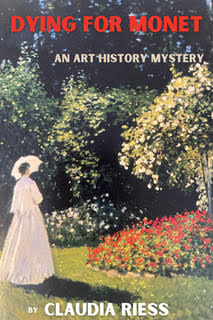
A gala evening auction at Laszlo’s, an upstart auction house in New York City, is in progress. Without notice, a much sought-after Impressionist painting is withdrawn from the block. Moments later, its broker is found dead at the foot of an imposing statue in Laszlo’s courtyard.
Amateur sleuths Erika Shawn, art magazine editor, and Harrison Wheatley, art history professor, are once again drawn into an investigation involving an art-related homicide, this time sharing an unnerving coincidence with violent crimes occurring abroad.
As Harrison searches for clues in the archives at the Ashmolean Museum in Oxford, Erika is on a stakeout in Brooklyn Heights gathering information on the owner of the hijacked still life. After Harrison experiences a disastrous encounter in London, he returns home, where he and Erika, along with a few of their usual cohorts, find themselves ever more deeply at odds with the movers and shakers on the dark side of fine arts commerce.
https://www.amazon.com/Dying-Monet-Art-History-Mystery/dp/1685126545
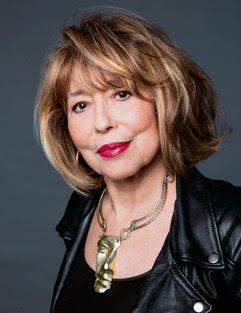
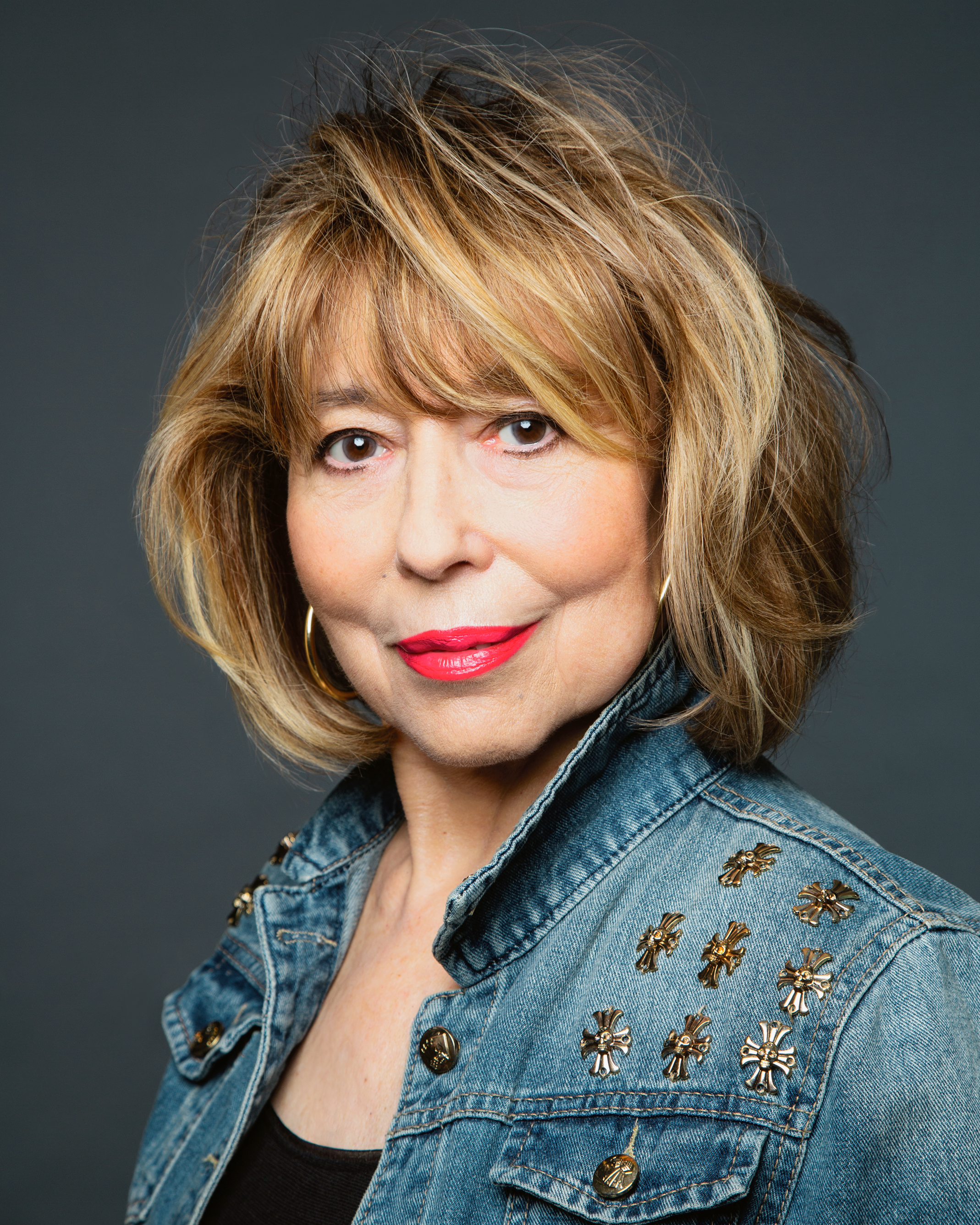
Claudia Riess is an award-winning author who has worked in the editorial departments of The New Yorker and Holt, Rinehart and Winston, and has edited several art history monographs. Stolen Light, the first book in her art history mystery series, was chosen by Vassar’s Latin American history professor for distribution to the college’s people-to-people trips to Cuba. To Kingdom Come, the fourth, will be added to the syllabus of a survey course on West and Central African Art at a prominent Midwestern university. Claudia has written articles for Mystery Readers Journal, Women’s National Book Association, the Sisters in Crime Bloodletter, and Mystery Scene magazine. She has been featured on a variety of podcasts, blogs and Zoom events.
 Ladies of Mystery
You must be logged in to post a comment.