My Favorite Part of Being a Writer by Paty Jager

I don’t know about all writers, but for me, the best part of writing a book is the “stewing and brewing” process. It’s the time between, “Bing!” I have an idea and when I start writing the actual story.

source: Depositphotos

What I call the “Stewing and Brewing” process is where I come up with the story idea or setting and then start researching and filling out my suspect chart.

I get to scan websites and look through baby name books to come up with character names and then give the attributes and reasons they are part of the story. Suspects, officials, friends, the whole bit.

And even better! Figuring out how the victim dies. I love putting a twist on the cause of murder. My newest Shandra Higheagle release, Toxic Trigger-point the death is caused by an acute allergic reaction to bees. The book I’m “stewing and brewing” right now I’m thinking the death appears accidental at first. Then… as things get investigated further it was murder.

There are times my devious mind astounds me! LOL However, coming up with the out-of-the-box scenarios is so much fun. Taking the reader on the trip of; this person did it, no, that person did it, is almost as much fun as coming up with the characters, motive, and cause of death.

I pinch myself all the time wondering how I can have so much fun writing when other writers are always complaining how hard it is. I do agree, the editing, revisions, and making the story shine are hard, but it’s like child birth. I forget about those things when I’m in the throes of “stewing and brewing”. 😉

Here is my latest Shandra Higheagle release:

Toxic Trigger-Point

Adultery… Jealousy… Murder

Shandra Higheagle Greer is minding her own business when she walks into a room for a massage and it is already occupied—by a dead body.

Always the champion for someone she knows, when her favorite masseuse looks like the murderer, Shandra listens to her gut and dreams choreographed by her deceased grandmother.

Detective Ryan Greer can’t believe his wife has walked into another homicide. He’s learned no matter how he tries to keep her out of the investigation he can’t. But this time the consequences could be deadly for Shandra—she heard the murder happen.

https://books2read.com/u/4Ex9De

Decisions, Decisions by Paty Jager

I’ve been contemplating whether or not to write books out of sequence since my trip to Iceland.

The trip started out as fun way to see Iceland with other authors, but the more I thought about it, I decided to set a Gabriel Hawke book there. However, the next book in the series has already been mentioned in the last Hawke book, so I have to make sure it comes next….

But…I believe I need to write the Iceland book while it is all still fresh in my mind. One day while the tour group was having lunch, I sat with our guide, Ragnor, and asked him questions about the best way to bring my Fish and Wildlife State Trooper with Master Tracker credentials to Iceland, other than a vacation. He would never travel that far for a vacation. He would stay close to home and perhaps even stay with his mother on the reservation.

Ragnor didn’t see him coming to any conference or event that would be put on by the Icelandic police. He did say that they had a very active Search and Rescue program. *boom* That is how I will have Hawke be in Iceland. He will be doing a training on tracking for the search and rescue. I even brainstormed his superior’s sister is married to an Icelander and they are living in Reykjavik.

I still have to do the research on their Search and Rescue program and put together the who and why of the murder he’ll get involved in. But the pieces are slowly coming together and I’m getting excited to write the book.

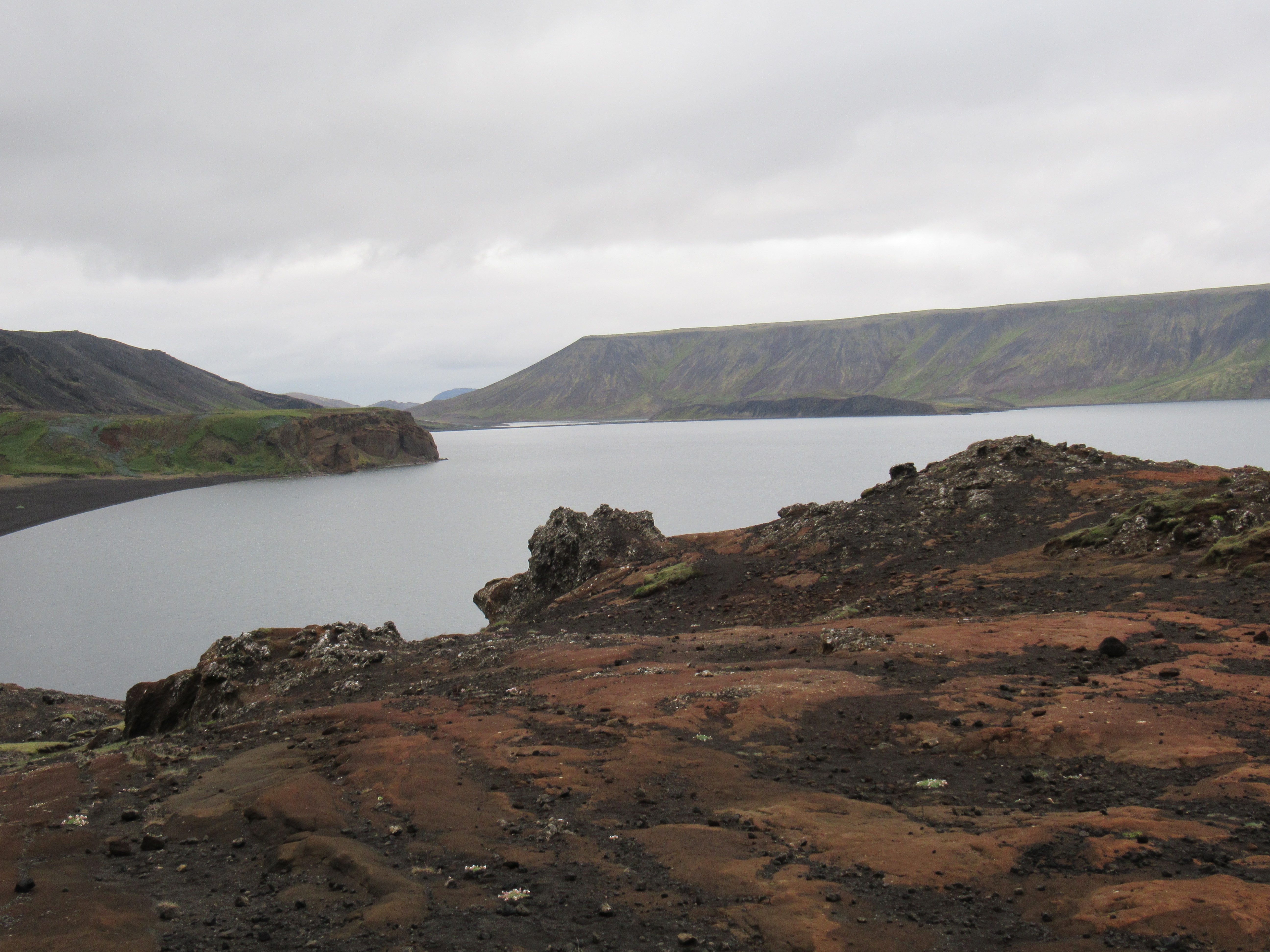
While we were out driving around on the tour, I took tons of photos (that are a bit blurry) of businesses and things that I will mention to give the feeling of the country to the book. And good photos of the place I think will work for Hawke to take his workshop outside to do some tracking. That will be when they discover a body.

Once Hawke starts on a trail, he can’t quit. Upping the stakes, the main suspect will be the nephew of his boss back in the states. Hawke is loyal. He’ll do everything in his power to make sure they find the real killer.

So my decision? Even though it will put the next Hawke book further out on a publish date, I’m leaning toward writing the Iceland book now.

What do you think? Good plan or could it backfire in my face since there hasn’t been a Hawke book out since March and the next one may not be until the end of the year?

blog / websiteFacebook / Paty’s Posse / Goodreads / Twitter / Pinterest   / Bookbub

Voice and Word Choice by Paty Jager

Voice is the author’s style, the quality that makes his or her writing unique, and which conveys the author’s attitude, personality, and character; or. Voice is the characteristic speech and thought patterns of the narrator of a work of fiction.”

This definition I pulled off the internet helps define Voice, but I’m going to dig a little deeper.

Each genre, historical or contemporary, western or mystery, I have to think about the “voice” I need to use for each one. I know the example of voice says it conveys the author’s attitude, personality, and character- true, but that has to also fit the time period and the place- historical or contemporary western. Jeans in a historical are called denims or overalls – in a contemporary they could be call Jeans, Wranglers or Levis.

This also goes along with word choice. The writer needs to know if a word was used in 1880 or if it didn’t become popular until the 1900s. When I type a word when writing an historical, and it feels modern, I use online etymology, a website where you can type in a word and it tells you when it was first used and the meaning of the word at that time and later.

Same goes with my mystery books. I use terms that are contemporary but try to include a bit of a western feel or voice to the books. I do this because they are set in rural areas and because my main characters are Native American, which also leads me to think about phraseology when writing from their points of view.

Paiute Fancy Dancer

Especially, my Gabriel Hawke character. He grew up surrounded by his culture, and therefore, has a deeper connection to the outdoors and the earth in general. While writing in his POV, I try to make sure his inner dialog as well as what he says to other characters captures that essence. 

Shandra Higheagle, while having the love of the outdoors and making pottery from clay she digs on the mountain where she lives, she grew up in a white world and is only now learning how deep her roots go in the earth. And because of this, she is easier for me to write because I can include my wonder of the Nez Perce and their culture to be reflected in her as she is coming to know more about her family.

When I sit down to write a book, depending on the genre, I have to mentally put myself in that time and place to make sure I give the best accounting of the events that are happening and told through my characters’ eyes and emotions. If you read a book from each of the genres I write, you will see there is a bit of difference in voice because I am trying to show the story through their eyes and not mine. But some of my emotions- such as my need to show injustice – will come through in every main character.

Word choice as I commented on earlier, has to do with making sure the word is true to the time and the occupation of a character or knowing what I am talking about. I don’t know how many western romance books- contemporary and historical – I stopped reading because a character grabbed a fetlock to swing up onto a horse’s back, or they grabbed the cantle as the horse started galloping. Or what really had me tossing a book…They put the halter on the horse and slid the bridle into its mouth. The writer needs to know what they are writing about. If they don’t know, they need to look it up. I spend a third of my writing time looking things up. Even if I think I know it, I still look it up to be sure. And while I’m looking it up, I might find a better word that makes the scene sound even more convincing.  

Words are what make up a book and they need to be thought about carefully. Just as carefully as the characters that are fabricated to show the story.

blog / websiteFacebook / Paty’s Posse / Goodreads / Twitter / Pinterest   / Bookbub

SUCCESSES AND PROBLEMS by Marilyn Meredith

Lately, that’s been my writing life, good stuff and not so good.

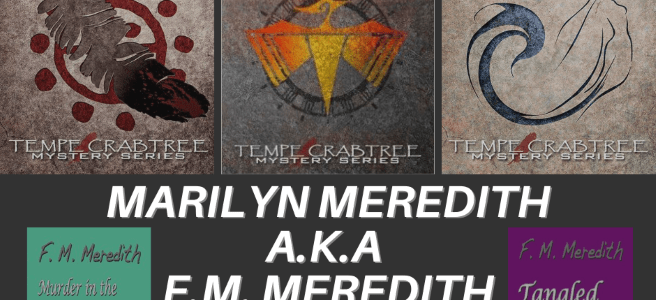
My long-time publisher for my Deputy Tempe Crabtree series has closed its doors. I asked for and received my rights back for the series and the covers. Because the cover had been designed for the latest book and new designs done for some of the older books, I was pleased.

So what to do next? I decided the best route to take with the series was self-publishing, though I didn’t really feel up to the task. One of my friends, an expert at self-publishing, is taking on this huge job. I say huge because there are 17 books in this series.

The latest book, Spirit Wind, is now published and available in print and on Kindle.

The first batch of the printed books didn’t have the appropriate headers—so I’ve used most of them as review copies—and sold some at a big discount.

A few of the other books in the series have been done, but the old publisher’s copies are still the ones upfront and available. So far, we’ve been unsuccessful at getting them taken down or at least the latest ones the first to show up.

I’d like to do a .99 cent deal for one of the series, but that will have to wait until some of the problems are fixed.

How am I feeling about all this? I’m happy the latest Deputy Tempe Crabtree mystery is now available. Though a bit frustrated about some of the other problems, I’m not going to lose sleep over them. One thing I’ve learned over the years, the author’s path is never smooth. I’ve had crooked publishers, and publishers who were friends die. This happened with the first publisher of this series.

I’m going to book fairs (I have plenty of books to sell) and giving talks to writers groups and others. The promotion goes on. And I’m working on a book in my other series.

One thing I can assure you, I’m never bored. I can’t even imagine what that would be like.

The official blurb for Spirit Wind: A call from a ghost hunter changes Deputy Tempe Crabtree’s vacation plans. Instead of going to the coast, she and her husband are headed to Tehachapi to  investigate a haunted house and are confronted by voices on the wind, a murder, and someone out to get them.

Marilyn

A Dickens of a tale by Sally Carpenter

Charles DickensAlthough we’re past the Christmas season, every writer should watch the movie “The Man Who Invented Christmas.” It’s the perfect examination of a writer’s life.

The title is a misnomer. Charles Dickens didn’t invent Christmas. He only revitalized interest in it. During the industrial revolution, employers saw no reason to close their factories and cease production on Christmas day. And many of the old customs of the British countryside, holiday feasts and dancing, did not fare well among the crowded housing and low wages of urban life.

Dickens’ novella “A Christmas Carol” reminded people of past celebrations and hit an emotional nerve that had them yearning for a holiday of goodwill. He also wrote other Christmas stories, but his first is best remembered.

But writing “Carol” was no easy feat, according to the movie, which is grounded in fact.

The film begins with Dickens on a lecture tour of America. Before the days of mass media, writers were treated like rocks stars. Dickens in greeted with standing ovations before he even speaks. How many contemporary writers have encountered a reception like that? Amid the clamor of the appearances, though Dickens would rather be at home, writing.

After the tour, Dickens’s publisher informs him that his last three books were “flops,” and an advance may not be forthcoming. The author is spending too much money on home improvements and he needs to borrow money. His wife is pregnant—again. Dickens needs to write another hit immediately.

But he’s out of ideas. As Dickens says, “Shakespeare—now there’s a man who could write. I doubt that he ever had a blockage.”

The author hates that his income depends on producing an endless stream of prose. “I’m sick to my teeth of writing for bread. I should have become a journalist.” Today, few authors can fully support themselves on fiction writing alone. They write in other fields, work a day job or have a second income from a spouse.

Dickens carries a small notebook with him and jots down unusual names of people he encounters. At a club he meets a man named Marley. “If you get the name right, the character should appear,” says Dickens. Many writers also keep lists of story ideas, names or trivia to use in their work.

Dickens hits on the idea of writing a Christmas story, but his publisher says no. Like many modern authors, he turned self publishing.

A small press quotes him the cost for the books, which will have color illustrations and fancy binding.

“You’ll have to sell every copy to make your money back,” says the printer.

Dickens replies, “That is my intention.”

How many authors sell every printed copy of their work or earn out their advance?

Dickens then hires the illustrator, Mr. Leech, who is taken back by the author’s demands and deadlines. “What you’re asking is impossible for an ordinary man,” says the illustrator.

“But you are no ordinary man,” says Dickens. “You are a genius.”

Later, when Leech receives copies of the text, he is again dismayed. “I am not a hired hand. I am an artist,” he says. “A jolly ghost (Ghost of Christmas Past). I can’t draw what I don’t understand.”

Can we have a show of hands from authors who have disliked the cover art for their books? I hate one of my book covers. My publisher hired the designer, a new person she wanted to try out. The first cover the designer gave me was appalling. I gave a concept to the designer, but she failed carry it out the way I wanted. Rather than making changes, the designer insisted she be paid. My publisher never used her again.

Now the pressure is on Dickens to write, as Christmas is only a few weeks away. “The characters won’t do what I want!” he moans. “I’m afraid if I can’t finish it I’ll never write again.”

His wife tells the servants to avoid him. “We must not disturb the poet when the divine frenzy is upon him.” Yes, we writers often say no to other obligations or friendly chitchat whenever we’re facing deadlines or feeling inspired.

When Charles neglects his family, his wife says, “I fear your characters mean more to you than your own flesh and blood.”

Authors often feel their creations are so real they can touch them. For Dickens, his characters actually come alive. He even takes Scrooge with him on a walk around London.

Scrooge is not an easy person to get along with. “I fear your representation of me is rather one-sided,” Scrooge says to his creator, “I have written a speech . . .”

“No!” Dickens shouts. “I’m the author!”

Scrooge: “Allegedly.”

I’ve hear authors say how their characters will take over the story or move the plot in a different direction or say things that the writer didn’t plan. The clay tells the potter how to build the pot.

The other characters of “Carol” begin to crowd Charles’ small office. After he yells at them, one says, “Was he the author? No wonder he looked so depressed.”

The writer shouts to his characters, “Go on, back to work!”

In the end, of course, “A Christmas carol” was a smash hit and Dickens did sell every copy of the first run. People began to celebrate Christmas in high spirits, and Charles went on more tours just to read “Carol” aloud to eager listeners.

Would anyone pay me to read my writing aloud to them? Maybe not, but as long as they read and enjoy them, then my work is well done. And if I get “blockage,” I can watch the movie again and see how Charles Dickens overcame his obstacles.

Photo Source: Deposit Photos