Last Character Development – Dela Alvaro

After a reader asked me how I developed my characters, I decided to share how I came up with each of my main characters in my mystery series. Today, I’ll explain how Dela Alvaro of the Spotted Pony Casino Mysteries came about.

In the beginning, Dela was actually a main character in a short story I entered in an anthology contest. The story didn’t make the book, but the character stuck with me. At the time she was from a tribe in California because the story had to be set in that state.

Dela Alvaro

As I wrote the short story, her life became clearer and clearer to me and I could see her as an Indigenous person from NE Oregon. When that idea stuck and I had been interviewing a Umatilla woman who helped me with my Stolen Butterfly book in the Gabriel Hawke novels, I knew that Dela would be head of security for a fictional casino. She made her debut in the book Stolen Butterfly, helping Hawke find a missing woman.

From there I spun off her own series. Using the information I gleaned from the Umatilla woman about tribal police and casino security (she had been a security guard at the real Wildhorse Casino), I sketched out my fictional casino, imagined her duties and how she could use her position to help with police investigations.

She was raised on the reservation by a single mom. Dela was told her father died before she was born and he was Hispanic. She believed this until the day she discovered a photo of a Umatilla man who looked a lot like her. A man no one wanted to talk about. Not wanting to cause her mother, a school teacher on the reservation, any unhappiness, she talked it over with her high school boyfriend who also had a missing father. Another thing they bonded over.

To give her a strong need to protect Indigenous women, I had Dela’s best friend in high school found murdered along the interstate when she should have rode home from Pendleton with Dela. Her guilt over her friend makes Dela’s desire to find missing and murdered women’s attackers her first priority. She must save others to atone for not saving her friend.

After that happened, she joined the army and left the reservation. Leaving behind a worried mother and a heart-broken boyfriend. But she needed to leave to think and become stronger. During her time in the Army, she became an MP and would have made it her career if a bomb hadn’t ripped off her lower right leg and filled her with shrapnel.

She returned to her childhood home to recuperate and had the opportunity to get a job as a security guard at the casino and worked her way up quickly when they realized her skills. She had wanted to join law enforcement but with her disability she would have been restricted to desk duty and that isn’t her style.

To her dismay she discovers that a Special Ops officer she butted heads with and had a crush on is an FBI agent stationed in Pendleton. Their lust for one another is palpable but they both know that they aren’t meant to be together and argue instead. Then Dela’s high school sweetheart returns to the reservation and wants to rekindle their relationship. It works. Heath has always been the person she could talk to and who would listen and trust her judgement. He joins the tribal police.

Together, Heath at the tribal police, Quinn at the FBI, and Dela with her good instincts and contacts in the casino security and surveillance, the three make a formidable trio when someone at the reservation is killed or threatened.

That is how I came up with Dela. By sitting down and thinking about her strengths, you read about above which could also be her weaknesses. Her other weaknesses are : Action before thought, feeling she isn’t a whole person, and taking in strays.

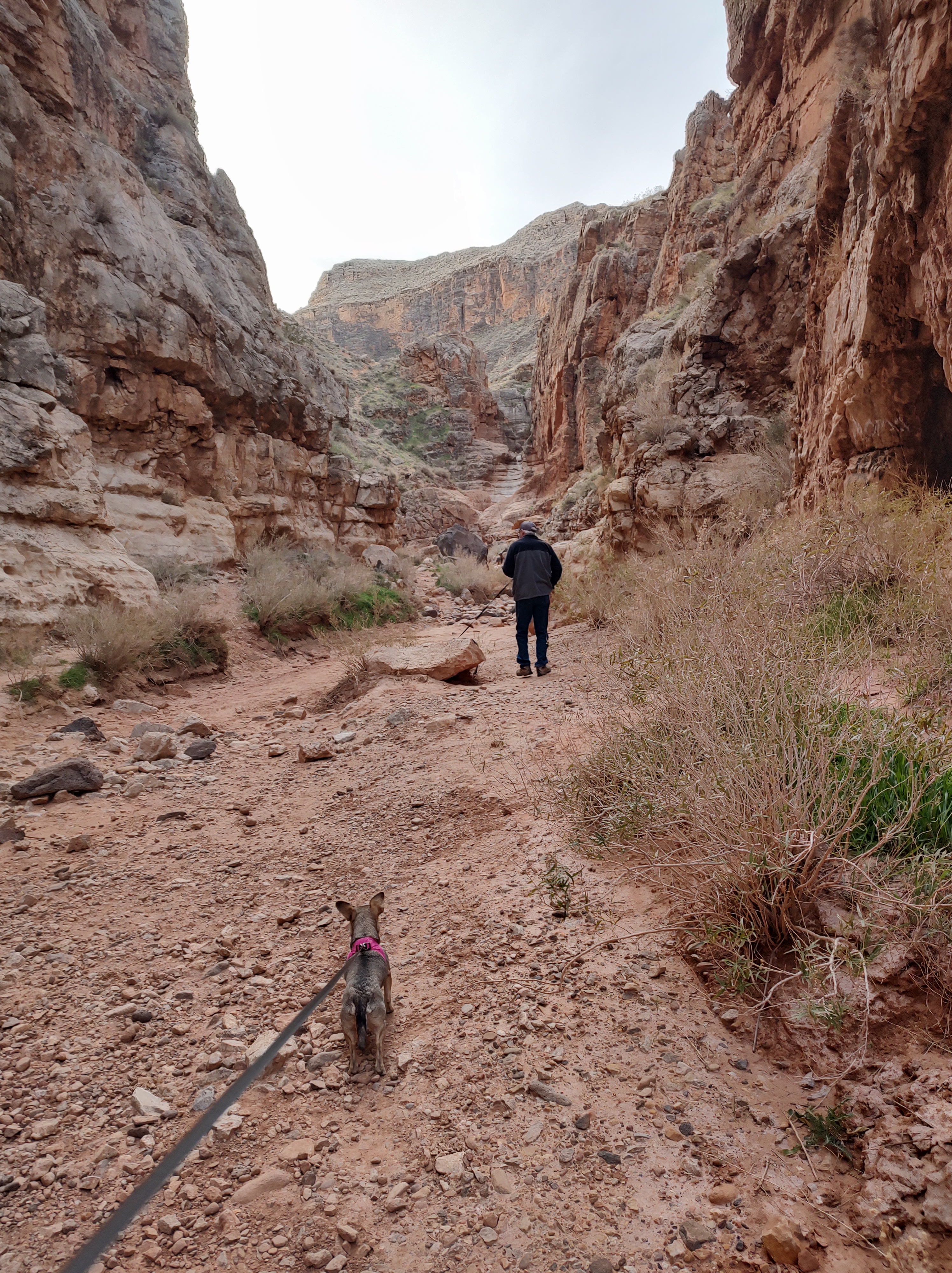
The action before thought is how Heath makes her a complete person. He is methodical and can keep her from reacting without thinking. Because of her loss of limb and inability to have children she feels she is damaged. While she acts and talks tough she has a soft spot for anyone or thing that needs help. Her strays are the three-legged dog she named Mugshot and Jethro, the donkey she was asked to take care of by a neighbor and was nearly killed and suspected of killing the woman’s husband.

I hope this gives you an idea of how I put together Dela Alvaro.

Right now I have a special- get all three first in series mystery books bundled together for FREE in ebook or audiobook. It’s my gift to readers this holiday season.

Here are the links:

Mystery audiobook bundle  https://books.bookfunnel.com/Holidayaudiobundle

Mystery ebook bundle https://books.bookfunnel.com/holidayebookbundle

Merry Christmas and Happy Holidays to you all!

More Character Development – Gabriel Hawke

I had a reader ask me how I come up with my characters. Last month I wrote about how I came up with Shandra Higheagle, my main character in the Shandra Higheagle Mysteries.

This month I’ll tell you how I came up with Gabriel Hawke, the main character in the Gabriel Hawke Novels. How I came up with names and secondary characters.

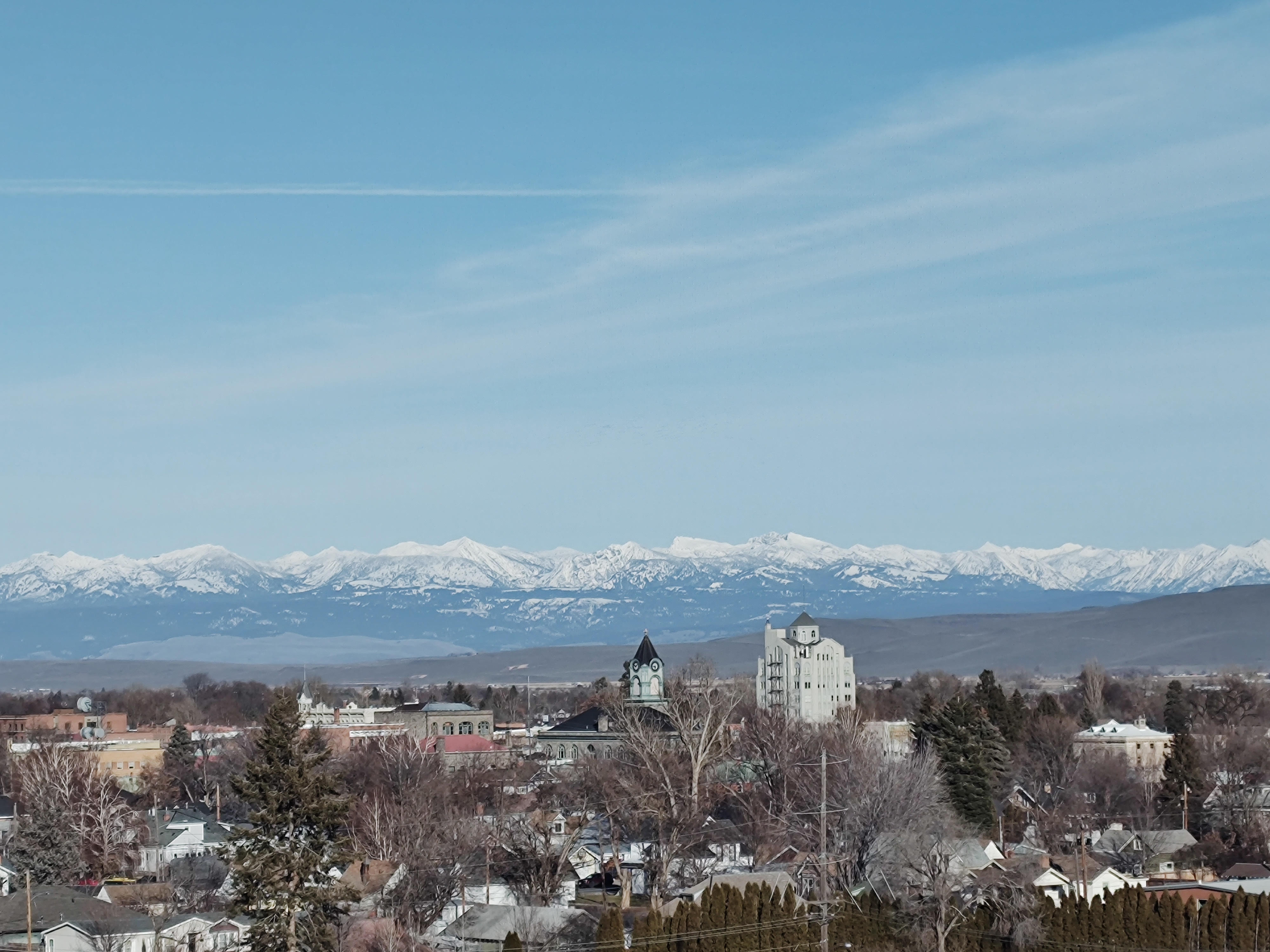
To start with, I wanted to set a series in the county where I grew up. I love the mountains, the valleys, the rivers, and the lakes. Wallowa County is beautiful year-round. Growing up in a small community, you learn the dynamics quickly. There are people whose families homesteaded; they feel the county is theirs. Anyone who moves in is an outsider until they have lived there for several generations It’s just the way it is. That makes for conflicts and misunderstandings. And small communities have secrets. Some are a hundred years old and some aren’t that old, but they are there and you know in a rural area, gossip moves faster than an F-16. Those were part of the reasons I picked this county for my setting. That and I wanted a Game Warden and have deaths in the mountains.

I asked my son-in-law if I could ride along with an Oregon State Police Fish and Wildlife Trooper. He set it up, and I spent a day riding around the county, learning what the job entailed, and I knew this was my character’s occupation. The trooper I rode with told me about how he could go from one corner of the county to the opposite one in one day, checking hunting tags or doing a callout. The county is 3,152 square miles. So it could take several hours to go from one corner to the other because most of the roads are gravel or logging roads that he navigates.

While riding with him, he told me stories about some incidents that he helped with and told how he not only does his job as a Fish and Wildlife officer, he also has to do the job of a State Trooper because the county is so large yet only has a population of 7,500, so there are few county and state law enforcement officers. In fact, there are four main towns in the county and only one has city police. It is the county seat.

My friend author Carmen Peone took this photo for me.

Now for Hawke. Because Wallowa County was the summer and winter home of the Wallowa band of Nimiipuu, or Nez Perce, I wanted my character to be of that tribe and to protect the land and animals of his ancestors. I gave him a backstory of growing up on the Umatilla Reservation outside of Pendleton- 3 hours from Wallowa County. His mother is Cayuse and his father was from the Nimiipuu Lapwai Reservation in Idaho. He excelled in sports in high school and went on to join the Marines. He was there four years and came back to Oregon and entered the Oregon State Police Academy. His first job was patrolling I-84 between La Grande and Hermiston — that meant he could live on the reservation and work.

He met a woman, married her and then ended up arresting her brother for drugs. She left him and when there was an opening in the Wallowas, he applied and got it. He isn’t a young trooper. He’s actually been a trooper long enough he could retire. He’s in his late fifties, getting closer to sixty, but he loves his job.

This was all the information I knew when I started writing the first book, Murder of Ravens.

I started that book with him being a mature single man living in a studio apartment over an indoor horse arena. He has a horse, a mule, and a dog. Since he isn’t one to get caught up in names, his horse is Jack, the name he had when Hawke purchased him. The mule came without a name, and after Hawke dealt with its cantankerous disposition, he named the mule Horse, hoping it would act more like a horse than a stubborn mule. And Dog is his constant companion when he’s out in the mountains or at home. When the animal came to him when he said, “Come Dog,” Hawke decided the name was good enough.

The horse stable where Hawke lives is part of a farm run by Herb and Darlene Trembley. Over the years, the landlords have become friends and an excellent resource for Hawke when he’s looking into families with history in the county. They grew up here, and their families have been in the county for generations.

While patrolling in the Wallowa Mountains and Eagle Cap Wilderness, Hawke enjoys the freedom of wearing his civilian clothes so poachers won’t take pot shots at him. He takes Dog with him, rides Jack, and packs Horse. They are a smooth-working team when Horse is having a good day. Hawke loves being in the mountains and takes all the patrols that he can.

While in the mountains investigating a death at Charlie’s Hunting Lodge, he butts heads with the new owner, Charlie’s niece, Dani Singer. Initially, they don’t get along and don’t understand one another. Hawke is trying to reconnect with his heritage, and she has run from it her whole life, pretending she wasn’t Indigenous, to not be tossed aside when she applied for the Air Force Academy. She made it in and became a skilled pilot. Since retiring from the Air Force, she uses that skill to fly clients into the Hunting Lodge with her plane and helicopter. As the series progresses, so does their admiration for one another.

The other secondary characters who show up in most of the books are Kitree, the girl who outfoxes Hawke in Book 2, Mouse Trail Ends. She ends up an orphan when her parents are killed while camping in the mountains. She is adopted by Tuck and Sage Kimball, Dani’s wrangler and cook at the hunting lodge.

His mother, Mimi Shumack, still lives at the Umatilla Reservation. He visits her often. She is a big part of who he is as an adult. She remarried when Hawke’s father left and had a daughter who is ten years younger than Hawke. The stepfather was a mean drunk. This shaped who Hawke is today.

Then I had to discover how many city police, county officers, and state police are in the county. I gave them all names, and they come and go in each book depending on what is happening.

Hawke’s personality is quiet, reflective. He rarely loses his temper unless he sees an animal or person being mistreated. He believes in taking care of the land and animals to keep nature at peace. He upholds the laws but will bend the law if it will catch a killer. He has tracking skills he uses not only to follow tracks but also to follow the trail of clues he uncovers while investigating. His need to find the truth or evidence can sometimes get him into trouble, but he manages with the help of Dog and friends to get out of it.

If you haven’t had the chance to read one of Hawke’s books, you can find Murder of Ravens at my website in ebook, audiobook, and print.

Murder of Ravens

The ancient art of tracking is his greatest strength…

And his biggest weakness.

Fish and Wildlife State Trooper Gabriel Hawke believes he’s chasing poachers.

However, he encounters a wildlife biologist standing over a body wearing a wolf tracking collar.

He uses master tracker skills taught to him by his Nez Perce grandfather to follow clues on the mountain. Paper trails and the whisper of rumors in the rural community where he works, draws Hawke to a conclusion that he finds bitter.

Arresting his brother-in-law ended his marriage, could solving this murder ruin a friendship?

Universal book link: https://www.books2read.com/u/bxZwMP

There’s a bundle of holiday gifts coming your way! 

I’m joining eleven other fabulous, award-winning, and best-selling mystery authors for a 12 DAYS OF CHRISTMAS STORY GIVEAWAY.

Here’s how it will work: 

For eleven days starting December 1st, you’ll receive a link for a completely free holiday story–no newsletter signups necessary. Then, on the 12th day, you’ll get a bundle of extra goodies to celebrate the season

Sound like fun?

If you want to make sure not to miss any of the stories and bonuses, you can sign up for my newsletter using this link: https://successful-speaker-2057.kit.com/dddfb95104

Stories – Imagination at its best

I’m in the middle of judging at county fairs with one today, and next week, judging at the Oregon State Fair. What could judging at county and state fairs have to do with writing? Let me tell you.

There is a plethora of people I work with when judging. From extension agents, volunteers, other judges, parents, and the kids. All of these give me fodder for characters in my books. I never truly learn all about the people, but I get descriptions, sometimes names, and characteristics that help me flesh out main or minor characters.

There are the items I judge. Why did that person use that color, make a dog coat, raise such exotic plants, or wish they could have brought in a poisonous plant? What people make or bring (there are some fairs that have collections as exhibits) to the fair to express who they are. So many times, I look at what a person has brought in and wonder what do they do when they aren’t crafting, sewing, or cooking.

I must say, my favorite thing to judge is the writing. Whether at the county or state level. 4-H members can now enter creative writing to be judged. When I read a good story and feel excited for the child who put this effort into telling a good story. I love seeing children expressing themselves in words and ideas on paper.

There have been stories that make me laugh, ones that make me sad, and ones that tear at my heart. One year, there were a lot of stories about death. That was hard to keep reading so many stories like that. But other years I’ve read about pirates, talking animals, fairies, ghosts, and even read a few mysteries.

I love that kids are learning to express themselves with words and sharing their imaginations with others. As a child, I wrote plays that my younger brother and I acted out with our stuffed animals. In junior high, two friends and I wrote an ongoing story that we passed around, adding to it. The story was an adventure set in the mountains where we lived.

Story has been a part of my life for as long as I started learning to read over my older brother’s shoulder. Words put together in a way to make someone want to read what I write is thrilling.

I will continue to write until my brain or my hands fail me. Because it is the best way I know to convey information to people in an entertaining way.

It’s early in the month but I have a Chirp Deal coming out on August 13th. If you want to listen to the first box set of my Gabriel Hawke Novels, it will be available for $2.99 from there from 8/13 – 9/10. You can find it here: https://www.chirpbooks.com/audiobooks/gabriel-hawke-box-set-1-3-by-paty-jager

    Join Oregon State Trooper Gabriel Hawke as he performs his duties with the Fish and Wildlife Division while finding a body with a wolf collar, tracking a lost child, and hunting down a poacher in the wilderness of Wallowa County.

    Books 1-3 in the Gabriel Hawke Novels

    Oregon State Trooper Gabriel Hawke is part of the Fish and Wildlife Division in Wallowa County. He not only upholds the law but also protects the land of his ancestors.

    Murder of Ravens

    Book 1

    State Trooper Gabriel Hawke is after poachers in the Wallowa Whitman National Forest. When he comes across a body wearing a wolf tracking collar, he follows the trail of clues.

    Mouse Trail Ends

    Book 2

    Dead bodies in the wilderness. A child is missing. Oregon State Trooper Hawke is an expert tracker, but he isn’t the only one looking for the child.

    Rattlesnake Brother

    Book 3

    State Trooper Gabriel Hawke encounters a hunter with an illegal tag. The name on the tag belongs to the Wallowa County District Attorney and the man holding the tag isn’t the public defender. 

    Words, Words, Words

    By Margaret Lucke

    The other day I fell down another internet rabbit hole. While working on a scene in my latest novel-in-progress, I was looking up some words to make sure I was using them correctly. I always like to catch these things, if I can, before the book is published and readers start pointing them out to me.

    A couple of hours later, I resurfaced, the sought-after definitions in hand along with quite a few more that were totally irrelevant to the scene in question.

    Doing the research can be more fun than doing the writing. It’s a great way to procrastinate while persuading myself that I’m actually working, just as much as if I were putting words on the page. Once I get started doing research like that, one interesting fact leads me to another, and to another. I’m especially fond of fun facts about words, writers, and literature. Here, for your amusement, are some of my discoveries:

    *    The longest word in the English-language dictionary is pneumonoultramicroscopicsilicovolcanokoniosis, which is a lung disease contracted from inhaling volcanic particles. It contains 45 letters (I counted so you wouldn’t have to). But its primacy is challenged by the chemical name of a giant protein known as titin, which has 189,819 letters and, it is estimated, would fill around 57 pages if printed in a typical book. A YouTube video of a man pronouncing the word runs almost as long as the film Gone with the Wind. No wonder the dictionary leaves it out.

    *    That long p-word disease isn’t much of a problem for writers, who are more likely to be afflicted with colygraphia, which sounds serious enough to earn us plenty of tea and sympathy. Most of us call this problem by its more common name — writer’s block.

    *    After you recover from your colygraphia, it’s time to get back to work. Before you know it, you may find yourself complaining about mogigraphia, or writer’s cramp

    *    Someone who probably suffered from mogigraphia was Peter Bales, who earned fame in Elizabethan England for his skill as a scribe and calligrapher. In 1590 Bales transcribed a complete copy of the Bible so tiny it could fit inside a walnut shell.

    *    Though Bales was known to engage in contests and rivalries, I don’t know if he produced his Bible to win a wager. But some have taken pen in hand in order to win a bet. For instance:

    >>   Editor and publisher Bennett Cerf bet Dr. Seuss $50 that he couldn’t write a book using only 50 words. Seuss responded by writing Green Eggs and Ham.

    >>   Ernest Hemingway famously won a bar bet when his drinking buddies each put $10 in the pot and challenged him to write a story using only six words. Hemingway scribbled these words on a napkin — “For sale: baby shoes, never worn” — and collected the cash. This has led to an entire genre of six-word stories, some of which can be found at http://www.sixwordstories.net/

    >>   Agatha Christie wrote her first book, The Mysterious Affair at Styles, after her older sister bet her that she couldn’t write a mystery novel in which the reader couldn’t guess the murder even though given the same clues as the detective – who in this case is Hercule Poirot.

    *    Christie’s other famous sleuth is Miss Jane Marple. But Miss M. was far from the first female detective. That honor may belong to the heroine of a novella by E.T.A Hoffman that was published in 1819, more than a century before Miss Marple made her appearance. Both the sleuth and the novella are named Mademoiselle de Scudéri. That’s the same E.T.A. Hoffman, by the way, who wrote The Nutcracker and the Mouse King, which formed the basis of Tchaikovsky’s Christmastime ballet.

    Who knew all these cool bits of trivia? Well, I know them, thanks to my research journey and the stops I made along the way. And now so do you. I’ll conclude this list with one final entry:

    * A literarian is someone who loves literature and is dedicated to sharing that love with others. In other words, me.

    What are some of the odder entries in your literary lexicon?

    Finding Time to Write is Hard

    The rest of this month, I am home 13 days! That means every one of those days I need to put my fanny in the chair and get the next Gabriel Hawke book written. Because August is going to be hit and miss to get writing done.

    I swear, each summer gets busier and busier! I was able to get more writing done when I sat all day in a swather or tractor raking hay during hay season than I do now.

    As our family grows so do the family commitments as well as I’m trying to get my books seen more by actual people. I’ve found that if someone meets a writer and sees their enthusiasm for their books, the reader is more likely to purchase the book. Then if the like that first purchase they come back for more.

    I started this month with an in-person event that I’ve not attended before. It was a Renaissance Faire (loosely). I sold 26 books over two days. All but one of the sales were to new to me readers. I’m hoping they will enjoy what they purchased and come back for more next year, as my following has done for the Sumpter Flea Market each year.

    The rest of this month I will be attending Miner’s Jubilee in Baker City, OR, to see if it will be something to do next summer, and I’m attending the Tamkaliks Powwow in Wallowa, OR. I’ve been attending this for several years to help me better see my characters and because I find it healing. The last two Mondays of the month, I’ll be judging at county fairs. That’s what makes the summer get busy for me. But I love talking to the 4-Hers and discovering their love for their projects.

    When I am home, I make myself write. I have to. My readers let me know they are impatiently waiting for the next book. I can’t let them down. I’m a people pleaser. My greatest flaw. It gets me more work than I can sometimes do, but there it is. It is who I am.

    I’m also mentoring two mystery writers and a friend who has been writing the same book for too long. I’m her weekly reminder to sit down in the chair and move the story forward, don’t keep making it perfect. That comes after the story is all out and waiting to be prettied.

    It is these mentorships that keep me from opening the internet first thing in the morning and getting words written before I look at an email or see who liked a meme on Facebook. While I coach other writers on finding time to write, finding ways to streamline their days and writing, I follow my own guidance by making sure I’m writing and moving my story forward.

    My greatest strength is that when I set my mind to something, I do it. And right now my mind is set on getting this book written this month so I can “pretty it up” next month when I’m attending a family reunion, a grandson’s wedding, judging at another county fair and state fair, and then selling my books for two days at the State Fair. Because most of those trips are on the opposite side of the state from where I live, it requires a day’s travel to and a day’s travel back. Which eats up a lot of the days in August! Half of August I’ll be away from home- 15 days to travel and attend the events.

    That is why my fanny is in my chair and I’m writing! I’m halfway through the book and should get it done in the next 13 days. Yipee!

    Authors, are you on a deadline this month, or do you give yourself slack in the summertime? If you’re a reader, how impatient do you get for the next book in a series?