Guest Blogger ~ Glenda Carroll

Where Did I Put That Plot?

By Glenda Carroll

            Plots don’t come easily to me. When I first started writing the Trisha Carson amateur sleuth mysteries about ten years ago, I sat down and blithely typed away following any idea wherever it took me. But that stopped working. I aimlessly spent time chasing after dead ends … nicely written, to be sure, but instead of moving the plot along, it stopped it cold. I wasted so much time.  I realized that I needed more control over what happened and when.  I’m not a plotter, as you can tell. I enjoy the freedom of following whims. So, this hasn’t been an easy step for me. But I’m trying.

 Take Better Off Dead (BOD), the latest book in the mystery series. Like all the mysteries before it, I knew the catalyst for the plot. It’s always based loosely on something true. In the series, each book swirls with an undercurrent of open water swimming.  That’s usually the true part.

 Almost fourteen years ago, a solo swimmer in the Maui Channel Swim, a 10-mile relay race between the islands of Lanai and Maui, was sucked under a powerboat by the propeller wash near the finish line. He suffered catastrophic injuries to one arm which had to be amputated and one hand that was reattached although it had two finders missing. I wasn’t there, but I read about it. Things like that stay in the back of my mind especially when I’m swimming in open water like the San Francisco Bay in Spring and Summer and Fall.  It came to the surface when I began to think about BOD.  I knew I wanted to use the idea of a horrible boating accident. But I needed a victim, some potential murderers and a realistic answer to the question, “why?”

            I lingered over the concept of a premeditated horrific accident but could go no further. At the time, I was also tutoring first generation, low-income high school students in English. One sophomore was reading Shakespeare’s Hamlet and wasn’t thrilled about the language. He didn’t understand Elizabethan English and no amount of my prompting and wheedling made the play on par with a Marvel comic book. That is until I told him the story of Hamlet, his dead father, his uncle and his mother in everyday language. It went something like this:  Hamlet, the prince of Denmark, is at university when he learns of his father’s death. While returning to the family castle, he runs into the ghost of his dad who tells him that his brother, Hamlet’s uncle, poisoned him and that he wants revenge. The revenge part sparked his interest.

 I lingered on how Shakespeare killed his actors: drowning, poisoning, stabbing with a sword, stabbing with a poisoned sword. I compared it to the violence running through video games or a superhero movie. What if Hamlet was the Hulk? That caught his attention. I convinced him to come up with a modern-day plot based on Hamlet. He bought into the idea.  So, we read the play, both the contemporary translation and the Elizabethan language version and he jotted down notes to help him with his video game. That’s when the light bulb went off.  If my student could update Hamlet, so could I. Later that evening, following Shakespeare’s plot, I started writing … modernizing the famous revenge tragedy. The moody Hamlet became Harrison. His dead father and the very much alive brother turned into Andy and Marty Barlow, wealthy Marin County financiers. That’s all the kick I needed. The story began to fall into place.

I can’t say the rest was easy, but I could see a path ahead of me. As part of the Acknowledgement in Better Off Dead, I thanked Will Shakespeare. Without him and Hamlet, there would not have been a Book 4 in the Trisha Carson series.

I’ve started Book 5, and it revolves around a skull found on a San Francisco Bay beach covered in eel grass. (That’s the true part.) Do you think I learned anything from my experience with Better Off Dead? Unfortunately, no. I have no idea what to write next.

BETTER OFF DEAD: A Trisha Carson Mystery
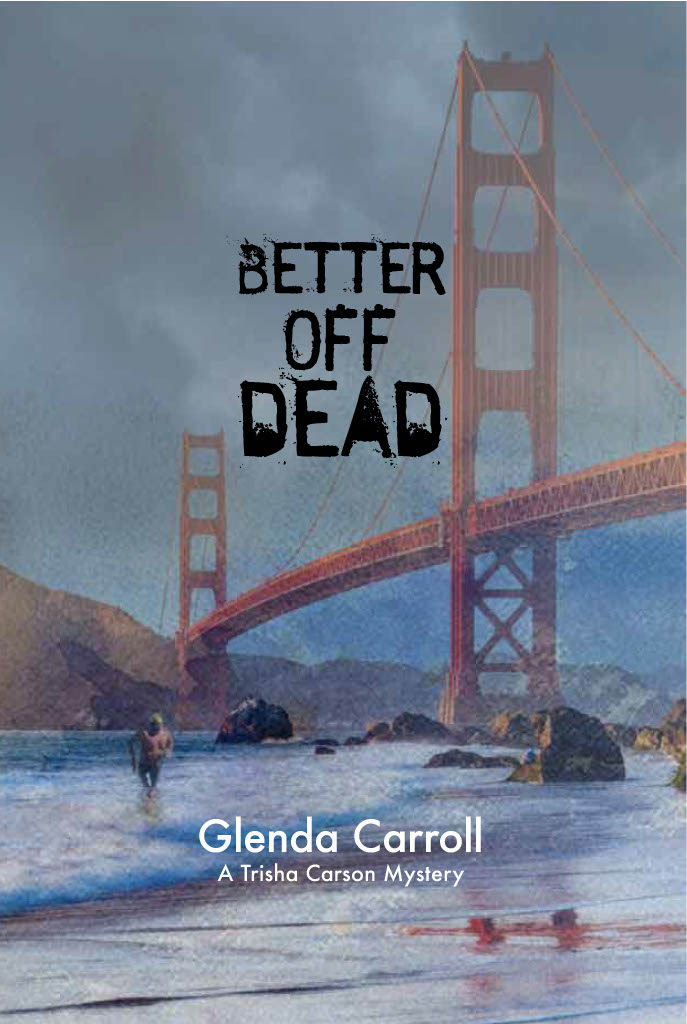
Successful Marin County, Ca financier, Andy Barlow, is training for a competitive open water swim in the cold San Francisco Bay. Unexpectedly, his support boat runs him over midstroke, killing the swimmer instantaneously. Consumed with grief and anger, Andy’s college-aged son Harrison, returns from London to probe what really happened. Although the local sheriff’s office and the Coast Guard have closed the case, Harrison refuses to believe their findings. He reaches out to amateur sleuth Trisha Carson to hunt down the real killer.

Trisha digs into the man’s history and finds fractured relationships in his family, his business and his marriage. There’s clearly more than one person who had reason to seek a deadly revenge, but would they go as far as murder?

Amazon – paperback, ebook

https://www.amazon.com/Better-Dead-Trisha-Carson-Mystery/dp/B0DXKTJRK2

Barnes & Noble – paperback, ebook

https://tinyurl.com/u4tt9nas

Audiobooks

Apple:  https://tinyurl.com/y5t5jw34

Audible:  https://tinyurl.com/yy5anbwr

Glenda Carroll is the author of the amateur sleuth Trisha Carson mysteries set in the beautiful San Francisco Bay area. The fourth book in the series, Better Off Dead, came out in Spring 2025. It’s available in paperback, ebook and audiobook. Alas, Carroll hasn’t won any awards; hasn’t even been short-listed for one. Glenda spends more time swimming than writing. She also tutors first generation, low-income high school students in English and History. She is the current president of Sisters in Crime, Northern California.

She lives in Northern California with her dog, McCovey.

Website: glendacarroll.com

Amazon: https://tinyurl.com/y5mmhh55

Indies United Publishing House Lcc: https://tinyurl.com/ycynyr8a

Barnes & Noble: https://tinyurl.com/u4tt9nas

Audible: https://tinyurl.com/yy5anbwr

Facebook:  https://www.facebook.com/glenda.carroll

Instagram: https://www.instagram.com/glenda.carroll/

Bluesky: ‪@ggcarroll.bsky.social

Guest Blogger ~ Lori Robbins

It is never too late to be what you might have been. George Eliot

Central to my identity as a writer is that I’m a serial late-bloomer. This pattern began when I was a teenager and decided to ignore conventional wisdom that dictated dancers had to begin training at a very young age. The result of my quixotic effort was a ten-year career onstage that defied the odds. Success as a dancer, of course, meant that I didn’t attend college until long after my peers got their degrees and began their grown-up lives. Luckily, the New York City public university system welcomes nontraditional students like me, and I graduated from Hunter College shortly before giving birth to my third child.

The habit of late starts didn’t end there. I was the oldest beginning teacher at my first job and didn’t publish my first book until the youngest of my six kids graduated high school. This personal history may explain why I love reading and writing stories about people who reinvent themselves. There are many examples of writers who find their voice later in life, but my favorite is Frank McCourt, who published Angela’s Ashes at 66 after spending much of his adult life as a high school teacher. As a former high school English teacher, the trajectory of his career has particular resonance for me.

Reinvention is a central theme in my books as well as my life. I write two mystery series and am in the process of writing a standalone thriller. Series often feature protagonists who deliver a comforting sameness. Miss Marple and Hercule Poirot investigate different crimes but those endeavors don’t materially change who they are. My characters, however, aren’t the same people at the end of the book as they are in the beginning.

The On Pointe series is set in a New York City ballet company and features a ballerina on the wrong side of thirty with two surgically reconstructed knees and an uncertain future. What I didn’t want was an ingenue who triumphantly overcomes obstacles and in the end, becomes a star. Leah is more complex than that. She defies expectations, both fictional and factual. Yes, she’s embroiled in a murder mystery, but the stakes are higher for her than they would be for someone at the start of her career.  Those challenges make her observant, wary, and more than a little cynical. In other words, the perfect amateur sleuth.

The Master Class mysteries leap across the Hudson River to suburban New Jersey and feature an English teacher who also is at a crossroads in her life. Although this marks her as different from someone like Miss Marple, she does share that redoubtable amateur detective’s skill in analyzing personality, means, and motive. Miss Marple draws upon her experiences in the tiny town of St. Mary Mead but Liz Hopewell’s expertise is in literature. It’s her superpower, and she uses it to untangle mysteries when concrete, forensic evidence fails to provide answers. I love puzzles and had a lot of fun integrating clues from books into the narrative. Every chapter title includes a reference to a famous poem or book that might help the reader solve the mystery. Or, it could be a red herring. Teasing out truth from lies is at the heart of these books.

Work is central to the identity of both protagonists. It’s how they define themselves and how others define them. And yet, both rebel against those easy labels to forge an identity filled with the possibilities of what might be next.

Me too.

Study Guide for Murder: A Master Class Mystery

Murder has no place in Liz Hopewell’s perfect suburban life. She left her complicated past behind when she moved from Brooklyn to New Jersey, and she’s determined to forget the violence that shadowed her early years. As an English teacher, wife, and mother, Liz now confines her fascination with dark themes and complicated topics to classroom discussions about Frankenstein and Hamlet. But violence follows her from the mean streets of her childhood home to the manicured lawns of suburbia when Elliot Tumbleson’s head has an unfortunate and deadly encounter with a golf club. Her golf club.

A second murder, a case of mistaken identity, and a rollicking trip back to Brooklyn all point to one prime suspect in each crime. Liz embarks upon a double investigation of homicides past and present, using her gift for literary theory to unearth clues that she finds as compelling as forensic evidence. But the killers, like her students, don’t always read to the end.

Amazon Buy Link: Study Guide for Murder

Lori Robbins writes the On Pointe and Master Class mystery series and is a contributor to The Secret Ingredient: A Mystery Writers Cookbook. She won two Silver Falchions, the Indie Award for Best Mystery, and second place in the Daphne du Maurier Award for Mystery and Suspense. Her short stories include “Leading Ladies”which received an Honorable Mention in the 2022 Best American Mystery and Suspense anthology. A former dancer, Lori performed with Ballet Hispanico and the St. Louis Ballet, but it was her commercial work, for Pavlova Perfume and Macy’s, that paid the bills. After ten very lean years onstage she became an English teacher and now writes full-time.

Her experiences as a dancer, teacher, writer, and mother of six have made her an expert in the homicidal tendencies everyday life inspires.

You can find her at lorirobbins.com

https://www.lorirobbins.com/

https://linktr.ee/lorirobbinsmysteries

https://www.instagram.com/lorirobbinsmysteries/

https://www.facebook.com/lorirobbinsauthor/

https://twitter.com/lorirobbins99

https://www.bookbub.com/profile/lori-robbins

https://www.goodreads.com/author/show/16007362.Lori_Robbins

Lessons from a Bad Neighbor

He’s long gone. In fact, I wrote the first draft of this post back in September and just now rediscovered it in my files. Some of these lessons I learned from enduring a bad neighbor for six weeks were things I already knew conceptually, but experiencing them emotionally last summer was enlightening for me as a writer.

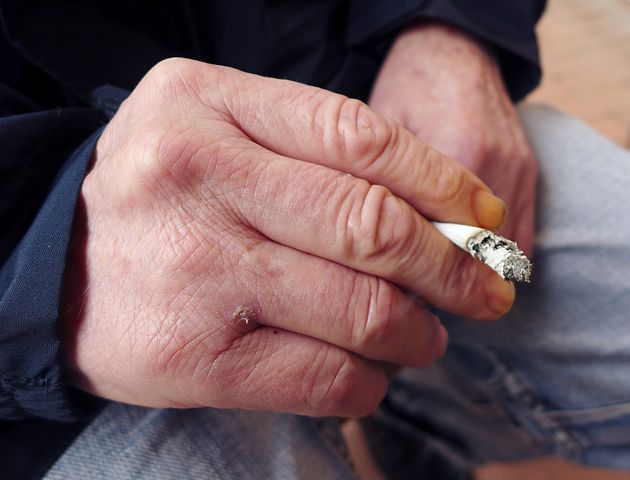
Shortly after Bad Neighbor’s arrival in our lovely old adobe apartment building, which is entirely non-smoking, even the courtyard, I began to smell tobacco smoke leaking through the gaps around the kitchen and bathroom pipes. Second-hand smoke causes low-level carbon monoxide poisoning, and opening windows and running fans isn’t enough to clear it out. He smoked so much, I got headaches and dizzy spells and had trouble concentrating, and the stink often woke me up in the middle of the night. To make it worse, he seemed to be a drug dealer. People stopped by for five to ten minutes at all hours. He left his outdoor light on all night for them. When one of my good neighbors confronted him (“Are you selling dope?”), Bad Neighbor threatened to knock his head off. Bad Neighbor accused me of harassing him when I complained, and he was furious with me for getting him evicted by telling our landlord about the smoking. Not that Bad Neighbor let the eviction notice cramp his style. After a month, instead of leaving, he moved his equally hostile, smoking girlfriend in with him. They had no lease. They paid no rent. They didn’t move out until a few days before he had to appear in court. Meanwhile, I acquired some insights.

One: How con artists work. This squatter took advantage of my kind, soft-hearted landlord with a sob story about why he couldn’t get a place to rent or afford a deposit and why he could only pay for one week at a time. My landlord was new in town. If he’d been in the rental business here longer, he might have heard about this guy’s history as a serial evictee, sort of a professional squatter. Bad Neighbor found a perfect mark. I suspect he knows the law as well as anyone and exploits it to make sure he can live rent free, utilities included, as long as possible.

Two: Why people could get the urge to be amateur sleuths. My good neighbors and I were convinced there were drug sales going on, and so was the gentleman next door. But we couldn’t prove anything. The temptation to ask each of the five-minute visitors what they were doing was strong. So was the desire to find a way to prove Bad Neighbor was not just a squatter but a criminal. I could see it especially in the old soldiers—a Korean War vet and a Vietnam vet. They wanted to be brave and see justice done.

Three: How frustration could drive people to act on their own when the law can’t move swiftly enough to suit them. In my best moments, I sent positive intentions toward Bad Neighbor, visualizing him quitting smoking, acquiring a conscience, and paying what he owed, but at other times I fantasized having superpowers that would make him wander off in the desert and fall into a canyon, never to be seen again. Not that I would actually have hurt him, but … I got it. How a peaceful person—I’m a yoga teacher, for Pete’s sake!—could wish harm on an enemy.

One of my good neighbors suggested I might break with my “no murder, just mystery” approach and write a story in which Bad Neighbor dies. Good idea, but I plan to write it without murder. I’m thinking of giving one of my recurring characters such a neighbor. In keeping with an ongoing theme in my series, she could recruit help from someone with paranormal powers, taking justice into her own hands. Actions like that have a way of biting back. I like this plot idea, but I have two books to revise before I can get to it.

Guest Blogger – Eileen Watkins

PersianCover_HiResMy Cat Groomer Mystery series evolved from a theme suggested by my publisher, but animals always have been a passion for me. As an only child, I grew up with pets instead of siblings, and related to them almost as brothers and sisters. I’ve never worked with animals professionally, but felt that with a little research I could step into the shoes of someone who did.

My amateur sleuth, Cassie McGlone, is in her late 20s when the series begins. Her psychology degree didn’t net her any jobs after college, so she took further training as a vet tech, an animal behaviorist and a cat groomer. Along the way, she learned that cats have different grooming and boarding needs from dogs. In the first book, The Persian Always Meows Twice, she has just set up an all-feline grooming and boarding business in the fictional rural/suburban town of Chadwick, N.J.

I’d read a few cozy mysteries featuring cats, usually pets who loitered on the fringes of things. They often had psychic links with their owners and provided clues to help solve crimes. In some books, cats communicated with other animals; they all seemed more aware than most humans of what was going on in their town, including people’s motives for murder.

I prefer to emphasize my sleuth’s realistic understanding of and compassion for animals, and how those traits compel her to investigate murders that involve her human clients. I also like to slip in lesser-known tips about cat care and behavior and to touch on some serious issues. I feel that Cassie’s work and the humans and felines she deals with can be interesting enough without any fantasy elements.

One of the things I enjoy most about writing cozies is the freedom to include a few laughs. My sense of humor is a bit dark, which works for murder mysteries, and I project that onto Cassie and her friends. When things get a little too weird or dangerous, I let someone crack a joke to lighten the mood.

I also like evolving the series. By now, Cassie has built up a solid circle of supporters including her assistant Sarah; her veterinarian boyfriend Mark; her over-protective mother Barbara; her best friend Dawn; Det. Angela Bonelli of the Chadwick police; faithful handyman Nick and his computer-genius son Dion; and members of the local shelter, Friend of Chadwick Animals (FOCA). In each book, I’ve tried to give one or two of these secondary characters larger roles than they’ve had so far. Cassie’s relationships with them also grow and deepen along the way.

In the first three books, Cassie stays pretty close to home (she lives above her shop). I worried about the series developing Cabot Cove Syndrome, with a ridiculous number of murders taking place in a supposedly “safe” small town. So by Book 4, Gone, Kitty, Gone, she’ll acquire a grooming van that lets her travel farther afield and get into a wider variety of scrapes.

Hope you’ll come along for the ride!

The Persian Always Meows Twice

A Cat Groomer Mystery

Cat lovers are thrilled to welcome an expert groomer to the picturesque town of Chadwick, N.J. But scratch below the surface, and unmasking a killer becomes a game of cat and mouse…

Professional cat grooming isn’t all fluff. When the fur starts flying, Cassie McGlone, owner of Cassie’s Comfy Cats, handles her feistiest four-legged clients with a caring touch and nerves of steel. While these qualities help keep her business purring, they also come in handy when she makes a house call to her best client, millionaire George DeLeuw, and discovers his murdered body next to his newly orphaned Persian, Harpo.

To help the local police find the killer, Cassie begins her own investigation. But no one, from George’s housekeeper to his vindictive ex-wife, is giving up clues. Not until Cassie is given permission to temporarily board Harpo does anyone show interest in the Persian’s well-being. Someone is desperate to get their paws on Harpo before the feline helps untangle a felony. Are there deadly truths that a cat whisperer like Cassie can coax out? She needs to tread lightly and remember that she gets one life, not nine!

The buy links for the book are:

EFW_Trees_TightShot_BestEileen Watkins specializes in mystery and suspense fiction. In 2017 she launched the Cat Groomer Mysteries, starting with The Persian Always Meows Twice, from Kensington Publishing. The Bengal Identity came out in spring of 2018 and Feral Attraction this fall. The Persian Always Meows Twice won the David G. Sasher Award for Best Mystery of 2017 at the Deadly Ink Mystery Conference, and received a Certificate of Excellence for 2017 from the Cat Writers’ Association, Inc. Eileen previously published eight novels through Amber Quill Press, most of them paranormal suspense, as “E. F. Watkins.”

Eileen is a member of Mystery Writers of America, Liberty States Fiction Writers and Sisters in Crime. She serves as publicist for Sisters in Crime Central Jersey and also for New Jersey’s annual Deadly Ink Mystery Conference. Eileen comes from a journalistic background, having written on art, architecture, interior design and home improvement for daily newspapers and major magazines. Besides these topics, her interests include the paranormal and spirituality as well as animal training and rescue. She is seldom without at least one cat in the house and pays regular visits to the nearest riding stable. Visit her web site at http://www.efwatkins.com.

Her website is www.efwatkins.com, and her Facebook page is https://www.facebook.com/EileenWatkinsAuthor.

Killing Time by Paty Jager

paty shadow (1)Eons ago when I wrote my  first mystery book it all started with guests on a talk show. Well, let me take a step back from there. I wrote that first murder mystery because there was someone in my life I wanted to see dead. Since I’m a law-abiding citizen, I used the power of words to kill my intended victim. 😉
It was having the demise of this person in mind as I watched the talk show that the premise of the story formed. The talk show had a woman and a man who were private detectives and they’d written a book, Be Your Own Detective. I listened to them talk about how they’d written a book that could help anyone be their own detective.

I haunted bookstores until I found the book. (This was way before you could order easily online). With the book in hand, I came up with a freelance photographer and divorced mother of two who gets a call from her ex that he is in jail for a murder he didn’t commit. The woman debated on whether to ignore her husband or make sure her children didn’t have the baggage of a criminal father. She watched a talk show and discovered the same book I did. 😉

With the book in hand she begins digging into the whereabouts of her husband when he supposedly killed a woman. (The person I wanted dead)  I used the information in the book on tailing, surveillance, paper trails and verbal seduction to come up with scenes and move the story along. The book had lots of great information in it. Some of it would still work to day and some that is dated.

I actually wrote two books with the same amateur sleuth. Some day, with lots of updating, they might become published. But as long as I can keep coming up with plausible deaths and mysteries for Shandra Higheagle to solve, I’ll be working on her stories.

higheagle-book-banner

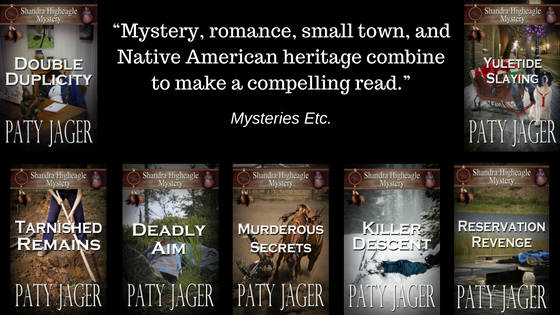
Paty Jager is an award-winning author of 25+ novels and over a dozen novellas and short stories of murder mystery, western romance, and action adventure.  This is what Mysteries Etc says about her Shandra Higheagle mystery series: “Mystery, romance, small town, and Native American heritage combine to make a compelling read.”
All her work has Western or Native American elements in them along with hints of humor and engaging characters. Paty and her husband raise alfalfa hay in rural eastern Oregon. Riding horses and battling rattlesnakes, she not only writes the western lifestyle, she lives it.

blog / websiteFacebook / Paty’s Posse / Goodreads / Twitter / Pinterest

Save