Endings

Beginnings and endings are the hardest part of writing for me. (That’s today. On other days it’s the muddled middle.) Some writers have arresting, captivating openings that grab the reader and carry her along into a ninety-thousand-word novel. I’m not one of those, but I can eventually get a few words on the page to get the story moving. For me the greater challenge is endings.

Some years ago I listened to Andre Dubus III talk about his new book, House of Sand and Fog, which led him to talk about how he’d grown as a writer. He didn’t like his first book, Bluesman, because he considered it sentimental. His disdain for this failure in craft was obvious, and when I met him at a writers’ event years later, the subject came up again. As I listened to him touch on the challenges in his work, I understood that for him an ending that is sentimental is also in some ways dishonest, an inability to reach deeper for something that was true. I had just purchased TheGarden of Last Days, and read it with that in mind. There is nothing sentimental in that book, least of all in the ending.

Several critics have explored the link between the traditional and cozy mystery and comedy; noir crime fiction has been linked to tragedy. At the end of the cozy mystery, the world is set right again; the villain has been identified and brought to justice of some sort; the lesser crimes of other characters are brought to light and justice is visited on them in various ways, perhaps public censure or shame or remorse; and the minor romance barely acknowledged sometimes comes to light and there is a new beginning for a young couple. All is right with the world. From Restoration Comedy to Agatha Christie and writers today, it is hard for a reader of cozies or traditional mysteries to be satisfied with less. An unrequited love or an unchallenged con artist will annoy some readers as much as a dangling participle will menace the peace of mind of a copy editor. And I understand this. There is something deeply satisfying about the comedic ending, a moment that reassures us that the world aslant can be righted, that our inchoate ideals can be realized.

So how does a writer of traditional crime fiction compose an ending that is both true to the story being told and unsentimental? Sometimes I think this question is just one more obstacle to writing a satisfactory ending, and all I’m doing is complicating matters, making life harder for myself. I’m not unsatisfied with the ending of Family Album, the third in the Mellingham series, but I acknowledge that it is a tad sentimental (maybe more than a tad). But readers loved it because it fulfilled one of the hints at the beginning of the story, and a promise fulfilled, particularly about a possible romance, always brings a frisson of delight. But it was sentimental. At least it wasn’t mawkish.

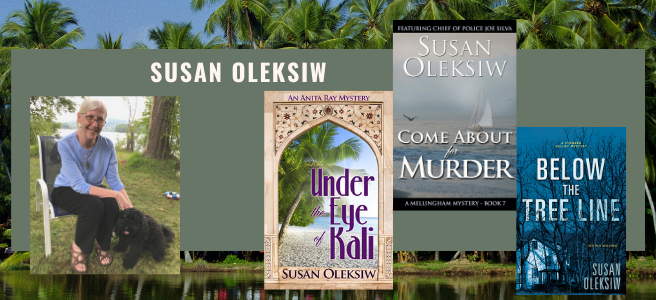
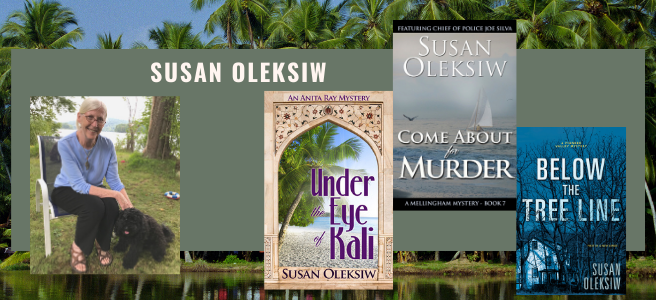
I don’t remember most of the endings in my books and stories but some stand out, for me at least. The ending of When Krishna Calls in the Anita Ray series required research, rethinking, and stepping back. A woman sentenced to prison looks out on her new world, listening to another prisoner, and is satisfied with the choices she has made. She won’t forget why she is where she is, and she won’t regret it. The ending of Friends and Enemies in the Mellingham series required several versions before I finally landed on the one that worked and fit with the rest of the story. An editor who read the ms and considered acquiring it mentioned how much she liked it (but not enough to take the book). Another ending that satisfied me is that in “Coda for a Love Affair,” in Devil’s Snare: Best New England Crime Stories 2024. The ending is simple, clear as cut glass and sharp.

Endings are hard because the easy ones come fast, are easy to write, and sit well on the page. And that’s the problem. They tempt us to take them, give a sigh of relief, and pat ourselves on the back for coming up with (rather than running carelessly into what looks like) the perfect line or paragraph to close out three hundred pages. Depending on how tired we are of the story and working on it, that ending will appear reasonable, acceptable, or a gift from the writing gods. So this is where I step back and wonder what Andre might think. I don’t have to get far into that mental exercise to admit that the first or even the thirtieth ending is not what I want. 

If nothing else, writing keeps us humble. In our heads we hear perfect dialogue, snatches of prose so brilliant we’ll never need the sun again, but on the page, our pen does not cooperate (or the computer keyboard), and we end up with the mundane, the ordinary, the usual. I keep working on endings but I know I fall short most of the time. As do we all. It’s encouraging to know that greater writers have the same struggles, the same challenges, the same doubts. With one eye on writers whom I admire, I keep at my own work, striving to meet my standards even if that means sometimes disappointing some readers. If I want better endings, I just have to keep at it until I get there.

Guest Blogger ~ Roxanne Varzi

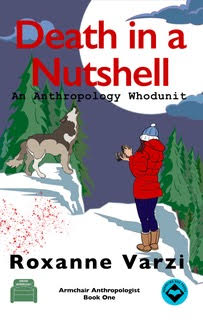
“Very few of us are what we seem,” the thematic essence in Agatha Christie’s stories, is not only the kernel of a good murder mystery but also the raison d’etre of an anthropologist. We anthropologists go to our field site (where we will study culture, people, rituals, or phenomena). We participate in daily life there, while observing and asking questions. Then, we return home, puzzle over, and try to piece together all the information we have collected that will solve the mystery to a cultural question. In my protagonist’s case in Death in a Nutshell: “Why do people immigrate to Bozeman, Montana?” And then, we write up our findings as an ethnography.

Anthropologists and detectives (and mystery writers) work hard at decoding (creating) symbols and looking for (planting) clues to explain why people do what they do, how they do what they do, and why they persist in doing what they do. Hypothetically, detectives are Anthropologists, Anthropologists are detectives, and mystery writers are a little of both. This fluidity is why writing Death in a Nutshell: An Anthropology Whodunit, a murder mystery that embeds anthropology, was not a huge leap for this anthropologist.

As a child, I was also told that just as “You are what you eat,” “You write what you read.” So, it should have come as no surprise to me, given that my youth was spent in the world of cozies with amateur sleuths (Nancy Drew, Ms. Marple, Harriet Vane, etc.) that while on a winter vacation in Montana five years ago, an idea for a murder mystery surprised me. It came to me, initially in the form of a single character in a singular setting: a nature photographer in Yellowstone Park.

I returned home with a burning desire to write, but a raging fever kept me in bed the last week of winter break. I was unable to write more than a few pages of notes. My teaching quarter began, and the mystery faded into a file folder where it would mostly remain for the next two years.

In early 2020, the pandemic hit, and a few months into the lockdown, I carefully re-opened the file, not because I had more time (teaching on Zoom coupled with a unique homeschooling experience was more challenging), but precisely because entering into a cozy world of my own making was the only salve and form of control, I had in a world that was out of control and facing new and inexplicable dangers.

While delving back into the world of fiction, I noticed that I was not the only one having difficulty handling reality. My university students were slipping away, and just like my young learner with dyslexia at home who had escaped to a world of fantasy novels, they also needed a more inventive, sensorial, and creative way to engage the material I was attempting to teach them.

At home, my goal was to make education more accessible, often involving using stories to deliver information. I was already doing this with complex theoretical knowledge at the college level in the form of a novel and plays, so why not a murder mystery? And why not for everyone who enjoys a good mystery and is fascinated by the study of human behavior, the kernel of any good mystery?

Anthropology is often described as a discipline that aims to make the strange familiar, and the familiar strange. There was no better time than during the early months of the pandemic to witness the familiar turning strange and the strange slowly becoming daily life. The world needed, and still needs, a little anthropology to help navigate difficult cultural transitions. But that does not mean it should be devoid of its mysteries or that we should seek to control all that we cannot easily explain.

One of the joys of writing fiction is how a book unfolds despite its author. As my book slowly came along, my characters, as characters in fiction often do, began to take on a life of their own. My protagonist acquired dyslexia, which was no surprise given that I had spent the better part of the last decade researching dyslexia, advocating for students with dyslexia, and learning about my own dyslexia. What was serendipitous and quite surprising was when, on one pre-pandemic afternoon, my son returned from an after-school program at Chapman University and demanded: “Where are my fossils?”

Why would he suddenly need his fossils?

“I need to take them to Chapman next week.”

What did fossils have to do with an after-school program that paired younger students with dyslexia and other learning differences with college students and faculty mentors?

“Our professor mentor is a paleontologist!” My aspiring paleontologist son answered in frenzied excitement.

The paleontologist was none other than Jack Horner, a pivotal figure in my novel, whose exhibition I had encountered during that fateful Montana vacation. People, indeed, are not what they seem. I had no idea Jack Horner was a person with dyslexia when I slipped him into Death in a Nutshell. Or that we would meet one day through my son and our shared dyslexia. Nor had I known that Agatha Christie–the author who would become such an influential figure in my writing–was also a person with dyslexia.

It’s moments like these, when the unseen mysteries that connect us come to light, that I most enjoy as a writer and anthropologist—and writing mysteries in particular are the best way to keep me digging for a good story.

Alex is on the verge of dismissal from her anthropology doctoral program when her luck turns, and she lands a fellowship with a dioramist at the Museum of the Rockies. The only problem is, Alex hasn’t a clue about dioramas or dinosaurs, and, as she will soon find out, she’s not the only one faking it in this frozen landscape.

From New York City to Yellowstone National Park, we follow Alex, a whip-smart dyslexic-ADHD Margaret Mead cum Ms. Marple, as she explores friendship, identity, globalization and a murder against the stunning backdrop of the Rockies in winter. 

            A murder mystery embedded with forays into visual anthropology … we find that in an era of fake news and science denial, a little anthropology goes a long way.

Universal Book link: https://books2read.com/varzi

Roxanne Varzi  is an award-winning author, filmmaker, playwright, Fulbright scholar, dyslexia disruptor. She has a PhD from Columbia University and is a full professor of Anthropology and Visual Studies at the University of California Irvine. Her writing is published in The London Review of Books, The Detroit Free Press, The LA Times, The Guardian, and Le Monde Diplomatique and three anthologies of Iranian-American stories. She is the author of Warring Souls, and Independent Publishers Award Gold Medalist Last Scene Underground: an Ethnographic Novel of Iran. 

https://faculty.sites.uci.edu/professorvarzi/

https://www.linkedin.com/in/roxanne-varzi-b178417a/

https://www.facebook.com/roxannevarziauthor/

Motivation

I’ve been working on the sixth Anita Ray mystery since July, and now have 44,000 words. That by itself should tell you that I haven’t been well focused on this one, but I’ve had two epiphanies this month. First, I know what the big crisis will be, and it’s coming up in the next 10,000 words. Second, and much more important, I don’t have to know a character’s motive until I get near the end.

This, the second discovery, surprised me. I’ve struggled with finding motivations for my characters’ behaviors beyond their conduct simply being the result of who they are, their past experiences and hopes for the future. That’s always been true of any character, but when it comes to murder or some other form of violence, I need to see something more in this person I’ve created, something that the reader hasn’t already divined by reading about him or her. 

We stitch together our fictional creations from snippets of real life. Riding on the subway or bus or train brings us into contact briefly with the oddities of our world, the woman who wears orange sandals under a plaid lumber jacket on a sunny day, her jacket covering up fabric of such color we’re dying to get a look at it but she’s buckled up tight. Perhaps the only thing about her buckled up. We overhear snatches of conversation. I still wonder about the meaning behind the casual words of two men in a cafe. She’s always been like this; it was no secret. But he married her anyway? He did. And it isn’t medical? Nope. I really want to know what “it” is. And then there was the package that arrived at a neighbor’s, which she sniffed and shook, and apparently rejected because she left it on the front step. I don’t know what happened to it after that, only that it disappeared.

I’m curious about these people’s lives but if I put them in a story as a killer, I need to know what would make them kill. Being odd or different or cryptic isn’t enough, as every writer knows. We look to the great ones in our genre—Agatha Christie in the traditional mystery, Ray Bradbury in science fiction, or James M. Cain for noir—and think about how they developed their characters’ moves and failures. The motives for crime can be limitless, but perhaps the shortest list comes from Christie: greed, lust, envy. Those cover just about every failing in life.

I’ve been thinking about these for weeks now because even though I have a murder, another crime coming up, a diverse cast of miscreants, and a great deal of stupidity, I still don’t have a motive for the inciting incident. At least, I didn’t. That was part of the second epiphany this month. The characters can have all sorts of immediate short-term motives, but the one that’s driving everything has to be larger, tied deeply and inexorably to the character’s identity. I found it this month, and it has delighted me. It was almost obvious, but not quite. 

The surprising thing to me is that I’ve written half the book without knowing why this is all happening and happening in the way it is. We watch people in life, just as in books, wondering what they’re up to. We’re waiting to cross the street when he see a man on the opposite sidewalk stop and stare in a store window; he peers, he moves closer, he looks around to see who else is nearby, and he stares even harder in the window. When he walks on, looking back once or twice, we cross the street and try to guess what he was looking at. It’s an old-fashioned tailor’s shop with the expected clutter in the undusted window—scraps of fabric, a bolt of cloth, a tape measure, a small cardboard box of pins and other notions. In the unlit interior beyond, we see nothing to catch our interest. So what was he looking at? He wasn’t wearing a fine suit, just a short jacket and slacks; and he wasn’t old enough to have known about regular tailors in this little city. But there is something in that window . . .

I stopped worrying about my characters’ motivations in this particular novel while I wrote, figuring each one would either come to me or it wouldn’t. And I have faith in my unconscious to supply the needful. But I’m also flexible, and if a better one pops into my head, I’ll go with that. This is all part of the path I decided to try with this book. I would write it without guideposts, outlines, clear (or vague) ideas of where I was going. If a character or incident popped into my head, I’d add it. I’d just keep going. It’s very liberating but also a little scary. I’m not sure what I have, if anything, but I do have a sense of things coming together. I’ll let you know in another 20,000 words or so where I am.

Guest Blogger – Kathleen Kaska

The Grand Dame of Mystery Writing

Agatha Christie_mockup02 copyAgatha Christie is regarded as the most popular mystery writer of all times. Since the publication of her first book in 1920, more than one billion copies of her books have been sold worldwide. She wrote her first detective story while working in a dispensary during the First World War. Her sister, Madge, bet Christie that she could not write a mystery in which she gave her readers all the clues to the crime and stump them at the same time. Christie proved Madge wrong, and The Mysterious Affair at Styles was published. Her second book sold twice as many copies as her first, and she found that writing flowed easily for her. In 1926, The Murder of Roger Ackroyd, gained her world acclaim. It is one of the most talked about detective stories ever written. Using a technique that had not been used before, many of her colleagues and readers accused her of breaking the mystery-writing rules. In her defense, she stated that rules are made to be broken and if done well, prove effective. Almost ninety years later, the controversy still remains. She’s gone on record to say that this Hercule Poirot mystery was her masterpiece.
But my two favorite Christie mysteries are two of her lesser-known novels. In these two action-packed stories, The Man in the Brown Suit and They Came to Baghdad, Christie ventured away from Miss Marple and Hercule Poirot and drove into light-hearted adventure. She sent her young heroines, Anne Beddingfeld and Victoria Jones, to mysterious locales, exposes them to harrowing danger, and allowed them to live life on the edge.

“I had a firm conviction that, if I went about looking for adventure, adventure would meet me halfway,” Anne Beddingfeld proclaimed. He archaeologist father has decently died. On her own for the first time in her life, Anne is ready for adventure. But her eighty-seven pound legacy would not last long. After a discouraging job interview, Anne was waiting to catch the train home, which put her in the right place at the right time. A man, startled by something, stumbled and fell off the train platform onto the third rail. Another man claiming to be a doctor, examined the body, declared the man dead, and hurried away, dropping a piece of paper with the words, “17.122 Kilmorden Castle,” written on it. Anne retrieved the paper and tried to catch up with the doctor, but he disappeared into the crowd.

Anne was determined to find the man in the brown suit. He obviously was not a doctor, since he examined the victim’s heart by palpating the right side of his body. After a clever bit of detecting, Anne was aboard a ship to South Africa. In Anne’s life there are no coincidences.

A few days later, she was in her cabin, recovering from seasickness when there came a knock on her door. Or to be more exact, an explosion. Her door flew open and a man tumbled inside.

“Save me,” he says. “They’re after me.” Anne shoved him under her bunk and got rid of the nosy stewardess, who was tracking the apparently drunk passenger. However, alcohol was not the reason for his clumsiness. A knife wound and the loss of blood gave cause for the young man’s unsteadiness. As Anne dressed his wound, they exchanged insults and cold stares, along with a bit of shoving. As he felt, she realized that it was him—the man in the brown suit! But he was gone again, and she was left standing with clenched fists and a racing heart. There was no doubt about it. Anne was in love, and she would find him no matter what.

“To Victoria an agreeable world would be one where tigers lurked in the Strand and dangerous bandits infested Tooting.” Victoria Jones, unemployed secretary, flighty female, habitual liar, is the star of They Came to Baghdad. Fired from her job for poking fun at her employer’s wife, Victoria found herself on her favorite park bench, eating a tomato and lettuce sandwich, and contemplating her future with no income. Before her pondering became too serious, however, she noticed a handsome blue-eyed man sitting next to her, and her plans for finding a new job were forgotten. A quick exchange of life stories, a few laughs, and Edward declared he must leave. “I don’t suppose you’ll ever think of me again,” said Edward. “Oh, Hell—I must fly.” Duty called and Edward was off to Baghdad. Victoria decided to follow the young man. Undaunted by the 3,000-mile distance and the mere three pounds to the name, she conned her way to the Middle East and quickly found herself penniless and alone in a strange hotel.

All of a sudden, there is a knock at Victoria’s door. Could it be Edward? Had word reached him that she was in Baghdad? Without hesitation, she opened the door and found a handsome stranger seeking refuge.

“For God’s sake hid me somewhere—quickly,” he pleaded. Victoria, never one to shrug off adventure, shoved him under the bed cover, propped up the pillows and leisurely leaned back while the hotel manager searched the room. Satisfied that the fugitive was not present, the manager left. Victoria pulled back the covers just in time to hear the dying man’s cryptic message. Now she must found Edward, but where should she begin? After all, she didn’t even know his last name.

Following the adventures of these two young women is almost as exciting as following Indiana Jones into the Temple of Doom. The Man in the Brown Suit and They Came to Baghdad are truly two of Agatha Christie’s most delightful mysteries.


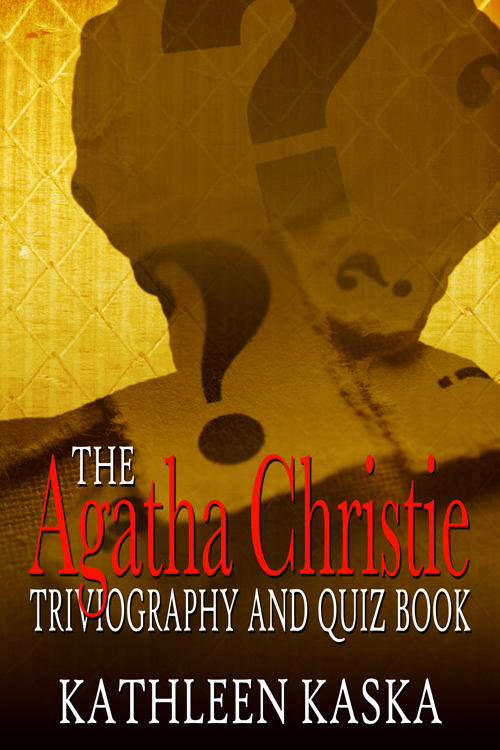
Kathleen Kaska writes the award-winning Sydney Lockhart mysteries set in the 1950s. She also writes the Classic Triviography Mystery Series, which includes ThIMG11_2661e Agatha Christie Triviography and Quiz Book, The Alfred Hitchcock Triviography and Quiz Book, and The Sherlock Holmes Triviography and Quiz Book. The Alfred Hitchcock and the Sherlock Holmes trivia books are finalists for the 2013 EPIC award in nonfiction. Her nonfiction book, The Man Who Saved the Whooping Crane: The Robert Porter Allen Story, (University Press of Florida) was released in 2012. Kathleen has a new mystery series, which will debut later in 2016.

http://www.kathleenkaska.com

http://www.facebook.com/kathleenkaska

https://twitter.com/KKaskaAuthor