Settings and Seasons

This morning when I went out to walk the dog, the temperature was 12 degrees. When the breeze came along, it cut. But it’s also dry. When I think about winter I prefer cold and dry to warmer and wet (think snow and ice).

During my walk I often compose sentences to add to whatever I’m working on when I get back to the house, or just because I feel like writing a sentence in my head. This morning the cold held my attention, and I began thinking about how this degree of cold would affect an amateur sleuth hot on someone’s trail. Snowy and cold would make the situation even worse.

Since I live in New England, famous for its winters, most of my mysteries, long or short, are set in pleasant, or at least tolerable, weather—in spring, summer, or fall. Winter poses challenges that my characters don’t have to face, challenges that could change the plot, the direction of the story, the success of the sleuth and the authorities. Perhaps the sleuth has only a few minutes to reach a location to rescue someone, but it’s snowing, the roads are icy, the stop lights not working because of a power failure, the streets impassable in some places. The weather certainly ratchets up the suspense. (Sounds like my drive home from work years ago.)

In a city the sleuth could travel faster and more safely by subway, but at least in my area (Boston), that means a different kind of problem—subway car breakdowns. (To be fair, in Boston subway cars break down in every season.) Or, this could be the start of a story—the subway car stuck in a tunnel. When the car starts up again and makes it to the station, the riders trip over a dead body blocking the exit. Is the killer still on the car, or did that person somehow get off and escape through the tunnel? Will he or she survive in subzero weather underground?

I will admit that when I go about choosing the setting in a warmish season, I’m really thinking about myself—how easy it is to get around, to get things done, to get anywhere I want to go. Winter is a chore for me. And on cold days, though I don’t actually mind them, having grown up in New England, I’m aware of how much effort it takes to make the transition to outdoors—scarf, hat, coat, boots or heavy shoes, mittens, sometimes even a hand warmer for a long walk. But now that I’ve thought up a number of scenarios relying on cold weather, perhaps I’ll make a change.

The weather is going to remain well below freezing for the next day or two, and then warm up. That gives me plenty of time to work out the basic plot of a story set in bitter cold weather, with all the worries and challenges that come with that setting. And I get to write the story while I’m warm inside.

As we head into Christmas, I hope all of you reading this are warm inside with your families and friends, good food, and a pet if you have one, enjoying the season and the freedom to write whatever you want.

How to Survive Christmas

Some of us (actually, quite a few of us) detest the holidays. If you are single and childless, the constant commercial emphasis on family can make it seem like there’s a flashing neon LOSER sign pointing right at you, even if you cherish your purposely chosen independent existence. And if you’re not Christian, well, that’s another aspect of Christmas that you can’t appreciate. Throw in the sappy music that we’ve all heard thousands of times; it usually starts playing in stores just after Halloween. And then, there’s the ever-present reminder to buy, buy, buy; that also usually starts in stores around Halloween. All the stoppage of normal activities and the travel challenges due to the predictable bad weather add to the stress. What’s an intentionally single, childless, non-materialistic, non-religious person like me to do?

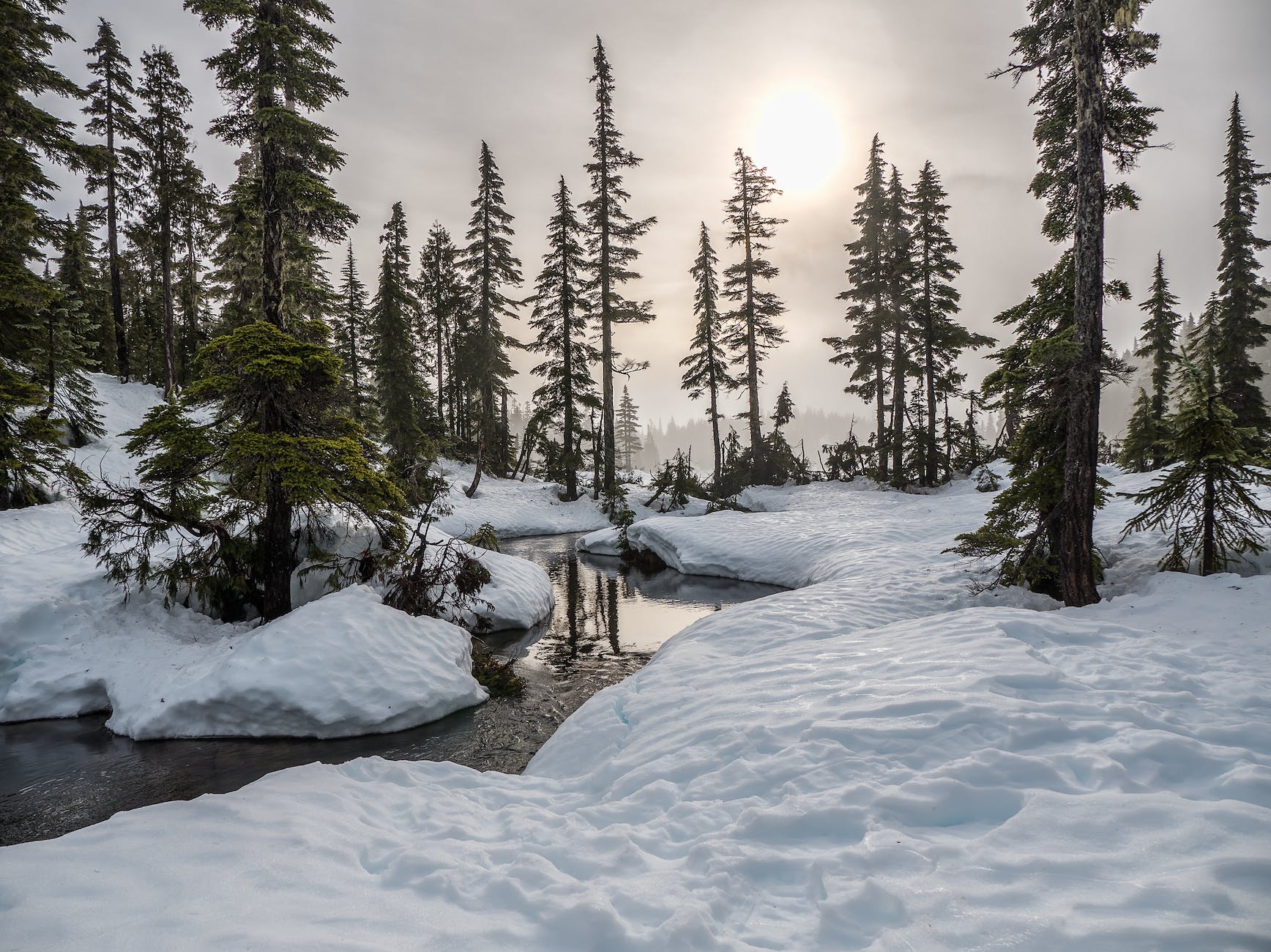
First of all, I go for a walk. There’s a foot of snow on the ground at my house right now, and it’s 13 degrees out, but I will nevertheless bundle up and go for a walk every day. Fortunately, I live close to miles of green belts and trails, and nature always soothes my jangled nerves and jumpy brain. The bare tree branches reveal bird and squirrel nests, and I like to watch the animals that are flitting about. Yesterday I saw a black squirrel leaping from one snowy tree to another. A flock of noisy varied thrushes was excitedly pecking away at apples still clinging to a tree; I’ve never witnessed that before.

Photo by James Wheeler on Pexels.com

I try to do things with friends. This doesn’t always work out so well, because a lot of them have families and are happily sucked into that holiday vortex and disappear for days, but there’s always someone who is eager to get out. I hope that families who get together actually do something other than giving gifts. I don’t remember a single Christmas from childhood for the gifts, but I do remember a few with special activities, like playing games or building snow people together.

I might give small gifts to children or the few people I know who actually need something, but I mostly resist the urge to buy more stuff that my relatives and friends don’t need. Instead, I give a nice card that includes a promise of time to help friends and family with something—an evening or day of childcare for a young couple, a miniature golf outing or beach day for kids, a helping hand with household chores or remodeling projects, a chauffeured ride for an elderly relative to visit a beloved friend in another town. Charities receive most of my year-end funds.

And I remind myself that this, too, will pass. After all, Christmas comes and goes every year. New Year’s is more my kind of holiday; a happy, hopeful start to the next year. Whatever you’re doing this holiday season, I hope you’re doing it with joy. Now, I’ve got to go out for a walk in the snow and enjoy the birds.

All in the lyrics

Christmas songs are blaring in the great room, and baby, it’s cold outside. Now and again, the lyrics to a song are so evocative they stop me in my tracks. Why? The precision, economy of words, and an image so clear that I would sell my right ear to create the same power in my writing.

Songwriters are lucky, they have a score and a singer to sell their lyrics. As writers, we have only our words, no chords, no major shifts, just the rattle of a turned page or a finger swipe. We rely on careful construction of characters, the description of a setting that is sufficient to create an image but not so detailed as to bore, and our ability to put it all together in a way that readers arrive where we want them to through the warp and weft of the narrative.

Lyrics are no different, they are images drawn so well and so clearly that they travel with us throughout our lives. Sometimes changing us, creating a longing to be or see or do. The lean, poetic cleanliness of a great lyric is something we might strive for daily.

To make my point, I picked stanzas from four songs. The first song was written long before I was a twinkle. But it is one I have known all my life and each time I hear it, I feel longing, hope, and loss. I dare you not to.

“I’ll find you in the morning sun, and when the night is new. I’ll be looking at the moon, but I’ll be seeing you.”

‘I’ll be Seeing You’ written in 1938 saw the country through WWII and onward, into infinity. NASA sent Billie Holiday‘s 1944 recording as its final transmission to the Opportunity rover when its mission ended on Mars in February 2019.  How fitting. Don’t you wish you packed a wallop like that with every line in a book?

The second song creates an indelible picture of freedom and the ties that bind us.

“Fly the ocean in a silver plane. See the jungle when it’s wet with rain. Just remember till you’re home again, you belong to me.”

Of course, it helps if Jo Stafford is singing it. If you’ve never heard her classic version of ‘You Belong to Me’ run to Pandora or U-Tube. But with or without Ms. Stafford, the imagery and emotion of the lyrics are undeniable.

Having grown up in Michigan with Motown 126 miles away, Smokey Robinson’s poetry fueled much of my music. The lyrics of my third selection never fail to get a grin and a singalong from me. Why?

“I’m stickin’ to my guy like a stamp to a letter, like the birds of a feather, we stick together. I’m telling you from the start, I can’t be torn apart from my guy.”

Because Mr. Robinson created a fulsome female protagonist with a clear agenda in only thirty-four words.

And number four brings us back to Christmas.

Christmas songs ring all the old familiar bells, a few lines, and you’re shivering in the back of your parent’s car, filled with excitement, knowing you’ll never sleep. Yet I admit that when it comes to indelible pictures, well – ‘Santa Baby.’

“Come and trim my Christmas tree with some decorations bought at Tiffany’s. I really do believe in you, let’s see if you believe in me.”

Well, do you? Money-grubbing little … gold digger.

I hope I’ve made my case that as writers with 70,000 words or more at our disposal, we might take a lesson from our favorite songs and etch rather than paint. You may disagree with the lyrics I picked, but really, how could you?

I’ll Be Seeing You by Sammy Fain / Irving Kahal

You Belong to Me by Chilton Price / Pee Wee King / Redd Stewart

My Guy by Ronald White / Smokey Robinson

Santa Baby by Philip Springer / Joan Javits / Anthony Fred Springer

Fiction or Fact: That Is the Question by Karen Shughart

If you’ve read any of the books in my Edmund DeCleryk Cozy mystery series, by now you will have noticed that with each murder there’s a historical back story that gives clues as to why the crime occurred.

When I conceived the series I decided to write about what I knew, which meant describing the beauty where we live up here on the southern shore of Lake Ontario: the beaches; fruit orchards; quaint homes and cottages, and the stunning weather that changes with each season. There’s also our close knit and friendly community and a rich tradition of history.

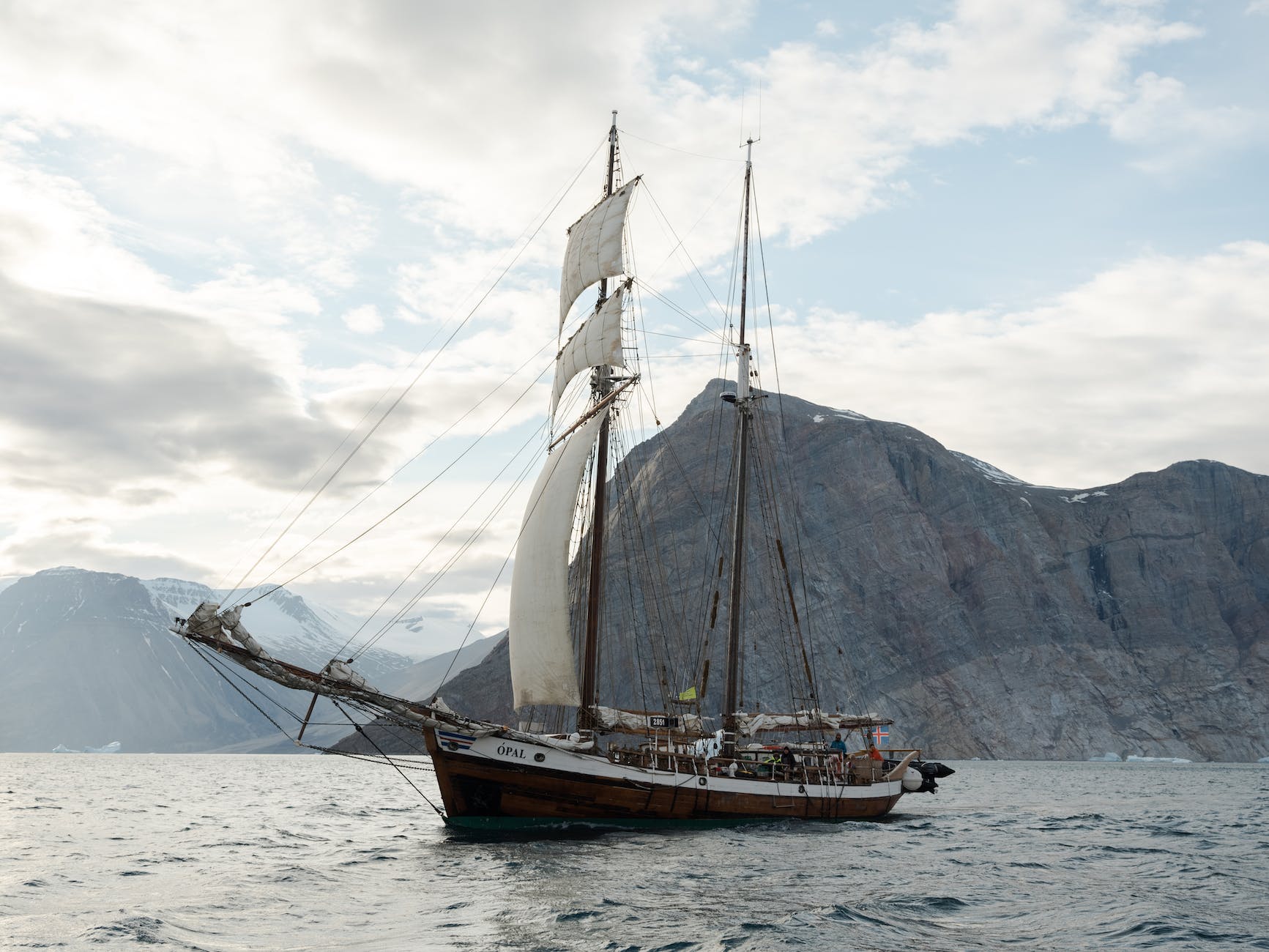
Across the lake lies Canada and in the middle of it, where the depths can reach 800 feet, shipwrecks occurred starting long before the Revolutionary War. The British invaded our village and burned most of it down during the War of 1812, and an active and committed abolitionist movement and the Underground Railroad helped to change the course of history. In the 1920s, rumrunners from Main Duck Island in Prince Edward, Ontario piloted across the lake to Chimney Bluffs-drumlins created by icebergs with a broad beach below-to supply the speakeasies here with booze. During World War II, several prisoner-of-war camps housed German soldiers, one of which has been converted to a state park near our home.

Photo by ArtHouse Studio on Pexels.com

I’ve been asked numerous times, at books talks and signings, about the inclusion of history into my books and the incidents are real. While the historical events are based on actual occurrences, I remind my readers that I write fiction, so history is merely a way to enhance the plot. Mostly, the characters are fictional and the details surrounding the events are figments of my imagination, although I do occasionally slip a real character into the mix.

In book one, King George, III had a minor role; in book two, I name-drop Morgan Lewis, the fourth governor of New York and quartermaster general during the War of 1812, whose father was a signer of the Declaration of Independence. In Murder at Freedom Hill, I mention Abe Lincoln  once or twice along with Frederick Douglass and Susan B. Anthony, but only to provide context to the back story.

I just started writing book four in the series, Murder at Chimney Bluffs. It’s early days, so at this point I have no idea who my historical celebrity will be, but whoever it is will have either supported Prohibition or opposed it, or be one of those mysterious crime bosses who organized the trips back and forth across the lake. I’ll figure it out as I move forward.

What I tell my readers is that what I love about writing fiction is that I can pretty much do anything I want with the plot, name dropping and historical events notwithstanding.  I wouldn’t have it any other way.

Guest Blogger ~ Angela Greenman

How Books Saved My Life

By most odds, I shouldn’t have been able to achieve much, let alone survive. My childhood was a battlefield that tried to destroy me. There were many enemies—mental illness, domestic violence, and poverty. From childhood into my teens in Chicago, we were so poor that my mother, younger brother and I were homeless for a while. And when we did finally find an apartment, I was relentlessly persecuted by my fears of what life held for me. I lived each moment fearful if we’d be able to pay the rent, or if we’d have milk to drink the next day.

Thank goodness for libraries! I believe books saved my life. They gave me hope. They shared with me stories of other peoples’ lives and how they overcame adversity. I started to believe maybe I had a chance to live differently. I’d stay up all night getting lost in my reading. I read a range of books by such authors as Phyllis Whitney, Agatha Christie, Gertrude Chandler Warner, and Louisa May Alcott.

Action and sci-fi movies, like books, transported me into new places—and I so much wanted to be anywhere other than where I was. I fantasized a lot about being a female James Bond, a strong woman who outwits the enemy and travels the world.

As damaged as my psyche was, instead of letting my childhood be a negative burden, I clung to the inspiring stories in the books that got me through my childhood and teens, and put the pedal-to-the-metal with a single-minded positive focus. I had an intense career where I was able to break through the glass ceiling, engage in discussions on national and international issues, and travel around the world.

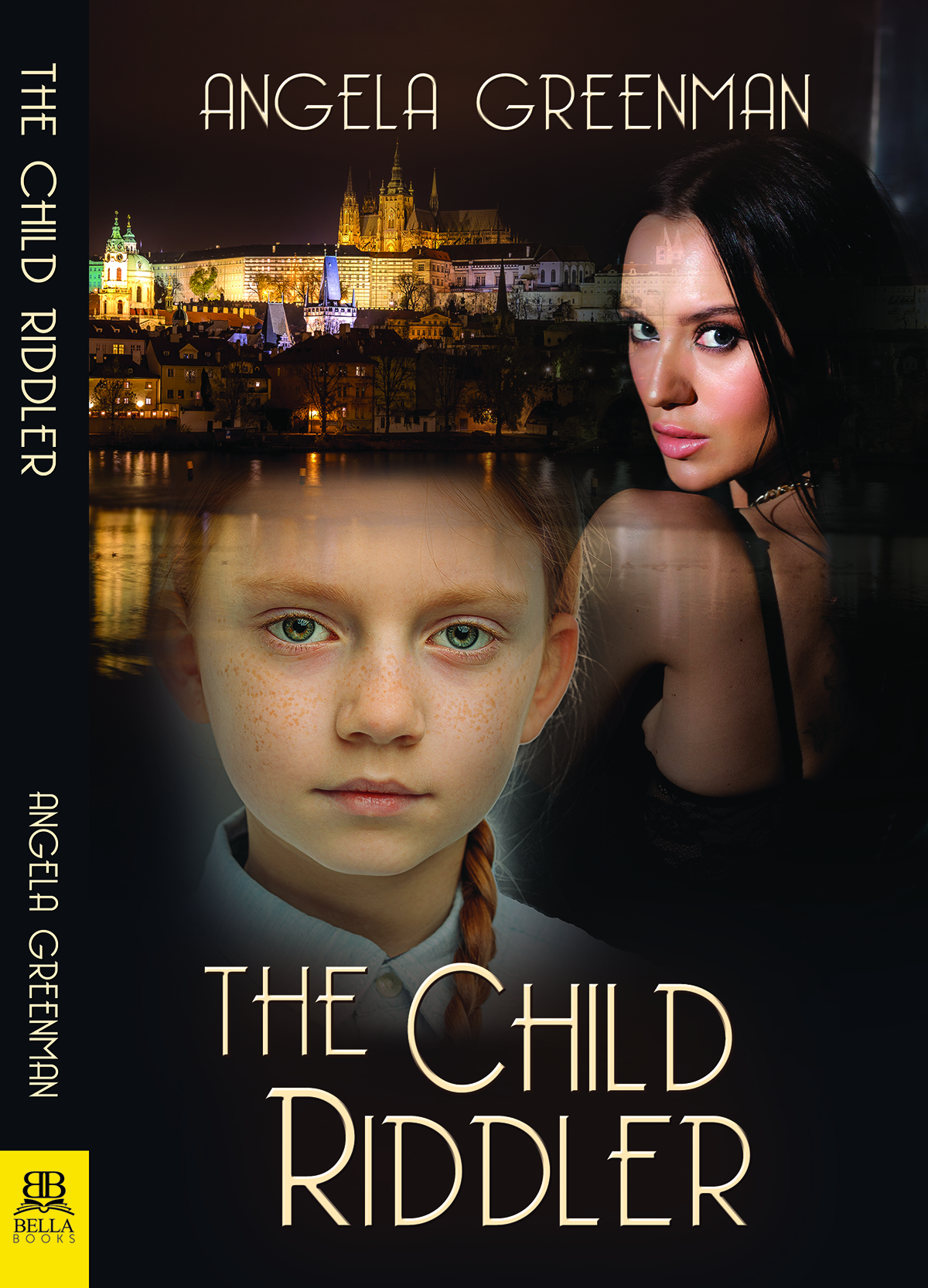
One of the great aspects about being an author is that you can share your life’s exciting adventures with readers. In my international thriller, The Child Riddler, my main character, Zoe, is a globe-trotting operative, who travels to some of the fascinating countries I’ve visited in my career. And, I am able to create a character from my fantasy. Like the readers, I get to go on that thrilling ride of discovering what it means to be a female James Bond.

But mostly as a writer, I want to celebrate strong women, because I know how hard it is to be one. I experienced how my mother suffered raising us as a single-parent on her lower wages and all that she went through.

I write too in hopes that other women can take heart from my story and know that they are strong.

THE CHILD RIDDLER

Despite the angry scars she carries from her childhood training, Zoe Lorel has reached a good place in her life. She has her dream job as an elite operative in an international spy agency and found her true love. Her world is mostly perfect—until she is sent to abduct a nine-year-old girl. The girl is the only one who knows the riddle that holds the code to unleash the most lethal weapon on earth—the first ever “invisibility” nanoweapon, a cloaking spider bot.

Zoe’s agency is not the only one after the child. China developed the cloaking bot and will stop at nothing to keep its code secret. While China rapidly hones in on Zoe, her threats grow. Enemies in Austria and Bulgaria reveal the invisibility weapon’s existence to underground arms dealers—now every government and terrorist organization in the world want the nanobot.

From Malta to the Italian Alps to England, Zoe races to save not only the child she has grown to care about, but also herself. Her drug addiction is threatening her engagement to the one person who brings her happiness, yet she needs the agency prescribed pills. They transform her into the icy killer she must be to survive. Can she still be ruthless without the chemicals that suppress her emotions?

Book buy links:
https://www.amazon.com/Child-Riddler-Angela-Greenman/dp/1642473650/
https://www.barnesandnoble.com/w/the-child-riddler-angela-greenman/1139775262?ean=9781642473650

Angela Greenman is an internationally recognized communications professional. She has been an expert and lecturer with the International Atomic Energy Agency for over a decade, a spokesperson for the US Nuclear Regulatory Commission, and a press officer for the Chicago Commission on Human Relations, the City’s civil rights department. After traveling to twenty-one countries for work and pleasure, Angela decided to seriously pursue her love of writing. She is a member of the International Thriller Writer’s Debut Authors program.

Links to connect with Angela:
Website: https://www.angelagreenman.com/
https://www.facebook.com/people/Angela-Greenman-Author/100071879436485/
https://twitter.com/AngelaGreenman
https://www.instagram.com/angelsprism/