Words on the Page

In one of the longest-running writing groups I participated in, our discussions often wandered into related areas but never very far afield. They were always informative, at least to me. One discussion in particular has remained with me. 

The de facto leader of the group asked apropos of nothing if we ever wrote anything other than fiction. Aside from the occasional memo for work, everyone said no, except for me. As both a free-lance writer/editor and later an employee in a social services agency, I wrote all the time. When I was freelancing, I wrote chapters for textbooks, articles short and long, lots of book reviews, and edited dozens of books. As an employee I wrote countless fundraising letters, newsletters for our donors, and a never-ending list of grant applications and reports. For me the job search meant finding an opportunity to write.

I wrote a novel (incredibly bad) in college along with short stories (mostly so-so), and in my first job afterwards, as a social worker, I wrote long detailed reports of my visits to children’s homes, foster homes, family court sessions, and other agencies. My long-winded exercises in leaving nothing out sat alongside the terser reports of my colleagues, who managed to say much the same thing in a tenth of the space. 

This observation came to me recently when in the process of cleaning out old files and boxes I came across my original notes from an early job. All that writing, all those words, as though I just had to use as many as possible whenever possible. It reminded me of my answer to a question asked in high school. What do you want to do, a friend asked. I want to write, I replied. And so I have.

Note that I didn’t say, I want to be a writer. I don’t think I’ve ever said that, or thought it. I’m not sure what it even means. I wanted to write. I wanted to get my ideas down on paper, explore them and develop them, see those sinuous strings of letters spreading across the page, coalescing into images I didn’t know I had in my head until I saw them in blue ink on white paper. Writing was like putting seeds into the ground so they’d grow into something bigger, something unanticipated but welcomed even if at first it made no sense to me.

When I look at the various mystery series I’ve written, I can see the stories I’ve used to interpret the experience of living along the New England coast, or in India during the tumult of the 1970s with Indira Gandhi, or on a farm in an isolated rural community. Some of the things I’ve said now surprise me. Did I really think that? How interesting! Each writer has different goals for any work in progress. My goals are always to discover something, see something emerge that I didn’t expect. For me, writing is like breathing. Necessary but something more.

The Pitfalls of Near History

Most of my books involve near history. That means, at any given time, someone might read a book I have written who lived in or visited the place where it is set, at the time it is set, and who remembers what it meant to them. Making near history a bit of a minefield. With historical fiction, the author takes us back to a time that we know from various historical sources. But near history, well, we lived through it.

For instance, CDR Byron Cooper is stationed at Alameda Naval Air Station in Head First. The air station has since closed. But in 1972, it was the boom and the bane of life in Alameda, CA. People remember the bustle, the jets flying over, the massive gray aircraft carriers at anchor. And the view. The Air Station was a vibrant organism then, not the runways with weeds growing through them, housing developments, and shopping centers of today. For those who remember, it is my job to reflect the energy of it as they remember it. For those who don’t remember it, the job is to create an image of it as it was. The difficult part is avoiding dissonance for one set and creating a breathing organism for another.

Pay Back, the third book in the Cooper Quartet, charts the fall of Saigon, day by day. The surrender and the U.S. exodus packed an emotional wallop for the country. People remember where they were, what they were doing and how they felt. You don’t want to get it wrong. Placing characters into the events and sharing the emotion of the moment is an honor and a tightrope. Get it right. The Cooper Quartet charts the emotional journey of a Michigan military family. Consequently, Pay Back is set in Saigon, on an aircraft carrier on Yankee Station, and in Michigan. Getting the timing right across all these locations was a challenge but essential. I was dealing with near history, history people remember, some from newscasts, some from demonstrations, some from the killing field.

My book, Perfidia, takes place in Barbados, shortly after its independence from England. The population of the island consists of the descendants of blacks brought over during the slave trade, and lily-white British landed gentry. Read Jane Austen’s Mansfield Park for a frame of reference. Since then, the gene pool has been generously stirred. Yet, in 1972, when the story takes place, it was still better to be a landed white Barbadian than a black Barbadian with a folding house. In the book, one of the few remaining Barbadian plantations is at stake. Three men vie to inherit, one is a little bit Latin, another lily-white, and the third is mixed race. So, as historical fiction, it is essential that the plot address the subtle prejudices of the time. People remember.

When the story takes place, Sam Lord’s Castle is a fixture of the island. It burned down a few years after. People who visited after never saw the castle, for those who visited before it was a treat. Don’t get the par terre wrong, or the staircases, or the type of plants or the view of the ocean. You’ll hear about it.

Near history. Challenging. Although historical fiction of any sort carries its own dangers. The history we rely on was created by contemporaneous historians, revisited, and reinterpreted repeatedly by more historians, reported by the daily newspapers of the era, and defined by biographies and interpreted by encyclopedias and textbooks. Many of these sources have or had prejudices, ideas they wished to put forward, and axes to grind. Was General Bedford Forrest a tactical genius or a beast?

So, there you go. Historical fiction of any sort – near or long ago. Challenging. I had a reviewer tell me a character knew nothing about how hard women worked in the 1870s as though she had firsthand experience. She must be very old indeed. It is enough to make you write a contemporary detective series.

Nope, not for me.

What is it about the Great Lakes? by Karen Shughart

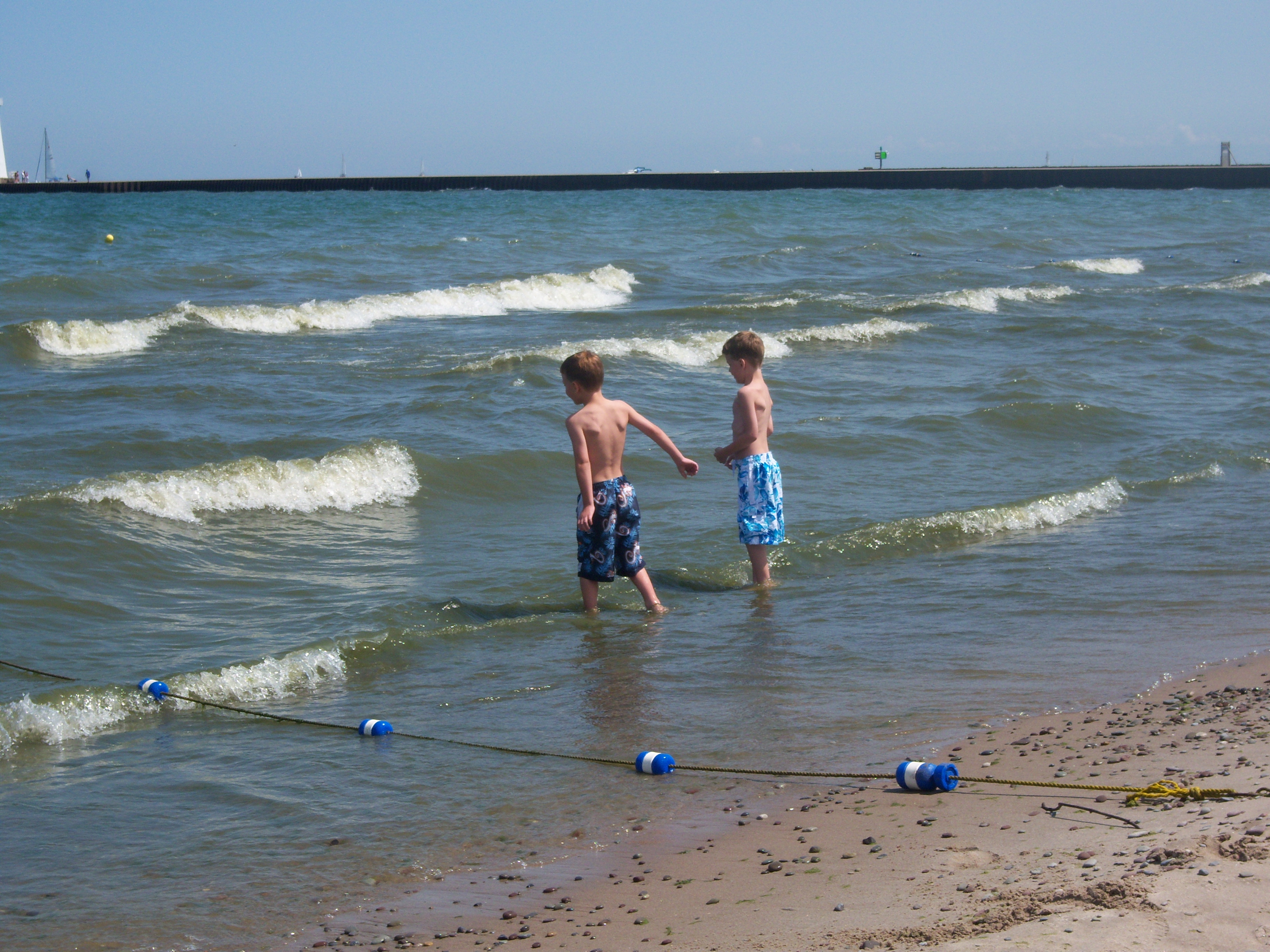
A book I read as a child, set in the 1950s on Lake Superior, resulted in a lifelong fascination with the Great Lakes.  I can’t remember the title, I wish I could, but I do remember snippets of it: family gatherings that included winter sports and summer outings; homemade ice cream made with snow and maple syrup; berry cobblers when the sun was warm and the days long and bright.

I grew up in a city about two hours from Lake Erie, and I have happy memories of family trips there: beaches, amusement parks, and many attractions you’d find at the ocean, but without the salt or sharks. We went to the Jersey shore on the Atlantic, too, and I loved it, but for some reason I always felt drawn to that lake. Many years later, I attended college in Buffalo, NY, and when the weather cooperated spent weekends at a beach cottage owned by family friends in nearby Fort Erie, Canada.

As fate would have it, about 20 years ago my husband and I decided one weekend to explore Lake Ontario, north of where we lived in Pennsylvania.  We discovered a tiny village through the internet; found a charming B&B with water views that was a short walk to the lake, the bay, a small but bustling business district, museums and restaurants, and a quick drive to Finger Lakes’ wineries. Two weeks later we bought our house.

We never expected to live here year ‘round, we planned to use the house as a getaway, but as time went by we were drawn to the region’s many charms.  We worked diligently to restore our house, it had been built by a lighthouse keeper more than a century ago and needed loving care. There’s mystique here: shipwrecks; sightings of massive lake creatures; British ships invading our village during the War of 1812; the transporting of runaway slaves to Canada; a rumor that a tunnel under our backyard hid some of those slaves before they fled. And the brisk business of rumrunning during Prohibition.

Each season has its own appeal. Summer months we revel in the resort vibe enjoying concerts, fireworks, outdoor movies, days spent beachcombing, shopping at farm stands, and lots of gatherings on our deck. During fierce winter storms we snuggle safely in our sturdy home, fireplace burning and soup on the stove, drinking wine with friends. Spring and fall are glorious, too, with acres of fruit trees in fragrant bloom or ripened apples hanging heavily at harvest, and a clean, sweet smell in the air.

In truth, our journey here was serendipitous, and we’ve never regretted it. Like the village on Lake Superior in the book I read so long ago, it’s an enchanting place filled with warm, kind people, and a peaceful quality of life.

From the time I was a child, immersed in Nancy Drew books, I wanted to write mysteries. One night several years ago, I dreamed the plot of my first Edmund DeCleryk cozy mystery, Murder in the Museum. Since then I’ve written three, published by Cozy Cat Press, all set on our lake with backstories that depict the history of this place we now call home. Writing has been a passion for me since I was young, but I never expected that someday my dream, coupled with a fascination with the Great Lakes, would become reality.

A Question with a Hundred Possible Answers

There is nothing a mystery author likes better than a question that could have a hundred possible answers, especially when it comes in the form of a dead body (gruesome!) or a missing person (my personal favorite).

Photo by Sagui Andrea on Pexels.com

So how does a writer come up with a scenario that fits this bill? If you are writing a cozy or a closed-door sort of mystery, you create a situation where a crowd of people have motives and opportunities to bump off the victim. But what if, like me, you prefer to set your stories in rural or wilderness environments? At first, you might think that there aren’t dozens of perpetrators to investigate “out there.”

I am often slapped in the face by real-life problems like these. The first came when I was attending a Great Old Broads educational campout near the border wall in Arizona. I’m naturally focused on wildlife and wilderness issues, but as I learned more about the human situations on both sides of the border, I had no choice but to set a mystery of a Hispanic woman’s disappearance in that area.

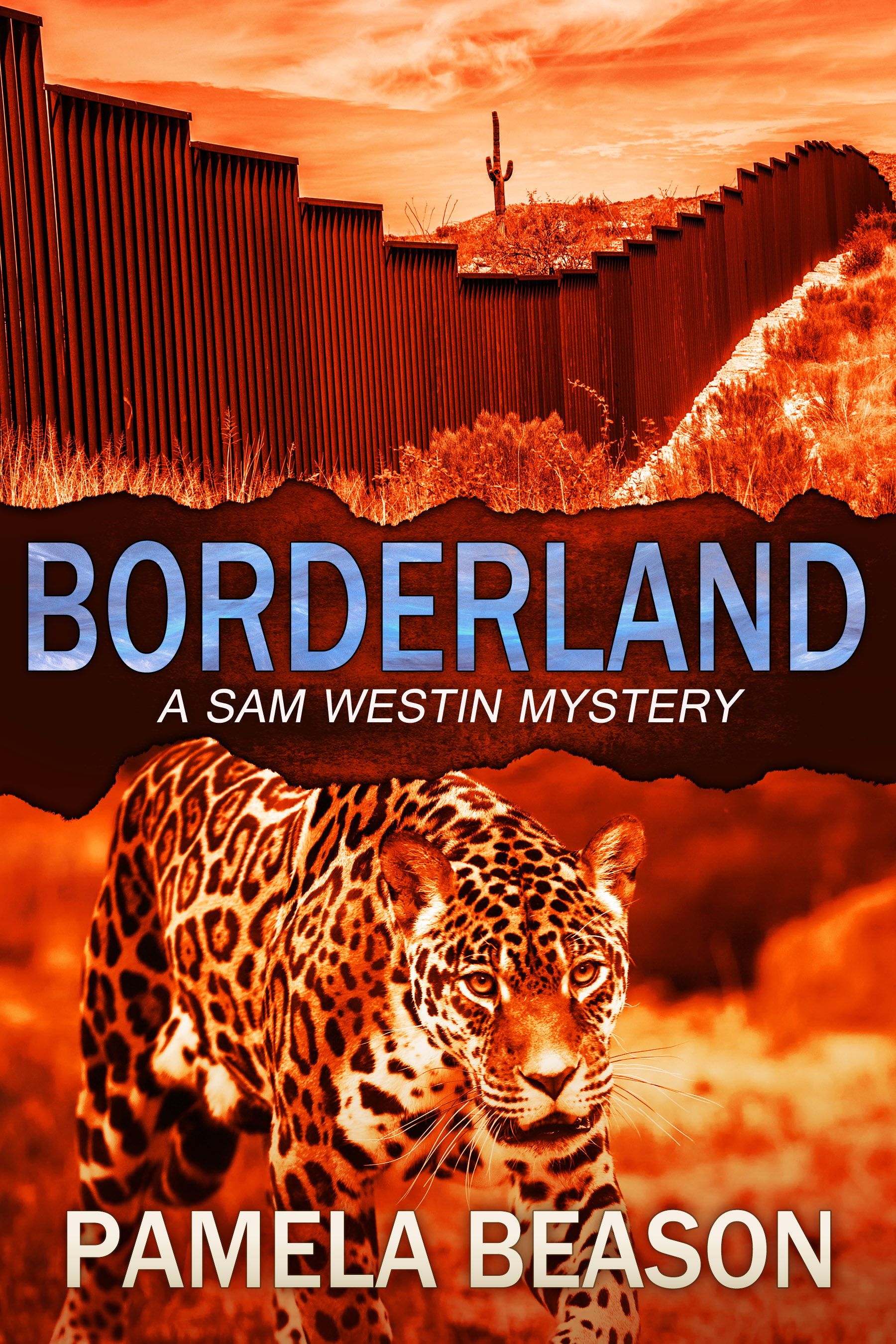
Because, heavens, anything could have happened to my character, Jade Silva. Americans of Hispanic descent are often stopped by Border Patrol agents for questioning. A few who could not readily supply documentation have even been mistakenly deported. Women have been kidnapped for human trafficking. There is drug running and killing of competitors and witnesses by cartels. Desperate migrants traveling in secret often die in the desert. Such an environment cries out for a missing-person mystery. The one I wrote is Borderland.

I am an avid hiker, so I am often exploring public lands—national forests, national parks, BLM areas, state parks, etc. In Washington State, we are blessed with millions of acres of wilderness. When I start off at a trailhead, I am frequently greeted by a poster featuring a missing hiker, sometimes a recent one, sometimes one from years past. More than 1600 people are currently listed as missing on US public lands. And that’s only the ones whom someone bothered to report; there are probably far more. And anything could have happened to most of these hikers. In some areas, it’s easy to get lost and succumb to cold or heat or thirst. It might be easy to fall off a cliff or into an abandoned mine shaft. There are raging rivers to cross, and ice-cold mountain lakes that may look inviting but can quickly incapacitate the unwary. Rockslides. Avalanches. Bears. Cougars. Elk. Moose. Wolves. And of course, the most dangerous animal of all, humans, especially those who are careless with guns.

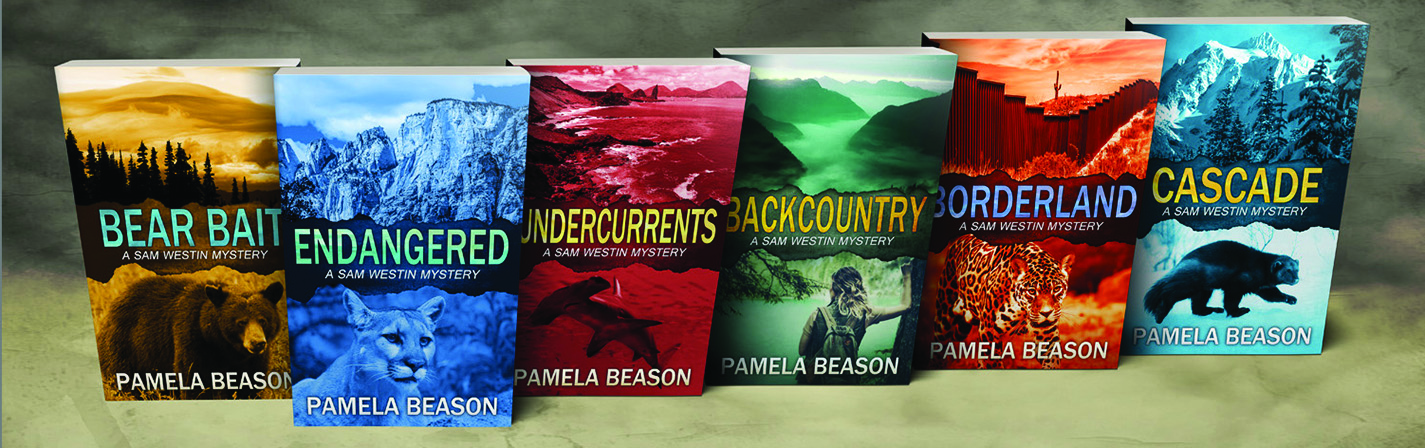
So, I’m setting my new suspense novel in the North Cascades area, which has all those possibilities for a hiker to get into deadly trouble. To add to all that, in the northern states like Washington, many public lands border Canada. Like our southern border, a hiker here might cross the border and vanish into another country. So, it is with all these possibilities in mind that I’m crafting my new novel, so far untitled and only half finished. (Hey, it’s summer, I’m hiking!)

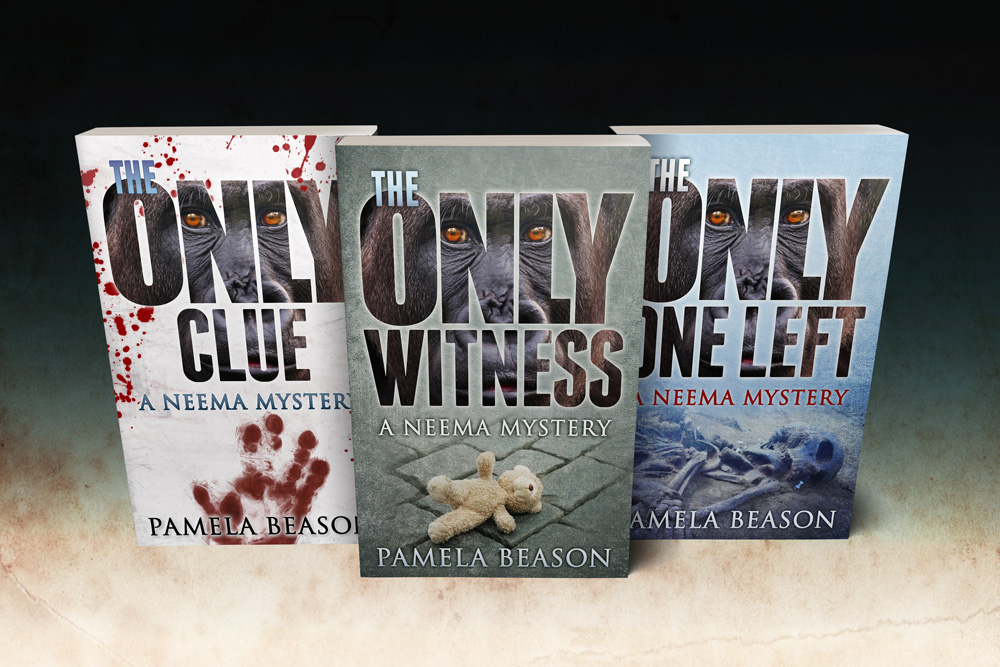
And did I mention that my hiker Sam Westin’s adventure is only half of the story? The other half belongs to Neema, the signing gorilla star of my other series. How will I straighten out this tangle of plots and scenarios? Talk about a question with a hundred possible answers!

Dealing with a Tough Topic

My latest WIP- Work In Progress-came about from two separate things my parents told me at different times. My mom was a nurse at a clinic. She commented that there were too many teenage pregnancies in the county. And years later my dad made the comment about a deacon of a church who cheated people and slept with other men’s wives.

Fast forward to now and my overactive imagination putting those two things together to come up with a murder mystery set in a small community where the pastor of a church “teaches” young women how to be good wives.

I have a secondary character whose point of view is shared in the book. She is a midwife who has brought the pastor’s offspring into the world after he sexually assaulted the teenagers and young women. The midwife tried to get the police to do something, but the charismatic pastor shined a bad light on her, and they wouldn’t listen. She is trying to keep the women’s names out of it knowing how many families and lives will be torn apart should it come out. At the same time, she wishes something would happen to the man.

And it does.

I am halfway through this book and my newest critique partner quit on me after saying the story was too dark and she didn’t like the way my main character Gabriel Hawke was acting.

Whoa!

The new CP thought I wrote cozy mystery like her. I never said I wrote cozy and had thought she would have looked up my books. I tried to look up hers, but she is a new writer. She has been giving me good thoughts and information coming into the series at book 11. But her last comments made me sit back and think about how the story is being portrayed. She said I was doing a good job with the midwife. She liked her attitude and how she was going about helping a suspect and keeping the victims from being brought public. But Hawke was too insensitive.

I have readers who say they love Hawke. I don’t want them to not like him after reading this book. Thinking long and hard about what she’d said, I realized, I was portraying the midwife how I would want someone hiding my secrets to be and I am portraying Hawke as a person out for revenge.

Stepping back, I roll things around in my head.

I know that the revenge comes from things that have happened in my past. Things I would love to have Rosa, the midwife, keep secret if she knew. But I’m instilling my revenge for being a victim into my Hawke character. While he does champion the underdog and will find justice even for a nasty piece of work as the victim, he needs to be more sensitive to the dead pastor’s victims.

And so, I spent all of last week with printed pages of my manuscript, going through and moving scenes, adding more scenes with Hawke learning from Rosa and his partner about how the victims of this man’s assaults have justice now that he is dead but need help to heal and not be put in the headlines of the local paper.  Or brought in for questioning about something that can no longer be punished.

I have to override Hawke’s need to put the last piece of the puzzle in the right place. And my need for revenge.

And though I wish my CP was willing to keep working with me, she did me a major favor by telling me how she felt about the story and my characters.