Intensify that interrogation scene

By Sally Carpenter

One of the hardest scenes to write in a mystery is the interrogation: The police officer, P.I., bounty hunter or amateur sleuth grills a suspect. Too often such scenes morph into a rhythm of Q-and-A, Q-and-A that lulls the reader to sleep and generates no conflict or character development. Interrogation scenes should be more than info dumps.

 I’m reading the book “Acting for Animators” by Ed Hooks (I bought the book years ago when I thought I’d be writing in TV animation). Hooks begins with basic acting theory that is useful for writers as well as visual artists. After all, acting is developing a character, and a mystery nothing more than how certain characters react to a crime. Without characters, our stories would be nothing more than boring police reports.

 Hooks says every scene in a play/book consists of a negotiation, of two or more characters striving to obtain a specific objective. Writing an interrogation scene with this in mind will perk up the story immensely.

 What is your character’s objective in an interrogation scene? The immediate goal for the protagonist, obviously, is to uncover clues or evidence to solve the case. But the character should have a larger overriding objective.

 The cop, of course, is doing her job. But maybe she had a long string of cold cases, and needs to break this one to prevent being transferred to traffic control. Or solving this case will result in a promotion. Or the mayor is breathing down her neck to wrap up this one quickly and quietly. Or she’s trying to do a good job to prove to Internal Affairs she’s not a dirty cop. All of these factors will affect every action the protagonist makes.

 The private eye needs this case to pay the overdue rent or her son’s college tuition or her mother’s operation. She must solve this crime because the local police department is too corrupt to deal with it.

The amateur sleuth is involved because the victim was a friend orerelative or the sleuth’s BFF was arrested for the murder.

 Or this particular case is too similar to the protagonist’s childhood trauma or inner demon that must dealt with. That will certainly affect the way the protagonist speaks to the suspects.

What of the suspect? That character’s objective in the scene is not to sit quietly and spit out exposition, but to get out of the hot seat as soon as possible.

A red herring will maintain her innocence or be terrified at the thought of an arrest or angry for even being considered a guilty party. This will affect how the answers are given.

 The killer may mislead, lie, deflect suspicion on another person, or act nonchalant, bored or even brag if the police have no solid evidence of his guilt.

 When people talk, they don’t sit motionless. They stand, pace, fidget, lean, cross arms or legs, nod, scratch, drink coffee, take notes, twist, etc. Characters in a story are also in motion, although they should move with a purpose and not flail about. Liars often avoid eye contact or cover their mouths. Writing in such action will break up long chunks of dialogue and add interest.

 Keep interrogation scenes short. A story is realistic, but it’s heightened realism. A real interrogation at police headquarters may take hours, but a reader won’t sit through pages of small talk.

 Make each word interesting. The suspect needs to say more than “I didn’t do it.”

 Each episode of “Columbo” is nothing more than a 90-minute interrogation scene! But the show works because each scene builds by revealing a new clue or pushing the killer emotionally further into exasperation.

 Columbo’s homey anecdotes about the wife or family are more than a humorous asides but are used as a means to disarm and distract the murderer, who thinks he can outwit this peculiar little man.

 The next time you watch “Columbo,” listen carefully to the thrust-and-parry game going on between the cop and the killer. How is the dialogue like a negotiation? Who has the upper hand in each scene? What “tricks” does Columbo use to wear down his opponent? And how can you use these techniques in writing an interrogation scene?




The Holiday Season is Winding Down…Now What?

Some of you have probably already taken down you Christmas decorations, others will wait until after the New Year, and then there are those who leave everything up for a long, long time.

We kept our decorations simple this year, and once our New Year’s Day celebration is done–we have relatives over who like seafood for gumbo and play our wild family game of Estimation–we’ll put everything away.

What will I be doing next? Hopefully getting my next Rocky Bluff P.D. edited, though I’m not sure if it’ll be published right away. My publisher is recovering from a serious illness–but I’m going to finish. Next will be planning a Deputy Tempe Crabtree mystery. I have some vague ideas wandering around in my brain, but nothing down on paper as yet.

I’ve a couple of events planned and signed up for one writing conference–my favorite–Public Safety Writers Association’s annual conference. It’s not until July, but I like it because it’s small and I get to spend time with some of my favorite mystery writers and a whole lot of people in various types of law enforcement, and other public safety fields.

If you’re interested, check out Public Safety Writers Association, and there is an early bird registration fee.

As the new year progresses, I’m hoping to be asked to appear/speak in other venues, find other book and craft fairs to attend, and perhaps set up a book signing or two.

Of course, as the saying goes about the best laid plans–one never knows what the future holds.

What are you plans for the coming year?

And while I’m here–I’ll wish all of you fellow ladies of mystery a most Happy New Year, and the same for all of our readers. May you all have plenty of mystery in your lives.

Marilyn

happy-new-year


How a series is like a spider plant

spider-plant

My writing process reminds me of a spider plantsprouting new plants which have potential to live and thrive if I cut them off the parent plant and pot them. But I have to choose how many little spiders I want to do that with, and how many I’d rather leave attached or simply trim off.

My last book, Ghost Sickness, took root from two stories I discarded. A scene that ended up being close to the end of it was originally the beginning of one of the rejected plots, while several key characters and settings came from the other. Maybe I should have entitled this post “Reduce, Reuse, Recycle,” because when I’m cutting, I store a lot of the cuts in a Scenes to Recycle file. It often ends up being the gentle way to kill my darlings, but it can also lead to creative recycling. Shaman’s Blues, my second book, hatched from a subplot in Soul Loss, which was originally going to be the second book and ended up being the fourth.

I’m well along in the first draft of the sixth book in my series, tentatively titled Medicine Buddha, and I can see that it’s going need trimming. I like the subplots better than the main plot. The antagonist doesn’t feel strong enough. My protagonist doesn’t have enough at stake. But I like the theme I’m working with and I love the settings. I’m also happy with reintroducing some characters from prior books, giving them important roles in this one.

This work in progress hatched like a baby spider plant from a second draft of Ghost Sickness. I cut scenes and subplots from it which are now the opening scenes of the main plot of book six. My protagonist, Mae Martin, attends a workshop on energy healing and medical intuition. There she encounters a fellow student, Sierra, who makes claims about reincarnation and self-healing and causing one’s own illness because of karma. She also claims that Mae’s boyfriend is part of a special soul group with her and that Mae isn’t in it. When I dropped Sierra into the workshop scene, I had no idea she was going to be my main antagonist and I’m still not sure she is.

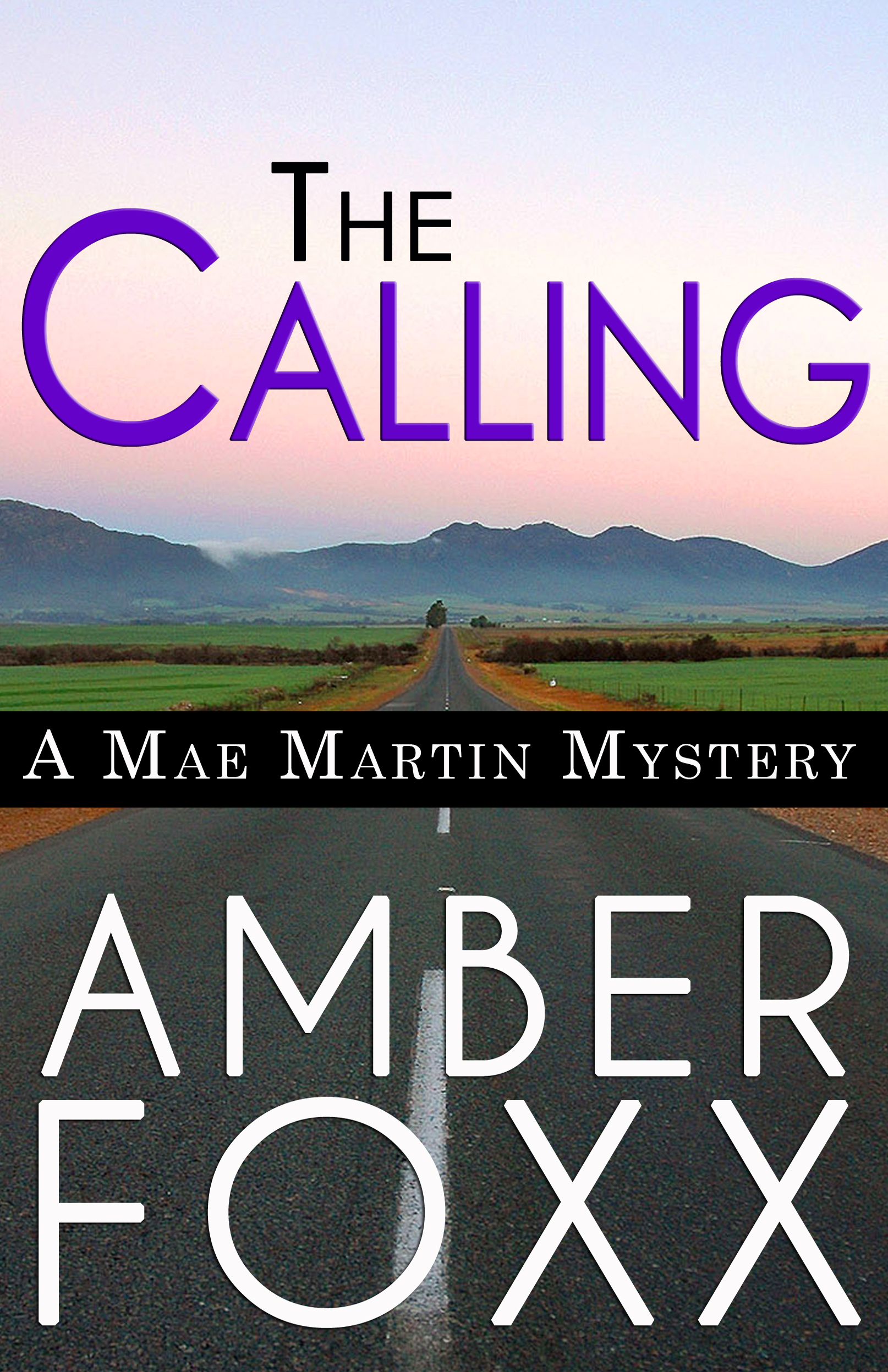
I don’t like to repeat myself. Since the crimes in my books aren’t murders, I have to think of new types of wrong-doing for each book. Sometimes the malfeasance is on a spiritual and ethical level; sometimes it’s a criminal act. I’m trying not to make Sierra an echo of Jill Betts, the neo-shamanism expert in Soul Loss, and I’m also aware that I can’t repeat the manipulations done by Charlie, the shady professor in The Calling, who misuses his knowledge of spirituality and alternative healing.

Maybe this antagonist will evolve, or be replaced as the real “bad guy” in the book by a person who’s in her shadow right now. Maybe she’ll end up being a victim of sorts. That was my original plan but my characters acted differently than I thought they would. Still, I think it would be interesting if Mae had to protect and help a strange, difficult person she dislikes. I don’t know yet. Maybe I’ll recycle that idea in the next book. It could work better there. First, I need to wrap up the current WIP. Then I’ll see which little spiders need to be trimmed and set aside for possible other books, and which will get to remain part of the big plant.spider_plant2

*****

The first book in the Mae Martin Psychic Mystery Series, The Calling, is on sale for 99 cents through the end of December.callingebooknew

The Little Things

thumb_IMG_1225_1024

A good book draws the reader in, makes her forget her own worries, the to-do list waiting on the fridge, the snow outside that needs shoveling (at this time of year, anyway!). How do the best authors achieve this? There are many ways, but certainly one is getting the little details right.

architecture-942557_1280
If a reader has previously visited the town in which a book takes place — let’s say, Philadelphia — having the hero run up Broad Street and take a right onto Fourth would pull him right out of the story (for those not familiar with Philly, those streets don’t intersect). If a reader knows a little bit about history, having the murder happen in a historical location that gets its history wrong would be a buzz kill.

There are many resources available to mystery writers today, and I love to take advantage of as many as I can. As a member of the Sisters in Crime, as well as two local chapters (one in my area, the other online), I have access to online courses, in-person lectures, lists of helpful books, and of course experts themselves available to answer questions. I’ve listened to coroners, successful authors, and community workers share their stories. I’ve taken classes on crime scene investigation and firearms.

256px-%22police_line%22_tape

Did you know there’s an email list just on forensics and crime scene investigations? It’s such fun! I can be checking my email — laughing at a joke from a friend, deleting unwanted ads for home loans and bodily enhancements — when I come across a detailed analysis of the decomposition rate of a dead body in a cold lake. Cool!

Sometimes my membership in these groups keeps me a little too busy, taking me away from my writing, particularly the group for which I serve as a board member. But it’s all worth it. It’s thanks to these groups that I have access to such fabulous information. And I know that when writing, sometimes the most important part can be the little things.

Learn more about Jane Gorman at janegorman.com, sign up for new release alerts at Bookbub, or follow her on Facebook, Twitter and Instagram.
Adam-Kaminski-Mystery-Series


MY LETTER TO SANTA CLAUS

copy

Dear Santa Claus,

I haven’t written to you lately, but I suppose you get enough mail at this time of year that you haven’t missed me. In fact, now that I think about it, I probably haven’t written to you since I was a kid and asked you for a Nancy Drew mystery for Christmas. I was a big mystery reader then, and I still am.

Well, I guess you’re wondering why I’m writing you now, especially since I’m not a little girl any longer. I’m a grownup (I guess), and now I write the mysteries I used to get for Christmas, but, Santa, I’m stuck. What I’m asking you for now is an idea for a story. I haven’t been able to write anything for a long time. I’ve run out of ideas.

I know you don’t usually carry packages of ideas in your sleigh. You usually bring toys and pretty dresses and books and computer games. But, Santa, before you say no, please hear me out.All I want is an idea for a story. That’s all. That should be simple for you. It’s not like a million dollars. Just an idea for a story, to get me writing again. That doesn’t seem like so much, does it?

Oh, and if you can, can you give me a really, really interesting main character–someone my readers will identify with and root for to find the answer to the puzzle. And, if it’s not too much trouble, maybe you could throw in a friend–you know, a sidekick–someone my main character can talk to and bounce ideas off. Of course I do need a villain, although I don’t suppose, being the good man that you are, that you have much experience with villains, but what’s a story without a good villain? I’m sure you can come up with someone evil and threatening, although not so obvious that the reader will guess his identity immediately.

Now, if you do this, give me an idea for a story and the characters, I’m sure I can take it from here. But, if you should be so inclined, maybe you could help by providing me with a good setting for the story. I know you’ve been all over the world, even if it’s only by sleigh on Christmas Eve,. but you know lots of places so you could give me a good place for the story to happen.

And, maybe the most important thing of all for a mystery story, I need a twist. That’s always the hardest part of the story–well, aside from the other things I asked for–but the twist in a mystery story is absolutely a necessity. No one wants to read a story that says that A met B and B hated A and then killed A and the police and everybody else knew it because they knew B didn’t like A. I need something new, something novel, a twist that will surprise my readers.

And, if you can also arrange that my story is accepted by some big name magazine, that would be terrific, too, but I can probably do that myself.

So, Santa Claus, I guess that’s it. That’s all I want for Christmas.

Lots of love,

Carole


Dear Carole,

That’s all you want for Christmas? You haven’t been in touch for years and years, and now that’s what you want for Christmas? Well, I’ve thought it over, and here’s my answer.

If I could come up with what you’ve asked for–a story idea, a protagonist, a sidekick, a villain, an interesting setting and a twist for the ending–if I could come up with all that, I’d write the story myself!

Merry Christmas!

Santa Claus