Digital Technology in Mysteries

Person with long, blonde hair sitting at a laptop with hands on keyboard. Photo taken from over their shoulder.

The more I read, the more I notice when digital technology isn’t a part of the story. It’s become a way for me to quickly decipher how old a book is. If I’m reading a novel and there’s no mention of texting or social media, or even Googling something, it sometimes pulls me out of the story.

The thing is, I’ve been a frequent texter for more than a decade. I’ve used social media regularly that long as well. But it feels like publishing has been slower to accept digital technology in stories and it’s only becoming more common in the past couple of years.

Digital technology is such an important part of our lives. Sure, the extent of that importance may vary from person-to-person, but you’re here reading a blog so it’s important to both of us on some level. 🙂

When I read a romance, I like seeing one character Google another. If I’m going on a date with someone or crushing on another person, you bet your britches I’m going to be checking them out online. Not only for curiosity’s sake, but for my own safety. My true crime obsession doesn’t help.

It’s even more glaring to me as a reader of mysteries. Particularly when a sleuth is a millennial or younger (late 30s or below). I’m at the upper end of the millennial group, which means I’m part of a small subset of millennials who remember life before cell phones and computers, but they’re important to how I operate daily because they were introduced during childhood. That’s the big difference I see between myself and my parents. When I’m curious about something, one of my first instincts is to Google it. That’s not instinctual to my parents because these digital technologies were available later in their lives.

So, when I read about a sleuth in their 20s or 30s (at least, but not limited to those ages), I expect to see them using the internet in their investigations or slyly using their cell phone to record someone, or sending out a help beacon from their Apple Watch if they’re in trouble. Granted, age does not equate to technological comfort and skill. I have friends who don’t have a social media presence and only switched from a flip phone to a smartphone in the last year or two. But, to me, that’s the exception not the rule.

I feel like I see the use of digital technologies more in television. Hallmark has been doing a great job of incorporating texts, video chatting, internet searches, and more into their movies (I’ve been watching Hallmark movies pretty non-stop since June). I’m not sure if it’s because authors are hesitant to write it, publishing professionals advice against adding a technological shelf life, or some other reason I haven’t thought of.

I’ve been thinking about this a lot during revisions of my cozy mystery. I’ve been intentionally trying to find ways to incorporate digital technologies.

Do you incorporate digital technologies in your stories? Do you think there’s a trend toward seeing more of it? Curious about your thoughts!
 

Guest Blogger – Vicki Vass

Why I write

Hi, Ladies of Mystery, thanks for letting me drop by and share some of my story with your readers. I thought I’d start by introducing myself. My name is Vicki Vass, and I write two different cozy mystery series, The Antique Hunter’s Mystery, and Witch Cat Mysteries.

My writing journey started very early actually almost as soon as I could read. I was a precocious child. So when I was four years old and saw my older brother reading a book, I decided that’s what I wanted to do. I read everything from cereal boxes to billboards to newspapers to books. It wasn’t long after that I decided I wanted to write. I wrote short stories through grade school, often killing off all the characters because I didn’t know how to end the story. I adapted the books Caddie Woodlawn and Alice in Wonderland into plays that my friends and I performed in our suburban Chicago neighborhood.

When it came time to go to college, I wanted to major in English and become a fiction writer. My uncle, a reporter for the Chicago Sun-Times, encouraged me to major in journalism, stating that there was more career opportunities. I ended up in journalism and knew it was the right path for me. At my college, I covered government for my daily newspaper and also was able to write some feature articles.

Following college, I wrote for community newspapers until moving to the Chicago Tribune, first as a freelancer and later as a staff writer for special sections. I covered everything from city councils, library boards, artists and community festivals. It was a wonderful experience and taught me how to write fast under deadline pressure. As newspapers began to decline, I moved on to social media and into my current full-time path as an editor of a medical journal.

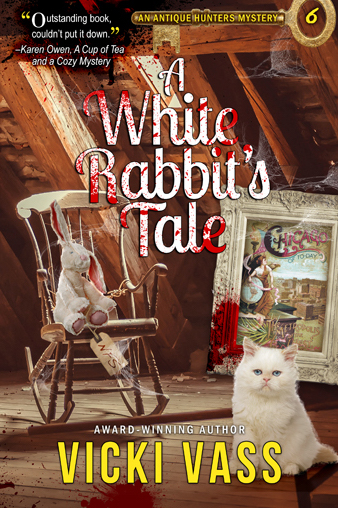
Working for a peer-reviewed medical journal means that I don’t write nor do I edit. I found myself missing writing so one day I took pen to paper and drafted a story which eventually became Murder for Sale, the first book in my Antique Hunter Mystery series. I loosely based the two lead characters, Anne and CC, on my close friends and our weekend adventures antique hunting together. That book was a finalist in the Mystery and Mayhem contest, and the sixth book in the series, A White Rabbit’s Tale, will be released in winter 2019.

While the characters were originally based on my two close friends, the characters have developed their own unique storylines and personality traits. Now the characters live outside of the real individuals.

The stories also focus on a historical element usually centered around a significant antique. That’s where reality ends and fiction takes over. The historical elements are a tribute to my father who taught American history and government for 30 years in the Chicago Public School District. He taught me to study and respect history.

As the series has evolved, I have found my passion for writing fiction to be restored, and I cannot wait to start the next story. My only shortage is time.

Thanks again for letting me stop by!

Vicki Vass

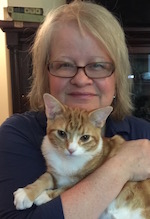
Vicki Vass gave up her reporter’s notebook to chronicle the near real-life adventures of her two best friends and fellow antique hunters. Like the fictional Anne, Vicki enjoys shopping and is always in the hunt for the next great deal. When not writing, Vicki can be found walking her two Australian shepherd puppies, Atticus and Tracker. She writes about her reading and adventures on her blog vickiscozycorner.com.  

Social media Facebook.com/vickivassauthorTwitter:@vickivass

A Free Kindle Book and Some Halloween Trivia

callingthedead-sm


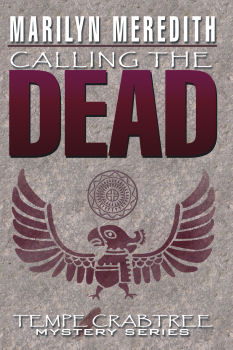
For Halloween I’m offering a free kindle book, Calling the Dead, one of the early Deputy Tempe Crabtree mysteries. It is free now through Halloween.

https://www.amazon.com/Calling-Dead-Tempe-Crabtree-Mysteries-ebook/dp/B07S3RFZ29/ref=sr_1_3?keywords=Calling+the+dead+by+Marilyn+Meredith&qid=1570114084&s=digital-text&sr=1-3

In Calling the Dead, Deputy Tempe Crabtree is challenged by a death that looks like suicide and a suicide that looks like murder and putting her job on the line when she investigates both on her on time, and jeopardizes her marriage to her pastor husband when she uses Native American ways to call back the dead.

orange and white squash
Photo by Tim Mossholder on Pexels.com

Now for some fun trivia about Halloween:

  1. Halloween originated in Ireland
  2. A pumpkin is a fruit.
  3. The round orange pumpkin is a native to North America
  4. The first individually wrapped candies were Tootsie Rolls.
  5. Alabama doesn’t allow Halloween celebrants to dress up like priests or nuns.
  6. In 2020, there will be a full moon on Halloween night.
  7. In 2017 the most popular Halloween candy was Kit Kats.
  8. Jack O Lanterns were first made out of turnips.
  9. To protect yourself on Halloween you should carry salt in your pocket.
  10. Male witches are called Warlocks.
  11. The word witch comes from the Old English meaning Wise Woman.
  12. Trick or treating evolved from the Celtic culture.
  13. If a person wears his or her clothes inside out and walks backward on Halloween, he or she will see a witch at midnight.

A bit more about my free Kindle book offer of Calling the Dead.

I did not use BookBub to promote—two reasons, it wouldn’t have been accepted because of not enough reviews, though what I do have are great, and I can’t afford a BookBub promotion.

What I did do is pay for some much less expensive advertising through places that promote free-e-books. And of course I’ll do my own promoting on Facebook, Twitter, and the various Facebook groups I belong to.

And you may ask, what is the motive for giving away copies of the Kindle version of the book? Hopefully, readers will like it and buy others in the series. Calling the Dead seemed like the perfect tale to offer for Halloween.

Marilyn


Changing over Time

After one of my novels comes out in print, I rarely reread it. If asked, I’ll read passages and discuss them, but once the work has gone to press, it’s out of my life except for promotion. All that changed recently when my agent reported the interest of a new publisher in taking on earlier series. This wasn’t simply a nice bit of news. It was an assignment—a synopsis of each and every book.

Like almost any other writer, I dread writing a synopsis. I don’t know why I find these so onerous and difficult. Nevertheless, I turned to the Mellingham series and pulled the first book from the shelf, Murder in Mellingham(Scribner, 1993). No one ever asked for a synopsis. No one or five page treatment lurked in a now-defunct format anywhere on my computer. After much gnashing of teeth, I had a page that pretty much covered the story of the book. On to the next in the series, Double Take. On this title, the Kirkus reviewer commented, “Oleksiw is growing as a writer.” I thought that was nice, wondered what passage prompted it, and thought no more about it. By the time I got to Family AlbumI was actually reading the story. I came across paragraphs I enjoyed, lingered on the phrasing, and stalled. Did I write that? Apparently, yes. I had the same experience with the remaining four books in the series.

I don’t know why I should be so surprised at how much my style has changed over twenty-seven years. The real surprise would be if it hadn’t. When I first began reading mysteries, I had very catholic tastes, but one day I wanted to read all of Agatha Christie’s Miss Marple books in a row for a reason I’ve since forgotten. With copies of her twelve mysteries on hand (excluding Sleeping Murder, published after her death though written thirty years before), I began reading. Although these mysteries are somewhat evenly spaced over forty years, the style ranges widely. I had never noticed this until I read them one after the other, when the differences become evident.

The typical cozy mystery reader may not think of Christie as a writer of several distinct styles but I do. I think the variations are masked by her consistent approach to exploring crime and the attitudes of the period. This rereading also helped me recognize at least one reason for a flagging interest in writers I used to enjoy—the sense of sameness in the work. Each story feels like the last one I read, and I no longer feel the sense of anticipation when I pick up those writers’ newest title.

Now that the synopses are done, I’ve turned to my current WIP, a stand-alone that is a departure for me both in narrative style and structure. This story is written in first person with more physical action and draws on my experience with home renovation. I like the concreteness of the work. William Zinsser, author of On Writing Well, described an exercise he gave his students that was a turning point for many of them. Take an ordinary object in your home, something you use or see every day, and describe it and how it works. I gave my students this in-class writing assignment: What is a zipper and how does it work? The students talked about it for days.

I used to think that an artist’s or writer’s style changed with the subject matter, but no longer. The change may be the result of no more than the passage of time, of assimilating what we’ve learned from the just completed work, and transforming that into something new, where again we learn and change. Now that I’ve seen how my work has evolved over twenty-five plus years and twelve published mysteries (not to mention the ones that failed and sit not quite forgotten in a drawer), I’m curious about how my work will change over the coming five or ten years.


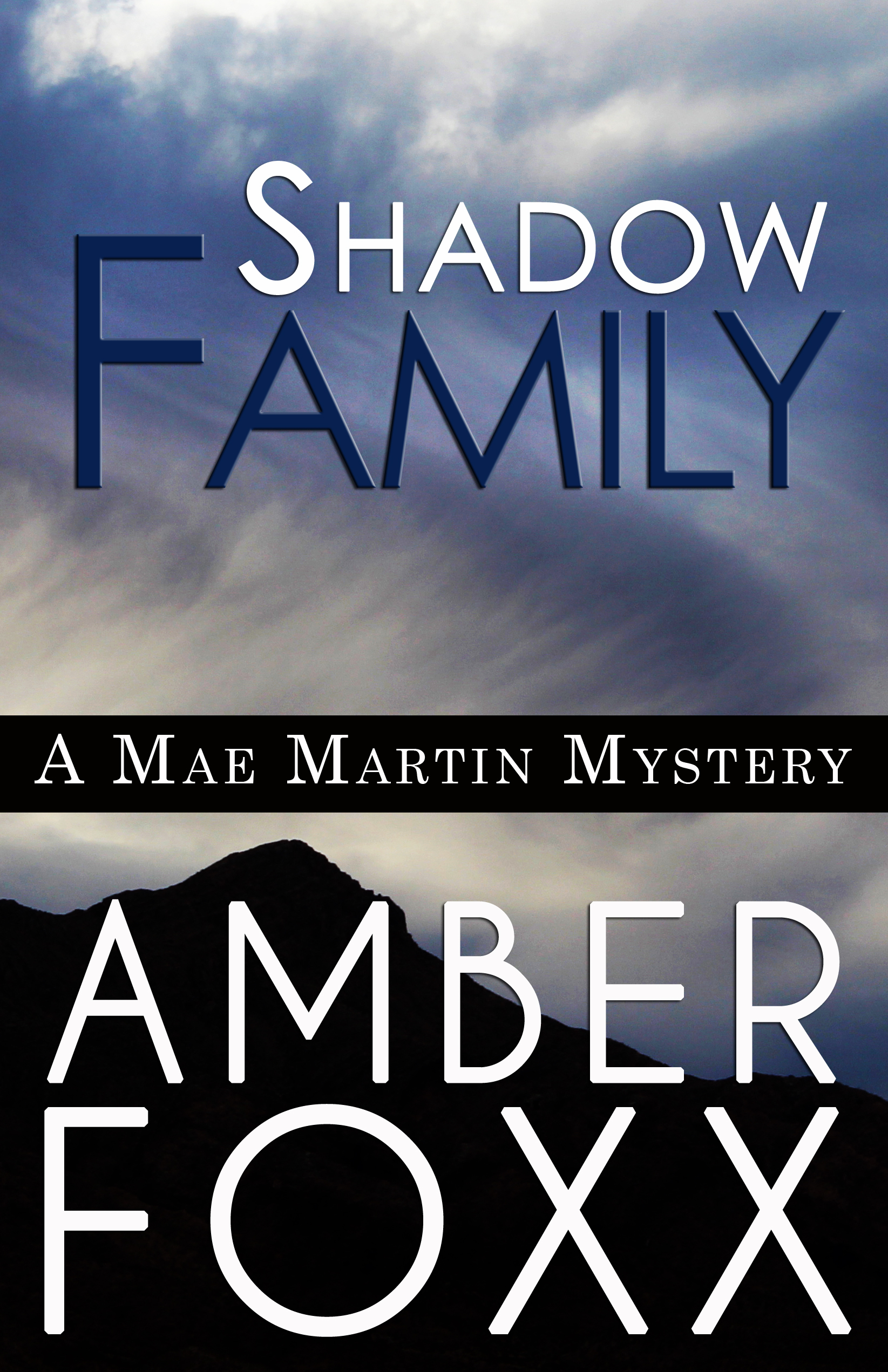
It’s Finally Happened … by Amber Foxx

I have a post due, and I have no idea what to write. I got Shadow Family back from my editor, after the usual back and forth about what to rewrite and why, and now I’m going through the book for the last time with her changes. The last time before sending it to my proofreader, that is. And then I’ll look it over again once those corrections are in. The upside of all this is that I’ve practically memorized all my books from so much repeated exposure to every page. I’m not likely to forget details that could affect the next book. I maintain a file of master notes on the series just in case, keeping track of characters’ ages, birthdays,  and unique mannerisms, names of minor secondary characters, family trees, and more, but I have the file of my protagonist’s personal memories and life experiences in my head. Okay, back to work. My readers are waiting for this book to come out.