A Bit of This and That

person picking food on tray
Photo by Craig Adderley on Pexels.com

Thanksgiving is upon us, the time to reflect on all we have to be thankful. I have so much: a wonderfully big family, a loving husband, and a long life full of memories. And a biggie for what is happening on Thursday—I do not have to cook. My grandson who lives in the mountains has invited all of us to his house for dinner. After years and years of being the main Thanksgiving feast cook, I am truly grateful!

Of course I’m thankful for my writing career—though I’ve never become famous or a best seller, I have loyal fans for both my series and have had a great time writing, The creation of two different worlds with interesting characters has keep me busy.

With my Rocky Bluff P.D. mystery series, I’ve created a small beach town that seems very real to me, as well as the people who inhabit it—members of the police department, their loved ones, and the members of the community, and of course the villains and the victims.

Of course there’s the Deputy Tempe Crabtree series mainly set in a mountain community much like the one I’m living in now though I’ve made some major changes. I’ve grown to love Tempe and her husband, Hutch. I’m always eager to see what’s going to happen with them next.

However, as I’m writing the latest, which will be #18, I realize that Tempe is reaching retirement age, is it time to end the series? I’m going to have to make a decision about that. Maybe it’s time to move on, perhaps write a stand-alone. I don’t know.

Something else being a writer has done for me is being able to share what I know with other writers. I’ve been able to do that at writers’ conferences and conventions, in smaller groups and one-on-one. I’ve also enjoyed being a speaker at various venues, especially when I can make people laugh.

Over all, I have so much to be thankful for.

Marilyn Meredith who also writes as F.M. Meredith

Latest in the Rocky Bluff P.D. series:

Bones in the Attic

Buy link for Bones in the Attic: https://tinyurl.com/yxpd8mxy 

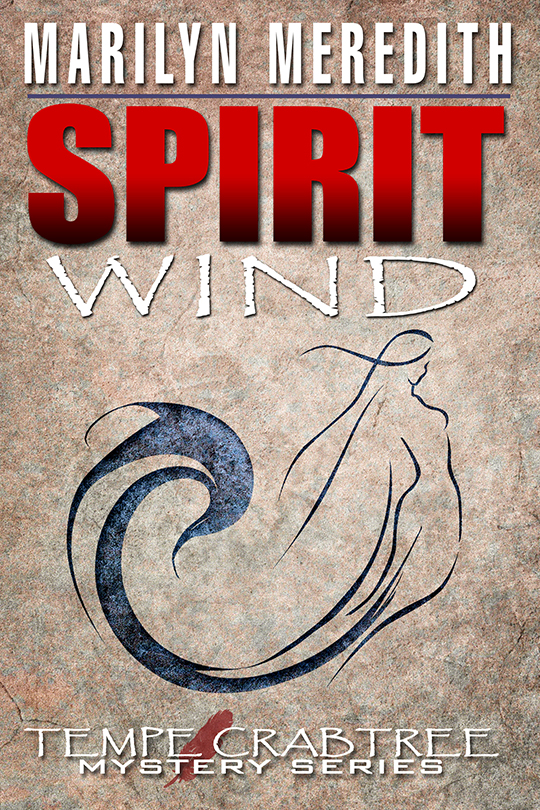
Latest in the Deputy Tempe Crabtree series;

Spirit Wind cover

Buy link for Spirit Wind: https://www.amazon.com/Spirit-Wind-Tempe-Crabtree-Mysteries/dp/1092112081/ref=sr_1_fkmrnull_1?keywords=Spirit+Wind+by+Marilyn+Meredith&qid=1556631664&s=books&sr=1-1-fkmrnull


The Ones I Keep

Still on my bookshelf are books that I loved as a child: . . . And Now Miguel by Joseph Krumgold, The Fur Person by May Sarton, and Asian stories. But one day in my teen years I came across a book my mother purchased for herself, by a man everyone in town knew. Some books have an inexplicable pull on us because of what they teach us, and this is one in my life.

John Leggett worked in Boston in the 1950s and 1960s before moving back to New York City and a job in publishing; he had always wanted to write. He and his wife were well known in the small town where I grew up. They and their three sons lived a few houses away from us, and my best friend at the time babysat for the boys. Sometimes, usually in the summer, I kept her company. We walked to the small beach nearby, or passed a quiet afternoon at home. I don’t remember the boys being particularly rambunctious.

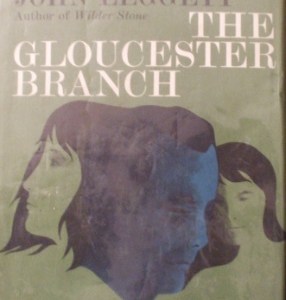
His second novel, The Gloucester Branch, published in 1964, was read by all in town largely because of its local setting. I had read his first book some years earlier, much to my mother’s dismay, and expected to like his second. I already knew I wanted to be a writer, and had already published one essay. I was only months away from writing my first short story.

The first news I had of Leggett’s second book was a spirited discussion among my parents’ friends about the title. One insisted it was bad because no one outside of the Boston area would recognize it. The Gloucester branch was the name of the B&M line that ran out to Cape Ann. The debate raged. Next came the characterization of the protagonist’s wife. I can still hear one woman saying, “That’s Mary to a tee. Why didn’t he disguise her better?” All of this whetted my appetite for the novel, and I dove in. I recognized the house the fictional family lived in, the streets they walked, even some of the minor characters (or so I thought). I read avidly from page one to the end.

Most writers I’ve talked to mention a well-known title or author as seminal in their development, usually someone I’ve read or at least heard of. When I think back, of course I can list numerous titles by important writers that swept me away, inspired me, and linger even now. So why do I remember a little-known writer of the last century? Why not remember another, better-known book of the same period: To Kill a Mockingbird (1960), The Spy Who Came in from the Cold (1963), Herzog (1964), Wide Sargasso Sea (1966), or any of the classics I read during that decade?

John Leggett never achieved great fame, though he ran the Writers Workshop at the University of Iowa and mentored a long list of award-winning writers. From there he moved on to California to become head of another writing program. He never became a household name outside of my hometown.

But in reading his novel The Gloucester Branch, I could see exactly what he had done, how he had taken real life and reshaped it, added twists and enhanced details to layer on meaning where there had been none or only the dull quotidian. I recognized the details, understood the changes he wrought, and appreciated the result. No other work of fiction had given me the same insight perhaps because no other had been so transparent in its reshaping of reality into story. Many books inspired me to write, tell a better story, or invent a richer character. But only one opened the window onto the simple transformations made by a writer’s mind.

Keeping a Character in Stitches

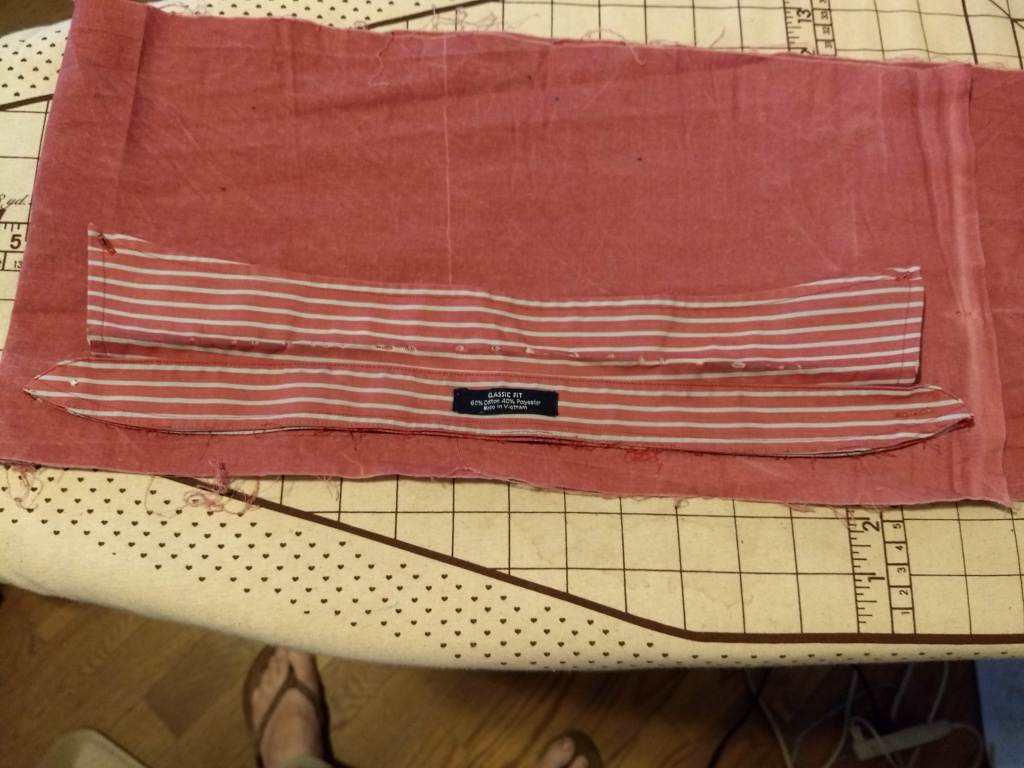
I make a lot of my own clothes and some of my husband’s. Why? Oh, lots of reasons. There’s the social justice thing – not supporting the sweat shop culture perpetrated by cheaply made clothes. Also, I like doing it. It’s creative and can be very interesting.

Now, don’t get too excited. I did not say I’m that good at it. I know too many people whose skills outstrip my own several times over. It’s just something I do. Okay?

It’s not that I’m disparaging myself, mind you. I’m happy to accept praise for my cooking, and my writing. It’s just kind of embarrassing when people gush about something that I’m not that good at. Trust me. I have never sewn a straight seam in my life. My topstitching is chronically crooked, and you do not want to know how many outfits I’ve had to give away because they didn’t fit, or because, like the last shirt I made for my husband, I put the sleeves on backwards.

What is interesting, in regards to the purpose of this forum, is how my interest in fabrics and needle crafts creeps into most of my writing. For example, in the 1920s, Freddie and Kathy series, when I had to figure out what industry had made Freddie Little’s family so extremely wealthy, I chose the textile industry. Aside from the fact that it is one of the oldest industries in the U.S., and Freddie is from Old Money, it’s something I like.

For the Old Los Angeles series, yes, Maddie Wilcox is a winemaker because my husband makes wine and I wanted a character that did, too. But Maddie is also a clothes horse – she will describe everyone’s outfits before she’ll describe anything else. I love historical clothing.

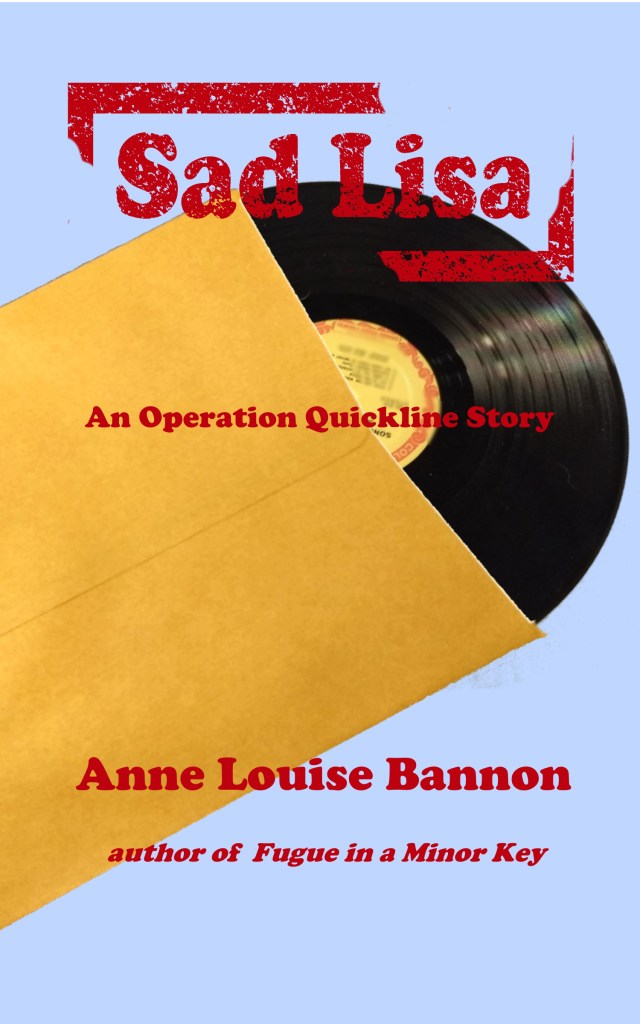
Then there’s the character who actually sews: Lisa Wycherly. Lisa and Sid Hackbirn have been a part of my life since 1982, when I first started writing That Old Cloak and Dagger Routine. It’s kind of a cozy spy novel, extended romance, occasional murder mystery series. I’m working on re-writing it now. The first four books are available now, and I’m getting book five, Sad Lisa, ready to appear on my personal blog for my Friday fiction serial. In fact, it will debut on December 6.

The thing is, as Lisa came to life, I wanted her to have a family and interests of her own. Sid doesn’t have any family and his hobby is sleeping around. Lisa, who is still a virgin and likely to stay that way for her own reasons, needed a life apart from being a member of a top-secret organization within the FBI. So, Lisa is religious, like me, and she sews and knits, although at the time I wrote her, I was not nearly as advanced a knitter as she is. Nor was I that advanced at sewing, either.

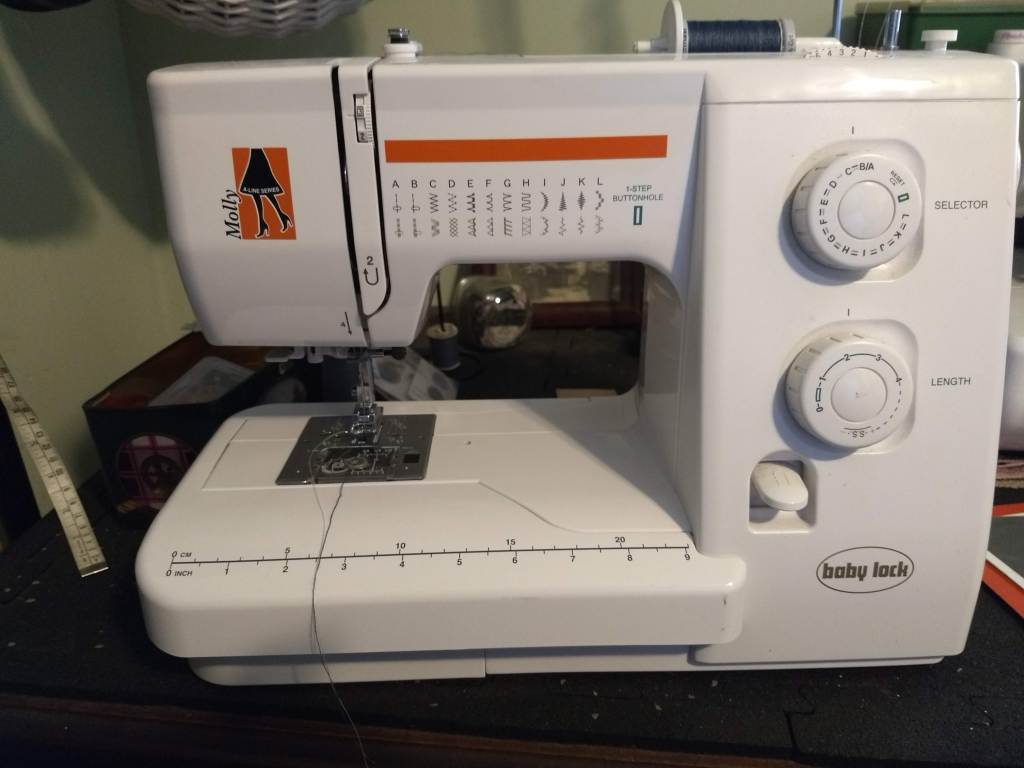
Which is kind of creating a problem now that I’m re-writing the series. You see, I’ve left it set in the original time that I wrote it. Why not? I’ve got all the dialogue and slang. A lot of the daily life details are all in the text, so I don’t have to hunt them down as much. Only there are some details that aren’t in the original text that I want to add. I’m trying to remember when I got my overlock machine, for example. Also known as a serger, they were around during the early to mid-80s, but mostly in industrial settings. My only problem is that if I didn’t get mine until the early 90s, having Lisa use one when it’s only 1984 would be bad.

Will I do another character who sews? I don’t know. I might. It would work well in the cozy world, in general. On the other hand, I do have one additional character in the queue who makes wine. I want to get that series started first. And, in the meantime, I am continuing to develop my sewing skills. Like remembering to put the sleeves on the shirt in the right direction. Sigh.

Gratitude by Karen Shughart

“Gratitude: The quality of being thankful; readiness to show appreciation for and to return kindness.” Oxford Dictionary

photo of autumn mood forest

Every morning, while drinking my cup of tea, I watch the news on TV.  Lately, it’s not been a great way to start my day. The news is filled with images and events that are disturbing and stressful, and at times I’m overwhelmed by the state of our nation and world:  bombings, shootings, horrific natural disasters, cruelty to children and animals, disrespect for differences, the list goes on and on.

Every evening before I go to bed, I read from a booklet that contains daily meditations, inspirational tips and advice for living in these very troubling times. At the beginning of each issue there’s an essay that’s connected to the monthly theme, written by a spiritual guide, therapist or religious leader. This month, as is fitting as we prepare to celebrate Thanksgiving, the theme is gratitude.

The author of the essay for November works as a therapist, counseling clients working in a variety of high-profile professions. She believes that, for our emotional well-being, we are obliged to take stock of our lives and instead of feeling angry when life doesn’t go the way we want, we must focus on what’s going well. She suggests keeping a gratitude journal, writing down three things each morning and evening for which we feel grateful.

I’ve thought a lot about that word, gratitude, and take time most days to be thankful, not always for what’s large or life changing, but instead for those everyday occurrences that help to keep my life in balance. I feel grateful when I awaken after a good night’s sleep.  I feel grateful that I can enjoy that hot cup of tea. I feel grateful that I can see the lake from my bedroom window and hear the crashing of the waves. I feel grateful for glorious bright colors of autumn leaves, or the crunching of the snow on winter walk; the sip of a good red wine. I feel especially grateful for the love that encircles me and the love I can give back: to my husband, children, relatives, friends.

The list, really, is endless, and I try and focus on what really matters rather than what brings status and recognition. It’s not the size of the house, it’s that there’s a roof over my head. It’s not the filet or lobster, it’s that we have food on the table. It’s not the make and brand of the car, it’s the vehicle that can get me safely where I want to go. It’s not the number of friends, it’s the quality of relationships.

What I’ve discovered is that even in the bleakest of times, those days and weeks where it seems like the stress will never end, there is something to feel grateful for. And, it’s amazing how one’s perspective changes after taking a minute or two to count one’s blessings.

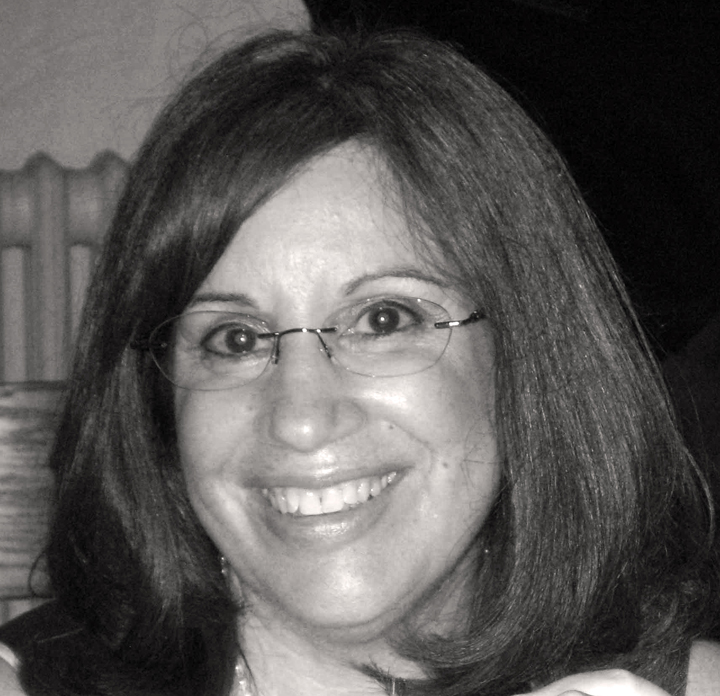
Guest Blogger: Lois Winston

Putting a Humorous Spin on Murder

By Lois Winston

I write the Anastasia Pollack Crafting Mysteries about a magazine crafts editor who is forced to become a reluctant amateur sleuth. However, I began my writing career penning dark romantic suspense. The first, after quite a few years and countless revisions, became the second book I ever sold. However, somewhere along the way I discovered my funny bone. Or maybe I should say funny bones because rather than being situated in my elbow, they reside in my ten fingers.

No one was more shocked than I. I’m one of those people who can never remember a joke’s punch line. When it comes to scintillating repartee, I always come up with a brilliant retort hours after the moment has passed. So years ago when my agent suggested I try to write a chick lit novel because Bridget Jones’s Diary had taken the publishing world by storm, and editors were clamoring for similar works, I laughed.

But she was serious. Apparently, she saw something buried deep inside me and knew it needed to be released. Turns out, she was right. On paper I’m quite funny, and the book I wrote, Talk Gertie to Me, became my debut novel.

Then one day my agent asked me to try my hand at writing a cozy mystery. She had been speaking with an editor who was looking for a series featuring a crafter. Since I designed needlework for craft kit manufacturers and craft book publishers in my day job, my agent thought I was the perfect person to write such a series. She also requested I use the humorous writing voice I had developed in Talk Gertie to Me. The woman was obviously clairvoyant because even though I hadn’t read a mystery since I devoured the Cherry Ames books as a kid, the moment I sat down at the computer to attempt writing a cozy mystery, I found my true literary calling.

I had always enjoyed reading books that make me laugh. There really is something to that old adage about laughter being the best medicine. Laughing releases endorphins in the brain, and the more endorphins, the happier we are. Given all the problems in the world, not only do I need to laugh more, I also realized I’d much rather make people laugh than have them sleep with one eye open at night.

So when Assault With a Deadly Glue Gun, the first book in the series was released in 2011, I was thrilled that critics embraced it. Publishers Weekly and Booklist both gave it starred reviews, comparing my writing to that of Tina Fey and Janet Evanovich. Kirkus described Anastasia as “North Jersey’s more mature answer to Stephanie Plum.” With praise like that, why would I ever go back to writing gritty romantic suspense?

Of course, Anastasia doesn’t see anything funny about the dead bodies I leave lying around for her to discover, the trouble I get her into with gangsters and psychopaths, or the communist mother-in-law I gave her. Luckily, she has no say in the matter. Besides, I’m not a total sadist when it comes to my reluctant amateur sleuth. I have given her a Shakespeare-quoting parrot and a drop-dead hunk of a boyfriend. Although, on second thought, maybe I am a bit sadistic because when it comes to photojournalist Zack Barnes, he may or may not also be a spy.

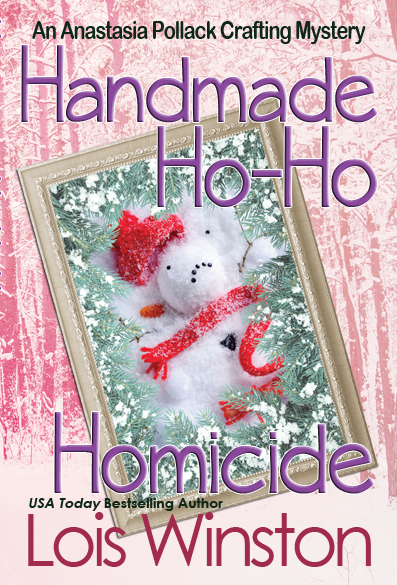
Handmade Ho-Ho Homicide

An Anastasia Pollack Crafting Mystery, Book 8

Two and a half weeks ago magazine crafts editor Anastasia Pollack arrived home to find Ira Pollack, her half-brother-in-law, had blinged out her home with enough Christmas lights to rival Rockefeller Center. Now he’s crammed her small yard with enormous cavorting inflatable characters. She and photojournalist boyfriend and possible spy Zack Barnes pack up the unwanted lawn decorations to return to Ira. They arrive to find his yard the scene of an over-the-top Christmas extravaganza. His neighbors are not happy with the animatronics, laser light show, and blaring music creating traffic jams on their normally quiet street. One of them expresses his displeasure with his fists before running off.

In the excitement, the deflated lawn ornaments are never returned to Ira. The next morning Anastasia once again heads to his house before work to drop them off. When she arrives, she discovers Ira’s attacker dead in Santa’s sleigh. Ira becomes the prime suspect in the man’s murder and begs Anastasia to help clear his name. But Anastasia has promised her sons she’ll keep her nose out of police business. What’s a reluctant amateur sleuth to do?

Buy Links

Amazon https://www.amazon.com/dp/B07VG2QZXV/

Kobo https://www.kobo.com/us/en/ebook/handmade-ho-ho-homicide

Barnes & Noble https://www.barnesandnoble.com/w/handmade-ho-ho-homicide-lois-winston/1132607263

iTunes https://books.apple.com/us/book/handmade-ho-ho-homicide/id1473711082

Bio:

USA Today bestselling and award-winning author Lois Winston writes mystery, romance, romantic suspense, chick lit, women’s fiction, children’s chapter books, and nonfiction under her own name and her Emma Carlyle pen name. Kirkus Reviews dubbed her critically acclaimed Anastasia Pollack Crafting Mystery series, “North Jersey’s more mature answer to Stephanie Plum.” In addition, Lois is a former literary agent and an award-winning craft and needlework designer who often draws much of her source material for both her characters and plots from her experiences in the crafts industry.

Website: www.loiswinston.com

Newsletter sign-up: https://app.mailerlite.com/webforms/landing/z1z1u5

Killer Crafts & Crafty Killers blog: www.anastasiapollack.blogspot.com

Pinterest: www.pinterest.com/anasleuth

Twitter: https://twitter.com/Anasleuth

Goodreads: https://www.goodreads.com/author/show/722763.Lois_Winston Bookbub: https://www.bookbub.com/authors/lois-winston