Books are a widely varying commodity. Some are so wonderful you could live in that world forever. Some are so bad you don’t even try to finish them. Most fall somewhere in the middle. Right now we’re dealing with a new kind of book, a kind of zombie product written by the abomination of AI and released by the overwhelming hundreds. Luckily – for now, at least – they are recognizable primarily for their lifelessness.
So what is it that binds these widely varying standards together – good, bad and zombie?
There are lots of things, but I believe a lot of it is dialogue. Good books have the characters speaking as if they were real people – not interchangeable cardboard cutouts. Of course, this is occasionally a rule that can be tweaked. In a futuristic sci-fi populated with human-android characters, the speech patterns and word choices would be different than in a light-hearted Regency romance, and each choice should be congruent not only with the time and setting of the book, but with the status/occupation/ethnicity of the individual character.
For an only slightly exaggerated example, everyone is familiar with the slave Prissy’s exclamation during the battle of Atlanta sequence in Gone With The Wind – “I don’t know nothing ‘bout birthing no babies.” As offensive as some modern readers might find it, her heartfelt cry is commensurate with her time, her status and the situation of the scene. Just imagine how jarring it would be if she were to say : “Good gracious, Miss O’Hara, I am completely ignorant of the processes involved in delivering a baby.” That would pull the reader right out of the scene. To a large extent, language equals character.
And the principle doesn’t really change no matter what the genre, though the actual words probably will. In a hard-boiled detective story, a police sergeant is not going to speak the same way as a career petty thief. In a western, a wealthy rancher with political aspirations will sound different from a brow-beaten saddle tramp. In a Regency romance a high in the instep duke will have a completely different vocabulary and range of meaning than a poverty-stricken dock worker. In a contemporary romance sometimes the difference will be less blatant, mainly because of the ubiquity of books and television acting as influencers, but there will be noticeable differences.
Just to make the convoluted even more so, know that all the above can be overridden if the plot demands. Perhaps the duke is working on the docks to find out who is stealing his fortune or something. Perhaps the weary saddle tramp is really a Pinkerton man out to investigate the rancher whom he thinks is really setting himself up as a dictator. Perhaps…. you get the idea. Confustication upon confustication. But you must play fair with the reader – not by telling him from the outset what is going on, but by allowing him to listen to the various people and find out the truth for himself.
Language equals character.
And if you’re writing a hard sci-fi about three-eyed, blue-skinned Orychiks from the Dyinolive galaxy with no humans involved you’re pretty much on your own… just remember that in almost every society the ‘elites’ (for want of a better word) speak differently than the ‘hoi polloi’ (again for want of a better word) primarily as a matter of status. I think this need for distinction, for individuality (even in a herd sense) is hardwired to people’s/being’s innermost self. Even among most animal species there is a distinct pecking order.
Just remember two things – language creates and showcases character, and you must play fair – enough that the reader can follow along with you and understand, even if you do pull a few tricks along the way.
As the days and nights are starting to cool, I’m looking forward to dressing in cozy sweatshirts, wrapping up in fuzzy blankets and settling into a routine of writing and quilting.
During the summer, there isn’t time to quilt. I spend a lot of time on the road either to attend events to sell my books, to attend family events, or do research for my writing. When I’m home I’m writing, pulling weeds, doing gardening, or helping hubby.
But come fall and winter, there are my walks and housework, but then I write until 3 or 4 pm and then I work on whatever quilt I have going until it’s dinner time. If I’m cutting fabric for a quilt, I’ll continue doing that after dinner.
It’s funny, I don’t like putting puzzles together, but I enjoy moving pieces of fabric around to find the right pattern in the colors and adjusting them. I can have fabric pieces laying on the guest bed for several days, or even weeks, as I wander in and out rearranging and deciding if I like the way they look. Once I’m satisfied I start sewing them together.
That’s kind of how I write. I start with the idea of a story in my mind and rearrange the characters and the setting as I formulate where the story will start and who will be murdered. It’s a process that I recently realized is crucial to my being able to write an enjoyable story.
My book Merry Merry Merry Murder that is releasing October 15th is the first book of what I hope will be a new series for me. I had the idea for it last fall. And then in January, I wrote the book in one month and felt I was on to something I could do to give my readers something extra to read in between my Gabriel Hawke Novels and Spotted Pony Casino Mysteries releasing.
I sent the book to my beta readers and they all said that they didn’t like the main character and the story fell flat. That is not what a writer wants to hear. I didn’t have time right then to work on it, because I was busy getting the next Hawke book written.
The Christmas book sat and I thought about it when I wasn’t deep in the Hawke book. And then I needed to get the next Spotted Pony book written. I talked to my beta readers some more about the Christmas book as I wrote the Spotted Pony book.
I swirled the main character Andi around in my mind a lot when I wasn’t actively writing or thinking about the books I was writing. After a couple of chat sessions with a beta reader and having a break between my other books, I sat down and went through Merry Merry Merry Murder. ( I know too many Merrys, but sing it like the Carol of the Bells song and you’ll get it)
After letting the character “ferment” in my brain for nearly a year, I dug back into the story. In that year, I’d learned more about my main character, so I “knew” her better. I rewrote the beginning of the story and gave her a new interesting friend and sent the new version to my beta readers.
It was a hit!
Every time I’ve started a new series, I’ve lived with the main character in my head for a year or more. So I knew them inside and out before I started writing their first book. I didn’t do that with Andi and now that I have had her in my head for longer, she is a complete character.
I’ll be sharing her book with you next month, but it was the idea I came up with for this month’s post.
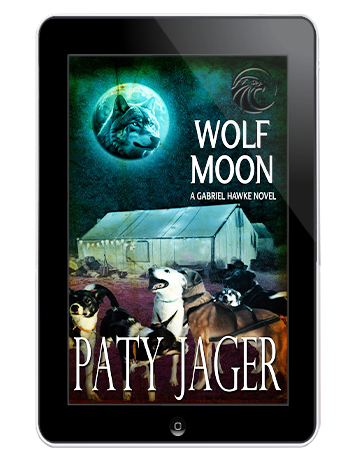
I do have the next Hawke book, Wolf Moon, available in ebook, exclusively at my website right now or you can preorder it from your favorite ebook vendor and get it on September 19th.
In the remote, snowbound wilderness of Oregon’s Eagle Cap Mountains, a sled dog race turns deadly. State Trooper Gabriel Hawke is teaching winter survival to Search and Rescue recruits when he’s called in to find a missing musher. Arriving at the race camp, he discovers the musher isn’t just a name on a list—she’s someone his friend Justine cares about deeply.
As Hawke searches rugged trails and icy backcountry, the case quickly shifts from a rescue to a murder investigation. Then a second body turns up, and it’s clear the killer is hiding among the racers, handlers, or volunteers. The deeper Hawke digs, the more he uncovers buried secrets and dangerous rivalries.
Now, with a killer on the loose and Justine possibly in the crosshairs, Hawke must navigate blizzards, betrayal, and bloodshed—before the race ends in even more tragedy.
Being the second oldest in a family of seven children and growing up impecunious during the mid-50s in rural Middle America, where occupying one’s time for entertainment was left to their imagination. I often busied myself trying to solve problematic riddles and puzzles, starting with the most basic and subjective ones like what came first the chicken or the egg, or, did Humpty-Dumpty really have a great fall, or was it simply a Kings premeditated design for fresh egg salad?
I was never enthused with those rainy-day picture puzzles that give away the reveal by displaying the completed puzzle’s image all shiny and pristine on the face of its cardboard container. No, I thoroughly enjoyed a deep dive into complex brainteasers, ones that would pique my curiosity, while challenging its solvability. Ones like: I speak without a mouth and hear without ears. I have no body, but I come alive with the wind. What am I? Or the immemorial murder mystery where a lifeless victim is discovered in a windowless room, and the only door is dead bolted from the inside.
Fast forward a multitude of years, after turning twenty-one, I moved to the east coast, to New York. Where I joined the police department and honed my skills as a detective in the creative art of criminal investigations.
It’s where I learned the meaning of a true mystery, where a mystery can be nothing more than an unanswered question, or where something is difficult or impossible to understand, or even to explain, or where something not understood or beyond understanding remains an enigma, until it’s solved.
I also learned the difference between a mystery and a secret, which most often will be conjoined in a crime. A secret is usually just information that needs to be ferreted out before revealing the hidden mystery.
While the mystery of any homicide is usually limited to who, what, where, when, how, and why, it rarely focuses its investigative depth on the murder victim’s family back story, or it may modestly skim its veneer. I’ve come to learn there is more often a burly and expansive personal history cloaked somewhere beyond the surface pedigree of the victim. By digging deeper into the victim’s background and uncovering hidden or forgotten secrets will often reveal a forewarning to their own impending crisis, of course that can only be exposed through an extensive investigation, and obvious hindsight. Though by unmasking hidden or untold historical family secrets will oftentimes reveal a clear and sharper image of the victim and their significant loved ones, it will frequently divulge the motive for the victim’s demise.
I further learned most homicide victims leave behind palpable shards of their living lives, along with their unintentional victims, (collateral damage) unwittingly of course, but nevertheless, they leave behind living victims, such as loved ones, family members, and loyal friends. These unforeseen victims, who are mostly overlooked and quickly forgotten victims themselves, though portentously significant in the life of the murdered victim, possess a fundamental account of their own that needs to be shared.
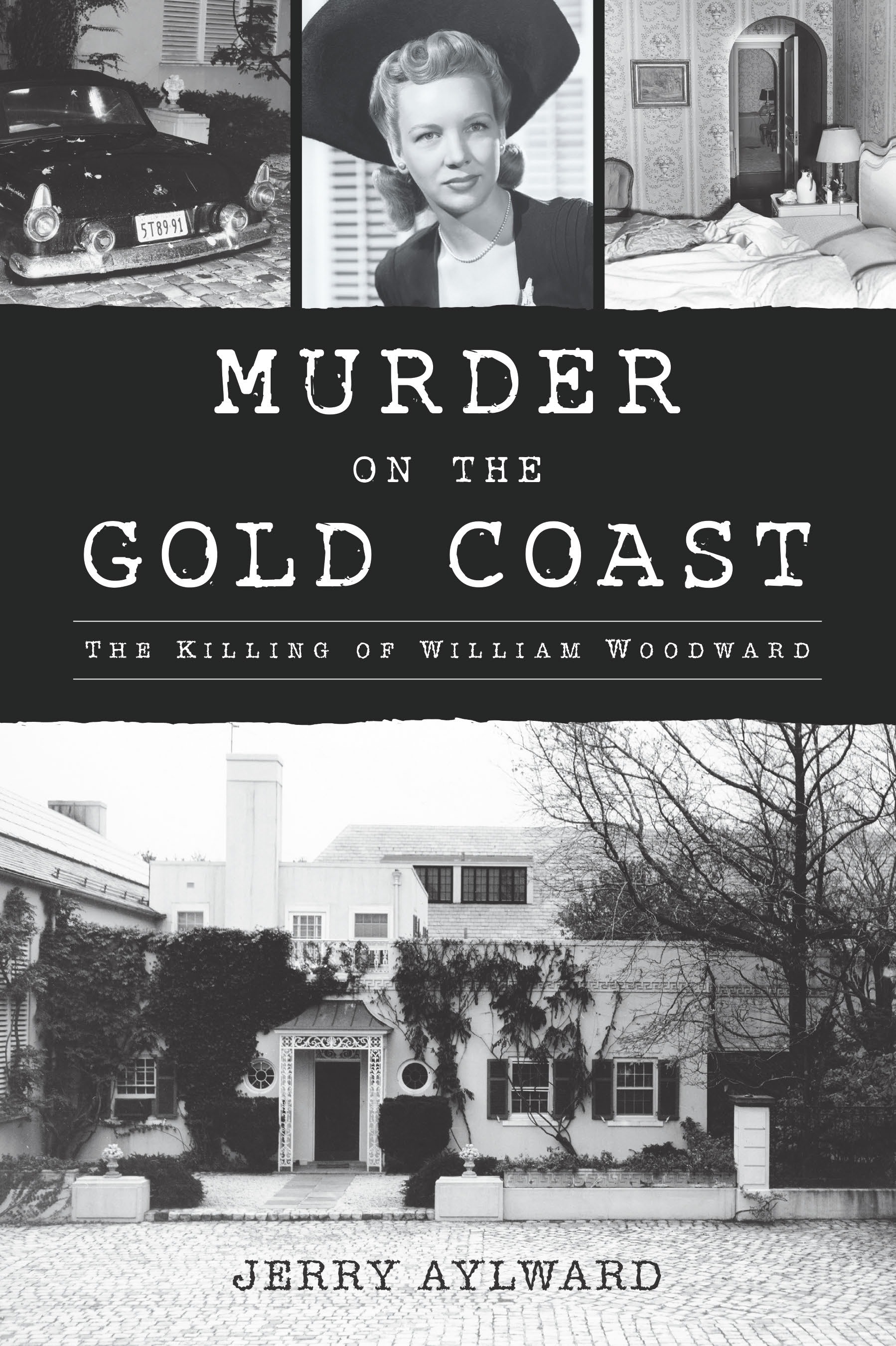
I’ve written both fiction and nonfiction, though all could be considered mysteries, at some point in time. My nonfiction books are True Crime. My latest True Crime chronicle takes place in 1955, in an affluent community located on the north shore of Long Island, in Nassau County, New York, commonly referred to as the Gold Coast, with the murder of a thirty-five-year-old multimillionaire, hence the title of the book Murder on the Gold Coast, conjointly narrating details of the living victims.
Consequently, I learned that conducting research into even a seventy-year-old controversial homicide case requires obtaining accurate and minute details of pertinent information that can only be attained by extreme digging into the crime itself, while not being stifled by intentional information barricades, despite some present-day law enforcement officials attempts at continuing to thwart the truth.
Another interesting detail I discovered while conducting my research in this aged homicide case was the compelling theory of the six degrees of separation. A persuasive philosophy that anyone on Earth can be connected to anyone through a chain of acquaintances with no more than five intermediaries. This means that on average, everyone on this planet is only six introductions away from each other.
I found in my current true crime commentary I was only three degrees-of-separation away from the victim himself, and only two degrees away from some of the essential witnesses, without ever knowing.
I also believed that just because some of the facts and physical evidence in this 1955 homicide investigation had been passed over or not addressed, it didn’t necessarily mean the investigators were merely incompetent.
It should also be noted that exposing any aged criminal mystery to the prism of a new day will always require accurate documentation and absolute certainty based on official police reports, court records, historical witness testimony, common logic, and above all, perceptual principle.
MURDER ON THE GOLD COAST
In the early hours on a rainy autumn night in 1955, on a lavish country estate in Oyster Bay Cove, esteemed New York socialite Ann Woodward fired both barrels of her custom-made shotgun into the head of her husband, multimillionaire William J. “Billy” Woodward Jr., killing him. She mistook him for a notorious prowler who preyed on the privileged class. At least that was what the official reports stated. The police focused on catching the prowler, as they cast an impenetrable dragnet around the “Playhouse” for the elusive intruder. However, as with many other aspects of Billy and Ann’s social circle, things were not always as they appeared. Local author and retired detective Jerry Aylward uncovers the uncomfortable truths behind one of the Gold Coast’s most notorious murders.
Murder on The Gold Coast… pre-order is now available at the following online sites.
Jerry Aylward is a retired detective with thirty-two years of service with the Nassau County (NY) Police Department. He served another ten years in federal law enforcement with the United States Department of Homeland Security as a criminal investigator with the OCSO (Office of the Chief Security Officer) at a high-level, secret, government research facility. Jerry has a bachelor’s degree in behavioral science from NYIT and is a New York State–licensed private investigator. Jerry has also authored nonfiction: Francis “Two Gun” Crowley’s Killings in New York City & Long Island. And a pictorial history of the Nassau County Police (NY) Department. Jerry’s first mystery novel was “The Scarlet Oak” was released in July of 2022. Jerry’s genre has been mainly local history and true crime. With The Scarlet Oak, he throws a twist of murder, spies, and spirits into an American Revolution time travel mystery that takes place in historic Oyster Bay, New York.
That’s weird, I know. I can’t listen to music because it makes me want to dance or transports me to somewhere else, but I also don’t work well in silence. I used to, but after living in a construction zone for months as my house was being put back together after the CZU fire in 2020 and having compressors, hammers, and saws around me all day, I lost the ability to write when it’s quiet.
There is an unexpected consequence to writing to talk, though. I just released book six in my PIP Inc. Mysteries series, “What Lucy Heard,” and as I was reading through it again in an attempt to keep from embarrassing myself when the editor saw it, I noticed it had subtle references to this year’s big new stories that I must have heard as I listened and typed. Evidently, they found their way into my subconscious even as I thought I was ignoring what I heard and that it was just writing white noise.
The cover of the book features a Cybertruck. When I was deciding what sort of vehicle the accused murderer should drive, something which matters for the story, I picked a Cybertruck not only because it’s quiet but also because that vehicle was so prominent in the news in the days of Elon Musk.
At one point in the story my protagonist, Pat Pirard, the former Santa Cruz County Law Librarian who has become an unlicensed private investigator to keep her and her dalmatian, Dot, and her ginger tabby, Lord Peter Wimsey—yes, a definite nod to the famed Dorthy Sayers detective—housed and fed after she was downsized out of her job, is coyly asking a suspect if it’s possible to make a text message disappear to see what they know. Her suspect says it’s easy if you use something like Signal to do it. I came up with that particular app after the news was all about a reporter accidently being included in a hi-level phone conversation he shouldn’t have heard and that a feature of the app was that conversations could be made to disappear.
The murder victim was a serial philanderer which gave me many suspects to play with since there were numerous people who had reason to want him dead. If that storyline is reminiscent of recent headlines, it’s probably not a coincidence. And the book ends with the protagonist asking her husband what will happen to the killer. He responds that rule of law must be followed or we have nothing, also a topic in the news today.
Editing is finished and the book was released on August 15th so any new current events and news stories will have to wait until the next book to make it to my pages.
I’m preparing to read it aloud in serial form to a group called Well Connected starting on September 9th. You have to sign up to join, but listening is free if you are over sixty. I love doing live readings and have read all my books to that group. Here’s the link to sign up if you want to listen in to “What Lucy Heard.” https://frontporch.net/ connect/well-connected/ I hope you’ll join me.
It’s no fun writing about Mr. Perfect. I mean, how boring can you get? Give me a character with some flaws and foibles, and I’ll write you a hell of a story.
I like the bad boys. The guy with the black leather jacket, the sleeve tattoo, and the don’t-mess-with-me attitude. The guy who is all dark and damn-your-eyes—and yes, I stole that line from Mary Stewart. Wildfire at Midnight, check it out.
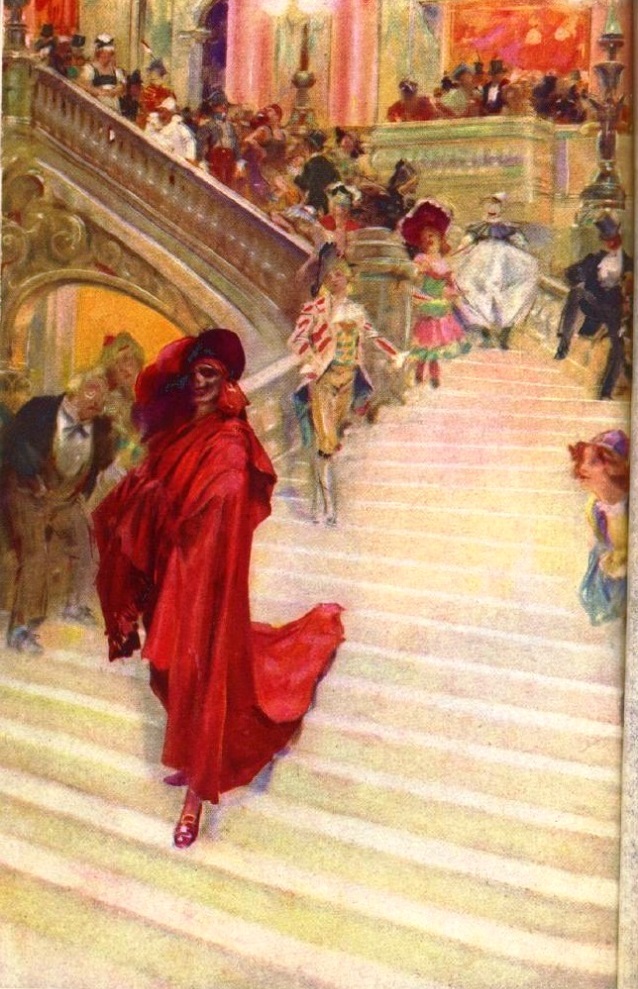
I give you the Phantom of the Opera, from Gaston Leroux’s novel all the way through Andrew Lloyd Webber’s version. The Phantom is obsessed with soprano Christine and wants her for his own. He’s manipulative, strangles people with his Punjab lasso, and drops a chandelier onto the stage at the Paris Opera. Still, I’m rooting for him instead of that insipid good guy Raoul, the Vicomte. Really, Christine, he has a title and money, but you’ll be bored within a year. The guy who wears the mask is far more interesting. Sings better, too.
The flawed characters are the ones that make stories interesting. Think Sam Spade, who has an affair with his partner’s wife. Sherlock Holmes, with all his maddening quirks. Edward Rochester in Jane Eyre. He proposes to Jane while his crazy wife is locked up in the attic. Bigamy—now, there’s a bad boy.
I’m working on a historical novel about the Lincoln County War in New Mexico. Among the major players in that conflict—Billy the Kid. Talk about the quintessential bad boy. It’s been nearly 150 years since Billy blazed across the scene, but he still fascinates. He was not dark and damn-your-eyes—most accounts describe him as slight of build, fair, with blue eyes. He definitely had the don’t-mess-with-me attitude. He killed people, rustled cattle and horses, and primary sources indicate he was loyal to his friends, polite to ladies and enjoyed dancing at local get-togethers. I’m having a ball writing about him.
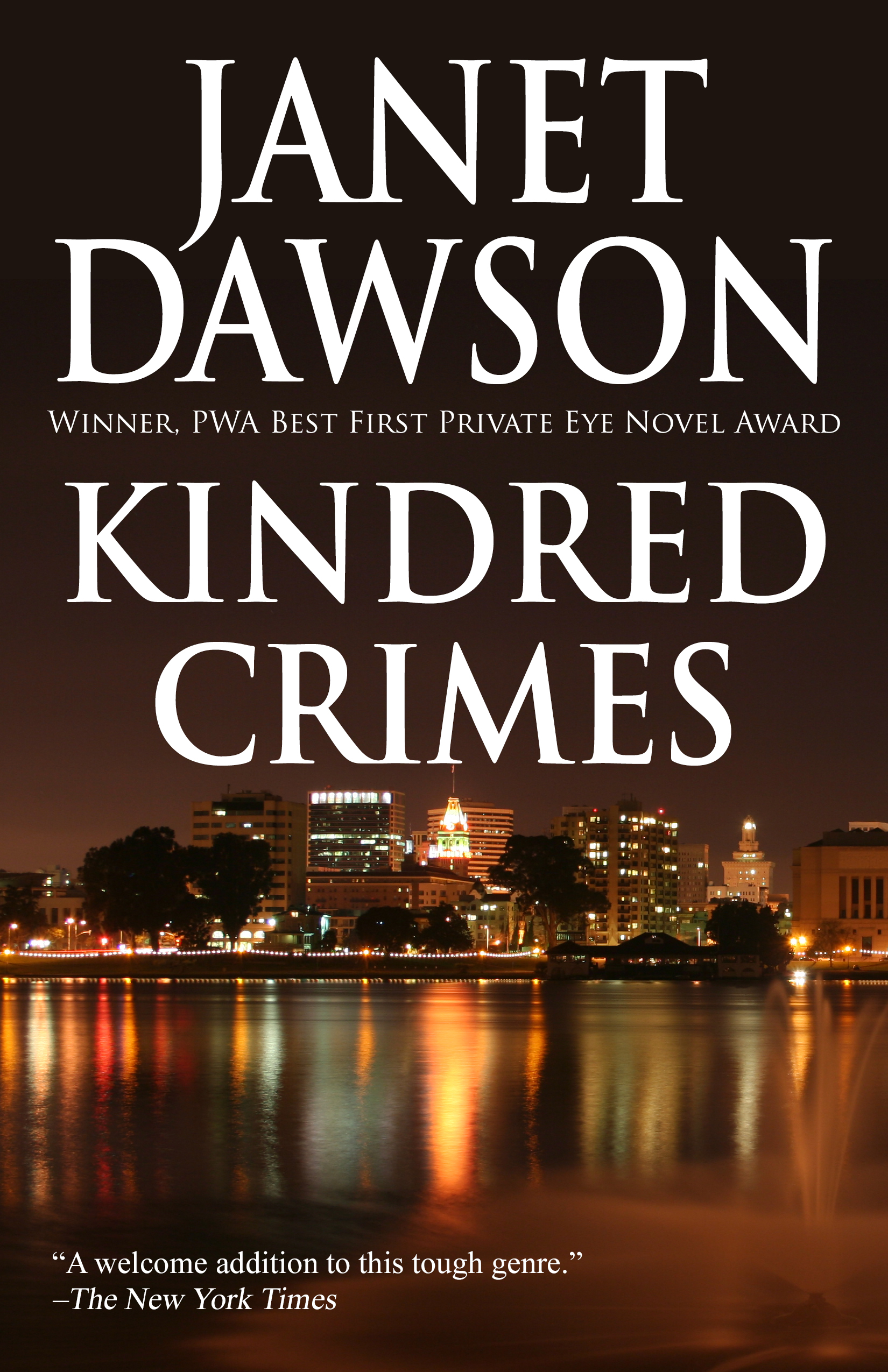
In Kindred Crimes, the first in my Jeri Howard series, there’s Mark Willis, an ex-con who did time for murder. Jeri knew him briefly in high school. Working on a case, she seeks him out.
Now life had aged him for real, streaking gray through his dark hair, etching lines at his eyes and mouth. There was something else, despite his grin and the flirtatious glint in those blue eyes. Something dangerous, a knife edge honed by twelve years in prison.
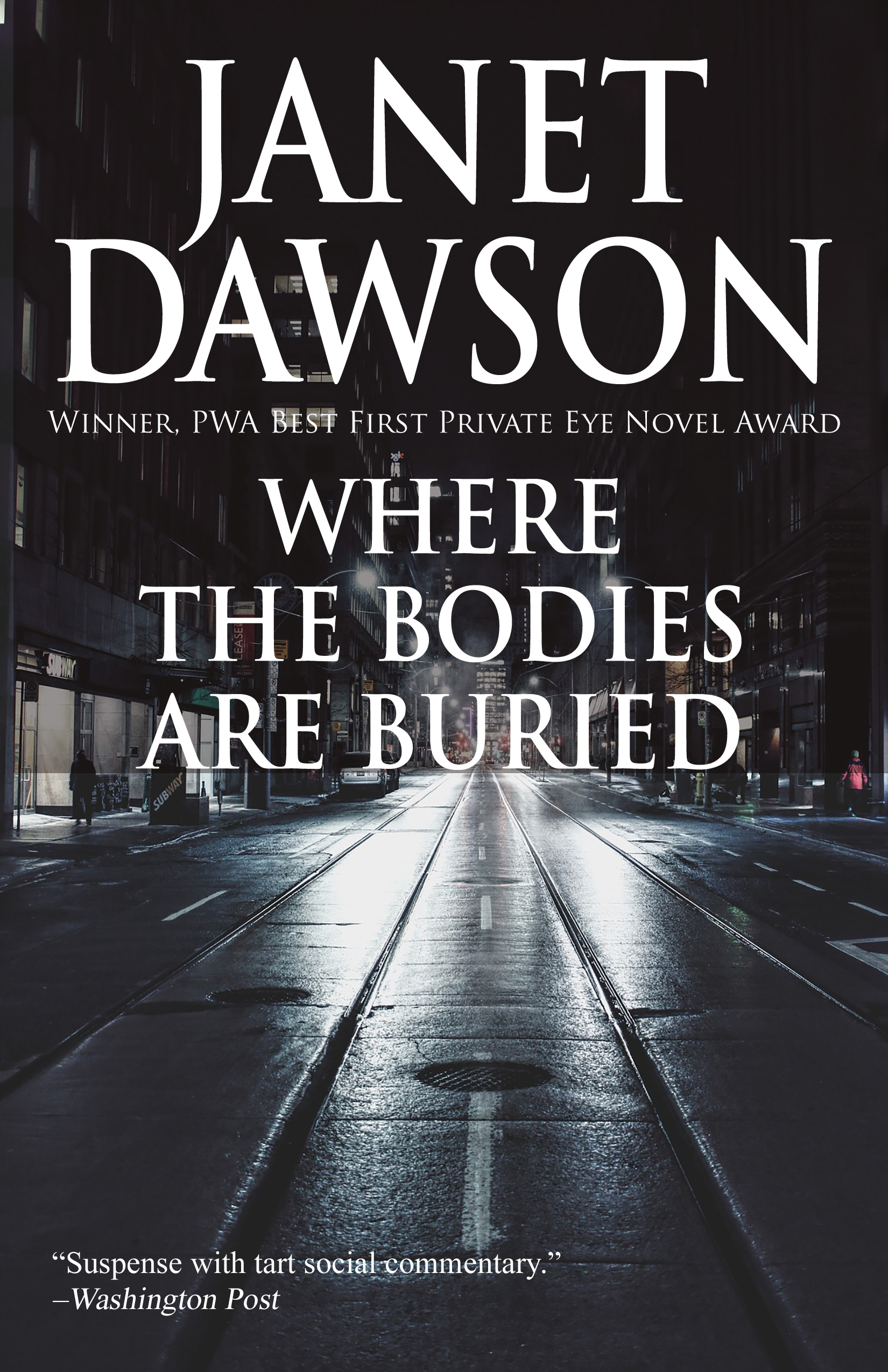
In a later Jeri Howard novel, Where the Bodies are Buried, Jeri goes undercover at the corporate office of a local company. She encounters David Vanitzky, who calls himself “a coldhearted, corporate son of a bitch.” He’s cocky, self-assured, and tells Jeri he’s the man with the shovel, the one who knows where the bodies are buried.
I had fun with a scene at the Oakland ferry terminal, where they don’t want someone to see them. David makes sure that their faces are hidden by grabbing Jeri and kissing her.
He had a soft mouth for such a hard case. I kissed him back, feeling a surge of guilty pleasure. I hated to admit it, but David Vanitzky was bad-boy sexy. The lure of the guy with the dangerous smile was, for me, somehow more attractive than the safe guy next door.
I put both hands firmly on David’s shoulders and pushed him away. . . . “You enjoyed that way too much.”
He grinned at me, unrepentant, like a cat who’d had too much cream and figured he deserved it. “So did you, though probably not as much as I did. And you’ll never admit it.”
I liked David so much he puts in an appearance in the next book, A Killing at the Track. He likes to gamble on horse races. Are you surprised?
So, here’s to the bad boys. I enjoy writing about them and I hope you enjoy reading their adventures.







 Ladies of Mystery
You must be logged in to post a comment.