Guest Blogger – Lois Winston

Killing Two Birds with One Stone

By Lois Winston

When I began writing A Sew Deadly Cruise, the ninth book in my Anastasia Pollack Crafting Mystery Series, I set myself two separate tasks. First, I thought it was high time I gave readers some additional background about Zachary Barnes, Anastasia’s love interest. Zack is introduced in Assault with a Deadly Glue Gun, the first book in the series, as Anastasia’s new tenant. A photojournalist, he’s looking to move from Manhattan to a quieter location in the suburbs where he can work in his darkroom without crazy neighbors suspecting he’s running a meth lab out of his apartment. The apartment above Anastasia’s garage provides the perfect location for him.

Almost immediately Anastasia suspects Zack’s career as a photojournalist is cover for a more covert government gig with one of the alphabet agencies. After all, when he’s not traveling back and forth to Washington, D.C., he’s flying off to questionable locations full of political and social unrest. Not to mention, he’s got a badass gun! Was he really photographing lemurs and pochards in Madagascar, or is he there for other reasons?

Of course, Zack denies he’s a spy, but wouldn’t any spy deny he’s a spy? So, is he, or isn’t he? Neither Anastasia nor my readers know at this point. Other than mentioning Zack’s brief marriage twenty years earlier, I’ve never delved further into his background. This all changes in A Sew Deadly Cruise when I finally reveal more about Zack’s history—or at least a substantial part of it.

In addition, for some time now I’ve been itching to write a locked-room mystery. A year ago, while on a cruise up to Canada with my husband—pre-pandemic—I began plotting a murder on a cruise ship, an ideal location for a locked-room mystery. However, to write a truly locked-room mystery, I needed to find a reason to keep the ship’s passengers from disembarking at any scheduled ports of call. Covid-19 hit as I was writing the book, but I certainly wasn’t going to use a pandemic or even an outbreak of norovirus, no matter how common they are on cruise ships.

How would Anastasia investigate a murder if passengers were all confined to their rooms due to illness? And really, who wants to read a humorous cozy mystery with characters suffering from gastrointestinal issues? Where’s the humor in that? Any reader with a weak stomach would be running for the porcelain throne!

I was at a point in my plot where I had to make a major decision about the story. Since I really, really wanted to keep my passengers stuck on the ship, I started hunting around the Internet for stories about stranded cruise liners, searching for a plausible excuse to keep the ship from being allowed to dock at any of its scheduled ports. Of course, I’m going to keep you in suspense, but I did find the perfect solution for keeping everyone onboard the ship but not confined to their cabins due to illness.

A Sew Deadly Cruise
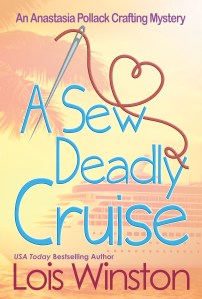
An Anastasia Pollack Crafting Mystery, Book 9

Life is looking up for magazine crafts editor Anastasia Pollack. Newly engaged, she and photojournalist fiancé Zack Barnes are on a winter cruise with her family, compliments of a Christmas gift from her half-brother-in-law. Son Alex’s girlfriend and her father have also joined them. Shortly after boarding the ship, Anastasia is approached by a man with an unusual interest in her engagement ring. When she tells Zack of her encounter, he suggests the man might be a jewel thief scouting for his next mark. But before Anastasia can point the man out to Zack, the would-be thief approaches him, revealing his true motivation. Long-buried secrets now threaten the well-being of everyone Anastasia holds dear. And that’s before the first dead body turns up.

Craft projects included.

Buy Links

Amazon: https://amzn.to/3fwHR7X

Kobo: https://www.kobo.com/us/en/ebook/a-sew-deadly-cruise

Nook: https://www.barnesandnoble.com/w/a-sew-deadly-cruise-lois-winston/1137427499?ean=2940162697930

Apple iBooks: https://books.apple.com/us/book/a-sew-deadly-cruise/id1526052822

USA Today bestselling and award-winning author Lois Winston writes mystery, romance, romantic suspense, chick lit, women’s fiction, children’s chapter books, and nonfiction under her own name and her Emma Carlyle pen name. Kirkus Reviews dubbed her critically acclaimed Anastasia Pollack Crafting Mystery series, “North Jersey’s more mature answer to Stephanie Plum.” In addition, Lois is a former literary agent and an award-winning craft and needlework designer who often draws much of her source material for both her characters and plots from her experiences in the crafts industry.

Website: www.loiswinston.com

Newsletter sign-up: https://app.mailerlite.com/webforms/landing/z1z1u5

Killer Crafts & Crafty Killers blog: www.anastasiapollack.blogspot.com

Pinterest: www.pinterest.com/anasleuth

Twitter: https://twitter.com/Anasleuth

Goodreads: https://www.goodreads.com/author/show/722763.Lois_Winston
Bookbub: https://www.bookbub.com/authors/lois-winston

My Mentor

Reading Susan Oleksiw’s post about writing mentors made me know I had to write about mine–Willma Gore.

I met Willma when I moved to Springville and joined a Porterville writing group. (I’ve belonged to this same group since 1981 though the members have changed through the years.) Willma had many articles published in West Ways magazine, Guideposts, farm journals and many other publications.

During our critique group meetings , she pointed out many ways for each of us not so well-published writers to make what we were working on better. New people joined the group, others dropped out, but Willma and I remained. I learned so much from her such as how to better handle point-of-view, making the setting real, creating believable characters, dialogue that moved the plot along and revealed character, using sounds, smells, taste, touch as well as what things and people looked like, and so much more.

We became good friends and traveling companions as we attended various writing conferences. She eventually moved to the coast where I visited her when I attended various conferences there. Time passed, we both grew older, and she once again moved, this time to be near a son in Sedona Arizona. I was able to visit her several times and sat in on a couple of her regular writing classes where she was continuing to teach writing skills to other aspiring authors.

Willma is now in her late nineties and living in an assisted living facility, where she still holds weekly writing classes. We still keep in touch via email and she’s one of my biggest fans, always reading my latest book.

I owe so much to Willma, not only for what she taught me, but also for a wonderful and long friendship.

Marilyn

Writers and Our Mentors

Over the last few weeks I’ve come across more than one article on writers and their influences. Every writer has one person we consider a mentor whether we acknowledge them as such or not. We usually think about mentors as the person who stands over us, and guides us in negotiating the world as it appears to a beginner. But in writing, the influence is both more subtle and more complicated.

James Crumley, like many others, thinks of Raymond Chandler as his lamp on the highway of narration, and William Zinsser thinks of E. B. White and his light tone before he begins work. R. V. Raman grew up reading Agatha Christie, Sherlock Holmes, and other writers of the Golden Age, which spurred his longing to write a traditional mystery set in India. Dorothea Brande talks about influences in more specific terms.

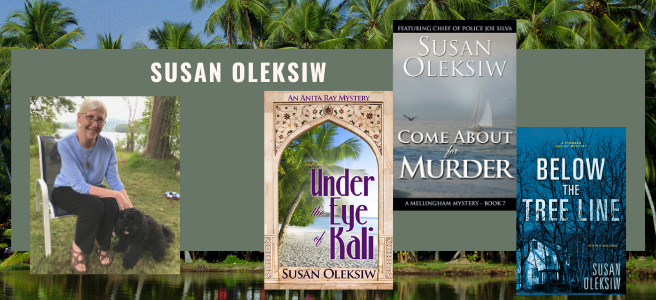
After warning the writer against imitating others in Becoming a Writer, she suggests the beginner analyze her work for its weaknesses and then seek out those who have the skills she lacks. If your dialogue is wooden or uninteresting, pick up a book by a writer known for riveting, revealing dialogue, and discover that no two people speak exactly alike. The distinction is more than the occasional vocabulary item, and a good dialogue will challenge the reader. I thought about her advice when I began working on Below the Tree Line: A Pioneer Mystery, which is set in a rural area quite different from where I live though I know it fairly well. My love of the traditional mystery, by writers such as Christie, Ngaio Marsh, and others, should be obvious. But others also played a role.

Although many writers spend time setting a scene in the mountains or along the ocean, few use it as a character as well as a now-forgotten English writer, P.M. Hubbard. Published in the 1960s and 1970s, he often set his stories in a natural world of both beauty and danger. His final scenes of The Quiet River have stayed with me over the years, a reminder of how powerful nature can be not only in shaping a story by challenging characters but also by undermining their civilized veneer, and washing away illusions of control and safety.

No story or novel is written today without influence from other fiction even if the story line is based on a true story. When I think of The Scarlet Letter, I wonder if Hawthorne was thinking of Edgar Allan Poe, whose crime tales and other work he admired. This classic novel reads to me as an early crime novel, with Chillingworth, the outraged husband, appearing as a secret sleuth out for revenge. He investigates, zeroes in on a suspicious situation, and moves closer to a suspect, driving this man further into despair. I’m not the first one to have entertained this idea. I just like the sense of writers working in conversation with others, learning from each other and engaging in a dialogue with our predecessors in our narratives.

The Art of Watching and Listening

Early on, two things shaped me and, I suspect, destined me to write. One was my birth, and the second the mumps.

Where I learned to watch!

Watching and remembering. So—birth. It was a dark, stormy day from all accounts—lightning everywhere on the Illinois plain. I was breach and blue. The doctors told my parents to watch my early development, concerned about brain damage. For sixteen months, I proceeded to scare my parents witless. Until one day, bored and thirsty, I stood up, walked into the kitchen, and asked for a drink of water, as in spoke in a sentence—all firsts. My mother dropped the glass in her hand. I watched it fall and shatter.

I had sixteen whole months to loll around and observe. Sixteen months to make sure when I stood, I was ready to speak up for myself. Yes, I sat wherever I was set. But I had fun, kept my own counsel, didn’t look stupid crawling around on the floor making silly slurpy, meaningless sounds. As a result, my memories begin well before my first birthday. When I was six months old, I watched my sister run away from home, her belongings strapped to the back of her tricycle. Frankly, I was glad to see her go. She teased me—a lot.

Since then, I have never stopped studying people, animals, trees, the sky, and….

Listening and hearing. The mumps. I lost the hearing in one ear. It never bothered me. I think because I was so young. It’s a U-shaped loss, so I can hear dog-whistles and stealthy sounds in that ear, just not anything anyone says. It’s handy when you’re in a house full of snorers. Trust me.

Hearing in a crowded room is easy for other people because they don’t have to sift a voice from the background jabber. They can look around the room, check to see if any other conversations are as lively. But they may miss the raised eyebrows, pursed lips, quick smiles, or rolled eyes that are the reveal. To hear, I cock my good ear towards the speaker and lean into a conversation. I listen to cadence, tone, emotion, hesitations. Sound is precious to me.

Employing them. So, the ability to sit quietly, listen, and watch undistracted has to be an asset for a writer. At least, I keep telling myself that. For instance, I’m sure we’ve all imagined something sinister afloat while relaxing at a favorite place. If not, I highly recommend it.

You’re at the beach. A man scrunching through the squeaky sand catches your eye. He is rushing toward a flight of stairs, his pant legs flapping against his shins, his hair ruffling in the onshore breeze. Overhead, clouds bunch, dark in their bellies, readying to rain. Water thunders against rocks, spuming into the air. A kestrel screeches as it rides the thermals. Its beady-eyes locked on the rocks below. Floating in kelp, an otter wonders—just wonders, like they do, and watches a body rocking, cradled in a tidal pool.

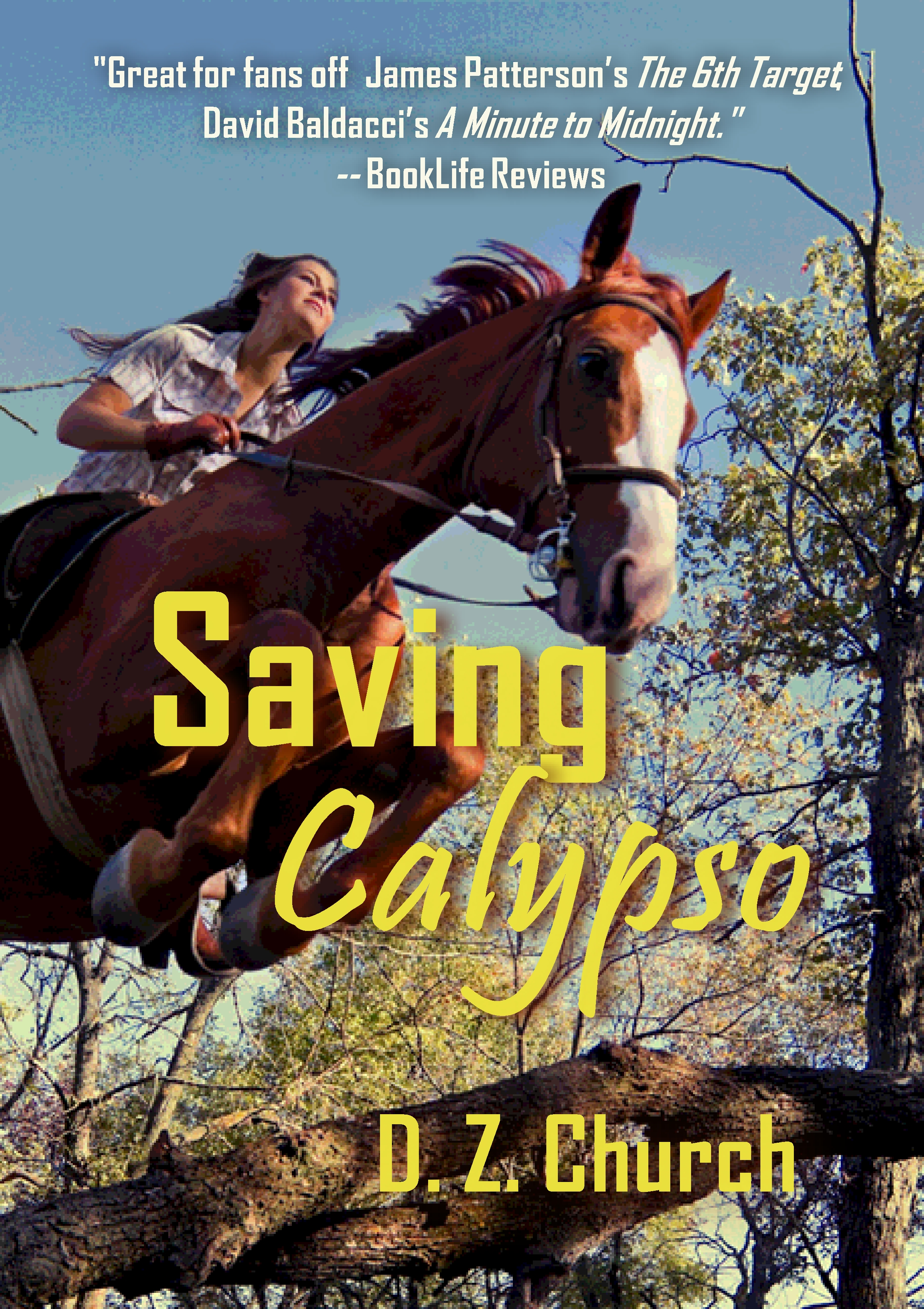
You’re in the mountains.My book Saving Calypso takes place in the High Sierra, a place I adore:

A redwood, a hundred and fifty feet of emotion, tossed its head. A hawk flew. A rabbit beat-feet across the pasture toward the newly turned dirt for this year’s vegetable garden. A shadow cruised at the edge of the timber then cut across the open field. Rafe Bolt slapped a brace of rabbits on the porch boards at Jessie’s feet. She put her hands behind her head and sighed at life’s perfection.

Words as motion, sound, feeling, life

Next time something unusual catches your eye, stop, watch, and listen as though you’re half-deaf and were a bit slow to stand, walk, and talk. It will be time well spent.

October by Karen Shughart

The leaves have turned, some fallen, and walking through the village our feet trample upon a carpet of brilliant colors. Stacks of pumpkins: pale green, yellow, orange, and white, are artfully arranged on steps leading up to front porches or peek out among decaying flowers. Wreaths rimmed with leaves of every shape and color, small green and white gourds, slender wheat stalks and delicate twigs adorn doorways, some homemade; others purchased at local craft shows.    Artfully placed wicker or galvanized metal baskets filled with pinecones are redolent with cinnamon and cloves.

On a cool morning, just after the rising of the sun, small herds of deer congregate in yards, nibbling away at their morning libations, white-tipped tails pointed straight up, in case of danger. But in our village there’s no need to fret;  instead early walkers pull out cell-phone cameras to capture the moment and the deer, with their soulful eyes alert, continue their task once they realize they are safe.

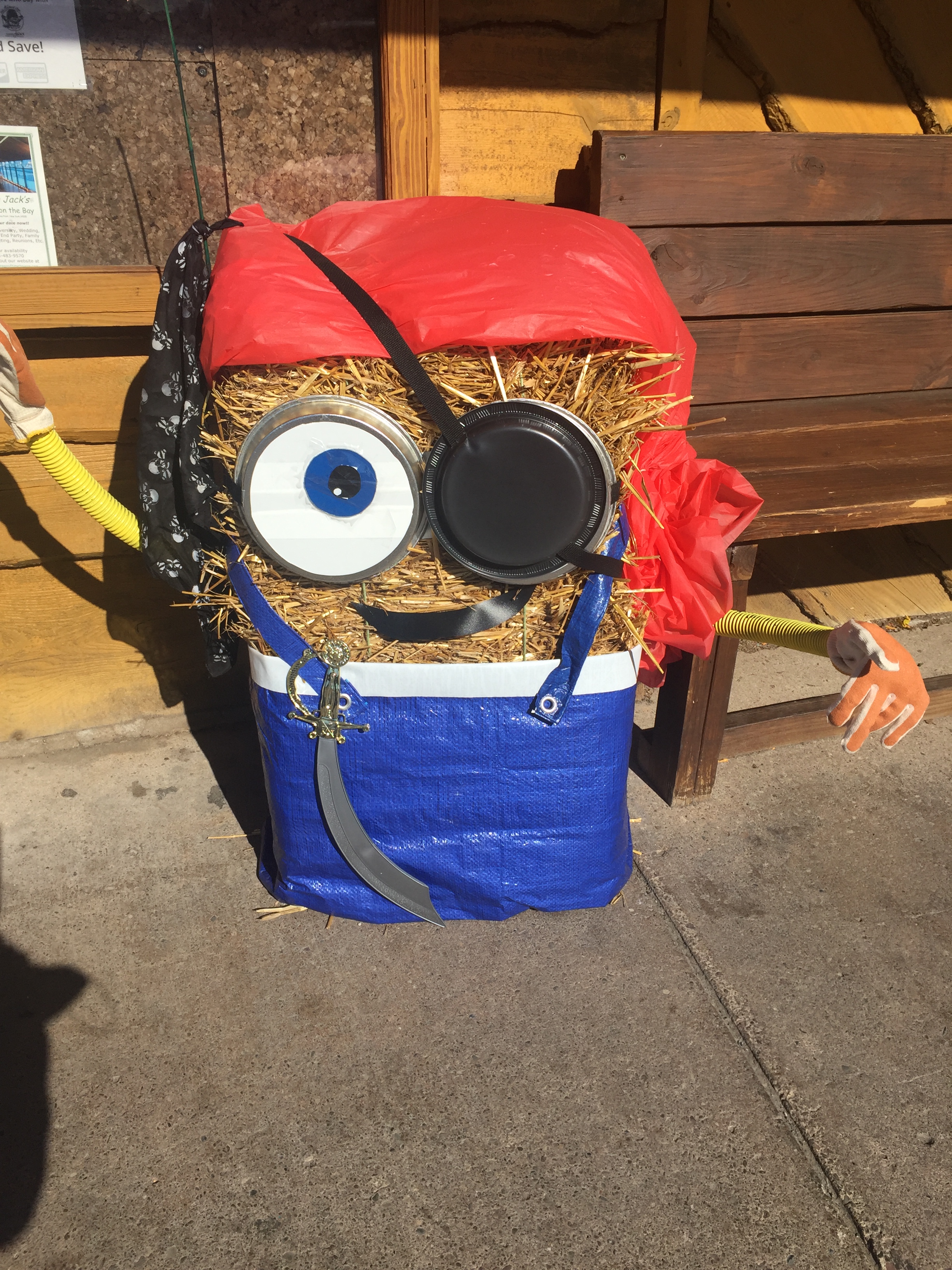
A block away our neighbors turn their yard into a ghoulish graveyard with tombstones covered in spidery cobwebs indicating those who are buried there:  Barry DaLive; Emma Goner; Ima Rotten, Ben Better, Anita Moore-Tishan, Berry D. Hatchet. Here and there, skeletons sway from the ghoulish branches of trees, some with limbs now barren, and you’ll see hay bales made to look like Minions, courtesy of the Neighborhood Association.

The screech owls, quiet during most of the summer and through September, now make their presence known. Their eerie sounds, terrifying at best, can be heard after most have of us have gone to bed, reminding us that something, soon, will be afoot. It’s called Halloween.

Halloween, here in our village on the south shore of Lake Ontario, when the nights are cold and an occasional early snowfall adds to the mood, is really a season. You can feel and see its presence starting not too long after Labor Day. Everyone is excited about Halloween: the children, most of all, and their parents who help them with their costumes, but also adults whose children have grown. There used to be house parties, and parties at restaurants and pubs, a time to let loose, enjoy the season, some folks in costume; others, not. This year will be different.

Here the celebration of Halloween is a throwback to earlier and safer times. Parents accompany the younger ones, who knock on our door yelling “trick or treat”, then reach out with their plastic pumpkins, open at the top, for the treats. It’s safe enough for the older ones to travel by themselves in groups. In our village, we all look after them. Well-trained in niceties, they remember to say “thank-you”, tiny ones urged on by their elders lest they forget. People in this village understand the concept of gratitude.

October is a time of transition. With its deep brilliancy it reminds us that slowly creeping stealthily in behind it is winter, a time of white silence and shadows.