Five Things: Staying True in a Semi-Cozy Historical Mystery Series

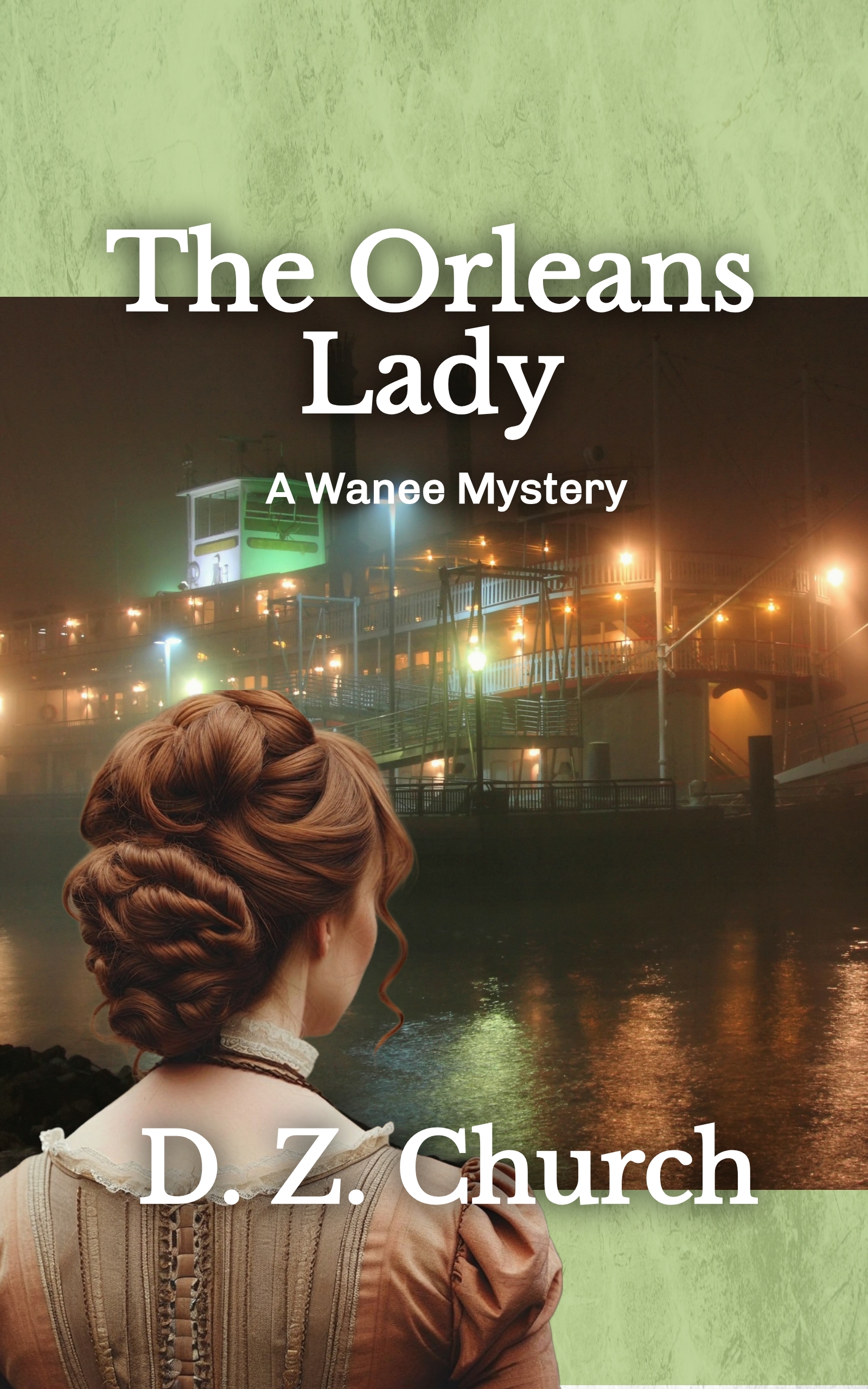
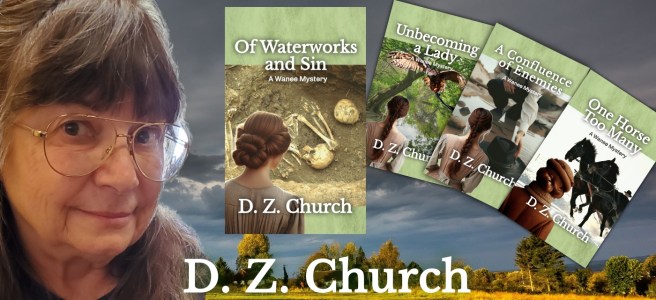
I haven’t posted five things in a while. These five issues (plus the bonus) pertain to the promises I made to myself when I conceived the idea for the Wanee Mysteries. And how that all worked out.

  1. Main Character. When I think of the detectives (amateur and otherwise) that I love, they all have one thing in common. The detectives are not observers, but are affected and changed by what they see. They grow, they learn, they change. The secret, I think, is to create characters that are true to their own code, their education, and their upbringing, then allow them to grow with each outing, even if that means abandoning their basic precepts while bringing the reader along, knowingly or un. For instance, in “One Horse Too Many”, Doc Shaw, raised by abolitionists, discovers he is prejudiced.
  2. Aging. One of my pet peeves as a reader is a series where no one ages. Come on! Am I to believe all that death and mystery happened in one place in one year? When I planned the Wanee Mysteries, I intended that the main protagonist, Cora Countryman, would begin as a girl unwilling to lose her short skirt and braid and grow into a fearless woman. I set my sights on each book occurring a minimum of three months after the book before, since one of my other goals was to have my stories unfold in a booming 1870s prairie town. To demonstrate its growth and incorporate the changes, both human and industrial, time could not be static, nor could people’s ages. So far, I’ve stuck to this goal, for why it is so important, read on.
  3. Daily life. One of my goals was to have those who populate Wanee, Illinois, provide a backdrop, depth and fun to the mysteries. That means the characters, subcharacters, and even the Methodist owl have lives that include romance, marriage, babies, death, and everything in between. As a consequence, Wanee is rich in Cora’s lifelong friends, one pregnant, one attempting to forge a new life, a young doctor challenged daily, a man attempting to redefine himself, and old friends living their lives. Two of the above are suitors, only one of whom can win. Or maybe, none. I pray their lives help define the period, the mores, small town life, and Cora. A reviewer notes: “I love Cora and all the surrounding characters. The voice is so solid, and the details are so vivid that I am transported back to the small, Midwest town circa 1876 every time.”
  4. The canvas. I set out to build a town grappling with growth and change as the backdrop for my stories. When the mysteries start, Wanee is a pretty sleepy place, or so everyone thinks. Yet the 1870s were anything but. The railroad opened up the country, and towns built water systems, bringing indoor bathrooms and electricity to the bigger cities. Small telephone companies sprang up, coal-fired boiler furnaces appeared, and people roamed, including hobos who stopped long enough to make money before moving on. Politics were raw as people continued to deal with the fallout of the Civil War. One reviewer notes: “Church populates the town with an array of fascinating characters and shows the upheaval of a changing society, as well as the lingering trauma of the Civil War.” So, I guess I can give myself a star for number 4.
  5. Point of View. I envisioned that Cora Countryman would always tell the tale from her point of view. Frankly, I struggle with maintaining this. The reason is that I created three other characters who could easily carry any story and are often at the heart of big doings, leaving Cora to discover details from them. The decision to begin “A Confluence of Enemies” from Sebastian Kanady’s point of view broke my rule right out of the gate. But it was needed to make the book work. So, I guess the rule is, it’s Cora’s way unless it isn’t. I think in the future there may be more isn’t. But, then, again, it won’t be her story. Darn!
  6. Bonus: To dangle or not to dangle. Let this bit of wisdom be a warning to us all. A reviewer writes: “This could have been the beginning of a great new series (in my humble opinion) if not for that bomb on the last page. Does it all go down the drain for a few more cents in future sales?” The truly unfortunate part of this is, if the reader had scanned the first pages of the next book, he would have discovered that his presumption was wrong. I guess it is my fault for ending with a joke between friends that was never intended as a dangle. I could always eliminate the offending bits, maybe I should? Accepting all thoughts on this, so feel free to comment.

Read about me, find my books, and sign up for my newsletter at https://dzchurch.com.

Three yogis, two cops, and one damn cute dog

by donalee Moulton

Everything that happens in a yoga studio is not Zen. Sometimes it’s grand larceny. Three yogis, two cops, and one damn cute dog join forces to discover who’s stolen a Patek Philippe watch from what was supposed to be a secure locker.  Time is ticking.

Ten yogis are in various stretches, twists, meditations, and yawns when Kristi walks back into the studio. She forces a smile, and the smile spreads of its own accord into her muscles, her bones, her heart. This is her sanctuary. She is at home here. The rawness she feels is still there, but it has moved to the edges now.

cover of donalee Moulton's book Bind

Today’s bind is a yogi squat. One leg is extended; the other is bent. One arm goes under the bent leg; the other goes around the back until they meet. In theory. Lexie can’t wait until this month is over, and it’s only day three. Bhodi looks around the room to see if anyone else has completed the bind. Surprisingly, Honey seems to have easily maintained the squat and the bind. Bonnie begins the countdown until she can come out of the contortion, which for her is a little squat and a hint of a bind.

Kristi takes this opportunity to explain the benefits of binds. “These poses allow muscles to release, relax, and open. You can go deeper. You can also focus on alignment and flexibility while building strength.” She breathes in.

“Dear God,” thinks Lexie, “there’s more.”

“If you make her stop,” Bonnie says to her higher spirit, “I will give you my first born.”

Kristi continues to talk, and smile. “Remember to breathe when you’re in the bind. Don’t tighten. And come out of the bind if you feel any pain. Go to your edge, but no further.”

Archina isn’t sure where her edge is, but she fears she left it behind several minutes ago. Woo Woo unbinds. She believes in the mind, body, spirit philosophy of yoga, but enough of this shit.

If it’s one thing Kristi knows, it’s how to read a room full of yogis. The edge has been reached. She tells everyone to stand up, give themselves a hug, and as a special treat, this morning there will be an extended savasana that includes a meditation. (Kristi always has a guided meditation on her phone.) The room smiles, even Bhodi. Eleven bodies move from the vertical to the horizontal. Archina grabs a blanket; Lexie puts a bolster under her knees; Kevin, the newest member of the group, reaches for his socks.

The Dalai Lama is midway through his 13-minute meditation on the disturbed mind when the studio door opens. Twelve faces turn to look at the human who belongs to the shoes that just clomped into their zen-like state. All twelve agree, zen is overrated. Standing at the entranceway to the studio is a 6’2” man with ripped muscles, ebony skin, and a three-day stubble. “He can bind with me any time he wants,” Kevin thinks.

It takes the intruder less than a second to realize he has interrupted the class at an inopportune time. “I’m so sorry,” he says. “I thought class was over.”

“We’re running a little late,” says Kristi in a voice the class has not heard before.

“Please continue,” says Ripped. “I will come back.”

“Too late now,” says Bhodi. He gets the evil eye from most of the class.

“How can we help?” says Kristi introducing herself.

Ripped steps forward, hand extended. “My name is Michael …”

Before he can continue, Woo Woo interjects. “No, it isn’t. Your name is Lewis.”

The demi-god looks at her in surprise. He’s not alone. The whole class stares at Woo Woo.

“I’m so sorry,” Woo Woo says turning a deep magenta. “I don’t know why I said that.” But she does. Sometimes a thought, an image, a tickertape runs through Woo Woo’s mind. She knows it’s a message, and she usually tries to convey it. On this occasion, she wishes she hadn’t.

Michael turns back to Kristi, leader of the pack. “Terrell. Michael Terrell.”

“Did you want to join the class?” Bhodi asks. The snark is obvious.

“Please,” thinks Kevin. “Please join.”

Terrell smiles. “It’s on my bucket list, but today I’m here for a less pleasant reason. I’m a detective with the Halifax Police Department. I’m looking into a watch that seems to have gone missing from the gym.”

Kristi tries to control her breathing. No one else tries to control anything. Lexie’s eyes fly wide open. Charlene gasps. Bonnie recoils.

Honey farts.

Guest Blogger ~ Laury A. Egan

Our guest Laury A. Egan answered interview questions.

1. Why you write the genre you do?

Good question! Though my dominant genre is psychological suspense/crime fiction, I also have written and published literary titles, comedy, romance, and a few children’s stories. In other words, I write the book that comes to me rather than focus on specific genres. Psychological suspense is indeed a favorite, however, and was originally inspired by Patricia Highsmith’s books in which she usually features a sociopath and does so with gleeful enthusiasm. (It is my suspicion that she herself fell into this sociopathic category). I also find that “bad guys” make for fascinating studies and Fair Haven has its share and some “bad girls” as well.

2. How did you came up with the mystery/murder/premise in the book you are promoting?

Actually, this was my first novel, one I began when I bought my first computer in the mid-80s. I made some headway then, but life got in the way as it often does (actually a new romantic relationship and a house move), and I delayed work for a few years. When the relationship flamed out in spectacular fashion, I moved nearer my parents on the coast of New Jersey, and though still working full time as a book designer and photographer, I picked up Fair Haven and finished a first draft. But once again life intruded so the manuscript was shelved into the closet. Finally, I began another novel, Jenny Kidd, inspired by Highsmith and set in Venice, and thus began a series of new books until my new and delightful publisher, Andrew May of Spectrum Books in London, began accepting my manuscripts at a furious pace, publishing four books in thirteen months. Once he cleared my desk and closets, I looked around and saw Fair Haven, but oh, my, it was a mess! Plot errors, amateur formatting, and tons of mistakes. It took me forever to whip this complicated, yet intriguing, novel into shape…which hopefully I did!  

3. How you came up with the main character in your book or series?

The cast of Fair Haven is generously large, but probably the most significant character is the forensic photographer, Chris Clarke, a handsome woman who is involved with Kate, a primary suspect in the murder. Because of my own background as a professional photographer, it was an easy task to handle the details of Chris’ work. She also lives by the river in the neighboring town of Fair Haven, and owns a sailboat, which I also did in my younger days. Chris has an obstreperous beagle who rules the house—Cagney is modeled on my own dog. He often steals the show in the novel, so hound and dog lovers should enjoy his escapades.

4. Any interesting research you did for the book?

Originally, I thought the local police force would oversee the murder investigation, which was one of the huge errors I committed during the first stages of writing. In fact, though they do some coordination, interviews, etc., the Monmouth County’s Major Crimes Bureau and the prosecutor’s office are in charge of everything, including gathering forensic evidence. I interviewed a former Fair Haven policeman as well as a retired director of the county’s Economic Crime Unit, both of whom set me straight on a number of misconceptions. In addition, after a few glasses of wine, a friend, a financial analyst, grinned and answered my question about how a broker would commit fraud, cheerfully providing details about the Cayman Islands, offshore accounts, and the like.

5. A post on your process of writing a mystery book.

As mentioned above, this book took a long and arduous journey from its inception to its submission to my publisher. Quite honestly, I never thought the manuscript was good enough to publish, but there was something charming about the plot and its characters that kept drawing me in. I also loved the irony of a murder in the quiet, serene village of Fair Haven. After hundreds of hours of revision, I hope this murder mystery will be an enjoyable read, one that harkens to some British series such as Midsomer Murders in that the residents of small towns are the focus even more than the crime. Despite this, have fun figuring out “who done it!”

Fair Haven: A picturesque riverside town. A safe, friendly place. And then, one summer afternoon in 1994, Sally Ann Shaffer is electrocuted in her hot tub. Who did it? One of her many lovers? Her husband? A thief? A jealous colleague at her tennis club? The town is suddenly embroiled in suspicion, interpersonal conflict, blackmail, fraud, and murder. 

“When is a murder mystery more than a who-done-it? Answer: When it is written by Laury Egan. This wonderful mystery kept me en-tranced, as her characters drug me around the town of Fair Haven and through their inter-woven lives. In an ever more complex web of intrigue, jealousy, hatred and lust the plot was revealed. Though its difficult to write a review of a murder mystery without giving away too much, I couldn’t figure it out, even with some well-placed clues, until the end and then I was amazed by the reveal. You will be too.”

—CA Farlow, author of The Paris Contagion

Amazon: https://geni.us/fairhaven Published by Enigma Books, an imprint of Spectrum Books, London

Laury A. Egan is the author of fifteen novels, a story collection (with a new collection, Contrary: Stories and a Play, due May 2025), and four volumes of poetry. Her psychological suspense/crime fiction novels are: Jack & I, The Psychologist’s Shadow, Doublecrossed, The Ungodly Hour, A Bittersweet Tale, and Jenny Kidd (a revised edition will be released October 18, 2025). Ninety of her stories and poems have appeared in literary journals and anthologies. She is a reviewer for The New York Journal of Books, a graduate of Carnegie Mellon University, and a 2024 recipient of a New Jersey State Council on the Arts Individual Artist Award in prose. Website: www.lauryaegan.com

LauryA.Egan@EganLaury

https://www.facebook.com/laury.egan/

https://www.instagram.com/laurya.egan/

https://bsky.app/profile/lauryaegan.bsky.social

https://www.amazon.com/s?k=Laury+A.+Egan

https://www.goodreads.com/author/show/4090464.Laury_A_Egan

https://www.linkedin.com/in/laury-a-egan-09096b3/ http://www.lauryaeganblog.wordpress.com/

Research: How Much is Too Much?

Recently, I picked up a book by a well-known author whose books I like. The book was one of a series and I was so excited to begin reading, but after a couple pages I realized I wasn’t enjoying the story. The author included so much information about the different agencies her characters were working for that it read like a textbook, not a novel, and I found myself getting bored and having trouble reading on in the book. And that wasn’t the first time I’d run into that. Another author whose books I love is doing the same thing. There are probably more, but these two stood out for me.

I know that a lot of people watch cop shows and true crime shows on TV. It has become very popular in the last few years. Is this the audience these authors are thinking of when they put everything they know about certain bullets, or forensic information in their novels?

 I can’t help but wonder, are we writing nonfiction or are we writing stories? I know it’s important to do the research and get things right, but what if our readers find the facts we throw in are too much?

For me, in the case of the authors I mentioned, I wanted them to get on with the story. I wanted to delve into the story and live with the characters, and the decisions they make, not be lost in the technical jargon.

I struggle with how much research to include in my own stories.  Where is the line between too much and not enough? It’s tempting when you are fascinated by what you discover in your research to add it all to the novel, but I was taught that you need to know a lot about the subject, but you don’t necessarily need to include all your knowledge in the book.

In my current mystery/thriller, Her Last Breath, which is coming out soon, I had to research old bones and what can be learned from them. I read a lot of information on forensic anthropology that was fascinating, but only one or two lines of my research was included in my book.

Could I have gone on and on about it and told the history of forensic anthropology? Sure, but would it have added anything to my story? I didn’t feel it was needed, and I didn’t want to get bogged down in the research so I didn’t, but it was fascinating, and I could understand why an author would enjoy the research so much they felt like they needed to share it with their readers.

Are there readers who would’ve been happy to read all my research? Maybe. But I’m sure there were those like me who would’ve wanted me to get on with the story. Therein lies my dilemma. I feel it’s important to put enough information in to make your book sound authentic, but not so much that your reader feels tired or bored while reading it.

How much of your research ends up in your books? Do you feel like some authors add too much? Or do you feel like the more the merrier as the old saying goes? Send me a message and let me know.

Finding Time to Write is Hard

The rest of this month, I am home 13 days! That means every one of those days I need to put my fanny in the chair and get the next Gabriel Hawke book written. Because August is going to be hit and miss to get writing done.

I swear, each summer gets busier and busier! I was able to get more writing done when I sat all day in a swather or tractor raking hay during hay season than I do now.

As our family grows so do the family commitments as well as I’m trying to get my books seen more by actual people. I’ve found that if someone meets a writer and sees their enthusiasm for their books, the reader is more likely to purchase the book. Then if the like that first purchase they come back for more.

I started this month with an in-person event that I’ve not attended before. It was a Renaissance Faire (loosely). I sold 26 books over two days. All but one of the sales were to new to me readers. I’m hoping they will enjoy what they purchased and come back for more next year, as my following has done for the Sumpter Flea Market each year.

The rest of this month I will be attending Miner’s Jubilee in Baker City, OR, to see if it will be something to do next summer, and I’m attending the Tamkaliks Powwow in Wallowa, OR. I’ve been attending this for several years to help me better see my characters and because I find it healing. The last two Mondays of the month, I’ll be judging at county fairs. That’s what makes the summer get busy for me. But I love talking to the 4-Hers and discovering their love for their projects.

When I am home, I make myself write. I have to. My readers let me know they are impatiently waiting for the next book. I can’t let them down. I’m a people pleaser. My greatest flaw. It gets me more work than I can sometimes do, but there it is. It is who I am.

I’m also mentoring two mystery writers and a friend who has been writing the same book for too long. I’m her weekly reminder to sit down in the chair and move the story forward, don’t keep making it perfect. That comes after the story is all out and waiting to be prettied.

It is these mentorships that keep me from opening the internet first thing in the morning and getting words written before I look at an email or see who liked a meme on Facebook. While I coach other writers on finding time to write, finding ways to streamline their days and writing, I follow my own guidance by making sure I’m writing and moving my story forward.

My greatest strength is that when I set my mind to something, I do it. And right now my mind is set on getting this book written this month so I can “pretty it up” next month when I’m attending a family reunion, a grandson’s wedding, judging at another county fair and state fair, and then selling my books for two days at the State Fair. Because most of those trips are on the opposite side of the state from where I live, it requires a day’s travel to and a day’s travel back. Which eats up a lot of the days in August! Half of August I’ll be away from home- 15 days to travel and attend the events.

That is why my fanny is in my chair and I’m writing! I’m halfway through the book and should get it done in the next 13 days. Yipee!

Authors, are you on a deadline this month, or do you give yourself slack in the summertime? If you’re a reader, how impatient do you get for the next book in a series?