Dealing with a Tough Topic

My latest WIP- Work In Progress-came about from two separate things my parents told me at different times. My mom was a nurse at a clinic. She commented that there were too many teenage pregnancies in the county. And years later my dad made the comment about a deacon of a church who cheated people and slept with other men’s wives.

Fast forward to now and my overactive imagination putting those two things together to come up with a murder mystery set in a small community where the pastor of a church “teaches” young women how to be good wives.

I have a secondary character whose point of view is shared in the book. She is a midwife who has brought the pastor’s offspring into the world after he sexually assaulted the teenagers and young women. The midwife tried to get the police to do something, but the charismatic pastor shined a bad light on her, and they wouldn’t listen. She is trying to keep the women’s names out of it knowing how many families and lives will be torn apart should it come out. At the same time, she wishes something would happen to the man.

And it does.

I am halfway through this book and my newest critique partner quit on me after saying the story was too dark and she didn’t like the way my main character Gabriel Hawke was acting.

Whoa!

The new CP thought I wrote cozy mystery like her. I never said I wrote cozy and had thought she would have looked up my books. I tried to look up hers, but she is a new writer. She has been giving me good thoughts and information coming into the series at book 11. But her last comments made me sit back and think about how the story is being portrayed. She said I was doing a good job with the midwife. She liked her attitude and how she was going about helping a suspect and keeping the victims from being brought public. But Hawke was too insensitive.

I have readers who say they love Hawke. I don’t want them to not like him after reading this book. Thinking long and hard about what she’d said, I realized, I was portraying the midwife how I would want someone hiding my secrets to be and I am portraying Hawke as a person out for revenge.

Stepping back, I roll things around in my head.

I know that the revenge comes from things that have happened in my past. Things I would love to have Rosa, the midwife, keep secret if she knew. But I’m instilling my revenge for being a victim into my Hawke character. While he does champion the underdog and will find justice even for a nasty piece of work as the victim, he needs to be more sensitive to the dead pastor’s victims.

And so, I spent all of last week with printed pages of my manuscript, going through and moving scenes, adding more scenes with Hawke learning from Rosa and his partner about how the victims of this man’s assaults have justice now that he is dead but need help to heal and not be put in the headlines of the local paper.  Or brought in for questioning about something that can no longer be punished.

I have to override Hawke’s need to put the last piece of the puzzle in the right place. And my need for revenge.

And though I wish my CP was willing to keep working with me, she did me a major favor by telling me how she felt about the story and my characters.

Guest Blogger ~ Valerie Nieman

Accidentally on purpose

            I sort of backed into writing mysteries.

            It’s not that I didn’t love them, at least the darker, creepier kind. Thanks to a home library of classics, I read Poe as a child and so gained acquaintance with the morbid, the gothic, and the methods of detection at a tender age. Later, I encountered Sherlock Holmes, through Basil Rathbone films and the original stories.

            But while I reveled in the clues and conundrums, I never thought I could write a mystery. How to get those clues in? How to twist a satisfactory plot?

            I first approached the genre with a novel called Blood Clay, which had the death of a child in the opening chapters but no mystery about the cause. It was a crime novel, and a study of the stranger in community, but not a whodunit.

            When I wrote To the Bones, the mystery was there from the start. A man wakes up in a pit of bones. Why is he there? Who did it? What happens when he manages to get out? Still, I didn’t think I was writing a classic mystery—more of an Appalachian folk horror novel with an environmental twist. The biggest mystery was not the man in the mine crack, but the murder of a river.

            I was lured into writing In the Lonely Backwater by the powerful voice of the main character. As soon as Maggie voiced the opening lines, I knew that I was in for a ride. And gradually the mystery, or mysteries, emerged and became clearer. I had to do a good bit of rewriting to weave in various elements, but when is that not the case?

            And Maggie herself? Well, there is a lot of her in me, or me in her, more than the usual self-identification of creator with characters. I grew up in the country and was a similarly solitary girl wandering the woods, toting around my Golden Guides to identify the rocks, insects, plants that I gathered on my treks.

            I can trace her devotion to Linnaeus and the delights of classification to my own memory of a fine high school biology teacher, and then reading the Fred Chappell story “Linnaeus Forgets,” that reawakened my interest in the Father of Taxonomy. My research, other than continued woods-wandering, included time spent at the University of North Carolina libraries with a 19th-century translation of A Tour in Lapland, Linnaeus’s fascinating diary of his early explorations and a book that comes into Maggie’s hands at a critical point.

            While the death of her beautiful cousin Charisse and the search for her killer form the backbone of the plot, the story is really a character study of a teenager struggling to shape her own life. As Chappell said in his review, “The heart of the mystery is at last (Maggie’s) own heart.”

            And the next? Maybe Maggie has more trouble….

All seventeen-year-old Maggie Warshauer wants is to leave her stifled life in Filliyaw Creek behind and head to college. An outsider at school and uncertain of her own sexual identity, Maggie longs to start again somewhere new. Inspired by a long-dead biologist’s journals, scientific-minded Maggie spends her days sailing, exploring, and categorizing life around her. But when her beautiful cousin Charisse disappears on prom night and is found dead at the marina where Maggie lives, Maggie’s plans begin to unravel. A mysterious stranger begins stalking her and a local detective on the case leaves her struggling to hold on to her secrets—her father’s alcoholism, her mother’s abandonment, a boyfriend who may or may not exist, and her own actions on prom night. As the detective gets closer to finding the truth, and Maggie’s stalker is closing in, she is forced to comes to terms with the one person who might hold the answers—herself.

Buy Links:

https://www.regalhousepublishing.com

Bookshop – https://bookshop.org/shop/ValerieNieman

B&N – https://www.barnesandnoble.com/w/in-the-lonely-backwater-valerie-nieman/1139962914

Amazon – https://www.amazon.com/s?k=Valerie+nieman&i=stripbooks&ref=nb_sb_noss

Valerie Nieman has been a reporter, farmer, sailor, teacher, and always a walker. She is the author of In the Lonely Backwater and four earlier novels, and books of short fiction and poetry. A graduate of West Virginia University and Queens University of Charlotte, she has held state and NEA fellowships.

Facebook – https://www.facebook.com/valerienieman1/

Twitter – https://twitter.com/valnieman

Instagram – https://www.instagram.com/valnieman/

Website – http://www.valnieman.com

Linked in – https://www.linkedin.com/in/valnieman/

Goodreads – https://www.goodreads.com/author/show/529629.Valerie_Nieman

Thoughts on a Book Tour

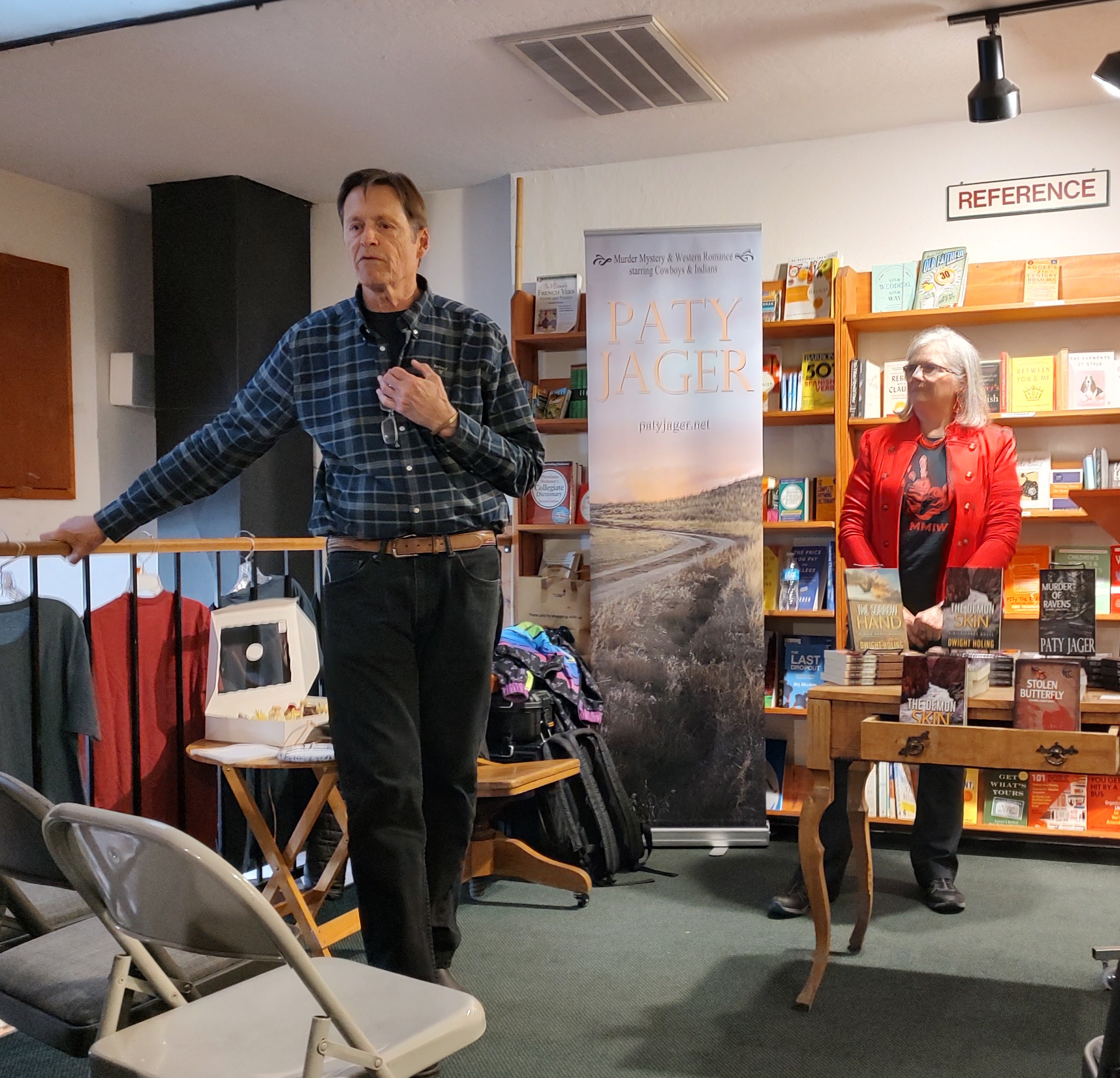
I am back home after spending last week driving around western Oregon and stopping at 5 bookstores.

Backstory: Last summer I attended a talk by author Dwight Holing at my local library. He was there talking about his series that is set in Harney County- where I live. When he was asked about how he advertised his books, and he mentioned Bookbub didn’t work well for him, I said, “Yeah, it doesn’t work well for me either.” He looked at me and said, “What genre are you?” My reply, “Same as yours.”

He asked my name and then said, “Your books stalk mine on Amazon!”

My rebuttal was “No, yours stalk mine.” We had a chuckle and he said to come talk to him after his presentation.

I did and we decided since we both write crime fiction set in Oregon with game wardens, his a federal agent and mine a state police officer, that we should team up and do something.

Dwight Holing and myself at Bloomsbury Books in Ashland, OR

Fast forward a few months and we came up with a book tour when we both had a new book out. We spent months setting up bookstores and planning to do it all in one week.

We just finished that week of visiting bookstores. After a phone conversation we’d decided to do a back and forth, “This is why I… What do you do?” format. And we had lots of encouraging comments about how well we played off one another. Then we would read from our books and take questions. It was interesting that most of the questions were from new or emerging writers. Though we did each have some fans or family at each of the stops we had.

Me talking at Grass Roots Bookstore in Corvallis, OR.

I was lucky enough to meet Sharon Dean who has been a guest of this blog. She came to our Ashland event. It was fun to meet someone in person who I have only exchanged emails with.

And in Bend I was able to meet up with some writer friends that before I moved to Princeton, we met once a month and had lunch and talked about writing.

The one thing that both Dwight and I concluded from this trip is that in-person events are no longer something that brings readers in. We had small groups at everyone of the events even though we both talked it up in our newsletters and social media and put out news releases in each town we visited. He said he’s going to start doing Zoom Book Clubs and will invite me to participate when he gets it all figured out.

While I enjoyed my week of driving around Oregon and meeting new people, I do agree that I won’t be doing another event like this any time soon. I think being set up where people are already gathered like flea markets, oktoberfest, and such is the way to go instead of bookstores.

Guest Blogger ~ Charlene Bell Dietz

WHY MYSTERIES CAPTIVATE

by

Charlene Bell Dietz

We’re all drawn to what we don’t understand. It must be a primeval survival instinct. We have our daily world, which mostly consists of routine habits and familiar surroundings. But when something quirky intrudes, we find ourselves on high-alert mode. Like at night, when our usual surroundings fade into shadow, and we hear a strange noise, we stop to listen. The appeal of experiencing what’s unknown in the safety of our own cozy world creates our great demand and interest for the mystery novel.

Many authors preach “write what you know” to wanna-be writers. To me this doesn’t make sense. What motivates us to solve problems and engage in dreams comes from our not knowing. Writers are readers, and reader’s read to experience something new and maybe learn. As authors, we need to write what we don’t know.

If you don’t know something how can you write about it?

Maybe you’ve dreamed of being a double agent. Possibly you’ve longed to experience what it would be like to be in a Witness Protection Program. Perhaps you’ve wondered how it would feel to have the hot breath of a serial killer on your neck just before your heavy wrench smashes his face into the dirt. Only human beings can enjoy danger safely, living vicariously, through the words spoken or written by others. No other animal on our planet has this luxury.

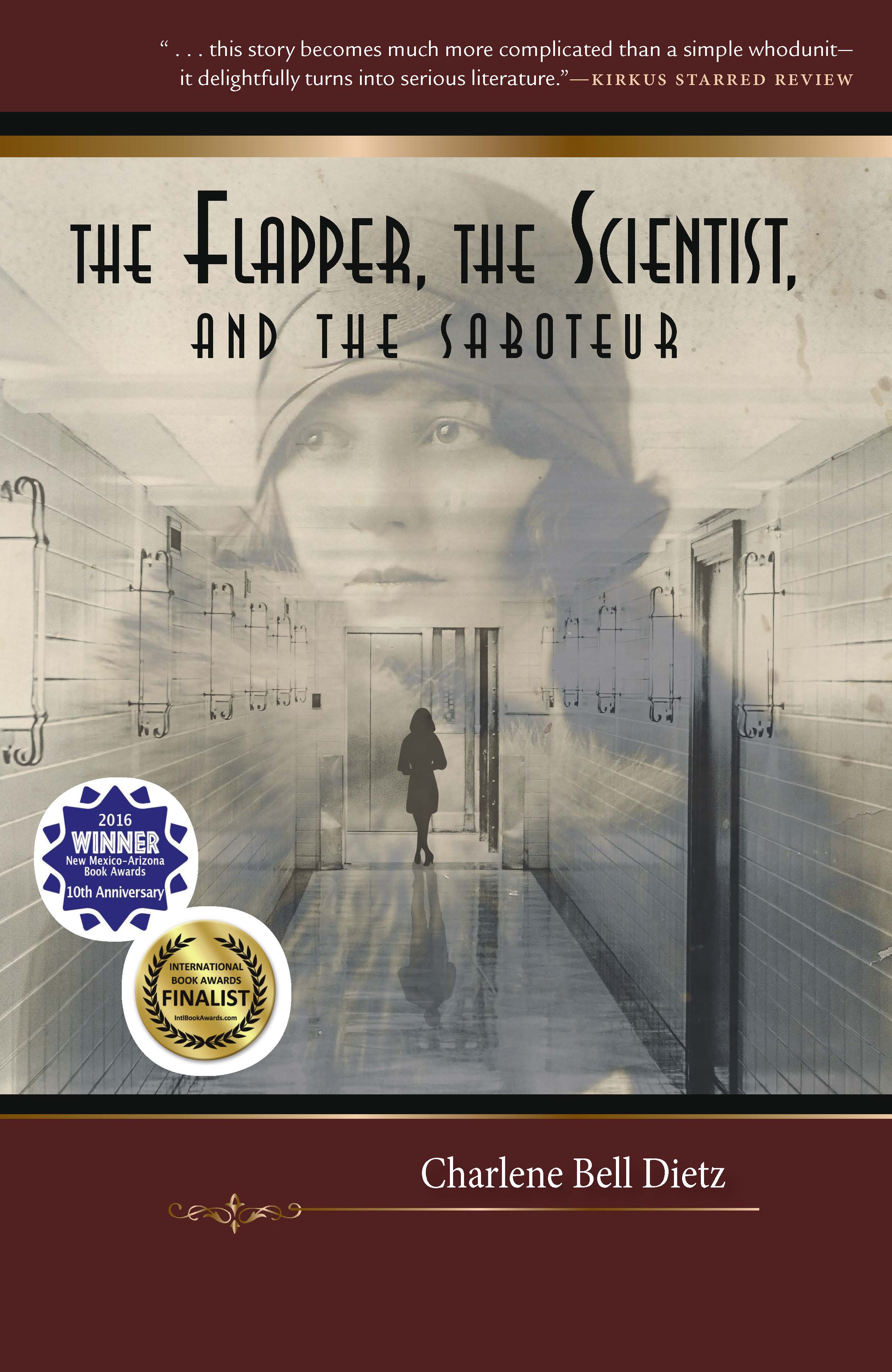
My first novel, The Flapper, the Scientist, and the Saboteur, Kirkus Reviews (starred review) started with scant knowledge about an estranged aunt who was an ex-flapper. Inspiration for this novel came to me because her story felt too important to ignore. My ancient aunt had slammed into my busy life, vying for attention with my demanding career. This redoubtable, chain-smoking, rum-drinking woman made a game of criticizing me, turning the air blue with smoke and cuss words, and enchanting my husband.

I’d come home exhausted from my job of problem solving as an administrator in a heavy-handed bureaucracy of educators and also from my layman position, working with a veterinarian to evaluate research protocols at the Lovelace Respiratory Medical Research Laboratory. Every evening, I’d find this tipsy woman telling outrageous tales of her Roaring-Twenties life as a flapper in dangerous 1923 Chicago. She never revealed much about her own antics, except on occasion she’d toss out tidbits of her wild life like delicious appetizers.

Too good not to be told:

What if I combined this ancient flapper’s ramblings and fabrications with today’s devastating corporate espionage problems, using what I did know about biomedical research labs? Then this would be much more than just another Roaring-Twenties flapper story. Even though I’d fashioned an unusual combination, I thought it might be quite an intriguing mix. However, I knew nothing about the 1920s and even less about corporate spying.

Playing around with my knowledge of bits and pieces, tiny kernels of ideas developed into miniature tales. I shuffled them together using fictional characters, places, events, and conflicts. For my strange story to be engaging, each character would have to be connected with the others characters through powerful motivations. This meant even my secondary characters must be three dimensional. I had huge holes in my knowledge. I needed to know more.

Use what you know to figure out what you don’t know:

After untold hours of researching, I made likely guesses to fill in as many empty spaces as possible. I buried myself under a search and find mode. I had started out knowing only the Hollywood version of a flapper’s life along with scraps of information my aunt had given. This wouldn’t do, and I knew nothing about corporate espionage, but spies have always intrigued me. The more I learned the more fun I found in bringing my Flapper, Scientist, and Saboteur to life.

Writing the unknown:

I believe your story deserves to be startling and robust. I always research more than I can possibly use. Then I select only what’s rich and on target. For fun, I throw in some quirky stuff. Here’s the best part: I put all of the above together, mix with my wildest imagination, edit, delete, select the most powerful verbs, revise, revise, revise, then polish my story—with joy.

My award winning stories happen because I dare to write what I don’t know. How does your imagination help you write what you don’t know?

The Flapper, the Scientist, and the Saboteur intertwines a corporate espionage mystery with a generational battle-of-wills story between a dedicated professional intent on fighting chaos to restore order and a free-spirited aunt who needs her niece to live in the moment.

Beth Armstrong, a Denver biomedical scientist, wrestles with the impossible choice of saving her sabotaged, groundbreaking cure for multiple sclerosis or honoring an obligation to care for her cantankerous old aunt. Playing nursemaid ranks just a notch above catching the plague on Beth’s scale, yet her ex-flapper aunt would prefer catching anything deadly to losing her independence under the hands of her obsessive-compulsive niece. 

While a murderous culprit runs loose in the science institute, Beth finds her whole life out of balance. Unpredictable nefarious activities at the institute–which is rife with suspects–cause Beth to wonder if she can trust anyone, while at home her chain-smoking aunt entertains Beth’s neglected husband with nightly cocktails and raucous stories from the Roaring Twenties. The Flapper, the Scientist, and the Saboteur creates a compelling mystery intertwined with a generational battle-of-wills story between a dedicated professional intent on fighting chaos and restoring order, and a free-spirited aunt who insists her niece listen to her heart and learn to live in the moment.

Buy Links:

https://www.barnesandnoble.com/s/charlene%20bell%20dietz/_/N-8q8
https://www.amazon.com/Flapper-Scientist-Saboteur-Charlene-Dietz-ebook/dp/B01HFKL3DA
https://treasurehousebooks.net/product-tag/charlene-bell-dietz/
https://www.audible.com/pd/The-Spinster-the-Rebel-and-the-Governor-
Audiobook/B0BPDCJK4B

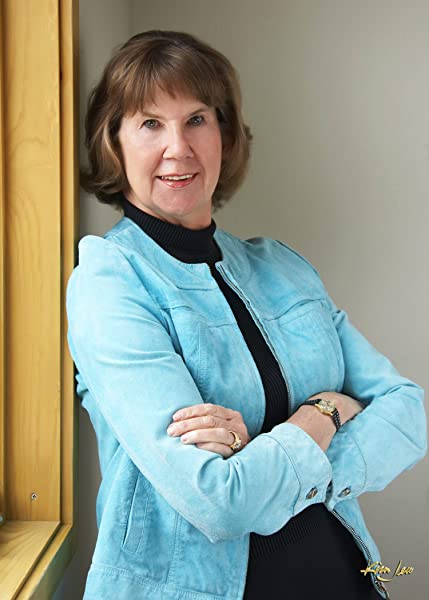
Charlene Bell Dietz, raised in the Rocky Mountains of Colorado, now lives in the central mountains of New Mexico. She taught kindergarten through high school, served as a school administrator, and an adjunct instructor for the College of Santa Fe. After retirement she traveled the United States providing instruction for school staff and administrators. Her writing includes published articles, children’s stories, short stories and mystery and historical novels, winning awards from NM/AZ Book Awards, Writers Digest, Public Safety Writers, and International Book Awards, along with earning two of the coveted Kirkus Reviews (starred review) and having two books named to Kirkus Reviews Best Books of 2018.

Connect with Charlene:

chardietzpen@gmail.com

https://www.facebook.com/charlene.dietz.9/

http://inkydancestudios.com

Guest Blogger ~ Heather Weidner

With a Little Help from Some Friends

Heather Weidner, Author of the Jules Keene Glamping Mysteries and the Mermaid Bay Christmas Shoppe Mysteries

I am extremely grateful for all the authors who have shared their ideas, advice, and successes with me through the years. Writing is mostly a solitary process, so it’s nice to know that you’re not alone and that others have experienced what you’re going through. Here are some tidbits that I’ve picked up through the years that have helped me improve my craft and to stay focused.

When I’m working on a new novel, I plot out a simple outline. I learned from Donna Andrews to color-code the different kinds of action in your outline, so you can see it over the course of the book. For example, I mark all romantic elements with pink, humorous items are orange, clues are green, etc. It helps create a visual as you write, and it shows you where you’re missing elements or when you’ve overloaded the story.

I learned from Mary Burton to keep a running list of over-used words. Add to it as you write, and then at the end of each revision cycle, search your document and remove the culprits. She also calls your first draft the “sloppy copy.” Typing “the end” doesn’t mean you’re finished. It’s the beginning of the revision cycle.

I learned from the late Kathy Mix to keep a list of character names for each book. Her rule was to name each character with a different letter of the alphabet. If she already had a Krissy, then she couldn’t have another character whose first name started with a “K.” I build a chart of characters for each book and note where the characters appear. I also create a list of key locations. I enter all the important facts, so I can keep track of the details.

Mary Miley gave me some great advice about honing dialogue. She recommends cutting out the unnecessary pleasantries and chitchat that don’t move your story forward.

Elaine Viets said to know your genre and who is publishing in it. Do your research and know the conventions before you query agents or publishers.

Lynda Bishop recommends that authors keep a timeline for each book to make sure all events are in order and make sense. This helps with pacing. This helps me keep the days straight (so the character doesn’t have lunch two times in the same day).

Tina Glasneck suggests that authors create a calendar for each book launch. Mine starts three months before the launch and runs three months after. Plan all events, interviews, blogs, and media campaigns. Make sure that you track the details.

Jane Friedman tells writers that their platform grows from their body of work. An author’s website and blog should be at the center of all of your marketing.

Frances Aylor and Alan Orloff gave me the best advice for writing. Butt glue (Frances) or BICFOK (Alan). They’re essentially the same. If you want to be a writer, put your Butt in the Chair and Fingers on the Keyboard.

Hollywood has come to Fern Valley, and the one stoplight town may never be the same. Everyone wants to get in on the act.

The crew from the wildly popular, fan favorite, Fatal Impressions, takes over Jules Keene’s glamping resort, and they bring a lot of offscreen drama and baggage that doesn’t include the scads of costumes, props, and crowds that descend on the bucolic resort in the Blue Ridge Mountains. Added security, hundreds of calls from hopeful extras, and some demanding divas keep Jules’s team hopping.

When the show’s prickly head writer ends up dead under the L. Frank Baum tiny house in what looks like a staged murder scene with a kitschy homage to the Wizard of Oz, Jules has to figure out who would want the writer dead. Then while they are still reeling from the first murder, the popular publicist gets lost after a long night at the local honky-tonk and winds up strangled. Jules needs to solve both crimes before filming is canceled, and her business is ruined.

Book Links

Amazon: https://www.amazon.com/dp/1685122000

Amazon: https://www.amazon.com/dp/B0BHLSYBZ9?ref_=pe_3052080_276849420

Barnes and Noble: Film Crews and Rendezvous: A Jules Keene Glamping Mystery by Heather Weidner, Paperback | Barnes & Noble® (barnesandnoble.com)

BookBub: Film Crews and Rendezvous: A Jules Keene Glamping Mystery by Heather Weidner – BookBub

Books a Million: film crews and rendezvous : : Booksamillion.com

Bookshop.org: https://bookshop.org/shop/heatherweidner

Fantastic Fiction: Film Crews and Rendezvous (Jules Keene Glamping Mystery, book 2) by Heather Weidner (fantasticfiction.com)

Goodreads: Film Crews and Rendezvous by Heather Weidner | Goodreads

Kobo: Film Crews and Rendezvous eBook by Heather Weidner – EPUB | Rakuten Kobo United States

Scribd: Film Crews and Rendezvous by Heather Weidner – Ebook | Scribd

Through the years, Heather Weidner has been a cop’s kid, technical writer, editor, college professor, software tester, and IT manager. She writes the Jules Keene Glamping Mysteries, the Mermaid Bay Christmas Shoppe Mysteries, and the Delanie Fitzgerald Mysteries.

Her short stories appear in the Virginia is for Mysteries series, 50 Shades of Cabernet, Deadly Southern Charm, and Murder by the Glass, and her novellas appear in The Mutt Mysteries series.

Originally from Virginia Beach, Heather has been a mystery fan since Scooby-Doo and Nancy Drew. She lives in Central Virginia with her husband and a pair of Jack Russell terriers.

Social Media Links

Website and Blog: http://www.heatherweidner.com

Twitter: https://twitter.com/HeatherWeidner1

Facebook: https://www.facebook.com/HeatherWeidnerAuthor

Instagram: https://www.instagram.com/heather_mystery_writer/

Goodreads: https://www.goodreads.com/author/show/8121854.Heather_Weidner

Amazon Authors: http://www.amazon.com/-/e/B00HOYR0MQ

Pinterest: https://www.pinterest.com/HeatherBWeidner/

LinkedIn: https://www.linkedin.com/in/heather-weidner-0064b233?trk=hp-identity-name

BookBub: https://www.bookbub.com/authors/heather-weidner-d6430278-c5c9-4b10-b911-340828fc7003

TikTok: https://www.tiktok.com/@heather_weidner_author?lang=en