Characters, where do they come from?

Shandra Higheagle Mystery, this month.

After my post last month about Getting to Know my Character, I had a reader ask me to write about how I create, develop, and name characters.

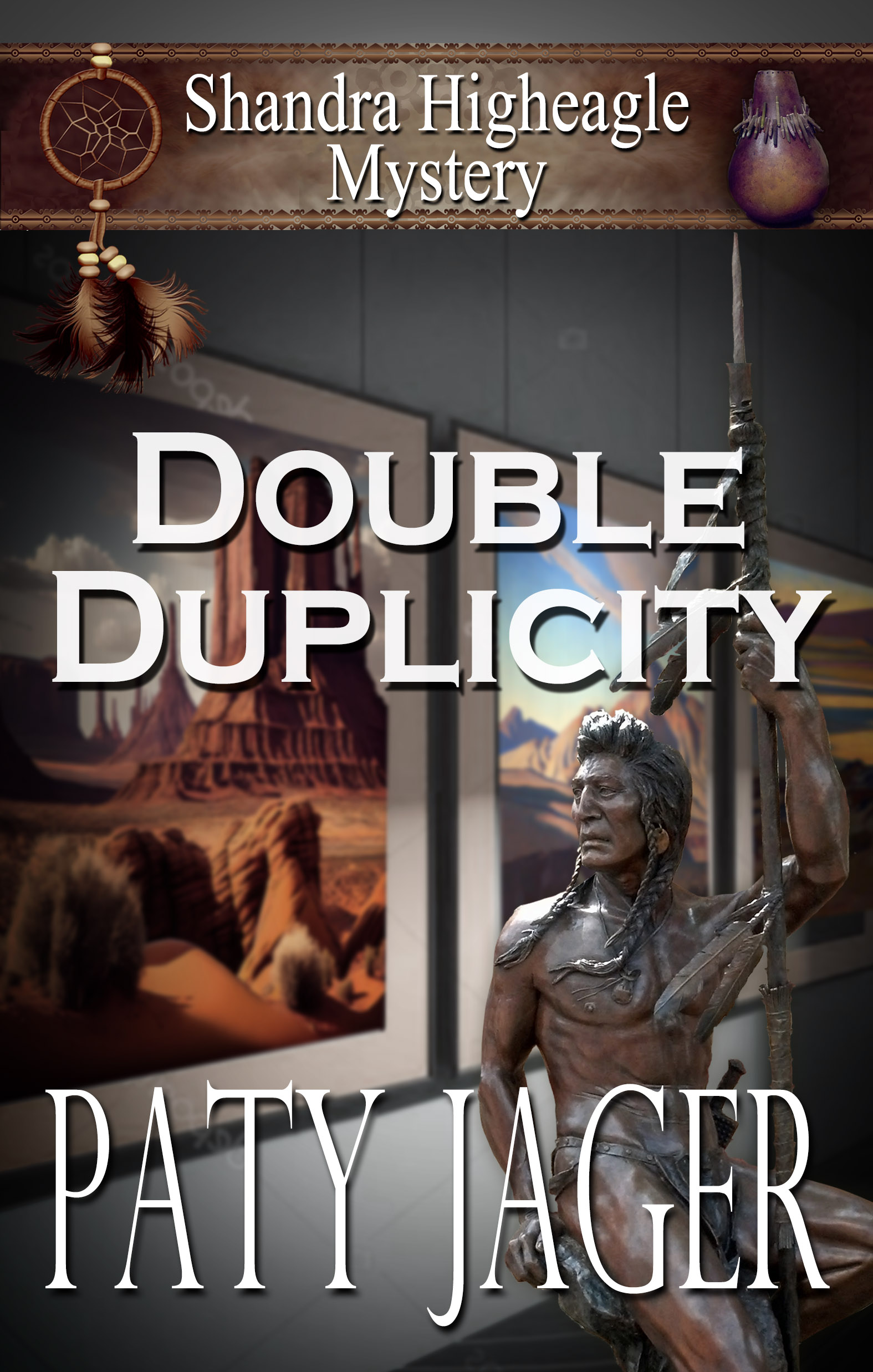
I guess I’ll start with my Shandra Higheagle series. In the case of this series, my brother gave me the idea for a unique murder weapon. He is an artist and was working at a bronze foundry, welding bronze statues and putting the patina on them. He told me about a large statue of a warrior with a spear and how the spear from the warrior’s hand up could be removed. It was made that way for transportation.

Once that idea was in my head, I knew the first book had to be set in the world of art to have the statue come into play. I decided my main character would be an artist. Since I am captivated by Indigenous culture and have a friend in that world who was willing to help me understand things I would need to know, I made Shandra a potter who made vases that are sold in art galleries. She is also half Nez Perce from the Colville Reservation and half Caucasian. To make it easier for me to write from her perspective, I had her Nez Perce father die when she was four and her mother took her away from that side of her family. She grew up off a reservation on a cattle ranch in Montana with a stepfather who kept her Nez Perce origins hidden.

That gave me a good way to reacquaint her with her Nez Perce heritage as I learned things. I didn’t try to appropriate her culture, just share her learning and experience. I had the help of my friend, who lives on the Colville Reservation, to help me with the books that are set there and how the people there live.

I set the books in a fictional ski resort area in Idaho. We had traveled through Kellogg, ID, a few years earlier, and I thought it was a wonderful place for an artist to reside. It gave Shandra a mountain where she would gather clay and purify it to make her vases. I had learned about an artist who made his own clay in Wallowa County from my brother. He set up a time for me to meet with the artist and learn all about the gathering and purifying of the clay. While I was there, he showed me several of his pieces that were in various stages of the processes he used.

Once I had all about Shandra settled, I started working on secondary characters. Her dog, Sheba, who is large and scared of her own shadow. A woman who helps her with her clay and taking care of the land that she purchased. Crazy Lil came with the ranch like a stray cat. She grew up on the ranch, lost it when her parents died, and went to work for the person who bought it. When they sold to Shandra, Crazy Lil didn’t move on and became Shandra’s right-hand woman. She’s a bit on the cantankerous side and is leery of Ryan, the detective who takes a shine to Shandra.

Then I added friends. A woman who owns an art gallery in Huckleberry. Naomi is married and she and her husband, Ted, sell Shandra’s vases and know a good deal about her. Ruthie is a Black woman who owns a diner in Huckleberry. She and Shandra bonded over Shandra’s love of cheeseburgers and caramel shakes. Her other good friend is Miranda Aducci, whose family owns the Italian Restaurant in Huckleberry. There are several other unique characters like the albino doctor who is trying to find a cure for the disease that killed all the males in his family in their 50s, and Maxwell Treat whose family owns the local mortuary.

When Shandra is considered a suspect for the death of a gallery owner in the first book, she butts heads with Ryan Greer, the detective for the county. This brings in a man who was a cop in a large city and came back to where he grew up because his large Irish family all live in and around the county. His cultural beliefs about little people help him to come to terms with Shandra’s dreams with her deceased grandmother before she realizes that they are helpful.  

Detective Ryan Greer came to me as I was building the beginning scene in my head. I made him Irish and gave him a good Irish name. His mother is Irish and taught her family all about her homeland. His siblings all have Irish names.

My vision of Shandra

Shandra’s name just came to me as I was putting together what she looked like to me. Of course, I wanted a last name that sounded Native American. Sheba’s name came from a big black fluffy dog my daughter had while growing up. Crazy Lil, was just something I typed the first time I brought her into the book. That’s the way all the secondary characters’ names come to me in each book.

As I type a scene and add a new character, I have in my mind what they look like and I add a name that seems to suit them, or the purpose they have for the story. That sounds kind of vague but that’s the way my mind works.

I always have the main character, the victim, and the suspects fleshed out when I start a book, but the secondary characters that are new to the series pop up as they enter my head.

I’m sure readers are interested in how I came up with my Gabriel Hawke and Dela Alvaro characters in their series. I’ll tell you about them in next month’s post.

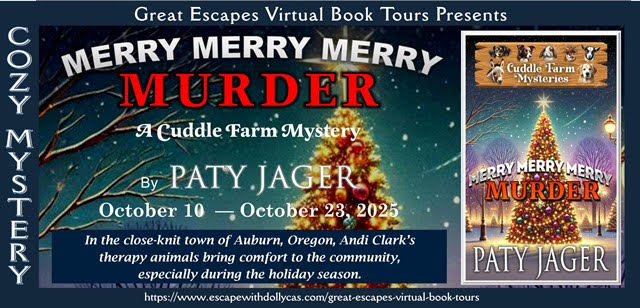
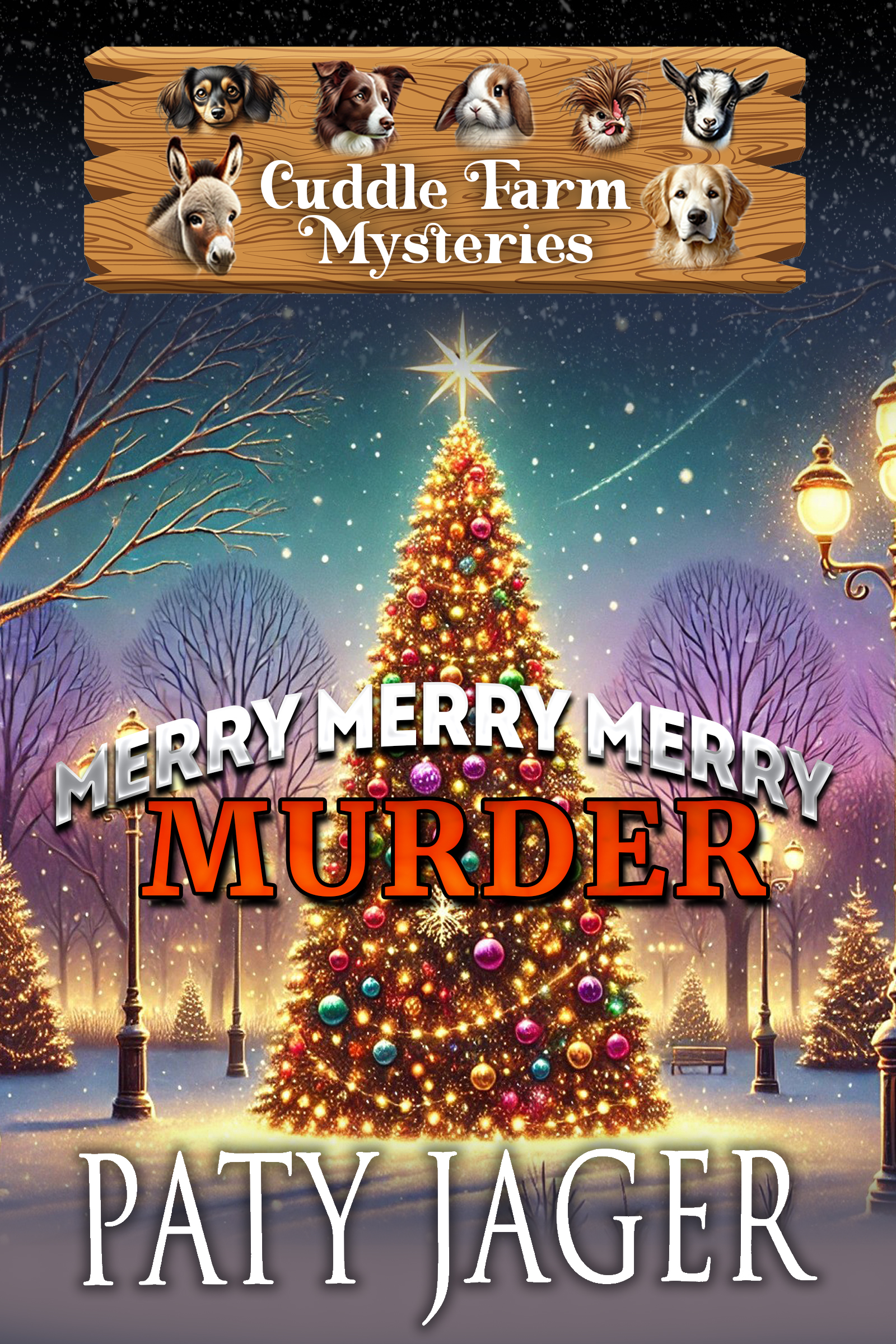
I wanted to give you the info about my new Cuddle Farm Mystery Series. There will be a blog tour for the first book, Merry Merry Merry Murder, from October 10th-23rd. there will be character posts and posts about how I came up with the series on multiple different blogs if you want to hear about the book from Cocoa, the border collie, Cupcake, the pygmy goat, Lulu, the chiweenie, and Betty, a secondary character who is one of the main character’s best friends.

 You can purchase Merry Merry Merry Murder ebook from the usual vendors or you can purchase the ebook from my website.

“Where comfort and cheer meet scandalous secrets—A holiday mystery set in a small town.”

In the close-knit town of Auburn, Oregon, Andi Clark’s therapy animals bring comfort to the community, especially during the holiday season. When a young girl seeks solace from Athena, Andi’s therapy dog, after witnessing an unsettling scene behind the sleigh, it marks the beginning of a much darker holiday.

As the town gathers for the Tree Lighting Ceremony, a scream shatters the festive atmosphere. Cocoa, Andi’s loyal Border Collie, pulls her toward a chilling sight: a woman standing over the lifeless body of the girl’s mother, strangled with Christmas lights.

Determined to help the grieving girl and her town recover from the shock, Andi, her therapy animals, and her niece, a county deputy, take it upon themselves to investigate. As they uncover secrets and untangle clues, they stay one step ahead of the new sheriff and worry that the killer lurking in their midst could be someone they know.

Purchase now from my website: https://www.patyjager.net/product/merry-merry-merry-murder-ebook/

Purchase from a universal buy link: https://books2read.com/u/mZ6qpJ

Guest Blogger ~ Glenda Carroll

Where Did I Put That Plot?

By Glenda Carroll

            Plots don’t come easily to me. When I first started writing the Trisha Carson amateur sleuth mysteries about ten years ago, I sat down and blithely typed away following any idea wherever it took me. But that stopped working. I aimlessly spent time chasing after dead ends … nicely written, to be sure, but instead of moving the plot along, it stopped it cold. I wasted so much time.  I realized that I needed more control over what happened and when.  I’m not a plotter, as you can tell. I enjoy the freedom of following whims. So, this hasn’t been an easy step for me. But I’m trying.

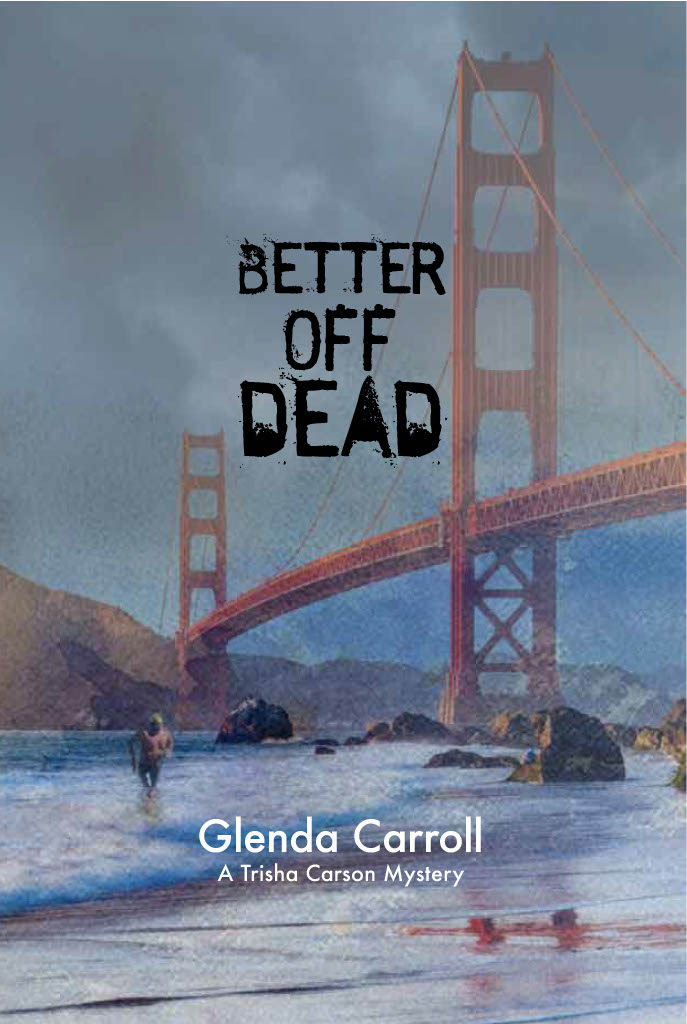
 Take Better Off Dead (BOD), the latest book in the mystery series. Like all the mysteries before it, I knew the catalyst for the plot. It’s always based loosely on something true. In the series, each book swirls with an undercurrent of open water swimming.  That’s usually the true part.

 Almost fourteen years ago, a solo swimmer in the Maui Channel Swim, a 10-mile relay race between the islands of Lanai and Maui, was sucked under a powerboat by the propeller wash near the finish line. He suffered catastrophic injuries to one arm which had to be amputated and one hand that was reattached although it had two finders missing. I wasn’t there, but I read about it. Things like that stay in the back of my mind especially when I’m swimming in open water like the San Francisco Bay in Spring and Summer and Fall.  It came to the surface when I began to think about BOD.  I knew I wanted to use the idea of a horrible boating accident. But I needed a victim, some potential murderers and a realistic answer to the question, “why?”

            I lingered over the concept of a premeditated horrific accident but could go no further. At the time, I was also tutoring first generation, low-income high school students in English. One sophomore was reading Shakespeare’s Hamlet and wasn’t thrilled about the language. He didn’t understand Elizabethan English and no amount of my prompting and wheedling made the play on par with a Marvel comic book. That is until I told him the story of Hamlet, his dead father, his uncle and his mother in everyday language. It went something like this:  Hamlet, the prince of Denmark, is at university when he learns of his father’s death. While returning to the family castle, he runs into the ghost of his dad who tells him that his brother, Hamlet’s uncle, poisoned him and that he wants revenge. The revenge part sparked his interest.

 I lingered on how Shakespeare killed his actors: drowning, poisoning, stabbing with a sword, stabbing with a poisoned sword. I compared it to the violence running through video games or a superhero movie. What if Hamlet was the Hulk? That caught his attention. I convinced him to come up with a modern-day plot based on Hamlet. He bought into the idea.  So, we read the play, both the contemporary translation and the Elizabethan language version and he jotted down notes to help him with his video game. That’s when the light bulb went off.  If my student could update Hamlet, so could I. Later that evening, following Shakespeare’s plot, I started writing … modernizing the famous revenge tragedy. The moody Hamlet became Harrison. His dead father and the very much alive brother turned into Andy and Marty Barlow, wealthy Marin County financiers. That’s all the kick I needed. The story began to fall into place.

I can’t say the rest was easy, but I could see a path ahead of me. As part of the Acknowledgement in Better Off Dead, I thanked Will Shakespeare. Without him and Hamlet, there would not have been a Book 4 in the Trisha Carson series.

I’ve started Book 5, and it revolves around a skull found on a San Francisco Bay beach covered in eel grass. (That’s the true part.) Do you think I learned anything from my experience with Better Off Dead? Unfortunately, no. I have no idea what to write next.

BETTER OFF DEAD: A Trisha Carson Mystery

Successful Marin County, Ca financier, Andy Barlow, is training for a competitive open water swim in the cold San Francisco Bay. Unexpectedly, his support boat runs him over midstroke, killing the swimmer instantaneously. Consumed with grief and anger, Andy’s college-aged son Harrison, returns from London to probe what really happened. Although the local sheriff’s office and the Coast Guard have closed the case, Harrison refuses to believe their findings. He reaches out to amateur sleuth Trisha Carson to hunt down the real killer.

Trisha digs into the man’s history and finds fractured relationships in his family, his business and his marriage. There’s clearly more than one person who had reason to seek a deadly revenge, but would they go as far as murder?

Amazon – paperback, ebook

https://www.amazon.com/Better-Dead-Trisha-Carson-Mystery/dp/B0DXKTJRK2

Barnes & Noble – paperback, ebook

https://tinyurl.com/u4tt9nas

Audiobooks

Apple:  https://tinyurl.com/y5t5jw34

Audible:  https://tinyurl.com/yy5anbwr

Glenda Carroll is the author of the amateur sleuth Trisha Carson mysteries set in the beautiful San Francisco Bay area. The fourth book in the series, Better Off Dead, came out in Spring 2025. It’s available in paperback, ebook and audiobook. Alas, Carroll hasn’t won any awards; hasn’t even been short-listed for one. Glenda spends more time swimming than writing. She also tutors first generation, low-income high school students in English and History. She is the current president of Sisters in Crime, Northern California.

She lives in Northern California with her dog, McCovey.

Website: glendacarroll.com

Amazon: https://tinyurl.com/y5mmhh55

Indies United Publishing House Lcc: https://tinyurl.com/ycynyr8a

Barnes & Noble: https://tinyurl.com/u4tt9nas

Audible: https://tinyurl.com/yy5anbwr

Facebook:  https://www.facebook.com/glenda.carroll

Instagram: https://www.instagram.com/glenda.carroll/

Bluesky: ‪@ggcarroll.bsky.social

There is more to a title than the words.

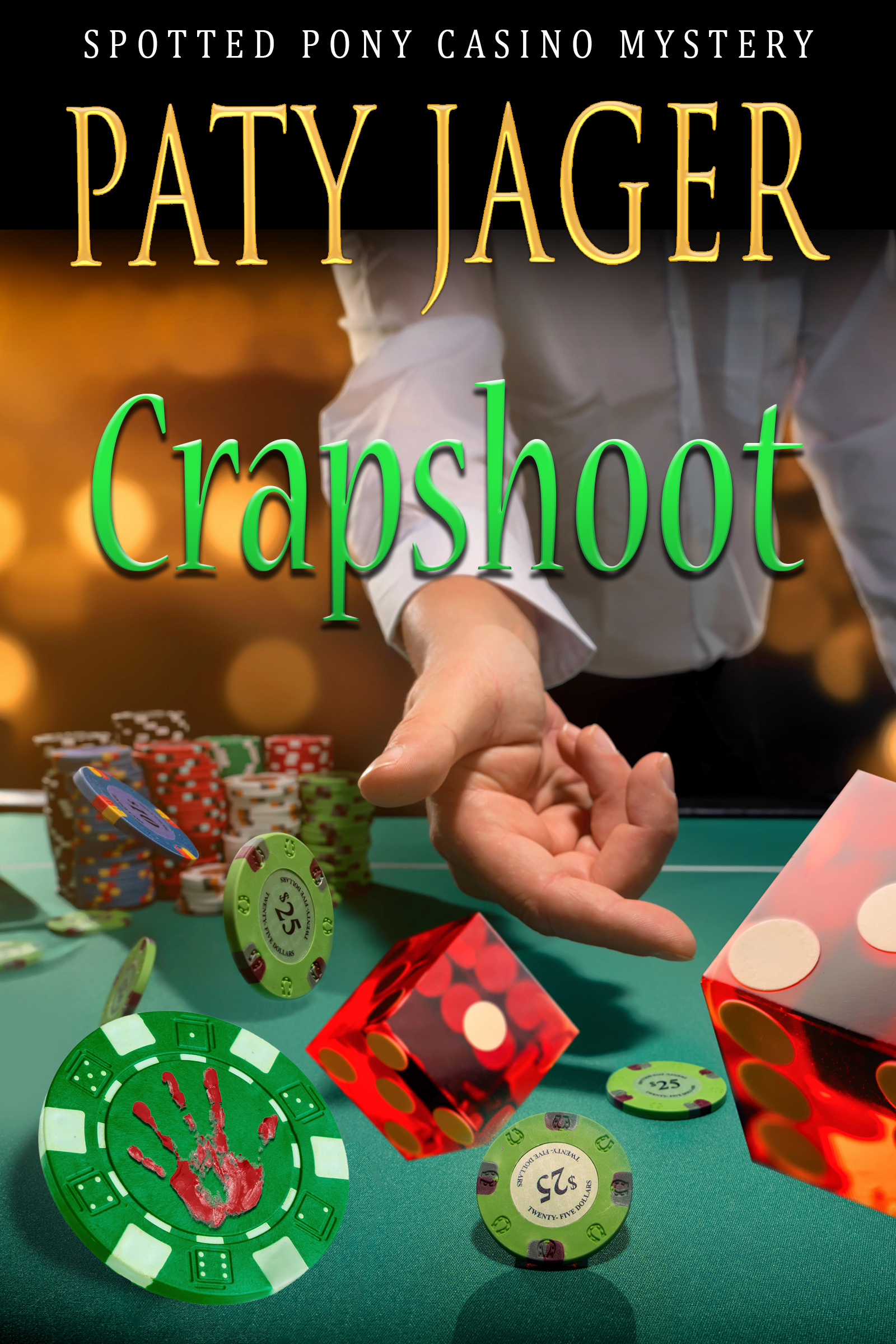
My line editor, who is in her thirties, said the title of my recently published book makes her laugh. I shrugged and told her the title is a gambling term. She said that makes sense because it is a book in the Spotted Pony Casino Mysteries, but it still makes her laugh.

Crapshoot: something(as a business venture) that has an unpredictable outcome. Webster’s dictionary.

When I came up with the storyline for book 7 in my Spotted Pony Casino Mystery series, of all the gambling terms I jotted down for titles, this term was the one that fit the best.

I’m a writer who comes up with an idea for a murder or an idea for a situation that puts my main character into a situation that will test them. This story didn’t start out with a murder. It was to be about a missing woman from the Umatilla Indian Reservation. The woman was a friend of my main character, a disabled veteran who lost her best friend in high school.

This story was meant to show how losing someone and not knowing why the cruelty happened could remain a constant enemy of the living. I wanted my main character to throw her whole being into finding the missing woman. And she does. But in the middle of this emotional trip, her nightmares come back and she becomes engaged. Talk about lows and highs! That is this story. A rollercoaster of ups and downs, and how the Indigenous community comes together to find their lost ones and to make themselves stronger.

While Crapshoot may make some people snicker or laugh, it is the epitome of this story. Each time my main character thinks she knows something, other information comes up. When she tries to rely on the right people or do the right thing, something gets in her way. It’s a crapshoot whether or not they will find the missing woman. The story takes a dark turn when the missing woman’s husband is killed. Then they discover an undercover female FBI agent is missing. And “SPLAT!” another body turns up. This is a story that I enjoyed writing to bring my character both happiness and grief. It shows more of the main character and sets her up for the next book that will knock her off her axis and make her wonder if a person can truly ever really know anyone.

So if this title makes you smile or laugh, that’s okay. Once you begin reading the book, you’ll understand the title and see the reason behind it, besides, it is a gambling term.

CRAPSHOOT

Book 7 in the Spotted Pony Casino Mystery series

 A Fentanyl death.

A missing woman.

Dela Alvaro, head of the Spotted Pony Casino security, and Heath Seaver, a Umatilla Tribal Detective, join forces with the FBI to find Dela’s missing basket-weaving instructor and put a stop to a lethal drug flowing onto the reservation.

The investigation turns deadly when an undercover FBI agent goes missing and the drug cartel’s girlfriend is out for Dela’s blood.

https://books2read.com/u/3njQ7e

In case you were wondering what gambling terms are left on my list for titles:

The Gimmick

Full House

Jackpot

Penny Ante

Luck of the Draw

Blue Chip

Guest Blogger ~ M.E. Proctor

Bop City Swing, or When Writers Click

By M.E. Proctor

We should write something together, I’ve heard these words many times. The suggestion is always vague and about as binding as the clichéd ‘let’s do lunch one of these days’. Many years ago, a friend and I planned to write a book. He was a big science fiction fan, so that’s what we decided to do. I delivered the first chapter. My friend never produced chapter 2, and I ended up doing the entire thing. It turned into a four-book dystopian series, The Savage Crown.

So, when fellow crime writer Russell Thayer typed in a social media chat that “Tom should go after Gunselle someday. Imagine the interrogation scene!” I agreed that bringing our two recurrent short story characters together was a cool idea, but I doubted it would go anywhere.

I was wrong. We’re a year later and Bop City Swing is on the bookshelves. Even better, Russell and I are working on another mystery featuring the same two leads.

Russ’s creation is Vivian Davis, aka Gunselle, a contract killer. He has written more than twenty short stories spanning the late 1930s-early 1950s with her in the starring role. My guy (he’s in a dozen stories so far) is Tom Keegan, a homicide detective in 1950 San Francisco. A professional killer and a cop, in the same place at the same time … sounds like a match made in Noir heaven.

Early last year, Russ and I both happened to have pieces published at the same time in two different magazines. A mash-up—in the vein of CSI meets Law & Order—was top of mind again and we started brainstorming ideas for a short story. What if she’s hired to bump him off … What if they’re after the same killer… We eventually decided to build the story around a political assassination that would involve both characters, coming at it from their respective angles. The detective investigates the case, in straight procedural fashion, and the contract killer is embroiled in it sideways. She didn’t commit the crime.

We never discussed the mechanics of the collaboration. It felt natural to tell the story from a double point of view (POV), Russ writing the Vivian-Gunselle chapters, while I wrote Tom’s scenes. The differences in our styles fit the particular voice of our respective characters. If there were awkward disparities or rough edges, we figured we could polish them off after the first draft.

Russ sent me a snippet of Gunselle being hired for a job she dislikes—fixing somebody else’s mess, i.e. the assassination (that plot line was discarded later on)—and a few days later, I sent him Tom’s arrival at the crime scene, the ballroom of a luxury hotel. The suspect is a musician in the jazz band hired for the event.

Everybody knows that most of the research should be done before starting to write the story, it’s a lot more efficient, but we were both eager to get something going. Now, with two scenes drafted, we had to make sure we were historically correct on the when and the where.

The when would be 1951, an election year. That November, San Francisco re-elected the incumbent republican mayor, Elmer Robinson. The fictional who (the victim) would be Charles Forrester, the democratic challenger launching his campaign at a June fundraiser. Where would be the Palace Hotel, conveniently located downtown, with a good size ballroom—an internet deep dive delivered period-accurate floorplans.

We knew when, where, and who, but like our two lead actors, we were stumped by the motive. Why was Charles Forrester shot? We wouldn’t find out for a while.

Writing a story is like a treasure hunt. Every sentence, written on the fly, contains potential clues. Here’s an example. The decision to make the killer a jazz trumpeter gave the plot a definite slant. It also gave us the opportunity to dig into the rich Bay Area music scene of the early 50s, the various clubs, the talent on display, the racial tensions, the lure of the city at night, the early involvement of the Mob in the drug trade. Russ had touched on the music angle in some of his stories and brought all that background into the plot, with great secondary characters. One of them, Maggie, became central to nailing down the motive and the final resolution. Through Maggie, we also touched on the war, only six years in the past, and its aftermath, how deeply it scarred many characters in the story.

Very soon, the project was no longer a short story. Bop City Swing had turned into a book.

During the months it took to complete a solid first draft, we had a couple of mini-debates. One of them was about who would enter the scene first.

Homicide cops always get there after the fact, by definition. We decided to start with Gunselle and put her in the ballroom, at the very beginning, before the shots ring out. That gave us the story hook. She was hired for the hit and somebody beat her to it. She’s pocketed the down payment. For doing nothing. As a professional, it sticks in her craw.

Another discussion was about the key confrontation between our two characters. Up to that climactic moment, they’d both gone through their moves separately, with only a glancing accidental contact that showed mutual interest. Yes, this is where it gets sexy … Who would write that scene, in whose POV? We considered writing it twice, in a ‘he says, she says’ tango, but it proved clunky. I wrote the initial scene, from Tom’s voice, then Russ took it and turned it around. It worked a lot better that way, Gunselle initiates the event and is the more active character. It was also fun to write Tom’s reaction afterwards.

We initially wrote our respective scenes separately. After a few weeks, we built a master document that we carried all through to the end, highlighting changes, constantly adjusting things. Russ writes snappy action scenes and I tend to be atmospheric. In the master document, we started blending things. He added bite and I added background.

Mid-way through the process, we built a timeline. The characters were all in motion and the investigation picked up speed. A beat-by-beat sequence of events helped us figure out the ending. None of what happens in the last act was in the cards from the start.

The time we took to consider options, writing them and discarding parts of them, might appear to be a waste but was crucial in coming up with the best solution. The beginning of the story, in particular, was rewritten multiple times. Part of the fun in a collaboration is having your partner put something on the table that you would never have come up with on your own.

Writing is a solitary pursuit. Sometimes, it feels good to share. Russ and I had so much fun, we’re doing it again. There will be more Tom and Gunselle in the future. I’ll keep you posted!

—-

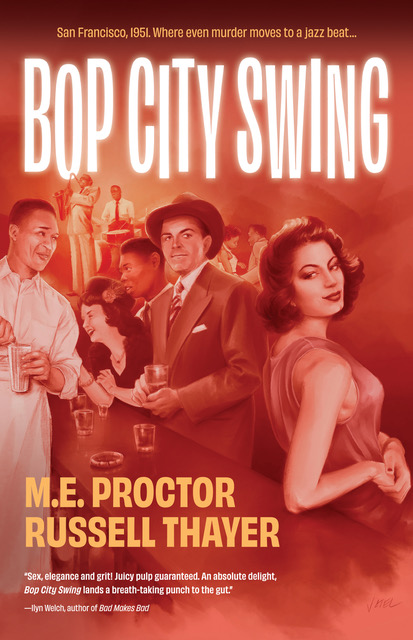
Bop City Swing

San Francisco. 1951.

Jazz is alive. On radios and turntables. In the electrifying Fillmore clubs, where hepcats bring their bebop brilliance to attentive audiences. In the posh downtown venues where big bands swing in the marble ballrooms of luxury hotels.

That’s where the story begins, with the assassination of a campaigning politician during a fundraiser.

Homicide detective, Tom Keegan, is first on the scene. He’s eager, impatient, hot on the heels of the gunman. Gunselle, killer for hire, is no longer there. She flew the coop, swept away in the rush of panicked guests.

They both want to crack the case. Tom, because he’s never seen a puzzle he didn’t want to solve, no matter what the rules say. Gunselle, because she was hired to take out the candidate and somebody beat her to it. It was a big paycheck. It hurts. In her professional pride and wallet.

The war has been over for six years, but the suffering and death, at home and abroad, linger as a horror behind the eyes of some men. And one young woman.

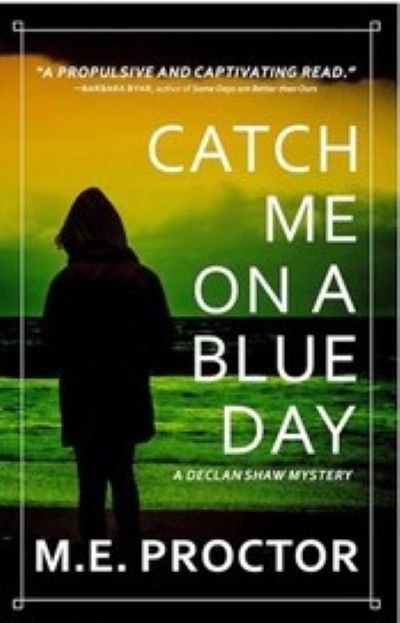
Bop City Swing is the brainchild of Russell Thayer, author of the Gunselle stories, and M.E. Proctor, who occasionally takes a break from Declan Shaw, her Houston PI, to don Tom Keegan’s gray fedora.

Buy Links:

Bop City Swing is available in eBook and paperback

On Amazon at https://www.amazon.com/Bop-City-Swing-Proctor-Thayer/dp/B0F4DSSQ9V/

From reviews:

“A wild ride down the neon-lit streets of post-WWII America, with bebop wailing in the nightclub on the corner, the white witch pumping through the veins of the junkie on the barstool, three slugs draining the life from the charismatic politician with a shady past, and enough snappy dialogue to light up the faces of Raymond Chandler and James M. Cain.”

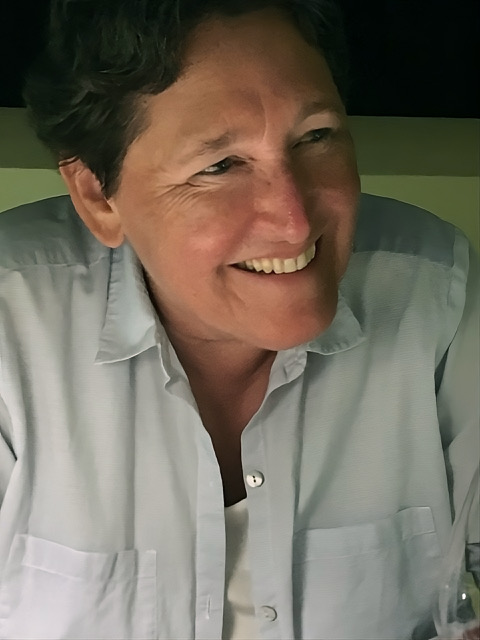
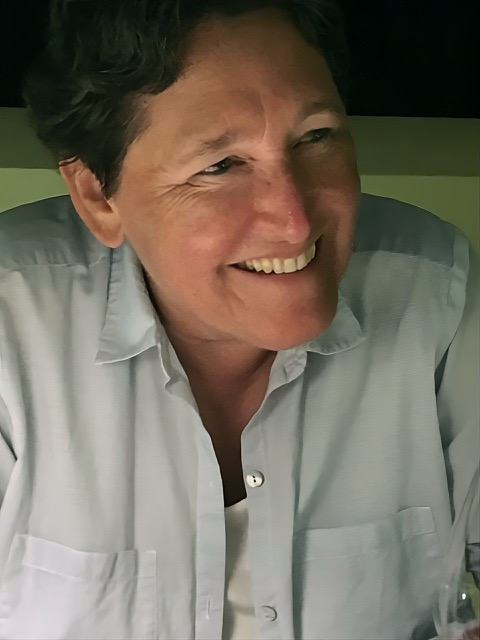
M.E. Proctor (www.shawmystery.com) was born in Brussels and lives in Texas. The first book in her Declan Shaw PI series, Love You Till Tuesday (2024), came out from Shotgun Honey, with the follow up, Catch Me on a Blue Day, scheduled for 2025. She’s the author of a short story collection, Family and Other Ailments, and the co-author of a retro-noir novella, Bop City Swing. Her fiction has appeared in VautrinToughRock and a Hard PlaceBristol NoirMystery TribuneShotgun HoneyReckon Review, and Black Cat Weekly among others. She’s a Derringer nominee.

Social Links

Author Website: www.shawmystery.com

On Substack: https://meproctor.substack.com

Facebook: https://www.facebook.com/martine.proctor

Twitter: https://twitter.com/MEProctor3

BlueSky: https://bsky.app/profile/meproctor.bsky.social

Instagram: https://www.instagram.com/proctormartine/
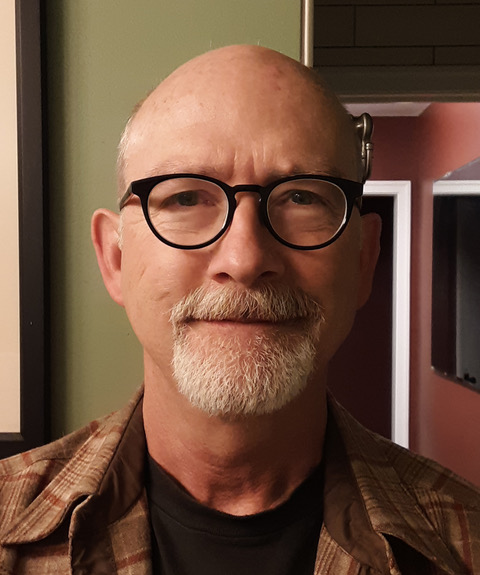
Russell Thayer’s work has appeared in BrushfireTough, Roi Fainéant Press, Guilty Crime Story Magazine, Mystery Tribune, Close to the Bone, Bristol Noir, Apocalypse Confidential, Cowboy Jamboree Press, Hawaii Pacific Review, Shotgun Honey, A Thin Slice of Anxiety, Rock and a Hard Place Press, Revolution John, Punk Noir Magazine, Expat Press, Pulp Modern, The Yard Crime Blog, and Outcast Press. He received his BA in English from the University of Washington, worked for decades at large printing companies, and currently lives in Missoula, Montana. You can find him lurking on Twitter @RussellThayer10.

Guest Blogger ~ Lois Winston

Truth is Stranger than Fiction

By Lois Winston

First, a little literary history regarding the expression, “Truth is stranger than fiction.” It’s been around for a long time. In 1897 Mark Twain published the travel book Following the Equator: A Journey Around the World. Chapter Fifteenth included the epigraph, “Truth is stranger than fiction, but it is because Fiction is obliged to stick to possibilities; Truth isn’t. — Pudd’nhead Wilson’s New Calendar.”

However, Twain wasn’t the first to come up with some version of the saying. Seventy-four years earlier, Lord Byron had Don Juan opine, “’Tis strange — but true; for truth is always strange; Stranger than fiction; if it could be told, How much would novels gain by the exchange!”

Why am I telling you this? It’s because I’m not only a news junkie, but I’m also a diehard eavesdropper. I developed that skill at a very young age, learning all sorts of interesting stories while listening from behind closed doors. The adults in my life thought I was off playing with my dolls or watching cartoons, but I quickly realized that far more interesting tales were being told around my grandmother’s kitchen table. I became Harriet the Spy, well before Louise Fitzhugh ever dreamed up Harriet.

My grandmother, aunt, and great-aunts loved to gossip. Consequently, I learned some fascinating stories about my relatives and their private lives. Little did I know at the time that much of what I overheard would eventually wind up decades later as inspiration for characters and plots when I first got the itch to write a novel.

Much of what I heard involved my grandfather, who had a decades-long career in law enforcement during the heyday of organized crime in the New York metropolitan area. By the time I came along, he’d risen to captain of a major metropolitan police force. However, back in the day, he was personally responsible for the apprehension of many mobsters. But get this: one of his brothers was a bootlegger! And one of his wife’s brothers was romantically involved with a woman whose family was in the Mafia! I wound up going to school with two of her nieces. Mind-boggling, right?

Is it any wonder Anastasia Pollack, my Jersey Girl reluctant amateur sleuth so often finds herself tangling with Mafia henchmen?

To date, I’ve published twenty-three novels and five novellas. The plots and subplots for all have been drawn from events I’ve either observed, overheard, or read about—going all the way back to those early childhood days of listening with my ear pressed up to the kitchen door.

However, in Seams Like the Perfect Crime, the fourteenth and most recent book in my Anastasia Pollack Crafting Mystery Series, I didn’t draw on memories of conversations from my childhood. Instead, I looked no further than across the street from a former house my husband and I bought in 1998.

Over the years, I’ve had some very strange neighbors. Many of them have made their way into my books, but the couple who lived in the house across the street from us back then tops the Strange Neighbors List.

In Seams Like the Perfect Crime, readers meet the very odd Barry Sumner, a half-naked man who spends hours each day mowing his postage stamp-sized yard of weed-infested packed dirt. When the mower runs out of gas, Barry settles onto the top step of his porch, downs a six-pack or two, and passes out. Every day, year round, weather permitting.

And here’s where truth being stranger than fiction comes into play. The characters of Barry Sumner and his wife are based on the neighbors who lived across the street from my husband and me twenty-seven years ago, including the same strange mowing obsession and beer guzzling habit, as well as his wife’s suspicions regarding some hanky-panky. Luckily, this former neighbor didn’t meet the same fate that awaits Barry Sumner in Seams Like the Perfect Crime.

Seams Like the Perfect Crime

An Anastasia Pollack Crafting Mystery, Book 14

When staffing shortages continue to hamper the Union County homicide squad, Detective Sam Spader once again turns to his secret weapon, reluctant amateur sleuth Anastasia Pollack. How can she and husband Zack Barnes refuse when the victim is their new neighbor?

Revolutionary War reenactor Barry Sumner had the odd habit of spending hours mowing a small patch of packed dirt and weeds until his mower ran out of gas. He’d then guzzle beer on his front porch until he passed out. That’s where Anastasia’s son Nick discovers his body three days after the victim and his family moved into the newly built mini-McMansion across the street.

After a melee breaks out at the viewing, Spader zeroes in on the widow as his prime suspect. However, Anastasia has her doubts. There are other possible suspects, including a woman who’d had an affair with the victim, his ex-wife, the man overseeing the widow’s trust fund, a drug dealer, and the reenactors who were blackmailing the widow and victim.

When another reenactor is murdered, Spader suspects they’re dealing with a serial killer, but Anastasia wonders if the killer is attempting to misdirect the investigation. As she narrows down the suspects, will she jeopardize her own life to learn the truth?

​Craft projects included.

Buy Links

Amazon: https://amzn.to/49KvjaG

Kobo: https://www.kobo.com/us/en/ebook/seams-like-the-perfect-crime

Nook: https://www.barnesandnoble.com/w/seams-like-the-perfect-crime-lois-winston/1146583329?ean=2940184679983

Apple Books: https://books.apple.com/us/book/seams-like-the-perfect-crime/id6738502932

Books2Read Universal Link to Other Sites: https://books2read.com/u/3LXa1e

USA Today and Amazon bestselling author Lois Winston began her award-winning writing career with Talk Gertie to Me, a humorous fish-out-of-water novel about a small-town girl going off to the big city and the mother determined to bring her home to marry the boy next door. That was followed by the romantic suspense Love, Lies and a Double Shot of Deception.

Then Lois’s writing segued unexpectedly into the world of humorous amateur sleuth mysteries, thanks to a conversation her agent had with an editor looking for craft-themed mysteries. In her day job, Lois was an award-winning craft and needlework designer, and although she’d never written a mystery—or had even thought about writing a mystery—her agent decided she was the perfect person to pen a series for this editor.

Thus, was born the Anastasia Pollack Crafting Mysteries, which Kirkus Reviews dubbed “North Jersey’s more mature answer to Stephanie Plum.” The series now includes fourteen novels and three novellas. Lois also writes the Empty Nest Mysteries and has written several standalone mystery novellas. Other publishing credits include romance, chick lit, and romantic suspense novels, a series of romance short stories, a children’s chapter book, and a nonfiction book on writing, inspired by her twelve years working as an associate at a literary agency.

Learn more about Lois and her books at www.loiswinston.com where you can find links for her other social media sites and sign up for her newsletter to receive a free download of an Anastasia Pollack Mini-Mystery.

Website: http://www.loiswinston.com

Newsletter sign-up: https://dl.bookfunnel.com/dc9t0bjl00

Killer Crafts & Crafty Killers blog: www.anastasiapollack.blogspot.com

Booklover’s Bench: https://bookloversbench.com

The Stiletto Gang: https://www.thestilettogang.com

Goodreads: https://www.goodreads.com/author/show/722763.Lois_Winston

Bookbub: https://www.bookbub.com/authors/lois-winston