Happy Dancing

I don’t know about other authors but there are times my husband and family give me a look that says, they wonder about my sanity. 😉

Last month, I drove to Wallowa County where I set most of my Gabriel Hawke Novels. He is an Oregon State Trooper with the Fish and Wildlife division. The reason for my trip was to:

1) Do reconnaissance of the area where Hawke finds an unconscious woman in the wilderness.

2) Discover why Starvation Ridge was named that.

3) Attend a powwow in Wallowa County so I can have Hawke and his partner Dani attend one in the next book. I also wanted to see if I could connect with a Nez Perce tribal member who would help me add more of the culture to my books.

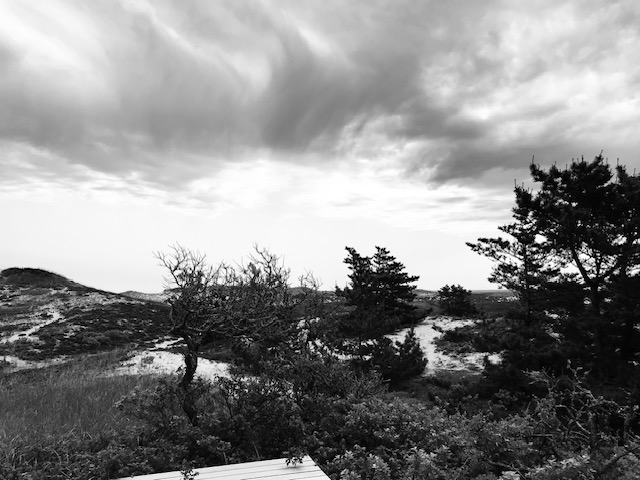
As usual, I dragged my sis-in-law and brother into my hijinks. Thankfully, my brother being an artist, he understands my need to see things for my books. And I’ve taken my sis-in-law along on other research adventures. First, we made the trip out Starvation Ridge so I could see it better. I’d used Google Earth and an Oregon Gazetteer to try and come up with a plausible explanation for the car stuck between two trees in the middle of forest service land. But I wanted to see the terrain better and I’m glad I did! The way I had my character discover the vehicle wouldn’t work for the area. When I came home, I rewrote the scenes where and how the car was found. Not only did I get a good look at the area, but I got a better feel for it too. And my brother added nuances to it because the story is set in April when there would still be some snow and lots of mud. Which I had written into the story, but he explained it a little bit more. Wind can blow the snow off the very top of the ridge and it’s just mud where there is snow in the trees.

Road on Starvation Ridge

Sis-in-law and I went to the museum in Joseph to find out if there was a way to discover why the ridge was named Starvation. And while we saw some great photos of the past and learned a bit more about the county’s history, we came up empty on the reason for the name. Of course, as we were driving around up on the ridge, we came up with all kinds of grisly reasons for the name. But the next day at the suggestion of a local historian, we went to the Wallowa Museum and the woman there found a book and we discovered the reason for the name. And it was nothing like what we had thought. In fact, it was pretty pathetic. According to the book, it was named Starvation Ridge because a man named Billy Smith came up on the ridge and discovered that a large herd of sheep had eaten all the grass off the ridge. He called it Starvation Ridge and it stuck. Kind of lame and not worth putting in my story. I’ll let the readers fantasize about the name as we had.

The Tamkaliks Celebration was as moving and colorful as I remembered. I’d attended this powwow a number of years ago, but after taking a class on writing Native American characters and the teacher suggested attending powwows and taking in the ceremonies and talking to people, I decided I needed to get to this one again. I also plan to have my characters attend the powwow in the next Hawke book. The songs, the welcome they give everyone, the friendship dance (we danced), and the reverence they pay to one another was so worthwhile.

Ceremony of the riderless horse. symbolizing the ancestors and those tribal members lost the past year.

The best part of the whole day was a woman that sat down in front of us. She openly explained what was happening to those around her and taught a young couple how to say her dog’s name which meant, Moose. This isn’t how you write the word, only how you say it, “Sauce Luck.” And she taught us how to say Good Morning. Again, not the way you write it but how you say it, which she explained. “Tots MayWe.” After watching her so enthusiastically sharing her culture, I sat down beside her and thanked her for explaining things and asked if she’d be interested in helping me bring more Nez Perce culture to my books. She was excited to help me! She told me about her education and her B.S. in American Indian Studies and Business and her new job that was basically teaching the Nez Perce culture to those who were interested. We exchanged names, emails, and phone numbers. I have sent her an email and she responded right away. I’m excited to have found another connection to help me make my books true to the Nez Perce culture.

And that, my friends, is why I am happy dancing!

Missing deadlines makes me nauseous.

I have a write on wipe-off board that I use to keep track of my “deadlines.” These are self-imposed deadlines, because I am a self-published or Indie author. But I take keeping to my deadlines a big thing. I HATE when I miss deadlines. I, being boss and employee, beat myself up over missing them and I have a hard time when a deadline passes and see it will be at least another month before a project will be finished.

That is what has been happening with Damning Firefly. Each month, I add another month to get it written and move the rest of the projects I set as goals for the year forward.

I’ve discovered that while I believe I have lots of time to write, I find I spend a lot of time researching and promoting. The book also had to go through a tweak which added more time to the finished project. But I am on the downhill side, which means I am wrapping up the clues, tightening the handcuffs on the suspect, and hoping the twist at the end leaves the reader going, “Wow, I didn’t see that coming” or “That was a good twist.”

I want to put this book up for pre-order but with as many times as I’ve extended the writing of the book, I’m afraid I’ll miss the date. But then, I am also anxious to see what readers think of the cover and the premise. It is darker and more controversial than my usual Gabriel Hawke book. But it was an idea that came from things my parents, who have now passed, said to me at different times. And I think it is something that people in small communities will sometimes hide.

Sales and reviews will tell me if the book was a hit or a miss. There are just times when I feel like there is a story that needs to be told. It’s something that burns in my gut and comes out through my fingertips. LOL that makes me think I should write paranormal. The visual is kind of funny!

I have tried to pair humor with a darker tale in Damning Firefly and tried to show the side of the victim’s and the woman who tried to help them.

Hopefully, by my next post I’ll have a pre-order and the book will have come back from my editor and soon to be released.

WHEN FICTION IS TOO MUCH LIKE FACT

Recently my little town of Springville hit the national news when one storm after another caused the Tule River to flood and fill houses with water and mud. We were among those ordered to evacuate because we live near the river—however despite the rushing water taking out trees and bridges as it headed toward the lake, we were in no danger. However, the first day the only roads to get out of town were flooded and closed.

Long ago I wrote a mystery called A Deadly Feast about a storm that caused a raging river to take out a bridge and strand those who lived on the other side for several days.

Raging Water is a Deputy Tempe Crabtree mystery written several years ago about the flooding of Bear Creek which forces people living along the river to evacuate and causes a huge mud slide which makes it impossible for anyone to leave.

Both books have a great similarity to what recently went on in our small town.

This is happened before.

I wrote Bears With Us when we had an occasional bear sighting in an around Springville. At the time, my grandson was a police officer in Aspen CO and many bear encounters he shared with me. I used his expertise to add excitement to the story.

Last summer several bears decided Springville would be a great place to dine. People reported bear sightings regularly. We had two different bears who decided to visit our trash trailer on different nights looking for hand-outs. One was a big black male, the other a smaller brown bear. They didn’t bother anything else, but were scary if you came home during their visits. Believe me, on those occasions we scurried into the house. We haven’t seen them since early fall.

Since I’ve written my final and the last offering in my Deputy Tempe Crabtree mystery series, I’m no longer worried about writing fiction that predicts future events. But it was fun telling readers about it.

Marilyn

Beating Fear with Knowledge

I think most writers are worriers. Will the readers like the story? Did I have typos/mistakes? Does the plot make sense? Am I not offending the culture of the people I write about? Am I doing justice to the cause? Am I entertaining as well as educating?

Yes, all of these things go through my head as I write a book. I feel bad I can’t get to every book by every author in my genre- mystery/suspense/crime fiction. But I spend most of my time reading books to help me better understand my characters. Because I write Native American characters and I am not Indigenous myself, I feel I must read and learn all I can about the culture and dynamics of the tribe and people I write about.

I have some tribal members who respond to my questions, but I’ve yet to find someone to openly allow me into their world. Which makes me worry, I’m not portraying them as well as I should be. Every time I think about that, I get a knot in my stomach. I want to show them for the inventive, resilient, good-natured people that they are. I also want to show the dynamics that have made them who they are.

An author friend, Carmen Peone, who helped me with my Shandra Higheagle mystery series, that is partially set on the Colville Reservation where she lives, told me about a Choctaw woman author who has a workshop to help Native and non-Native writers better understand their characters. I spent all last week watching, listening, and taking notes. Then I picked up a book I purchased a month ago about a woman who grew up in the area near where my series, takes place and am learning more about the culture and family bonds within the culture I write about.

I have the two closest powwows written into my calendar to attend. I have attended both of them once before, years apart. This summer I will attend both and try to do what Sarah Elizabeth Sawyer suggested for attending a powwow. She had a lot of good insights even though her tribe is in Oklahoma, and I write about Oregon tribes.

One of the series that I work so hard to perfect the cultural dynamics is my Spotted Pony Casino mysteries set on the Umatilla Reservation outside of Pendleton, Oregon. Book 4 in the series released this month.

Lies, deceit, blackmail.

Murder ends it all.

Or does it?

When an employee at the Spotted Pony Casino is caught leaving early, Dela Alvaro, head of security confronts the woman. The lies the woman tells only piques Dela’s curiosity. After witnessing the employee threatening a man, she is found murdered in her car parked in the driveway of her home.

Upon learning the woman used her job at the casino to blackmail men, Dela feels compelled to solve the woman’s murder and teams up with Tribal Officer Heath Seaver. Not only does the duo have a death to solve, but there is also a mystery behind Dela’s dead father. Not to mention, her mom just announced she’s marrying a man Dela has never met.

https://books2read.com/u/4X0WY9

I’ll leave you with something one of my readers sent me in an email. It made my day!

“Your characters are so full of life and personality, I find myself thinking they’re real folk! The sign of a great writer! I just finished the Squeeze. Loved it, love Dela! And when I get up your way, I’d love to buy you a cup of coffee. You are an inspiration for other NW authors and a marvelous advocate for our indigenous peoples. Please keep bringing up the issue of missing people…it needs to be kept alive or nothing will change. Thank you for all you and your posse do to make Oregon a better place. You have my support, 100%. And I’ll await your next book, whoever you choose to write about. I already know I’ll love it.”

Guest Blogger ~ Charlene Bell Dietz

WHY MYSTERIES CAPTIVATE

by

Charlene Bell Dietz

We’re all drawn to what we don’t understand. It must be a primeval survival instinct. We have our daily world, which mostly consists of routine habits and familiar surroundings. But when something quirky intrudes, we find ourselves on high-alert mode. Like at night, when our usual surroundings fade into shadow, and we hear a strange noise, we stop to listen. The appeal of experiencing what’s unknown in the safety of our own cozy world creates our great demand and interest for the mystery novel.

Many authors preach “write what you know” to wanna-be writers. To me this doesn’t make sense. What motivates us to solve problems and engage in dreams comes from our not knowing. Writers are readers, and reader’s read to experience something new and maybe learn. As authors, we need to write what we don’t know.

If you don’t know something how can you write about it?

Maybe you’ve dreamed of being a double agent. Possibly you’ve longed to experience what it would be like to be in a Witness Protection Program. Perhaps you’ve wondered how it would feel to have the hot breath of a serial killer on your neck just before your heavy wrench smashes his face into the dirt. Only human beings can enjoy danger safely, living vicariously, through the words spoken or written by others. No other animal on our planet has this luxury.

My first novel, The Flapper, the Scientist, and the Saboteur, Kirkus Reviews (starred review) started with scant knowledge about an estranged aunt who was an ex-flapper. Inspiration for this novel came to me because her story felt too important to ignore. My ancient aunt had slammed into my busy life, vying for attention with my demanding career. This redoubtable, chain-smoking, rum-drinking woman made a game of criticizing me, turning the air blue with smoke and cuss words, and enchanting my husband.

I’d come home exhausted from my job of problem solving as an administrator in a heavy-handed bureaucracy of educators and also from my layman position, working with a veterinarian to evaluate research protocols at the Lovelace Respiratory Medical Research Laboratory. Every evening, I’d find this tipsy woman telling outrageous tales of her Roaring-Twenties life as a flapper in dangerous 1923 Chicago. She never revealed much about her own antics, except on occasion she’d toss out tidbits of her wild life like delicious appetizers.

Too good not to be told:

What if I combined this ancient flapper’s ramblings and fabrications with today’s devastating corporate espionage problems, using what I did know about biomedical research labs? Then this would be much more than just another Roaring-Twenties flapper story. Even though I’d fashioned an unusual combination, I thought it might be quite an intriguing mix. However, I knew nothing about the 1920s and even less about corporate spying.

Playing around with my knowledge of bits and pieces, tiny kernels of ideas developed into miniature tales. I shuffled them together using fictional characters, places, events, and conflicts. For my strange story to be engaging, each character would have to be connected with the others characters through powerful motivations. This meant even my secondary characters must be three dimensional. I had huge holes in my knowledge. I needed to know more.

Use what you know to figure out what you don’t know:

After untold hours of researching, I made likely guesses to fill in as many empty spaces as possible. I buried myself under a search and find mode. I had started out knowing only the Hollywood version of a flapper’s life along with scraps of information my aunt had given. This wouldn’t do, and I knew nothing about corporate espionage, but spies have always intrigued me. The more I learned the more fun I found in bringing my Flapper, Scientist, and Saboteur to life.

Writing the unknown:

I believe your story deserves to be startling and robust. I always research more than I can possibly use. Then I select only what’s rich and on target. For fun, I throw in some quirky stuff. Here’s the best part: I put all of the above together, mix with my wildest imagination, edit, delete, select the most powerful verbs, revise, revise, revise, then polish my story—with joy.

My award winning stories happen because I dare to write what I don’t know. How does your imagination help you write what you don’t know?

The Flapper, the Scientist, and the Saboteur intertwines a corporate espionage mystery with a generational battle-of-wills story between a dedicated professional intent on fighting chaos to restore order and a free-spirited aunt who needs her niece to live in the moment.

Beth Armstrong, a Denver biomedical scientist, wrestles with the impossible choice of saving her sabotaged, groundbreaking cure for multiple sclerosis or honoring an obligation to care for her cantankerous old aunt. Playing nursemaid ranks just a notch above catching the plague on Beth’s scale, yet her ex-flapper aunt would prefer catching anything deadly to losing her independence under the hands of her obsessive-compulsive niece. 

While a murderous culprit runs loose in the science institute, Beth finds her whole life out of balance. Unpredictable nefarious activities at the institute–which is rife with suspects–cause Beth to wonder if she can trust anyone, while at home her chain-smoking aunt entertains Beth’s neglected husband with nightly cocktails and raucous stories from the Roaring Twenties. The Flapper, the Scientist, and the Saboteur creates a compelling mystery intertwined with a generational battle-of-wills story between a dedicated professional intent on fighting chaos and restoring order, and a free-spirited aunt who insists her niece listen to her heart and learn to live in the moment.

Buy Links:

https://www.barnesandnoble.com/s/charlene%20bell%20dietz/_/N-8q8
https://www.amazon.com/Flapper-Scientist-Saboteur-Charlene-Dietz-ebook/dp/B01HFKL3DA
https://treasurehousebooks.net/product-tag/charlene-bell-dietz/
https://www.audible.com/pd/The-Spinster-the-Rebel-and-the-Governor-
Audiobook/B0BPDCJK4B

Charlene Bell Dietz, raised in the Rocky Mountains of Colorado, now lives in the central mountains of New Mexico. She taught kindergarten through high school, served as a school administrator, and an adjunct instructor for the College of Santa Fe. After retirement she traveled the United States providing instruction for school staff and administrators. Her writing includes published articles, children’s stories, short stories and mystery and historical novels, winning awards from NM/AZ Book Awards, Writers Digest, Public Safety Writers, and International Book Awards, along with earning two of the coveted Kirkus Reviews (starred review) and having two books named to Kirkus Reviews Best Books of 2018.

Connect with Charlene:

chardietzpen@gmail.com

https://www.facebook.com/charlene.dietz.9/

http://inkydancestudios.com