Guest Blogger -Jennifer Giacalone

Working Backwards

When people find out that I write the occasional mystery novel, the most common question I get is “so do you write the ending first and then work backwards?”

So, for anyone who might be wondering if I did that with “Art of the Chase,” the answer is no. However, I didn’t quite write it from beginning to end either. You could say I did it sideways, from the middle out.

Where Is the Middle Anyway?

For me, a mystery turns less on the beginning or the ending and more on the little bit of information that’s so interesting and surprising that it allows you to see certain things about what comes before it and after it.

For example: I was watching a documentary on the works of Vermeer. They talked a bit about how it was unusual for the time period that he used so much blue in his paintings, because it made them very expensive. Blue paint could only be produced with lapis lazuli stone, which had to be hand-ground and then processed in a very unpleasant, potentially dangerous procedure. You didn’t find many painters of that period using it as wantonly as he did.

The advent of French ultramarine produced chemically, in the 1880s, made it much easier and cheaper to work in blue. And it was this seemingly random fact that ended up being what the story turned on.

Because I started to think: what if you had a detective who specialized in art thefts? Would they know about the rarity of blue in Renaissance and Baroque painting? How would that knowledge come into play if a particular piece was stolen? I was starting in the middle. The middle of a story, the middle of a question, the middle of a period of history in which blue paint was a precious commodity.

Research Is The Fun Part

The process of writing is, for me at least, an opportunity to learn. I learn about myself, always; my biases, my areas of weakness as a writer, my own fascinations. But I also just learn about… well, stuff.

Almost everything I choose to write about requires some amount of research. And it’s always about something of interest to me. There’s nothing I love more than learning a lot about a topic of interest, in this case, art. And in particular, the life and work of Artemisia Gentileschi, the various methods of producing paint colors used by the old masters, and the architectural landscape of Florence. What a delight!

I fell down a rabbit hole, and popped up somewhere late in the third act with bits of fascinating information in my little paws like some sort of literary groundhog. The threads that connect my little prizes are ultimately what hold the story together. Why does this painter matter to this detective? What sort of thief would want to steal a piece of hers? And what does the history of blue paint have to do with any of it?

There is a Connection Here, I Swear

I spread my treasures out and draw lines from one to the next. I figure out why these things matter to each other, and so the story reveals itself. My plotting efforts tend to look less like a traditional bulleted outline, and more like a murder board with photos tacked up alongside post-it notes, connected by a brightly colored thread that runs from the middle out.

And I’m the lunatic cop who can stand back and see how it might all connect; who do I need my thief to be, my heroine, my informant? How do I build them to make these treasures shine and tickle my readers as much as they tickled me?

Ah, there it is. I see it. There’s my story. There’s my heroine. This is how she gets from here, to here, to there. There’s my thief. That’s what he wants, and why.  It’s not a matter of working backwards or forwards. It’s a matter of allowing the story to emerge from the bits and pieces that delight me the most, and letting them surprise the reader as much as they surprised me.

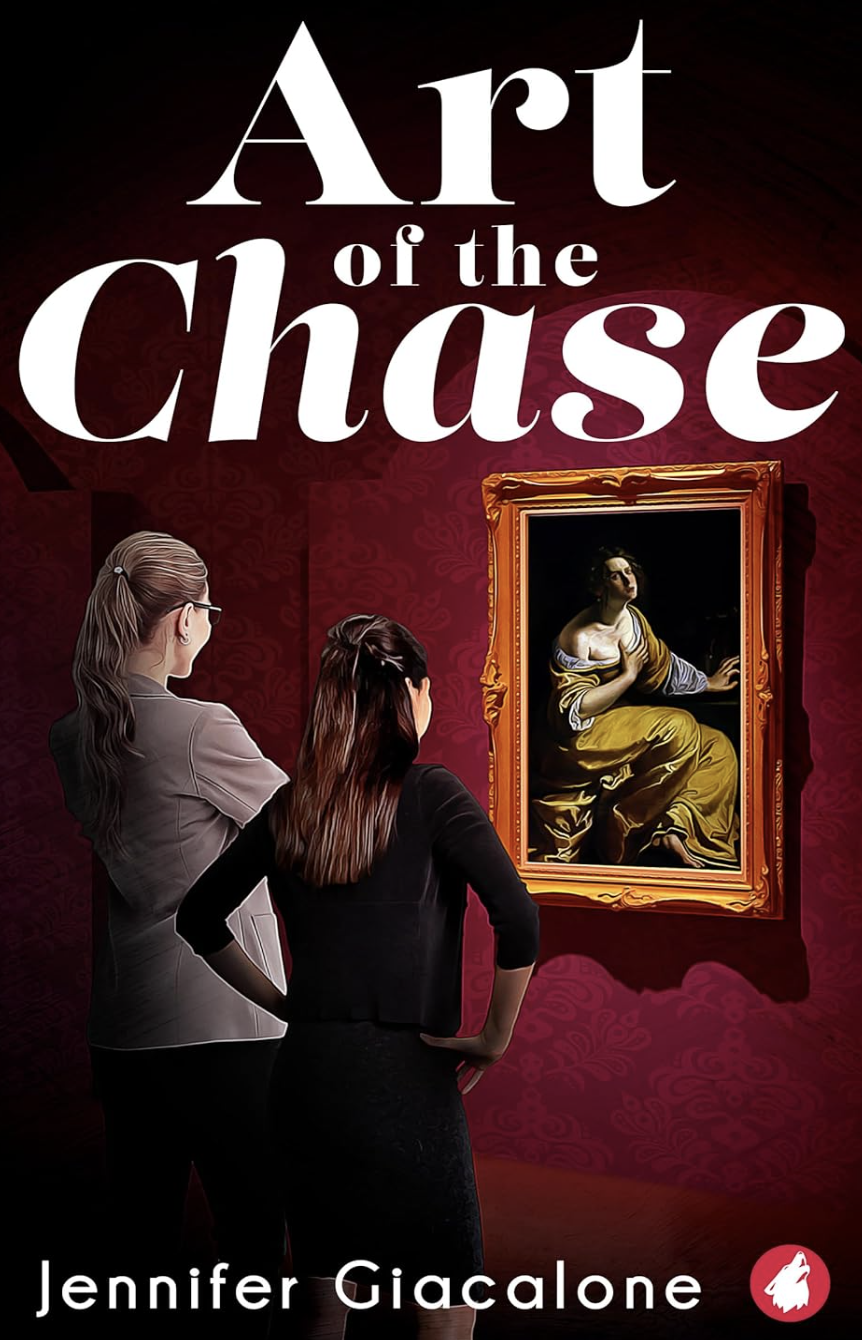
When a notorious art thief surfaces, warring detective exes reunite for the hunt. 

Six years ago, the “Fabulous Gustave” slipped the grasp of Agent Fleur van Beekhof, making off with a priceless artwork…and Fleur’s beautifully ordered life. Suddenly the cool, pragmatic Europol detective lost her detective partner and wife, her rising career, and her control, thanks to the addictive lure of cards.

When a new Italian art theft bears all the markings of Gustave’s flamboyant, taunting style, Fleur is put back in the field, because no one knows him better. She jumps at the chance to correct the mistake that ruined her life. The hitch? She has to work with her fiery ex-wife. 

Where Fleur is a detective who loves art, Renata is an art expert who loves being a detective. Where Fleur is by the book, Renata is reckless and leaps into danger. But they’ll need both of their skills to catch the slipperiest thief Europe has ever seen … even if it shatters what’s left of Fleur’s heart. 

Buy link: https://www.amazon.com/dp/3963248351

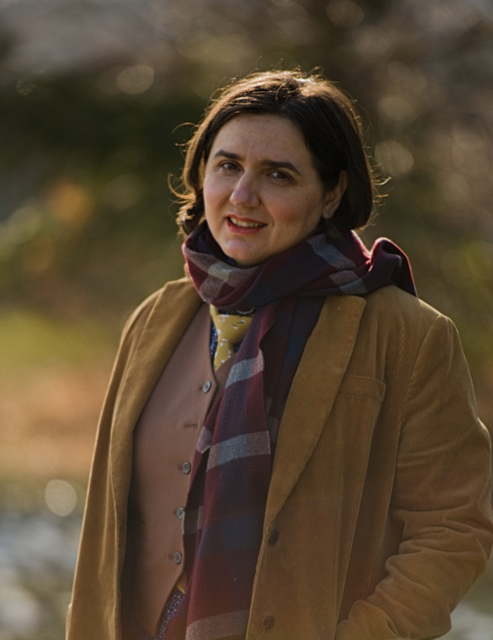
Jen Giacalone is a neurodivergent queer nerd who has lived many lives and brings with her a wealth of experience to tell high-octane drama, thriller, and mystery stories across books, film, and TV.

After spending her twenties as a rock and roll frontwoman, and her thirties as a graphic designer in boardrooms of Fortune 500 companies, she’s currently in what she likes to call her “final form” as a writer.

You can usually find her disappearing down rabbit holes of fascinating research on random subjects that will turn up in one of her books. And, of course, she sprinkles a little glitter on everything she touches.

https://www.instagram.com/jengiacalone/

Guest Blogger ~ Keith Yocum

This is how I came up with the mystery premise in “A Whisper Came,” book 1 in the Cape Cod Mystery series.

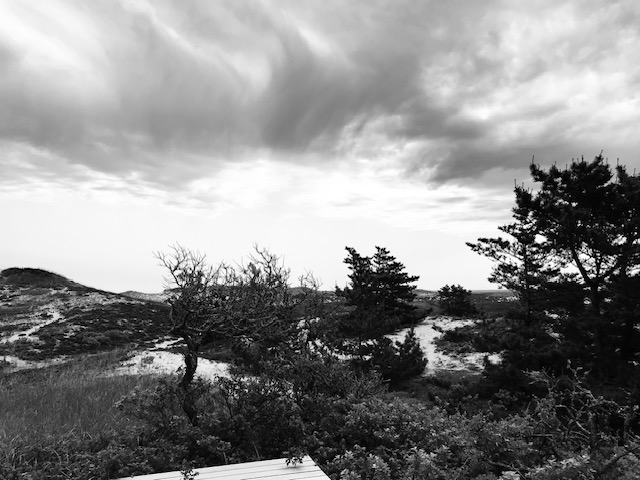
There is something about the ocean that lends itself to mystery. Whether it’s the isolation of deserted beaches or the strange sound of the wind whistling through tall sea grasses, the area lends itself to a sense of uncertainty and mystery.

I live in Chatham, Massachusetts, at the elbow of Cape Cod. It has the distinction of being surrounded on three sides by salt water: Nantucket Sound, Pleasant Bay, and the Atlantic Ocean. It was founded in 1664 and incorporated in 1712. For American towns, this is old.

Along with the passing centuries has come a litany of shipwrecks off Cape Cod—estimated at 3,500—and, of course, legends. Dotting the cape are 14 lighthouses, though many are not operational.

In 2019, I toured the decommissioned lighthouse on Monomoy Island off Chatham. I had driven my boat past the lighthouse many times over the years but never set foot on the island. The Monomoy lighthouse and keeper’s house are used by the US Wildlife Service to study migratory seabird and resident seal populations.

During the tour, I was surprised by the utter isolation of the lighthouse. It took us nearly a half-hour to walk across the deserted island to reach the lighthouse and keeper’s house. We were allowed to climb to the top of the lighthouse, but there was nothing to see but sand, scrub brush, and the ocean. It was beautiful but oddly intimidating because of its isolation.

During the visit, our Wildlife Service guide chuckled when he mentioned that some researchers at the keeper’s house felt the building was haunted.

For a mystery writer, there’s nothing more intriguing than a hint of spectral disturbances in this setting. After returning to the mainland, I researched the history of this area of Monomoy Island and found unsubstantiated rumors of murders that occurred near the lighthouse in the 1860s. Several legends about ghosts on the island also provided a perfect plot twist.

As a former journalist, I decided to write a modern story involving a young reporter named Stacie Davis sent to Chatham to cover the story of an unidentified woman’s body found floating off the island of Monomoy. The fact that the woman’s body wore clothing from another era added just the right amount of intrigue.

Stacie, the lead character in “Whisper,” is a young reporter at the low end of her newspaper’s totem pole. As a general-assignment reporter, she is given a variety of stories that test her mettle. She’s not happy to be sent on the 90-mile drive to Chatham from Boston, but she’s also keen to prove she can handle any story.

I work closely with my wife, Denise, when revising a manuscript. Perhaps it’s her training as a psychologist, but she was instrumental in bringing authenticity and toughness to Stacie’s character. We have worked together on ten novels, and I always take her advice on improving character development, plot pacing, and romance (of course).

The reception for “A Whisper Came” was much stronger than I anticipated. Our local bookstore here in Chatham sells quite a few paperbacks, and I’ve just finished “Dead In The Water,” book 2 in the Cape Cod Mystery series with intrepid reporter Stacie Davis.  

I can’t wait to see what trouble Stacie will get into in book 3. She’s one tough cookie.

A Whisper Came

Stacie, a young, ambitious reporter, is sent to Chatham on Cape Cod to follow up on the body of an unidentified woman found floating nearby. Over the centuries, Cape Cod has been the site of thousands of shipwrecks, leaving the sandy shore littered with debris, legends, and ghost stories. Stacie’s editors encourage her to dig into the mix of Chatham’s quirky residents and to write about the mysteries surrounding the old Monomoy Point Lighthouse. On a lark, she makes a nighttime visit to the lighthouse with a young charter boat captain and, in the process, stumbles tragically into a dark mystery that forces her to question her sanity and the truth buried in a legend. 

Amazon: https://www.amazon.com/dp/B093TJR9QC

B/N: https://www.barnesandnoble.com/w/a-whisper-came-keith-yocum/1139508965

Ibooks: https://books.apple.com/us/book/id1570048192

Google iPlay: https://play.google.com/store/books/details?id=uvNWEAAAQBAJ&pli=1

Keith Yocum is a former journalist and business executive who has worked for publications including The Boston Globe and The New England Journal of Medicine. He lives on Cape Cod and is the author of ten novels. He welcomes feedback at http://www.keithyocum.com.

https://www.facebook.com/yocum.keith/

    Merging Fact With Fiction by Karen Shughart

    I’ve been a contributing blogger for Ladies of Mystery for roughly five years, and initially, at the beginning of each year, I made a list of the topics I wanted to write about for each month. But a year or two ago I decided to be a bit more flexible and instead of sticking to the script, so to speak, to write about what motivated me at the time.

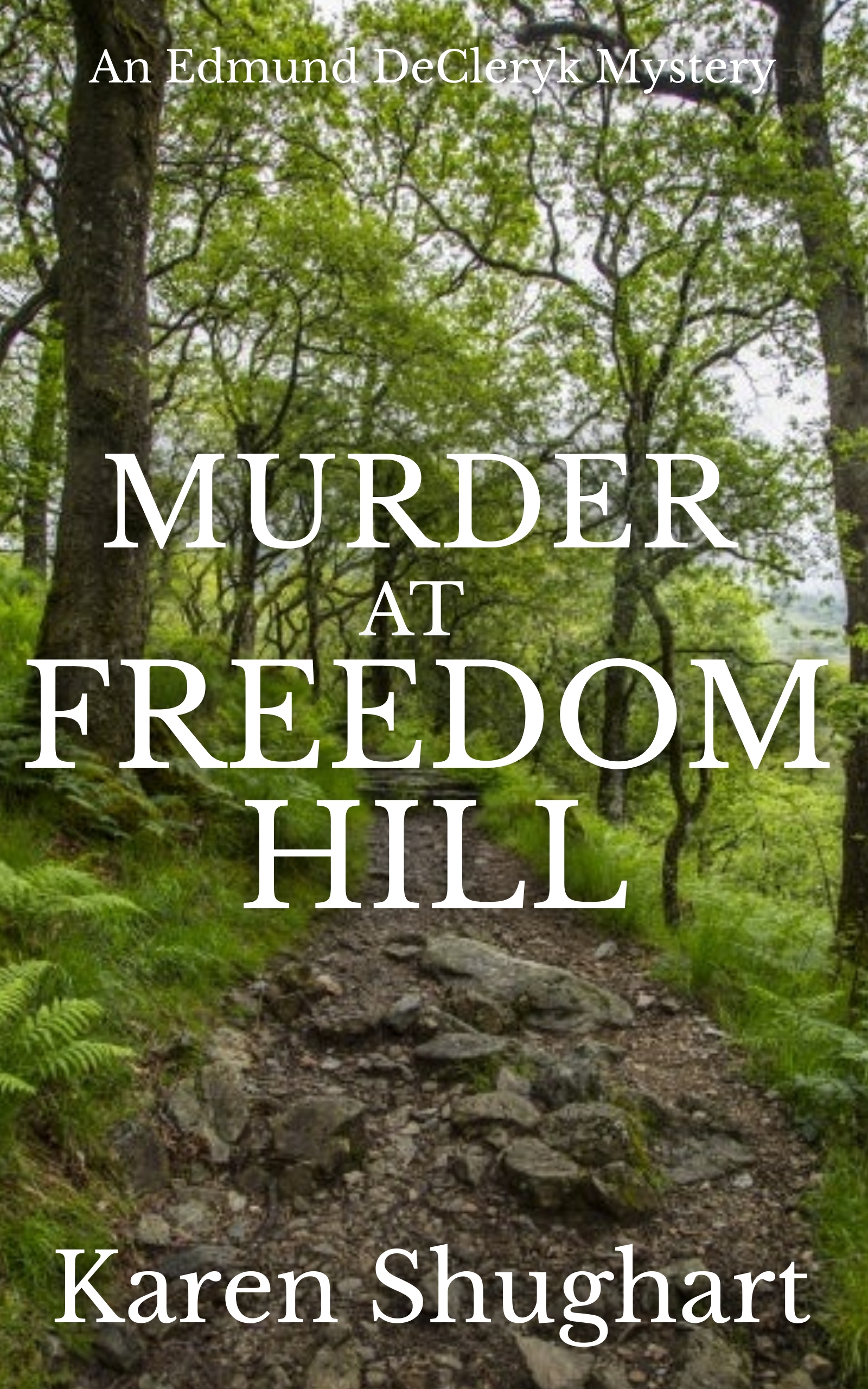
    When I began to think about what to write for this month’s blog, at first I came up with a blank–some months are easier than others–and after that I considered writing something about Valentine’s Day or Presidents’ Day. Somehow neither felt right, and I couldn’t think of anything original to say about the topics. Then I decided that because February is also Black History Month I’d write about the third book in my Edmund DeCleryk cozy mystery series, Murder at Freedom Hill, which is about the murder of the beloved, biracial mayor of the fictional village of Lighthouse Cove, NY, whose body is found on the path leading to the beach at a historical site called Freedom Hill on the south shore of Lake Ontario

    Freedom Hill is a real historic site a short drive from our house where before and during the Civil War, through an intricate, dynamic and well-developed Underground Railroad system, escaping slaves fled down a path to boats that would transport them across the lake to freedom in Canada. At that same time Maxwell Settlement, upon which the fictional Macyville in the book is loosely based, was a thriving community of freed people of color who worked along side abolitionists to help those slaves escape.

    In the book, when criminal consultant, Ed, is hired to investigate the mayor’s murder he wonders if the crime might be racially motivated and related to an exhibit the mayor had been working on with Ed’s wife, Annie, head of the local historical society and museum. The exhibit’s focus is on Macyville and the mayor’s ancestors, both Black and White, who lived there, but a critical piece of information the mayor had promised to provide is missing.

    The historical society, with help from the mayor, has also obtained a grant from the National Trust for Historic Preservation to restore Macyville, which had fallen into disrepair after its residents left for better opportunities after the Civil War, and a fire destroyed it in the 1920s (the real settlement remains in ruins, but there’s a historic marker designating the site). Annie is working with contractors to assure the project will be completed in time for July 4th weekend festivities, but she suspects that someone is trying to stop it from moving forward. Is the mayor’s death related, or is something else afoot?

    I enjoyed doing the research for this book and merging fact with fiction- as I do with all the books in my series- but for some reason this particular period of history has always fascinated me. It was gratifying to learn how so many of our residents played a critical role in helping to shelter fleeing slaves from capture before transporting them to freedom.

    Karen Shughart is the author of the Edmund DeCleryk cozy mystery series, published by Cozy Cat Press, including the award-winning book three, Murder at Freedom Hill.  All books are available in Kindle, Kindle Unlimited, paperback, and Audible. She is a member of CWA ( Crime Writers Association of the UK-North America Chapter) and F.L.A.R.E ( Finger Lakes Authors and Readers Experience).

    My window into other worlds

    I don’t know how many of you get giddy when you can visit or see the settings from books you’ve read. But as a reader, I have always enjoyed being taken to settings or worlds I haven’t been and may never be able to see. Books have always been my window into other worlds.

    A few weeks ago, my hubby and I made a trip from SE Oregon to Killeen, TX to see his sister and her husband and deliver boxes of belongings to our oldest granddaughter now living in Arkansas. On the way over we drove through the four corners and the towns of Flagstaff, Tuba City, Windowrock, and Gallup. The settings of author Tony Hillerman’s novels.

    My husband just shook his head as I said the names of places that I’d read about in those novels. I could envision Leaphorn, Chee, and Bernie Manuelito driving around on the dirt roads I saw from the freeway.  Seeing First Mesa on Hopi land and the hogans on the Navajo land… It stalled my breath to see places and things I’d envisioned as I read or listened to Mr. Hillerman’s books but had used my imagination at what it would look like.

    In case you haven’t figured it out already, I have been a huge fan of Tony Hillerman’s books since reading the first one. While he has more Native American life, traditions, and legends in his stories than I have in mine, he was my inspiration to have a Native American character as the main protagonist in my three mystery series. 

    He lived on or near the four corners area where the Hopi, Navajo, and Pueblo tribes live. He had many contacts among these tribes to help him show more of the culture than I’ve been able to cultivate living a distance from the reservations and tribes I write about in my Gabriel Hawke novels, Shandra Higheagle Mysteries, and Spotted Pony Casino Mysteries.

    I aspire to write as intriguing and thrilling reads even though they aren’t as steeped in the culture and lives of the people.

    The next Gabriel Hawke book, I’m having Hawke and Dani, his significant other, attend Tamkaliks. A powwow held every July in Wallowa, Oregon. I attended it this past year for the third time and am now feeling confident I can give my two Nez Perce characters the experience they would undergo having been away from their culture for decades due to their careers and trying to fit into a culture other than their own.

    However, with the return of Hawke’s sister to his life, she is showing him how good their culture is for their wellbeing. That will be a subplot in the book to his investigation into a decades-old body he discovers while patrolling the Snake River in the Hells Canyon.

    I‘m hoping my contact within the Nez Perce community and the Fish and Wildlife Trooper helping me with the patrol of the river will give my story more realism.

    Speaking of realism, I took a trip to the Oregon Coast last Spring to research for my newest release, The Pinch, book 5 in the Spotted Pony Casino Mystery series. In this book Dela Alvaro, head of security for the Spotted Pony Casino is at a tribal-run casino on the Oregon Coast helping them beef up their security. While there a child is kidnapped and she runs into an old friend.

    The Pinch

    Dela Alvaro, head of security for the Spotted Pony Casino, is asked to do a security check of a casino on the Oregon Coast. She no sooner starts her rounds at the casino and a child of a dubious couple is kidnapped. Special Agent Quinn Pierce of the FBI has been out to get the father for some time.

    One of Dela’s best friends from the Army is also at the casino and they catch up. The next morning, Dela finds her friend strangled. As Dela struggles with the violent death of yet another best friend, Tribal Officer Heath Seaver arrives and the two begin untangling the lies, kidnapping, and murder.

    As Heath carries the kidnapped child to safety, Dela must face a cunning killer alone.

    Pre-order now, releases on February 22nd. https://books2read.com/u/38Y787

    I hope you enjoy this latest book and follow my books to learn more about the Nez Perce, Umatilla, and Cayuse tribes as my characters, Hawke and Dela begin to, in Hawke’s case become reacquainted with his roots and Dela is just beginning to learn she may have a Umatilla heritage.

    I purchased this seed holder pot from a Pueblo woman in front of a market on the reservation. She told me she was Acoma (Ah-kuh-muh) Pueblo with the Bear Clan. She showed me her name and a bear paw on the bottom of the pot. She then told me the solid black on the pot represents mountains and land, the orange sun, and the thin lines rain. I enjoyed my visit with her.

    That is the thing I love most about reading, writing, and traveling. I learn new things and broaden my horizons.  

    Guest Blogger ~ Erica Miner

    Prelude to Murder: Bringing Murder and Music Together

    Everything about my journey to the mystery genre was connected to my love for writing and my life as a violinist with the Metropolitan Opera in New York.

    Though I had played the violin most of my life, I had started writing before I began studying the instrument. In grade school, at the age of 7 or 8, I was placed in an afterschool program for Creative Writing. I don’t remember much of what I wrote (it was about 100 years ago!). But I do remember loving the entire process: creating characters and plot lines and weaving them all together to tell stories. Then I discovered I also had a talent for the violin. That fiendishly difficult instrument monopolized my creativity, though my passion for writing never left me.

    Eventually I ended up in the orchestra of the most prestigious opera company in the world, where I was part of a uniquely exciting, glamorous subculture. What I hadn’t anticipated was the hotbed of intrigue behind that famous “Golden Curtain”—an operatic Tower of Babel with clashing egos, rampant jealousies, and nefarious happenings. I then realized an opera house was the perfect place for mischief and mayhem. Why not bring murder and music together in that milieu? My Julia Kogan Opera Mystery series was born.

    When it comes to the old adage “Write what you know,” I was not immune. My main character, Julia, is a young violinist much like me when I first started out at the Met: a starry-eyed neophyte who knows nothing about the backstage conflicts that take place between the fascinating but maddening characters who work there. In the first book of the series, Aria for Murder, on the night of Julia’s debut performance at the Met, an unthinkable tragedy occurs, and suddenly she becomes entangled in a murder investigation. Julia’s sleuthing makes her the target of the killer, and she uses her own ingenuity to survive.

    There was little research involved in my Met Opera mystery, since I had been there for 21 years; but Prelude to Murder, the recently released sequel, takes place in a totally different atmosphere: Julia goes off to the desert to perform with the Santa Fe Opera. I had never been to Santa Fe, so I visited the area to do copious amounts of research on its history and culture. It was a revelatory experience, and the book is infused with rich details. Of course, no sooner does Julia arrive in Santa Fe than operatic chaos ensues, and she finds herself involved in yet another murder investigation, this time with the added element of Santa Fe’s ghostly activity. Her wits carry her through, and in Book #3 she goes to San Francisco for more operatic mayhem.

    Though I find the mystery genre the most difficult to write, it also is the most challenging. The potential for murderous intrigue against the background of a theatre, where the turmoil behind the scenes is often more dramatic than what occurs onstage, is limited only to the number of opera houses in the world—and to my wicked imagination.

    Prelude to Murder

    Young, prodigious Metropolitan Opera violinist Julia Kogan, having survived her entanglement in an investigation of her mentor’s murder on the podium, and a subsequent violent, life-threatening attack of a ruthless killer, is called upon for a key musical leadership position at the Santa Fe Opera. But at the spectacular outdoor theatre in the shadows of the mysterious New Mexican Sangre de Cristo Mountains, she witnesses yet other operatic murders, both onstage and off. Dark and painful secrets emerge as, ignoring warnings from her colleagues and from Larry, her significant other, Julia plunges into her own investigation of the killing. Ghostly apparitions combine with some of the most bloody and violent operas in the repertoire to make Julia question her own motives for searching for the killer. But this time the threat to her life originates from a source she never would have imagined.

    Buy links:

    Amazon: https://www.amazon.com/Prelude-Murder-Julia-Kogan-Mystery/dp/1685124429/ref=monarch_sidesheet

    Barnes and Noble:

    https://www.barnesandnoble.com/w/prelude-to-murder-erica-miner/1144067662?ean=9781685124427

    https://www.thirdplacebooks.com/book/9781685124427

    After 21 years as a violinist with the Metropolitan Opera, Erica Miner is now an award-wining author, screenwriter, arts journalist, and lecturer based in the Pacific Northwest. Her debut novel, Travels with My Lovers, won the Fiction Prize in the Direct from the Author Book Awards. Erica’s fanciful plot fabrications reveal the dark side of the fascinating world of opera in her Julia Kogan Opera Mystery series. Aria for Murder, published by Level Best Books in 2022, was a finalist in the 2023 Eric Hoffer Awards. The second in the series, Prelude to Murder, published in 2023, glowingly reviewed by Kirkus Reviews (https://www.kirkusreviews.com/book-reviews/erica-miner/prelude-to-murder/), finds the violinist in heaps of trouble in the desert at the Santa Fe Opera. The next murderous sequel takes place at San Francisco Opera. As a writer-lecturer, Erica has given workshops for Sisters in Crime; Los Angeles Creative Writing Conference; EPIC Group Writers; Write on the Sound; Fields End Writer’s Community; Savvy Authors; and numerous libraries on the west coast.

    https://www.facebook.com/erica.miner1

    https://twitter.com/EmwrtrErica

    https://www.instagram.com/emwriter3/

    AUTHOR WEBSITE:

    https://www.ericaminer.com