More Character Development – Gabriel Hawke

I had a reader ask me how I come up with my characters. Last month I wrote about how I came up with Shandra Higheagle, my main character in the Shandra Higheagle Mysteries.

This month I’ll tell you how I came up with Gabriel Hawke, the main character in the Gabriel Hawke Novels. How I came up with names and secondary characters.

To start with, I wanted to set a series in the county where I grew up. I love the mountains, the valleys, the rivers, and the lakes. Wallowa County is beautiful year-round. Growing up in a small community, you learn the dynamics quickly. There are people whose families homesteaded; they feel the county is theirs. Anyone who moves in is an outsider until they have lived there for several generations It’s just the way it is. That makes for conflicts and misunderstandings. And small communities have secrets. Some are a hundred years old and some aren’t that old, but they are there and you know in a rural area, gossip moves faster than an F-16. Those were part of the reasons I picked this county for my setting. That and I wanted a Game Warden and have deaths in the mountains.

I asked my son-in-law if I could ride along with an Oregon State Police Fish and Wildlife Trooper. He set it up, and I spent a day riding around the county, learning what the job entailed, and I knew this was my character’s occupation. The trooper I rode with told me about how he could go from one corner of the county to the opposite one in one day, checking hunting tags or doing a callout. The county is 3,152 square miles. So it could take several hours to go from one corner to the other because most of the roads are gravel or logging roads that he navigates.

While riding with him, he told me stories about some incidents that he helped with and told how he not only does his job as a Fish and Wildlife officer, he also has to do the job of a State Trooper because the county is so large yet only has a population of 7,500, so there are few county and state law enforcement officers. In fact, there are four main towns in the county and only one has city police. It is the county seat.

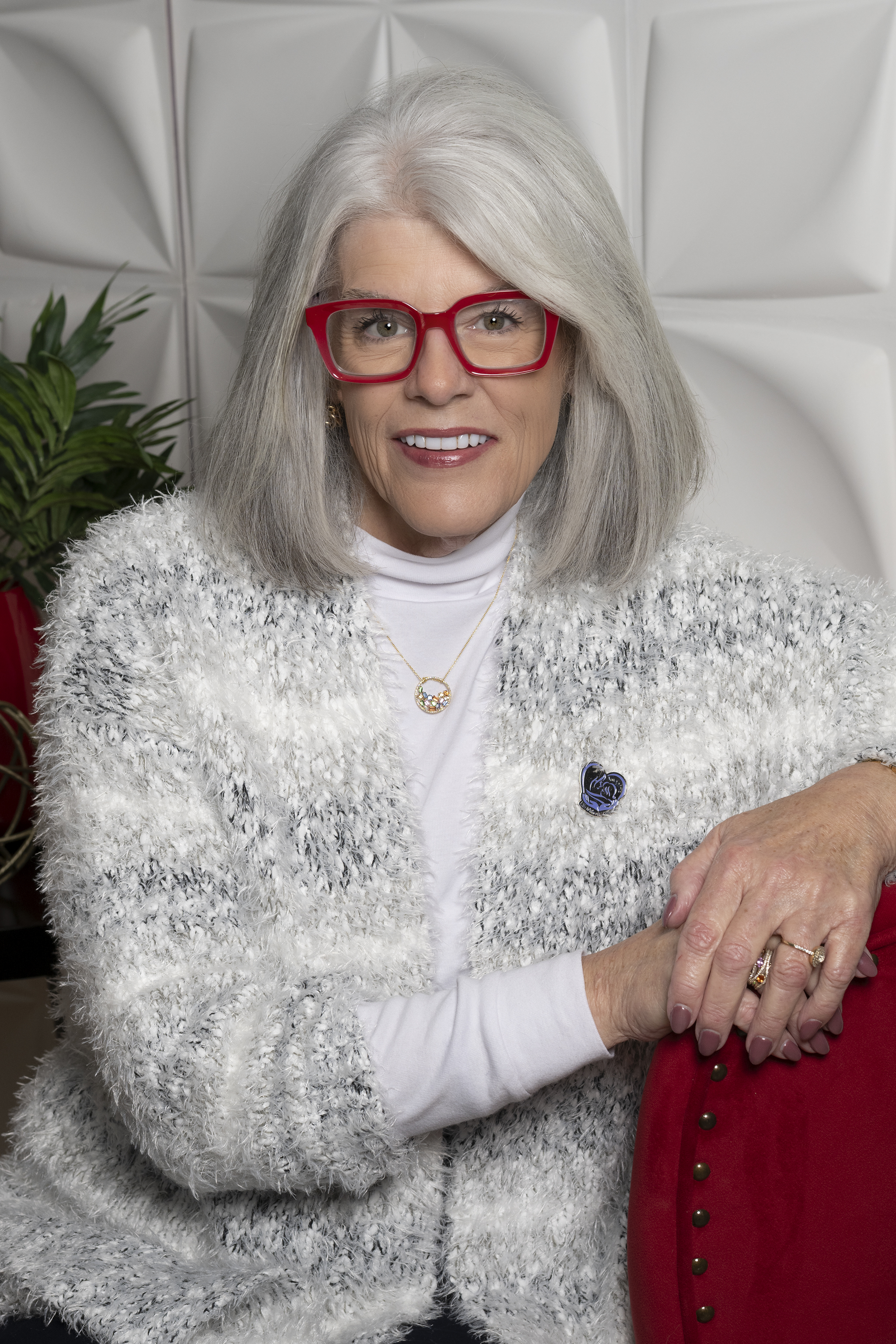
My friend author Carmen Peone took this photo for me.

Now for Hawke. Because Wallowa County was the summer and winter home of the Wallowa band of Nimiipuu, or Nez Perce, I wanted my character to be of that tribe and to protect the land and animals of his ancestors. I gave him a backstory of growing up on the Umatilla Reservation outside of Pendleton- 3 hours from Wallowa County. His mother is Cayuse and his father was from the Nimiipuu Lapwai Reservation in Idaho. He excelled in sports in high school and went on to join the Marines. He was there four years and came back to Oregon and entered the Oregon State Police Academy. His first job was patrolling I-84 between La Grande and Hermiston — that meant he could live on the reservation and work.

He met a woman, married her and then ended up arresting her brother for drugs. She left him and when there was an opening in the Wallowas, he applied and got it. He isn’t a young trooper. He’s actually been a trooper long enough he could retire. He’s in his late fifties, getting closer to sixty, but he loves his job.

This was all the information I knew when I started writing the first book, Murder of Ravens.

I started that book with him being a mature single man living in a studio apartment over an indoor horse arena. He has a horse, a mule, and a dog. Since he isn’t one to get caught up in names, his horse is Jack, the name he had when Hawke purchased him. The mule came without a name, and after Hawke dealt with its cantankerous disposition, he named the mule Horse, hoping it would act more like a horse than a stubborn mule. And Dog is his constant companion when he’s out in the mountains or at home. When the animal came to him when he said, “Come Dog,” Hawke decided the name was good enough.

The horse stable where Hawke lives is part of a farm run by Herb and Darlene Trembley. Over the years, the landlords have become friends and an excellent resource for Hawke when he’s looking into families with history in the county. They grew up here, and their families have been in the county for generations.

While patrolling in the Wallowa Mountains and Eagle Cap Wilderness, Hawke enjoys the freedom of wearing his civilian clothes so poachers won’t take pot shots at him. He takes Dog with him, rides Jack, and packs Horse. They are a smooth-working team when Horse is having a good day. Hawke loves being in the mountains and takes all the patrols that he can.

While in the mountains investigating a death at Charlie’s Hunting Lodge, he butts heads with the new owner, Charlie’s niece, Dani Singer. Initially, they don’t get along and don’t understand one another. Hawke is trying to reconnect with his heritage, and she has run from it her whole life, pretending she wasn’t Indigenous, to not be tossed aside when she applied for the Air Force Academy. She made it in and became a skilled pilot. Since retiring from the Air Force, she uses that skill to fly clients into the Hunting Lodge with her plane and helicopter. As the series progresses, so does their admiration for one another.

The other secondary characters who show up in most of the books are Kitree, the girl who outfoxes Hawke in Book 2, Mouse Trail Ends. She ends up an orphan when her parents are killed while camping in the mountains. She is adopted by Tuck and Sage Kimball, Dani’s wrangler and cook at the hunting lodge.

His mother, Mimi Shumack, still lives at the Umatilla Reservation. He visits her often. She is a big part of who he is as an adult. She remarried when Hawke’s father left and had a daughter who is ten years younger than Hawke. The stepfather was a mean drunk. This shaped who Hawke is today.

Then I had to discover how many city police, county officers, and state police are in the county. I gave them all names, and they come and go in each book depending on what is happening.

Hawke’s personality is quiet, reflective. He rarely loses his temper unless he sees an animal or person being mistreated. He believes in taking care of the land and animals to keep nature at peace. He upholds the laws but will bend the law if it will catch a killer. He has tracking skills he uses not only to follow tracks but also to follow the trail of clues he uncovers while investigating. His need to find the truth or evidence can sometimes get him into trouble, but he manages with the help of Dog and friends to get out of it.

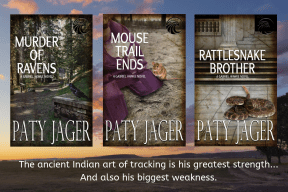
If you haven’t had the chance to read one of Hawke’s books, you can find Murder of Ravens at my website in ebook, audiobook, and print.

Murder of Ravens

The ancient art of tracking is his greatest strength…

And his biggest weakness.

Fish and Wildlife State Trooper Gabriel Hawke believes he’s chasing poachers.

However, he encounters a wildlife biologist standing over a body wearing a wolf tracking collar.

He uses master tracker skills taught to him by his Nez Perce grandfather to follow clues on the mountain. Paper trails and the whisper of rumors in the rural community where he works, draws Hawke to a conclusion that he finds bitter.

Arresting his brother-in-law ended his marriage, could solving this murder ruin a friendship?

Universal book link: https://www.books2read.com/u/bxZwMP

There’s a bundle of holiday gifts coming your way! 

I’m joining eleven other fabulous, award-winning, and best-selling mystery authors for a 12 DAYS OF CHRISTMAS STORY GIVEAWAY.

Here’s how it will work: 

For eleven days starting December 1st, you’ll receive a link for a completely free holiday story–no newsletter signups necessary. Then, on the 12th day, you’ll get a bundle of extra goodies to celebrate the season

Sound like fun?

If you want to make sure not to miss any of the stories and bonuses, you can sign up for my newsletter using this link: https://successful-speaker-2057.kit.com/dddfb95104

Characters, where do they come from?

Shandra Higheagle Mystery, this month.

After my post last month about Getting to Know my Character, I had a reader ask me to write about how I create, develop, and name characters.

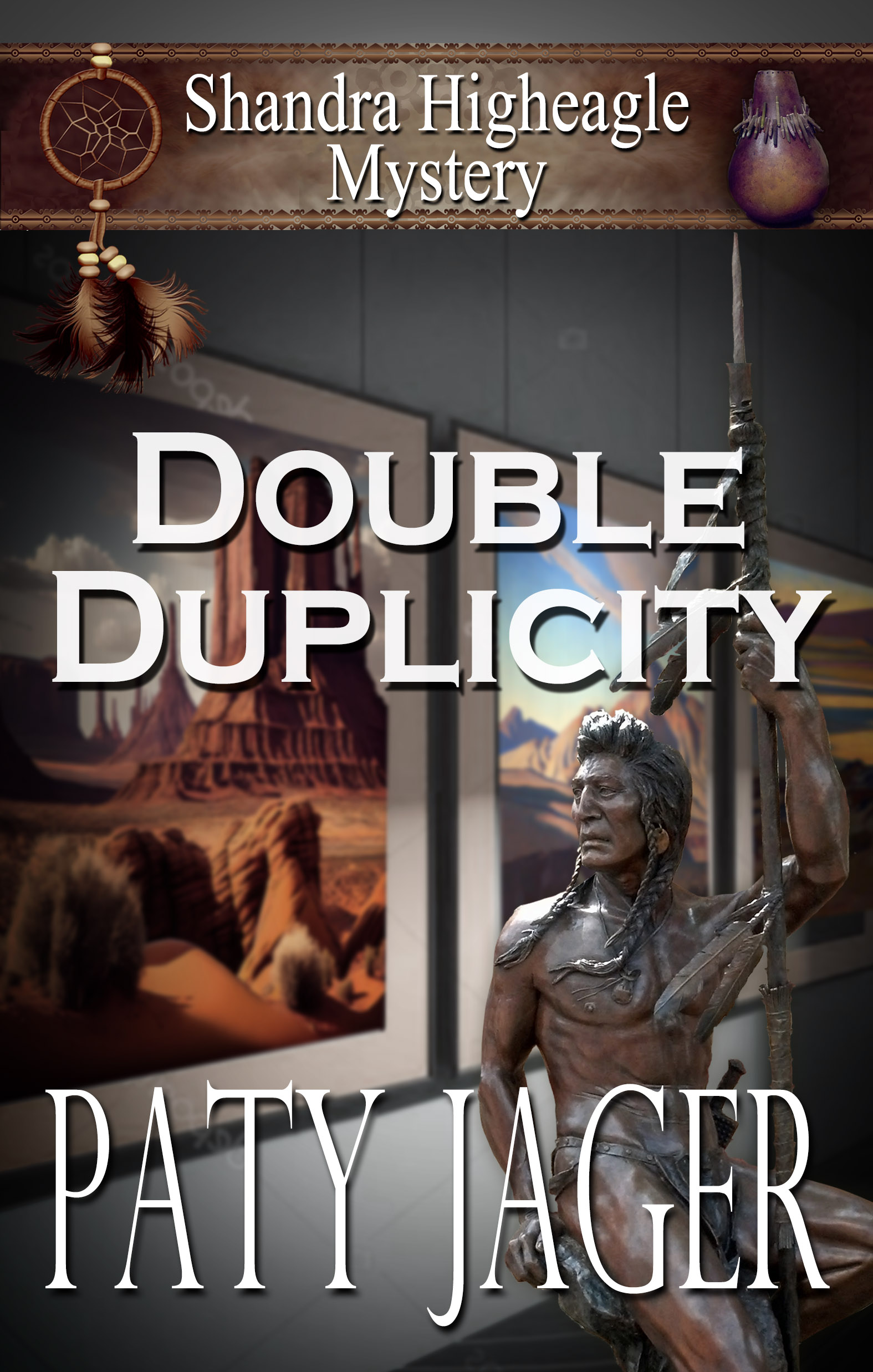
I guess I’ll start with my Shandra Higheagle series. In the case of this series, my brother gave me the idea for a unique murder weapon. He is an artist and was working at a bronze foundry, welding bronze statues and putting the patina on them. He told me about a large statue of a warrior with a spear and how the spear from the warrior’s hand up could be removed. It was made that way for transportation.

Once that idea was in my head, I knew the first book had to be set in the world of art to have the statue come into play. I decided my main character would be an artist. Since I am captivated by Indigenous culture and have a friend in that world who was willing to help me understand things I would need to know, I made Shandra a potter who made vases that are sold in art galleries. She is also half Nez Perce from the Colville Reservation and half Caucasian. To make it easier for me to write from her perspective, I had her Nez Perce father die when she was four and her mother took her away from that side of her family. She grew up off a reservation on a cattle ranch in Montana with a stepfather who kept her Nez Perce origins hidden.

That gave me a good way to reacquaint her with her Nez Perce heritage as I learned things. I didn’t try to appropriate her culture, just share her learning and experience. I had the help of my friend, who lives on the Colville Reservation, to help me with the books that are set there and how the people there live.

I set the books in a fictional ski resort area in Idaho. We had traveled through Kellogg, ID, a few years earlier, and I thought it was a wonderful place for an artist to reside. It gave Shandra a mountain where she would gather clay and purify it to make her vases. I had learned about an artist who made his own clay in Wallowa County from my brother. He set up a time for me to meet with the artist and learn all about the gathering and purifying of the clay. While I was there, he showed me several of his pieces that were in various stages of the processes he used.

Once I had all about Shandra settled, I started working on secondary characters. Her dog, Sheba, who is large and scared of her own shadow. A woman who helps her with her clay and taking care of the land that she purchased. Crazy Lil came with the ranch like a stray cat. She grew up on the ranch, lost it when her parents died, and went to work for the person who bought it. When they sold to Shandra, Crazy Lil didn’t move on and became Shandra’s right-hand woman. She’s a bit on the cantankerous side and is leery of Ryan, the detective who takes a shine to Shandra.

Then I added friends. A woman who owns an art gallery in Huckleberry. Naomi is married and she and her husband, Ted, sell Shandra’s vases and know a good deal about her. Ruthie is a Black woman who owns a diner in Huckleberry. She and Shandra bonded over Shandra’s love of cheeseburgers and caramel shakes. Her other good friend is Miranda Aducci, whose family owns the Italian Restaurant in Huckleberry. There are several other unique characters like the albino doctor who is trying to find a cure for the disease that killed all the males in his family in their 50s, and Maxwell Treat whose family owns the local mortuary.

When Shandra is considered a suspect for the death of a gallery owner in the first book, she butts heads with Ryan Greer, the detective for the county. This brings in a man who was a cop in a large city and came back to where he grew up because his large Irish family all live in and around the county. His cultural beliefs about little people help him to come to terms with Shandra’s dreams with her deceased grandmother before she realizes that they are helpful.  

Detective Ryan Greer came to me as I was building the beginning scene in my head. I made him Irish and gave him a good Irish name. His mother is Irish and taught her family all about her homeland. His siblings all have Irish names.

My vision of Shandra

Shandra’s name just came to me as I was putting together what she looked like to me. Of course, I wanted a last name that sounded Native American. Sheba’s name came from a big black fluffy dog my daughter had while growing up. Crazy Lil, was just something I typed the first time I brought her into the book. That’s the way all the secondary characters’ names come to me in each book.

As I type a scene and add a new character, I have in my mind what they look like and I add a name that seems to suit them, or the purpose they have for the story. That sounds kind of vague but that’s the way my mind works.

I always have the main character, the victim, and the suspects fleshed out when I start a book, but the secondary characters that are new to the series pop up as they enter my head.

I’m sure readers are interested in how I came up with my Gabriel Hawke and Dela Alvaro characters in their series. I’ll tell you about them in next month’s post.

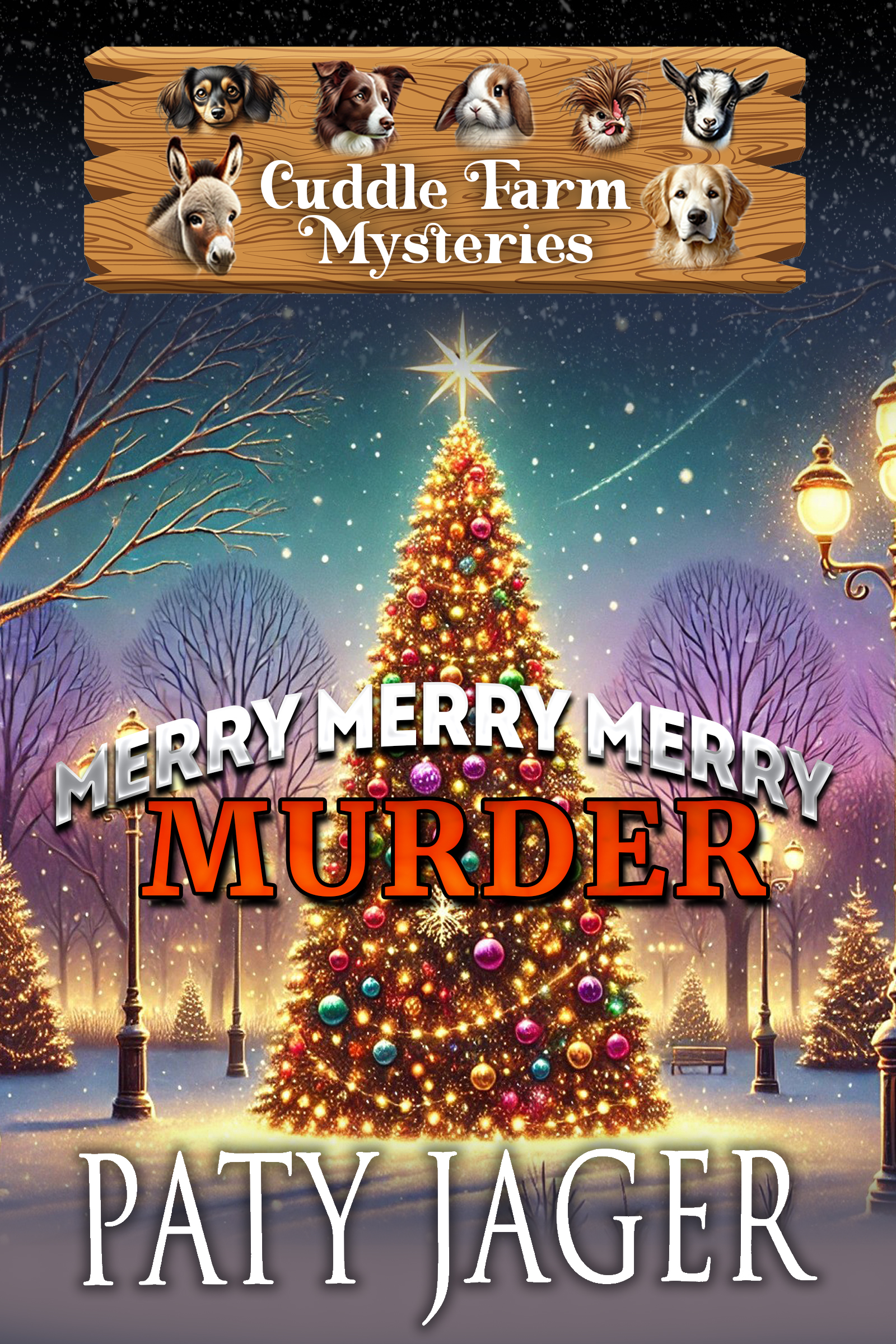
I wanted to give you the info about my new Cuddle Farm Mystery Series. There will be a blog tour for the first book, Merry Merry Merry Murder, from October 10th-23rd. there will be character posts and posts about how I came up with the series on multiple different blogs if you want to hear about the book from Cocoa, the border collie, Cupcake, the pygmy goat, Lulu, the chiweenie, and Betty, a secondary character who is one of the main character’s best friends.

 You can purchase Merry Merry Merry Murder ebook from the usual vendors or you can purchase the ebook from my website.

“Where comfort and cheer meet scandalous secrets—A holiday mystery set in a small town.”

In the close-knit town of Auburn, Oregon, Andi Clark’s therapy animals bring comfort to the community, especially during the holiday season. When a young girl seeks solace from Athena, Andi’s therapy dog, after witnessing an unsettling scene behind the sleigh, it marks the beginning of a much darker holiday.

As the town gathers for the Tree Lighting Ceremony, a scream shatters the festive atmosphere. Cocoa, Andi’s loyal Border Collie, pulls her toward a chilling sight: a woman standing over the lifeless body of the girl’s mother, strangled with Christmas lights.

Determined to help the grieving girl and her town recover from the shock, Andi, her therapy animals, and her niece, a county deputy, take it upon themselves to investigate. As they uncover secrets and untangle clues, they stay one step ahead of the new sheriff and worry that the killer lurking in their midst could be someone they know.

Purchase now from my website: https://www.patyjager.net/product/merry-merry-merry-murder-ebook/

Purchase from a universal buy link: https://books2read.com/u/mZ6qpJ

Guest Blogger ~ Glenda Carroll

Where Did I Put That Plot?

By Glenda Carroll

            Plots don’t come easily to me. When I first started writing the Trisha Carson amateur sleuth mysteries about ten years ago, I sat down and blithely typed away following any idea wherever it took me. But that stopped working. I aimlessly spent time chasing after dead ends … nicely written, to be sure, but instead of moving the plot along, it stopped it cold. I wasted so much time.  I realized that I needed more control over what happened and when.  I’m not a plotter, as you can tell. I enjoy the freedom of following whims. So, this hasn’t been an easy step for me. But I’m trying.

 Take Better Off Dead (BOD), the latest book in the mystery series. Like all the mysteries before it, I knew the catalyst for the plot. It’s always based loosely on something true. In the series, each book swirls with an undercurrent of open water swimming.  That’s usually the true part.

 Almost fourteen years ago, a solo swimmer in the Maui Channel Swim, a 10-mile relay race between the islands of Lanai and Maui, was sucked under a powerboat by the propeller wash near the finish line. He suffered catastrophic injuries to one arm which had to be amputated and one hand that was reattached although it had two finders missing. I wasn’t there, but I read about it. Things like that stay in the back of my mind especially when I’m swimming in open water like the San Francisco Bay in Spring and Summer and Fall.  It came to the surface when I began to think about BOD.  I knew I wanted to use the idea of a horrible boating accident. But I needed a victim, some potential murderers and a realistic answer to the question, “why?”

            I lingered over the concept of a premeditated horrific accident but could go no further. At the time, I was also tutoring first generation, low-income high school students in English. One sophomore was reading Shakespeare’s Hamlet and wasn’t thrilled about the language. He didn’t understand Elizabethan English and no amount of my prompting and wheedling made the play on par with a Marvel comic book. That is until I told him the story of Hamlet, his dead father, his uncle and his mother in everyday language. It went something like this:  Hamlet, the prince of Denmark, is at university when he learns of his father’s death. While returning to the family castle, he runs into the ghost of his dad who tells him that his brother, Hamlet’s uncle, poisoned him and that he wants revenge. The revenge part sparked his interest.

 I lingered on how Shakespeare killed his actors: drowning, poisoning, stabbing with a sword, stabbing with a poisoned sword. I compared it to the violence running through video games or a superhero movie. What if Hamlet was the Hulk? That caught his attention. I convinced him to come up with a modern-day plot based on Hamlet. He bought into the idea.  So, we read the play, both the contemporary translation and the Elizabethan language version and he jotted down notes to help him with his video game. That’s when the light bulb went off.  If my student could update Hamlet, so could I. Later that evening, following Shakespeare’s plot, I started writing … modernizing the famous revenge tragedy. The moody Hamlet became Harrison. His dead father and the very much alive brother turned into Andy and Marty Barlow, wealthy Marin County financiers. That’s all the kick I needed. The story began to fall into place.

I can’t say the rest was easy, but I could see a path ahead of me. As part of the Acknowledgement in Better Off Dead, I thanked Will Shakespeare. Without him and Hamlet, there would not have been a Book 4 in the Trisha Carson series.

I’ve started Book 5, and it revolves around a skull found on a San Francisco Bay beach covered in eel grass. (That’s the true part.) Do you think I learned anything from my experience with Better Off Dead? Unfortunately, no. I have no idea what to write next.

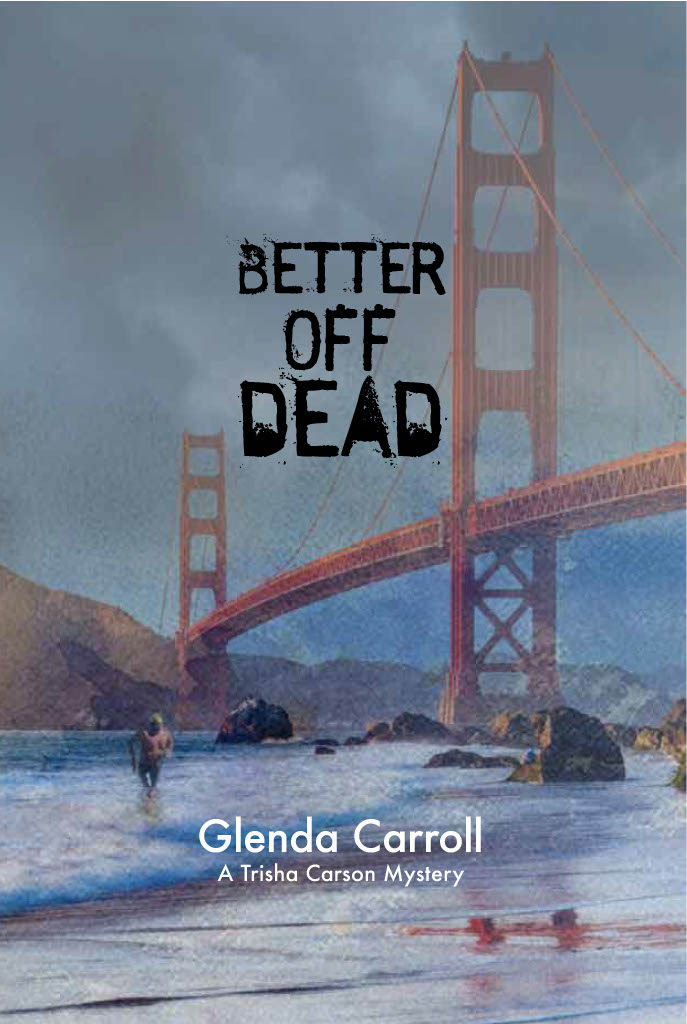
BETTER OFF DEAD: A Trisha Carson Mystery

Successful Marin County, Ca financier, Andy Barlow, is training for a competitive open water swim in the cold San Francisco Bay. Unexpectedly, his support boat runs him over midstroke, killing the swimmer instantaneously. Consumed with grief and anger, Andy’s college-aged son Harrison, returns from London to probe what really happened. Although the local sheriff’s office and the Coast Guard have closed the case, Harrison refuses to believe their findings. He reaches out to amateur sleuth Trisha Carson to hunt down the real killer.

Trisha digs into the man’s history and finds fractured relationships in his family, his business and his marriage. There’s clearly more than one person who had reason to seek a deadly revenge, but would they go as far as murder?

Amazon – paperback, ebook

https://www.amazon.com/Better-Dead-Trisha-Carson-Mystery/dp/B0DXKTJRK2

Barnes & Noble – paperback, ebook

https://tinyurl.com/u4tt9nas

Audiobooks

Apple:  https://tinyurl.com/y5t5jw34

Audible:  https://tinyurl.com/yy5anbwr

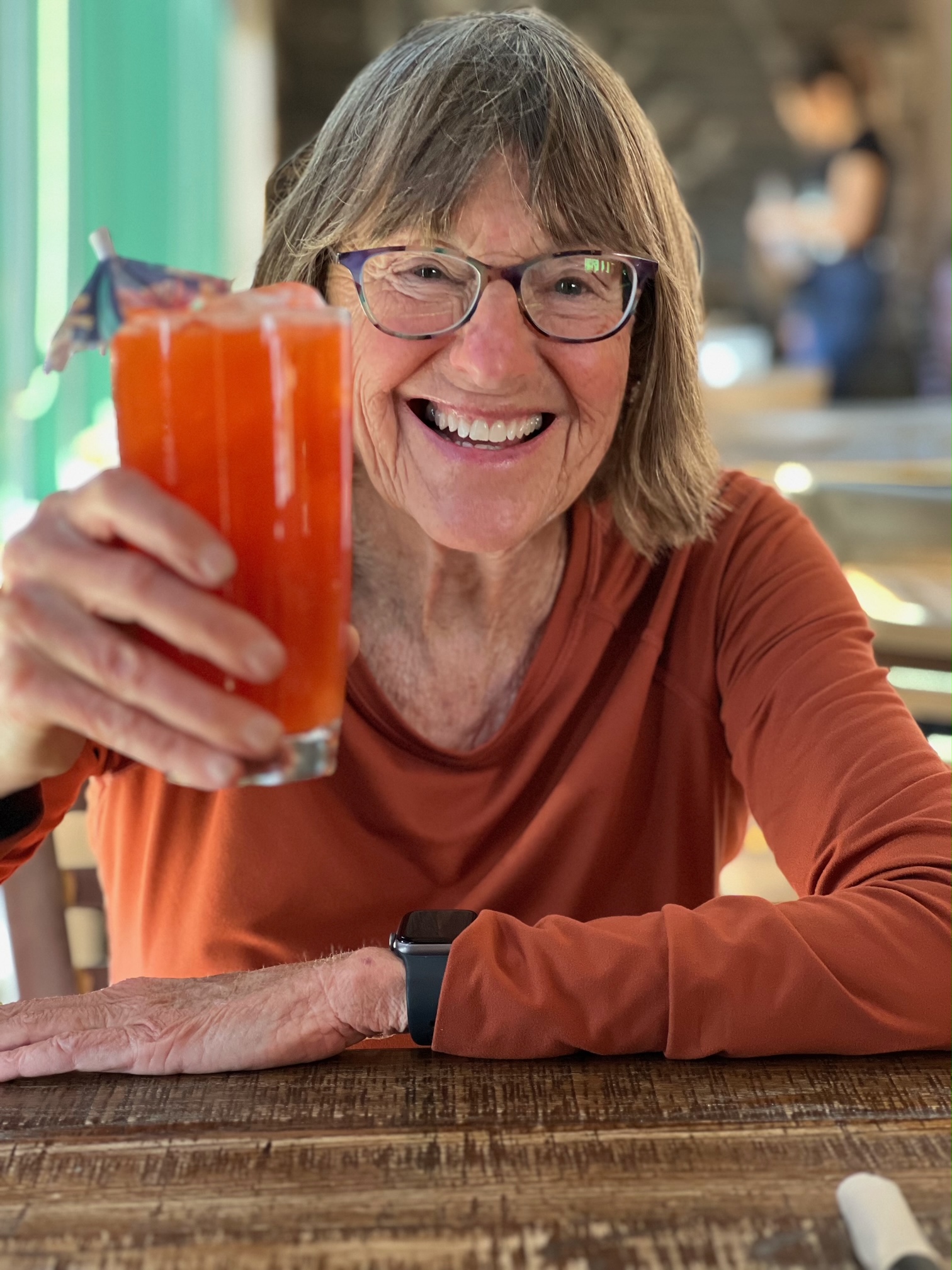
Glenda Carroll is the author of the amateur sleuth Trisha Carson mysteries set in the beautiful San Francisco Bay area. The fourth book in the series, Better Off Dead, came out in Spring 2025. It’s available in paperback, ebook and audiobook. Alas, Carroll hasn’t won any awards; hasn’t even been short-listed for one. Glenda spends more time swimming than writing. She also tutors first generation, low-income high school students in English and History. She is the current president of Sisters in Crime, Northern California.

She lives in Northern California with her dog, McCovey.

Website: glendacarroll.com

Amazon: https://tinyurl.com/y5mmhh55

Indies United Publishing House Lcc: https://tinyurl.com/ycynyr8a

Barnes & Noble: https://tinyurl.com/u4tt9nas

Audible: https://tinyurl.com/yy5anbwr

Facebook:  https://www.facebook.com/glenda.carroll

Instagram: https://www.instagram.com/glenda.carroll/

Bluesky: ‪@ggcarroll.bsky.social

Are You Listening to What They Are Saying?


by Janis Patterson

Books are a widely varying commodity. Some are so wonderful you could live in that world forever. Some are so bad you don’t even try to finish them. Most fall somewhere in the middle. Right now we’re dealing with a new kind of book, a kind of zombie product written by the abomination of AI and released by the overwhelming hundreds. Luckily – for now, at least – they are recognizable primarily for their lifelessness.


So what is it that binds these widely varying standards together – good, bad and zombie?


There are lots of things, but I believe a lot of it is dialogue. Good books have the characters speaking as if they were real people – not interchangeable cardboard cutouts. Of course, this is occasionally a rule that can be tweaked. In a futuristic sci-fi populated with human-android characters, the speech patterns and word choices would be different than in a light-hearted Regency romance, and each choice should be congruent not only with the time and setting of the book, but with the status/occupation/ethnicity of the individual character.


For an only slightly exaggerated example, everyone is familiar with the slave Prissy’s exclamation during the battle of Atlanta sequence in Gone With The Wind – “I don’t know nothing ‘bout birthing no babies.” As offensive as some modern readers might find it, her heartfelt cry is commensurate with her time, her status and the situation of the scene. Just imagine how jarring it would be if she were to say : “Good gracious, Miss O’Hara, I am completely ignorant of the processes involved in delivering a baby.” That would pull the reader right out of the scene. To a large extent, language equals character.


And the principle doesn’t really change no matter what the genre, though the actual words probably will. In a hard-boiled detective story, a police sergeant is not going to speak the same way as a career petty thief. In a western, a wealthy rancher with political aspirations will sound different from a brow-beaten saddle tramp. In a Regency romance a high in the instep duke will have a completely different vocabulary and range of meaning than a poverty-stricken dock worker. In a contemporary romance sometimes the difference will be less blatant, mainly because of the ubiquity of books and television acting as influencers, but there will be noticeable differences.


Just to make the convoluted even more so, know that all the above can be overridden if the plot demands. Perhaps the duke is working on the docks to find out who is stealing his fortune or something. Perhaps the weary saddle tramp is really a Pinkerton man out to investigate the rancher whom he thinks is really setting himself up as a dictator. Perhaps…. you get the idea. Confustication upon confustication. But you must play fair with the reader – not by telling him from the outset what is going on, but by allowing him to listen to the various people and find out the truth for himself.


Language equals character.


And if you’re writing a hard sci-fi about three-eyed, blue-skinned Orychiks from the Dyinolive galaxy with no humans involved you’re pretty much on your own… just remember that in almost every society the ‘elites’ (for want of a better word) speak differently than the ‘hoi polloi’ (again for want of a better word) primarily as a matter of status. I think this need for distinction, for individuality (even in a herd sense) is hardwired to people’s/being’s innermost self. Even among most animal species there is a distinct pecking order.


Just remember two things – language creates and showcases character, and you must play fair – enough that the reader can follow along with you and understand, even if you do pull a few tricks along the way.

Guest Blogger ~Joanne McLaughlin

Repeat That Name, Please  

            Identity is a big deal in my novels. Maybe it has something to do with all the Superman comic books I read in the barbershop while my dad was having his hair cut. Lots of identity stuff in those stories, secret and otherwise. Midwestern farm boy or big-city newspaper reporter? Mild-mannered, bespectacled guy or visitor from another planet able to leap tall buildings in a single bound?  

            Names—specifically, who we are versus the person we allow the world to see—are a common thread in my first four published novels, three darkly romantic vampire tales and a thriller. Vampires reinvent themselves from century to century; the rest of us sometimes do, though over shorter lifetimes. And, of course, in literature and in life, often all we know of a person at first is the name presented to us.

            In my fifth novel, A Poetic Puzzle, one name sets my protagonist, M. Irene “Mimi” Jones—an under-recognized, under-employed poet/English literature professor—on a mission. It’s the name she shares with internationally acclaimed poet Mary Irene Jones, who has vanished, but not before sending Mimi a cache of her heretofore unpublished manuscripts. Is the timing of these two events a coincidence? Are the manuscripts clues of some sort? And if so, why entrust them to Mimi, of all people? The same-name thing must be significant, right?

            I should mention here that the house Mimi lives in is one she inherited from yet another Mary Irene Jones, the paternal grandmother for whom she was named.

            About that: The name Mary Irene Jones is what prompted me to write A Poetic Puzzle.

            You see, my own father’s mother was a Mary Irene Jones, too, before she married my grandfather. She didn’t disappear, per se, but I never got to know her. My dad scarcely did—he was only nine years old when she died in 1931 of what was apparently characterized as “women’s trouble.” My mother suspected that meant some sort of reproductive or breast cancer. I’m not sure anyone now living would know. My father was the family’s youngest child; he, his older brother, and his two older sisters are gone now.

            I look like my father, as does my son. Both of them more closely resemble George McLaughlin, Mary Irene’s husband, my paternal grandfather. But in the lone photograph I have of her, I can see myself.

            That photo, actually a picture of a photograph, may be the only one that still exists. I don’t know whether she had siblings whose children or grandchildren might have family photo albums. I have never had close ties to my McLaughlin relatives, let alone any Jones descendants who might be her family. Judging from her husband’s birth year, I think this Mary Irene was born in the United States in the late 19th century, but I don’t know when or where. I know she married a man from northeastern Pennsylvania and ended up living in Philadelphia, but I don’t know the circumstances. Except for the year, I don’t know the date of her death or where she was buried.

            That sepia-tone image of my grandmother sits next to my laptop as I write this. I’ve studied it endlessly, searching for clues beyond the obvious. In it, she has dark hair, brown, I suppose, since my father and I and at least one of his sisters had dark brown hair. She has a long face not unlike mine—my late Aunt Vera, whom I resemble a bit, had the same long face.

            Pince-nez eyeglasses sit on my grandmother’s nose—maybe she was near-sighted the way I am. Her light-colored, lacy long-sleeved dress is cinched at the waist with a bow. And she is standing outdoors, with trees in the background. Holding her left hand is a small boy, maybe sandy-haired, maybe five years old. He is dressed for warm weather. My mother told me that she had been told that the boy was not my dad, but who offered that information, I don’t know.

            Were my grandmother and this boy, presumably her other son, standing in their backyard? Were they having a picnic in a park? Were her daughters—one older than the boy, one younger—playing away from the camera’s lens? Was my father an infant napping nearby?

            How my mother came to give me this photo, I don’t recall. Did my uncle’s wife, a distant cousin of Dad’s who married his brother, give it to my parents? My mother always suggested that particular aunt-by-marriage was the source of whatever McLaughlin family history we were aware of. Ancestry.com shows any number of second and third and more distant cousins with whom I share a bit of DNA, but because I have no details about my grandmother’s forebears, I can’t readily know which of these many cousins, if any, sprang from the same branch of the family tree she and I came from. Answers might lie at the bottom of a deep and daunting rabbit hole, to add another garden metaphor, or it might be a fruitless search.

            Truly, Mary Irene Jones McLaughlin is a mystery to me.

            Which got me thinking back in spring 2022: What if I immortalized her (sort of) in a mystery? What if, given that I knew little more than her name, that’s where my story began?

            I dropped her married name from the plot line, lest someone think this book was nonfiction. Also because, as names go, Mary and Jones are definitely common ones.

            As A Poetic Puzzle opens, the reader learns that the two Mary Irene Joneses not only have the same name, but also the same occupation, and are affiliated with the same small college in suburban Philadelphia. It soon becomes apparent, however, that what’s in a name is a confounding, confusing bit of business.

            Mimi Jones discovers much as she scrutinizes the pieces of A Poetic Puzzle, not the least of which is this:

            How well do we really know anyone?  

A Poetic Puzzle

Internationally acclaimed poet Mary Irene Jones has vanished—calls and texts unacknowledged, bank accounts emptied, car abandoned. But before she disappeared, she mailed never-published manuscripts to a lesser-known namesake poet, M. Irene “Mimi” Jones. Are the manuscripts clues only Mimi can decipher? And what about the handsome Philadelphia cop assigned to the case? He seems as intrigued by Mimi as by the missing celebrity poet. Talk about a person of interest…

Amazon.com: A Poetic Puzzle: A Mystery in 32 Pieces: 9781951967130: McLaughlin, Joanne: Books
A Poetic Puzzle – Kindle edition by McLaughlin, Joanne. Romance Kindle eBooks @ Amazon.com.

Joanne McLaughlin began telling stories in second grade, creating superhero fan fiction in the Philadelphia rowhouse where she grew up. She has worked for public media and newspapers in Philadelphia, upstate New York, and northeastern Ohio, involved in award-winning coverage of topics from politics and public health to fashion and financial markets, as well as Pulitzer Prize-finalist architecture criticism and a Peabody Award-nominated podcast. For several years, she also served as vice president of a firm that managed and booked blues musicians. Her novels include the romantic mystery A Poetic Puzzle; Chasing Ashes, a crime thriller; and Never Before Noon, Never Until Now, and Never More Human, a vampire trilogy. Her latest short fiction appears in Ruth and Ann’s Guide to Time Travel, Volume 1; the short stories Peppina’s Sweetheart and Grass and Granite are available on Amazon. Joanne is inspired by strong women like the ones who raised her, determined to meet challenges head on. Joannemclaughlin.net

Social media:
https://facebook.com/joannemclaugh

https:Instagram.com/joannemclaugh

@joannemclaughlin.bsky.social

Joanne McLaughlin (@joannemclaugh) / X

Joanne McLaughlin | LinkedIn