Soup Weather

November. Sunrise comes later and sunset comes sooner. Though I live in California, the nights are chilly. I bundle up on the sofa, a fleece throw over me, book in hand, and a cat or two jockeying for position on my lap. What’s for dinner? This time of year, it’s usually soup.

I start with the basics. Onion and garlic sauteed in olive oil. Add lots of veggies, whatever is to hand. Carrots for color, mushrooms, a handful of fresh spinach. Toss in that leftover cauliflower or broccoli. Add cans of tomatoes and pinto beans. I like pinto beans in my soup.

I add homemade broth made from leftover chicken or turkey bones. Perhaps I’ll add a splash of Worcestershire, soy sauce or even rice vinegar.

Then it’s herbs and spices, going beyond salt and pepper. Toss in oregano, or maybe a pinch of tarragon. With so many spices to hand, I’m experimenting with smoky paprika, cumin and coriander. Cayenne and chili, curry and sometimes even cinnamon or nutmeg for something different.

Soon there’s a fragrant pot of delicious homemade soup simmering on the stovetop.

And what does that have to do with writing? Plenty.

When I’m writing a novel I start with the basics. Instead of onions and garlic, it’s plot, characters and setting. Decisions must be made. Will it be first person, or third, or a combination of both? That depends on what kind of novel I’m simmering.

The plot thickens—sorry, couldn’t resist that, as long as I’m going with the cooking analogy. Suffice to say I want my soup to have plenty of variety and flavor. And my novel to have a story full of twists, turns and surprises.

The Jeri Howard novel I’m finishing up, The Things We Keep, is one such pot of soup. This is the 14th book I’ve written with Jeri as protagonist, so I’m well acquainted with my fictional Oakland private eye and the world she inhabits. On that basic framework I build my story, and I think this one has its share of plot twists.

As for the setting, this time Jeri is sleuthing in familiar Bay Area territory. In other books I’ve taken her farther afield, though for the most part in California, though she goes to New Orleans in The Devil Close Behind. In Witness to Evil, I sent her to Paris, though she eventually wound up in Bakersfield.

As for characters, I do have a list of staples. Jeri’s father Tim, now retired, who at the start of the series was a history professor and a major player in Till The Old Men Die. Her fiancé Dan, who has his first appearance in Bit Player. Longtime attorney friend Cassie Taylor, who has appeared in several books since the first, Kindred Crimes. I enjoy adding new characters to the mix and if I like them well enough, they get return appearances. For example, New Orleans private eye Antoine Lasalle, who appears in The Devil Close Behind, has a walk-on in The Things We Keep.

It’s soup weather, a comforting bowl on a chilly night. Or several nights. Because soup melds flavors when it sits in the fridge overnight. I can put it on the stove again and add new herbs and spices. Basil this time or lemongrass for something different.

Novels, like soup, can always be revised.

Guest Blogger ~ Terri Benson

I’ve written two historical romances, and read a lot of them growing up, but I also enjoyed mysteries. Somewhere along the line, I picked up a Clive Cussler novel with Dirk Pitt and his classic cars. While the Dirk Pitts stories themselves generally didn’t focus on the cars, there was one mentioned in every book and photos were usually on the back cover. Those books rekindled my interest in the beautiful old cars. I generally go for the pre-1950s cars, not the later muscle cars – a fact that causes some discussion between myself and my husband.

There are quite a few car shows around the Four Corners region where I live, and some of the larger auction houses like Barrett-Jackson and Mecum hold events in Denver, Las Vegas, and Scottsdale – all within a reasonable weekend trip for me. I get my ideas for the cars in my books at these shows, as well as perusing online catalogues, websites, and blogs. Once I have a car in mind, the story seems to come from that.

I’m a bit odd in when I’m starting a book, I almost always come up with the title first, based on the car, or in the case of Pickup Artist, a Marmon-Herrington pickup I saw in Vegas several years ago. If you read the book (and I hope you do!) you’ll find the title has more than one meaning, which is always my goal.

My main character, Renni Delacroix, is a young, pretty, female classic car restorer, who has had to fight her way into the industry for those specific reasons. Her unusual background growing up with a widowed great uncle and his middle-aged son, both of whom were involved in circle track and stock car racing, gave her far more experience with car bodies and engines than most men twice her age. That experience has allowed her to become a top-ten restorer, but it’s left her with a hefty chip on her shoulder after spending years proving herself over and over. She has another, more unusual skill, which gives her even more grief – when she touches a car, she starts to see its history in her dreams. It can be helpful in her chosen career, but has been hard on past relationships, not to mention making her the butt of jokes during her college years and beyond.

Her gift (or curse as she sees it) exposes an old mystery in each book, but doesn’t help much in solving said mystery, or contemporary mysteries she’s involved in. Often, as in The Pickup Artist, those past and present mysteries, separated by decades, end up being related. An eclectic cast of characters (and I mean that literally), both help and hinder Renni with their meddling and advice.

The Pickup Artist

Classic car restorer Renni Delacroix has a unique gift, one kept carefully hidden: when she touches a car, she sees its history. Focused on building her business in the small town of Rampart, Colorado, she hides the truth of her psychic ability.

But when a Marmon pickup is delivered, visions of terrified women jolt her clean off the old truck. She has no choice but to come forward, especially since one the of the women was her best friend, murdered six months earlier. Rennie explains what she sees to Detective Matt Brody. Skeptical, he’s surprised to find evidence the Marmon belonged to a serial killer known as the Rocky Mountain High Killer.

While battling Brody’s suspicions, and her growing attraction to him, Renni uses skills honed hunting down classic parts to unearth the killer. But will she be able to give their identity to Brody before she loses everything,– her job, her home…even her life?

Buy links

https://www.barnesandnoble.com/w/the-pickup-artist-terri-benson/1140930664

https://www.audible.com/pd/The-Pickup-Artist-Audiobook/B09XHSYFBC

A life-long writer, Terri is traditionally and self-published in novel length, plus nearly a hundred articles and short stories published – many award winning. She’s a member of Rocky Mountain Fiction Writers, Sisters in Crime, and Rocky Mountain Mystery Writers, presents workshops at writer’s conferences, and teaches night classes at Western Colorado Community College.  Terri spends her non-writing time working at a non-profit, camping, jeeping, and dirt biking with her junior-high-school sweetheart/husband of 40+ years and a succession of Brittany spaniels. You can find more information on her at https://www.terribensonwriter.com/

Social Media Links

https://www.facebook.com/Terri-Benson-Writer-105857887430017/

https://www.facebook.com/terri.benson.104

Guest Blogger ~ Jane Tesh

Turn On the Ghost Light

            I had been with Poisoned Pen Press since 2004. When the company was bought by Sourcebooks, Sourcebooks did not want to continue either series even though I had many more books to go. As you can imagine, this was a blow, but I was still a Poisoned Pen author and they would accept a standalone. So I got to work.

            This was more of a challenge than I thought. I had been writing my two series since 1995 and loved all those characters. To start over with a new cast was daunting. What would I write about? Where could I set this story? What was something I knew about that I could have fun with?

            The answer to that was community theater. I’ve been in community theater productions for over forty years, so I have a lot of experience to drawn upon. Talk about drama. It is definitely in the theater, especially amateur theater with long-standing feuds and clashing egos. And there is a boatload of superstitions to play with. Now I just needed some characters.

            As soon as I have the right name, I have a character. This happens all the time, and I can’t explain it. I name them, and there they are. So I thought of the name Theodosia “Teddy” Ballard. She told me her neighbor’s cat accidentally burned down her apartment building. She missed her latest job interview, a job she really didn’t want. Her dear grandmother who raised her was going into a retirement facility, and her scheming cousin had taken grandmother’s house. She didn’t have a job or a place to live.

            So I thought of the name of her best friend and actor, Will Selms. When Will arrived, he had the perfect solution. Paula Norwood, stage manager at the local community theater, had recently fallen down the costume loft stairs and died from her injuries. The show desperately needed a stage manager. Teddy could have the job and live in the cottage behind the theater. Problem solved.

            Only Teddy doesn’t know the first thing about being a stage manager. But along with the reader, she learns all about the theater. And of course, every theater is haunted, and before long, Teddy makes the acquaintance of George, the theater ghost. George saw Paula fall and tells Teddy it was not an accident. She decides to solve the mystery.

            Something very unexpected happened during the writing of this book. Teddy and Will started to have a typical love scene when Teddy said to me, “I don’t really want this.” To my surprise, I didn’t want it, either. That’s when I realized I had never wanted it. And then, like Teddy, I found a word for this feeling. Asexual. This opened a whole new part of Teddy’s character and gave me a chance to work through what had puzzled me practically my whole life.

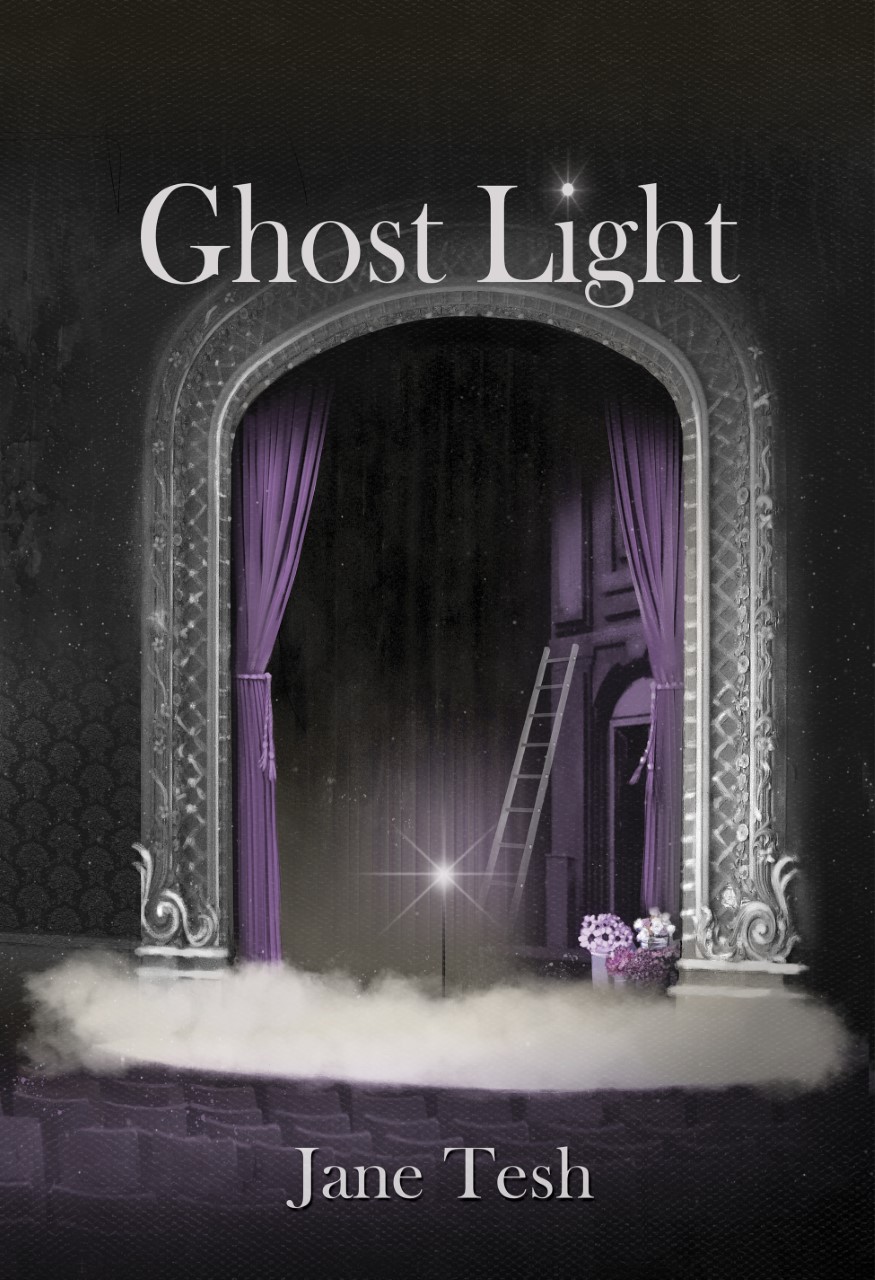
Ghost Light

Theodosia “Teddy” Ballard knows nothing about community theater, but when the stage manager for “Little Shop of Horrors” takes a tragic header down the costume-loft stairs, she agrees to fill in for the sake of her actor friend, Will. Teddy takes the superstitions and swelled heads of The Stage in stride—till she meets George Clancy Everhart, the theater ghost, who informs her that the previous stage manager was murdered and demands that she find the killer. Both investigation and rehearsals are complicated when she makes a surprising discovery about her relationship with Will—and learns that George has his own dramatic agenda.

https://www.amazon.com/Ghost-Light-Jane-Tesh/dp/1939113563

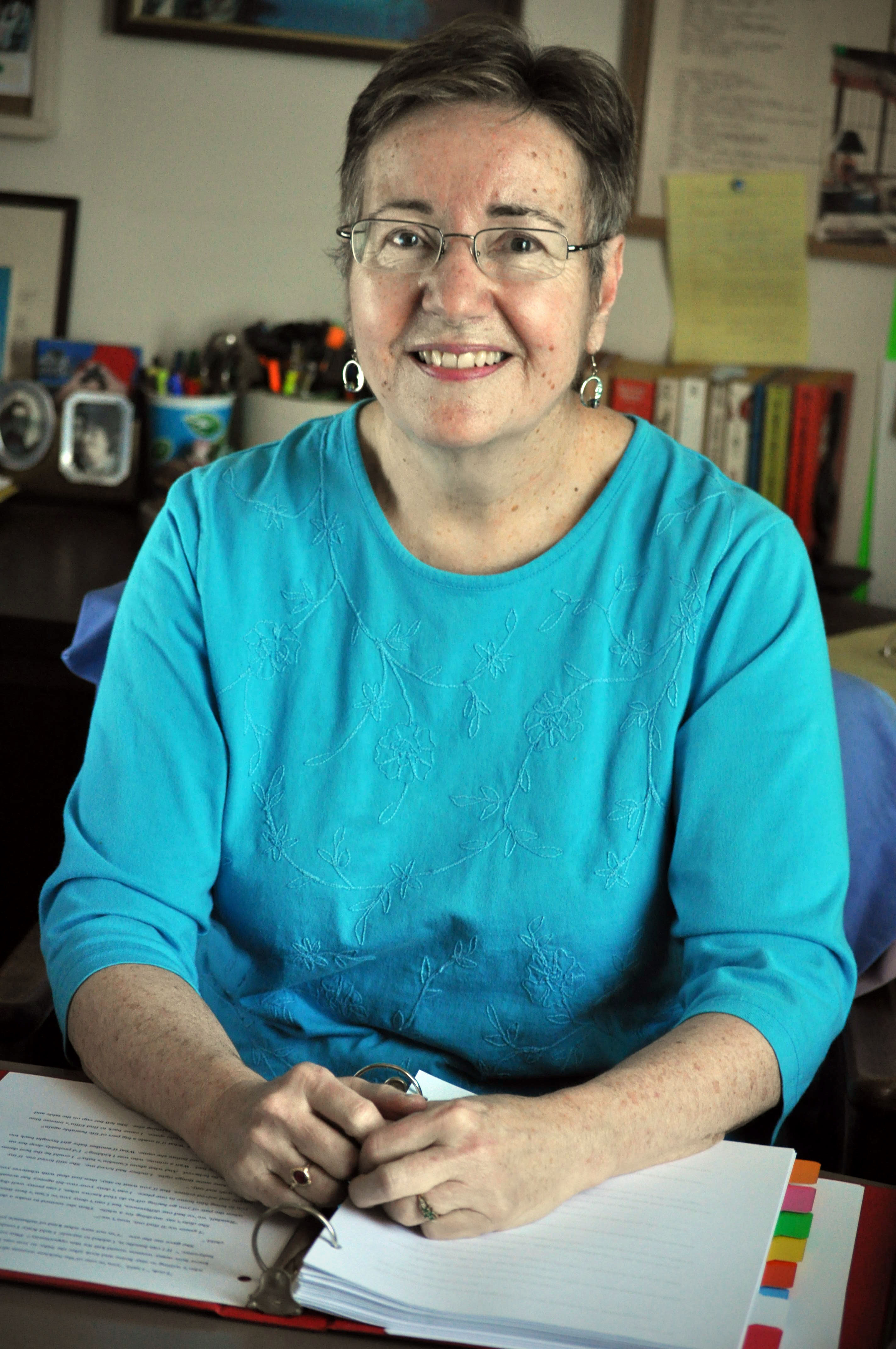
Jane Tesh, a retired media specialist, lives in Mt. Airy, North Carolina, Andy Griffith’s home town, the real Mayberry. She is the author of the Madeline Maclin Mysteries, featuring former beauty queen, Madeline “Mac” Maclin and her reformed con man husband, Jerry Fairweather, and the Grace Street Mystery Series, featuring struggling PI David Randall, his psychic friend, Camden, and an array of tenants who move in and out of Cam’s boarding house at 302 Grace Street. Ghost Light is her first standalone mystery and the first to feature an asexual heroine. She has also published five fantasy novels. When she isn’t writing, Jane plays the piano and conducts the orchestra for productions at the Andy Griffith Playhouse.

Visit Jane’s website at www.janetesh.com and her Facebook page, www.facebook.com/GraceStreetMysterySeries

Ghosts — present, past and future

As mystery and thriller writers we deal with death – a lot. What follows is my view of how death colors a story, as informed by being farm-bred, knowing where animals go on the big truck, and the host of ghosts who populated our old frame farmhouse.

Ghosts

Ghosts were as much a part of my early life as was the knacker man, to use a British expression. There was the guy who checked the non-existent, though once-existent, oil lamps in the upstairs hallway to ensure the gas was off. He walked down the hall to a window overlooking the hog pens, stood for a moment, then walked back. Every night.

There were brothers, one that occupied a cold spot in the corncrib, and one who looked endlessly into the house through a sashed window. They died on the same day, one after another, one from want, the other from the loss. Their story fueled my imagination.

And David whose sister waited for him to knock on her wall each night before going to sleep. I met David when he warned me of a small fire in the farmyard. When I returned, the fire out, he knocked.

This leads one to believe that life is like the loaf of bread used to describe time travel, we are never far from intersecting the previous or next slices of bread.

When someone dies and refuses to move on

Booth Island deals with the death of a brother who drowned off the family island in Canada. It is he who lures his sister back nine years later.

 “I can’t. The minute I relax, my brother comes to me. I need to exorcise him, or help him cross over, or whatever the mediums would say. If not, I’ll never be happy.”

“I prescribe two servings of Finn Sturdevant with a side of Tiger Tail.” Penny hugged me. “Poor Boo. Is there an Ouija Board stashed on Booth Island?”

I wiggled my eyebrows.

When one death haunts the characters

Dead Legend begins The Cooper Vietnam Era Quartet, centering around the mysterious death of Mac Cooper. His sons navigate his legacy and his loss:  anger in Dead Legend, bargaining in Head First, acceptance in Pay Back, and resolution in Don’t Tell.

Byron Cooper’s burden: The old adage about be careful who you mess on your way up, you may meet them on your way down, went double time when everyone in the Pacific Fleet, WestPac, over the rank of Lieutenant Commander, looked you in the eyes, clapped you on the shoulder, and said knew your old man.

Laury Cooper’s hell: Laury wound the film to the August 8, 1955 edition of the paper. He found the four-paragraph story on Mac Cooper’s death; simple, to the point, almost as though it had been lifted from the police blotter.

At 2:45 a.m. August 8, 1955, the body of Commander MacLaury Cooper was found…

And resolution in Don’t Tell: Laury and Kate held hands in front of a bungalow gleaming white in the soft light of a late Hawaiian afternoon. … He pointed out the carport, the palm where someone had lurked watching the family’s descent into hell, and a hibiscus Mac had planted not long before his death.

When an accident sculpts the future

A single past action drives the narrative in Saving Calypso, consider the action mold from the previous slice of bread, rimming the current slice and slowly eating into the loaf.

“Forgive me. This must be excruciating … I drew up the will for Ray. He insisted. It was finalized the day we reached agreement on your sentencing.” Burridge’s steady brown eyes peered over the top of his glasses into Grieg’s baby-blues until Grieg’s dropped. “It wasn’t a small thing you did, boy.”

Grieg tweaked the pleat of his slacks.

Burridge squinted then poked his glasses up his nose. “Destroying a family. Killing a police officer’s son. Drunk. Chasing a girl.”

To ghosts everywhere

Characters driven by the ghosts of past actions, deaths, and loss give mysteries focus and heart, and protagonists a reason to act, creating a pulse and adding depth to the story. Paradise for a mystery/thriller/suspense writer.

Writing and Rewriting

My Monday morning zoom partner and I indulge in wide-ranging discussions with no restrictions on our wanderings. We’ve discussed business architecture in Kolkata, the renaming of Indian cities, e.g. from Calcutta to Kolkata, Maya ruins, and the writing process, which fascinates her because she’s a techie and thinks differently, she tells me. More recently we’ve been exploring figures of speech after coming across a book of them by Mark Forsyth. In The Elements of Eloquence he examines over forty figures, with wit and erudition. 

In case he has failed to make his point, Forsyth ends with a final note. “Above all, I hope I have dispelled the bleak and imbecilic idea that the aim of writing is to express yourself clearly in plain, simple English using as few words as possible. This is a fiction, a fib, a fallacy, a fantasy and a falsehood. To write for mere utility is as foolish as to dress for mere utility.” Obviously not a fan of Hemingway’s work.

Even while reading through his work, I got his other message. Look carefully at what you write. We use these figures of speech all the time anyway, he points out, even if we don’t know what they’re called and how they developed and what some good examples of them are. So, recognize them, and polish the gems in your own work. 

Forysth’s book underscores that writing is rewriting, as Richard North Patterson said (or wrote), along with every other author who has ever given writing advice. Before I even begin a story or novel I craft a first line in my head. Until I understand how I’m going to open, to begin a journey, I can’t start writing. I know those who begin by writing scenes they expect to be in the narrative at some point, sometimes the final scene, but I’m one who has to begin at the beginning, and the beginning is the opening sentence. I draft it again and again in my head, and when I think I have something that will work, that places the main character where I want her to be, then I write it down. But even then it’s not done. This is just the first stab at the opening line on paper, and I rework the phrasing several times. Forsyth’s list of figures of speech draws out the faint opportunities I might not otherwise notice.

I don’t usually feel the need to recast every sentence, but sometimes a paragraph needs to be reworked again and again. My preference is to get a sense of the narrative and characters on paper, and then rework it. I don’t write fast, so I tend to rethink and redraft as I go along, editing until I consider a paragraph or scene finished enough to be allowed to stand. I know I’ll come back to it later, probably several times.

Working slowly also means that I’m more likely to make discoveries as I go along—a character whose back story turns out to be significant to the plot in an unexpected way; a twist in the timeline that I might not have noticed otherwise; and a digression I discover I can use later. But also I can spend time teasing out greater meaning by reworking sentences, building the idea by building the expression.

Forsyth’s book came along at just the right time, giving me another way to consider a passage and recraft lines in my WIP. Reexamining every expression, recasting every line, is all part of the writing process. The first draft is really just throwing the clay onto the wheel, loading film into the camera. Rewriting is the work.