My First DSLR

I was returning to India after a seventeen-year hiatus, and my husband suggested I take a digital camera. He gave me his. The first time I returned I took a film camera. The DSLR would be much easier—no film to load and unload throughout the day, not to mention the added cost to develop and weight in my luggage.

One of my favorite side ventures is photography, something that I first tried as an eight-year-old and then again as a college student, but didn’t pick up again until my forties. Since then I’ve had two solo shows, exhibited in juried shows, and sold a few images. But the camera I use has its own story.

Michael began working in photography in college, and immediately showed an aptitude for all things photographic. He began with a Pentax and remained loyal to the brand for practical as well as technical reasons. Every Pentax lens is interchangeable on a Pentax body, and over the years he accumulated lots of lenses. Before my trip he’d been having trouble with his current DSLR, and took it to a specialist, at Hunt’s. The two men along with a technician inspected, tested, retried, retested, opened, fiddled, and couldn’t figure out why it wouldn’t register an image. The camera simply didn’t work. He didn’t buy it from Hunt’s, but the man offered him something reasonable for it. Instead, Michael brought it home and told me of the very disappointing visit. This is where it gets weird.

He came in and told me the whole story of his visit to Hunt’s, and his discussion with the owner, whom he’d worked with before and trusted. I picked up the camera, sighted it, and snapped the shutter. The image appeared and looked fine to me.

“What’s wrong with it?” I asked. “It looks okay.”

Michael looked at the image, at me holding the camera out to him, at the image, at me. He agreed it did look okay. I’ll never forget the look on his face, though I didn’t understand why his expression was so odd.

“Why don’t you take it with you to India, along with the other one.” He was referring to a small pocket digital Pentax I’d given him a few years ago that he didn’t use.

I did, and took tons of photographs. The camera was the most reliable tool I’ve ever worked with. It always worked for me. I never had any trouble with it. It never worked for him again, no matter what he did. I use it still, though I now have access to his other, more advanced cameras and lenses.

At the time I said the problem with the camera was a matter of electricity. I had less in my hands, or body, than he had. My touch didn’t interfere with the operation of the camera. Maybe I have more than he has and that helps the camera work. I have no idea. But it’s one of those odd incidents in life that reminds me of how little we know about how the physical world around us operates. 

And it perhaps explains why some of us love our tools, as though they are a part of our body, an extension of our imaginative selves as we manipulate the physical world to fit our vision. Writers do it with paper and pen, or computer and printer; carpenters with hammers and chisels and wood; photographers with camera and lenses and paper and ink. It doesn’t matter what you use; the result is the same—a world remade according to the singular vision of one particular person, a lens into another mind and its world.

Winter — characterized

What a wonderful time of year to consider all that winter can bring to a mystery/thriller. The season when days grow shorter, the dark seems darker, and death closer than life. It is time to take stock of the year past and plan for the year to come. Any farmer will tell you it is in the darkest months in which the seeds of change are set.

Winter can be tricky, especially if you write historical novels, so do your research. Here’s a hint: the weather has changed such that we can’t rely on our current relationship with winter when describing the season even ten years ago. The changes evident in the last twenty-five years are particularly striking. I did most of my growing up in a Michigan town where it started snowing in November and didn’t stop until the crocus popped up. It’s not like that anymore.

Back when I spent my days gathering climatological data that became the foundation of the American weather prediction model, an older meteorologist I knew would begin the morning weather briefings to a rapt gaggle of meteorologists with: Back in the year of the big snow. It was a lame weather joke, but he wasn’t kidding. North America used to get big, frigid, wind-driven snows. Like Buffalo, NY, just endured.

Clouds. Snow. Cold. Ice.

Hard, deep, cold, lasting snow. Whipping across the plains, stalling life. A time to read, time to plan, a time to learn, there’s a lot for writers to work with there. Snow that blots out all the familiar sights, so that going to the barn, or to school, or the outhouse is an adventure from which one might never return. And ice, the first melt creating a layer of ice sharp enough to cut skin, a second snow atop it, another melt, and so on until spring.  Then one wrong step and your character stovepipes in three-feet-deep, forcing them to either wait for the spring thaw to get their foot out, yell for help, or tear their pants and skin to break free. All under skies flat with purple-bellied nimbostratus, spitting tough little pelts at you, not just the lofty, fluffy snowflakes that come with romance.

The joyfulness of winter fun: Skates. Sleds. Icicles. Hockey.

My grandparents met ice skating on the Fox River in Illinois. They were from opposite sides of the river and met gliding down the middle. After WWI, the same couple was married across the county line by a justice of the peace in the headlights of my grandfather’s car. Romance.

The point is they met on the ice, ice skating, holding hands and skating side by side.

“She threw open the window sash, a blast of frigid air accompanied by giggles and guffaws rushed in to greet her. From the sounds of laughter and excited voices, ice skaters had discovered the frozen pond.” From One Horse Too Many, a coming Wanee Mystery

There was a time when every kid who grew up in snow country had a favorite sledding hill with a stream at the bottom, all dubbed Devil something, where they tested their metal. Towns had ponds, rivers, even streets that froze, where the boys met on ice and battled it out with sticks.

And icicles really were so big they could put your eye out. Watching an icicle grow could take up the better part of early evening. Wonderful, drippy, prismatic, and deadly.

Dark. Short Days.  Death.

It is a fact that we are all statistically more likely to die in winter. It is the shortness of the days, the incessant dark, and the sense that more is ending than beginning. Things just naturally slow down.

It also is true most murders occur in summer — heat, irritability – just watch the old movie Body Heat, who wouldn’t kill?

Still, as with all weather, at all times of year, writers who don’t look to the skies are missing an opportunity. It is far too easy to go for the steam heat over the slow freeze. Everyone understands sunny and bright, rainy and threatening, but the cold, darkness, isolation, joy, and fragile passing beauty of life and death under winter skies – oh my!

Winter kills. As a character.

“The day was sullen, low dark-bellied clouds bumped together like the bottom of apple pandowdy, fat and stationary they continued to dump snow.”  From One Horse Too Many, a coming Wanee Mystery.

November: A Prologue by Karen Shughart

After my first Edmund DeCleryk Cozy mystery, Murder in the Museum, was published, I decided to play around with the concept of having two prologues for subsequent books and contacted my publisher to see what she thought. She basically told me to ” go for it”, and in book two, Murder in the Cemetery, that’s what I did: the first to set the historical back story that alerts readers to why the murder may have been committed, and the second to describe the seasonal tone for the crime.

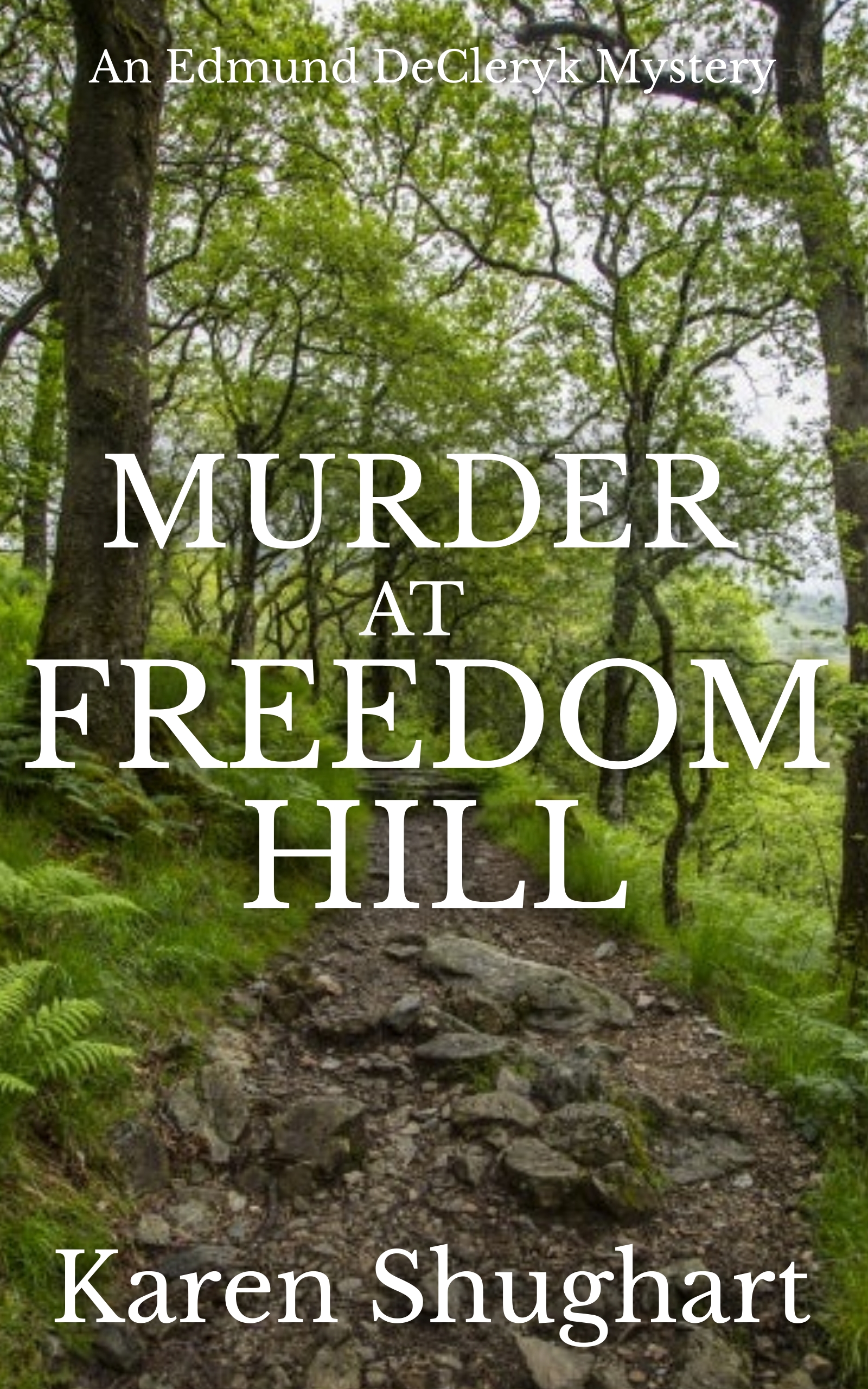
In book two I described the month of May in Lighthouse Cove, with its profusion of flowers and abundance of sun, a fitting backdrop to the crime that’s about to occur. In Murder at Freedom Hill, the third book in the series (now on sale in paperback and Kindle versions at Amazon and other book outlets) the second prologue is entitled “November”. I thought it was appropriate for this month’s blog, so here goes:

  For residents of Lighthouse Cove, NY, November was always a month of mixed emotions.  

There was a yearning for the blazing colors of October, the cool, crisp nights, starlit skies, bright days. For a low-hanging sun that could still warm the bones and ease the joints.  For the farm stands, now shuttered until spring, that had offered up a bounty of ripe produce, local honey, homemade baked goods and jams, fresh herbs.  For the hayrides and bonfires and deer spotting among the apple orchards. For the unbridled joy of chattering, costumed children extending small hands for treats as their parents kept a watchful eye; glowing lights illuminating their way.

There was also the peace that comes with tourists gone for another year and the ease of getting about.  The sound of waves, ambling onto the beach like lazy sloths. The geese and swans gliding effortlessly around the bay, no longer competing for space with boats and bathers, and the eagles soaring silently above on currents of wind. The rumbling and grumbling of street noises now muffled by a thick carpet of brown, fallen leaves.

 There was excitement and anticipation, too, in November.  For a day, later in the month, when families would gather to give thanks and then soon after, start to prepare for the hustle and bustle of the upcoming holiday season. For the hunters who had been looking forward all year to donning their camo, retrieving their guns, and stalking their prey in fields and woods, hoping to bestow upon their loved ones a largess befitting of their labors.

For some, November was also the month of grieving. A month of decay that precedes death.  Where what was past was past and would be no more, and what lay ahead was the chill and dark of winter.

Guest Blogger ~ Heather Redmond

The Story Behind A Twist of Murder

A Twist of Murder is the fifth in my historical mystery series, A Dickens of a Crime. It started in January 1835, when (yes, that) Charles Dickens was a parliamentary reporter, not yet a novelist, and tracks the start of his literary career and his courtship with Catherine Hogarth, his future real-life wife. The first four books were set in London, but I moved most of the action to Harrow on the Hill for book five, set in March 1836, to follow my former mudlark characters who are going to school there.

And what a school it is! Strange goings on indeed. The owner of Aga Academy seems to have sold off part interest to Fagin Sikes, a harsh taskmaster who treats the students like poor orphans, not paying customers. A servant girl is flashing around a treasure map. When a circus comes to town, some of the students vanish and no one looks for them. Soon after, the servant girl goes missing, and people finally start to care. When a coroner’s job includes researching rumors of treasure, that might get the highest priority of all. Charles Dickens and friends are called to the school to find the missing students, the missing servant, and the treasure.

When you are writing an ongoing series, the next story idea appears quite naturally as an offshoot of the characters from previous books. I prefer to hold onto characters instead of dropping them from book to book. I think it makes series richer. Therefore, the missing students and victims in this book have largely been featured in previous books or are related to important ongoing characters. This gives relationships between all my story people room to grow and change. Aga Academy had been mentioned and briefly visited in earlier books, so it was time to feature it as a main location.

Charles Dickens did a little treasure hunting in A Tale of Two Murders, book one, but that was nothing compared to his new adventure. As an ardent follower of the History Channel TV show The Curse of Oak Island, I love to have treasure hunts in my books. This was my first opportunity to create an actual treasure map, though. I confused myself a few times while creating it. I guess I wasn’t a pirate in a previous life, LOL.

This series is loosely based on the novels of Charles Dickens. A Twist of Murder includes elements of his novels Oliver Twist and Hard Times, such as the life of orphans and students, as well as his hatred of the Utilitarian philosophy of education. My conceit for the series is that Charles is having experiences and hearing names that will ultimately appear in his fiction. We know that his novels are far from being fanciful. Modern readers are so far removed from the Victorian era that we often don’t recognize what is in his novels was normal life at the time.

I had a lot of fun writing a book set in 1836 Harrow on the Hill, and I hope you enjoy this adventure hunting for treasure, missing students, and the murderer of a young servant girl.

A TWIST OF MURDER

In Victorian England, aspiring author Charles Dickens is on the case again—in pursuit of missing orphans, legendary treasure, and a cold-blooded killer in the latest installment of Heather Redmond’s charming series that reimagines the famous writer as an amateur sleuth.

Harrow-on-the-Hill, March 1836: In a sense, orphans Ollie, John, and Arthur have always been treasure hunters. The mudlarks have gone from a hardscrabble life scavenging the banks of the Thames for bits and bobs to becoming students at a boarding school outside of London, thanks to the kind and generous intercession of Charles Dickens. But now they’re missing—as is, apparently, a treasure map.

When Charles arrives at the school, he’s hit with another twist—the servant girl who was allegedly in possession of the map has been strangled in the icehouse. Unbeknownst to them on their spirited adventure, his young friends may be in mortal danger. Now Charles and his fiancée Kate Hogarth, who has come to join him in the search for the runaways, must artfully dodge false leads and red herrings to find the boys and the map—before X marks the spot of their graves . . .

A Twist of Murder by Heather Redmond

https://www.amazon.com/dp/1496737970

Heather Redmond writes two mystery series, A Dickens of a Crime, featuring young Charles Dickens in the 1830s, and a Seattle-set cozy mystery series, the Journaling mysteries. Her latest Dickens title is A Twist of Murder, book 5 in the series, and the paperback edition of Tattooed to Death, book 2 of her cozy series, will be available in January. She also writes as Heather Hiestand and lives in Washington state.

heatherhiestandredmond (@heatherhiestandredmond) TikTok | Watch heatherhiestandredmond’s Newest TikTok Videos

https://twitter.com/HeatherARedmond

https://www.facebook.com/profile.php?id=100063596828868

Novelist and Artist (@hiestandheather) • Instagram photos and videos

A Holiday Mystery Anthology

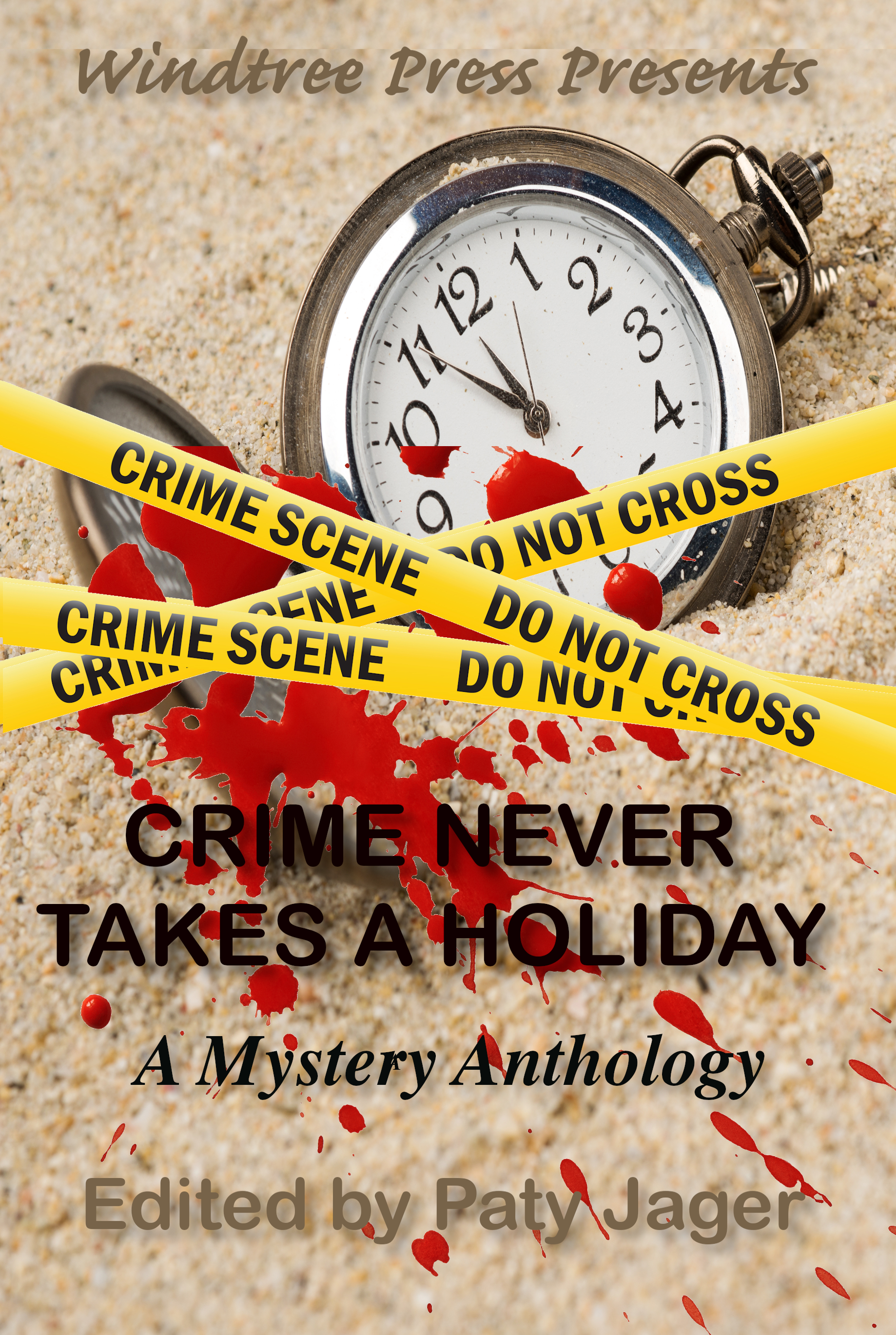
Last January, my author co-op, Windtree Press, had a quarterly meeting and it was decided we’d put out a mystery anthology, since we had 8 authors in the group who wrote mystery/suspense/thriller books. We chose to make it have a holiday theme and every story had to have or mention a dead body. That and the length were the guidelines.

We set dates by when the short stories had to be sent to the person editing (me) and when I had to have all the stories ready for the person formatting, and when they had to have it ready to publish. It was fun reading each authors stories and helping them where they needed to beef up the mystery or flesh out a character. Once the author and I were happy with the story, I then sent it on to another author in the group to proofread.

In the end we have 10 completely different, yet entertaining mystery stories.

CRIME NEVER TAKES A HOLIDAY

A cornucopia of ten cozy mystery stories that are perpetrated during holidays from New Years to Christmas. This collection explores unexplained disturbances, college pranks gone wrong, and almost always one or more murders around a holiday. Solve these spooky crimes that lurk beneath celebratory parties and help search for the murderers. Kick off your shoes, grab a warm drink and snuggle into a blanket before you get lured onto the sparkling snow for the next crime spree.

A Body on the 13th Floor by Paty Jager
Dead Ladies Don’t Dance by Robin Weaver
Took Nothing Left Nothing by Pamela Cowan
Busted for Bones by Dari LaRoche
Yuletide Firebug by Kathy Coatney
Starry Night Murder by Mary Vine
The Twelfth Night Murder by Ann Chaney
Blue Christmas by Melissa Yi
Two Turtle Doves by Maggie Lynch
Five Golden Rings by Kimila Kay

https://books2read.com/u/b6zYgp

A Body on the 13th Floor by Paty Jager

Dela Alvaro, head of security for the Spotted Pony Casino, has a dead body in an elevator on New Year’s Eve. The unfortunate soul was stuck between the 12th and 14th floors when he met his demise.

This short story pulls together a good number of the cast from my Spotted Pony Casino Mysteries series. I had a fun time coming up with the plot and making it as interesting as I could in a short amount of time. I think all writers should not only write novel length stories but also write short stories to help hone their skills and learn to tell a story in few words but ones that can make an impact.

If you grab a copy, I hope you enjoy the mysteries!