The Natural World in Crime Fiction

Many of the books I enjoy include some aspect of the natural world. An obvious recent example is The Witch Elm by Tana French, which revolves around an old tree in a yard where the main characters played as children and one returns as an adult to recover from an assault. Then there’s my own Below the Tree Line, which is set on a farm in rural Central Massachusetts. Now that I’m writing about a suburban setting, I’m taking a look at my neighborhood for scenes or aspects of nature to include in a traditional mystery. It’s not going as expected.

My first choice was to talk about apple trees, since we have one. However, it hasn’t produced a real crop in a few years, and right now looks like it’s dying. It might work if the book were entitled “Death of an Apple Orchard,” since the tree looks more like a sculpture than something that might have ever produced fruit. Scratch that idea.

The ornamental trees in this area seem to have developed a disease that kills off their leaves, so for the last two years they have looked like they too are dying. No one seems concerned enough to take them down, so we’ll have to wait and see what the future holds.

To this I can add all the invasive species that have killed off our native species, thereby depriving other plants, birds, and animals of expected sustenance. Our own backyard is being overtaken by bittersweet, bamboo, rose of Sharon, and lots more. I’m not sure it’s even possible to get rid of the invasives now. It may be too late. Nature as evil invader. Not my idea of the setting for a cozy.

The other obvious choice for drawing nature into a tale is birds. I love birds, love watching them flit among the shrubs picking up a meal—bugs or seeds—and jabbering at each other. Cardinals are of course always welcomed, along with goldfinches, northern flickers, and egrets, even crows. But the winged creatures I most often see are not nearly as attractive, or as much of a pleasure to watch. Turkeys.

Turkeys are everywhere now.

Last year a flock made its way slowly down our street, passing from yard to yard in search of edibles. When they encountered a fence they headed out to the street. A driver trying to park made the mistake of honking at one of them. This is received as a direct insult, and the turkeys responded accordingly. Two of them attacked the car, pecking and jabbering at it. Not satisfied with this display of temper, they headed out into the street, bringing two lanes of traffic to a halt. This was so disruptive that a neighbor entered the fray shooing away the turkeys to the other side of the road, allowing traffic to flow again. But the turkeys weren’t done yet. They reentered traffic, once again tying it up, until bored, they wandered away, down the center of the road.

Once when a turkey was behaving appropriately, I snapped a pic of it. The click of my iPhone startled the bird and he looked up, scanning the area for whatever creature had threatened him. I moved on.

These feather characters won’t work as background detail for a story, though they might serve as a motive for murder.

Notice I began looking for an apple tree but mine was not attractive, and then moved on to other aspects of nature that were less than serene or beautiful. The cozy mystery needs the apple tree in blossom, but a thriller or suspense story needs the scaly fruit tree. Nature offers us both (and a lot in between) and as writers we choose aspects of the natural world to signal theme, tone, mood. I plan to get those diseased decorative trees into a story very soon. The turkeys are more likely to find their way into a humorous story, perhaps fleeing a homeowner determined to get rid of them. I’ll enjoy writing that one. And then I’ll talk about the rabbits that are now everywhere.
Thanks Giving

D. Z. Church

How lucky am I to have my blog appear on Thanksgiving Day! This year. In the middle of a pandemic. When no one can travel or sit at a table with all those they love. Okay, it’s been on my mind.

A lot.

Thanksgiving has always been my holiday. Back in the days when we had nuclear families, as in grandparents living with us or nearby, aunts and uncles and cousins just up the road, Thanksgiving was it! Just a great big, whack-a-doodle party from beginning to end. Especially since as kids our entire responsibility was to stay out of the way while the feast was prepared. My older sister and I and an aunt and uncle our ages made Christmas chains out of all the left-over aluminum foil at a big old card table in the front parlor. If we were really good, we got to pour water into the water glasses and set up the kids’ tables. Remember those?

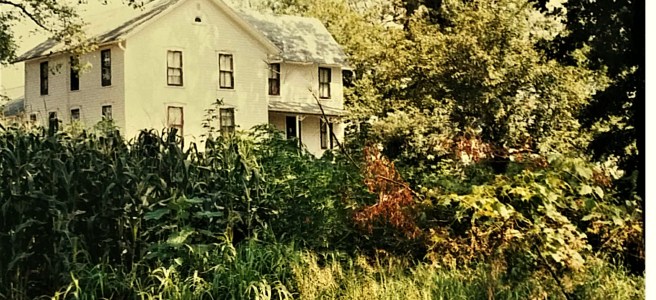
The outbuildings at the farm, the house was to the left of the tall trees.

The entire family, including great aunts and uncles from Chicago, all converged on the family farm, a Century farm in northwestern Illinois with a big old Victorian farmhouse. The local aunts, uncles, and cousins arrived by late morning. But, since we lived only twenty minutes away, we strolled in for breakfast, which always included Grandma Mid’s thumbprint cakes. These things were to die for, and you might actually die from them. They involved large dollops of heavy cream hand-churned from milk from our cows by a second cousin a few miles away. OMG!

Cooking for the big day, started the previous weekend with pies. Grandma Mid and her daughters were glorious pie makers. The inscription on one aunt’s tombstone ends with: And the best damn pie maker. No kidding. For reference, imagine one of those ads you used to see with a huge family around an enormous table covered in food and double it. It was like a Norman Rockwell painting gone wild.

As soon as we were released from our eating obligations, we kids would roar out into the farmyard or across the lane to the timber and romp and stomp. Back then, there were only six grandkids and our youngest aunt and uncle, but the eight of us could make a world out of the woodland, the ditch, and the farmyard. Sooner or later, a ball game would erupt on the front lawn with the walnut trees standing in for bases. When darkness descended, the Hearts game started. My uncles played hardcore unforgiving Hearts with raised voices, accusations of cheating, and peals of laughter.

I once drew a picture for my second grade class of Thanksgiving at our farm. I was meticulous about it, putting every single one of the thirty-one participants in the picture. The assignment had been to draw a true picture of the holiday, suspicious my teacher questioned my accuracy. She even showed it to my mother, who forever gained my adoration by systematically naming all thirty-one persons in the picture. Though I think she fudged on more than a few.

Is it any wonder that this farmhouse stood in for the one in my Cooper Vietnam Era Quartet? Becoming a character in the newest and third book, Pay Back.

The farmhouse

Redolent with years of yeasty bread and the gossip of farm families, the farmhouse kitchen took up a full quarter of the ground floor and was the aorta of the home. Everything and everyone flowed through it whether to climb the stairs, enter the front parlors, or go to the bathroom. An oak table, ten feet long without leaves, surrounded by ladder-backed oak chairs with a captain’s chair at each end, took a full third of the room. A built-in corner hutch gleamed with a new multi-paned glass door.

Ash planking adorned the restored floor. The cabinets were white, the countertop butcher block, and the appliances stainless steel and time-tested. Rag rugs made by the Plainwell Woman’s Club from strips of used clothing were sprinkled around the room, one in front of the six-burner gas stove, one in front of the sink, and one under the oak table.

That kitchen stove had a bun warmer to one side. Every now and then, I would have the joy of tumbling downstairs for breakfast to tiny cheeps emanating from behind the warmer door. I remember Grandmother frying eggs at the stove, then casually leaning over to open the bun warmer as the cheeps crescendoed. Tiny little yellow chicks bobbled out on to the floor, trying their untried wings, and wobbling along. Grandma’s calico cat, the only working cat allowed in the kitchen, rested her paws on the edge of her water dish. She watched them take their first drink, her little cat lips pursed.

Sigh.

We may not have this Thanksgiving with family, but we have all that came before and all those to come. So, get out the albums, cook up your turkey, and snuggle in front of a fire (be it on Netflix, electric, gas, or wood), and spend time with your family on Zoom, Hangouts, or a video conference of choice. And enjoy!

Three books of the Cooper Era Vietnam Quartet: Dead Legend, Head First, and Pay Back are available on Amazon in paperback and ebook. Pay Back at https://www.amazon.com/Pay-Back-Cooper-Vietnam-Quartet-ebook/dp/B08CJDHP92

Guess What I Just Realized

My latest mystery in the Rocky Bluff Police Department series, Not as We Knew It, is now available on Kindle and in paperback from Amazon.

Of course, this means it’s time to promote it. Since in-person events are for the most part no longer available it means relying on the Internet to let people know I have a new book out.

I’ve always enjoyed visiting other’s blogs to talk (write) about my latest books, and as I’ve been thinking about what to write, I realized this was the second time I’ve done something odd in a mystery.

There is no murder!

What a shocker. There is definitely plenty of mystery, and as in all the Rocky Bluff P.D. mysteries, a lot about the officers and their families and how they are dealing with what’s happening in their lives. And since I’m writing in more or less real time, you can guess what the biggest problem going on that they must cope with.

And, there was no murder in my last RBPD mystery either, Bones in the Attic.

Maybe that’s a good thing since Rocky Bluff is such a small town, but I am a tad worried about my readers. Almost all mysteries revolve around murder. A missing woman is the main mystery, but other crimes are committed like happens anywhere.

The book is done and being read, waiting for the reviews to come in.

Not as We Knew It is  #16 in the series.

 Marilyn who writes this series as F. M. Meredith

Guest Author ~ Sharon Dean

A male English professor once asked me, why do all you women trade these mystery novels? By “all you women” he meant people like me, female English professors of a certain age. I used to trade with someone during final exams and escape into a mystery between reading student papers. My favorites were by Amanda Cross. How could I resist something called Death in a Tenured Position?

            Amanda Cross was the pseudonym for Carolyn Heilbrun, a faculty member at Columbia. She escaped the stress of being a woman in what was then a male dominated profession by writing novels about a female professor stumbling upon and solving crimes.

            What my female colleagues and I all had in common were preteen years reading Nancy Drew, Trixie Belden, the Dana girls, any of a huge number of mysteries put out by the Stratemeyer Syndicate. Bobbee Anne Mason, who wrote her Ph.D. dissertation on Vladimir Nabokov, studied these novels in a book called The Girl Sleuth (1975) before she turned to writing fiction of her own. In a line that captures how these books led so many of us to become English professors, Mason writes that after all “A scholar is a version of a sleuth.”

            My last scholarly book was an edition of letters by the nineteenth century writer Constance Fenimore Woolson. I had to be a sleuth to edit these letters. I had to find them, to puzzle together how they fit chronologically, to search for many of the names now lost to us. When I gave up writing books that required footnotes and turned to writing fiction, mysteries were a logical place for me to begin.

            My first amateur sleuth, Susan Warner, is what you would expect from me––a retired English professor. My new one, Deborah Strong, is not far removed. She’s a librarian in a town adjacent to the one I imagined for Susan. Both these amateur sleuths listen, watch, put clues together. Both allow me to draw on my life as an academic, especially the second in both series. My Susan Warner novel Death of the Keynote Speaker is set on New England’s Isles of Shoals. It weaves together the real history of Celia Thaxter’s literary salon on Appledore Island and a notorious murder on Smuttynose Island, with a fictional nineteenth-century writer I named Abigail Brewster. Writing it, I drew on many of those letters by Constance Woolson that I edited. In my forthcoming novel, The Wicked Bible (scheduled for Octorber 2021), Deborah Strong encounters a letter to the imagined Brewster when she’s at a conference on the history of libraries.

            I’ve let go of the academic life and learned to edit out the scholarly voice that used to intrude into my drafts. But I can’t let go of the connections to the scholarly research that creep into my fiction. Mine is a life that a good sleuth might have predicted. Reader of girl sleuth mysteries becomes analyzer of literature, and scholarly sleuth becomes writer of whodunits. I’m enjoying the journey.

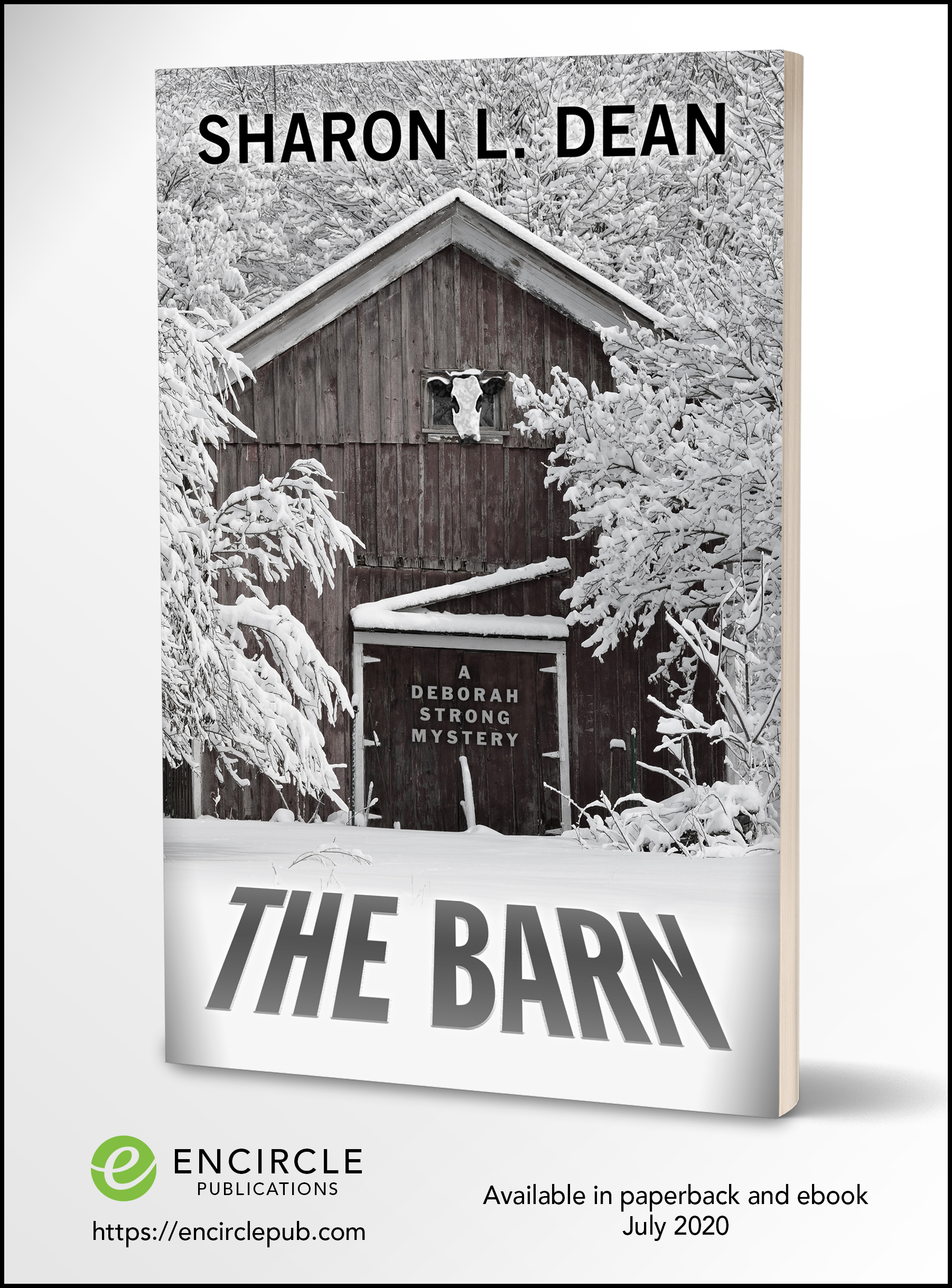
The Barn

In 1990, Deborah Madison and Rachel Cummings, both seventeen, are enjoying a bicycle ride on a beautiful September day in New Hampshire. They stop at a local barn that no longer houses cows but still displays a wooden cow’s head that peeks out from a window in the rafters. Sliding open the door, they find Rachel’s boyfriend, Joseph Wheeler, dead on the barn’s floor.

            The case lies as cold as Joseph for nearly thirty years until Rachel returns to New Hampshire to attend the funeral of Joseph’s mother. The girls, now women, reopen the cold case and uncover secrets that have festered, as they often do, in small towns. Against a backdrop of cold and snow and freezing rain, Deborah and Rachel rekindle their friendship and confess the guilt each of them has felt about things that happened in the past.

The Barn is a story of friendship lost and recovered, secrets buried and unburied, and the power of forgiveness.

Buy links: https://www.amazon.com/gp/product/B08BZWKTMB

publisher’s link: https://encirclepub.com/product/thebarn/

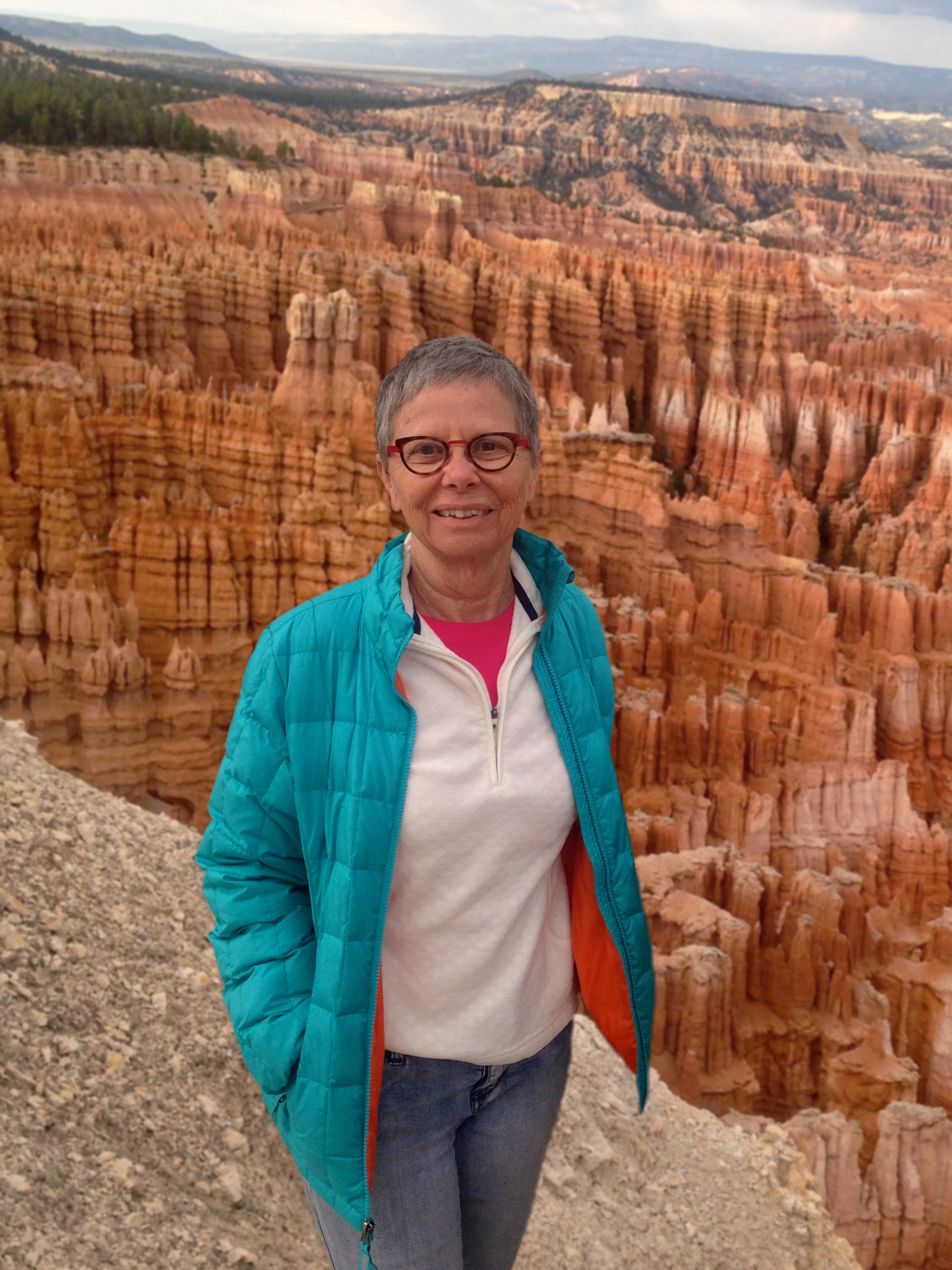
Sharon L. Dean grew up in Massachusetts where she was immersed in the literature of New England. She earned undergraduate and graduate degrees at the University of New Hampshire, a state she lived and taught in before moving to Oregon. After giving up writing scholarly books that required footnotes, she reinvented herself as a fiction writer. She is the author of three Susan Warner mysteries and of a literary novel titled Leaving Freedom. The Barn, the first novel in a new mystery series, features librarian and reluctant sleuth Deborah Strong as she and her friend solve a thirty-year-old cold case. Set in the depth of New Hampshire’s January, The Barn is a story of friendship lost and recovered, secrets buried and unburied, and the power of forgiveness.

website: https://wordpress.com/page/sharonldean.com/31
publisher’s link: https://encirclepub.com/product/thebarn/
Goodreads: https://www.goodreads.com/author/show/267389.Sharon_L_Dean

Gratitude and Poetry by Karen Shughart

For many years the poetry books I collected, starting in my teens, sat on our bookshelves untouched. I have no idea why I stopped reading poetry, but I did.

Then, one cold and rainy afternoon last month, I made myself a cup of tea and after pulling several books off  a shelf, curled up on the loveseat in front of the fire and began to flip through the pages. I intended to find poems of gratitude to be used for this blog, but I got off track, delighting in rediscovering poems I had loved and admired regardless of topic.

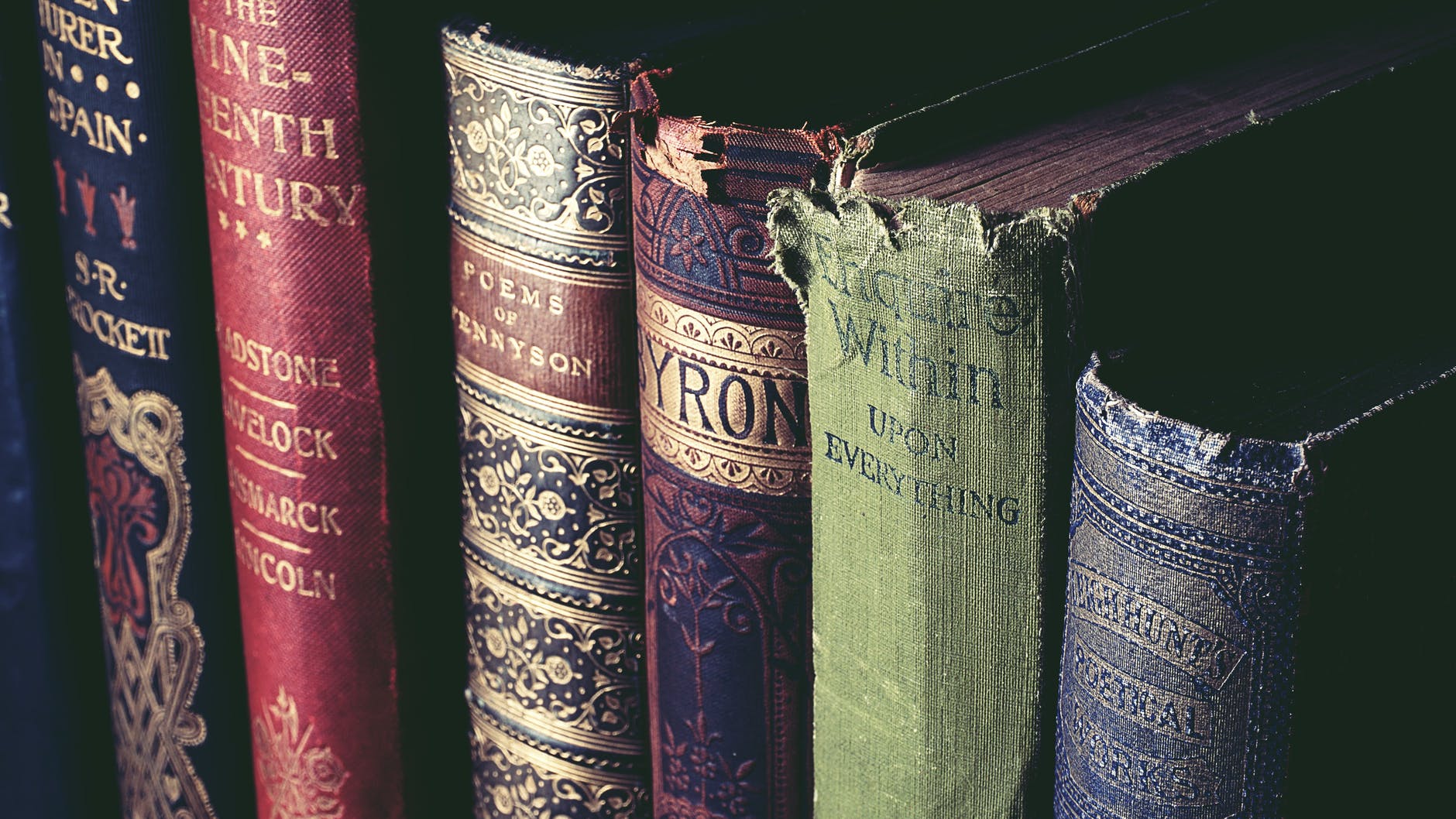
Photo by Suzy Hazelwood on Pexels.com

In high school,  I was introduced to the Romantic poets: Wordsworth, Coleridge, Keats, Shelly, Byron, and Blake; whose works beckoned me to understand the world through nature, imagination, revolution and those marginalized in society. I memorized stanzas that I can still recite because they so filled my heart.

Later, still in my teens, I was drawn to The Rubaiyat of Omar Khayyam, a lyric poem that presents deep feelings and emotions on subjects such as life, death, love, and religion. Did it help clarify or shape my own identity? Probably not, as my own experiences and travels unfolded in their own unique way, but at the time, I was entranced by it.

As an English major in college, I read and discussed the works, both in and out of the classroom, of  contemporary poets like John Barth, who was in residence at my university; Laurence Ferlinghetti;  Karl Shapiro; Leonard Cohen; and  Wallace Stevens, who, in 1955, won the Pulitzer Prize for Poetry for his Collected Poems. To me, his poems resonate like verbal music and his perfect control of language evokes a myriad of complex feelings.

Throughout my college years and beyond, I discovered, read, and admired the works of many more poets, Walt Whitman and T.S. Eliot among those, but also the Welsh poet, Dylan Thomas.

My father, who was born in 1919, graduated college and then went to serve our country during World War II.  One of George Patton’s scouts, he received two bronze stars. He was a fierce man: in his morals, ethics, and values; his love for his family and for his country. Towards the end, his fierceness continued as he battled serious health issues that never seemed to daunt or derail him from living the remainder of his life to the fullest.

The eldest of his four children, I was the first to read a eulogy at his funeral. I never could have  expressed what I knew of my father’s spirit better than Thomas’ poem, “Do not go gentle into that good night”, written for his dying father in 1947, the year I was born.

So, I guess this blog really is about both poetry and gratitude. Gratitude that I had a family that encouraged education, an education that exposed me to poetry, and a family that embodied and still does today, the meaning and actions of love.