Left Coast Crime Conference

This month is sneaking up on me! I thought I had all my blog posts and events for the month taken care of and “poof!” I realized I still had this post to write.

I ended last month with a book-selling event that rolled into a week at the beach with two of my best friends. It was supposed to be a working week to get the next Spotted Pony Casino book moving along. However, we ended up doing more playing than me working. But I needed it.

Agate Beach on the Oregon Coast

Then I started out the beginning of March with family things to deal with and now, in two days, I’m headed to Denver for the Left Coast Crime conference. It is one of my favorites because there are readers there and authors get to be on panels and talk about how our books fit into whatever the panel is about. Authors also get to host special events with readers. I signed up to do this, however, I noticed I’m not on the list, so they must have lost my email in the myriad of emails they get. I will host a table at the banquet with author friend Sheri Lewis Wohl. We are excited about our table decorations and giveaways!

this will be on the table I’m hosting

I was lucky to get on two panels this year. One is about Animal Sidekicks, which we all know plays into all of my mystery series. Every one of my main characters has a dog sidekick. I’m excited to talk about Sheba, Dog, and Mugshot during the panel and how they help their people. This panel is at 3:45 on Thursday. Friday at 2:45, I’m on a panel about crime in small towns. Again- spot on for my books since they are all set in small towns/rural areas. This will be another fun panel.

The conference always needs volunteers I’m helping by being a runner for a few of the panels. I did this at last year’s conference and found it an easy way to help out without having to do too much peopling.

As an introvert, these conferences take a lot out of me. I usually spend at least one session a day in my room, regrouping. Even though it makes the conference more expensive, I don’t have roommates. I need complete quiet when I go to my room at night. I feel like my ears ring for hours afterward. It takes a lot for me to put myself out there but I know that the more exposure I get, the more likely readers will pick up my books and try them.

I also enjoy talking to readers. When I can engage with them and talk about my books and what they like to read, I feel I’m gaining more perspective for what I write and how the reader perceives it. That is invaluable.

My bag is packed. I have 16 books to give away after my panels. They have either damaged covers or were printed wrong. And I have the mugs I’m giving to the people at my table, bundled in with the books and my clothes. My suitcase should be much lighter on the way home. I’m just counting down the days until my hubby takes me to the airport and I head for Denver.

If you’re at the Left Coast Crime conference, attend one of my panels and come say “hi!”

Guest Blogger ~ Mike Nemeth

Why Does a Nice boy from Wisconsin Write Murder Mysteries?

The simple answer is: I grew up reading detective stories, from John D. MacDonald to Ross Macdonald to Eric Ambler. I admired the intricate plotting that kept me guessing as their stories unfolded. Later, I discovered Elmore “Dutch” Leonard, a prolific writer of tales about ex-cons and petty thieves looking to strike it rich with their next caper and usually failing miserably. You may know Dutch by the many movie adaptations of his novels including, Be Cool, Get Shorty, Fire in the Hole, Killshot, Jackie Brown, Out of Sight, 3:10 to Yuma, Cat Chaser, 52 Pickup, Hombre, The Big Bounce, Stick, Mr. Majestyk, and Freaky Deaky. As much as I enjoyed Dutch’s stories, I was influenced most by his cinematic style. He never got in the way of his characters and let them tell their stories through dialog and action scenes.

The second reason I write murder mysteries is that the genre allows the writer to fold in subplots from other genres that become clues in the solution to the murder. In most of my novels an unexpected love story comes from out of nowhere and smacks the protagonist upside the head, the sort of romance that causes the protagonist to wake up and pay attention. Such is the case in The Two Lives of Eddie Kovacs. Eddie, a grieving widower, goes undercover to solve suspicious deaths at a luxury condo complex and runs into Madeleine, a wealthy widow who awakens long-dormant feelings in Eddie but is also the key to the mystery. She becomes the focal point for Eddie’s decisions about the case, his desire for redemption, and his future.

My third reason for writing murder mysteries is that a good story must contain high stakes for the protagonist and few stakes are higher or more enticing than murder. And two murders are better than one. In The Two Lives of Eddie Kovacs, the unsolved murder of Eddie’s investigative partner during his stint in the Army has haunted him for decades. Eddie has always wondered if he had inadvertently set his partner up for the crime. When another murder occurs at the condo complex during his surreptitious investigation, Eddie begins to connect the dots and sees the truth.

And finally, the murder mystery genre allows for an underlying theme that isn’t preachy and doesn’t detract from the pleasure of solving a complicated crime. In The Two Lives of Eddie Kovacs, the solution to the murders calls into question the boundary between personal freedom and the encroachment of the law. This question is a dilemma for Eddie as he grapples with love, his integrity as a lawman, and his desire for redemption.

Murder mysteries are such fun!

Propelled by two murder cases, separated by decades, The Two Lives of Eddie Kovacs is, at its heart, a provocative and suspenseful love story that explores the unbreakable connection between the past and the present, and the boundary between personal freedom and the law.

Eddie Kovacs is tormented by his experience in Vietnam when he derailed an illegal CIA plot, and deflated over his forced retirement as a DA’s investigator. When the sheriff of Chatham County, Georgia offers him an undercover assignment, Eddie jumps at the chance to end his career in a blaze of glory. His assignment is to solve the riddle of suspicious deaths at a luxury condo complex on Tybee Island before the DEA exposes the scandal that would dash the sheriff’s political ambitions.

Eddie has spent his life looking over his shoulder for the vengeful CIA agents who have tirelessly pursued him. As he investigates the deaths, he discovers that a former agent has remained vigilant for fifty years and is in the building, stalking Eddie. To make matters worse, Eddie is a grieving widower irresistibly drawn to a resident named Madeleine, and his infatuation feels like infidelity, not to mention a betrayal of his badge. In a race with the DEA and hunted by the CIA, Eddie lays a trap for his suspect and discovers Madeleine’s darkest secret—a secret that forces Eddie to choose between love and redemption.

The Two Lives of Eddie Kovacs can be found on Amazon at amzn.to/3CVzMY4 (that’s Bit.Ly short form link).

It is also in the Ingram system and can be ordered at any bookstore or online from Ingram. 

Mike Nemeth is the author of Defiled, which became an Amazon bestseller, The Undiscovered Country, which won the Beverly Hills Book Award for Southern Fiction and the Augusta Literary Festival’s Frank Yerby Award for Fiction, and Parker’s Choice, which has won a Firebird Award for Thrillers, and American Fiction Awards for Romantic Mystery and Diverse & Multicultural Mystery. Creative Loafing named Mike Atlanta’s Best Local Author for 2018.

The recurring theme of Mike’s novels is that morality and legality are two different things. The stories are romances tucked inside mysteries.

https://mikenemethauthor.com/

Research, or the Lure of the Rabbit Hole

by Janis Patterson

There’s nothing more frustrating than a novel which mangles history. Unless, of course, it is alternative history (at best a bastard genre) and clearly labeled as such. What raises my ire is when someone writes what is purported to be historical fiction but has such factual clangers in it as to stop the reader cold. My favorite example of this is from a contest I judged when a Regency hero – handsome, wealthy, arrogant as all of them are – pulls a fountain pen from his pocket to sign some important document.


Really? A fountain pen?


The bladder fountain pen that we all know wasn’t invented for at least fifty years after the Regency. Even the steel-tipped dip pen wasn’t invented until after the end of the Regency. Before that, writing was done with feather quills, usually goose.


Of course I dinged the writer severely for not doing proper research, and sent a rather kindly note of explanation of her low score, hoping to raise her consciousness about the necessity of research. Instead she attacked me viciously, not only in a private letter but on social media, ranting that it was an old-fashioned pen and who would know the difference anyway.


And there is the crux of the matter. Far too many people get their ideas of history from novels (and movies, and TV) and therefore as writers we owe them the honesty of real facts.


Such a high-minded ideal is not without its dangers to us, though. I was working on a fairly early Victorian Gothic where my librarian heroine had to make some ink. Now I knew she couldn’t just pop off to the allsorts shop in the village for a bottle, so I went online and looked up how to make ink.


Who knew there were so many ways to make ink? And there are so many people making it today? Well, it was a plethora of information and I started reading happily. Only thing was, I realized that some of the recipes used items to which my early-Victorian-working-in-remote-Scotland heroine would have no access. But I had to make sure of what was available, which took me to botanical sites and shopping sites and each of them led to other sites, most of which had little to nothing to do with Scotland, libraries or ink, and before I knew it hours later I was deep into the intricacies of making Scottish country cheese. Still don’t know quite how I got there, but it was fascinating.


Now I don’t know if I’ll ever need any minutiae about the making of country cheese in Victorian Scotland, but it did give me a deeper insight into the Scottish rural people of the time, their lives, their chores, their way of living. Besides, I believe that everything is useful in some way, some time, some how. Who knows when some snippet of rural Victorian Scottish life/mores/cheesemaking – or something influenced by them – will show up in a totally unrelated story? It’s one of the dangers and the magic of writing!


Doubtless by now you have figured out that I like research. And, having an inquiring (some say nosy) mind, I must admit I do. It’s one of the most fascinating things in the world. And one of the most dangerous. It can take hold of a story, turn it every way from up, then hand it back to you in a form totally different from the way you originally envisioned it. Or, if you are strongminded enough to corral your story to its original form, those little snippets of research are still there, adding depth and shading – and an occasional surprise – to your story.


A prime rule of good writing is Do Your Research. Another rule of good writing is Do Not Let Your Research Take Over. Usually I manage both, but it’s most definitely a delicate balancing act.

One of My Favorite Things About Writing

My favorite part about writing is learning. When I wrote historical western romance, I enjoyed visiting museums and libraries in the areas where the books were set to learn local history and to find maps of the towns. I read newspapers on microfiche to get a feel for the setting and the people. The small-town newspapers back in the 1800’s were as much gossip columns as they were filled with political news.

Writing historicals, I had to learn a lot, and I loved every minute of it. I was a nerd in school. I’d take my history, geography, and social science textbooks home even if my work was finished so I could read ahead and learn more.

Writing contemporary books, I always come across occupations or places I don’t know anything about and spend hours learning. Even if all that learning may only end up as one paragraph in the whole book.

When I write mysteries, I have to research causes of death, how law enforcement works, occupations, and settings. My horizons are always expanded when I start a new book. I’m currently researching for the next Spotted Pony Casino book, Crap Shoot. I know it will deal with MMIW (Missing and Murdered Indigenous Women) I have three articles that I’ve set aside until now to help me determine how I want to handle the subject and whether the character will be just missing or murdered. Whether it will be domestic or a stranger. So many possibilities and the research I’m doing will help me to see the direction of the story.

I’m also attending an event called- Winter Fishtrap: What is the West? Fishtrap is a gathering of writers from the West. The organization puts on several events throughout the year in the county where I grew up and where my Hawke books are set. This Winter Fishtrap has some great topics and many of the speakers are Indigenous. I’m hoping to get a better sense of that it means for them to be in Wallowa County and telling their stories from this event. To hopefully help me better articulate my character Gabriel Hawke and my character Heath Seaver from the Spotted Pony Casino Mysteries.

I first attended a Fishtrap event back in the 1980’s and quickly discovered it was more about literary writing than genre writing. that was the only multi-day event I attended. I have been in the county visiting family when they had readings and attended those with a family member, This will be the first multiday event since the 80s. I’m hoping it will be as good as it sounds.

Speaking of my Gabriel Hawke series… Wolverine Instincts is now available.

In the heart of the wilderness, the hunter becomes the hunted.

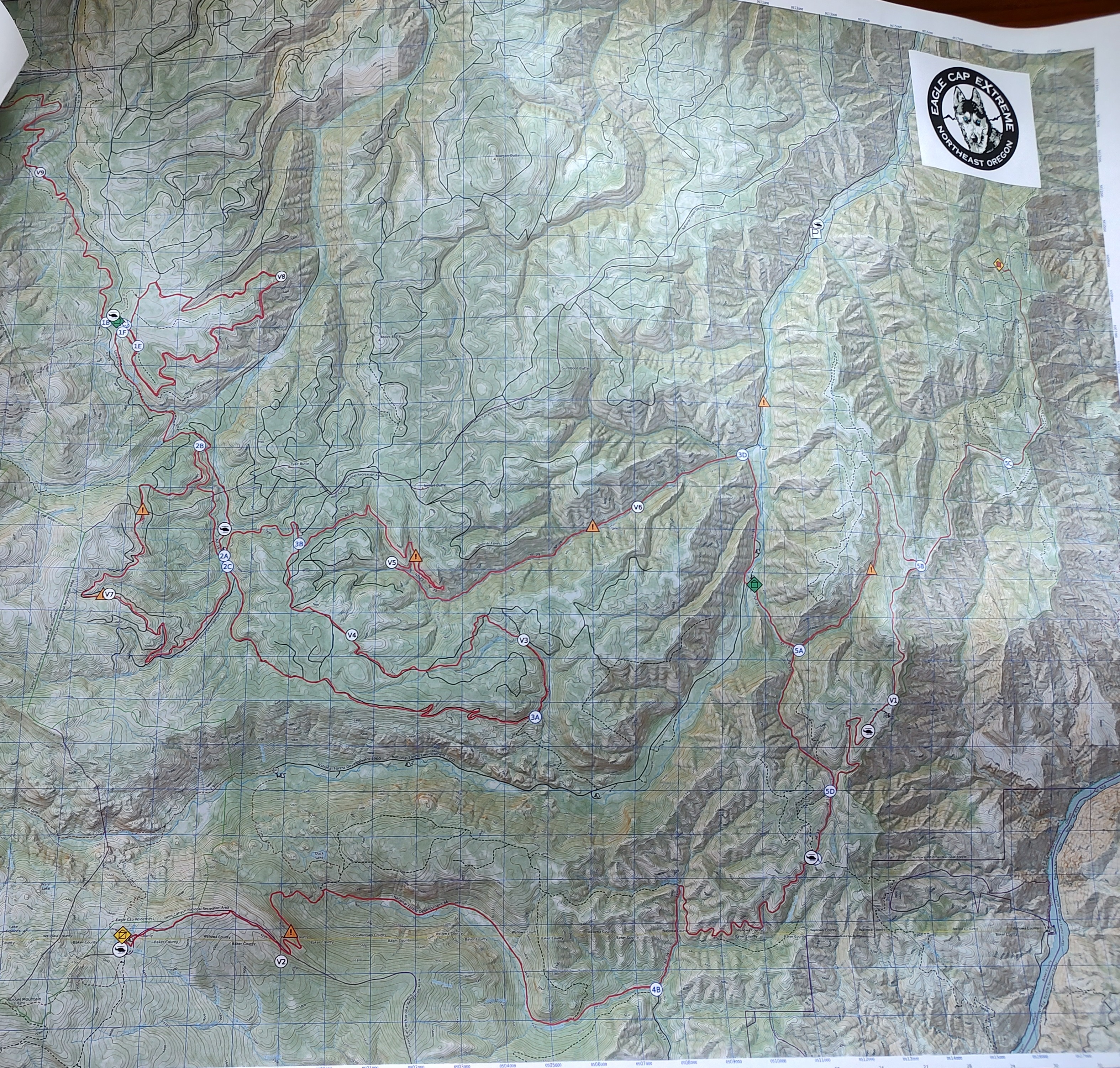
Gunshots shatter the quiet of Oregon’s Eagle Cap Wilderness, drawing Oregon State Trooper Gabriel Hawke into action. Following the sound, he stumbles upon a shredded cage, the sharp musk of a wolverine, and a dead hiker.

Tracking footprints through the rugged terrain, Hawke uncovers a second victim. It’s clear—he’s hunting a killer who’s hunting humans.

With Dog by his side, Hawke’s search leads to two brothers, one gravely injured. Enlisting the help of pilot Dani Singer, he gets the injured man to safety before returning to the wilderness.

Teaming up with a reclusive, disabled veteran who knows the Eagle Cap as well as he does, Hawke pieces together the killer’s twisted game. They suspect a poacher—one as ruthless and elusive as the wolverine he’s still chasing.

In a deadly wilderness where survival is the only rule, Hawke must outsmart a predator who knows no bounds.

Universal buy link: https://books2read.com/u/m2yARG

OR Purchase direct from the author in ebook and print from these links:

ebook link – https://www.patyjager.net/product/wolverine-instincts-ebook/  

print link- https://www.patyjager.net/product/wolverine-instincts/

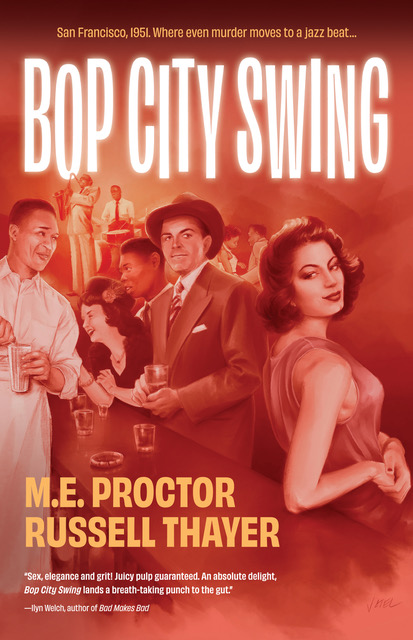
Guest Blogger ~ M.E. Proctor

The Detective Comes Calling

When I start working on a short story I never know much about the characters. I might have a place in mind—a bar on a beach, a path in the forest, an iced-over parking lot—or a line of text I woke up with, like this one that I used recently, curious to see where it would take me: Innocence doesn’t do it for me. Spoiler alert: somebody dies.

Most of my pieces unspool that way. Characters walk on stage, I get to know them, and things happen. Or nothing happens and the story goes asleep on my laptop, for a while or forever. That loose process works well for me, for short fiction.

A book is a very different animal.

If you write yourself in a corner in a short story the damage is minimal. You can shelve the draft, revisit it later and either find a solution or scrap it entirely. It’s disappointing but at worst you’ve only lost a few weeks. On the other hand, if you’re fifty thousand words into a book and hit a wall or run out of juice, it really hurts. The investment in time and the emotional commitment are substantial. Of course you can try to rescue the project. As Chandler said: In doubt, send in a guy with a gun. Sometimes it works, other times … Raise your hand if like me you’ve read books that feel like they’re limping to the finish line.

The pitfalls of winging it were very much in the back of my mind when I decided to sink my teeth into a crime novel. The problem is that I’m not a plotter. Detailing every beat of a story before sitting down to write it feels too much like a straitjacket. It sucks all the fun out of the project. Why bother to write it if I know everything, no surprises, from the get go? Still, I wanted to be better organized than usual. Start with an idea and develop a rough outline that could go the distance.

It was an excellent resolution.

It didn’t happen.

Because Declan Shaw threw me for a spin.

I was on the back porch, engaged in the creative exercise known as woolgathering, when a name popped into my head. Out of nowhere. Insistent. I’d never written anything, book or short story, that used the name of a character as a prompt. I was intrigued. Who the hell was this guy pitching a tent in my subconscious?

Names aren’t neutral. In life, we’re passive recipients—a gift from our parents. In fiction, the writers are in control. They can play with the mental images a name creates (Dickens mastered it). What does the name suggest about the character’s past, family, or cultural background? Smith evokes 1984 or The Matrix, Cadogan-Smith comes with horses and country estates, Smith-Underfoot might be a familyliving in Hobbiton.

Declan Shaw. What does it bring to mind? Irish heritage. He probably drinks whiskey and can tell a tale. Yes, I know, it’s a cliché. But seriously, with a name like that, what does he do for a living? I love antiheroes but I didn’t feel like spending an entire book with a hitman, Ken Follett did it so well in The Day of the Jackal, and, more recently, Rob Hart in Assassins Anonymous. So what? Reporter. I could see the byline, front page, above the fold. Then an insidious voice in my head whispered: Can you build a series around a journalist, how many cases can he cover, without stretching credibility? A series? The inner voice had to be kidding, there was no book #1 yet. It was ludicrous. But, but … I could smell the possibilities.

And that‘s how, right there, on my porch, Declan Shaw became a private detective.

The first scene I wrote had nothing to do with investigating. I pictured him as an eleven-year-old boy, standing at the bottom of a flight of stairs, looking up at his intimidating grandmother. She was a black-clad villain straight out of a comic book. I imagined the events that brought the kid to her place and the disastrous consequences that ensued. Readers won’t find any of that in Love You Till Tuesday, the first book in the series. Declan’s back story is in my back pocket and won’t come out until the time is right.

I forgot my resolution to outline and gave myself permission to improvise. The plan was to learn who my character was by writing him. It took a lot longer than I expected, three years, three manuscripts, a thousand pages, multiple false starts. None of that work made it into the book, but the effort was worth it. I knew Declan inside out. We were both ready to tackle Love You Till Tuesday. In some sort of orderly fashion.

My plot document looked like the output from a chaotic brainstorming session, a jumble of character sketches, a rough timeline, cryptic notes, dead ends and side stories. It was an unstructured and messy pseudo synopsis, with plenty of freedom between the lines to change almost everything. As I typed away, things changed indeed, and changed again after input from editors and beta readers, cuts and tightening up, but the original bones of the story remained. Until finally Declan Shaw made his official debut with his cigarillos, his cowboy boots, his good and flawed impulses, and his ironic take on the world. He’s good company. I’m keeping him.

Love You Till Tuesday – A Declan Shaw Mystery

The murder of jazz singer April Easton makes no sense, and yet she appears to have been targeted. Who ordered the hit and why? Steve Robledo, the Houston cop in charge of the investigation, has nothing to work with. Local P.I. Declan Shaw who spent the night with April has little to contribute. He’d just met her and she was asleep when he left.

The case seems doomed to remain unsolved, forever open, and quickly erased from the headlines. And it would be if Declan’s accidental connection with the murder didn’t have unexpected consequences.

The men responsible for April’s death are worried. Declan is known to be stubborn and resourceful. He must be watched. He might have to be stopped. He’s a risk the killers cannot afford. The stakes are high: a major trial with the death penalty written all over it.

Buy Links:

Love You Till Tuesday is available in eBook and paperback.

Barnes & Noble, Bookshop.org, and Amazon at https://www.amazon.com/Love-You-Till-Tuesday-Proctor/dp/1956957707

From reviews:

If you think the crime fiction market has enough PIs, think again. Declan Shaw is the kind of PI this genre has been waiting for. Declan is a well-developed, complex and nuanced character, wrestling with his own internal conflicts as he investigates the murder of April Easton. Sharp, witty dialogue and a fast-pace make Love You Till Tuesday an engaging read—one of those books you can’t put down and keep reading late into the night. It is a fun, intense read from beginning to end and M.E. Proctor displays her incredible talent at creating a well-written and beautifully crafted book.

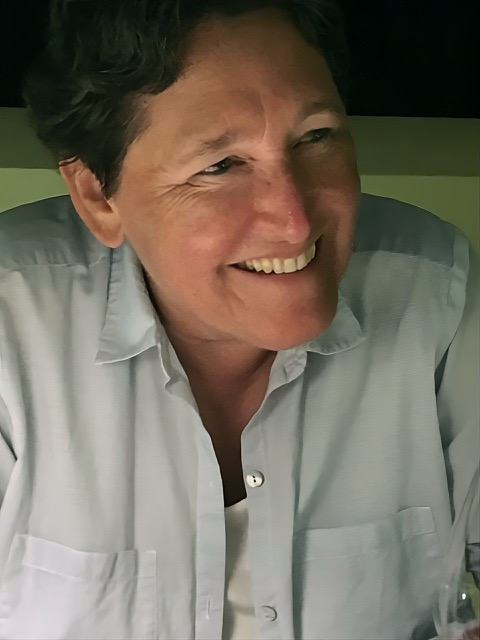
M.E. Proctor was born in Brussels and lives in Texas. The first book in her Declan Shaw PI series, Love You Till Tuesday, is out from Shotgun Honey with a follow up scheduled for 2025. She’s the author of a short story collection, Family and Other Ailments. Her fiction has appeared in various crime anthologies and magazines like VautrinBristol NoirMystery TribuneShotgun Honey, Reckon Review, and Black Cat Weekly.

Social Links

Author Website: www.shawmystery.com

On Substack: https://meproctor.substack.com

Facebook: https://www.facebook.com/martine.proctor

Twitter: https://twitter.com/MEProctor3 BlueSky: https://bsky.app/profile/meproctor.bsky.social