Pesky little thing called research.

When I learned about an event that is held every year in the area where I set my Gabriel Hawke novels, I decided I would write a book around that event. How hard could it be to have my character, who is a Fish and Wildlife State Trooper, become involved with finding a person or a killer during a sled dog race competition?

Well… Let me tell you, now that I’ve been digging into the logistics, the multitude of volunteers, the less than 60 hours for the total of the 200 mile race, and that doesn’t even count the weather conditions, I’m starting to wonder if this was a good idea.

Map of the race

I’ve had my first interview with a person who has volunteered for this event for 20 years. She gave me some good insight into logistics and more people I will need to interview. This book won’t be ready to write for at least two more weeks as I talk to the head of technology, mushers, the race marshal, and judge.

What had started out as a “fun idea” has now blossomed into much more of a project. I can’t even start my suspect chart or decide how someone would be murdered or missing without doing all the research. There are so many uncertainties that I can’t even begin to fathom what the motive would be.

This is so out of the norm for what I normally do when writing a book in this series. By the time I’m ready to start writing the book, I have mulled over every aspect of the death, did the bit of research I needed and am ready to roll.

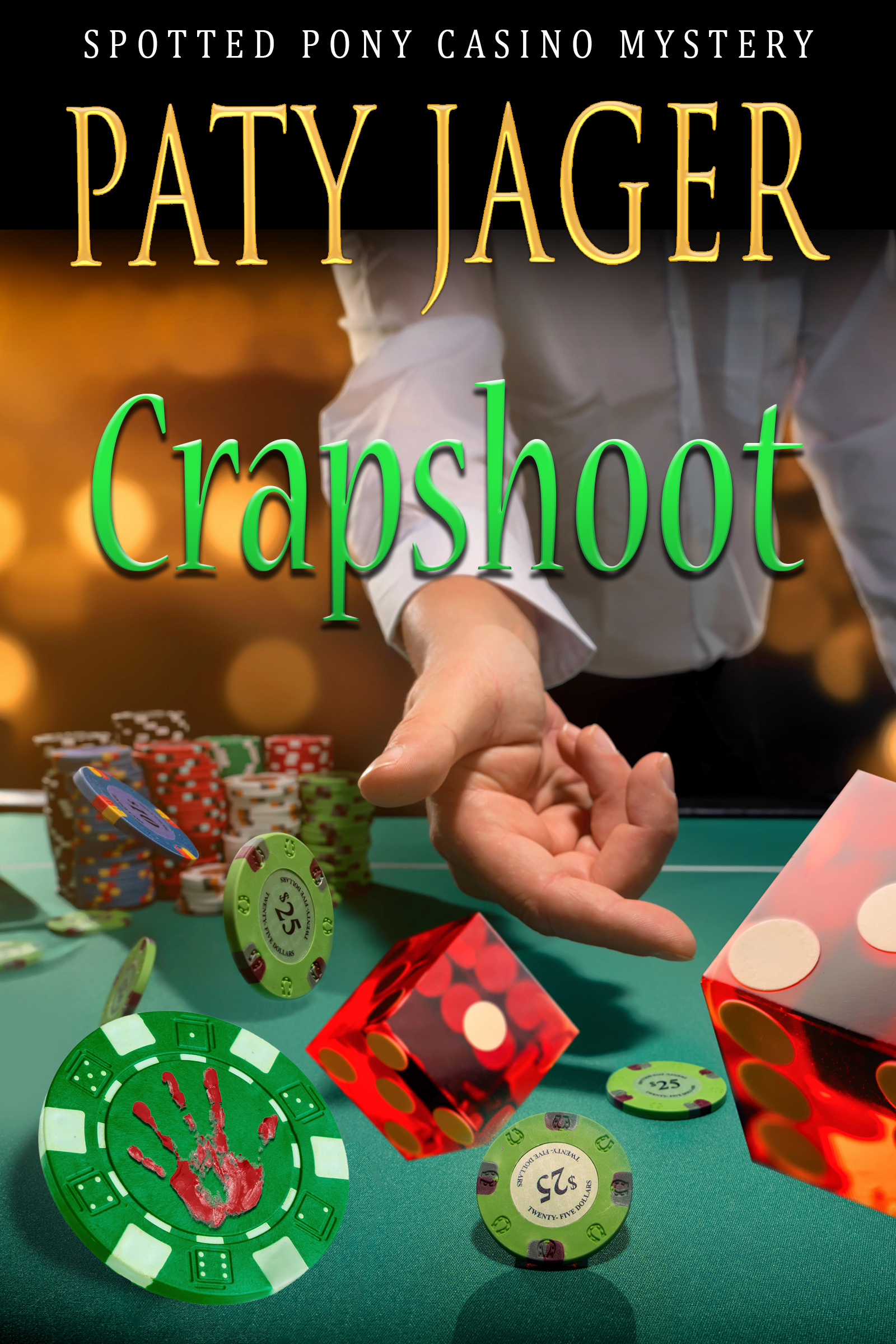
Now I sit, watching one more video, reading one more blog, and waiting to interview people so I can start this book. The next book my fans are waiting for me to publish. But as I dabble in the research, waiting to do the interviews, I may have to start working on the next Cuddle Farm Mystery book or even the next Spotted Pony Casino Mystery book, because my hands and imagination can’t sit idle for that long.

Depositphoto

I’ve already learned a lot that I didn’t know. Especially, about the dogs. A good mushing dog isn’t big and thick. It’s long and lean, like a marathon runner. They have high energy and stamina. The Alaskan Husky is nothing like the Siberian Husky. The Alaskan has been bred through the centuries to be fast and tough. They have a multitude of breeds in them that make them the marathoners that they are.

Now I need to learn more about the tracking of the participants during the race, the area where they sleep, and why someone, in a sport where you are dependent on one another to survive, would kill.

Chameleon

As an author, there are days I feel like a chameleon. I have to change my thoughts, my energy, and there are times it feels like my skin.

Because I’m a self-published or Indie author- I have many job descriptions.

  • Writing – The one I love and wish I could do and not worry about any of the others.
  • Editing – One that takes a different side of my brain but makes my work better.
  • Formatting – Making my story into formats for ebook and print books.
  • Producer – Getting the manuscript and pronunciations to my narrators and getting all of that set up to be produced. Then listening to the chapters to make sure the narrators didn’t miss words or used the right emotion.
  • Promoter – Finding the places that will best showcase my books and getting them out to these places as well as looking for authors who write the same type of story to try and do newsletter swaps, Oh and there’s the newsletter that needs to be written. Also making memes, (which I try to get a PA to do as much as possible.)
  • Marketing – Different bubble than promoting. Here I am figuring out what other books in my genre look like, looking for the best advertising for the book and the least amount of out-of-pocket.
  • Sending my stories to Beta Readers and Critique Partners to get feedback on the story and what I can tighten or make different to make it a better story.
  • Uploading – When the book is ready in ebook format, I upload to the various ebook vendors and aggregators. I also upload the print formats to Ingram Sparks. And I upload the audiobook to Findaway Voices/Spotify, Kobo, and Bookfunnel. I also upload the ebooks to Bookfunnel so I can add them to my website store.
  • Website store- While I enjoy having a place where readers can purchase my books directly from me with a bit of a discount to the other vendors, I made myself more work when each book comes out. But that’s okay. I want my readers to start purchasing direct. I like having the one-on-one interaction with them.

For each of these tasks there is a different mindset and there are days I can’t get up the energy to tackle some of them. I always have the energy and drive to write, but many of the other tasks, I drag my feet and reluctantly peel off my writing colors and daunt the dingy, grubby colors of making my brain work in a way, it isn’t accustom to do.

While my brain is constantly coming up with story ideas and working through the next scene or character encounter in my work in progress and the next book brewing in my head, it doesn’t like to switch over to the mundane side of being an author.

There are days I think I should just write for fun and not bother with selling it. But then I think of all the hours and years I’ve spent honing my craft, and know I need to make it a paying endeavor. Not to mention, I would have angry readers if I stopped putting out new books. I love that so many people let me know they enjoy my mysteries. They, the readers, are what keep me shedding my writing colors and doing the jobs necessary to get a book published.

Readers, you keep me writing and sharing! And makes my skin burst with bright, happy colors!

If you want to check out my books you can find them at https://www.patyjager.net

Guest Blogger ~ Skye Alexander

Clothes Make the Woman

The fashion world is ever-changing, and in the 1920s when my Lizzie Crane mystery series takes place the clothes a woman wore not only expressed her sense of style but also the changing ideas and mores of the Jazz Age. Modern ladies were shedding outdated social roles and restrictions as fast as they cast off their corsets. Hemlines rose to previously shocking lengths, baring ankles and calves. Some daring young women even painted images of their beaus on their knees––their short skirts revealed the pictures when they danced the Charleston. Glittery flapper dresses, resplendent with sequins and fringe, exposed plenty of skin. On the beaches, swimming costumes crept up high enough that policemen known as “beach censors” trod the sand, measuring ladies’ legs to make sure no more than six inches of flesh showed between hem and knees.

Wearing trousers, too, signaled not only a desire for comfort and convenience, but a shift toward equality between women and men as well. In most circles at that time, a lady dressed in pants raised eyebrows. Some towns in the Midwest and South even outlawed wearing trousers and fined brazen women for doing so. In the first novel in my Lizzie Crane mystery series, Never Try to Catch a Falling Knife, my jazz singer heroine from Greenwich Village gets off to a rocky start her first day on the job by wearing trousers when she meets her conservative Yankee employer. Sportswomen, however, were grudgingly allowed to don knickers on the golf course or men’s white trousers while playing tennis. Although off-the-rack pants for ladies weren’t available in the early Twenties, the 1927 Sears catalog offered tweed woolen knickers to golfing girls for $2.98. If you wanted something more in line with what Katherine Hepburn popularized a decade later, you had to have them custom-made or buy men’s and alter them yourself.

The Inside Scoop on Intimate Attire

As women’s outer garments changed, so did their underwear. No longer confined by tight corsets and multiple petticoats, liberated ladies shed the many layers their mothers wore in favor of slinky teddies, camisoles, and bloomers that slid comfortably beneath their slim-fitting dresses. Nylon, polyester, and other synthetic materials didn’t exist at that time, so wealthy women chose undies made of silk whereas ladies of lesser means garbed themselves in cotton, rayon, and wool. Instead of only boring white, lingerie now became available to style-conscious women in pink, peach, beige, light green, and naughty black. https://www.sewhistorically.com/dressing-the-1920s-woman-1920s-lingerie/

Prior to the Roaring Twenties, women wore thick stockings primarily for warmth. Now, with their legs on display in their new short skirts, modern ladies switched to sheer stockings that showcased their calves. Silk stockings were the preferred choice for those who could afford them at $1.48/pair in 1925 (the equivalent of about $25 in today’s money), in colors ranging from champagne to black. Rayon provided a cheaper alternative for cost-conscious women––and if they objected to the material’s sheen, they dusted their legs with powder to soften it.  

Women who still chose to wear girdles clipped their stockings to attached garters. Free-spirited fems rolled their stockings into place and fastened them just above the knee with elastic bands. The bands, sometimes called “jazz garters,” soon became a fashion statement in themselves, decorated with lace, ribbons, and rhinestones in sexy colors such as purple, red, and black. And if a woman wanted to keep a nip nearby in defiance of Prohibition, she could wear a garter flask that featured a pocket with a small silver container to hold her drink of choice.

Shopping for Clothes in the Roaring Twenties

Prior to the 1920s, most women made their own clothes. But as more entered the workforce during the Jazz Age––half of single women were employed outside the home in 1930––they had less time to devote to sewing. In response to this trend, department stores such as Macy’s and Bergdorf Goodman began selling off-the-rack garments. Now, busy ladies could purchase ready-made dresses, coats, and other clothing rather than engage in the time-consuming task of creating their own wardrobes or paying seamstresses to fabricate them.

For people who couldn’t afford to buy at upscale department stores, a shopping alternative arose during the 1920s: thrift shops. Prior to this time, peddlers hawking used clothing and other goods were common in America’s cities and towns––especially in less affluent neighborhoods. Many of these merchants were Jewish immigrants. But during the Twenties, Christian churches began establishing outlets to sell clothing and other products donated by parishioners with the goal of raising money for their churches. Goodwill trucks collected used clothing from more than a thousand households in the Twenties. Proceeds from thrift stores funded half the Salvation Army’s budget. Chanteuse Lizzie Crane, my style-savvy protagonist, realizes that wealthy ladies wouldn’t be caught dead wearing the same evening gown twice, and she buys most of her attire secondhand at church charity stores.

Hemlines and the Economy

Not only do the clothes a woman wears reveal her personal tastes, social class, and ideology, they may also be an indication of the economy. According to the “Hemline Index,” skirts rise during periods of prosperity and lengthen during leaner times. The short skirts of the Twenties celebrated a post-war boom as well as newfound freedoms for women. During World War II and the recession that followed, women’s hemlines dropped again. When times were good in the 1960s, the fashion world gave us the miniskirt and the bikini.

That’s not to say investors should take tips from haute couture––it’s likely that the fashion industry follows economic trends rather than predicting them. But perhaps something more than personal taste or vanity influences a woman’s choice of clothing. Risqué styles reflect a sense of playfulness, confidence, and freedom from limitations or worries, whereas more serious garb suggests a desire for protection, endurance, and the security of tradition. Whether or not these psychological connections have any merit, certainly the Roaring Twenties transformed the way women thought of themselves and their place in the world––and their clothes reflected that transformation.

Running in the Shadows

March 1926: Salem, Massachusetts

A spring equinox party at the mansion of a rich, flamboyant, and controversial art collector promises New York jazz singer Lizzie Crane and her band a fat paycheck, lucrative connections, and plenty of fun. She’ll also have an opportunity to reconnect with a handsome Boston Brahmin she fancies.

But the excitement she hopes for doesn’t turn out the way she expected. On the night of the musicians’ first performance, a naked young woman trots into the ballroom on horseback, sweeps up a talented artist named Sebastian, and rides off with him into the night. The next morning, Lizzie discovers the artist’s body tied to a tree, shot full of arrows like the martyred Saint Sebastian in Botticelli’s painting.

            Soon Lizzie learns that her business partner, pianist Sidney Somerset, once had a close relationship with the dead man––and police suspect Sidney may have murdered him. As she tries to protect her friend and discover the killer, Lizzie gets swept up in the treacherous underworld of art theft and forgery, a world where fantastic sums of money change hands and where lives are cheap. 

Buy links :Amazon – https://www.amazon.com/Running-Shadows-Lizzie-Crane-Mystery/dp/1685127061/

Barnes & Noble – https://www.barnesandnoble.com/w/running-in-the-shadows-skye-alexander/1146168035?ean=9781685127060

Skye Alexander is the author of more than 50 fiction and nonfiction books. Her stories have appeared in anthologies internationally, and her work has been translated into fifteen languages. In 2003, she cofounded Level Best Books with fellow crime writers Kate Flora and Susan Oleksiw. So far her Lizzie Crane mystery series includes four traditional historical novels set in the Jazz Age: Never Try to Catch a Falling Knife, What the Walls Know, The Goddess of Shipwrecked Sailors, and Running in the Shadows. Her fifth, When the Blues Come Calling, is scheduled for release in September 2025. After living in Massachusetts for thirty-one years, Skye now makes her home in Texas.

Visit her at https://skyealexander.com

Guest Blogger ~ Erica Miner

Overture to Murder: a violinist who won’t quit sleuthing

It’s strange how a standalone mystery can evolve into a series. I started off with just one book, Aria for Murder, inspired by my 21 years of experience playing violin at the Metropolitan Opera in New York. The protagonist, young violinist Julia, trades her violin for a detective’s hat as she finds herself investigating murders that take place on and offstage. I had fun weaving real operas into the mystery plot and was gratified at the number of readers who told me they enjoyed learning about opera for the first time. It never occurred to me to write a sequel until one of my fans asked me for one. As a savvy opera aficionado who knew the opera world inside out, he even specified that Book 2 should take place at the Santa Fe Opera.

I jumped at the idea. Though I had never visited Santa Fe, I knew that its opera house, an outdoor theatre set between two mysterious mountain ranges, would be the ideal setting for an opera mystery. Prelude to Murder was the result. While I was in Santa Fe researching the book, I met with a friend, the dramaturg of the San Francisco Opera who, when I revealed my work in progress, asked if I would be interested in writing a third mystery to take place at his company. Book 3, Overture to Murder,was born a year later.

In the story, a suspicious hit-and-run and subsequent backstage murder drive Julia to continue her relentless sleuthing as she investigates deadly secrets behind the music. Can she uncover the truth before the curtain falls on her family’s safety? The answers lie in Overture to Murder. As always, Julia manages to find trouble lurking in every dark hallway and back stairway of the San Francisco Opera, proving once again that an opera house is the perfect environment for mischief and mayhem.

But there were other reasons why I decided to set my third mystery at San Francisco Opera. First of all, San Francisco is one of the world’s most captivating cities. And it considers its opera only slightly less sacred than the Holy Grail. It’s totally an opera town. It’s also a city of mystery and suspense. Witness “Haunted SF Ghosts, Murder and Mystery: a dark and ghastly tour through the mysterious past of downtown alleys and streets. Get haunted by after-dark tales of strange deaths, ruthless villains, famed ghosts, and shocking assassins.” Oh yes. There’s more to the scary aspects of this city than meets the eye.

My most compelling motivation, however, was my personal history with San Francisco’s War Memorial Opera House. Over the years I’ve spent a lot of time there, visiting close relatives and friends who have worked with this illustrious company. When I started researching Overture to Murder, I learned about the fascinating history connecting the opera company with the Gold Rush and other astonishing aspects of the city’s history. But this time, as my friend who had motivated my desire to write the mystery showed me the opera house from top to bottom, I developed a special new intimacy with the place. What I discovered was a theatre steeped in intrigue, with dark creepy basements, ancient creaky elevators, and terrifying catwalks; a place with its own ghosts, whose stories could curl your ears.

What better place to set a mystery?

Overture to Murder

High notes of suspense and danger as the curtain comes down on murder in the third novel of Erica Miner’s Julia Kogan Opera Mystery series. Young Metropolitan Opera violinist Julia heads to the San Francisco Opera to replace ailing concertmaster, Ben, who has suffered serious injuries in a hit-and-run accident. Julia suspects it was no accident, and when one prominent company member becomes the victim of a grisly murder, she cannot resist becoming involved in the investigation. As in her previous sleuthing at the Met and Santa Fe Opera in Books 1 &2, Julia finds danger lurking in the elegant but creepy San Francisco War Memorial Opera house and again finds herself face to face with a ruthless killer. But this time her courage is put to the test when the life of a precious family member is in even deeper peril.

Buy Links:

https://www.amazon.com/Overture-Murder-Julia-Kogan-Mystery/dp/1685127819/

https://www.barnesandnoble.com/w/overture-to-murder-erica-miner/1146432661?ean=9781685127817

https://www.thirdplacebooks.com/book/9781685127817

Award-winning Seattle-based author, lecturer, screenwriter, and arts journalist Erica Miner believes opera theatres and fiery artistic temperaments are a chilling backdrop for murder, and perfect for creating fictional mischief! Drawing on her 21 years as a violinist at the famed Metropolitan Opera, Erica’s fanciful plot fabrications reveal the dark side of the fascinating world of opera in her Julia Kogan Opera Mystery series (Level Best Books): Aria for Murder (2022), finalist in the 2023 CIBA and Eric Hoffer Book Awards; Prelude to Murder (2023), a Distinguished Favorite in the 2024 NYC Big Book Awards;and Book 3, Overture to Murder (2024), a Distinguished Favorite in the 2025 Independent Press Awards.

Erica’s debut novel, Travels with My Lovers, won the Fiction Prize in the Direct from the Author Book Awards. Her screenplays have won awards in the Writer’s Digest, Santa Fe, and WinFemme competitions. When she isn’t plumbing the depths of opera houses for murderous mayhem, Erica frequently contributes reviews and interviews for the well-known arts websites https://classicalvoiceamerica.org, www.bachtrack.com, and www.BroadwayWorld.com.

Erica has lectured on opera and writing throughout the US, as well as in Australia.

Social Media:

https://www.facebook.com/erica.miner1

https://www.instagram.com/emwriter3/

Author Website:

https://www.ericaminer.com

Guest Blogger ~ Millicent Eidson

Three years since my initial guest blog in 2022 (https://ladiesofmystery.com/?s=eidson), my microbial mystery world has expanded to multiple disease threats worldwide. It’s a good time to catch everyone up.

For decades, I was immersed in zoonotic diseases transmitted from animals. Scientists estimate that three-quarters of new or emerging infections are zoonoses.

As a veterinarian working in public health, I dropped smelly baits from a helicopter over the Adirondacks to vaccinate raccoons against rabies. I tracked down people with explosive diarrhea from a scenic New Mexico train ride. I coordinated reporting and collection of dead birds when West Nile virus showed up in the western hemisphere.

Serious illnesses and deaths are tragic but stamping out disease outbreaks is exciting. Each cluster of ill people is a mystery for a disease detective. Everyone knows about Rizzoli and Isles from the wonderful Tess Gerritsen thrillers. But veterinarians exposed to deadly hantavirus when collecting infected mice are less familiar medical heroes.

When I retired from fulltime work as a veterinary epidemiologist at the Centers for Disease Control and Prevention and two state health departments, I continued part-time teaching about zoonoses to graduate students. It’s rewarding to open up the eyes of new public health practitioners to the fascinating world of zoonoses. But I wondered if I could do the same for the general public.

Our daughter is adopted from China like thousands of orphans with the one-child policy. In my fiction, I wanted to explore how it might feel for someone whose Asian role models are replaced by Anglo, Hispanic, and Native American cultures embedded in a rich landscape.

And many of us struggle with mental and physical health challenges from birth, injury, or illness. Can someone wrestling with that history contribute fully to our demanding, fast-paced world?

So Maya Maguire was born, inspired by my daughter’s heritage and my own with mostly Irish ancestors. Like me, Maya Maguire starts her public health career after completing years of work toward veterinary and master’s degrees. Unlike me, she’s a bit of a genius and completes all her training young, adding further stress when expected to perform at the level of other more mature CDC trainees.

The initial three novels primarily immerse us in Maya’s world, other than diary excerpts from a mysterious young boy facing his own roadblocks near the Arizona/Utah border. In “Anthracis,” Maya is in her first year of training as a CDC Epidemic Intelligence Service officer stationed in New Mexico. Along with veterinary and physician colleagues, she battles perplexing new means of anthrax infection in the Southwest.

Her second year of EIS training still finds Maya in the Southwest, tackling tick-borne Borrelia infections across Arizona and New Mexico. Then she joins a colleague based in Norway on outbreaks in multiple European countries and north Africa. Personal relationships are impossible to balance with her work obligations.

In “Corona,” Maya experiences the COVID-19 outbreak along with all of us, first in Arizona, then in Denmark with infected mink, and finally in her home country of China to find its origin in bats. Like many, she won’t escape the pandemic fully unscathed.

Mosquitoes bring “Dengue” from Puerto Rico to New York City, then New Mexico and Hawai‘i. This novel expands the MayaVerse by alternating point-of-view chapters between Maya and her public health veterinarian mentor, Faye Simpson. Faye’s a kick-ass character in her late sixties, transplanted from a childhood on a Colorado ranch to a career with the New York City health department.

“Ebola,” available this summer, broadens even more with the perspectives of multiple male characters confronting the virus in West Africa, New York City, and New Mexico. Maya’s finishing a final training year with the CDC and Faye is retired from fulltime public health work but still enmeshed in Ebola crises.

These brief summaries only touch on the lively characters in the stories. Fred Grinwold and Nancy Bingham are Maya’s physician supervisors in New Mexico and Arizona. Their early romance and outbreak puzzles are available along with other Faye Simpson stories in “Microbial Mysteries,” my short story collection.

Sci fi thrillers are entertaining but sometimes based on pure imagination. For a peek into the exciting real world of zoonotic disease control through the perspective of colorful and compelling characters, join me in the MayaVerse!

Dengue: A Microbial Mystery

Is dengue the next pandemic? Two veterinary medical detectives, decades apart in age and experience, battle the tropical disease on the mainland, then in Hawai‘i. Even in paradise, people can’t escape blood-thirsty mosquitoes spurred on by a warming climate. Join these resilient women as they push through personal challenges to discover the scientific truth and stop the relentless death toll.

From reviews:

Maya Maguire is a deeply complex character, with a backstory that contains both heartache and joy. I have thoroughly enjoyed getting to know her … As for the medical terminology in the book … You’re in capable hands. Dr. Eidson uses real-life medical words and situations in the book, but they’re always put into a context that allows the reader to understand exactly what’s going on. (As an aside, the research that must have gone into this book is mind-blowing.)

Buy Links: https://books2read.com/millicenteidson/  or  Dengue: A Microbial Mystery (MayaVerse): Eidson, Millicent: 9781955481168: Amazon.com: Books

Millicent Eidson, a master of intrigue and suspense, weaves her literary magic through the pages of the Maya Maguire microbial mystery series. With a keen eye for detail and a passion for scientific puzzles, she invites readers into a world where microbes hold secrets more treacherous than any criminal. Millicent’s career as a public health veterinarian and epidemiologist began at the Centers for Disease Control and Prevention. After days filled with pathogens and outbreaks, the nights belonged to whispered tales of microbes dancing in her imagination. Upon retirement, her passion for storytelling blossomed into the MayaVerse, https://drmayamaguire.com/.

She can be found at Facebook, Millicent Eidson, | LinkedIn, Millicent Eidson (@EidsonMillicent) / Twitter, and Millie Eidson (@drmayamaguire) • Instagram photos and videos