Finding Time to Write is Hard

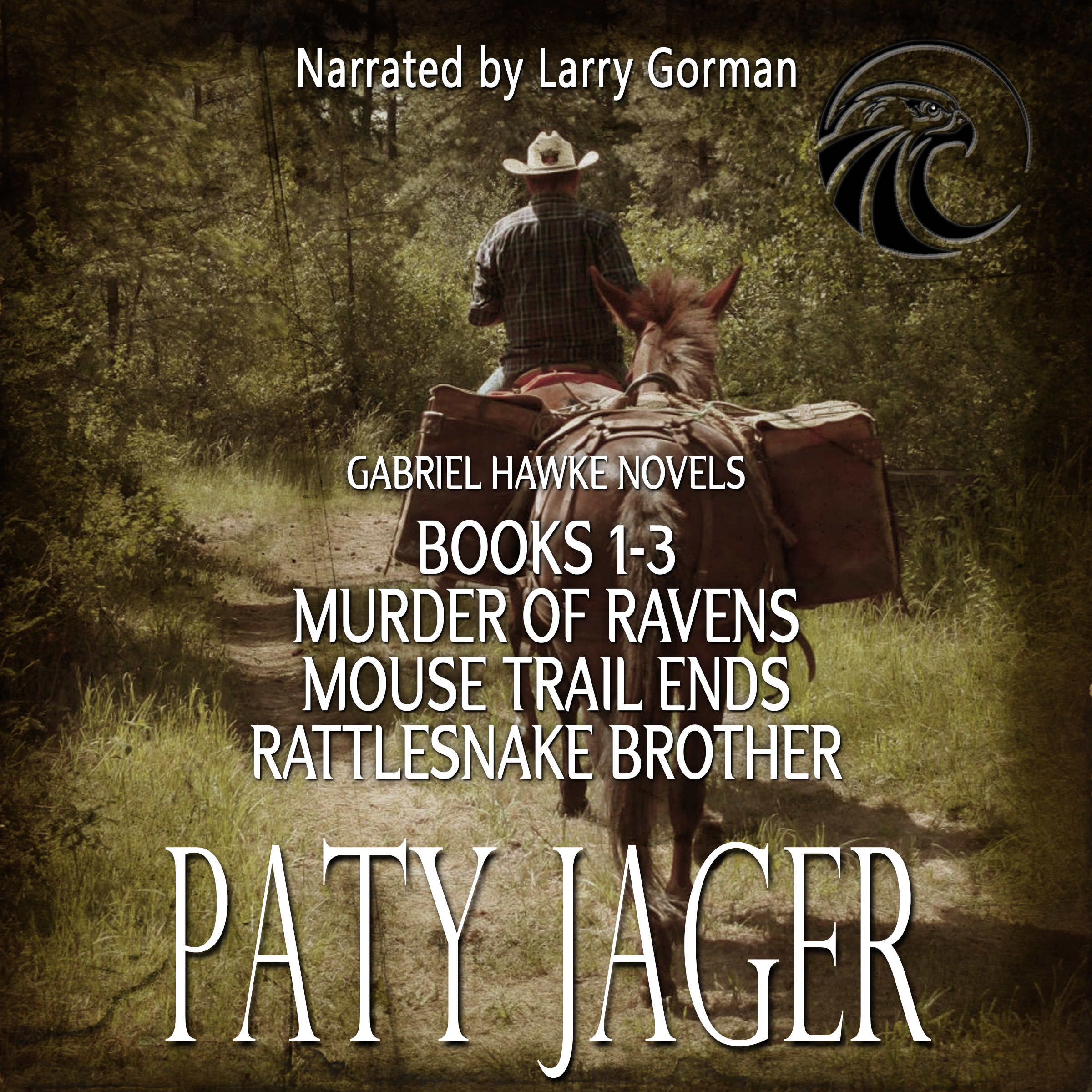
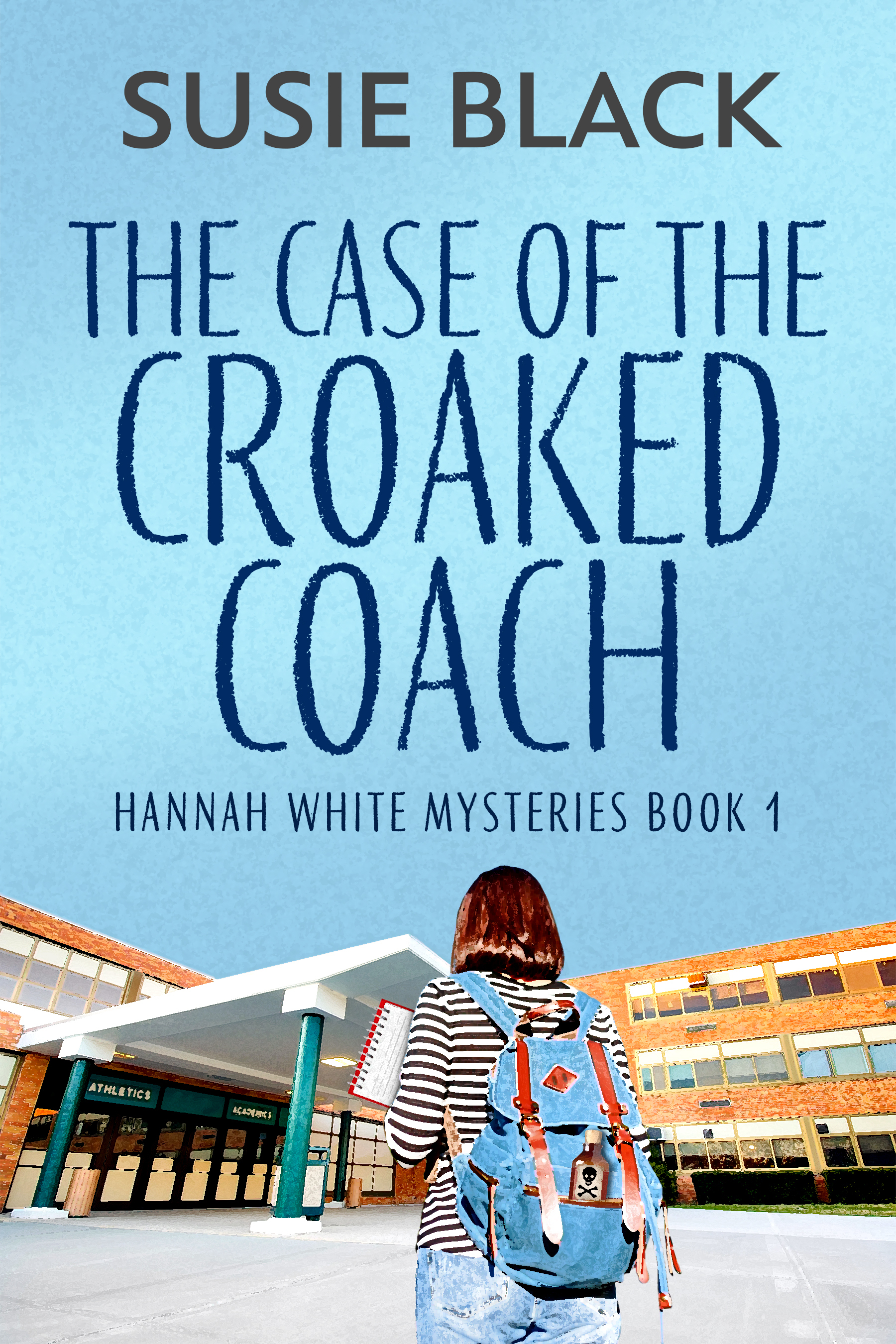
The rest of this month, I am home 13 days! That means every one of those days I need to put my fanny in the chair and get the next Gabriel Hawke book written. Because August is going to be hit and miss to get writing done.

I swear, each summer gets busier and busier! I was able to get more writing done when I sat all day in a swather or tractor raking hay during hay season than I do now.

As our family grows so do the family commitments as well as I’m trying to get my books seen more by actual people. I’ve found that if someone meets a writer and sees their enthusiasm for their books, the reader is more likely to purchase the book. Then if the like that first purchase they come back for more.

I started this month with an in-person event that I’ve not attended before. It was a Renaissance Faire (loosely). I sold 26 books over two days. All but one of the sales were to new to me readers. I’m hoping they will enjoy what they purchased and come back for more next year, as my following has done for the Sumpter Flea Market each year.

The rest of this month I will be attending Miner’s Jubilee in Baker City, OR, to see if it will be something to do next summer, and I’m attending the Tamkaliks Powwow in Wallowa, OR. I’ve been attending this for several years to help me better see my characters and because I find it healing. The last two Mondays of the month, I’ll be judging at county fairs. That’s what makes the summer get busy for me. But I love talking to the 4-Hers and discovering their love for their projects.

When I am home, I make myself write. I have to. My readers let me know they are impatiently waiting for the next book. I can’t let them down. I’m a people pleaser. My greatest flaw. It gets me more work than I can sometimes do, but there it is. It is who I am.

I’m also mentoring two mystery writers and a friend who has been writing the same book for too long. I’m her weekly reminder to sit down in the chair and move the story forward, don’t keep making it perfect. That comes after the story is all out and waiting to be prettied.

It is these mentorships that keep me from opening the internet first thing in the morning and getting words written before I look at an email or see who liked a meme on Facebook. While I coach other writers on finding time to write, finding ways to streamline their days and writing, I follow my own guidance by making sure I’m writing and moving my story forward.

My greatest strength is that when I set my mind to something, I do it. And right now my mind is set on getting this book written this month so I can “pretty it up” next month when I’m attending a family reunion, a grandson’s wedding, judging at another county fair and state fair, and then selling my books for two days at the State Fair. Because most of those trips are on the opposite side of the state from where I live, it requires a day’s travel to and a day’s travel back. Which eats up a lot of the days in August! Half of August I’ll be away from home- 15 days to travel and attend the events.

That is why my fanny is in my chair and I’m writing! I’m halfway through the book and should get it done in the next 13 days. Yipee!

Authors, are you on a deadline this month, or do you give yourself slack in the summertime? If you’re a reader, how impatient do you get for the next book in a series?

Guest Blogger ~ Melissa Westemeier

The story behind Old Habits Die Hard begins in 2004 when I attended the University of Iowa’s Summer Writing Festival where I met four women who would become my writing partners. One of those women shares the author credit on Old Habits Die Hard, Mariana Damon came up with the idea of a murder taking place at a retirement community set in a renovated church. When I met Mariana in 2004, the spunky woman from Nebraska with a low voice, wild red curls and long flowing skirts was writing a murder mystery set in a fictional reservation in the southwest, featuring a Native American police officer solving a crime involving a murder and ancient artifacts. Mariana’s writing journey took her next to France, then to Cambridge, England, and finally to Kuwait before her dementia made further work as a writer impossible to pursue.

Mariana and I shared many trips together over the years we worked together and often bunked up together, too. We’d share our secrets, dreams, wishes, and histories deep into the night. Wickedly funny and brave, Mariana’s generous spirit meant I could trust her with anything, she’d be honest and loyal in every circumstance. It’s funny how our lives mirrored each other’s—we both taught English in public schools, both lived in the Midwest, both mothered only sons, and both set aside our own ambitions for our spouses’. She was truly a sister from another mister.

In 2021 another partner, Marni Graff, and I visited Mariana in her new home at a memory care facility. During our time together Mariana shared her desire to write one more murder mystery, so Marni and I gamely took notes and helped her flesh out ideas for a setting, murderer, victim, motive, and cast of characters. “Death at the Abbey” was set in the assisted living facility where she lived before her condition worsened, and she had a terrific concept for an opening scene.

Marni, Mel, Mariana 2021

Marni and I felt tremendous sadness at our friend’s struggle with her disease and helplessness as dementia stripped away her capacity to focus, let alone write. “We should write it for her,” I suggested to Marni over breakfast before we boarded our flights home. It seemed like a fitting tribute to our friend if we could flesh out her final idea and put her name on it. We’d left the character worksheets and plot outline with Mariana, so I jotted down what we could remember in a tiny notebook.

A year later I was between projects and dug that little notebook out of my purse. I’ll just flip through it and see what I might be able to do—maybe turn these ideas into a short story. I’d never successfully written a murder mystery before, but Marni has written eight of them, so I figured I could get things started and Marni could clean up my mess and we’d take it from there. The joke was on me because when I came up for air, I’d written 30,000 words, almost half a book! I sent the pages to Marni and our other writing partner, Lauren Small, to get their feedback. Their response was overwhelmingly positive and encouraging so I kept writing. Four months later I had a complete, polished draft of this book, retitled Old Habits Die Hard.  

I preserved Mariana’s original ideas. Sister Bernadette, a retired nun, solves the murder of Toni Travi at The Abbey with the help of her former student, Detective AJ Lewis. All six of Mariana’s original characters are in the story, and the opening scene is all Mariana’s. She’d determined who committed the murder and why, so it was up to me to fill in the rest. AJ’s less heartbroken and much younger than she’d planned him to be, but I hope she’ll recognize him and be happy with how he turned out.

Mariana Damon sparked this series and it’s exciting to take her ideas further than she imagined they’d go. Neither of us expected that visit in 2021 to result in a book and we certainly didn’t predict a series would happen. It’s pretty cool how our friendship that twenty years ago wound up with both of us on the cover page. Old Habits Die Hard and I’m honored to be Mariana’s ride or die until the end.

PHOTO: Lauren, Mariana, Melissa & Marni Summer 2014

OLD HABITS DIE HARD:

When retired nun and teacher Sister Bernadette returns with her fellow residents to The Abbey: Senior Living, she is the first to discover the body sprawled in the hallway of the converted school where she once taught English and now lives.  Instead of freezing with horror, Sister Bernie has questions. Lots of them. Why does Toni Travi, the bedazzled and bejeweled resident from apartment 218, have so much chest hair? Did anyone at The Abbey know Toni was a man? Was Toni’s death related to allegations that she cheated at cards? Where’s the murder weapon? Who had motive? And did someone kill Toni, or the man hiding beneath the Revlon foundation and blonde wig? 

Detective AJ Lewis is charge of the investigation though Sister Bernie acts as if he is still her student. With unholy stubbornness, she dogs his every step, eavesdrops, sneaks beyond the police tape and offers conjecture and clues. He wants to keep her safe, but she’s determined to lend a helping hand—it’s her habit, after all!

BUY LINKS

Google Play https://play.google.com/store/books/details/Melissa_Westemeier_Old_Habits_Die_Hard?id=4oorEQAAQBAJ&hl=en_US&gl=US&pli=1

Amazon https://a.co/d/exKs6zn

Kobo https://www.kobo.com/us/en/ebook/old-habits-die-hard-6

Barnes & Noble https://www.barnesandnoble.com/w/old-habits-die-hard-melissa-westemeier/1146452143?

Melissa Westemeier is a Sister in Crime and teacher from Wisconsin. She uses humor to explore serious subjects, and her published books include murder mysteries, rom-coms, and a trilogy loosely based on her years tending bar on the Wolf River. She likes her coffee and protagonists strong and prefers to work barefoot with natural lighting.

MEL’S Website: https://www.melwestemeier.com/

Facebook https://www.facebook.com/profile.php?id=100027992959383

Instagram  https://www.instagram.com/mwestemeier/

Bluesky  https://bsky.app/profile/mwestemeier.bsky.social

There is more to a title than the words.

My line editor, who is in her thirties, said the title of my recently published book makes her laugh. I shrugged and told her the title is a gambling term. She said that makes sense because it is a book in the Spotted Pony Casino Mysteries, but it still makes her laugh.

Crapshoot: something(as a business venture) that has an unpredictable outcome. Webster’s dictionary.

When I came up with the storyline for book 7 in my Spotted Pony Casino Mystery series, of all the gambling terms I jotted down for titles, this term was the one that fit the best.

I’m a writer who comes up with an idea for a murder or an idea for a situation that puts my main character into a situation that will test them. This story didn’t start out with a murder. It was to be about a missing woman from the Umatilla Indian Reservation. The woman was a friend of my main character, a disabled veteran who lost her best friend in high school.

This story was meant to show how losing someone and not knowing why the cruelty happened could remain a constant enemy of the living. I wanted my main character to throw her whole being into finding the missing woman. And she does. But in the middle of this emotional trip, her nightmares come back and she becomes engaged. Talk about lows and highs! That is this story. A rollercoaster of ups and downs, and how the Indigenous community comes together to find their lost ones and to make themselves stronger.

While Crapshoot may make some people snicker or laugh, it is the epitome of this story. Each time my main character thinks she knows something, other information comes up. When she tries to rely on the right people or do the right thing, something gets in her way. It’s a crapshoot whether or not they will find the missing woman. The story takes a dark turn when the missing woman’s husband is killed. Then they discover an undercover female FBI agent is missing. And “SPLAT!” another body turns up. This is a story that I enjoyed writing to bring my character both happiness and grief. It shows more of the main character and sets her up for the next book that will knock her off her axis and make her wonder if a person can truly ever really know anyone.

So if this title makes you smile or laugh, that’s okay. Once you begin reading the book, you’ll understand the title and see the reason behind it, besides, it is a gambling term.

CRAPSHOOT

Book 7 in the Spotted Pony Casino Mystery series

 A Fentanyl death.

A missing woman.

Dela Alvaro, head of the Spotted Pony Casino security, and Heath Seaver, a Umatilla Tribal Detective, join forces with the FBI to find Dela’s missing basket-weaving instructor and put a stop to a lethal drug flowing onto the reservation.

The investigation turns deadly when an undercover FBI agent goes missing and the drug cartel’s girlfriend is out for Dela’s blood.

https://books2read.com/u/3njQ7e

In case you were wondering what gambling terms are left on my list for titles:

The Gimmick

Full House

Jackpot

Penny Ante

Luck of the Draw

Blue Chip

Guest Blogger ~ M.E. Proctor

Bop City Swing, or When Writers Click

By M.E. Proctor

We should write something together, I’ve heard these words many times. The suggestion is always vague and about as binding as the clichéd ‘let’s do lunch one of these days’. Many years ago, a friend and I planned to write a book. He was a big science fiction fan, so that’s what we decided to do. I delivered the first chapter. My friend never produced chapter 2, and I ended up doing the entire thing. It turned into a four-book dystopian series, The Savage Crown.

So, when fellow crime writer Russell Thayer typed in a social media chat that “Tom should go after Gunselle someday. Imagine the interrogation scene!” I agreed that bringing our two recurrent short story characters together was a cool idea, but I doubted it would go anywhere.

I was wrong. We’re a year later and Bop City Swing is on the bookshelves. Even better, Russell and I are working on another mystery featuring the same two leads.

Russ’s creation is Vivian Davis, aka Gunselle, a contract killer. He has written more than twenty short stories spanning the late 1930s-early 1950s with her in the starring role. My guy (he’s in a dozen stories so far) is Tom Keegan, a homicide detective in 1950 San Francisco. A professional killer and a cop, in the same place at the same time … sounds like a match made in Noir heaven.

Early last year, Russ and I both happened to have pieces published at the same time in two different magazines. A mash-up—in the vein of CSI meets Law & Order—was top of mind again and we started brainstorming ideas for a short story. What if she’s hired to bump him off … What if they’re after the same killer… We eventually decided to build the story around a political assassination that would involve both characters, coming at it from their respective angles. The detective investigates the case, in straight procedural fashion, and the contract killer is embroiled in it sideways. She didn’t commit the crime.

We never discussed the mechanics of the collaboration. It felt natural to tell the story from a double point of view (POV), Russ writing the Vivian-Gunselle chapters, while I wrote Tom’s scenes. The differences in our styles fit the particular voice of our respective characters. If there were awkward disparities or rough edges, we figured we could polish them off after the first draft.

Russ sent me a snippet of Gunselle being hired for a job she dislikes—fixing somebody else’s mess, i.e. the assassination (that plot line was discarded later on)—and a few days later, I sent him Tom’s arrival at the crime scene, the ballroom of a luxury hotel. The suspect is a musician in the jazz band hired for the event.

Everybody knows that most of the research should be done before starting to write the story, it’s a lot more efficient, but we were both eager to get something going. Now, with two scenes drafted, we had to make sure we were historically correct on the when and the where.

The when would be 1951, an election year. That November, San Francisco re-elected the incumbent republican mayor, Elmer Robinson. The fictional who (the victim) would be Charles Forrester, the democratic challenger launching his campaign at a June fundraiser. Where would be the Palace Hotel, conveniently located downtown, with a good size ballroom—an internet deep dive delivered period-accurate floorplans.

We knew when, where, and who, but like our two lead actors, we were stumped by the motive. Why was Charles Forrester shot? We wouldn’t find out for a while.

Writing a story is like a treasure hunt. Every sentence, written on the fly, contains potential clues. Here’s an example. The decision to make the killer a jazz trumpeter gave the plot a definite slant. It also gave us the opportunity to dig into the rich Bay Area music scene of the early 50s, the various clubs, the talent on display, the racial tensions, the lure of the city at night, the early involvement of the Mob in the drug trade. Russ had touched on the music angle in some of his stories and brought all that background into the plot, with great secondary characters. One of them, Maggie, became central to nailing down the motive and the final resolution. Through Maggie, we also touched on the war, only six years in the past, and its aftermath, how deeply it scarred many characters in the story.

Very soon, the project was no longer a short story. Bop City Swing had turned into a book.

During the months it took to complete a solid first draft, we had a couple of mini-debates. One of them was about who would enter the scene first.

Homicide cops always get there after the fact, by definition. We decided to start with Gunselle and put her in the ballroom, at the very beginning, before the shots ring out. That gave us the story hook. She was hired for the hit and somebody beat her to it. She’s pocketed the down payment. For doing nothing. As a professional, it sticks in her craw.

Another discussion was about the key confrontation between our two characters. Up to that climactic moment, they’d both gone through their moves separately, with only a glancing accidental contact that showed mutual interest. Yes, this is where it gets sexy … Who would write that scene, in whose POV? We considered writing it twice, in a ‘he says, she says’ tango, but it proved clunky. I wrote the initial scene, from Tom’s voice, then Russ took it and turned it around. It worked a lot better that way, Gunselle initiates the event and is the more active character. It was also fun to write Tom’s reaction afterwards.

We initially wrote our respective scenes separately. After a few weeks, we built a master document that we carried all through to the end, highlighting changes, constantly adjusting things. Russ writes snappy action scenes and I tend to be atmospheric. In the master document, we started blending things. He added bite and I added background.

Mid-way through the process, we built a timeline. The characters were all in motion and the investigation picked up speed. A beat-by-beat sequence of events helped us figure out the ending. None of what happens in the last act was in the cards from the start.

The time we took to consider options, writing them and discarding parts of them, might appear to be a waste but was crucial in coming up with the best solution. The beginning of the story, in particular, was rewritten multiple times. Part of the fun in a collaboration is having your partner put something on the table that you would never have come up with on your own.

Writing is a solitary pursuit. Sometimes, it feels good to share. Russ and I had so much fun, we’re doing it again. There will be more Tom and Gunselle in the future. I’ll keep you posted!

—-

Bop City Swing

San Francisco. 1951.

Jazz is alive. On radios and turntables. In the electrifying Fillmore clubs, where hepcats bring their bebop brilliance to attentive audiences. In the posh downtown venues where big bands swing in the marble ballrooms of luxury hotels.

That’s where the story begins, with the assassination of a campaigning politician during a fundraiser.

Homicide detective, Tom Keegan, is first on the scene. He’s eager, impatient, hot on the heels of the gunman. Gunselle, killer for hire, is no longer there. She flew the coop, swept away in the rush of panicked guests.

They both want to crack the case. Tom, because he’s never seen a puzzle he didn’t want to solve, no matter what the rules say. Gunselle, because she was hired to take out the candidate and somebody beat her to it. It was a big paycheck. It hurts. In her professional pride and wallet.

The war has been over for six years, but the suffering and death, at home and abroad, linger as a horror behind the eyes of some men. And one young woman.

Bop City Swing is the brainchild of Russell Thayer, author of the Gunselle stories, and M.E. Proctor, who occasionally takes a break from Declan Shaw, her Houston PI, to don Tom Keegan’s gray fedora.

Buy Links:

Bop City Swing is available in eBook and paperback

On Amazon at https://www.amazon.com/Bop-City-Swing-Proctor-Thayer/dp/B0F4DSSQ9V/

From reviews:

“A wild ride down the neon-lit streets of post-WWII America, with bebop wailing in the nightclub on the corner, the white witch pumping through the veins of the junkie on the barstool, three slugs draining the life from the charismatic politician with a shady past, and enough snappy dialogue to light up the faces of Raymond Chandler and James M. Cain.”

M.E. Proctor (www.shawmystery.com) was born in Brussels and lives in Texas. The first book in her Declan Shaw PI series, Love You Till Tuesday (2024), came out from Shotgun Honey, with the follow up, Catch Me on a Blue Day, scheduled for 2025. She’s the author of a short story collection, Family and Other Ailments, and the co-author of a retro-noir novella, Bop City Swing. Her fiction has appeared in VautrinToughRock and a Hard PlaceBristol NoirMystery TribuneShotgun HoneyReckon Review, and Black Cat Weekly among others. She’s a Derringer nominee.

Social Links

Author Website: www.shawmystery.com

On Substack: https://meproctor.substack.com

Facebook: https://www.facebook.com/martine.proctor

Twitter: https://twitter.com/MEProctor3

BlueSky: https://bsky.app/profile/meproctor.bsky.social

Instagram: https://www.instagram.com/proctormartine/

Russell Thayer’s work has appeared in BrushfireTough, Roi Fainéant Press, Guilty Crime Story Magazine, Mystery Tribune, Close to the Bone, Bristol Noir, Apocalypse Confidential, Cowboy Jamboree Press, Hawaii Pacific Review, Shotgun Honey, A Thin Slice of Anxiety, Rock and a Hard Place Press, Revolution John, Punk Noir Magazine, Expat Press, Pulp Modern, The Yard Crime Blog, and Outcast Press. He received his BA in English from the University of Washington, worked for decades at large printing companies, and currently lives in Missoula, Montana. You can find him lurking on Twitter @RussellThayer10.

Guest Blogger ~ Lois Winston

Truth is Stranger than Fiction

By Lois Winston

First, a little literary history regarding the expression, “Truth is stranger than fiction.” It’s been around for a long time. In 1897 Mark Twain published the travel book Following the Equator: A Journey Around the World. Chapter Fifteenth included the epigraph, “Truth is stranger than fiction, but it is because Fiction is obliged to stick to possibilities; Truth isn’t. — Pudd’nhead Wilson’s New Calendar.”

However, Twain wasn’t the first to come up with some version of the saying. Seventy-four years earlier, Lord Byron had Don Juan opine, “’Tis strange — but true; for truth is always strange; Stranger than fiction; if it could be told, How much would novels gain by the exchange!”

Why am I telling you this? It’s because I’m not only a news junkie, but I’m also a diehard eavesdropper. I developed that skill at a very young age, learning all sorts of interesting stories while listening from behind closed doors. The adults in my life thought I was off playing with my dolls or watching cartoons, but I quickly realized that far more interesting tales were being told around my grandmother’s kitchen table. I became Harriet the Spy, well before Louise Fitzhugh ever dreamed up Harriet.

My grandmother, aunt, and great-aunts loved to gossip. Consequently, I learned some fascinating stories about my relatives and their private lives. Little did I know at the time that much of what I overheard would eventually wind up decades later as inspiration for characters and plots when I first got the itch to write a novel.

Much of what I heard involved my grandfather, who had a decades-long career in law enforcement during the heyday of organized crime in the New York metropolitan area. By the time I came along, he’d risen to captain of a major metropolitan police force. However, back in the day, he was personally responsible for the apprehension of many mobsters. But get this: one of his brothers was a bootlegger! And one of his wife’s brothers was romantically involved with a woman whose family was in the Mafia! I wound up going to school with two of her nieces. Mind-boggling, right?

Is it any wonder Anastasia Pollack, my Jersey Girl reluctant amateur sleuth so often finds herself tangling with Mafia henchmen?

To date, I’ve published twenty-three novels and five novellas. The plots and subplots for all have been drawn from events I’ve either observed, overheard, or read about—going all the way back to those early childhood days of listening with my ear pressed up to the kitchen door.

However, in Seams Like the Perfect Crime, the fourteenth and most recent book in my Anastasia Pollack Crafting Mystery Series, I didn’t draw on memories of conversations from my childhood. Instead, I looked no further than across the street from a former house my husband and I bought in 1998.

Over the years, I’ve had some very strange neighbors. Many of them have made their way into my books, but the couple who lived in the house across the street from us back then tops the Strange Neighbors List.

In Seams Like the Perfect Crime, readers meet the very odd Barry Sumner, a half-naked man who spends hours each day mowing his postage stamp-sized yard of weed-infested packed dirt. When the mower runs out of gas, Barry settles onto the top step of his porch, downs a six-pack or two, and passes out. Every day, year round, weather permitting.

And here’s where truth being stranger than fiction comes into play. The characters of Barry Sumner and his wife are based on the neighbors who lived across the street from my husband and me twenty-seven years ago, including the same strange mowing obsession and beer guzzling habit, as well as his wife’s suspicions regarding some hanky-panky. Luckily, this former neighbor didn’t meet the same fate that awaits Barry Sumner in Seams Like the Perfect Crime.

Seams Like the Perfect Crime

An Anastasia Pollack Crafting Mystery, Book 14

When staffing shortages continue to hamper the Union County homicide squad, Detective Sam Spader once again turns to his secret weapon, reluctant amateur sleuth Anastasia Pollack. How can she and husband Zack Barnes refuse when the victim is their new neighbor?

Revolutionary War reenactor Barry Sumner had the odd habit of spending hours mowing a small patch of packed dirt and weeds until his mower ran out of gas. He’d then guzzle beer on his front porch until he passed out. That’s where Anastasia’s son Nick discovers his body three days after the victim and his family moved into the newly built mini-McMansion across the street.

After a melee breaks out at the viewing, Spader zeroes in on the widow as his prime suspect. However, Anastasia has her doubts. There are other possible suspects, including a woman who’d had an affair with the victim, his ex-wife, the man overseeing the widow’s trust fund, a drug dealer, and the reenactors who were blackmailing the widow and victim.

When another reenactor is murdered, Spader suspects they’re dealing with a serial killer, but Anastasia wonders if the killer is attempting to misdirect the investigation. As she narrows down the suspects, will she jeopardize her own life to learn the truth?

​Craft projects included.

Buy Links

Amazon: https://amzn.to/49KvjaG

Kobo: https://www.kobo.com/us/en/ebook/seams-like-the-perfect-crime

Nook: https://www.barnesandnoble.com/w/seams-like-the-perfect-crime-lois-winston/1146583329?ean=2940184679983

Apple Books: https://books.apple.com/us/book/seams-like-the-perfect-crime/id6738502932

Books2Read Universal Link to Other Sites: https://books2read.com/u/3LXa1e

USA Today and Amazon bestselling author Lois Winston began her award-winning writing career with Talk Gertie to Me, a humorous fish-out-of-water novel about a small-town girl going off to the big city and the mother determined to bring her home to marry the boy next door. That was followed by the romantic suspense Love, Lies and a Double Shot of Deception.

Then Lois’s writing segued unexpectedly into the world of humorous amateur sleuth mysteries, thanks to a conversation her agent had with an editor looking for craft-themed mysteries. In her day job, Lois was an award-winning craft and needlework designer, and although she’d never written a mystery—or had even thought about writing a mystery—her agent decided she was the perfect person to pen a series for this editor.

Thus, was born the Anastasia Pollack Crafting Mysteries, which Kirkus Reviews dubbed “North Jersey’s more mature answer to Stephanie Plum.” The series now includes fourteen novels and three novellas. Lois also writes the Empty Nest Mysteries and has written several standalone mystery novellas. Other publishing credits include romance, chick lit, and romantic suspense novels, a series of romance short stories, a children’s chapter book, and a nonfiction book on writing, inspired by her twelve years working as an associate at a literary agency.

Learn more about Lois and her books at www.loiswinston.com where you can find links for her other social media sites and sign up for her newsletter to receive a free download of an Anastasia Pollack Mini-Mystery.

Website: http://www.loiswinston.com

Newsletter sign-up: https://dl.bookfunnel.com/dc9t0bjl00

Killer Crafts & Crafty Killers blog: www.anastasiapollack.blogspot.com

Booklover’s Bench: https://bookloversbench.com

The Stiletto Gang: https://www.thestilettogang.com

Goodreads: https://www.goodreads.com/author/show/722763.Lois_Winston

Bookbub: https://www.bookbub.com/authors/lois-winston