Guest Author Terri Reid

The origin of my main character – Mary O’Reilly

Gold leaves floated down from tall branches and then rushed with the wind across the concrete pavement of the playground only to be caught against the brick walls of the school. Children laughed and ran, along with the leaves, playing on equipment that would be considered criminally neglectful today.

In a corner of the schoolyard, with leaves swirling around their Mary-Jane shod feet, the young girls stood together, discussing the upcoming weekend. Dressed in the plaid uniforms of their Catholic School, one might think the conversation would have inklings of piety or, given their age, perhaps it centered on the cutest boys in class. But no, their conversation was much darker and more daring.

“You have to stand under the oak tree, leaning against it’s trunk.”

“And you have to have a rosary around your neck, not just a necklace.”

“Then you have to repeat three times, the words ‘I believe in Mary Worth.”

“The…then…what happens?

“She climbs down the trunk of the tree, grabs hold of the rosary, and tries to choke you to death.”

“To death?”

“Or she scratches your eyes out with her long, dead fingernails.”

“Dead fingernails?”

“You need to try it, on Friday night. It always works best on Friday night.”

This is where Mary O’Reilly was born, although I didn’t realize it at the time. My Irish-Catholic upbringing filled with stories of ghosts and ghouls fed the storyteller that was in my DNA. The stories weren’t only shared on the playground, they were told by parents, grandparents, siblings, and friends. Hearing ghost stories, especially true stories that people had actually experienced themselves, created a delicious terror that could not be duplicated by any other event. Then having a ghostly experience of my own gave me a clearer insight of not only the paranormal, but how people react when you admit you have seen a ghost.

My main character, Mary O’Reilly, was a fourth-generation Chicago police officer. One night, during a drug bust, a dealer darted out of a derelict apartment building. His eyes and his gun were trained on Sean, Mary’s oldest brother. She didn’t even think about her reaction. She stepped between her brother and the bullet. Then everything went dark.

The next thing she remembered was floating above the hospital room where the nurses and surgeons were working on her broken body. Then above the Waiting Room where she saw her parents and her brothers pacing, their faces drawn and pale. Finally, she drifted up to a place that felt peaceful and safe.

“Mary, you have to make a choice now,” the deep, gentle voice echoed in her head.

“You can continue on to the light,” he continued. “Or you can return to be with your family for a time. But if you choose to return, your life will be different. Things will have changed.”

She thought about her family, remembered the look on their faces, and made up her mind immediately.

“I chose to go back,” she replied.

When Mary recovered, she discovered the change was a little more than she bargained for. Mary now could see and talk to ghosts.

Mary’s character is smart, brave, athletic, and compassionate. She is loyal and she has a tender heart. She has learned that a ghost is only a person who happens to be dead. And, as she works with the dead to solve their mysteries, she has learned one compelling truth: often the true monsters are the living.

Loose Ends

Dying is what changed Mary O’Reilly’s life. 

As a fourth generation Chicago cop, she knew the risks of the job and stepping between another cop and a drug dealer’s bullet was just something you did.  She would have done it even if the cop hadn’t been her older brother.  Rushed into surgery; Mary flat-lined.  She actually saw it, because she was watching from the ceiling of the room.  She floated pass her family in the waiting room, looking worried and much, much older.  And then she started her walk towards the light.  She was nearly there when she heard a voice call her by name and give her a choice.  Continue on or go back.  But if she went back things would be different. Boy, was that an understatement.

Now, a private investigator in a small town, Mary’s trying to learn how to incorporate her experience as a cop and new-found talent of seeing and communicating with ghosts into a real job. Her challenge is to solve the mysteries, get real evidence (a ghost’s word just doesn’t hold up in court), and be sure the folks in town, especially the handsome police chief, doesn’t think she’s nuts.

Twenty-four years ago, a young woman drowned in the swimming pool of a newly elected State Senator.  It was ruled an accident.  But now, as the Senator prepares to move on to higher positions, the ghost of the woman is appearing to the Senator’s wife. 

Mary is hired to discover the truth behind the death. She unearths a connection between the murder and the disappearance of five little girls whose cases, twenty-four years later, are still all unsolved.  As she digs further, she becomes the next target for the serial killer’s quest to tie up all his loose ends.

Buy Link: https://www.amazon.com/dp/B003Y5H8IK

Terri Reid is the author of the Mary O’Reilly Paranormal Mysteries. An independent author, Reid uploaded her first book “Loose Ends – A Mary O’Reilly Paranormal Mystery” in August 2010. By the end of 2013, “Loose Ends” had sold over 200,000 copies and, has consistently ranked as one of the top selling books in its genre. This year she celebrates the 10th Anniversary of Loose Ends.

She has nineteen other books in the Mary O’Reilly Series and several other series including The Willoughby Witches, The Blackwood Files, The Order of Brigid’s Cross, and The Legend of the Horsemen.

Reid has enjoyed Top Rated and Hot New Release status in the Women Sleuths and Paranormal Romance category through Amazon US. Her books have been translated into Spanish, Portuguese and German and are also available in print and audio versions.

Reid has been quoted in a number of books about the self-publishing industry including “Let’s Get Digital” by David Gaughran and “Interviews with Indie Authors: Top Tips from Successful Self-Published Authors” by Claire and Tim Ridgway.

She was the keynote speaker for Book ‘Em North Carolina Writers Conference and Book Fair in Lumberton, N.C., a guest presenter at Love Is Murder in Chicago, a guest lecturer at a number of universities in Illinois, and has been the opening speaker for the Illinois Paranormal Conference.

Reid lives in northwest Illinois near Freeport, Illinois, the setting of the Mary O’Reilly series.  She writes a weekly blog called Freaky Friday through her website at www.terrireid.com and can be reached at author@terrireid.com.

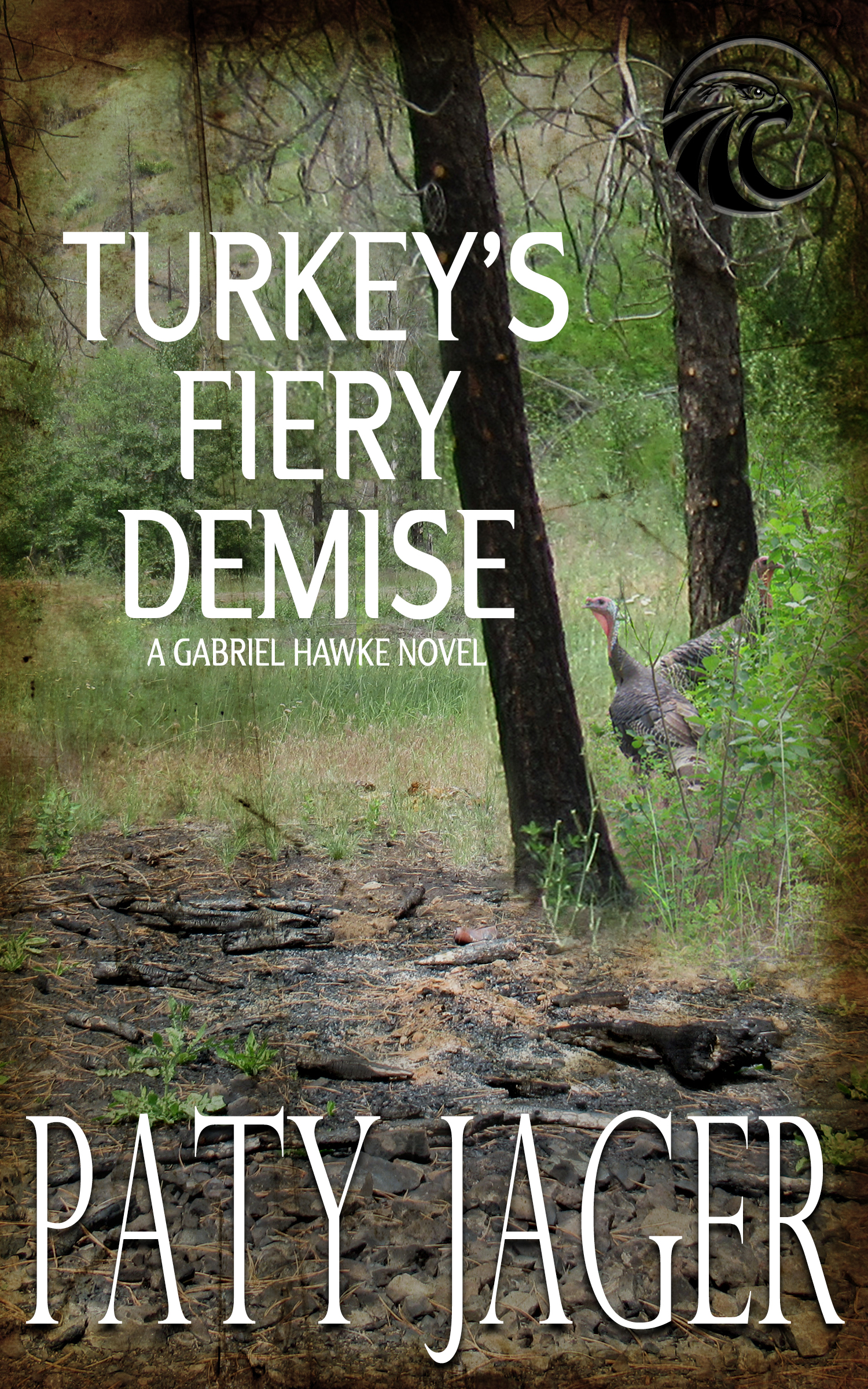
Revisiting a Vacation by Paty Jager

I went on a trip of a lifetime, for me, last summer. When I received an email about a literary trip set in Iceland and saw the itinerary and how well we’d be taken care of, I told my hubby it was my birthday gift and I signed up.

Now, almost a year later, I am getting ready to publish a book I set in Iceland. I loved the country- the people, the scenery, the history. I felt at home there. Hmmm… I wonder if I have more Norse in me than I thought? I’m ready to go back whenever my hubby would agree to it and the pandemic lifts.

The trip was put together by The Author’s Guild. It was a mix of half usual tourist sights and half literary sights. We had a meeting with Yrsa Sigurdardottir, a crime fiction author in Iceland whose books I had read and enjoyed. We went to a museum which had ancient Icelandic manuscripts. They were made of sheep skin and wood covers. And we visited the home of the 1955 Nobel Prize winning author, Halldor Laxness.

But I would have to say the highlight of my trip was getting the other writers, who mostly wrote non-fiction books excited about helping me find a good place to have a murder. Each place we stopped someone would say, what about this or that? And then as a group they would come up with how and why someone would be murdered in that spot. It was a lot of fun.

landscape at Kleifarvatn Lake

On the last day, which happened to be my birthday, all ten of us loaded up in the small bus we’d been travelling in all week, and headed to Lake Kleifarvatn. The landscape at this lake has been likened to a moonscape. It is sparse, barren, rocky surroundings. I took quite a few photos, thinking this would make tracking someone near impossible and would make a great place for a tracking specialist to be needed.

Boiling mud pools at Krysuvik

However, we continued on and as soon as I saw the steam and the bubbling mud I knew I’d found my means of murder! At Krysuvik, a tourist attraction of sulfurous steam escaping boiling mud pools, I could see a body half in and half out of one of the mud pools. The more I walked around the area taking photos, I solidified this was where the the murder would take place.

I asked our guide, Ragnar, lots of questions and scribbled in my little book. I asked him about Search and Rescue. He said they had a large SAR program. When I came home, I looked it up. I was so excited! They had a world reknown SAR conference every two years. I could send Hawke to Iceland to teach at the conference. And the best part, the conference was this year, well, we’ll see if it is still held with all the closures of conferences this year, but it would be held in the Harpa. The Harpa is a fairly new concert hall and conference center that is beautiful! It was a building across the street from our hotel and I had been in it for dinner one night and a play another. It was a building I knew.

This is Harpa. It has beveled colored glass panels all over it and is gorgeous when the light hits it just right.

Everything just seemed to fit together for my book! And I’m pleased to say, Fox Goes Hunting, book 5 in my Gabriel Hawke Novels is available in pre-orde and will release on June 1st. What a fun way to celebrate the anniversary of my trip- with a book set in Iceland.

Writing the book I was able to revisit several of the places I’d been, reconnected with our guide for some help with things I hadn’t seen or didn’t know about the country, and enjoyed putting my taciturn Native American Game Warden in an environment different than he knew.

Blurb for Fox Goes Hunting

While teaching a tracking class at a Search and Rescue conference in Iceland, Oregon State Trooper Gabriel Hawke discovers a body in a boiling mud pool. The body is the young man Hawke’s class is tracking.

Unable to walk away from the young man’s death without helping to find the killer, Hawke follows the clues and discovers the young man had few enemies, and all of them have alibis. The killer is cunning like the fox, but Hawke is determined to solve the homicide before the conference attendees head home in five days. 

Pre-order at all ebook vendors:

https://books2read.com/u/3yEjKv

The Angst That Doesn’t Go On The Page by Paty Jager

Many literary prose are filled with angst and trepidation. I wonder if literary writers feel the same angst and trepidation that genre writers do?

This is a confession of sorts. Before I started writing mystery, I just researched either history, settings, occupations or whatever I needed to make the story real and conjured up characters that I liked and hoped readers liked. Those were my romance books.

Then I wrote an action adventure trilogy. I researched and read and studied. I came up with a high IQ character and hoped I could pull her off. I set books in areas I had never been, but I found people who had or lived there. I dug deep to make sure I had all the knowledge I felt I needed to write those books. When the first one released, I knew it was going to flop. How could I write about an anthropologist with a genius level IQ and make people believe her?

But I did! Readers loved Isabella Mumphrey. The first book won an award!

After all the angst and worry, I decided to try my hand at the genre I really wanted to write– mystery. And what did I do? I made my character half Native American. Mainly because I feel it is a culture that gets shoved under the rug and partly because I love research and learning new things. I thought why not learn about the culture along with my character.

But I worried I couldn’t pull her off. That someone would tell me I didn’t have the right to write such a character or I wasn’t portraying her correctly. However at book 14 in my Shandra Higheagle Mystery series, I have people who love the information on the culture that I include in the books. This makes me happy that I am informing my readers about a culture they may not know about in an entertaining way.

Then I start writing another book and I worry this one won’t be as good as the last. Or I feel it’s lagging, not enough twists, or not enough culture… There is always something I feel I didn’t flush out enough.

This goes on daily as I write. My books go through critique partners, beta readers, a line editor, a sensitivity reader, a proof reader and my final arc readers before it gets to the public. And I still worry that something was missed.

It isn’t until my ARC readers send me the links to their reviews that I know if my book was mediocre or they enjoyed it. I”m happy to say the newest release has been a joy to get reviews and emails about. The subject lines have been: I loved it! You did it again!

These are worth all the worrying, angst, and beating myself up over the characters and plot.

Here is Abstract Casualty

Book 14 in the Shandra Higheagle Mystery series

Hawaiian adventure, Deceit, Murder

Shandra Higheagle is asked to juror an art exhibition on the island of Kauai, Hawaii.

After an altercation at the exhibition, the chairwoman of the event, Shandra’s friend, arrives home with torn clothes, scratches, and stating she tried to save an angry artist who fell over a cliff. Shandra and Ryan begin piecing together information to figure out if the friend did try to save the artist or helped him over the edge.

During the investigation, Shandra comes across a person who reminds her of an unhealthy time in her past. Knowing this man and the one from her past, she is determined to find his connection to the dead artist.  When her grandmother doesn’t come to her in dreams, Shandra wonders if her past is blinding her from the truth.

https://books2read.com/u/4XXLke

Guest Author – Susan Elia MacNeal

My series’ heroine, Maggie Hope, has been through a lot in the eight novels of the series—most recently falsely imprisoned on a Scottish island. Before that she was held by the Gestapo in Paris, and before that she went up against a serial killer in London. And then of course there’s the war itself. Which is why for her ninth outing, THE KING’S JUSTICE, I wanted to not only write a new thriller/mystery—but also show the toll Maggie’s experiences have taken on her.

PTSD (post-traumatic stress disorder) is the modern name for what in Maggie’s time was called “shell shock.” And although I sometimes describe Maggie as “Nancy Drew meets James Bond,” one thing that makes Maggie different is that all of her experiences, both good and bad, have changed her as a person. (As opposed to Nancy and James, who, while wonderful, remain static characters, regardless of how much danger they’ve be in and trauma they’ve survived.) In this novel, she tries to ignore her psychic damage by quitting the secret agent game, smoking non-stop, drinking too much, and riding much too fast on a motorcycle. But eventually she has to come to terms with her past, her trauma, her fears, and her vulnerabilities.

THE KING’S JUSTICE takes place during March of 1943, in London. The Blitz is over, but the war continues—and unexploded bombs can be found all over the city—just waiting for something to set them off. I have Maggie working as a bomb defuser, a job desperately needed in London at the time, —and also because Maggie’s a bit of an unexploded bomb, too. To defuse herself, she needs to work through her past traumas, some brought to light by a stolen violin and a new serial killer.

This killer is dropping suitcases full of bones in the Thames, and they’re washing up on the banks, sometimes half-buried in sand and silt. Some of the “mudlarkers” of London—those who dig on the riverbanks for lost historic treasures like Roman coins, medieval pottery shards, and Elizabethan rings—find the suitcases with the bones, and report them to Scotland Yard. Maggie’s beau, DCI James Durgin takes the case, and Maggie is ultimately recruited to help, because of a connection to someone from her past.

Like unexploded bombs, I really loved working in the metaphor of mudlarking—sifting through trash to find treasure. I think Maggie’s coming to grips with the traumas of her past was a lot like mudlarking—she has to excavate a lot of “dirt,” before she can find her “treasure”—a return to, well, not her old self, of course—but someone who’s experienced trauma, processed it, and come through the other side.

Without giving anything away, in the novel’s first scene, we meet Maggie as she’s in a deep pit, defusing a bomb. By the last scene, she’s looking down on London from the observation deck of the Monument to the Great Fire of London. Like the city itself, Maggie has gone through disaster and rebuilt, now stronger, smarter, and more compassionate. I hope readers will find her journey inspiring.

In THE KING’S JUSTICE, the ninth book in the acclaimed Maggie Hope mystery seriesby Susan Elia MacNeal (Bantam Hardcover; On Sale 2/25/2020),our heroine is on edge. Maggie has returned to London after being imprisoned on a remote island for knowing confidential SOE information, but she is traumatized by her experience. As Maggie takes a break from spying, she starts to behave more and more recklessly. She drinks too much, speeds through the streets on her motorcycle, and joins a squad tasked with defusing unexploded bombs left in London from the Blitz.

When conscientious objectors to the war start disappearing, Maggie is determined to stay out of it. But as human bones start washing up on the shores of the Thames inside of suitcases, it becomes clear that a serial killer is afoot, and Maggie must put aside her hesitations and get to work. Little does Maggie know that this investigation will force her to conquer her demons and face her past in order to solve the case.

Susan Elia MacNeal is the New York Times bestselling author of the Maggie Hope mysteries. MacNeal won the Barry Award and has been nominated for the Edgar, Macavity, Agatha, Left Coast Crime, Dilys, and ITW Thriller awards. She lives in Brooklyn, New York, with her husband and son.

susaneliamacneal.com • Facebook.com/MrChurchillsSecretary

Twitter: @SusanMacNeal • Instagram: susaneliamacneal

Wrapping Up a Murder by Paty Jager

I just finished the 14th Shandra Higheagle Mystery book. This book is set in Kauai, Hawaii. Yes, I had to write off the trip I took to Kauai last October. LOL Actually, it took me 40 years to get my husband to go to Hawaii with me and I happened to like the idea of setting a book there.

I enjoyed revisiting the places we went to add spice and authenticity to the book. My photos, some I took with the intention of using for the cover, and others so I could remember what I’d seen, helped me bring the island to life in the book.

While the writing, bringing in the island flavor, and discovering an actual event that brought my amateur sleuth potter to the island in a real way, it was the intricacy of the plot that kept me spellbound as I wrote the book.

Artwork from the exhibition in my book.

As usual, I started out with my suspect chart, all part of the art world on Kauai. But as I researched and discovered more about the island, the art world became more dark and convoluted. This on an island that boasts very low crime rates. But I couldn’t help myself. The island is warm, inviting, and overpopulated with tourists.

Because of the tourists, I have my characters catering to the masses. I’m not saying what I wrote about isn’t happening on the island, but it isn’t in the statistics that I read. However, I did read about the influx of drugs back about 5 years and taking creative license, I used that information to sway the direction of the story.

I take pride in so many readers saying they didn’t know who the murderer was until it was unveiled in most of my mysteries. And so, I go at each book with the intent to drop clues but keep the reader wondering until the end. I hope I’ve done that with this book as well. We’ll see when I get my critique partners’ notes on it.

Here is the cover for Abstract Casualty, set on Kauai, Hawaii.