Titles- where do they come from?

Ask any writer and they will each give you a different answer to where they get the title for a story, book, or article. Most will even say they come up with the title differently for each story, book, or article.

So how does that tell you where titles come from…it doesn’t. From talking to other writers and reading the struggles they go through to find titles, I can tell you there is no set way a writer comes up with the words that are on the front of their book or draws a reader to their story or article.

If the writer is published with a traditional publisher, they have no say over the title. The publishing company decides what title will go on the book based on past book sales. Not sales by that author but by all the authors in their house and what titles readers were drawn to.

A self-published author can give their book a title and it will stay with the book. We don’t have the algorithms that the traditional publishing houses have. But we can google the title, see if there are any others like it. Then we can see if the words in the titles are used in top selling books. And so on. If you are a writer who tries to piggyback off the top selling books.

For me, the title either comes as I am “stewing and brewing” the story –this is where I’ve come up with a premise, or the means of murder, or a unique idea I plan to incorporate into the story. If that doesn’t bring about a catchy title that matches other titles in the series, then I start writing. Adn at a point while I’m putting the story down in words, a few will string together and a lightbulb comes on and I realize that is the title of the book. This has happened to me, mostly with the first book of a series. Then after that the rest of the series has to have similar titles.

As for my Shandra Higheagle mystery series, the titles all come from either the way someone was killed or how they came to be killed.

With the Gabriel Hawke series, since he is a Fish and Wildlife officer (game warden) I wanted to have animals in the titles of the books and on the covers.

The Spotted Pony Casino mystery series, I chose to use gambling terms for the titles of the books. I found a dozen terms that I liked and have been slowly incorporating which ever title I pick into the murder mystery that I write. This has actually been the easiest way to come up with a title. I have the list and just have to decide which term works with the premise I come up with for the book.

Currently, I have started book 10 in the Gabriel Hawke series. When I first came up with the idea for the story and formulated the premise of the murder, I had called the book Fleeing Swan. But after researching the area and getting a great photo of a bear while traversing the wilderness where one of the characters will be hiding, I decided I wanted that photo on the cover and have changed the title to Bear Stalker. While the character who I was referring to as swan in the original title swims away from a threat, I decided to give her the Cayuse name of Small Bear (kskɨ́s yáka). Since she is being stalked by the killer- I came up with the title Bear Stalker. And now that I have my title and my story, my fingers are flying across the keyboard telling Small Bear’s story.

I haven’t decided what the next title will be in the Spotted Pony Casino series. I have an inkling of what the story will be about, at least the secondary plot since I left it hanging in the last book, but I want the title to reflect the main plot of murder in the book and not the secondary plot that will be left hanging in the next few books. I don’t want that little time bomb to go off just yet. 😉 But until I get a clear picture of what the next book will be about, I’m not sure what the title will be other than one from my list of gambling terms. 😉

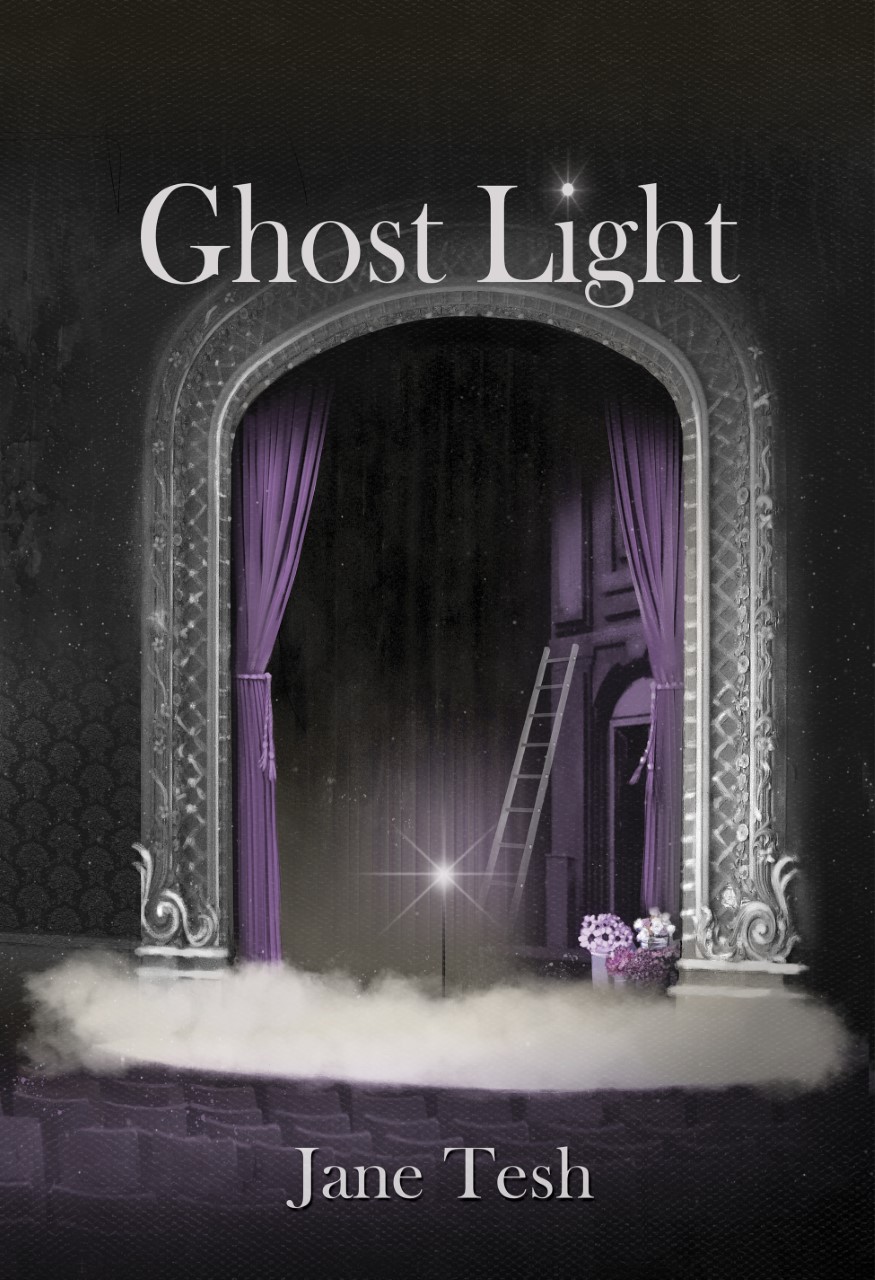
Does a title of a book draw you to discover more about the book or is it the cover image that draws you to the book? Especially if it is an author you have never read before.

Guest Blogger ~ Nancy Lynn Jarvis

Writing PIP Inc. Mysteries is my way of keeping a friend who has moved to another state close and letting pets who have crossed the rainbow bridge live on as more than memories.

When I began writing mysteries in 2008, my protagonist was a realtor like I was. I used my experiences to enhance the story lines and told readers that as far-fetched as the real estate references were, they were all true and based on things that happened to me or my associates during my twenty-five-year career. It was easy to write authentically because I knew the business so well. But after seven books in the Regan McHenry Real Estate Mysteries series, it was time for a change.

I have a dear friend, also named Pat like my PIP Inc. protagonist, who is the most fascinating person I know. She gave me many ideas for murders and was especially helpful with bank robbery insider information she knew for my stand-alone novel, Mags and the AARP Gang, because she was on the board of the credit union where I set the robbery.

As I started formulating the PIP Inc. Mysteries series, I asked if I could use her and her background―like my Pat, she was the county law librarian and is a private investigator―as my protagonist and if she would be a consultant for the books because I knew nothing about being a private investigator and would need her help. She agreed under one condition: private investigator Pat had to have green eyes because she always wished her eyes were green.

 I made my Pat half her age, unmarried, and with an enviable figure, something the real Pat loved. When she saw the cover for the first book in the series she exclaimed that Pat had the hips she always wished she had.

I also gave Pat two pets, a Dalmatian named Dot and a ginger tabby named Lord Peter Wimsey. Dot is based on my beloved Freckles―whose real-life antics often find their way into the books―and my husband’s cat, Wimsey. 

Having Pat as a consultant has worked out better than I hoped. She advises me on how to conduct investigations so details ring true, and she comes to Santa Cruz at least twice a year for an in-person consult. You should have seen us spying on a neighbor when she was here recently. Pat suggested we climb his security fence to see if we were right about him and what was happening on his property. When I told her that could be dangerous, she said, “Don’t worry, I always carry my Magnum 357, just like private investigator Pat does.”

You can read about the adventures of Pat, Dot, and Wimsey in the PIP Inc. Mysteries series. Book 3, The Corpse’s Secret Life was released earlier this year. The series is intended to be read in order so you might want to start with The Glass House and then The Funeral Murder before you take on the sin-eaters and undercover agents of The Corpse’s Secret Life. (And if you want to find out what that neighbor was up to, there’s always the barely fictionalized A Neighborly Killing from the Regan McHenry Real Estate Mysteries series.)

Pat’s fledgling private investigation company, PIP Inc., has a promising new case.

Pat is still wearing a wrist cast after breaking her arm in a confrontation with a killer, so when she’s hired by the City of Watsonville to unearth the identity of an older woman who died in her bed, she’s delighted that her next job promises to be a simple computer-based research project.

Why is it that things are never as simple as she thinks they will be? Pat soon discovers nothing is as it seems, beginning with a corpse who had secret identities, murder, and a post-death ritual thought to have last been performed decades ago.

 “I love this series, and this particular mystery is very entertaining.”

        Janice J. Richardson author of The Spencer Funeral Home series

“Captivating from the start! The Corpse’s Secret Life transports you into a realm of page-turning mystery… a must read”

          Maryanne Porter, author of Haunted Santa Cruz, California.

You can find her all her books here: https://www.amazon.com/Nancy-Lynn-Jarvis/e/B002CWX7IQ

Nancy Lynn Jarvis left the real estate profession after she started having so much fun writing the Regan McHenry Real Estate Mysteries series that she let her license lapse. But after seven books, she was ready for a new adventure and is currently working on the fourth book in her PIP Inc. series which features protagonist not-quite-licensed private investigator, downsized law librarian Pat Pirard. She has also edited crowd pleasers Cozy Food: 128 Cozy Mystery Writers Share Their Favorite Recipes and Santa Cruz Weird. Read first chapters of her books at www.nancylynnjarvis.com

Facebook: https://www.facebook.com/nancylynnjarvis/

Goodreads: https://www.goodreads.com/author/show/2918242.Nancy_Lynn_Jarvis

BACK IN THE GROOVE—SORT OF

Attending the PSWA Annual Conference was wonderful. So rewarding to see old friends and make some new ones—plus talk writing and hear speakers and panels on various writing topics.

I need to write another—and the last—Deputy Tempe Crabtree mystery. Tempe is retired now and I’m ready to let her enjoy her retirement. Though I’ve had a request to put one of the ongoing characters in, one who is based on a real person and would like to see something specific happen with the character, that’s all I had. (I thought End of the Trail would be the last and then The Trash Harem had to be written. Now I need to send Tempe off with one last adventure.

In my newsletter, I asked my readers for ideas and did the same on Facebook. More ideas, but nothing that appealed.

While I was at the conference I some thoughts about what might be good in this final visit with Tempe started to pop into my brain. I even thought of a good beginning. No, I haven’t written anything down yet as I’ve had too many other things to do. When you come home from being gone six days duties pile-up: unpacking, laundry, and all the mail.

Frankly, I’ll be glad to actually be in the writing groove again, it’s been far too long. In the past, I’ve managed to write and publish two books a year. Nothing so far this year.

I’ll start like always, jotting notes down. Eventually getting to who turns up dead—where, and all those who might have wanted the victim dead. Naming and writing all the new character descriptions often comes next. Usually while I’m doing it, plot ideas will come tumbling unbidden but quite welcome.

Because I have other work I do for folks, sometimes it takes a while to get started on a new book. I am hoping for the best. I really, really want to get back to writing.

Marilyn

To Prologue or Not to Prologue (#2) by Karen Shughart

I promise this isn’t a duplication of Paty Jager’s blog from last Monday. Paty and I frequently seem to be on the same page when choosing topics for our monthly blogs, and when I read her title, I was terrified that my extremely rough draft had somehow made it’s way into scheduling instead of her very well-written and polished one. Fortunately, my fears were allayed when I saw her name as the author. Whew! And while our titles are the same, we’ve written from our own points of view.

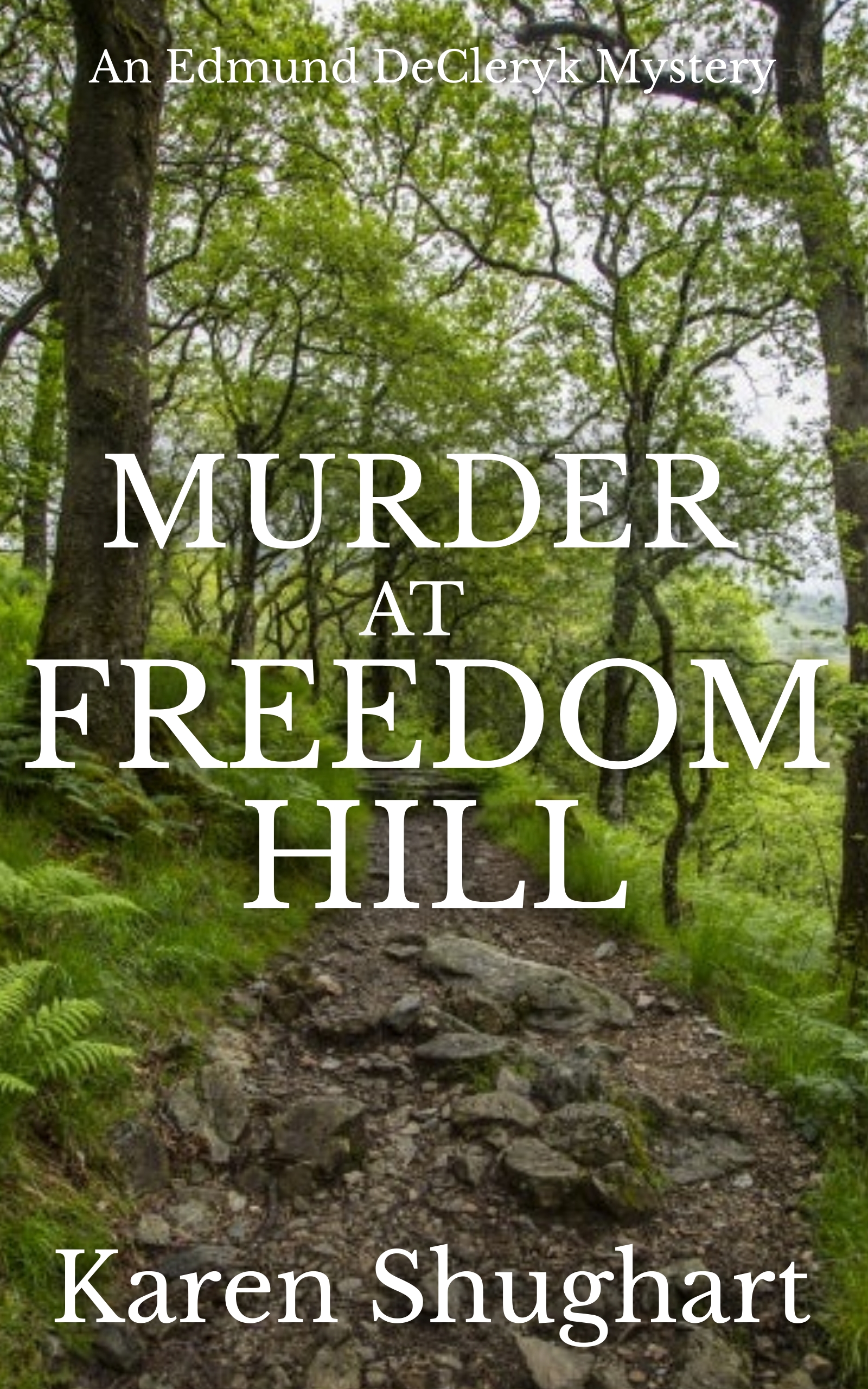
Each of the books in my Edmund DeCleryk Cozy mysteries has an historical backstory that’s related to the crime and provides clues to why the murder was committed. In book one, Murder in the Museum, the prologue introduced a character whose journal, written in 1845, was discovered at an archeological dig in Toronto, Canada. The prologue in book two, Murder in the Cemetery, ties the crime to a battle that occurred in Lighthouse Cove, NY during the War of 1812.

My creative juices really started flowing in book two, and I played around with writing two prologues: the first as described above; the other to introduce the setting, the month of May. You’ll have to read the book to learn why that’s important. My dilemma was which to keep and which to discard. I realized I was emotionally attached to both, so decided to get my publisher’s advice-few books are written with two prologues. Her quick response: “go for it,” and I did.

I’m heading down the home stretch with book three, Murder at Freedom Hill. Yet again, I’ve written two prologues: the first, the historical backstory – it takes place in 1859 in Lighthouse Cove during the abolition movement, when fleeing slaves boarded a schooner to transport them across Lake Ontario to Canada. The second is set in November, the month when the harvest is over, and the chill and frost of winter lurk just around the corner.  

What I love about writing this series is that I don’t have to follow all the rules. It doesn’t mean I am undisciplined; I certainly know how to craft a story from beginning to end, but I enjoy taking liberties with commonly accepted writing practices when it makes sense.

It’s up to us mystery writers to decide how our stories will be written. Some begin with the murder; others lead up to it, it can go either way. It’s the same for prologues. Sometimes a book needs no prologue, but at other times a prologue can set the scene and enhance the plot. And at times, two prologues are even better.

To Prologue or Not to Prologue

I’m currently working on the next (#10) Gabriel Hawke Novel. It will be set up in the style of book #2. I have a person who saw a murder in the wilderness and my character Hawke will find them. Just like book #2, I’ll be starting it with a prologue where the character witnesses the killing and then runs in fear for their life.

To me it makes sense to start the book, with a prologue, showing the person watching the act happen and then fleeing, so that will need to be in their point of view. Then as the story progresses, there will be things Hawke (my main character) won’t know or see, but the reader needs to know through the fleeing person’s point of view so I will have the two points of view in the book.

Most of my Gabriel Hawke books are in my main character’s point of view unless there are scenes that the reader needs to see what my character can’t see. That’s when I use a second point of view.

This book, I’m still working on the title, has been brewing and stewing in my head for nearly 6 months. It came to me as I was writing book #9 that released the end of June. That’s how my brain works. While I am working on a current book in a series, my mind is already moving to the next book. It may be the villain creeping around in my brain, or a setting, or a premise. But as I typed the words to the work in progress, the other story is working in the background.

Back to prologues. There has been a book or two I’ve read where the prologue was flat or didn’t feel like it had anything to do with the story that followed. But there have also been books where the prologue drew me into the story, and I couldn’t wait to read more.

As with all writing, it is the execution of the timing, the words, the characters that makes a reader continue or stop. That and a good, as in a mystery book, whodunit. Something to keep the reader turning the pages and reading well past the time they should turn out the lights and sleep.

Unless you can pull them in at the beginning, with a good prologue, first sentence, first paragraph, first page, first chapter, you could possibly lose the reader. And that’s why I ponder the question: To prologue or not to prologue.

What do those of you reading this post think?

Here is info about my newest release: Owl’s Silent Strike

Book 9 in the Gabriel Hawke Novels

Unexpected snowstorm…

Unfortunate accident…

And a body…

What started out as a favor and a leisurely trip into the mountains, soon turns State Trooper Gabriel Hawke’s life upside down. The snowstorm they were trying to beat comes early, a horse accident breaks Dani Singer’s leg, and Hawke finds a body in the barn at Charlie’s Lodge.

Hawke sets Dani’s leg, then follows the bloody trail of a suspect trying to flee the snow-drifted mountains. Hawke is torn between getting the woman he loves medical care and knowing he can’t leave a possible killer on the mountain.

Before the killer is brought to justice, Dani and Hawke will put their relationship to the test and his job on the line.

https://books2read.com/u/bw19DG