Guest Blogger ~ Skye Alexander

Mystery Stories and Mystery Schools

What comes to mind when you hear the word “occult”? Evil cults that worship the devil? Weird rituals where animals are sacrificed? Wizards with nefarious aims wielding power behind the scenes? If so, you probably got those impressions from Hollywood or from fear-based religious groups. Let’s pull back the dark curtain that shrouds the occult arts to discover how supernatural elements can contribute to a mystery novel’s plot.

What Does “Occult” Mean?

First of all, the word “occult” simply means hidden, as in hidden knowledge. For centuries, people who practiced the occult arts had to hide what they knew and practiced in order to avoid imprisonment, torture, and murder at the hands of misguided authorities. They formed secret societies sometimes known as Mystery Schools, passed down wisdom through symbols and oral tradition, and wrote in secret code.

Yet occult ideas and practices––witchcraft, divination, spellcasting, incantations, and magic potions––continue to fascinate us to this day. Perhaps the most famous scene in literature comes from Shakespeare’s MacBeth where three witches stir a mysterious brew while they prophesy “toil and trouble” for the Scottish king. The Bard’s plays MacBeth and Hamlet also feature ghosts, and A Midsummer Night’s Dream involves faery spells and shapeshifting. More recently, J.K. Rowling’s popular Harry Potter stories have captured the imaginations of millions of young people worldwide and introduced them to some of the tenets of magic work––and its possibilities.

Using the Occult in Plotting a Story

Occult practices involve working with forces beyond the mundane, tapping into reservoirs of hidden power, and sometimes interacting with supernatural beings. Therefore, they let writers and readers step outside the ordinary limitations of a storyline. Ghosts and spirits can also expand readers’ knowledge into realms beyond the physical. In Alice Sebold’s The Lovely Bones, for example, a murdered girl shares a perspective of the crime from her vantage point on the other side.

Oracles such as the tarot, astrology, or runes can give veiled glimpses into the future. Is someone destined to die when the Death card turns up in a tarot reading? In my mystery novels What the Walls Know and The Goddess of Shipwrecked Sailors, a tarot card reader sees trouble lurking ahead for the protagonist Lizzie Crane, which adds to the stories’ suspense.

Authors can incorporate metaphysical ideas into their novels in various ways. For example:

  • Is a character a seasoned witch or wizard, or a novice dabbling with forces she doesn’t understand, like the Sorcerer’s Apprentice?
  • Does a character pursue a metaphysical path that leads him to a discovery or danger? How does he grow from this experience?
  • If this is a historical novel, what local customs, religious beliefs, and laws affected occultists at that time? Are historical events, such as the Salem Witch Trials of the early 1690s, worthwhile additions to the book?
  • Do nonphysical entities influence a character’s decisions, aid her in solving a problem, or guide her into a realm beyond the physical one?
  • Does a character conjure a spell that works––or goes wrong––and takes the story in an intriguing direction?

Oh, and by the way, writing is a powerful form of magic. When casting a spell, you envision an outcome you want to create. Then you infuse it with color, action, emotion, intention, and passion. You experience it as if you’re living it right now. In your mind’s eye, you see the result as if it already exists––and you’re the Creator who makes it happen. Sounds like writing a novel, doesn’t it?

The Goddess of Shipwrecked Sailors
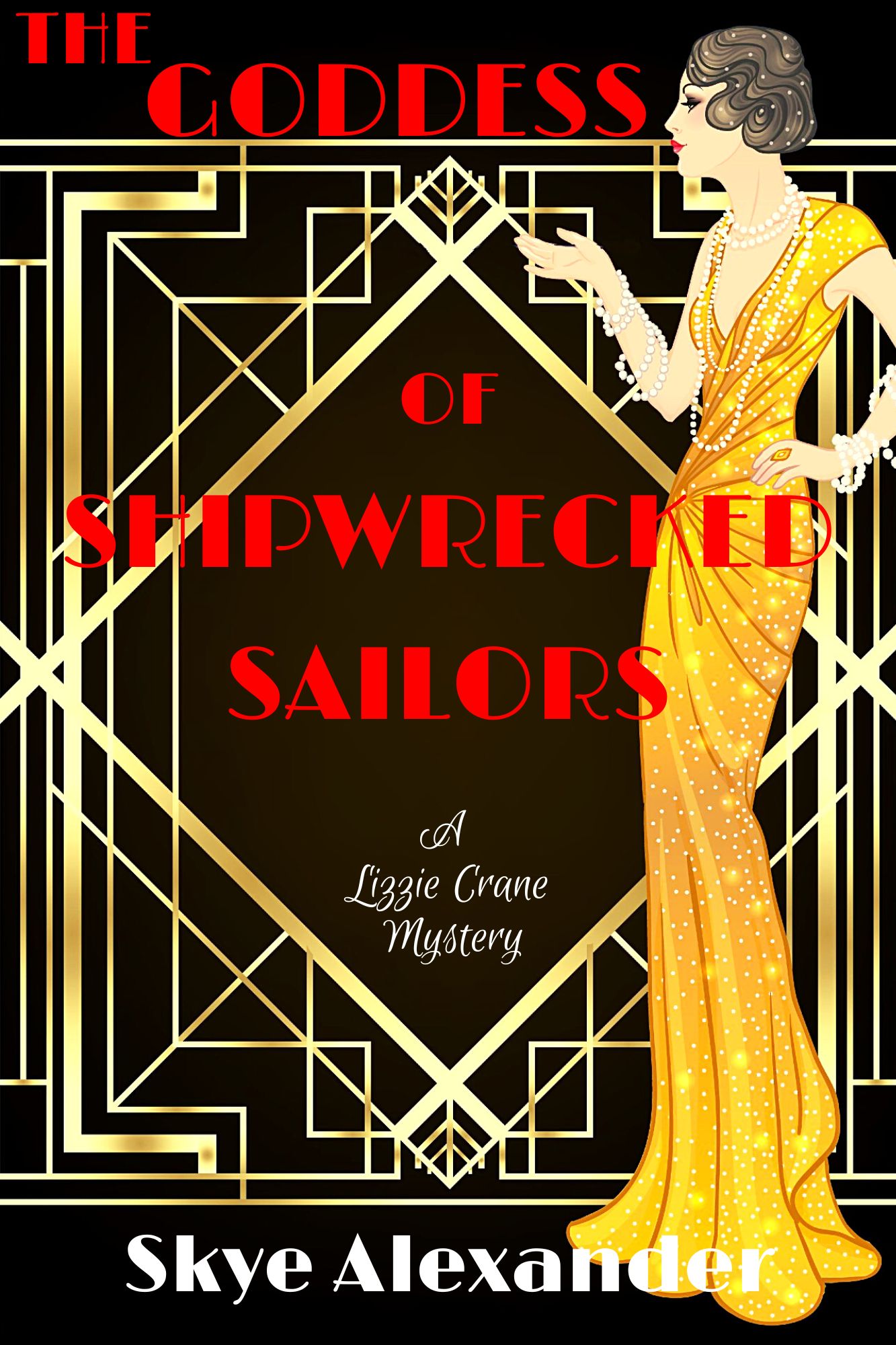
Salem, Massachusetts, Christmas 1925: When the heir to a shipping fortune hires New York jazz singer Lizzie Crane and her band to perform during the Christmas holidays, she has high hopes that the prestigious event will bring them riches and recognition. But the evening the musicians arrive, police discover a body near a tavern owned by Lizzie’s cousin––a cousin she didn’t even know she had. Soon Lizzie becomes a pawn in a deadly game between her cousin and her employer over a mysterious lady with a dangerous past.


Buy links

Amazon: https://www.amazon.com/Goddess-Shipwrecked-Sailors-Lizzie-Mystery/dp/1685124348

Barnes & Noble: https://www.barnesandnoble.com/w/the-goddess-of-shipwrecked-sailors-skye-alexander/1144045510?ean=9781685124342

Author Bio:
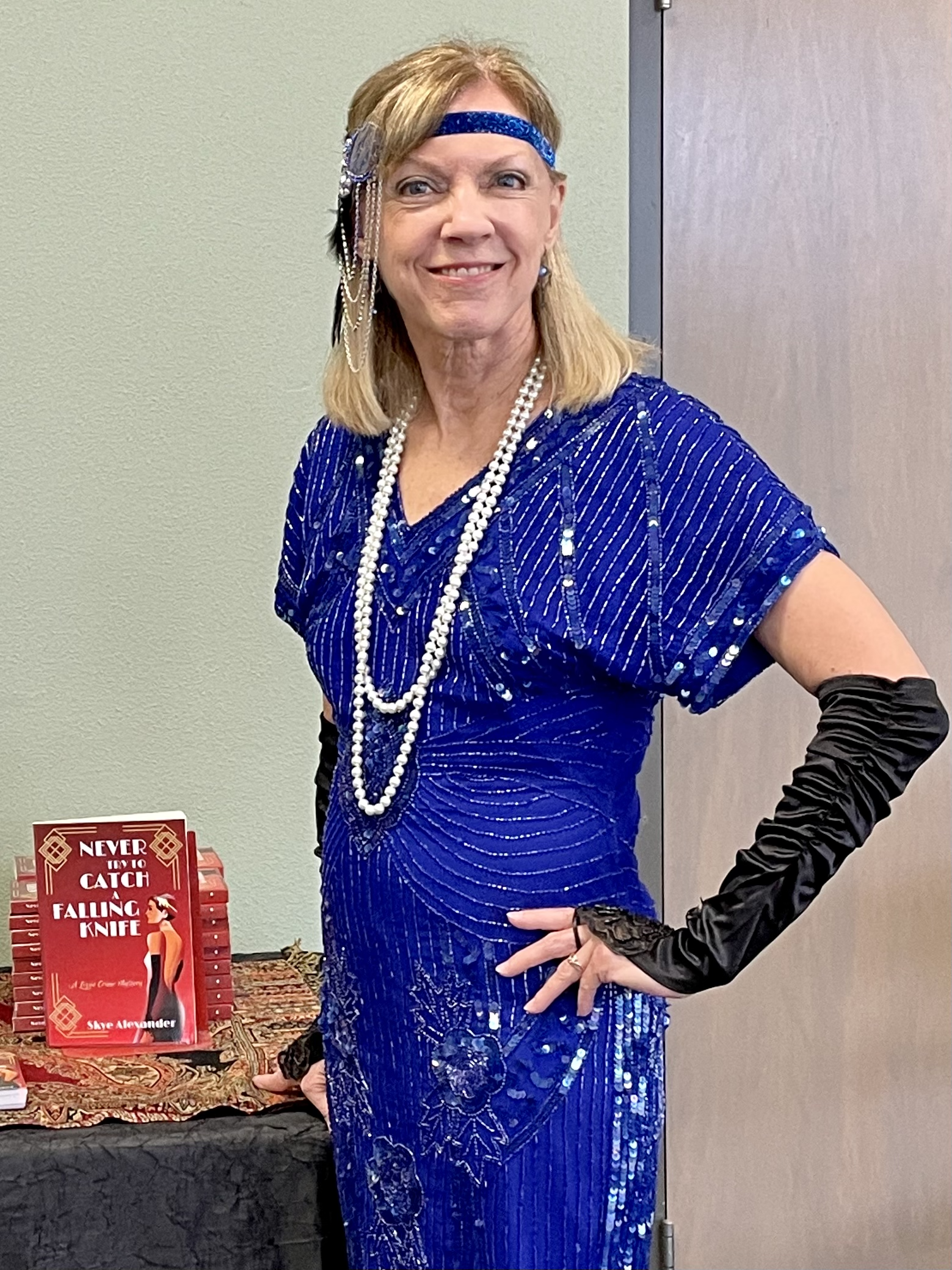
Skye Alexander’s historical mystery novels What the Walls Know and The Goddess of Shipwrecked Sailors, the second and third books in her Lizzie Crane mystery series, use tarot cards and other occult ideas to provide clues. Skye is also a recognized authority in the field of metaphysics and the author of fifteen bestselling nonfiction books on the occult arts including The Modern Guide to Witchcraft, The Modern Witchcraft Book of Tarot, and Magickal Astrology.

Facebook link

https://www.facebook.com/skye.alexander.92

Goodreads link

https://www.goodreads.com/book/show/198671880-the-goddess-of-shipwrecked-sailors

Video trailer

https://drive.google.com/file/d/1IjHJjQYpVe35nvBkMD4sMn-o2zt0skA2/view (if you can’t access it here, it’s also on the first page of my website and on YouTube at https://www.youtube.com/watch?v=kgCT41caKrs

Guest Blogger ~ Erica Miner

Prelude to Murder: Bringing Murder and Music Together

Everything about my journey to the mystery genre was connected to my love for writing and my life as a violinist with the Metropolitan Opera in New York.

Though I had played the violin most of my life, I had started writing before I began studying the instrument. In grade school, at the age of 7 or 8, I was placed in an afterschool program for Creative Writing. I don’t remember much of what I wrote (it was about 100 years ago!). But I do remember loving the entire process: creating characters and plot lines and weaving them all together to tell stories. Then I discovered I also had a talent for the violin. That fiendishly difficult instrument monopolized my creativity, though my passion for writing never left me.

Eventually I ended up in the orchestra of the most prestigious opera company in the world, where I was part of a uniquely exciting, glamorous subculture. What I hadn’t anticipated was the hotbed of intrigue behind that famous “Golden Curtain”—an operatic Tower of Babel with clashing egos, rampant jealousies, and nefarious happenings. I then realized an opera house was the perfect place for mischief and mayhem. Why not bring murder and music together in that milieu? My Julia Kogan Opera Mystery series was born.

When it comes to the old adage “Write what you know,” I was not immune. My main character, Julia, is a young violinist much like me when I first started out at the Met: a starry-eyed neophyte who knows nothing about the backstage conflicts that take place between the fascinating but maddening characters who work there. In the first book of the series, Aria for Murder, on the night of Julia’s debut performance at the Met, an unthinkable tragedy occurs, and suddenly she becomes entangled in a murder investigation. Julia’s sleuthing makes her the target of the killer, and she uses her own ingenuity to survive.

There was little research involved in my Met Opera mystery, since I had been there for 21 years; but Prelude to Murder, the recently released sequel, takes place in a totally different atmosphere: Julia goes off to the desert to perform with the Santa Fe Opera. I had never been to Santa Fe, so I visited the area to do copious amounts of research on its history and culture. It was a revelatory experience, and the book is infused with rich details. Of course, no sooner does Julia arrive in Santa Fe than operatic chaos ensues, and she finds herself involved in yet another murder investigation, this time with the added element of Santa Fe’s ghostly activity. Her wits carry her through, and in Book #3 she goes to San Francisco for more operatic mayhem.

Though I find the mystery genre the most difficult to write, it also is the most challenging. The potential for murderous intrigue against the background of a theatre, where the turmoil behind the scenes is often more dramatic than what occurs onstage, is limited only to the number of opera houses in the world—and to my wicked imagination.

Prelude to Murder

Young, prodigious Metropolitan Opera violinist Julia Kogan, having survived her entanglement in an investigation of her mentor’s murder on the podium, and a subsequent violent, life-threatening attack of a ruthless killer, is called upon for a key musical leadership position at the Santa Fe Opera. But at the spectacular outdoor theatre in the shadows of the mysterious New Mexican Sangre de Cristo Mountains, she witnesses yet other operatic murders, both onstage and off. Dark and painful secrets emerge as, ignoring warnings from her colleagues and from Larry, her significant other, Julia plunges into her own investigation of the killing. Ghostly apparitions combine with some of the most bloody and violent operas in the repertoire to make Julia question her own motives for searching for the killer. But this time the threat to her life originates from a source she never would have imagined.

Buy links:

Amazon: https://www.amazon.com/Prelude-Murder-Julia-Kogan-Mystery/dp/1685124429/ref=monarch_sidesheet

Barnes and Noble:

https://www.barnesandnoble.com/w/prelude-to-murder-erica-miner/1144067662?ean=9781685124427

https://www.thirdplacebooks.com/book/9781685124427

After 21 years as a violinist with the Metropolitan Opera, Erica Miner is now an award-wining author, screenwriter, arts journalist, and lecturer based in the Pacific Northwest. Her debut novel, Travels with My Lovers, won the Fiction Prize in the Direct from the Author Book Awards. Erica’s fanciful plot fabrications reveal the dark side of the fascinating world of opera in her Julia Kogan Opera Mystery series. Aria for Murder, published by Level Best Books in 2022, was a finalist in the 2023 Eric Hoffer Awards. The second in the series, Prelude to Murder, published in 2023, glowingly reviewed by Kirkus Reviews (https://www.kirkusreviews.com/book-reviews/erica-miner/prelude-to-murder/), finds the violinist in heaps of trouble in the desert at the Santa Fe Opera. The next murderous sequel takes place at San Francisco Opera. As a writer-lecturer, Erica has given workshops for Sisters in Crime; Los Angeles Creative Writing Conference; EPIC Group Writers; Write on the Sound; Fields End Writer’s Community; Savvy Authors; and numerous libraries on the west coast.

https://www.facebook.com/erica.miner1

https://twitter.com/EmwrtrErica

https://www.instagram.com/emwriter3/

AUTHOR WEBSITE:

https://www.ericaminer.com

Guest Blogger ~ donalee Moulton

In the right place

Céad míle fáilte. This Gaelic expression means “a hundred thousand welcomes.” If you live in Nova Scotia, as I do, this is an expression you will have seen for much of your life. (Pronouncing it is a different issue altogether.) A hundred thousand welcomes in any language speaks to the type of people you are likely to encounter when you come here and the values they place on such encounters.

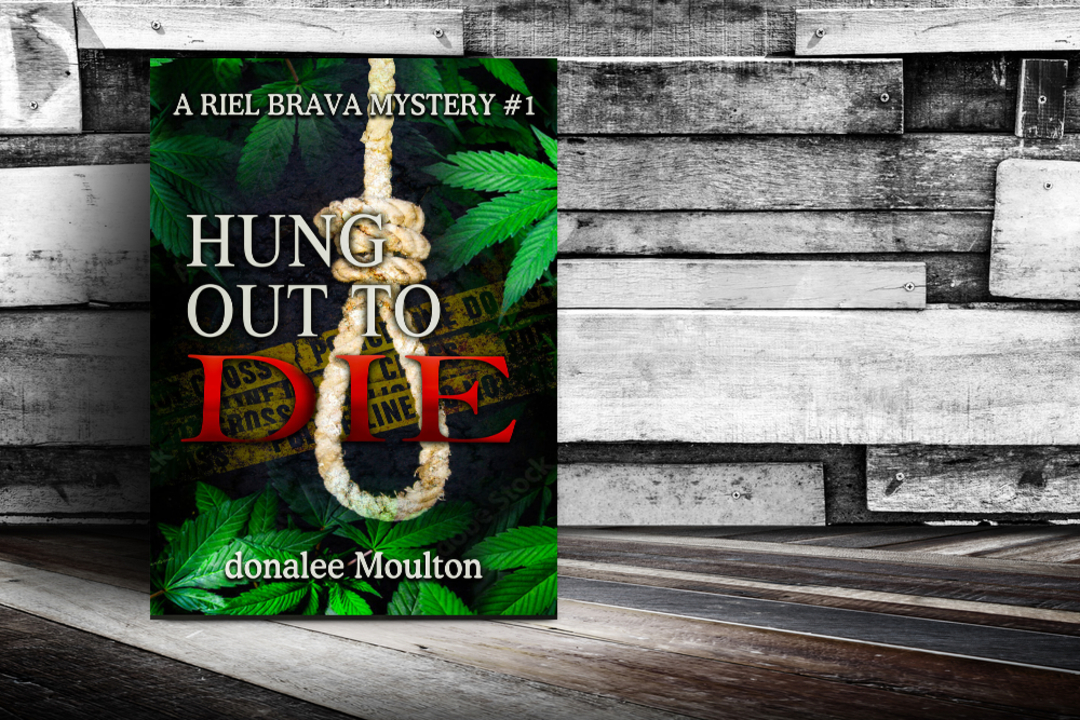
Riel Brava – attractive, razor-sharp, ambitious, and something much more –

is the lead character in my new mystery, Hung Out to Die. He lives in Elmsdale, Nova Scotia, about a 40-minute drive from Halifax, the province’s capital. In East Coast parlance, Riel is a come from away.

Raised in Santa Barbara, California, Riel has been transplanted to Nova Scotia where he is CEO of the Canadian Cannabis Corporation – one of the estimated four to twelve percent of CEO’s who are psychopath. It’s business as usual until Riel finds his world hanging by a thread.

Riel resists the hunt to catch a killer. Detective Lin Raynes draws the reluctant CEO into the investigation, and the seeds of an unexpected and unusual friendship are sown. Ultimately, Riel finds himself on the butt end of a rifle in the ribs and a long drive to the middle of Nowhere, Nova Scotia.

Fact is, I could have placed Riel in the middle of anywhere. The murder is not location specific. The victim does not fall from the Brooklyn Bridge or mysteriously appear atop Old Faithful, places that are singular. Nova Scotia made sense for me as a writer, and it made sense for Riel as a character. I live here; I know this province better than any other place. I can write about it with ease, and with a personal perspective.

For Riel, who lives uncomfortably in a world where people hug each other because they care and share the pain of others because their brain is wired that way, being in a place where he does not have roots, where he is an outsider, mirrors what goes on within Riel. It’s the right place for him.

Because I am from Nova Scotia, I can also authentically and naturally insert elements of life here. Take the language, for instance. You may discover some new words such as bejesus and tinchlet. There will be expressions common to the area. “Bless your heart” is one you’ll hear a lot in Nova Scotia, and Riel hears it as well.

There is also food that has Nova Scotia marinated into it, as Riel discovers. Turns out Riel is now a donair aficionado. (I am not.)

One of the things I have learned as a writer is that I am in control, and I am not in control. I can decide to situate a character in a particular place, and the character will let me know if that is the right place as the writing unfolds. In the case of Riel, he ends up in the dark of winter at a deserted row of cottages called, what else, Céad míle fáilte.

I did not see that coming. I have a feeling Riel did.

Hung Out to Die

Riel Brava, CEO of the Canadian Cannabis Corporation, just wants to be left alone to do his job and one day run for president of the United States. He has a plan. Murder gets in his way. It isn’t easy being a psychopath.

paperback

ebook

donalee Moulton is an award-winning freelance journalist. She has written articles for print and online publications across North America including The Globe and Mail, Chatelaine, Lawyer’s Daily, National Post, and Canadian Business.

Her first mystery book Hung out to Die was published this spring. Her second mystery, Conflagration, will be published in February. donalee’s short story “Swan Song” was one of 21 selected for publication in Cold Canadian Crime, and was shortlisted for an Award of Excellence. A second short story, also featuring the Iqaluit-based chief of police Doug Brumal, was published this spring in Black Cat Weekly. Her literary short story “Moist” was published recently in After Dinner Conversation and The Antigonish Review.  As well, donalee is the author of The Thong Principle: Saying What You Mean and Meaning What You Say and co-author of, Celebrity Court Cases: Trials of the Rich and Famous.

CONTACTS:

Website: donaleemoulton.com 

Amazon Author URL: amazon.com/author/donaleemoulton

Facebook: https://www.facebook.com/donaleemoultonauthor

Goodreads:  https://www.goodreads.com/donaleemoulton

LinkedIn:  https://www.linkedin.com/in/donaleemoulton/

Twitter: @donaleeMoulton

Instagram: donaleemoulton

A Few Of My Favorite Things

I’m one of those people who loves Christmas music. All of it! From the good old songs by Nat King Cole, Bing Crosby, and Brenda Lee to the new ones by Mariah Carey, Kelly Clarkston, and Cher’s new one. If there are bells jingling, joyful lyrics, or reverent lyrics, I like it all.

Listening to Christmas music while I cook, clean house, and put things away from my recent book selling events, makes the task lighter and more fun. My hubby rolls his eyes as I dance around the kitchen putting dishes away, totally absorbed in the song that is playing. (If I’m absorbed how do I know he rolls his eyes?) Because he makes a noise or says something that draws my attention to him. He isn’t a Grinch, but he isn’t into the holiday as much as I am.

Where I’m going with this is I have learned I may be more auditory than I thought. I started listening to one audiobook so I could see what I would need to produce if I ventured into making my books into audiobooks. I enjoyed listening to a book because my hands were free. Now when I sew, cook, clean house, or drive long distances, I prefer to listen to audiobooks. Except this time of year because I’m listening to Christmas music. Audiobooks have kind of become my addiction because I can listen to them while doing other tasks. My mind can wander into the story while my hands and eyes are doing something else.

Lately, I’ve felt like I don’t have enough hours in a day to read for pleasure. But I can listen and continue doing certain tasks. Even my walks, I can listen to a book and get my exercise and fresh air. Our last trip to see our daughter, while my hubby drove, I listened to a book with my earbuds because his pickup doesn’t have the capability to put it through the radio, but our trip before that with my car, he even listened to the book.

I’m finding at the book selling events I attend that more people are saying they listen to audiobooks. Which is good for me since my three mystery series are all on audio. As a means to get more of the books purchased, I joined a Facebook website group for authors with audiobooks wide, meaning not just published through Audible. This group has proven to be more helpful in teaching me how to promote my audiobooks than any other workshop or event I’ve attended.

Right now, the authors at Indie Audiobook Deals are having a MASSIVE year-end giveaway. If you like audiobooks as much as I do, you might want to enter the giveaway. You can sign up to follow the authors with audiobooks in the genre you like to listen to as more ways to get your name in the drawing.

Five entrants will win a $50 Kobo gift card! Kobo is the premier site to listen to fantastic audiobooks.🎧

We’re picking FIVE winners so make sure to complete all of the extra entries to enhance your chances of winning. Good luck and wishing you a happy holiday season!

Enter here: https://kingsumo.com/g/pt4ez1/win-1-of-5-kobo-50-gift-cards

And if you are a mystery fan who likes books with diverse characters, right now I’m listening to book 2 Peril at the Exposition by Nev March and enjoying it. I discovered Ms. March earlier in the year with her first book that I purchased through Chirp, an audiobook distributor that has sales constantly. After listening to that book, Ms. March had asked a question on a crime scene email group I’m on. I emailed her to let her know how much I enjoyed her book and she agreed to be a guest blogger here in February.

Anyway, I got away from reading about diverse characters. Her first book is set in India in the 1800s. The one I’m listening to now is set in Chicago. The two main East Indian characters left India so they could be married. For some reason I enjoy reading books set there. I also like Sujata Massey’s Mysteries set in 1920 India. When I finish reading the book Blood Sisters by Vanessa Lillie, I will dive into The Mistress of Bhatia House by Ms. Massey.

I believe my interest in other cultures is why I write mysteries with Native American characters. I like to learn about their culture and reveal it to others. Though I reveal it slower than an Indigenous writer would because I didn’t grow up in the culture and have to learn about it and understand it before I’ll put it on a page.

Also this month, I have my audiobook, Murder of Ravens, book 1 in the Gabriel Hawke series for $0.99 at Chirp. Double Duplicity book one of the Shandra Higheagle Mysteries, Double Duplicity is $0.99 at Spotify. Or you can get the first three audiobooks of the Shandra Higheagle Mysteries at Barnes and Noble Nook for $2.99.

If you haven’t already finished your holiday shopping, a book or audiobook is a great gift. The recipient will step into another world and be the better for it.

Happy Holidays!

Paty

Setting the Scene by Karen Shughart

All the books in my Edmund DeCleryk cozy mystery series are set in Lighthouse Cove, NY, a fictional village on the south shore of Lake Ontario, with the crimes occurring in the present but are related to something that happened in the past. In book one, Murder in the Museum, a map dated 1785 discovered in the historical society museum – led by sleuth Ed’s wife, Annie – and a journal dated 1845 found at an archaeological dig in Toronto, Canada, provide clues to why the victim was killed.

In book two, Murder in the Cemetery, a relic at the cemetery where casualties of the War of 1812 are buried; long-lost letters written by the wife of a patriot transported to England as a prisoner of war during that time;  a missing artifact at an exhibit at the Victoria and Albert Museum in London, England; and a diary discovered at an abandoned farmhouse help Ed and Annie solve the case.

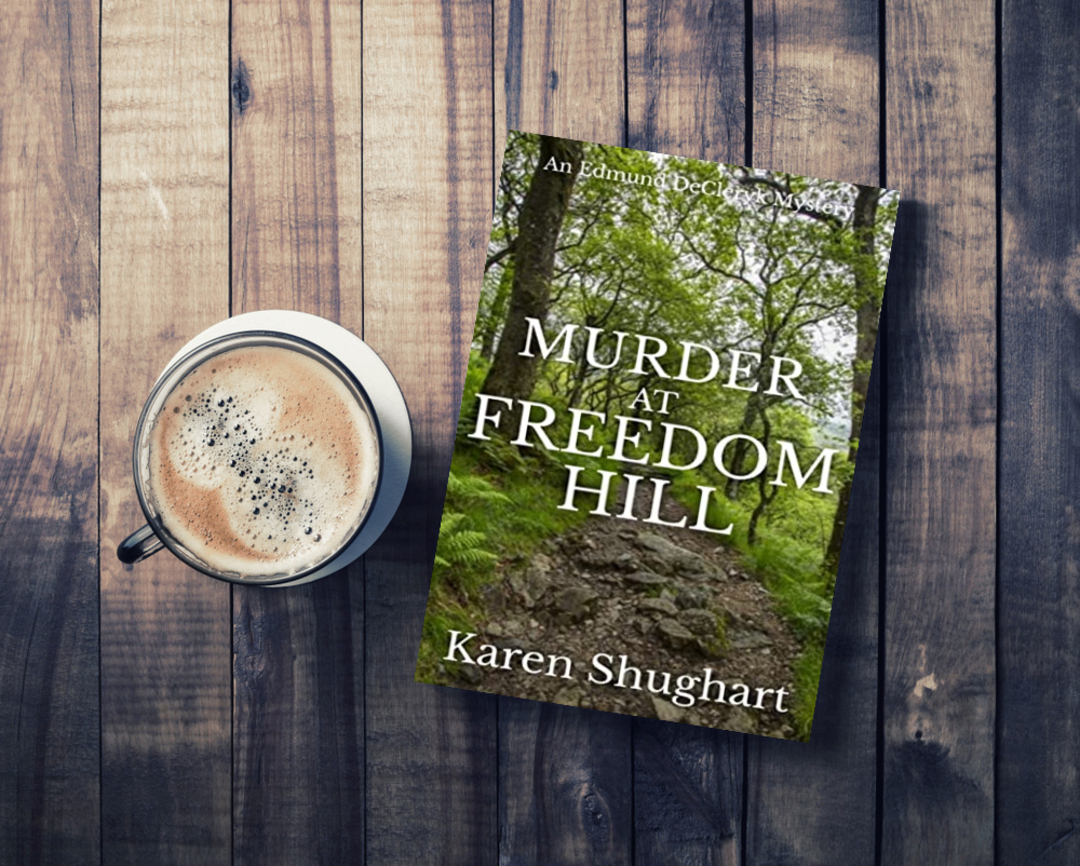
In book three, Murder at Freedom Hill, the crime is thought to be related to the victim’s ancestry, his forebears lived in a settlement where free people of color lived harmoniously with abolitionists who helped transport escaping slaves to Canada across the lake before the Civil War. Another heinous deed, related to that settlement, is revealed during the investigation of the murder.

But what the books also have in common is that I weave into the plot the seasonal setting.  After book one, instead of just one prologue I decided to write two, the first with the historical backstory and the second describing the season.

I continue descriptions of the weather throughout each book, it helps to construct the mood. For example, Murder at Freedom Hill begins in November, before Thanksgiving. In one of the early chapters, Ed discovers that the village mayor has been murdered. A beloved member of the community, the mayor also served on Annie’s board of directors and the two had become close friends. After conferring with Detective Brad Washington at the crime scene, Ed gets into his SUV and drives to the museum to tell Annie about his death. Lots of sunshine and a clear sky start the day, but then the weather changes:

“The brilliant sky at sunrise had made way for clouds the color of brushed pewter that hovered over the roiling silver lake. The day looked like an antique photograph: sepia; gunmetal grey; milky white and black; faded like withered grass. The direction of the wind had changed, picking up speed from the northwest, with fallen leaves swirling around the museum parking lot as Ed pulled into a spot. The temperature had plummeted- winter silently creeping in like a cat about to pounce upon its prey.”

What I enjoy about writing cozy mysteries is the ability to expand description if it fits into the plot, and the weather can either give readers a sense of doom and gloom or provide an interesting juxtaposition to an odious deed.

Karen Shughart’s cozy mysteries are published by Cozy Cat Press. She’s currently working on book four of the series, Murder at Chimney Bluffs.